Home Blog Page 707

Sen. Sullivan’s bill to protect police moves ahead, but Rep. Peltola misses votes to condemn defunding police

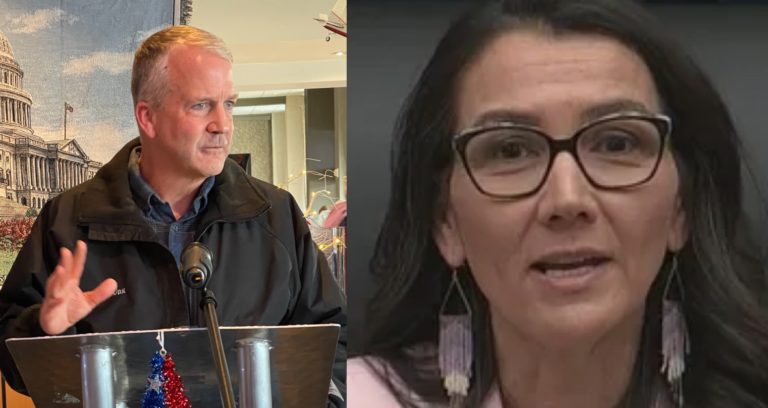
Sen. Dan Sullivan has taken a stand to protect the nation’s public safety officers by reintroducing the Protect Our Heroes Act, legislation aimed at deterring assaults and murders of law enforcement officials. The bill also includes enhanced penalties for ambush attacks orchestrated to lure officers to specific locations. Additionally, Sen. Sullivan proudly cosponsored the National Police Week resolution, which was unanimously passed by the Senate on Tuesday.

While Sullivan was supporting police, Alaska Democrat Rep. Mary Peltola has been missing votes in Washington all week and skipped a critical vote on Thursday on a resolution expressing support for local law enforcement and condemning efforts to defund the police.

Earlier this year, Peltola voted for lower penalties for violent crime, a position too extreme for even Sen. Chuck Schumer and President Joe Biden. Last month, Peltola again voted against police officers and for emboldening criminals.

Peltola skipped the vote today so she could attend a photo op with First Lady Jill Biden in Bethel, Peltola’s hometown.

Sen. Sullivan emphasized the growing threats faced by law enforcement personnel.

In 2022 alone, 331 officers were shot in the line of duty, resulting in the tragic loss of 62 lives. These numbers represent a 32 percent increase compared to the previous year, indicating a troubling trend that demands immediate attention.

Sen. Sullivan emphasized the importance of protecting those who work tirelessly to enforce the law and ensure public safety.

“The men and women of law enforcement find themselves in precarious—often dangerous—situations when enforcing our laws, holding criminals accountable, resolving disputes, and protecting the safety of our families,” Sullivan said. “In addition to these risks, our brave public servants should not also have to fear being assaulted or ambushed in the course of performing their duties.”

The Protect Our Heroes Act aims to address this pressing issue through:

  1. Creation of a federal crime for assaulting or killing public safety officers.
  2. Implementation of a mandatory minimum sentence of 10 years for attempted murder, and 30 years for the murder of an officer, with the possibility of capital punishment.
  3. Establishment of mandatory minimum sentences for assaulting public safety officers, with heightened penalties for causing serious bodily harm.
  4. Introduction of severe sentencing enhancements for luring an officer into an ambush attack.

These measures, if passed by the House and signed by the president, will provide a legal framework to curb attacks on law enforcement officials and ensure that those who perpetrate such crimes face the full weight of the law.

In this year alone, 135 officers have already been shot in the line of duty, representing a 52% increase compared to the same period in 2020. Fifteen officers have lost their lives to gunfire this year. Ambush attacks have resulted in 43 officers being shot in 38 separate incidents in 2023. The numbers do not account for instances where officers were shot at but not struck.

Sen. Sullivan’s previous attempt to pass the Protect Our Heroes Act faced opposition from Senate Democrats, resulting in its failure on Sept. 17, 2020. The reintroduction of the bill presents an opportunity for bipartisan support and a chance to address the pressing need to safeguard public safety officers.

At a time when there has been an exodus of officers from the Metropolitan Police Department in the nation’s capital, Sen. Sullivan earlier this year voted in favor of House Joint Resolution 42, which repeals the anti-police law enacted by the D.C. Council. This legislative move, which was opposed by Rep. Peltola and her fellow Democrats, comes at a crucial time when record crime rates are putting immense strain on the city’s law enforcement resources.
FBI whistleblower: Agency manipulated Jan. 6 data to shape narrative

By CASEY HARPER | THE CENTER SQUARE

A former FBI agent testified before Congress Thursday saying that the FBI manipulated data to make domestic terrorism linked to Jan. 6, 2021 seem like a nationwide phenomenon instead of an isolated incident.

The revelation came as part of a hearing held by the House Select Subcommittee on the Weaponization of the Federal Government where FBI whistleblowers testified before lawmakers about abuse and politicization of the FBI.

They also testified about backlash they received, even losing their jobs as retaliation for refusing to toe the narrative established by FBI leadership.

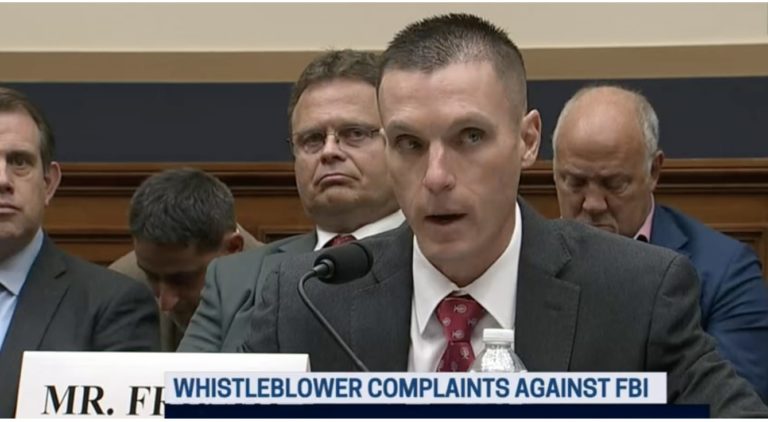
Steve Friend, a former FBI special agent who served five years on an FBI SWAT team and five years before that in local law enforcement in Georgia, made the claim about his former agency artificially inflating domestic terrorism data.

“Typically you would investigate Jan. 6 as one case with lots of subjects, but instead the decision was made to open up a separate case for every single individual there,” he said during the hearing. “And instead of, on paper, investigating them from the Washington field office, spreading and disseminating those to the field offices around the country, and if the individual lived in that area.”

“In effect,” he added. “It made it look like there was domestic terrorism cases and activities that were going on around the 56 field offices when in fact the cases were really all from Washington, D.C., and Washington had a task force that was responsible for calling the shots in all those cases.”

Friend said this is part of a trend for the federal law enforcement agency, adding that the FBI’s National Security Branch “has refocused counterterrorism from legitimate foreign actors to political opponents within our borders.”

The FBI had come under heavy fire for politicization on behalf of democratic interests in recent years. More evidence has emerged that the FBI may have played more of a role in inciting the events of Jan. 6 than previously thought.

A Government Accountability Office report released in February found the FBI and Capitol Police were aware of threats ahead of Jan. 6 but did not do enough about it. 

The FBI has also been exposed for working with social media companies to censor Americans online, most notably by urging social media companies to shut down the Hunter Biden laptop story just before the 2020 election between President Joe Biden and then-president Donald Trump.

Social media company representatives say they were told by the FBI that the story was Russian disinformation.

That story has since been verified and is not disinformation, but not before the FBI’s decisions impacted the presidential election.

These and other concerns have put the federal law enforcement agency under serious scrutiny, in particular from Republican lawmakers like U.S. Rep. Jim Jordan, R-Ohio, who chaired Thursday’s committee hearing and called the FBI “an agency focused on politics.”

The FBI did not immediately respond to a request for comment. 

Casey Harper is a Senior Reporter for the Washington, D.C. Bureau. He previously worked for The Daily Caller, The Hill, and Sinclair Broadcast Group. A graduate of Hillsdale College, Casey’s work has also appeared in Fox News, Fox Business, and USA Today.

Photo: Whistleblower Steve Friend, a former FBI special agent who served five years on an FBI SWAT team and five years before that in local law enforcement in Georgia, testifies before a U.S. House committee about the agency’s political approach to criminal investigations across the country. Courtesy: CSPAN

Baggage thief, Anchorage adviser Sam Brinton arrested again — as fugitive of justice

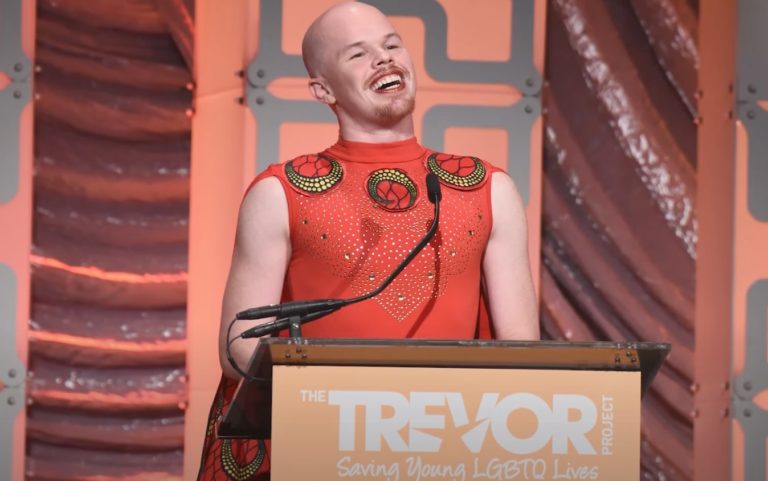
Sam Brinton, a former spent nuclear waste disposal official in the Biden administration, was arrested at his residence on Wednesday by the Montgomery County Police Department in Maryland.

The arrest comes following a duo of theft incidents involving stolen luggage at airports, which led to Brinton’s termination from his position in the Biden Energy Department last year.

Police have charged him with being a fugitive from justice, and he has been held until an extradition hearing, as part of an ongoing investigation by the Metropolitan Washington Airports Authority Police.

This arrest seems to relate to new charges related to airport thefts. “Metropolitan Washington Airports Authority Police executed a search warrant May 17 in Montgomery County, Maryland, in connection with allegations of stolen property in luggage from Reagan National Airport that was brought to the department’s attention in February 2023,” the department wrote in a statement to media.

Brinton’s troubles began last year. Brinton, who understands himself as a nonbinary or gender-fluid person (neither male nor female), was initially charged with grand larceny in December, following an incident that occurred on July 6, 2022, at Harry Reid International Airport in Las Vegas. Brinton was accused of stealing a suitcase with a combined value of $3,670. The stolen bag contained jewelry worth $1,700, clothing valued at $850, and makeup worth $500.

Brinton pleaded “no contest,” waiving his right to a trial. The Clark County Judge Ann Zimmerman ordered him to pay $3,670.74 in restitution to the victim and an additional $500 in fees, including a criminal fine. Judge Zimmerman also handed Brinton a 180-day suspended sentence with the condition to “stay out of trouble.”

Brinton was also accused of stealing another designer suitcase from the Minneapolis-St. Paul Airport, in a separate

In addition to his involvement in the theft cases, Brinton has drawn attention for his various professional and activist endeavors. That’s where his ties to Alaska come in.

He founded the Trevor Project, an organization focused on supporting gender-confused youth and combating “conversion therapy,” which seeks to discourage alternate gender identities. Anchorage passed an ordinance banning conversion therapy, a move that has faced legal challenges in other jurisdictions due to concerns over free speech rights of therapists. The Trevor Project was involved in secretly advising Assembly members on the ordinance.

Brinton’s name showed up in subject lines of emails between Anchorage Assembly members Austin Quinn-Davidson, Felix Rivera, and Chris Constant, members of the Trevor Project Team and Assembly Attorney Dean Gates. The actual content of the emails were illegally redacted by the Assembly’s attorney, citing deliberative process and personal information.

Brinton has a diverse background outside his professional career. He is known as a drag queen, queer activist, and sado-masochism instructor, providing coaching on various sexual proclivities, including bondage and role-playing involving individuals dressed as animals.

Prior to his dismissal, Brinton served as the head of the nuclear waste disposal division at the Energy Department.

Downing: Pork barrel trip for Jill Biden, Deb Haaland, was rescue mission for Mary Peltola

By SUZANNE DOWNING

All went smoothly for First Lady Jill Biden and Secretary of the Interior Deb Haaland as they traveled from Washington, D.C. to Bethel, a town with a population of 6,200, for a brief rally in a gymnasium filled with school children and their parents.

Bethel is the hometown of Rep. Mary Peltola, and the love was expected to flow, despite the chilly weather in mid-May, with temperatures in the mid-30s.

Their purpose for the trip was purely political, aimed at rescuing Peltola in 2024, but it came at a high cost for American taxpayers who foot the bill for such presidential junkets. 

The jet carrying the First Lady consumes at least 70,000 gallons of fuel for a 20-hour round trip from the center of American politics to the frontier.

However, the focus of Wednesday’s trip was not on climate change or the carbon footprint of the First Lady. The media overlooked the irony of the Biden Administration burning through fossil fuels to travel to a place where Biden has been attempting to shut down the oil industry.

U.S. Sen. Dan Sullivan, who didn’t attend the event, recognized the irony. In a statement, he reminded Alaskans of the “48 executive orders and actions singularly targeting Alaska under the Biden administration, many of which were implemented without any consultation with Alaskans.”

The Biden-Haaland trip was ostensibly to showcase the federal investment in broadband infrastructure in rural Alaska.

Let’s examine that claim.

The infrastructure bill aims to bring broadband to a small number of households and businesses scattered across a vast wilderness. However, it will take many years before fiber can be laid over the rivers and through the woods to reach the remote outposts on the list.

The reality is that Elon Musk’s Starlink network, as well as One Web, and Pacific Dataport’s Aurora satellite networks have already made significant progress in bridging the connectivity gap in rural Alaska. These projects, driven by the free market, have succeeded despite the subsidies received by their fiber-based competitors, who rely on taxpayer funding.

The Aurora GEO satellite, specifically designed for rural Alaska, was launched last month from Cape Canaveral and is currently in beta testing. It will be operational within 60 days.

The fiber optic initiative has other drawbacks. In addition to a severe shortage of fiber optic cable, the United States also lacks a sufficient number of qualified technicians to meet the current demand in the Lower 48 states. 

When the $42.5 billion federal investment in broadband is implemented, the cost of materials and labor will skyrocket due to increased competition and limited supply. Finding crews willing to travel to remote Alaska villages to install networks will become a challenge when lucrative opportunities are available closer to home.

As an example of the sketchy return on investment, last year the Department of Agriculture gave a grant to Alaska Telephone Co. for $33 million to expand fiber to about 90 households between Klukwan, Haines, and Skagway. That means taxpayers of America spent over $358,000 per household for this project that serves 211 people and five businesses. 

But wait, there’s even more: Last year, the Tanana Chiefs Conference was awarded $30.3 million to serve fiber to 75 households in four tiny villages: Alatna, population 30; Allakaket, population 181; Hughes, population 85; and Huslia, population 306. The total cost per household is estimated to be $404,000.

There are dozens of these grants made in Alaska by USDA, and they total in the hundreds of millions.

In this latest grant, the Bethel Native Corporation will get $100 million from the infrastructure package, “because you know what your communities need,” Jill Biden told the auditorium, apparently oblivious to the long wait time that is all-but guaranteed for completion and the current satellite service.

Not lost on us was that there was a giveaway of iPhones, iPads, and iPods every 15 minutes during the warmup for the rally. That, too, was from federal funds.

Dr. Biden was using a pork project to campaign for congressional incumbent, Rep. Peltola in Peltola’s own hometown, where she will get nearly every vote in 2024. What a waste of money.

Peltola has been identified as one of the top “saves” for the Democratic Congressional Campaign Committee and the Democratic National Committee. 

Alaska’s first-term congresswoman is also listed as a top target of the National Republican Congressional Committee, as she is out of step with much of Alaska. After all, even with all his flaws, Donald Trump still won the state by over 10% in 2020, and Republican Gov. Mike Dunleavy handily won reelection in 2022. Biden will not win Alaska in 2024. He has more to worry about than the state’s three electoral votes.

Peltola, who rushed to endorse Joe Biden, has now played the Biden card and there’s no more squeeze out of that lemon. The question for the Democrats is: How much more will it cost them to save Peltola in 2024?

Suzanne Downing is publisher of Must Read Alaska.

Senate tactic fails to deliver budget, and special session starts Thursday

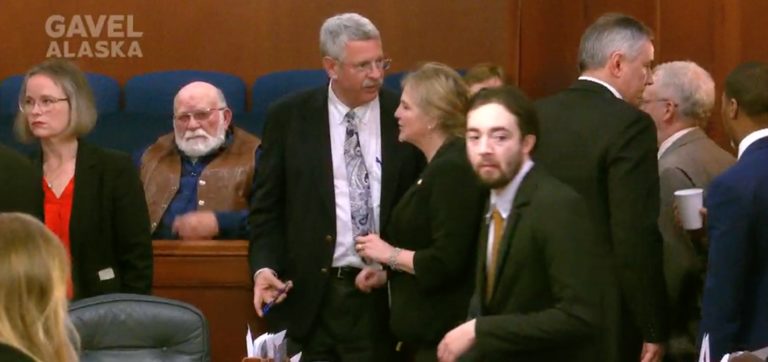
In a tense and last-minute turn of events, the Alaska House of Representatives adjourned abruptly on Wednesday at 9:15 pm without voting on the state budget. A special session will begin Thursday at 10 am, as called by Gov. Mike Dunleavy.

The Alaska Senate had waited until the last possible minute to pass the spending proposal, prompting a race against the clock for the House to respond. The vote to adjourn was 22-18, with all Republicans voting together except for Rep. David Eastman, and Rep. Jesse Sumner, who voted with the Democrat minority.

The Senate’s budget plan was presented to the House late Wednesday, creating a demanding deadline that had less than six hours for the House to accept the proposal without any alterations.

The House, after spending most of the day in caucus, began its floor session two hours after the Senate’s budget approval at 6 pm, which left representatives with limited options to negotiate. As the House convened at 8 pm, and with a constitutional requirement to adjourn at midnight, it became apparent that an agreement was unlikely.

While the Senate had adjourned for the year, some senators, including Sen. Forrest Dunbar, took their seats in the gallery of the House to observe the unfolding situation. Dunbar arrived in a flannel shirt and stroked his day-old beard as he watched the House in action from a slouched position.

During the final moments on the Senate floor earlier in the evening, a few amendments had been introduced. The crucial question remained: had enough changes been made to appease House members fighting for a larger Permanent Fund dividend?

In the midst of this political standoff, the Democratic House minority appeared ready to accept the Senate take-it-or-leave-it scenario. However, the spending plan for the upcoming fiscal year, commencing on July 1, would have required at least five Republican defections to secure approval.

The Senate budget includes a $1,300 PFD payment per qualifying Alaskan, while the House’s plan offered a $2,700 dividend. The House’s proposal would have meant an $800 million draw from the Constitutional Budget Reserve.

One notable change made to the Senate’s budget depends on the price of oil. If the price exceeds $73 per barrel, Alaskans would receive a bonus on their Permanent Fund dividend.

This story will be updated with information once Gov. Mike Dunleavy makes a decision about convening a special session.

Jet-setting Jill heads to Bethel, as President Biden refuels in Anchorage on way to Japan

A Temporary Flight Restriction called for the Anchorage airspace by the Federal Aviation Administration on Wednesday was violated at least three times by small-plane pilots, Must Read Alaska learned.

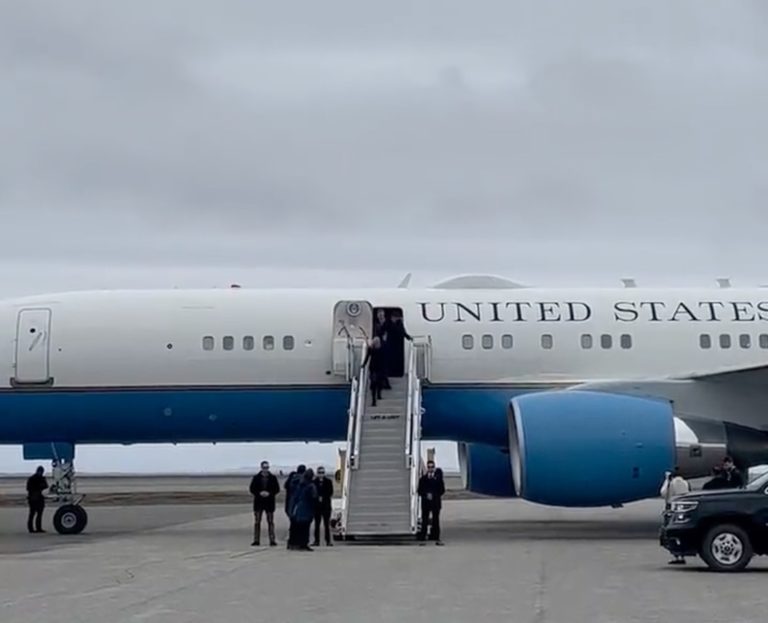
Fighter jets were scrambled to check on at least one of the errant pilots, as Air Force Two landed at Joint Base Elmendorf-Richardson, before First Lady Jill Biden continued on to Bethel for what has all the looks of a campaign stop that was thinly disguised as a rally for broadband for rural Alaska, part of infrastructure spending.

Also, separately, President Joe Biden’s Air Force One stopped in Anchorage on its way to Japan, where he was scheduled for a G-7 Summit meeting, which he has ended up cutting short. Onboard with him were Secretary of State Antony Blinken, National Security Adviser Jake Sullivan and Press Secretary Karine Jean-Pierre. The president’s jet landed at about 2:24 pm at JBER, refueled, and was gone by 4 pm. Although he will meet with leaders in Japan, he will not complete the second part of his trip, which included Australia and Papua New Guinea.

Jill Biden traveled on a Boeing C-32A, similar to a Boeing 757; later Wednesday, the First Lady disembarked in Bethel in chilly mid-30s weather with a brisk wind. At the school gymnasium, a sign welcomed her and much of the community had turned out to do the same, as she appeared with Rep. Mary Peltola and Interior Sec. Deb Haaland.

Sen. Dan Sullivan issued a statement regarding the visit:

“While I’m pleased to see Biden administration officials visiting Bethel and our rural communities to promote federal broadband investments authorized by Congress, I hope the First Lady and Secretary Haaland take the time to listen to Alaskans who have been harmed by the Biden administration’s policies,” Senator Sullivan said. “Unfortunately, that was not the case the last time Secretary Haaland visited Alaska and met with residents in King Cove as well as with Alaska Native Vietnam Veterans. Following that trip, Secretary Haaland not only further delayed and complicated land allotments that Alaska Native Vietnam Veterans were promised under the law, but also proceeded to reverse course on a land exchange that would have provided King Cove residents life-saving medical care access.

“In total, there have been 48 executive orders and actions singularly targeting Alaska under the Biden administration. Many of these were done without any consultation from Alaskans. The Biden administration needs to do better and listen to the people of Alaska,” Sullivan said.

The last time Jill Biden was in Alaska was for a refueling stop in 2021 on the way to the Tokyo Olympics. This is the first visit to Bethel by a wife of a sitting president.

Lt. Gov. Dahlstrom hires new chief of staff: Kelly Howell

Alaska Lt. Gov. Nancy Dahlstrom announced the appointment of Kelly Howell as her new chief of staff, replacing Josh Applebee, who previously served as the chief of staff to former Lt. Gov. Kevin Meyer and for the past six months in that position of Dahlstrom.

Howell, who had been serving as Dahlstrom’s Special Assistant since January 2023, brings state government experience and a deep understanding of government operations, the press announcement said.

“I have had the privilege of getting to know and work with Kelly over the years. She has served the state in a variety of roles, and I have confidence in her ability to manage the day-to-day operations of our office while simultaneously advancing the Administration’s policy goals,” Dahlstrom said.

A lifelong Alaskan, Kelly Howell was born in Fairbanks and raised in Fairbanks, Nome, and Anchorage. With a career spanning over two decades in public service, she embarked on her government service with the Department of Health and Social Services in 1996. Howell joined the Department of Public Safety, where she held various positions, including Administrative Services director and legislative liaison/special assistant to the commissioner.

Howell is a graduate of East Anchorage High School. She holds a bachelor’s degree in Justice and Psychology from the University of Alaska, Anchorage.

Muni loses another department director: Maintenance & Operations

The director of Anchorage’s Maintenance and Operations Department has tendered his resignation, Must Read Alaska learned on Wednesday.

Saxton Shearer has served as the department head since July of 2021. He has been with the municipality since 2020.

“I have enjoyed my time as M&O Director and thank Mayor Bronson for his confidence in me,” Shearer said. “I have been afforded an opportunity in the private sector that will allow me to continue pursuing my passion for project management that I could not pass up. I will miss the incredible staff at M&O and am confident in their ability to continue serving the people of Anchorage.”

“Saxton has been a steady and tremendous asset to our team. His work on the Hiland Avalanche stands out as a highlight during his time with us. I wish him nothing but the best in his career going forward,” Bronson said.

A number of department heads have seen turnovers during Mayor Dave Bronson’s time in office. It started in August of 2022, when the director of the Health Department, Joe Gerace, was forced to resign after his professional resume didn’t add up.

In February, the city’s Human Resources director, Niki Tshibaka, resigned.

Bronson accepted the resignation of Solid Waste Services Director Dan Zipay in April.

Chief Fiscal Officer Grant Yutrzenka submitted his resignation last week.

Deputy Chief of Staff Brice Wilbanks resigned in January.

Amy Demboski was fired as city manager in December.

Adam Trombley resigned as chief of staff in April. Sami Graham had served in the position, but had resigned early on.

City Attorney Patrick Bergt resigned last year, and Blair Christianson, appointed to fill his position interim, followed in January.

Just last week, the library deputy director Judy Eledge resigned after being hounded by the media for her political views.

Dunleavy joins 23 governors responding to Texas’ call for help

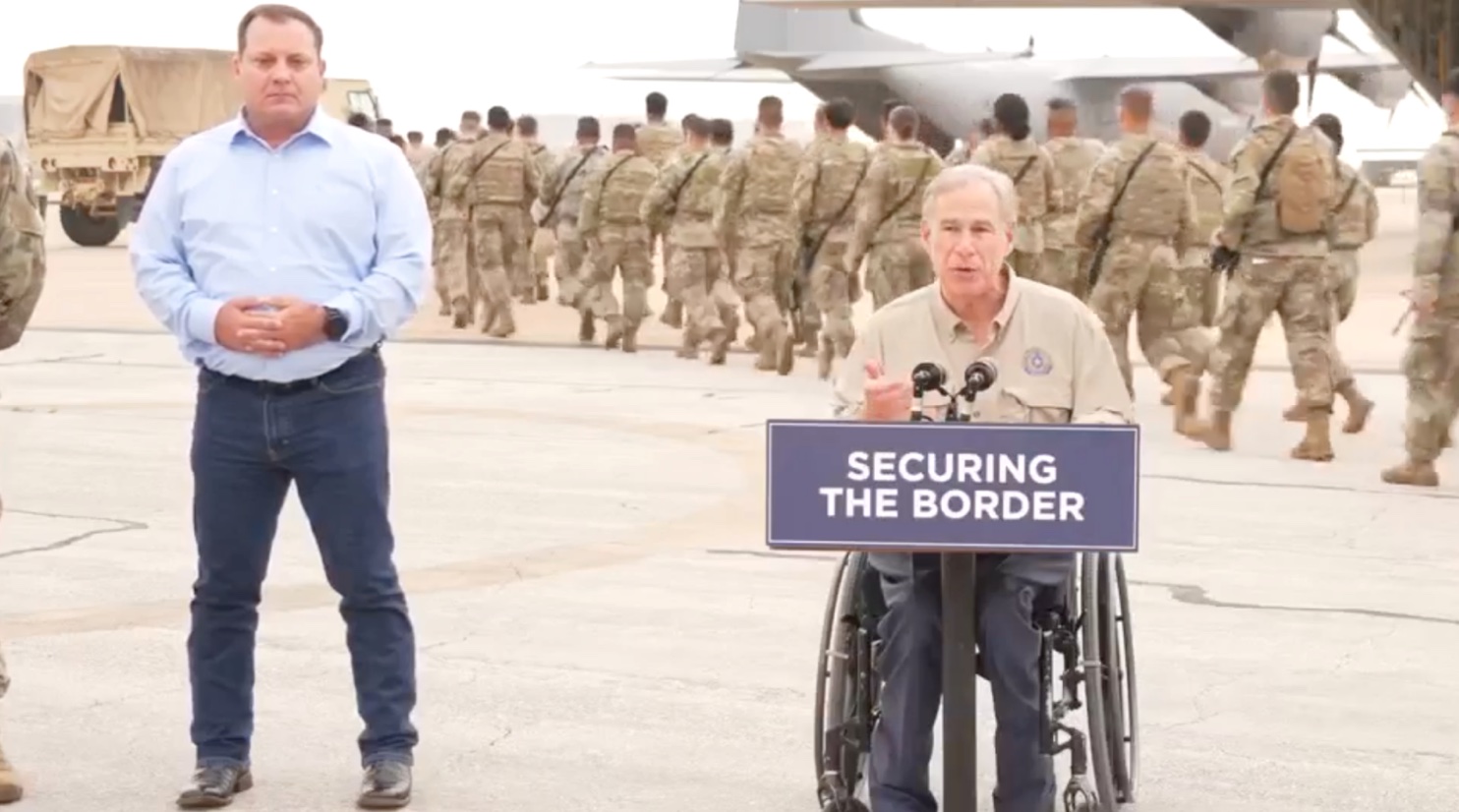
Alaska Gov. Mike Dunleavy joined 23 other Republican governors in responding to Texas Gov. Greg Abbott’s call for assistance to secure the Texas border with Mexico.

The governors’ joint statement comes in response to last week’s expiration of Title 42, a public health authority that allowed swift deportation of those who entered the United States illegally during the Covid-19 pandemic.

“The federal government’s response handling the expiration of Title 42 has represented a complete failure of the Biden Administration,” the governors said in a statement.

“While the federal government has abdicated its duties, Republican governors stand ready to protect the U.S.-Mexico border and keep families safe,” the GOP governors said.

“All states have suffered from the effects of deadly illegal drugs coming across the border, and every state is a border state due to the devastating influx of drugs in our communities. Republican governors are leading the way to address the border crisis by increasing fentanyl sentencing and increasing support for law enforcement interdiction of drugs, among other measures.

“Texas Governor Greg Abbott has exemplified leadership at a critical time, leading the way with Operation Lone Star, and deploying the Texas Tactical Border Force to prevent illegal crossings and keep the border secure. We support the efforts to secure the border led by Governor Abbott.”

No Democratic governors responded to Gov. Abbott’s May 16 request for assistance and Democratic governors of neighboring border states of New Mexico, Arizona, and California have not made similar appeals as Gov. Abbott.

Abbott, in his letter requesting assistance, highlighted the gravity of the situation, emphasizing that the consequences of the border crisis extend beyond Texas: “The flood of illegal border activity invited by the Biden Administration flows directly across the southern border into Texas communities, but this crisis does not stop in our state.”

Mexican drug cartels and transnational criminal enterprises are exploiting the chaos to smuggle drugs like fentanyl and facilitate criminal activities nationwide, Abbott said.

Biden policies pose the most significant national security threat since 9/11, the Republican governors said, adding that at least 125 known or suspected terrorists have been apprehended while illegally crossing the southern border during this fiscal year.

Florida Gov. Ron DeSantis has pledged specific support to Texas:

  • 101 Florida Highway Patrol Troopers
  • 200 Florida Department of Law Enforcement Officers, in teams of 40
  • 20 Florida Fish and Wildlife Conservation Commission Officers
  • 800 Florida National Guard Soldiers
  • 20 Emergency Management Personnel – including radio technicians, logisticians, mechanics and planners
  • Five available fixed wing aircraft with monitoring equipment and downlink capabilities with two aviation crew teams
  • Two Mobile Command Vehicles and two command teams
  • 17 available unmanned aerial vehicles (drones) and support teams
  • 10 vessels – including airboats, shallow draft vessels, and mid-range vessels

Since Biden assumed office, more than 7 million people crossing the southern border have been apprehended or were reported to have evaded capture by law enforcement.

In response, the Biden Administration recently dispatched 1,500 military troops and thousands of federal employees from the Department of Homeland Security to expedite the processing of foreign nationals into the United States.

The Administration has emphasized that the intent is not to block entry but to facilitate the entry process.