Tuesday, August 18, 2026
Home Blog Page 652

Senate effort grows to declassify agency info on alien life forms

A group of bipartisan senators introduced an amendment to the National Defense Authorization Act last week, aiming to force government disclosure of unidentified anomalous phenomena records, which includes alien life forms and unidentified flying objects.

The proposed legislation, titled the “Unidentified Anomalous Phenomena Disclosure Act of 2023,” seeks to preserve and centralize all federal government records related to unidentified anomalous phenomena, ultimately enabling public access to comprehensive information on the subject.

Led by Sen. Chuck Schumer, the amendment has support from Sen. Mike Rounds (R-S.D.), Sen. Marco Rubio (R-Fla.), Sen. Kirsten Gillibrand, (D-N.Y.), Sen. Todd Young (R-Ind.), and Sen. Martin Heinrich (D-N.M.).

The amendment is a step toward increasing transparency and accountability surrounding unidentified anomalous phenomena, also commonly referred to as unidentified flying objects (UFOs) or unidentified aerial phenomena (UAPs).

Sen. Rubio has made this a priority for years. In 2021, when he was vice chairman of the Senate Select Committee on Intelligence, he spearheaded a similar measure with Sen. Gillibrand and Rep. Ruben Gallego, (D-Ariz.)

“UAPs pose a significant challenge to our national security, appearing in sensitive U.S. airspace and around military personnel. The amendment would establish an office that would replace the current Unidentified Aerial Phenomena Task Force and would have access to Department of Defense (DoD) and Intelligence Community data related to UAPs,” Rubio’s office said in 2021. “By doing so, the office will have the authority to establish a coordinated effort to report and respond to UAPs, significantly improve data-sharing between agencies on UAP sightings, address national security concerns, and report health effects people may experience in relation to UAP events.

The revived proposed amendment now has Senate Majority Leader Chuck Schumer as the key sponsor, as Rubio is in the Republican minority. Having the leader in the Senate as the key sponsor bodes well for the amendment.

It begins by emphasizing the importance of preserving and centralizing all federal government records related to unidentified anomalous phenomena. These records should carry a presumption of immediate disclosure and eventually be made available to the public to ensure a comprehensive understanding of the government’s knowledge and involvement in such phenomena.

The amendment highlights the necessity for legislation to create an enforceable, independent, and accountable process for the public disclosure of UAP records.Existing provisions, such as the Freedom of Information Act, have proven inadequate in achieving timely disclosure of records.

The legislation acknowledges the existence of unidentified anomalous phenomena records that have not been declassified or subjected to mandatory declassification review due to exemptions under existing provisions of law. It emphasizes the need to restore proper oversight over these records by elected officials in both the executive and legislative branches of the federal government.

Among the key provisions of the proposed legislation is the establishment of the Unidentified Anomalous Phenomena Records Collection at the National Archives and Records Administration. This collection would serve as a centralized repository for all records related to unidentified anomalous phenomena.

The amendment also calls for creation of an Unidentified Anomalous Phenomena Records Review Board. This board would be responsible for overseeing the collection, review, and release of the records, working in collaboration with relevant government offices and agencies.

Proponents like Rubio argue that increased transparency surrounding unidentified anomalous phenomena is essential for scientific research, national security, and public interest. Critics may express concerns about potential national security implications and the credibility of unidentified phenomena reports.

The introduction of the “Unidentified Anomalous Phenomena Disclosure Act of 2023” underscores the growing interest and recognition of unidentified aerial phenomena and the need for a comprehensive approach to studying and disclosing these phenomena, especially after the U.S. military shot down an unidentified flying object over the Arctic Ocean, and has yet to describe what it was or provide the public with any photographic evidence of the object.

The 64-page amendment to the National Defense Authorization Act is at this link.
Federal government now borrows $5.1 billion per day

By CASEY HARPER | THE CENTER SQUARE

Budget groups continue to release dire forecasts for the explosive growth of the U.S. national debt.

The U.S. Treasury reported a $1.4 trillion deficit so far nine months into fiscal year 2023.

“Three-quarters into the fiscal year and we’re borrowing an astounding $5.1 billion per day,” said Maya MacGuineas, president of the Committee for a Responsible Federal Budget. “If that isn’t a sign that we need a wake-up call, maybe it should be the fact that the deficit for this fiscal year is now larger than all of last year’s deficit – and there’s still three months to go.

The U.S. Congressional Budget Office released a report earlier this year projecting the national debt will be nearly twice as large as the U.S. economy in 30 years.

“By the end of 2023, federal debt held by the public equals 98 percent of GDP,” the report said. “Debt then rises in relation to GDP: It surpasses its historical high in 2029, when it reaches 107 percent of GDP, and climbs to 181 percent of GDP by 2053.”

CBO also reports that deficits will likely rise as well.

“In CBO’s projections, the deficit equals 5.8 percent of gross domestic product (GDP) in 2023, declines to 5.0 percent by 2027, and then grows in every year, reaching 10.0 percent of GDP in 2053,” the report said. “Over the past century, that level has been exceeded only during World War II and the coronavirus pandemic.”

As The Center Square previously reported, the cost of interest payments on the national debt will exceed the cost of U.S. funding for national defense within a decade.

In fact, federal spending trends show interest payments on the national debt will soon be the largest expense of the federal government.

The CRFB said in a report released last week that “by 2051, spending on interest will be the single largest line item in the federal budget, surpassing Social Security, Medicare, Medicaid, and all other mandatory and discretionary spending programs.”

Lawmakers have raised concerns about this issue but a dramatic cut in spending to pay down the debt is far from getting traction.

“The federal government borrowed $2 trillion over the past 12 months. That’s $63,000 per second,” said Rep. David Schweikert, R-Ariz. “It’s delusional to think our debt doesn’t matter when America’s working class suffers the consequences.”

MacGuineas also said that the trust funds for Medicare, Social Security and highways “will face insolvency” within a decade.

“With unsustainable borrowing, rising interest costs, and looming insolvency of the trust funds that support some of our nation’s most valued programs, the outlook for our fiscal health has been in decline for far too long,” she said. “We need to turn the tide and work towards further reducing deficits and putting the national debt on a downward, sustainable course.”

Video: Earthquake, 7.2, at Sand Point puts area on alert for tsunami

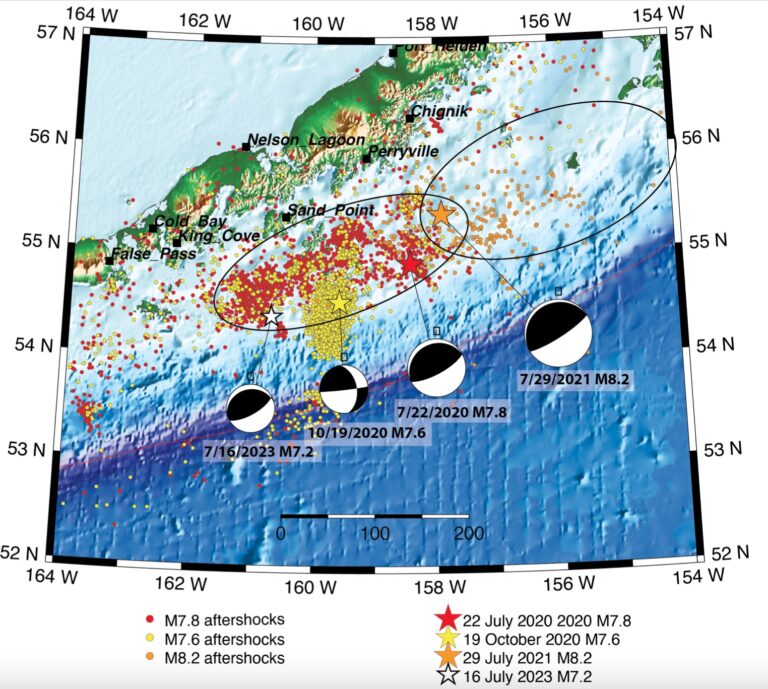
In a region accustomed to seismic activity, a magnitude 7.2 earthquake rocked the offshore Alaska Peninsula on July 15 at 10:48 p.m. Alaska time.

The earthquake occurred three years to the month after the magnitude 7.8 Simeonof Earthquake that struck the same area.

The epicenter of the 7.2 earthquake was 50 miles south of Sand Point, approximately 100 miles southeast of the 7.8 event in 2020, and at a depth of around 20 miles.

Shortly after the earthquake struck, a tsunami warning was issued as a precautionary measure on Saturday night. It was downgraded the warning to an advisory level about an hour later, and ultimately canceled it just before 1 a.m. The recorded tsunami waves reached a maximum height of only 0.5 feet in King Cove and Sand Point, posing no significant threat to coastal communities.

The ground shaking resulting from the earthquake was felt across multiple communities on the Alaska Peninsula and the eastern Aleutian Islands, with an intensity reaching level V, considered moderate on the Modified Mercalli Intensity Scale.

The Alaska Earthquake Center anticipates the earthquake will generate its own aftershock sequence, following the pattern of previous moderate-sized earthquakes in the region. As of now, the largest aftershock, measuring a magnitude 5.0, occurred three minutes after the main shock.

Anchorage police chief says APD and Assembly relationship is strained

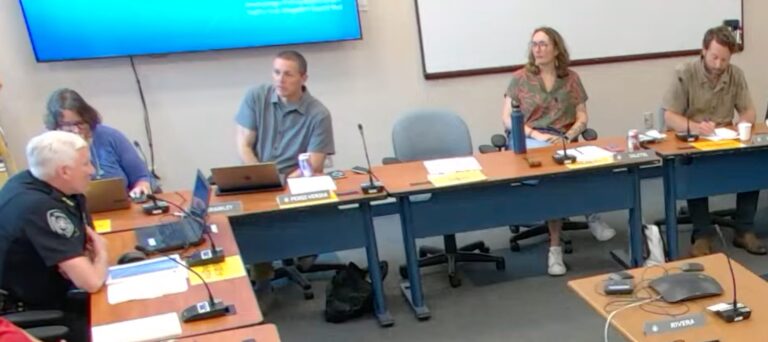
At the beginning of an Anchorage Assembly work session Friday on the proposed repeal of the “scofflaw” ordinance, Anchorage Police Chief Michael Kerle took a moment to express what many in the community have already seen:

“It is my opinion and the opinion of others in the police department that the Assembly and the Police Department have a very adversarial relationship right now,” he said.

Kerle said he had lost sleep the night before in anticipation of the meeting with the Assembly.

“It’s been confusing to me,” Kerle added. “I don’t understand why. I’m not a political figure, my department is not a political department. We have the same goals as the Assembly. I mean my two goals are the safety of the citizens of Anchorage and the safety of my department, those are my main goals.”

The Assembly, under the radical leadership of the past 18 months, has grown increasingly hostile to the police in general. The Assembly was not hostile when Ken McCoy was police chief of Anchorage, but then he was one of them — a hardline political operative who dressed left.

Kerle, a U.S. Marine veteran, has been with the department since joining APD as a recruit in the Academy in 1996. He became chief on Feb. 1, 2022.

“I look at the experience of my command staff alone … over 110 years of police experience. You might say we’re experts. We’ve been trained by the F.B.I., and every other other federal agency, the Southern Police Institute [Louisville, KY], which is a police training facility, Northwestern University,” he said, and added more.

“We know the law, we’re use-of-force experts, traffic experts, we go to a lot of training. We are the public safety experts,” Kerle said.

He reminded the Assembly that the police force also has very diverse backgrounds, and that while he had 11 years as a military commissioned officer, others have worked in the past as managers at Sears and Carrs, or were former police officers with other agencies.

“It seems as of late that we’ve been left out of a lot of the initial – and this is one of them — a lot of the initial drafting of these ordinances or changes that are proposed,” Kerle said.

In the case of the repeal of the scofflaw ordinance, it’s being offered by hard-left Assemblyman Felix Rivera, who is demonstrably more interested in gay and Black Lives Matter issues than actual community safety.

Kerl said that the Assembly members’ minds are already made up by the time he or his department has a chance to comment on the proposals that affect public safety.

When Public Safety is not involved, and then minds are made up, it’s hard for the department to have any reasonable input, he said.

Assemblywoman Meg Zaletel, who was chairing the meeting, moved into a defensive vocal fry as she responded, saying that maybe the Assembly would “look into greater collaboration.”

A vocal fry is a growl at the end of sentences that some younger women use to try to sound more authoritative.

Read: Vocal fry is about power, status, gender

The current scofflaw program in Anchorage allows police to impound a vehicle owned by someone with at least $1,000 in delinquent traffic fines.

At the June 6 Assembly meeting, Rivera introduced an ordinance to fully repeal what he calls the “regressive Scofflaw program. This program serves no true public safety purpose and is an effective tax on poverty.”

Read the draft ordinance at this link.

The work session, including Chief Kerle’s remarks, can be watched on YouTube at this link:

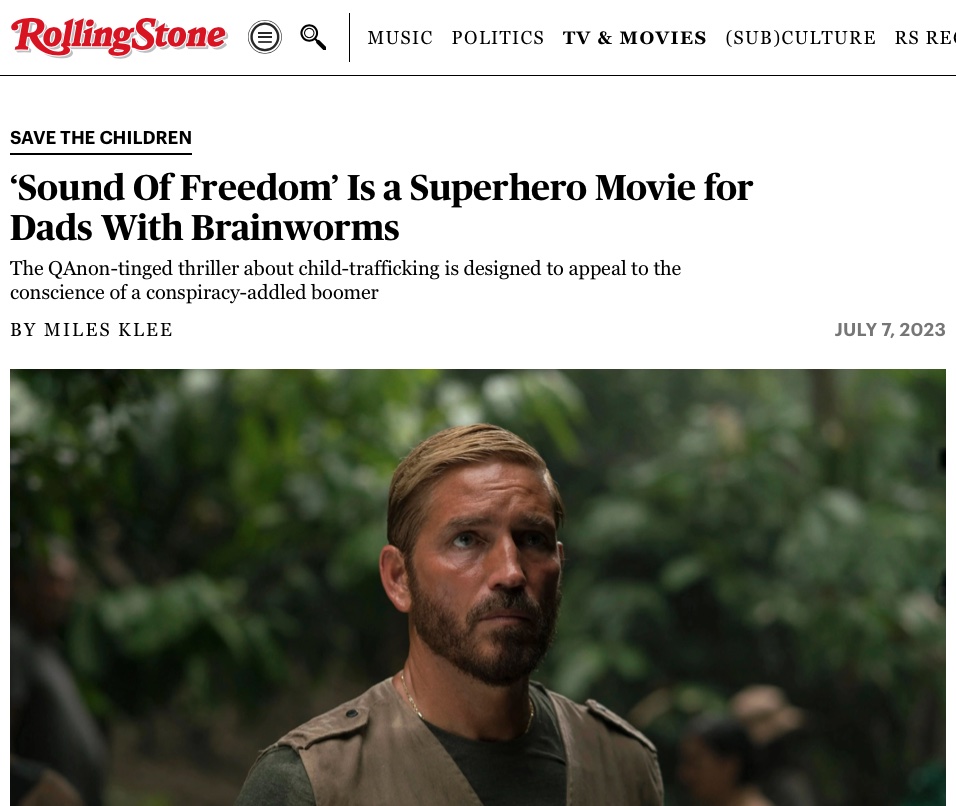
Liberals and media bash ‘Sound of Freedom’ as a QAnon-driven theory about cabal of global child traffickers

As the documentary movie “Sound of Freedom” turned out to be the surprise box-office hit of the summer, liberals and the media that represent them are calling child trafficking, as represented by the film, a “QAnon-worthy theory.”

Even the Anchorage Daily News had to sideswipe the movie as a “faith-based child trafficking film,” instead of saying it is a film exposing crimes against children.

The ADN also gave a stink-eye to Attorney General Treg Taylor for offering to buy tickets for anyone on his staff to see the film. Instead of pursuing the success of the film, the newspaper focused on insinuating that Taylor made an ethical blunder.

The blunder? The state’s top law officer offering movie tickets for his employees to see a film about …. wait for it … law and justice.

This, from a newspaper that won a Pulitzer Prize for its coverage of the difficulty of justice in rural Alaska, which it labeled “Lawless.”

Rural Alaskan Native girls are known to be targets of sex traffickers in Anchorage and the world beyond, because they can be marketed as various races to pedophiles. But the newspaper finds fault with the film because it is faith-based.

Mexican Eduardo Verástegui is the producer and Jim Caviezel plays the lead character in “Sound of Freedom,” which tells of the real-life story of Tim Ballard, a U.S. Department of Homeland Security agent who is credited with saving numerous children from traffickers who control prostitution rings that service pedophiles. Most of these children were rescued in other countries, where child trafficking is known to be lucrative. The storyline in “Sound of Freedom” involves a rescue in the jungle of Colombia.

Thousands of Alaskans have seen this non-Hollywood movie that reaped $19.7 million last weekend, according to tracking site Box Office Mojo, and has now crossed over the $50 million mark. It’s the third-most popular movie in the country currently, after “Insidious: The Red Door,” and “Indiana Jones and the Dial of Destiny.”

But many in the media have targeted the film and labeled it QAnon, a conspiracy theory dreamed up by conspiracy theorists on the Left.

The media doesn’t just say it’s a “conspiracy theory,” but decides for viewers that the film is “controversial.”

“The anti-child sex trafficking film that’s faced criticism over its QAnon ties has grossed more than $50 million at the domestic box office, Deadline reported, making it one of the top 25 highest grossing domestic films of 2023 so far,” Forbes wrote.

“The idea that elite cabals of child sex traffickers lurk everywhere is a core QAnon idea. But the company behind the film denies it’s fueling conspiratorial thinking,” wrote the BBC.

“It should be noted that the real-life Ballard has been accused of exaggerating his rescue narratives,” wrote the New York Times, quoting the aptly-named “Vice” publication.

“A partially crowdfunded religious drama has become an unlikely summer hit among moviegoers (at least, among those who can contend with its ingrained QAnon conspiracies),” wrote the culture reporter for The Daily Beast.

Why does the Left and the media hate the movie so much?

Ballard, who started Operation Underground Railroad, was an informal advisor on sex-trafficking issues to President Donald Trump in 2019. Ballard’s organization has been targeted by left-stream media, which had taken no notice of Operation Underground Railroad before, ever since Ballard advised Trump.

On Fox News, Ballard addressed the multiple instances of the media linking the film to QAnon:

I can’t explain, and neither can they. They just like to throw the word out, QAnon. They make zero connection to the actual story. It’s very difficult to make that connection when it’s actually based on a true story.”

The filmmaker Verástegui says that child trafficking is the fastest growing illegal trade in the world: “You can sell a bag of cocaine one time, but a child five to 10 times a day.”

“Sound of Freedom,” which premiered on July 4, is showing in several places in Alaska this week, including multiple showings at Cinemark Century Anchorage on 36th Avenue, Regal Totem on Muldoon Road, and Valley Cinema in Wasilla.

In Juneau, it’s playing at Glacier Cinema on Cinema Drive, in Kenai it’s still listed at the Kenai Cinema, and in Fairbanks it is on the screen at the Regal Goldstream.

Angel Studios, the production company behind “Sound of Freedom,” reports that more than 450 new theaters would screen “Sound of Freedom” starting July 14.

Kamala Harris: We must ‘reduce population’ to combat climate change

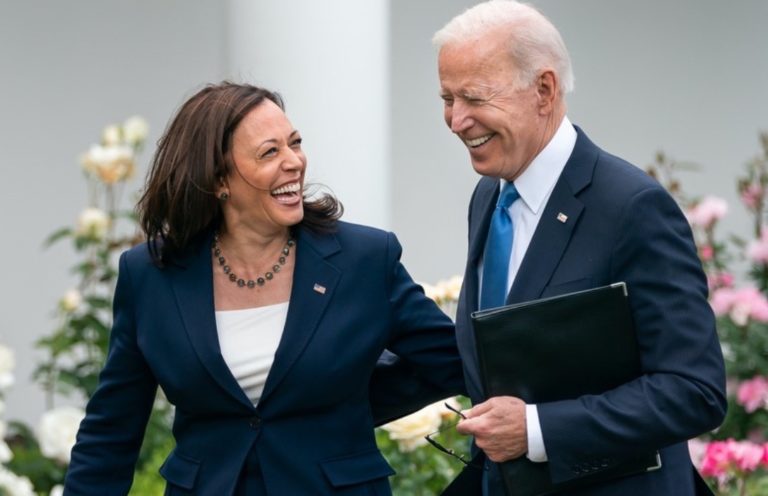
Vice President Kamala Harris on Friday said that the United States must “reduce population” to combat climate change. In a White House transcript of her speech later, the word “population” was crossed out and the word “pollution” was inserted, to show what she the vice president was supposed to say.

Harris was speaking at Coppin State University in Baltimore, Maryland on the topic of a clean energy economy. After several minutes of accolades for officials in the room, she launched into the topic.

“When we invest in clean energy and electric vehicles and reduce population, more of our children can breathe clean air and drink clean water,” Harris said. The audience applauded.

The official White House transcript says, “When we invest in clean energy and electric vehicles and reduce population [pollution], more of our children can breathe clean air and drink clean water.  (Applause.)”

Harris also blamed weather events on climate change, including wildfires in Canada, which are believed to have been started by lightning in one case, and possibly arson in another. Canada has its own methods for handling wildfires.

According to Harris, the fact that climate change leads the news cycle is proof enough:

“So, every day, all across our nation, we feel and see the impact of the climate crisis.  I mean, if you watch the morning news, it will be the lead story.  It’s been every day for the last couple of weeks.  It is the lead story.  I think we finally, at least in our progress, come to the point that most people can no longer deny it because it is so obvious,” Harris said.

“And we have seen, around our country, where communities have been choked by drought, have been washed out by floods, and decimated by hurricanes.  Here in Baltimore, you have seen your skies darkened by wildfire smoke.  And you have seen the waters of the Chesapeake Bay rise, threatening homes and businesses that have stood for generations,” she expounded.

Read the complete White House transcript of her speech here.

Alaska Native Medical Center must correct governance faults by October

Valerie Davidson, CEO of Alaska Native Medical Center, gave only a few more clues to tribal health leaders Friday than she gave to medical staff members and partners, after an unfavorable review by the federal government, which has given the medical center a bad report card.

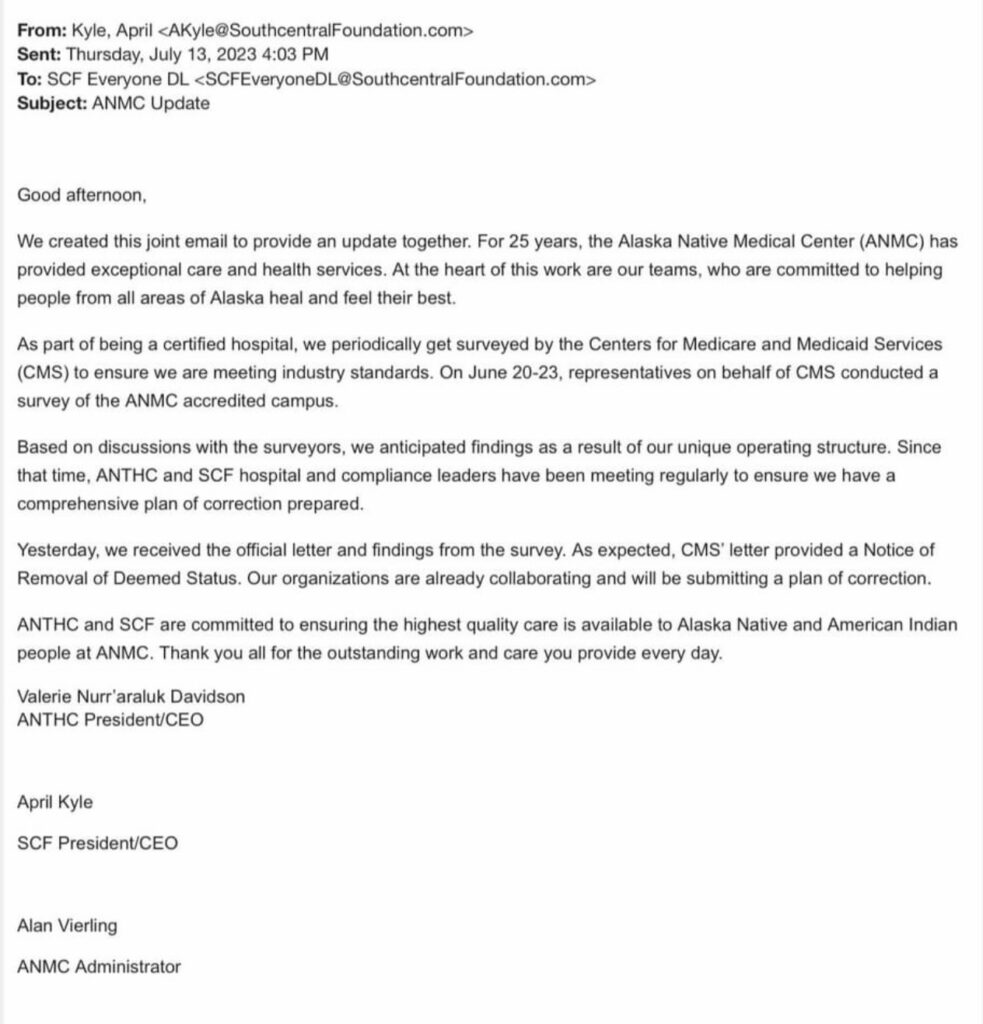
Earlier, Davidson and the CEO of Southcentral Foundation had issued a letter to stakeholders saying that the Centers for Medicare and Medicaid had revoked the “deemed status,” of the hospital after it didn’t meet government standards.

CMS can temporarily remove a health center’s “deemed status” after an inspection, if there are noncompliance or substantial other problems identified.

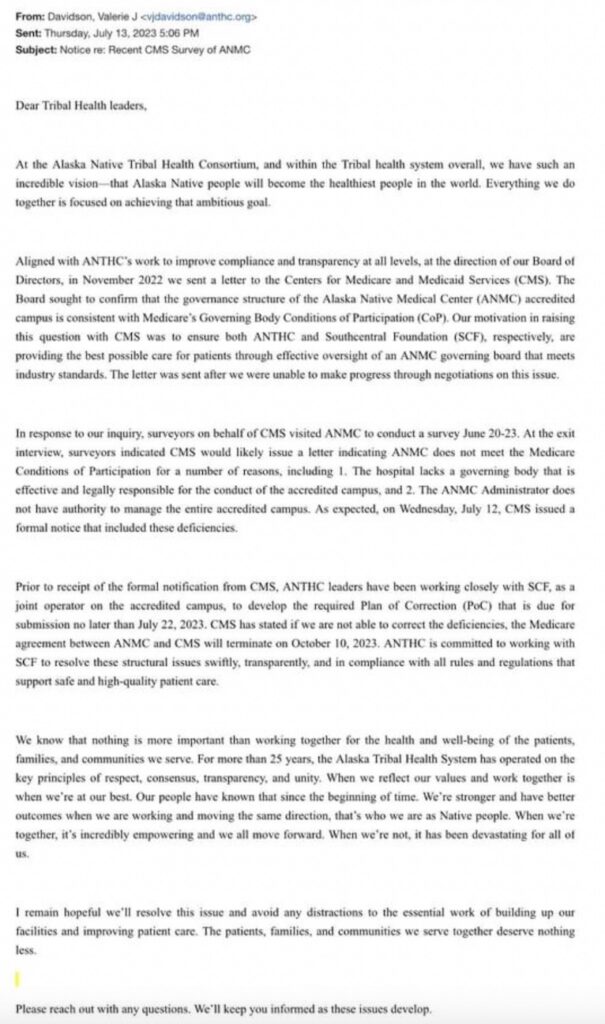
In a second letter that surfaced Friday, Davidson said that some of the problem has to do with the governance structure of ANTHC, Southcentral Foundation, and ANMC, which have a consortium relationship.

The issue surrounds the fact that ANMC does not have a governing body that is effective and legally responsible for the conduct of the accredited campus, and that the ANMC administrator does not have authority to manage the entire accredited campus, Davidson wrote. The letter was nearly as vague as the first letter.

Before ANMC was notified in writing about its status being revoked, it was told that the bad report was coming. It has until July 22 to submit a plan of correction to the Centers for Medicare and Medicaid. And then if deficiencies are not corrected by Oct. 10, the Medicare agreement that CMS has with the Native medical center will be terminated by the federal government.

“We know that nothing is more important than working together for the health and well-being of the patients, families, and communities we serve. For more than 25 years, the. Alaska Tribal Health System has operated on the key principles of respect, consensus, transparency, and unity. When we reflect our values and work together is when we’re at our best. Our people have known that since the beginning of time. We’re stronger and have better outcomes when we are working and moving the same direction, that’s who we are as Native people. When we’re together, it’s incredibly empowering and we all move forward. When we’re not, it has been devastating for all of us,” Davidson wrote to tribal leaders, giving few clues as to the real nature of the problem.

Peltola defensive over her vote against funding for U.S. troops

Rep. Mary Peltola played defense Friday after she cast a controversial vote against funding the U.S. military earlier in the day.

“Today I took one of the most difficult votes I’ve ever had to take. The defense bill on the floor today was not the same bipartisan bill that came out of committee. House leadership let the most extreme members of Congress load it up with amendments designed to create political attack ads while removing access to health care for millions of Americans who are employed by the Department of Defense, and their families,” Peltola said of her vote against the National Defense Appropriations Act.

On numerous occasions in her few months in office, Peltola has put herself on the record in favor of extremist measures relating to transgenders and the use of puberty blockers for children, and today she voted against very minor congressional sideboards put on the military budget to prevent taxpayers from having to pay for things like “gender changing” surgeries for members of the military.

“I will always support our brave servicemen and women. I also believe that they are equal citizens, just like the rest of us. That means they have the same rights to privacy and choice in their medical decisions that any other American should have,” Peltola said.

In fact, members of the military have very different standards and are not the same as civilians, as much as Peltola would like them to be.

“When the U.S. military is a party to cases centering on First Amendment rights to free speech, free press, and free exercise of religion, the Supreme Court generally defers to the government’s interest and discretion, permitting the military to restrict the rights of service personnel in ways it does not permit in civilian contexts, writes Elizabeth Beaumont in a paper on the differences between military freedoms and civilian freedoms.

The military justice system, for instance, would violate someone’s constitutional rights if that person was a civilian. Legal rights of service members are narrower than those of civilians.

“We shouldn’t be pitting pay raises that they deserve against the reproductive freedoms that they also deserve. That is a false choice, created for purely political reasons, and I look forward to negotiations with the Senate’s version of the bill where this issue will be discussed further. I will advocate strongly to return to the bipartisan, policy-focused bill that came out of committee, and will gladly vote for a bill that fully protects our troops and their families,” Peltola explained.

Republican candidate Nick Begich took issue with Peltola’s vote:

“Mary Peltola had an opportunity to support our national security and our military families with much deserved pay raises. She voted No. She says she chose to vote against the bill because it didn’t fit her social agenda, but national defense is about keeping America safe,” Begich said.

“Several Democrats crossed the aisle to vote for this bill. Mary wasn’t one of them. If she wanted to weigh in on these matters, she shouldn’t have missed over 30 amendment votes on the NDAA,” Begich said. “When elected, Alaska’s service members and families can count on this: I will show up for them.”

The National Republican Congressional Committee also disagreed with Peltola.

“Today extreme Democrat Mary Peltola voted against the National Defense Authorization Act, going on record to block funding for the United States military. Voting against pay raises for our troops and the safety of our country over taxpayer funded late-term abortions and woke transgender ideology is extreme and dangerous,” the NRCC said.

“Mary Peltola is following an extreme and dangerous agenda led by the fringe elements of her party that is entirely out of touch with the American people. She needs to answer for why she is willing to put our national security risk for her woke agenda,” said NRCC spokesman Ben Petersen.

Alaska Native Medical Center gets ‘deemed status’ removed by federal accrediting agency

Alaska Native Medical Center has received a notice of “removal of deemed status” by the Centers for Medicare and Medicaid Services (CMS), which found deficiencies that need to be corrected. Those deficiencies were not revealed to the public.

CMS can temporarily remove a health center’s “deemed status” after an inspection, if there are noncompliance or substantial other problems identified.

On Thursday, Valerie Davidson, president and CEO of ANTHC; April Kyle, president of South Central Foundation; and Alan Vierling, ANMC administrator, sent a letter advising their partners and stakeholders of the problem, which pertains to both the ANMC and Southcentral Foundation. The consortium will be submitting a plan of corrective action.

The way the rules work is that ANMC can remain under the jurisdiction of the state until it “either demonstrates substantial compliance or CMS terminates its Medicare participation.” It can then get its “deemed status” restored.

“While a provider or supplier is under SA [state] jurisdiction, the AO [Accrediting Organization] has no jurisdiction or authority from a Medicare perspective,” CMS explains.

A hospital that loses its Medicare deemed status may continue to accept Medicare and Medicaid patients and may also receive federal funding in all previous payment modalities. But without a corrective plan that has been accepted by regulators, its ability to receive Medicare and Medicaid reimbursements may be quite limited.

Alaska Native Medical Center serves 158,000 Alaska Natives and other Native Americans in Alaska and is a referral hospital for the Alaska Region of the Indian Health Service.