Saturday, August 15, 2026
Home Blog Page 534

Gig economy: Freelance workers sue Biden over labor rules pressuring them to be regulated as employees

Over 2,500 freelancers from various professions, including writing and truck driving, have united under the banner of Fight For Freelancers to file a lawsuit against the Biden Administration.

The lawsuit targets a new U.S. Department of Labor rule that pressures businesses into categorizing independent contractors as employees, a move that the coalition argues is antithetical to how many workers want to engage in the work force.

Wilson Freeman, an attorney with the Pacific Legal Foundation, said the new Biden rule is too vague.

“The Labor Department’s new classification rule blurs the line between independent contractors and employees. This not only confuses businesses but also poses a threat of severe civil and criminal liabilities,” Freeman stated. The rule’s vagueness, he said, leaves businesses in a state of uncertainty, with only the Department of Labor having the clear authority to determine the nature of a contracting relationship.

The Fight For Freelancers coalition lawsuit is the first to be filed agains the Biden anti-gig-economy rule. The freelance workers who filed the lawsuit in Georgia on Tuesday afternoon say the Biden rule violates the U.S. Constitution.

Kim Kavin, one of the litigants, said, ““Opposition among independent contractors to this proposed rule change has been widespread and overwhelming—just as they were with previous state and federal legislative attempts to limit the choice of self-employment since 2019. Misclassifying us as employees is not protecting us. It is attacking us and attempting to destroy our chosen careers.”

The rule is to take effect on March 11 and will impact millions of contractors in America, driving up labor costs for businesses that use contract labor, including healthcare and app-based “gig” services like Uber, Lyft, and DoorDash. It may also impact freelance writers, who have said that the Labor Department ditched a much more independent worker-friendly Trump Administration rule that was accepted by both businesses and freelancers.

That Trump-era rule said the factors used to classify workers included the degree of control that a company exercises over a worker’s daily work schedule.

The new rule includes things like how permanent the work is, the degree of skill needed, the initiative required, and if the work performed is at the core of the company’s business.

The plaintiffs are seeking a temporary injunction while the lawsuit, Warren v. U.S. Department of Labor, goes through the courts.

Supreme Court takes up fishing case: Can government force fishing boats to pay for federal onboard observers? Law crafted by Sen. Ted Stevens is in play

On Wednesday, the U.S. Supreme Court will deliberate on a legal principle related to how much authority federal agencies have when interpreting laws and making regulations.

The case involves herring fisheries in the Atlantic, but hearkens back to a bill crafted by Sen. Ted Stevens, and could impact a wide array of sectors, from healthcare to environmental regulation. It is one of the most closely watched cases of the Supreme Court’s docket this year.

In Loper Bright Enterprises, et al., Petitioners v. Gina Raimondo, Secretary of Commercethe matter involves something called the “Chevron doctrine,” named after a 1984 Supreme Court ruling in Chevron v. Natural Resources Defense Council, which set the legal test for when U.S. courts must defer to a government agency’s interpretation of a law or statute.

In Chevron, the case was about the Clean Air Act, which required states that had not yet achieved national air quality standards to establish program to regulate and permit ew or modified major stationary sources of air pollution, such as manufacturing plants. The Environmental Protection Agency had passed a regulation under the Act that allows states to treat all pollution-emitting devices in the same industrial grouping as though they were a single “bubble.” A group of litigants led by the Natural Resources Defense Council challenged the bubble provision. The U.S. Court of Appeals for the D.C. Circuit set aside the EPA regulation as inappropriate for a program enacted to improve air quality. But the Supreme Court at the time, under Justice John Paul Stevens, said the bubble regulation was a reasonable interpretation of the term “stationary source” as referred to by the Clean Air Act.

More detail at this Supreme Court link.

The Chevron doctrine outlines a two-step process for courts to assess an agency’s interpretation of statute. Courts must decide if Congress had specifically addressed the issue in question. If the answer is no, the agency’s interpretation of how it interprets the law is considered reasonable.

Over time, the Chevron doctrine has become a cornerstone of federal administrative law, and has been referred to in over 18,000 court cases. Conservatives have been highly critical of the law, which gives bureaucrats vast powers over the private sector that it regulates.

This is the first time since 2016 the high court has agreed to reconsider the doctrine. In Wednesday’s arguments, the fishing company Loper Bright Enterprises challenged a rule made by the National Marine Fisheries Service under the Magnuson-Stevens Act, a law crafted by Alaska Sen. Ted Stevens and Washington Sen. Warren Magnuson in the 1970s.

The rule promulgated under the Magnuson-Stevens Act forces the fishing industry to fund observer costs at $710 per day for data collection. This forced fee is being contested by the fishing companies that argue that the NMFS rule and data collection fee exceeds the Act’s authority.

Both the district court and the U.S. Court of Appeals for the District of Columbia Circuit upheld the agency, applying the Chevron doctrine, although applying different reasons.

In November 2022, Loper-Bright petitioned the Supreme Court to review the D.C. Circuit’s decision and reconsider the Chevron doctrine. The case was accepted in May 2023. The Supreme Court added a related case, Relentless, Inc. v. Department of Commerce, to its docket.

The fisheries are represented by former U.S. Solicitor General Paul Clement and lawyers from Cause of Action, a New Jersey public-interest firm.

Joining the case on behalf of fishing families and companies are Americans for Prosperity, The Foundation for Government Accountability, American Cornerstone Institute, Competitive Enterprise Institute and Manhattan Institute, Chamber of Commerce of the United States of America,  Buckeye Institute and National Federation of Independent Business Small Business Legal Center, Inc., the Cato Institute, and dozens of other entities, including  U.S. Senator Ted Cruz, House Speaker Mike Johnson, and 34 other members of Congress.

Environmental groups are arguing as friends of the government’s side. Environmental Defense Fund, Ocean Conservancy, Save the Sound, and others have taken up the cause to protect the Chevron doctrine.

Nenana gun burglar nabbed by Trooper lying in wait

Footprints in the snow. An Alaska State Trooper, patiently hiding nearby. In a dramatic overnight operation, Alaska State Troopers apprehended 41-year-old Ronald Campbell of Nenana, thwarting what is described as an ongoing burglary. The arrest, made in the early hours of Jan. 16, followed a covert surveillance operation by the Troopers.

It started around 8:05 pm on Jan. 15, when the Troopers were alerted by a homeowner, currently out of town for work, about suspicious activity at his residence. The homeowner had been informed by a neighbor in Nenana about Campbell’s suspicious retreat from the out-of-town man’s residence.

Recognizing the recent surge in thefts and burglaries in the area, the Troopers responded discreetly. On arrival, fresh footprints in the snow led them from the homeowner’s house to an open kitchen window, signaling a break-in. Inside the house, the Trooper discovered a breached gun cabinet with two handguns and ammunition missing, though several long guns remained.

Anticipating the burglar’s return for the remaining firearms, the Trooper secured permission to stay overnight in the house. This strategic decision paid off when Campbell re-entered the home through the kitchen window at around 3:30 am, only to be arrested on the spot. He was found in possession of two axes, a large knife, a backpack with tools, and a drill with drill bits.

Further investigation led the Trooper to backtrack Campbell’s footprints across town to his residence. A search warrant executed at Campbell’s home revealed both stolen handguns, the ammunition, additional weapons including shotguns, rifles, and prohibited items like a sawed-off shotgun and a homemade suppressor. Campbell, a multiple felon, is prohibited from possessing certain firearms, including handguns.

Campbell was remanded to Fairbanks Correctional Center on multiple charges, including Burglary 1st Degree, two counts of Theft 2nd Degree, Theft 4th Degree, Criminal Mischief 3rd Degree, three counts of Misconduct Involving a Weapon 3rd Degree, and Possession of Burglary Tools.

Governor’s executive orders get rid of bureaucratic layers, and one splits AEA and AIDEA

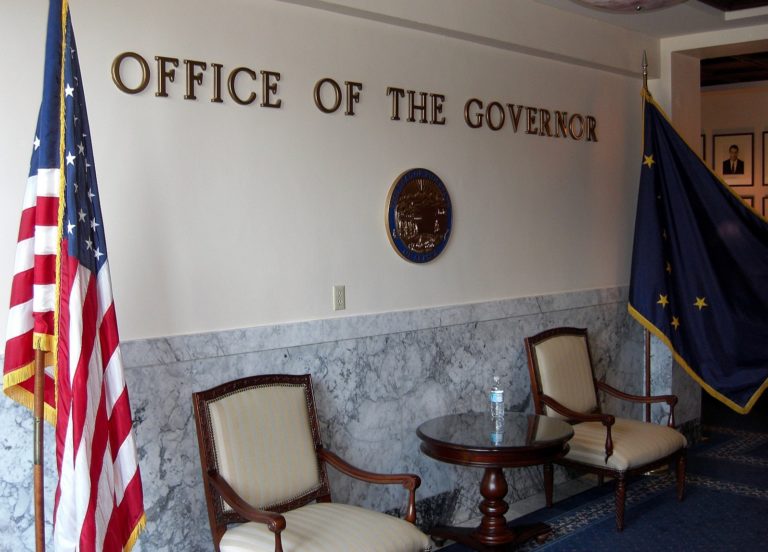
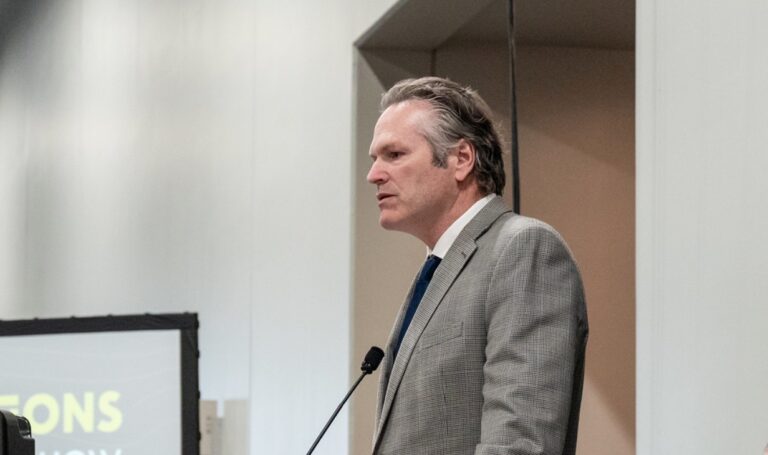
Gov. Mike Dunleavy has a dozen executive orders that he has sent to the Alaska Legislature. They were read into the record at the opening of the 2024 legislative session on Tuesday. Some are routine, but others are new.

One executive order splits the Alaska Energy Authority away from the Alaska Industrial Development and Export Authority, so it has its own dedicated energy board. Right now the two agencies share a board. AEA, which is larger than the Alaska Railroad, used to have its own board, until the Legislature combined the boards over a decade ago. These are two billion-dollar corporation that operate with a single volunteer board. AEA’s capital budget has increased over 1,000 percent in the last five years, which may have led to the need to separate the boards again.

Another executive order changes the Marine Highway Operations Board so that all the seats are appointed by the governor, and none by the Legislature.

The governor would also do away with three occupational boards that were created by the Legislature over the years. They are the Massage Board, Barbers and Hairdressers Board, and Board of Midwives. The massage field and hair professionals would be managed by regulation through the Department of Commerce, and the 43 midwives in the state would be also regulated by the Department of Commerce, rather than seven of their midwife colleagues. The Emergency Medical Services Council would also be regulated by the Department of Health as well, rather than through a citizen board.

The governor is getting rid of two legislatively designated park boards: The Wood-Tikchik State Park Management Council and the Chilkat Bald Eagle Preserve Council. Both areas would be managed through the Department of Natural Resources, not by a separate board.

Separate boards require staff time and this may be a way to reduce bureaucratic layers.

These executive orders would go into law if not disapproved in a joint session within 60 days. The Legislature would have to muster 31 “no” votes to stop the governor’s executive orders.

Two years ago, the governor split the Department of Health and Social Services into two departments via executive order so that the Department of Health could have more focus.

Goals: Dunleavy lays out his priorities for 2024 legislative session

As the Alaska Legislature gavels into session on Tuesday, Gov. Mike Dunleavy issued a statement about his top areas of concern for this year’s lawmaking season. They include items he is bound to be talking about in his sixth State of the State Address, which will be Jan. 29 at 7 pm.

Affordability

“A major focus for this year’s legislative session is affordability. Alaska can be an expensive place to live, but we can also do something about it. Food and energy security, childcare, housing, access to land, and healthcare are the key areas we need to work on to make Alaska an even better place to live. But as we work to solve these issues, we must ensure that we are not focused only on the short term, but that our work sets up Alaska to be prosperous over the next 50 years,” the governor said. That is going to mean generating wealth, which means resource development.

“We have the ability to generate wealth to pay for the services Alaskans need but we have to be committed to developing our resources to pay for new or existing programs. We can’t continue to say ‘no’ to developing resources,” he said.

Public Safety

Public safety has been a priority of Dunleavy since before he was elected in 2018. Dunleavy’s FY25 proposed budget invests in public safety by adding 10 additional Village Public Safety Officers, three new investigators focused on crimes against children, and four investigators fully dedicated to missing and murdered Indigenous persons cases.

Improving Educational Outcomes

Alaska’s K-12 students are still significantly underperforming by every measure.

Dunleavy seeks to advance tribal compacting of education. During 2023, the Department of Education and Early Development selected five tribal partners to start negotiating a state-tribal education compacting demonstration project. Ten months of negotiations concluded with a final legislation report that outlines how Tribally Compacted Public Schools can be advanced through new legislation.

Work to address Alaska’s teacher retention and recruitment challenges that began after Dunleavy’s 2020 State of the State address have continued in 2023. Drawing on research and findings from the Governor’s Teacher Retention and Recruitment Working Group, Dunleavy introduced HB 106 to provide lump sum cash incentives of either $5,000, $10,000 or $15,000 directly to classroom teachers depending on the district where they taught.

The bill is currently in House Finance Committee.

In August, the Department of Education published Alaska’s Teacher Retention and Recruitment Playbook which identifies practical, professional and policy recommendations to address Alaska’s persistent issues with retention and recruitment.

Alaska is Open for Business

Dunleavy introduced, and the Legislature subsequently passed a bill in 2023 that will allow the State to take part in the global markets for carbon trading. This bill will promote more active forest management. Together with a bill the governor signed to establish an Alaska lumber grading program, Dunleavy is working to shift Alaska’s forests from liability that bring in very little revenue and require spending millions of dollars on wildfire suppression each year to an asset that is revenue positive.

Another Dunleavy bill before the legislature would enable the State to generate revenue by storing carbon in depleted oil and gas reservoirs and other underground formations.

The Alaska Affordability Act

Affordability for Alaskans has been a primary focus of the Dunleavy administration. This session, Gov. Dunleavy will introduce the Alaska Affordability Act that he believes helps with expenses that impact a family’s budget: childcare, energy, housing, and food security.

The Task Force on Childcare was established to develop a plan to improve availability and affordability of quality childcare throughout Alaska. The task force delivered preliminary recommendations in November, and a second report is due in July. The administration will be implementing the task force’s recommended regulatory changes and working with the legislature on additional statutory changes.

The governor created the Alaska Energy Security Task Force to develop a comprehensive statewide energy plan for energy generation, distribution, and transmission and identify solutions for Alaska with a focus on affordability, reliability, and security. The Energy Security Task Force report was published in December.

In addition to continuing the work in these areas, Dunleavy said he will abe advancing ways to improve the affordability of housing and increasing food security under the Alaska Affordability Act.

Energy

The Alaska Energy Independence Fund will provide loans to families and rural utilities to help finance sustainable energy projects. This includes power generation and storage, as well as efficiency improvements.

Legislation incentivizing new Cook Inlet natural gas production and geothermal energy will also be introduced this session.

To increase the diversity of energy sources in the Railbelt region the Dunleavy administration will propose legislation to streamline the regulatory structure of the transmission lines and include budgetary measures to upgrade and improve the lines used to transport electricity from power plants to homes and businesses. Creating innovative solutions to upgrade the grid and manage the high cost of energy in rural Alaska is crucial for the future affordability of Alaska.

Alaska has an abundance of energy resources and an all-in approach to energy will create the lowest cost of energy, ensure reliability, and avoid dependency on outside sources. Dunleavy expects to have conversations about developing all energy sources available to Alaska, he said.

“I look forward to the next 121 days of working with lawmakers on what matters most to Alaskans,” said Governor Dunleavy. “While we may have different opinions on policy issues, we are all striving to reach the same goal of making Alaska a better place to live and raise a family.”


Snowbird hunting? This bill would take resident fishing permits away from those who spend too much time Outside

Sen. Jesse Bjorkman, a Republican member of the Senate’s Democrat-dominated majority, is offering a bill that reels in residency requirements for resident fishing, hunting, and trapping licenses.

It’s a companion bill to House Bill 201, filed last year by Rep. Rebecca Himschoot (no party, member of Democrat caucus) of Sitka and Rep. Sarah Hannan, a Democrat, of Juneau.

According to HB 201 and Senate Bill 171, a person would have to be not only physically present, but continuously present, in the state of Alaska for the 12 months prior to applying for an in-state fishing, hunting, or trapping license, in order to qualify for the resident rate.

There are exceptions, and they are found in Alaska Statute AS 43.23.008, the law that defines what a resident is for the purpose of receiving a Permanent Fund dividend.

Those exceptions are things such as going Outside the state for medical treatment, to serve in the military, to care for a gravely ill relative, or settle the estate of a deceased parent. The exceptions include staffers for Alaska’s congressional and Senate leaders in Washington, D.C., or a State of Alaska field office staffer in another state. There’s a 90-day continuous-absence limit and a 180-day total absence limit, with all kinds of proof needed for the Permanent Fund Division, which examines each application thoroughly and has an investigation division with people assigned to bird-dog fraud.

What the two fishing-hunting-trapping bills would do is create a new and likely costly bureaucratic hurdle for the Department of Fish and Game, which would have to vet applicants at the same level the Permanent Fund Division currently does.

HB 201 has been referred to House Resources and Judiciary committees; Resources will first meet on Friday.

The Himschoot-Bjorkman bills originated because some out-of-staters come to Southeast Alaska, specifically Prince of Wales Island, in the summer to work and they get in-state fishing licenses, even though they maintain residences out of state. Alaska resident sport fishing licenses cost $60. Nonresidents pay $100 for an annual license. Resident hunting licenses are $85, and residents don’t pay for tags. Nonresidents pay $260 for an annual hunting and sport fishing license.

Alaska residency is a sticky and litigious subject with Alaskans. When the Alaska Permanent Fund was established, it originally had an elastic benefit that gave more dividend money to those who had maintained residency since statehood.

But then, an Anchorage couple, Ron and Patricia Zobel, sued and won because the residency requirements were a violation of their constitutional right to equal protection. The residency requirement was dialed back as a result. Now, a person must be a resident of the state for a full year before being eligible to apply for a dividend. And they can be gone from the state for a certain amount of time each year.

The Himschoot-Bjorkman bills are written in such a way that they can be interpreted as disallowing a vacation to Hawaii, since the proposed statute says “has been physically present in the state at all times during the 12 consecutive months under (2) of this subsection or, if absent, was absent only 03 as allowed in AS 43.23.008.”

In U.S. Supreme Court case Dunn v. Blumstein405 U.S. 330, 92 S. Ct. 995, 31 Ed.2d 274 (1972),[6] the court held, “All durational residency requirements inherently infringe upon the fundamental constitutional right of interstate travel. Hence, all such requirements are prima facie invalid and will be countenanced only when they serve a compelling state interest.”

Residency issues are found in another Senate bill that was offered by Sen. Forrest Dunbar of Anchorage. That bill is trying to address the problem some people have because bed-and-breakfast owners don’t want to rent to Alaska residents. That story is linked below:

Vivek Ramaswamy drops, endorses Trump

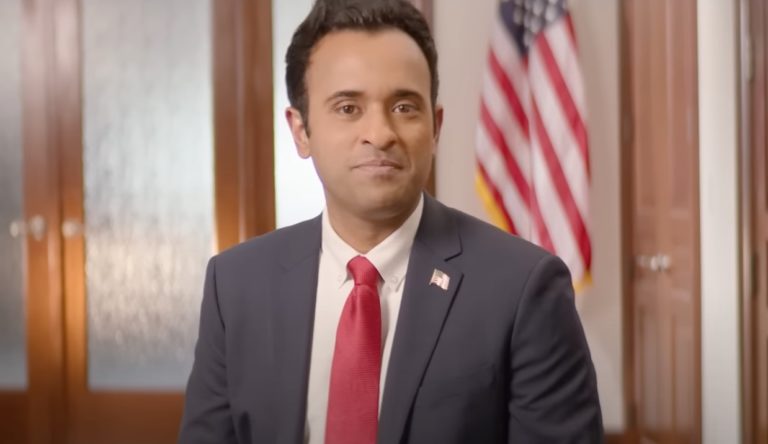
After a fourth-place finish in the Iowa Caucus, Republican presidential candidate Vivek Ramaswamy dropped from the race on Monday night. The entrepreneur-turned-politician had pulled in just 7.7% of the 110,298 Republicans participating in the nominating exercise, the first in the nation for the 2024 presidential election. Donald Trump currently has over 51% of the vote (over 56,000 caucus votes), followed by Ron DeSantis, 21%, and Nikki Haley, 19%.

Trump gets awarded 20 delegates for the Republican National Convention in August, when the party’s delegates vote on the party’s nominee. DeSantis gets 9, and Haley gets 8.

Ramaswamy immediately endorsed Trump after declaring that there was “no path for me to be the next president.” That means his three delegates will go to Trump, giving Trump 23 delegates from Iowa.

Ramaswamy, who largely self-funded his campaign that he first announced on Tucker Carlson’s Fox News channel show nearly one year ago, said he will continue his political activism promised he was “not going anywhere.”

The next state to hold a nominating process is New Hampshire on Jan. 23. That state holds a state-run primary, and is the first in the nation to have a primary. With Trump’s 30-point lead out of Iowa, he holds a significant lead in polling nationwide, in spite of the 91 felony counts being waged against him by the Department of Justice and the attorney general of New York.

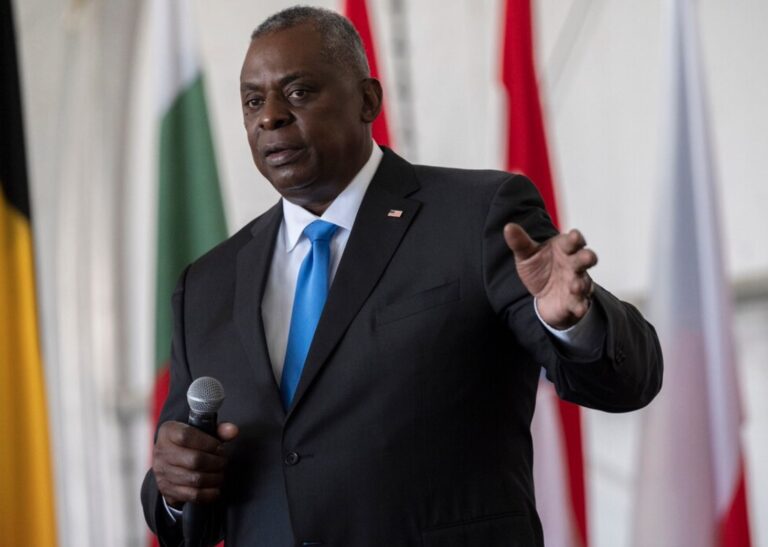
Day 15: Sec. Austin released from hospital

Secretary of Defense Lloyd Austin was released from Walter Reed National Military Medical Center on Monday, the Pentagon said in a statement.

Secretary Austin provided the following statement: “I’m grateful for the excellent care I received at Walter Reed National Military Medical Center and want to thank the outstanding doctors and nursing staff for their professionalism and superb support. I also am thankful and appreciative for all the well wishes I received for a speedy recovery. Now, as I continue to recuperate and perform my duties from home, I’m eager to fully recover and return as quickly as possible to the Pentagon.”

Secrecy and false statements surrounding Austin’s 14-day hospitalization has led to criticism from some in Congress, the media, and even President Joe Biden, who agreed on Friday it was wrong for Austin to keep his prostate cancer diagnosis secret from the Commander in Chief.

Trump wins Iowa: 53% … and counting

Former President Donald Trump won the Iowa Caucus on Monday with 53% of the vote from Republican participants across the state. Ron DeSantis came in second with 20% and Nikki Haley got 19%. Vivek Ramaswamy was under 8%. The results are changing throughout the night but Trump is remaining over 50%. It’s too early to tell who is in second.

The race was called by AP and Fox News before all results were in based on a combination of exit polling and other data. At the time of this publication, over 34% of the votes had been counted in Iowa and all major media outlets have projected Trump as the far-and-away winner.