On Thursday, Anchorage Republican Rep. Tom McKay formally switched up his campaign plans. Instead of running for reelection for House District 15, he decided to challenge Democrat Sen. Matt Claman, who represents Senate Seat H. Already running against Claman is former Rep. Liz Vazquez, a Republican.
At about the same time, former State Sen. Mia Costello filed for McKay’s seat in House District 15. That south Anchorage district has two Democrats running — Dustin Darden and Denny Wells. Costello is a Republican who started out as a member of the school board, was elected to the House, then the Senate, and was bumped from office by Claman in 2022.
Claman is having to run again this year due to redistricting.
McKay is a former chairman of the Alaska Republican Party and comes from the oil and gas sector, where he has worked as a petroleum engineer. He first ran and won in 2020.
At a special meeting of the Anchorage Assembly on Friday, members are expected to certify the results of the May 14 mayoral runoff election.
The final results the Assembly will certify are, at this time, 42,597 votes for Suzanne LaFrance, and 36,961 for Dave Bronson, a 7-point difference.
Some 79,658 votes were cast out of 238,050 registered Anchorage voters, a 33.46% turnout in the runoff election. Official results will be posted after certification.
After the election is certified, a transition period begins. LaFrance has set up a transition website at teamanchorage.com. The website has a “get in touch” form for people to express interest in working for the LaFrance administration, which will begin July 1.
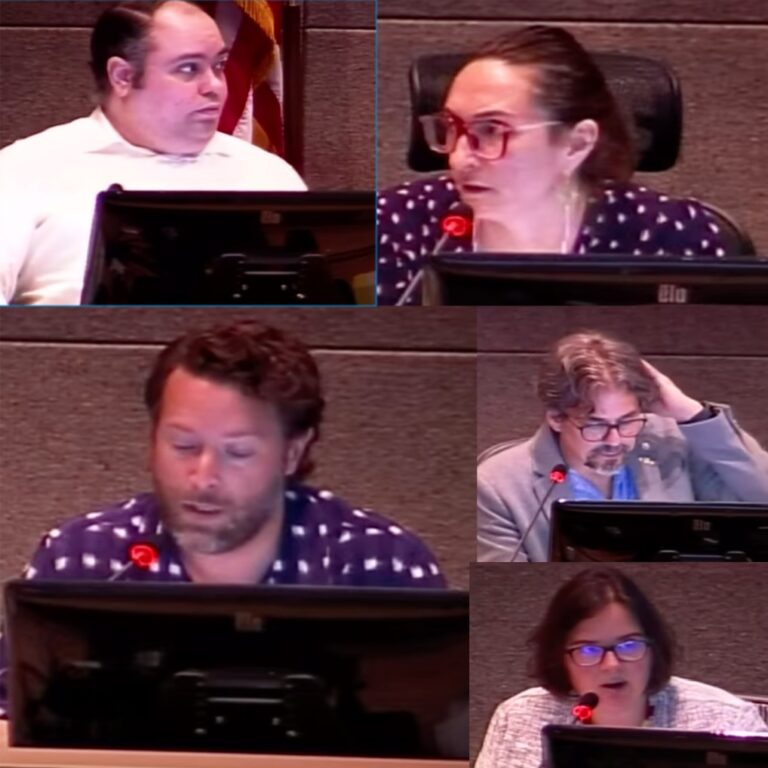
In addition to certifying the election, the Assembly has other items on the agenda, including clarifying that the Assembly is the official entity that can comment and respond on behalf of the Municipality regarding the Eklutna Hydroelectric Project proposed dismantling, stripping the power from the executive branch.
The Assembly will also vote to set a public hearing June 11 on the Municipality’s official position on the Eklutna Hydroelectric Project. Leftist members of the Assembly want to hold off having the governor make a decision. The governor has the final say on Eklutna.
The Assembly will also vote on reappropriating money from the Mayor’s Office to the transition expenses needed due to the LaFrance win. The Assembly had forgotten to make plans for the transition costs in the regular budget.
The Assembly will vote on something it has long wanted to do: Designate certain space inside City Hall as “Assembly Premises” over which it has sole authority.
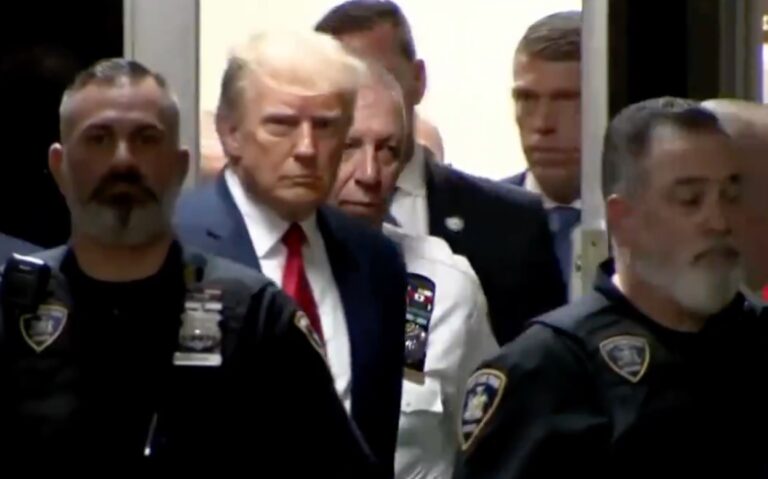
The jury in New York has found former President Donald Trump guilty on all counts in the hush-money trial involving payoffs to a woman who he allegedly had sex with over 18 years ago. Sentencing will be July 11 at 10 a.m. in the Manhattan courtroom.
Porn actress Stormy Daniels testified earlier this month that the two of them had a sexual encounter in 2006 and she was paid to keep silent about it during the presidential race 10 years later.
While there are numerous lawsuits against Trump by governments in New York and Georgia, this was his first criminal trial and the first criminal trial of a former president. Trump did not testify in the trial.
The jury deliberated for about 12 hours over Wednesday and Thursday on the 34 counts of falsifying business records.
An appeal of the verdict seems almost certain.
When Trump came out of the court building, he spoke briefly, railing against the “conflicted judge, a corrupted, rigged trial, a disgrace. They wouldn’t give us a venue change. We were at 5.5 or 6% in this precinct … The real trial is Nov. 5. We didn’t do a thing wrong. I’m a very innocent man. It’s OK. I’m fighting for our country. This was done by the Biden Administration. We’ll fight ’til the end and we’ll win, because our country has gone to hell….” He went on to describe briefly the state of the nation under Biden.
Rep. Byron Donalds of Florida wrote on X in advance of the verdict: We were told if Trump was indicted he’d be done–Trump PREVAILED. We were told if there was a mugshot he’d be done–Trump PREVAILED. We were told if court cases began he’d be done–Trump PREVAILED. President Trump will PREVAIL over this lawfare & we will Make America Great Again.
Donald Trump Jr. wrote: “Guilty on all counts. The Democrats have succeeded in their years long attempt to turn America into a third-world shithole. November 5 is our last chance to save it.”
Florida Gov. Ron DeSantis wrote: “Today’s verdict represents the culmination of a legal process that has been bent to the political will of the actors involved: a leftist prosecutor, a partisan judge and a jury reflective of one of the most liberal enclaves in America—all in an effort to “get” Donald Trump.”
Turning Point USA’s Charlie Kirk wrote: “We knew from the start this was the most likely outcome. This case was engineered for years, from the very top of the Democrat apparatus, to bring down Trump, using a rigged law in a rigged courtroom with a rigged jury. Trump will appeal and this will, eventually, be overturned, but this is a scar on our nation. For today, at least, this country looks more like Venezuela or China or Russia than the United States of America. Now, we must be ready to maintain our resolve. There will be an unprecedented push to say that Trump CANNOT be allowed to win, that we CANNOT elect a convicted felon. Don’t give in. They did this because they are desperate. They will lose, and they will pay.”
Republican Jessica Wright, who ran for Alaska House in 2022 but lost to Rep. Jesse Sumner, has thrown her name back in for the seat, with an official letter of intent to run for Wasilla House District 28. Already in that race is Republican Steve Menard, who ran against Sumner in 2022 and came in second.
Some politicos believe Sumner will pull his name out at the last minute and that he has recruited Menard as his choice for his successor. Sumner has served since January of 2023 and has complained that the time away from his construction business has cost him greatly. Sumner is running out of time to get his filing completed; as of this writing, only Menard is an official candidate for Wasilla House District 28.
Jessica Wright’s husband Stephen Wright, is a Republican challenger to Sen. David Wilson, also a Republican. Wilson serves the Wasilla area in Senate Seat N.
Another couple that is working the political odds are James Squyres and Pam Goode, both ultra-conservatives in the Delta Junction neck of the woods. They’ve both filed letters of intent, but have not indicated if they are going for the House seat opening up in District 36, or for Senate Seat R. Or maybe one will file for House and one for Senate and improve the odds.
On Wednesday, Sen. Click Bishop said he would not run for again this year and Rep. Mike Cronk of District 36 immediately announced he will file for Senate Seat R.
In 2018, Squyres ran for House District 9 [now mostly District 29, after redistricting in 2020]. Goode ran for the seat in 2014 and 2018, both running to knock out Rep. George Rauscher, who has managed to keep his House seat since beating cross-over Muskox Coalition member Rep. Jim Colver in 2016.
As of midday Thursday, Jessica Wright, James Squyers, and Pam Goode are still only in the “letter of intent” stage of filing. The filing deadline for the seats is June 1.
The U.S. Supreme Court ruled Thursday that the New York Department of Financial Services director likely violated the free speech rights of the National Rifle Association when she pressured companies that do business with the NRA to cut their ties to the group.
In National Rifle Association of America v. Vullo, the court agreed with the NRA that Maria Vullo pressured banks and insurance companies to blacklist the NRA. In a twist, the NRA was represented by the American Civil Liberties Union, a group that usually defends liberals.
Vullo called the NRA-endorsed insurance policies “murder insurance.” She denies exerting improper pressure on companies.
But Vullo sent letters to banks and insurance companies warning about the “reputational risks” of working with the NRA.
Vullo and Gov. Mario Cuomo also issued a joint press release echoing many of the letters’ statements, and “ ‘urg[ing] all insurance companies and banks doing business in New York’ ” to join those “ ‘that have already discontinued their arrangements with the NRA.’ ”
The ruling means that the National Rifle Association lawsuit against Vullo can proceed, although the court said the Second Circuit Court of Appeals is still “free to reconsider whether Vullo is entitled to qualified immunity.” The lower court has tossed out the NRA’s lawsuit against Vullo.
With Fairbanks Sen. Click Bishop announcing his retirement from the Senate, Rep. Mike Cronk of Tok and Northway said he will file for Senate Seat R.
Cronk first ran for the House in 2020 to represent what was then called House District 6. After redistricting in 2020, it became District 36, which stretches around parts of Fairbanks North Star Borough and south to Northway, deep in the Interior of Alaska. Cronk ran again in 2022, and won against a Democrat by a landslide.
Although he had filed for reelection to the House, when Bishop announced he is dropping, Cronk decided he should step up and run for what is the largest district geographically in Alaska.
Cronk is well known throughout the Interior, both as a legislator and longtime basketball coach.
He grew up in Northway and graduated from Walter Northway High School in 1987. Cronk, in the Alaska High School Hall of Fame, was a basketball standout. In his first three seasons he averaged 32 points a game and 20 rebounds. During his senior year, he averaged 37 points per game and 23 rebounds. Cronk is considered by many to be the most prolific scorer in the history of Alaska prep basketball.
“He proved his ability to score against the best by averaging 36 points against formidable opponents like East Anchorage, Lathrop, North Pole and Palmer High Schools. He still holds the state record in points scored in a single game, 62. Although hailing from a small Alaskan high school, he was named Alaska Player of the Year in 1986-87,” says the Alaska High School Hall of Fame website.
Cronk went on to earn a bachelor’s degree in elementary education from the University of Alaska at Fairbanks in 1992 and taught at Walter Northway High School, where he coached basketball. He is an accomplished hunter and outdoorsman.
If his name seems familiar to readers outside the sprawling district, it’s because the year 2017 turned out to be a fateful year for Cronk. He and friends attended the Route 91 Harvest festival in Las Vegas when his friend Rob McIntosh was shot in the chest during the mass shooting that killed 59 people. Cronk held his fingers on the bullet holes, dragged his friend to safety, put him in the back of a pickup truck with other wounded people, and eventually flagged down an ambulance. In the chaos that followed, another wounded concert-goer died in his arms on the way to the hospital.
Reached by Must Read Alaska in Seward, Cronk said he was getting his paperwork together to file for the Senate seat being vacated by Sen. Bishop. The deadline for filing is June 1.
Sen. Click Bishop, a Republican state lawmaker from Fairbanks, is retiring from the Senate.
Bishop released the following statement:
“With just a couple days remaining before the June 1st filing deadline, I am taking this opportunity to announce that I will not be running for re-election to Senate District R.
“Since the legislative session in Juneau adjourned on May 15th, my time has been spent in fellowship with family as we’ve contemplated and prayed for guidance on the things that matter most in life.
“This was a difficult decision. Senate District R comprises West Fairbanks, the Alaska Highway, Richardson Highway, and villages along the Yukon River, Tanana River, Nenana River, and Copper River. This region has been home to my family for generations.
“During my twelve years serving in the State Senate, I am proud to have served the entire time on the Finance Committee. By working with some of the finest public servants, we balanced budgets, grew the Permanent Fund, improved the state’s credit ratings, and tried to meet basic priority needs in education and deferred maintenance.
“I enjoyed sponsoring the legislation that created the Permanent Fund Dividend Education Raffle, which provides a way for people to support education while having a little fun.
“The time is right for me to prioritize and focus on family matters over the next two years. My parents recently passed on, and there are some gold mining opportunities I need to pursue. It’s also time for me to learn a few things from my grandkids as we prepare for the next chapter.
“My family and I are not done with public service. There is still a determination inside me to fix our current path of rising energy costs and the loss of our working-age population. It is clear that addressing those issues requires taking on a bigger role than serving in the legislature.
“Over these next few days, we will be out of telephone service as we head to our family cabin.”
Bishop represents the western part of the Fairbanks North Star Borough and rural communities in Interior Alaska. Before running for Senate, he was Commissioner of the Department of Labor and Workforce Development from 2007 to 2012, in the administration of Gov. Sean Parnell. After winning in 2012, he had to run again in 2014, due to redistricting, then ran unopposed in 2018, and won again in 2022 against challengers Elijah Verhagen and Robert Williams. Due to redistricting, his seat is up for election this year, which makes it the fifth election for the district in 10 years.
Former Rep. Bill Thomas, who served in the Alaska House from 2005-2013 for northern Southeast Alaska, has filed for House. The current incumbent for the district, now known as District 3, is Rep. Andi Story, a Democrat.
Thomas is a lifelong resident of Haines and easily held the seat until redistricting created an opening for Sitka Democrat Jonathan Kreiss-Tomkins, who beat him by 32 votes in 2012.
The shape of the district changed dramatically and is now north Juneau, including the Mendenhall Valley, Auke Bay, Tee Harbor, and up to Haines and Skagway.
Thomas is war veteran and a Tlingit who was born in Haines, graduated from Haines High School, and joined the U.S. Army. He served six months in Vietnam in 1968. He has been a commercial fisherman and served as chairman and CEO of his village’s Native corporate, Klukwan, Inc.
While in office, Thomas served on the Finance Committee, and co-chaired the committee. After leaving office, he worked to get recognition for the Tlingit code talkers from World War II.
Rep. Story was on the Juneau school board for 15 years. She advocates for more funding and no accountability for schools and for things like transgender athletes competing against girls in sports. She was a founder of Great Alaska Schools, and was president of the Alaska Association of School Boards. Her masters degree is in social work.
Story went unchallenged in 2022 and is serving her second term in the House.
The judge overseeing the hush money trial of former President Donald Trump spent an hour telling the jury how to apply the law to the case, including that they must reach a unanimous decision but don’t have agree on the means.
Some jumped on the statement as circular reasoning. U.S. Sen. Marco Rubio compared the trial to those of the Soviet Union.
Screenshot
Judge Juan Merchan read 55 pages of instructions to the jury Wednesday morning before deliberations began.
Among the instructions: “Although you must conclude unanimously that the defendant conspired to promote or prevent the election of any person to a public office by unlawful means, you need not be unanimous as to what those unlawful means were,” according to the instructions. “In determining whether the defendant conspired to promote or prevent the election of any person to a public office by unlawful means, you may consider the following unlawful means: (1) violations of the Federal Election Campaign Act otherwise known as FECA; (2) the falsification of other business records; or (3) violation of tax laws.”
U.S. Sen. Marco Rubio lashed out on X, the social media platform formerly known as Twitter.
“Judge in Trump case in NYC just told jury they don’t have to unanimously agree on which crime was committed as long as they all at least pick on,” Rubio, R-Fla., wrote. “And that among the crimes the can pick from are ones Trump WASN’T EVEN CHARGED WITH!!! This is exactly the kind of sham trial used against political opponents of the regime in the old Soviet Union.”
Legal analyst Jonathan Turley called Merchan’s instruction a “coup de grâce.”
“He said that there is no need to agree on what occurred,” Turley wrote on X. “They can disagree on what the crime was among the three choices. Thus, this means that they could split 4-4-4 and he will still treat them as unanimous.”
The case centered around Trump’s alleged sexual encounter with an adult film actress in 2006 and a $130,000 payment to her in 2016 to keep her quiet ahead of the 2016 election. Trump has pleaded not guilty and denied the encounter happened.
Prosecutors allege that Trump covered up the payment to Stormy Daniels and another hush money payment to former Playboy model Karen McDougal ahead of the election, falsifying records to claim they were legal payments.
Trump, 77, is the first former U.S. president to be charged with a felony.
Manhattan District Attorney Alvin Bragg charged Trump with 34 counts of falsifying business records related to money paid to Daniels and McDougal. Bragg has alleged Trump broke New York law by falsifying business records with the intent to commit or conceal another crime.
Prosecutors allege Trump falsified internal records kept by his company, hiding the true nature of payments that involve Daniels ($130,000), McDougal ($150,000), and Trump’s former personal lawyer Michael Cohen ($420,000). Prosecutors allege the money was logged as legal expenses, not reimbursements.