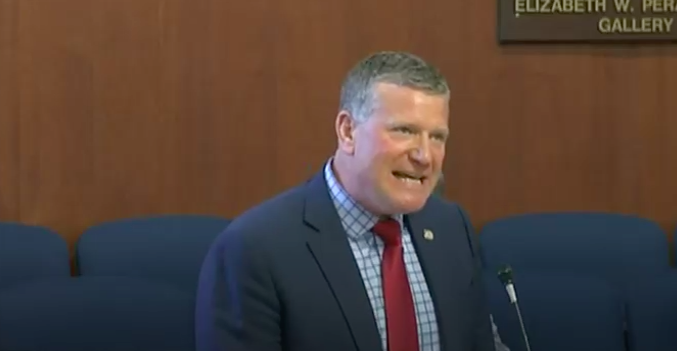
Unelected by a landslide in the 2020 primary, former Rep. Chuck Kopp is making another try at state office.
He was beat by former Alaska Republican Party Chairman Tom McKay in 2020, but this year the district lines have shifted and he is taking on Craig Johnson, who serves as Rules Committee chair in the Alaska House for South Anchorage District 10.
Both are Republicans, but Kopp is considered a “Sen. Cathy Giessel” Republican, one who cannot be relied on to hold the line on spending. Kopp is known to have threatened Rep. Johnson this year, saying if he didn’t vote for Sen. Giessel’s defined benefits bill for state employees, Kopp would run against him. He’s making good on the threat.
Kopp is a former police officer who now runs a political consultancy company with Cherie Curry. He worked on the campaign of former Gov. Bill Walker, who was, by then, in opposition to Republicanism and in line with big government policies. He also worked on the campaign of Bill Popp for Anchorage mayor; Popp received 17% of the vote. Another campaign he worked on was John Coghill’s congressional run; Coghill got 2.4% of the vote in the primary.
Political observers note that Kopp would likely caucus with the Democrats to advance the public employee union agendas of fixed pensions rather than 401k retirement accounts.
Kopp served as an officer in the Anchorage Police Department and Kenai Police Department for a combined 20 years. He was chief of police of Kenai, and acting city manager from 2005 to 2006.
He was briefly Public Safety commissioner under Gov. Sarah Palin but forced to resign when a scandal followed him from his time as police chief in Kenai.
When he was a staffer in the House, he was one of the architects on Senate Bill 91, the catch-and-release, soft-on-crime bill, pass.
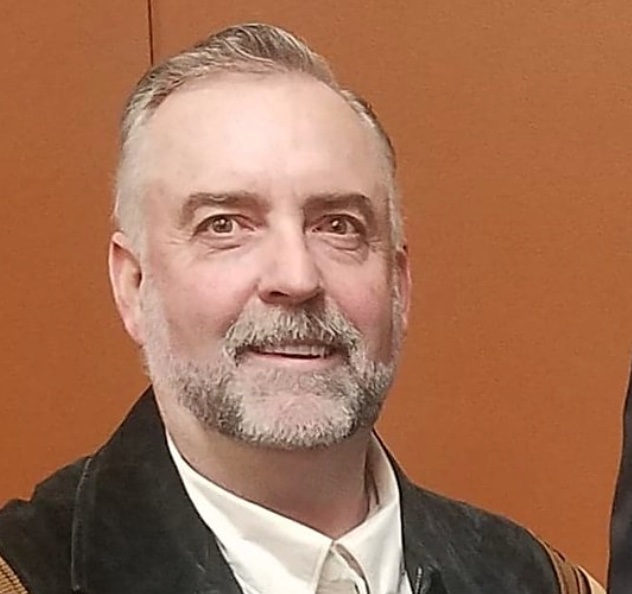
Larry Persily, who writes op-eds regularly for the Anchorage Daily News, has a new column out on his usual theme of “Alaska needs to tax Hilcorp.”
Persily is the owner of Good Journalism, LLC, which is the owner of the Wrangell SentinelLLC, a paper he bought decades ago, sold, and then repurchased a few years ago.
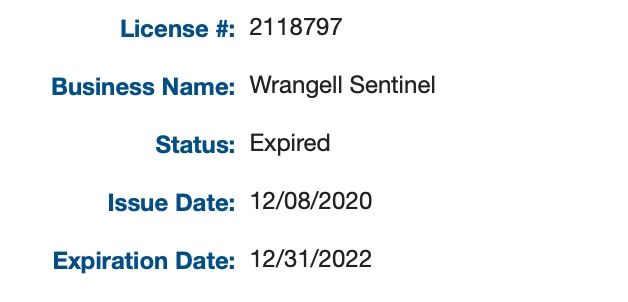
The Wrangell Sentinel’s business license has been expired since 2022, or so it shows at the Alaska Division of Corporations, Business and Professional Licensing.
Persily is running his newspaper business through an LLC, just like Hilcorp owner and CEO Jeff Hildebrand is running Hilcorp as an LLC, and Persily is not paying personal income tax or corporate income taxes for either Good Journalism, LLC or the out-of-compliance Wrangell Sentinel, LLC.
The difference is that Jeff Hildebrand invests hundreds of million of dollars into Alaska, employees thousands of Alaskans, and even kept the lights on in Southcentral Alaska during the near-blackouts during the worst of the winter cold snap this past season, ensuring that natural gas kept flowing to Enstar at the same price, not gouging the natural gas company, which was having trouble meeting demand from customers. That was during a critical time when Joint Base Elmendorf-Richardson and the Municipality of Anchorage had turned down the heat in public buildings. Hilcorp never got credit for stepping up and supplying the demand even without a contract.
“All corporations, whether publicly owned biggies like Amazon and Walmart, or privately owned moneymakers like Hilcorp, big law firms or medical practices, are able to succeed at their businesses, in great part, because government provides services the companies and their employees and customers use, such as roads, ports and police. Government also provides financial assistance that their lower-paid employees need,” Persily argues in his op-ed, which argues that LLCs should be taxed.
Unappreciated by pro-taxers, companies like Hilcorp also provide services to the public, such as heat, but there are those like Persily who are wedded to the idea that government has a duty to skim capital from any company that risks investment in a tough-to-operate place like Alaska.
The additional irony is that Persily’s op-ed ran in the Anchorage Daily News, also organized as an LLC by the Binkley Co., which is also an LLC. Persily is arguing that the newspaper, which can barely stay afloat in this era and depends on grants from nonprofits to pay its journalists, should pay taxes to the state.
Persily is the go-to guy for Alaska journalists for a reliable quote from an “oil and gas expert,” having served as Federal Coordinator of the Alaska Natural Gas Transportation Projects during the entire Obama Administration. He has worked on and off in government and journalism for most of his career. He worked for Rep. Mary Peltola when she first took office.
Former Alaska House Rep. Ron Gillham, a Republican, is challenging the man who beat him in 2022 — Justin Ruffridge, for the House seat representing Soldotna, District 7.
Gillham, a North Slope crane operator and construction superintendent, first ran in 2020 against then-Rep. Gary Knopp, a liberal Republican who was not endorsed by the Republican Party and who died while piloting his small airplane that year.
In 2022, Ruffridge, a pharmacist, jumped in to challenge Gillham from the political left and won the seat by 83 votes.
Former Alaska House Rep. Bart LeBon of Fairbanks narrowly lost to Maxine Dibert in 2022, but is looking for a rematch in this year’s election. He filed with the Alaska Public Offices Commission as a candidate on Tuesday, although his paperwork is not yet showing at the Division of Elections, another step candidates must take to get on the ballot.
LeBon is a Republican, Dibert is a Democrat.
LeBon originally won a seat in the Alaska House in 2018, when then-Rep. Scott Kawasaki ran for Senate. The former banker won by one vote against Kathryn Dodge, a Democrat.
He defended his seat in 2020 in what was the largest red wave in Alaska election history, but lost to Dibert in 2022 by 23 votes.
It was known as District 1 until redistricting in 2020. The district is now known as D-31. This western part of Fairbanks is considered a swing district, with boundary similar to what they were before redistricting.
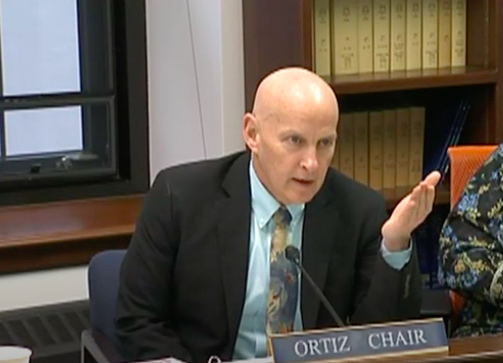
Rep. Daniel Ortiz, a non-affiliated member of the House of Representatives who has always caucused with Democrats, will not run again for his seat, according to a report from the Ketchikan Daily News.
Ortiz was first elected to the district, now known as District 1, in 2014. Although Ketchikan is a Republican-leaning district, Ortiz is a popular retired teacher who managed to get elected and reelected, in spite of good Republican candidates who ran against him.
Word had started leaking out Tuesday after Ortiz broke the news to his family over the Memorial Day weekend. He said his health is the reason he is stepping back from public office.
This year, Jeremy Bynum is the Republican candidate running for House District 1. Republicans in district endorsed Bynum last night unanimously before the news about Ortiz broke this morning.
Bynum is the manager of the electric division of Ketchikan Public Utilities. He ran against Ortiz in 2022 and lost by just 343 voters. He is a second-term borough Assembly member.
After attending Memorial Day ceremonies in Alaska over the weekend, U.S. Senator Dan Sullivan hopped on a jet and led a bipartisan congressional delegation to Taiwan, a visit meant to underscore America’s support for the Taiwanese people after the election and inauguration of President Lai Ching-te.
Taiwan held its election in January and inauguration of President Lai on May 20.
The lawmakers plan to meet with a number of officials while in Taiwan—including President Lai and Vice President Hsiao Bi-khim, whose Democratic Progressive Party favors strong ties with the United States.
Sullivan, a Republican and a member of the Senate Armed Services Committee, is a retired colonel with 30 years of service in the Marine Corps Reserve. Co-leading the trip is U.S. Sen. Tammy Duckworth of Illinois, a Democrat who served in the Reserve Forces for 23 years and is a member of both SASC and the Senate Foreign Relations Committee.
Taiwan is feeling the pressure from increased threats from the People’s Republic of China but Lai is determined to remain independent.
“On this day [May 20, 1996], Taiwan’s first democratically elected president took the oath of office, conveying to the international community that the Republic of China Taiwan is a sovereign, independent nation in which sovereignty lies in the hands of the people,” Lai said in his inaugural address.
“On this day in 2024, having completed our third transition of political power, Taiwan officially commences, for the first time, the third consecutive term of the same political party in office. We also set sail into a new era that is full of challenges, yet also brimming with limitless hope,” he said. Read Lai’s full speech at this link.
Sullivan has long been a supporter of democracy in Taiwan, which the Chinese Communist government of the People’s Republic of China claims as its own. President Joe Biden in January said “We do not support independence,” when asked his reaction to the election in Taiwan.
“We’re here in Taiwan to demonstrate to the world that the United States stands firm with the island democracy of Taiwan and to congratulate the Taiwanese people on another successful election and transfer of power,” said Senator Sullivan. “In these increasingly dangerous times, it is critical that America show steady, unwavering bipartisan commitment and resolve in support of Taiwan’s democracy and—critically—we must work with our allies to enhance cross-strait deterrence now. Today, Taiwan is considered one of the freest places in the world. Every Taiwan election threatens the central premise of the Chinese Communist Party—that one person ruling in perpetuity knows what’s best for 1.4 billion people. This is a giant vulnerability for the Chinese Communist Party’s rule.”
After Taiwan, Sullivan will stop in Singapore to participate in the International Institute for Strategic Studies’ Shangri-la Dialogue, which is one of Asia’s premier global international security and defense summits.
Hess Corporation shareholders approved the company’s acquisition by Chevron for $53 billion.
Hess was the company that drilled the first wildcat well on Alaska’s at Prudhoe Bay. Last year, Chevron shareholders voted to approve the acquisition, which has been underway ever since.
It’s the second major movement between oil companies this week. ConocoPhillips announced Wednesday it is acquiring Marathon Oil.
At the special meeting of Hess stockholders held Tuesday, a majority of the Hess common stock were voted in favor of the adoption of the merger agreement, Hess said in a statement. News of the merger is dampened by an ongoing legal dispute with Exxon Mobil, which could still kill the deal.
“We are very pleased that the majority of our stockholders recognize the compelling value of this strategic transaction and look forward to the successful completion of our merger with Chevron,” CEO John Hess said. “Together we will be positioned as a premier integrated energy company, with the leadership, asset portfolio and financial resources to deliver significant shareholder value for years to come.”
No further approval of Chevron stockholders is required in connection with the merger. Completion of the merger remains subject to other closing conditions, including resolution of ongoing arbitration regarding rights in the Stabroek Block joint operating agreement Hess has with Exxon Mobil, the company said.
If Exxon prevails in that dispute and the Chevron-Hess deal falls apart, Hess would keep its stake in the Stabroek Block in Guyana, which is an Exxon-owned project.
In an interview with Financial Times, last year, CEO Hess said the time was right to sell: “Our company is 90 years old — an anniversary we’re celebrating this year — and it all started with my father driving a second-hand truck delivering fuel oil during the Depression.”
During the time Hess was prominent in Alaska, it was known as Amerada Hess, after a merger with Amerada Petroleum Corp. in 1969. By May of 1970, Amerada Hess drilled the first successful wildcat well in Prudhoe Bay on Alaska’s North Slope.
The next year, Amerada Hess was one of several oil companies invited by the Canadian government to work on building pipelines from the North Slope through Canada to the United States. That never came to fruition due to the permitting of the Trans Alaska Pipeline System.
Hess continued working in Alaska and in 1974 was the first company to apply for permits to unload supertankers from the Trans-Alaska Pipeline.
In the 1980s, the State of Alaska sued 17 oil companies for underpayment of oil production royalties. The case was named after Amerada Hess, because it was the first company in the alphabetical list of all the defendants. The oil companies eventually settled in 1997 in Alaska v. Amerada Hess et al. after 15 years of court proceedings; the settlement was about $600 million out of the $902 million that the State of Alaska said was due.
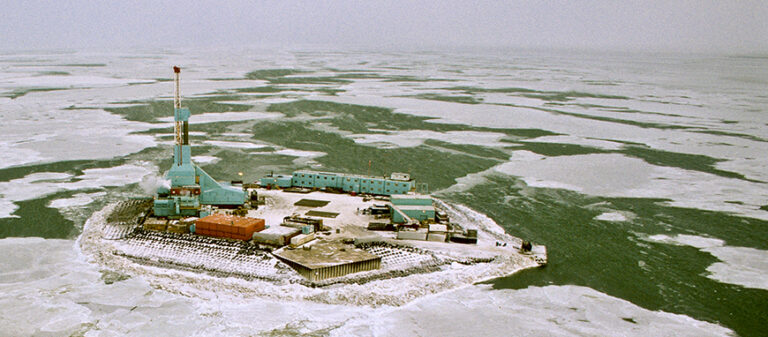
By 1986, Amerada Hess reported it had discovered oil about five miles west of Seal Island in the Beaufort Sea, in a joint venture with Shell Western Exploration Production Inc., Amoco, Texas Eastern, and Murphy. The Seal Island project was the world’s first artificial manmade island in the Arctic to yield commercial quantities of oil and gas.
Mergers and acquisitions typical of the industry also mark the history of Hess, which acquired Monsanto Oil Company and Triton.
The company began focusing elsewhere and its business model changed over time. It sold off its retail locations, and spun off some of its operations around the globe. In 2003, Hess sold its 1.5 percent stake in the Trans-Alaska pipeline system to ConocoPhillips.
Currently, Hess is focused on oil in North Dakota, the Gulf of Mexico, and overseas, including Guyana and Malaysia.
The sale of Hess to Chevron, and the acquisition of Marathon by ConocoPhillips comes after last year’s acquisition of Pioneer Natural Resources by Exxon for roughly $60 billion. Pioneer had made discoveries in the offshore Oooguruk field, west of Prudhoe Bay and in 2008, became the first independent operator to produce oil on the North Slope. It divested its Alaska operations to Caelus Energy in 2013 and exited Alaska for better prospects in the Permian Basin.
ConocoPhillips and Marathon Oil Corporation announced Wednesday the companies have entered into a definitive agreement in which ConocoPhillips will acquire Marathon Oil in an all-stock transaction, with an enterprise value of $22.5 billion, to include $5.4 billion of net debt.
ConocoPhillips, one of the world’s largest energy companies, is Alaska’s largest oil producer and has been a leader in oil and gas exploration and development in the state for more than 50 years.
Marathon Oil Corporation is an independent energy company specializing in exploration and production, which had a refinery on the Kenai Peninsula until 2011, when it was spun off as Marathon Petroleum, and operates in 12 states.
“This acquisition of Marathon Oil further deepens our portfolio and fits within our financial framework, adding high-quality, low cost of supply inventory adjacent to our leading U.S. unconventional position,” said Ryan Lance, ConocoPhillips chairman and chief executive officer. “Importantly, we share similar values and cultures with a focus on operating safely and responsibly to create long-term value for our shareholders. The transaction is immediately accretive to earnings, cash flows and distributions per share, and we see significant synergy potential.”
Under the terms of the agreement, Marathon Oil shareholders will receive 0.2550 shares of ConocoPhillips common stock for each share of Marathon Oil common stock, representing a 14.7% premium to the closing share price of Marathon Oil on May 28, 2024, and a 16.0% premium to the prior 10-day volume-weighted average price.
Key points:
Acquisition of Marathon Oil Corporation is expected to be immediately accretive to earnings, cash flows and return of capital per share.
ConocoPhillips expects to achieve at least $500 million of run rate cost and capital savings within the first full year following the closing of the transaction.
Independent of the transaction, ConocoPhillips expects to increase its ordinary base dividend by 34% to 78 cents per share starting in the fourth quarter of 2024.
Upon closing of the transaction, ConocoPhillips expects share buybacks to be over $20 billion in the first three years, with over $7 billion in the first full year, at recent commodity prices.
Although the Alaska Local Boundary Commission will make the final decision, a proposed new borough in Southeast Alaska for the area around Hoonah received poor marks from the commission staff, who studied the matter.
A group petitioned for the new borough in November. The proposed Xunaa Borough would encompass 10,403 square miles, but would have just 980 residents. That would make it the eighth-largest borough in Alaska, but the third smallest by population, after Yakutat (pop. 687) and Bristol Bay (pop. 844) boroughs. The Xunaa Borough would be Alaska’s 20th borough; the previous borough approved for incorporation was the Petersburg Borough, which became effective on January 3, 2013.
The petition was filed Nov. 27. A 90-day public comment period commenced, followed by hearings, respondent briefs, and petitioner’s brief.
Hoonah is currently part of the Sitka House District 2, but Hoonah in the Hoonah/Angoon Census Area, not inside a borough.
“LBC staff does not recommend adopting the petition in its current form. As identified in this report, there exist substantive concerns about assumed areawide powers and the addition of fewer than 100 residents to the existing population fails to meet the LBC’s constitutional, statutory, and regulatory requirements for borough incorporation,” the staff report says.
In its current form, the petition only meets a few of the commission’s standards, the LBC says. “It essentially trades one local government for another. Further, the borough government would assume very little responsibility for services currently being delivered by the state, diminishing the benefit to the State from borough formation.”
Staff concludes that although the petitioner went to great lengths and expense to advance the proposal, “a more compelling petition would include one or more of the neighboring municipalities of Gustavus, Tenakee Springs, and Pelican, as well as a plan to consolidate school districts, and apportion borough assembly representation to ensure a more equitable distribution of resources throughout the region. There may be a growing desire and purpose for a regional form of government, as new opportunities for economic development continue to emerge. Forming regional governments is also consistent with, and in fact the intention of, Alaska’s Constitution, and is supported by Alaska statutes and regulations.”
But for now, staff writes, there’s no consensus in the area being proposed for a borough, including how cities of Gustavus, Pelican, and Tanakee Springs would operate.
“Though the residents would vote on the proposal, the petitioner’s draft charter does not account for the inclusion of either cities or town-site service areas in addition to the current community of Hoonah. If such a petition were proposed to include these additional three communities, the charter would also need to be amended to ensure balanced representation on a borough assembly and the appropriate delivery of area-wide services,” the staff writes in its report.
The last borough approved for incorporation was the Petersburg Borough, which went into effect on Jan. 3, 2013.