Friday, May 15, 2026
Home Blog Page 430

This bud’s for you: Biden easing restrictions on cannabis by reclassifying drug

By BRETT ROWLAND | THE CENTER SQUARE

President Joe Biden’s administration plans to ease federal restrictions on cannabis by reclassifying the drug for the first time in half a century. 

The Biden administration plans to announce an interim rule soon reclassifying the drug for the first time since the Controlled Substances Act was enacted more than 50 years ago, according to media reports confirmed by NBC News

For decades, cannabis has been classified as a Schedule I drug, a class defined as drugs with no accepted medical use and a high potential for abuse. Other Schedule 1 drugs include heroin, LSD, ecstasy and methaqualone, the hypnotic sedative sold under the brand name Quaalude before it was discontinued in the 1980s.

Under the plan, cannabis would be reclassified as a Schedule III drug, defined as drugs with a moderate to low potential for physical and psychological dependence. Other Schedule III drugs include products containing less than 90 milligrams of codeine per dosage unit, ketamine, anabolic steroids and testosterone.

The election-year move comes after Biden has repeatedly promised to reschedule cannabis since 2019.

During his State of the Union address earlier this year, Biden said he would be “directing my Cabinet to review the federal classification of marijuana, and expunging thousands of convictions for mere possession, because no one should be jailed for using or possessing marijuana.”

Rescheduling the drug could open the door to pharmaceutical company investment in the $34 billion cannabis industry in states where it is legal. 

Matthew Schweich, executive director of the Marijuana Policy Project, called it a “modest step.”

“This is a positive step forward for federal cannabis policy, however it is a rather modest step given the strong support among American voters for comprehensive cannabis reform,” he said in a statement. “It is important to acknowledge that this rescheduling would not affect the criminalization of medical cannabis patients and cannabis consumers under state laws – so we must continue the work of enacting sensible and fair cannabis legalization and medical cannabis laws through state legislatures and ballot initiatives.”

Reclassifying the drug could also ease tax burdens for the companies that sell it, said David Goubert, president and CEO of AYR Wellness, a public company based in Florida.

“This represents the most significant step towards federal cannabis reform in U.S. history and will provide much needed relief to operators of all shapes and sizes, allowing us fair tax treatment by eliminating 280E, in addition to allowing for additional research into the medical efficacy of cannabis,” he said in a statement. “AYR Wellness, along with many of its peers, continues to advocate for the full de-scheduling of cannabis, and feel today’s news represents positive progress towards that eventual outcome.”

Alaska’s top prison doc is now state’s new chief medical officer

15

The Alaska Department of Health Commissioner Heidi Hedberg announced Dr. Robert Lawrence, formerly the chief medical officer at the Alaska Department of Corrections, is the new chief medical officer, replacing Dr. Anne Zink.

“We are truly thrilled to add Dr. Lawrence’s unique perspectives to the work we are accomplishing within the Department of Health,” Hedberg said. “His commitment to promoting the health, wellbeing and self-sufficiency of all Alaskans is widely recognized and deeply appreciated. As we extend our heartfelt gratitude to Dr. Anne Zink for her outstanding leadership over the past five years, we anticipate continued improvements in Alaska’s healthcare systems with Dr. Lawrence at the helm.”He began his new role on Monday.

“Of everything the great state of Alaska has to offer, people matter most,” said Dr. Lawrence. “I am honored to join this team of dedicated servants who focus their efforts to elevate the health and independence of every person in Alaska.”

Dr. Lawrence earned his medical degree from the University of Washington School of Medicine, a master’s degree. in Bioethics from Trinity International University, and a master’s degree in Social Science Education from Harding University. He is board certified by the American Board of Family Medicine. He began his work as a doctor in Alaska in Nome.

Dave Bronson: A call for Assembly action on Anchorage’s homeless crisis

By MAYOR DAVE BRONSON

The homeless situation in Anchorage affects us all, from the individual homeless walking around our neighborhoods to the encampments that have sprung up around town. Although not all individuals experiencing homelessness engage in problematic behavior, a troubling number do. Disorderly camps, drugs, and alcohol, and unsafe environments are all too common. The reality is, we need to do more.

What is standing in the way? An uncooperative Assembly.

The Anchorage Assembly has voted against every one of my proposals to address homelessness, while at the same time publicly denouncing that I have not proposed any solutions. At a recent special assembly meeting devoted to the topic, all my solutions were voted down, with members asking for more time to consider them and others outright opposing my efforts. The political reality is they are more interested in opposing me than solving the problem. Anchorage residents should expect and deserve their elected officials to work together to provide solutions to problems that affect our city.

Here are a few of the ideas shot down by the assembly: a proposal to spend no more than $240,000 to ship a custom-built, prefabricated Sprung Structure to Anchorage for a navigation center for our homeless. I’ve identified an investor willing to pay to construct the facility and an operator willing to provide services, yet the assembly won’t spend the funds to ship the building here.

I continue to believe the Navigation Center near Elmore and Tudor Roads is the best solution. Assembly Chair Chris Constant opposes the plan, in part, because he believes the Sprung Structure is not an adequate structure to house individuals. These buildings are sufficient for use by the United States Department of Defense and developers on Alaska’s North Slope where some of the harshest and extreme weather conditions in the world exist. Not to mention, any building has to be permitted before it’s occupied.

The next proposal shot down or delayed indefinitely by the assembly would have given the city the ability to clean up homeless camps. It placed new size limits on homeless encampments to twenty-five tents and put distance requirements between homeless encampments and shelters, driving down the ability for access to drugs and alcohol, and limiting predatory behavior.

Another solution I proposed and was supported by downtown business owners is a measure that would prohibit camping in certain parks and carve out the downtown business district as a camping-free zone. A similar law was considered and passed by the Sea-Tac city council in October 2020. Why the liberal Sea-Tac city council can pass an ordinance to protect certain parks and retain their use to the general tax-paying population and tourists, but the Anchorage Assembly cannot – is puzzling. We have an economic hub and a wildly energetic tourism season ahead; why are we not protecting that asset and showcasing Anchorage?

Not only is the inaction by the assembly puzzling, but it’s also dangerous. The New York Times’ bureau chief, Mike Baker, last year wrote an article titled “An ‘Unimaginable Death Toll Among Anchorage’s Homeless Residents.” Shelter gives intervention opportunities and allows for year-round supervision for individuals experiencing homelessness. Our remaining two shelter options, the Alex Hotel, and the Aviator Hotel, where individual rooms are made available to homeless, are closing their doors to the homeless in preparation for the tourism season. This means hundreds of previously sheltered individuals will be without a place to live beginning next month.

As we grapple with how to address homelessness in Anchorage, we have had some successes. We established a cold weather shelter, and it may become a year-round shelter, thanks to a recent $4 million matching grant from the Alaska State Legislature that we are hopeful will remain in the final budget. We know that many deaths occur in summer when homeless individuals are outside and unsupervised. This funding will go a long way to continue to provide a shelter option for our homeless population. There is still so much work to be done, and I ask the community to call upon the Anchorage Assembly to support keeping people off our streets.

Mayor Dave Bronson is chief executive of Anchorage.

Portland State U. closed due to ‘Kristallnacht’ movement spreading across the country’s campuses

Leftists have gone from “punch a Nazi” to “kill a Jew” in just a couple of years.

A few days after the president of Portland State University bent to student and faculty pressure and stopped all grants coming from the Boeing Co., the campus has been closed on Tuesday, “due to the ongoing incident at the library,” the university said on X/Twitter. The incident was widespread vandalism and occupation of buildings.

Pro-Hamas rioters spray-painted and broke into the university’s library Monday night, the same night that rioters took over a major building at Columbia University in New York and held three janitors hostage, barricading the doors from both within and without the building.

On Monday night, Mayor Ted Wheeler, Portland police chief Bob Day, Multnomah County District Attorney Mike Schmidt, and PSU president Ann Cudd — the liberals squad that runs Portland — tried to encourage the occupiers to leave peacefully. But the property damage, including spray painted buildings and fixtures, increased, along with the intimidation to Jewish people of the community.

Democrats and their enablers across college and university campuses are engaging in a coordinated event that has eerie similarity to the notorious Kristallnacht “night of broken glass” of 1938 Nazi Germany, when Nazi supporters, including Hitler Youth, smashed the windows of Jewish businesses, creating terror. Nazi treatment of Jews led to the creation of the Jewish state of Israel on May 14, 1948.

“Universities are set up to explore the competition of ideas, and that’s a noble purpose, but when people engage in acts of violence and destruction, that is no longer peaceful behavior, that is criminal activity,” Mayor Wheeler said late Monday night during a press conference at the Portland Police Central Precinct. “City, county, police, prosecutors — we are all unified. We will not allow acts of violence to carry the day in our city.”

In fact, district attorney Schmidt has a catch-and-release policy for criminals in the city, which has been increase riddled with violence, drugs, homelessness, and is a hotbed of anarchism and political violence.

Riots and demonstrations, including building occupations and violence against Jewish members of the communities, have rapidly escalated on campuses across the country.

After midnight in New York, pro-Hamas rioting students and faculty broke windows, barricaded doors and occupied Hamilton Hall at Columbia University overnight. The riot came after school officials did not bend to the demands to divest all ties with Israel, including invested assets of the university.

But in Portland, the university president had already ceded to the demands to reject grants from Boeing, because of Boeing’s manufacture of anti-missile technology used by Israel against its aggressors in the region, including Hamas and Iran. It wasn’t enough. The concession by President Cudd did not deter the rioters on Tuesday.

Peltola targets Natives to reverse slipping support

Just as Vice President Kamala Harris has been assigned to shore up the black vote for President Joe Biden by headlining events for African-American voters, Alaska Rep. Mary Peltola was stumping for the Native vote on her most recent trip back home to Alaska, in an effort to shore up support.

Flanked by her chief of staff Anton McParland, who also serves as her campaign manager, she appeared at a campaign event over the weekend in Anchorage that targeted Natives, where she has started to see wearing support. According to her slide presentation, the goal is to register more Native voters and “get them set up with absentee ballots” in August, when the Alaska primary election is held.

She doesn’t actually need cash from Alaska Natives because her campaign treasury has millions of dollars from donors primarily outside Alaska. She has over $2.5 million in available campaign cash.

But she does need to invigorate and motivate her base. According to the Alaska Federation of Natives, “Our people make up approximately 20% of the state’s general population. If we vote early (in-person or by mail) or on Election Day, we can determine the direction of Alaska.” AFN believes Natives vote as block.

According to left-leaning polling group Data for Progress, Peltola is slipping with Native voters, thus her focus on using her Native affiliation to restore confidence. In the latest poll, conservative candidate Nick Begich is actually doing better with Native voters than Peltola, although overall, the two are in a 50-50 tie in the March poll among all Alaskans, in a ranked choice match up, with Nancy Dahlstrom eliminated in the first round.

According to the Peltola campaign, “door to door activity is the most fundamental aspect of this plan” to get Natives reengaged, including the strategy to “push youth in their households to vote with them and have more civically engaged youth assist elders in their households.”

In addition to her campaign account, Peltola has a launched political action committee called the “Cache PAC,” which has raised $100,000 so far to support her campaign. Major donors to Peltola’s Cache PAC include people like John Arnold of Texas, whose foundation was one of the main donors to the ballot initiative that brought ranked-choice voting to Alaska. Also donating to the Cache PAC is Melinda Gates, former wife of billionaire Bill Gates. Top Cache PAC donors include:

STALLINGS, NANCY
ANCHORAGE, AK 99507
NOT EMPLOYED$5,000
STALLINGS, MICHAEL
ANCHORAGE, AK 99507
UAA$5,000
WOMER, ROD
NEWBURY PARK, CA 91320
Not Employed$5,000
KARPLUS, BARBARA
NEWBURY PARK, CA 91320
Tax Practitioner$5,000
ARNOLD, JOHN
HOUSTON, TX 77019
Not Employed$5,000
PUYALLUP TRIBE OF INDIANS
TACOMA, WA 98404
$5,000
DUNCAN, RONALD
ANCHORAGE, AK 99503
GCI$5,000
CHAPADOS, GREGORY
ANCHORAGE, AK 99501
GCI$5,000
FRENCH GATES, MELINDA
REDMOND, WA 98052
Pivotal Ventures$1,000
PAWLOWSKI, MICHAEL
ANCHORAGE, AK 99504
NOT EMPLOYED$500
HALL, JOELLE
EAGLE RIVER, AK 99577
NOT EMPLOYED$500
CARTER, PATRICK
ANCHORAGE, AK 99515
CONSULTANT$500
JOULE, REGINALD
KOTZEBUE, AK 99752
J AND H CONSULTING$500

The Cache PAC is funding a lot of the campaign airline travel and on-the-ground fundraising expenses, according to FEC reports. Some of Cache’s donated funds went to the Treasure Island Hotel and Casino in Las Vegas. United Airlines, American Airlines, and the Alaska Democratic Party were the biggest recipients of the Cache PAC payments since the leadership PAC was launched.

Peltola has also received over $20,000 from the Fair Shot PAC, an East Coast political action committee that supports congressional Democrats exclusively. Some of the major donors to that PAC include John Donahue of Arabella Advisors, one of the dark money groups that has been changing the political landscape of Alaska, and billionaire Bill Gates.

Biden rule allows people to sue doctors for not giving them transgender drugs, surgeries

By CASEY HARPER | THE CENTER SQUARE

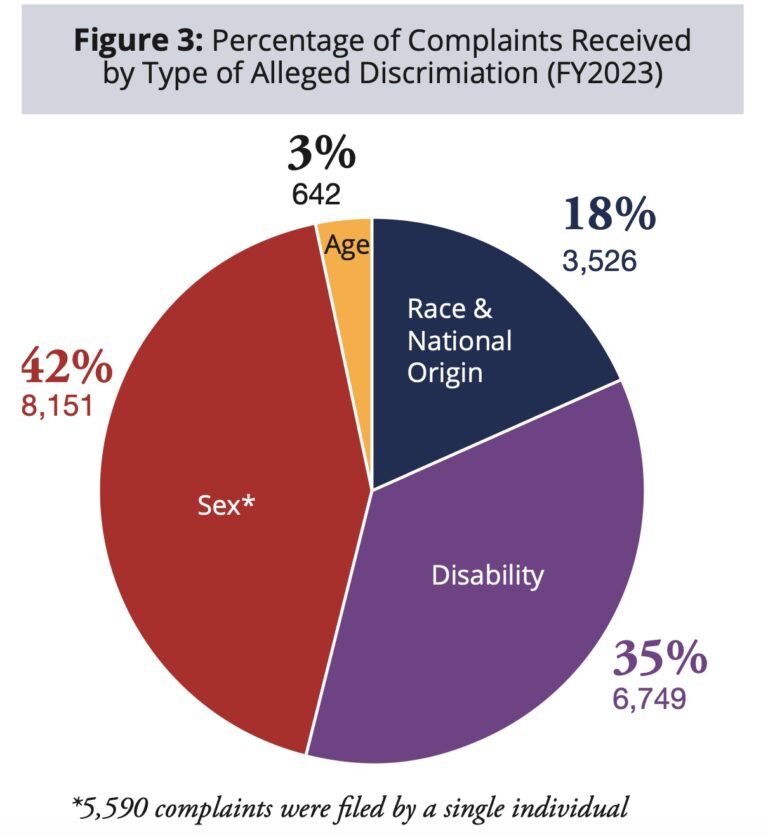
The Biden administration has issued yet another rule redefining “sex” to fit progressive gender ideology politics, this time in healthcare.

The U.S. Department of Health and Human Services Office for Civil Rights along with the the Centers for Medicare & Medicaid Services issued the final rule, which extends a wide swath of legal protections to transgender drugs and surgeries and in turn opens the door to sue those healthcare providers and insurers who do not support them.

HHS says the rule is allowed under Section 1557 of the Affordable Care Act, also known as Obamacare. The rule would apply to any healthcare providers or insurers who receive federal funding.

“Today’s rule is a giant step forward for this country toward a more equitable and inclusive health care system, and means that Americans across the country now have a clear way to act on their rights against discrimination when they go to the doctor, talk with their health plan, or engage with health programs run by HHS,” said Secretary Xavier Becerra.

Critics argue this rule is the latest effort by the Biden Administration to force a transgender agenda on Americans using federal rule-making.

“The Biden administration’s new healthcare mandate is a vast overreach that turns medicine upside-down,” Alliance Defending Freedom Senior Counsel Julie Marie Blake said in a statement. “Congress never voted to redefine sex in the Affordable Care Act to add gender identity. The rule harms families and children by promoting dangerous, life-altering ‘gender-transition’ procedures that remove healthy body parts or block puberty. The Biden administration’s egregious rule would alter the United States’ medical system for the worst.”

A federal district court ruled in March that the Biden administration could not require religious employers and religious healthcare providers to provide for transgender drugs and surgeries.

A similar Biden administration rule via the Department of Education to redefine sex in a similar manner has gotten national attention and pushback. The rule change, which critics say would end women’s sports in schools as we know it, is already facing a legal challenge from a collection of states.

The similar HHS rule change, however, has received less attention but could be just as impactful.

“Just days after the Biden administration gutted protections for women and girls in Title IX, they have now moved to inject radical gender ideology into hospitals and medical centers nationwide,” Terry Schilling, president of American Principles Project, said in a statement.

Schilling argued the rule would be used to require healthcare providers to offer sex-change operations, puberty blockers and more even to minors or face losing their license.

“Insurers will be compelled to cover these practices,” Schilling continued. “And individual doctors, nurses, and other practitioners will be pressured to facilitate sex changes or else risk career-ending lawsuits, even if it goes against their conscience and best medical judgment.

“Not only is this rule a blatant invasion of politics into medicine, but it also represents the privileging of an insane ideology over science and biology,” Schilling added.

David Eastman: Alaska’s Ethics Committee engages in election interference, violates ethics laws

30

By REP. DAVID EASTMAN

Judges in Alaska are barred by law from donating to a political organization or a candidate for public office (Canon 5(A)(e)).

Public members of Alaska’s Legislative Ethics Committee are likewise barred by law from participating in, or even attending, fundraising events on behalf of political parties or legislative campaigns. They are also barred by law from making a donation in any political race involving the legislature or someone running against a legislator or a legislative employee (AS 24.60.134).

That’s what the law says. Public members of the Ethics Committee simply choose to ignore it.

Conner Thomas has been continuously serving on the Ethics Committee since he was first appointed in 1998. While sitting on the Ethics Committee he has publicly made political donations to the Alaska Democratic Party, the Democratic National Committee, the Senate Democratic Campaign Committee (SDCC)#StopRepublicans, various Democrat candidates running against Republican legislators, and many other partisan causes.

He has been allowed to do this and continue serving on the committee because public members of the Ethics Committee habitually ignore violations of the law when committed by their fellow members of the Ethics Committee. In some cases, members have served on the committee and worked together for more than twenty-five years. Also, the committee (or those hired by the committee) are the ones who recommend to the chief justice that members should be reappointed to additional terms on the committee.

Last year, the committee even went so far as to convince Chief Justice Maassen to intentionally delay his reappointment of current members of the committee until after their terms of office had already expired. By intentionally delaying their own reappointment, members of the Ethics Committee circumvent the state law that prevents them from continuing to remain on the committee after the legislature has refused to confirm their reappointment.

Given the power wielded by the committee, some legislators are reluctant to object to current members of the committee being given additional terms, especially considering the prospect that those same members will continue to sit on the committee even if the legislature is successful in blocking their confirmation.

In 2020, Chief Justice Bolger reappointed Joyce Anderson to the committee for another term. The 31st Legislature quietly declined to confirm her appointment. Instead of resigning, she chose to continue to sit on the committee just as if the legislature had voted to confirm her appointment. Because the chief justice had delayed submitting her reappointment until after her previous term had expired, she was able to continue sitting on the committee uninterrupted until her appointment could be confirmed by a future legislature.

Imagine what it would be like to be a Republican legislator and to know that, at any time, you could be hauled into a courtroom presided over by a judge who is fully committed to the success of the Democratic Party. Would you expect to get a fair shake?

This is what it is like for legislators from conservative districts who have the misfortune of being labeled “too conservative” by those serving on the Ethics Committee in Juneau. It is a glimpse into what legislators like Lora Reinbold, Christopher Kurka, Tammie Wilson and others experienced at the hands of the Ethics Committee during their time in the legislature. In the case of Rep. Kurka and Sen. Reinbold, that treatment continued even after they had left the legislature.

Sen. Reinbold decided not to run for reelection in 2022 and to instead continue to battle the Ethics Committee in court. Rep. Kurka decided instead of running for reelection to run for governor. On April 25th, a fraudulent ethics complaint was filed against Rep. Kurka during his campaign for governor. On April 26th, the day after the complaint was filed, the Chair of the Ethics Committee made a campaign donation to Bill Walker, one of Rep. Kurka’s opponents in the primary election.

Predictably, the Ethics Committee then proceeded to drag out the investigation against Rep. Kurka for more than 18 months, forcing him to incur thousands of dollars in legal expenses before finally concluding, after his campaign had already ended, that the complaint was baseless.

To avoid the obvious conflict of interest that arises when legislators are legally investigated and prosecuted at taxpayer expense by their opponent’s supporters, the Ethics Act bars individuals who wish to make these kind of donations from serving on the Ethics Committee.

State law goes further than simply saying that a member of the Ethics Committee is prohibited from making a particular campaign donation when they are serving as chairman of the committee, or that they are prohibited from making a particular campaign donation when they are presiding over an ethics case involving a particular legislator. The Ethics Act bars members of the committee from making a donation for or against any legislator under any circumstances. Those who wish to influence elections involving legislators aren’t barred from making campaign donations, they are barred from serving on the Ethics Committee.

During his time on the Ethics Committee, Conner Thomas has made over 1,200 donations to Democrat candidates, the Democratic Party, and Democrat-affiliated groups. The fact that the Ethics Act, which he is sworn to uphold, specifically prohibits him from making a number of these donations has not stopped him from doing so.

This is the person that current members of the Ethics Committee unanimously elected to be their chairman, not just once, but repeatedly.

This ought to tell you something about the political leanings of those currently sitting on this committee. It should also tell you something about what conservative legislators are up against in Juneau today. It’s not a fair fight when your political opposition breaks the law with impunity and then uses public funds to prosecute you for made-up crimes.

No legislator worth their salt should be voting to tolerate these kinds of on-going abuses.

Some of the many campaign donations made by Conner Thomas while serving on the committee include:

On April 4, 2022, while serving as Chairman of the Ethics Committee, he made a campaign donation to Bill Walker who was running against Rep. Kurka in the primary election. This donation violated the Ethics Act.

On April 22,2022, while serving as Chairman of the Ethics Committee, he made a campaign donation to Mary Peltola, who was running against Sen. Josh Revak for Alaska’s vacant congressional seat. This donation violated the Ethics Act.

On April 26, 2022, while serving as Chairman of the Ethics Committee, he made a second campaign donation to Rep. Kurka’s opponent, Bill Walker. This donation violated the Ethics Act.

On June 7, 2022, while serving as Chairman of the Ethics Committee, he made a political donation to the Alaska Democratic Party. Note: this donation was made while Sen. Josh Revak was running against Mary Peltola for Alaska’s vacant congressional seat.

On November 21, 2020, while serving as Vice Chair of the House Subcommittee of the Ethics Committee, he made a political donation to Stop Republicans. The Ethics Act permits staff contracted by the Ethics Committee to engage in certain political activities “if doing so will not lead to the appearance that the committee is subject to undue political influence and there is no appearance of impropriety” (AS 26.40.134). Should we expect committee staff to follow the law if Ethics Committee leadership openly refuses to be held to this same standard?

On January 14, 2021, while serving as Vice Chair of the House Subcommittee of the Ethics Committee, he made a second political donation to Stop Republicans.

On September 8, 2021, while serving as Chair of the House Subcommittee of the Ethics Committee, he made a third political donation to Stop Republicans.

On October 17, 2018, while serving as Senate Subcommittee Chair of the Ethics Committee, he made a campaign donation to the Senate Democratic Campaign Committee (SDCC). The SDCC is a subdivision of the Alaska Democratic Party. Campaign donations made to the SDCC in 2018 were transferred to Rep. Scott Kawasaki’s legislative campaign for state senate. This donation violated the Ethics Act.

On August 22, 2018, while serving as Senate Subcommittee Chair of the Ethics Committee, he made a campaign donation to Mark Begich who was running against Sen. Kevin Meyer. This donation violated the Ethics Act.

On September 13, 2018, while serving as Senate Subcommittee Chair of the Ethics Committee, he made a campaign donation to Mark Begich who was running against Sen. Kevin Meyer. This donation violated the Ethics Act.

On September 17, 2018, while serving as Senate Subcommittee Chair of the Ethics Committee, he made a campaign donation to Bill Walker who was running against Sen. Kevin Meyer. This donation violated the Ethics Act.

On September 17, 2018, while serving as Senate Subcommittee Chair of the Ethics Committee, he made a campaign donation to Mark Begich who was running against Sen. Kevin Meyer. This donation violated the Ethics Act.

On September 20, 2018, while serving as Senate Subcommittee Chair of the Ethics Committee, he made a campaign donation to Mark Begich who was running against Sen. Kevin Meyer. This donation violated the Ethics Act.

On September 27, 2018, while serving as Senate Subcommittee Chair of the Ethics Committee, he made a campaign donation to Mark Begich who was running against Sen. Kevin Meyer. This donation violated the Ethics Act.

On October 4, 2018, while serving as Senate Subcommittee Chair of the Ethics Committee, he made a campaign donation to Mark Begich who was running against Sen. Kevin Meyer. This donation violated the Ethics Act.

On October 11, 2018, while serving as Senate Subcommittee Chair of the Ethics Committee, he made a campaign donation to Mark Begich who was running against Sen. Kevin Meyer. This donation violated the Ethics Act.

On October 18, 2018, while serving as Senate Subcommittee Chair of the Ethics Committee, he made a campaign donation to Mark Begich who was running against Sen. Kevin Meyer. This donation violated the Ethics Act.

On October 19, 2018, while serving as Senate Subcommittee Chair of the Ethics Committee, he made a campaign donation to Mark Begich who was running against Sen. Kevin Meyer. This donation violated the Ethics Act.

On October 21, 2018, while serving as Senate Subcommittee Chair of the Ethics Committee, he made a campaign donation to Mark Begich who was running against Sen. Kevin Meyer. This donation violated the Ethics Act.

On October 24, 2018, while serving as Senate Subcommittee Chair of the Ethics Committee, he made a campaign donation to Mark Begich who was running against Sen. Kevin Meyer. This donation violated the Ethics Act.

On October 25, 2018, while serving as Senate Subcommittee Chair of the Ethics Committee, he made a campaign donation to Mark Begich who was running against Sen. Kevin Meyer. This donation violated the Ethics Act.

On November 1, 2018, while serving as Senate Subcommittee Chair of the Ethics Committee, he made a campaign donation to Mark Begich who was running against Sen. Kevin Meyer. This donation violated the Ethics Act.

On May 16, 2016, while serving as House Subcommittee Vice Chair of the Ethics Committee, he made a political donation to the Alaska Democratic Party.

On March 31, 2015, while serving as House Subcommittee Vice Chair of the Ethics Committee, he made a political donation to the Alaska Democratic Party.

On June 30, 2014, while serving as Senate Subcommittee Chair of the Ethics Committee, he made a campaign donation to Byron Mallott who was then campaigning with Senate Minority Leader Hollis French as Democrat candidates for governor and lieutenant governor, respectively.

Records show that while serving on the Legislative Ethics Committee, Conner Thomas made over a thousand political donations to the Democratic Party and other partisan causes.

Rep. David Eastman represents Wasilla House District 27.

Candidate Suzanne LaFrance is supported by extreme anti-gun group in Washington State

Candidate Suzanne LaFrance, running for mayor of Anchorage and in the current run-off election against Mayor Dave Bronson, is supported by Fuse Washington, which bills itself as Washington’s “largest progressive organization – people creating change online, on the ground, and on issues that matter most.”

One of the issues that matters most to Fuse Washington is gun control.

The Fuse group supports Bob Ferguson, attorney general of Washington state, for governor in that state’s next gubernatorial election. Ferguson has partnered with retiring Gov. Jay Inslee to pass dozens of laws and regulations to eliminate the right to own a firearm in Washington. Fuse Washington has the ban of “assault weapons” as one of its highest priorities.

On campaign finance paperwork with the Alaska Public Offices Commission, LaFrance support group “907 Action,” a side activity of the leftist pop-up group “907 Initiative,” has sent thousands of dollars to Fuse Washington for help with the campaign against Mayor Bronson.

907 Action’s executive director is Aubrey Wieber, who came to Alaska as a reporter for the Anchorage Daily News, and then became an Assembly aide to Assemblyman Chris Constant, before being hired by the newly launched 907 Initiative, whose supporters include all-female, all Democrat types:Debra Call, the group’s president; Eleanor Andrews, vice president; and Sydney Scout, treasurer.

Fuse’s criteria for endorsements include supporting those who are women, people of color, LGBTQ and young candidates.

The 907 Action group popped up as a subsidiary of the 907 Initiative, which does not report its funding sources to the public. In 2022, the 907 Initiative reported it had $341,000 in revenue during its initial start-up year, but it hid the source of all of its contributions.

Ballots for the runoff election go in the mail to qualified Anchorage voters on April 30, and they must be returned to the local drop boxes or mailed back to the Municipal election office by May 14.

Will the Democrat convention in Chicago be a repeat of 1968 or 2020 riots?

With violent protests rising across America’s college campuses between those who support Hamas-led terrorists and those supporting the right of Israel to exist in peace, a summer of riots could be ahead, hearkening back to the riots during the 2020 presidential election cycle, when Black Lives Matter was all the topic, and where “CHAZ” encampments took over the streets of cities in the hot summer months leading up to the primary and general election.

The officials in charge of safety for this summer’s Democratic National Convention in Chicago say protests will be allowed, but only to a point. They don’t want to see a repeat of the violent 1968 Democratic National Convention in Chicago, when anti-war protestors took over the convention district. The National Guard was deployed to break up the protests that year, after Chicago had been the target of riots and mass looting since the assassination of the Rev. Martin Luther King Jr.

Illinois Gov. J.B. Pritzker told CNN, “Look, we believe in free speech, and we’re going to allow people to protest and say whatever it is they want to say, but the reality is, we’re also going to make sure that people have ingress and egress and that they’re safe in our state.”

Since he made that statement, however, college campuses across America have erupted in pro-Hamas demonstrations and encampments, and surveys shows that more than 50% of Jewish students feel unsafe on college campuses today. In one survey, 65% of respondents have felt unsafe on campus due to anti-Semitic attacks, with one in 10 reporting they have feared physical assault because they are openly Jewish.

A Jewish student at Yale University earlier this month was stabbed in the eye by a pro-Hamas protestor wielding a Palestinian flag. Chants of “Burn Tel Aviv to the ground,” and “Hamas we love you. We support your rockets too!” have been recorded by those covering the Columbia University riots.

Chicago has been a hotbed of political demonstrations and looting. Recently, the access to Chicago’s O’Hare International Airport was shut down by hundreds of protestors. Gov. Pritzker said the protesters were cleared quicker than any other similar road protests across the country.

“Our Chicago Police Department was able to get those folks off the highway faster than any other city in the United States. And they’re prepared for the Democratic Convention.”

But that was before the Palestinian protests have erupted and become more violent and widespread on campuses — weeks before schools are emptied for the summer. The rhetoric and violence against Jewish people has only intensified in recent weeks, splitting the Democratic Party, as its members argue over what constitutes “genocide.”

The Democratic National Convention is scheduled for Aug. 19-22. President Joe Biden is the party’s only nominee.