Over the winter, the publisher of the Anchorage Daily News began asking thought leaders in Anchorage about how the community would react to the newspaper reducing its hard copy editions to twice a week.
The decision was made by the owners, the Binkley Company, and announced to staff in April, but a computer issue involving ransomware attacks postponed the date of conversion from June 2 to July 15.
The announcement of the planned reduction was made public today. According to the newspaper, three jobs will be lost; they are in the distribution department. No other jobs will be touched.
The newspaper already had outsourced its printing in 2017 to Wick Communications, which owns and prints the Frontiersman newspaper in the Mat-Su Valley, and it’s not been revealed if jobs will be lost at that printing plant as a result. Ryan Binkley, CEO, said that the journalism of the Anchorage Daily News will remain strong: “The move won’t affect news coverage or the organization’s journalistic ambition,” the paper said.
“The decision to reduce print days reflects changing reader habits and rising costs. Readership on ADN.com and its mobile app far exceeds that of the print newspaper — accounting for more than 90% of readership overall. The number of digital-only subscribers surpassed the number of print subscribers several years ago,” the newspaper said today in a story.
The news of the reduction was reported at Must Read Alaska on April 11, before the ransomware attack delayed the date for conversion.
In an interview in Fairbanks, Alaska Rep. Mary Peltola broke her silence about Joe Biden: She predicted that Donald Trump will win Alaska in a landslide in November.
Peltola also said that her opinion about Biden’s mental capacity and the growing concern about his dementia is “irrelevant.”
“I don’t think there is any benefits to Alaskans weighing in on this issue,” Peltola said. “My opinion is irrelevant.”
Peltola was working to suppress Democrat expectations, but she also contradicted the proclamations of her own party. In a May visit to Alaska by Democratic National Committee Chairman Jamie Harrison, he said that ranked choice voting could give Biden a victory in Alaska.
Peltola has a markedly different view from DNC Chairman Harrison:
“Alaska is not in play in the presidential race and that last I heard, Biden was 33 points behind Trump in Alaska,” Peltola told the Fairbanks News Miner. “The last presidential election cycle, it was 10 points above for Trump.”
The reporter did not press Peltola on what a landslide for Trump might mean to her own race, but her prediction may have been off script. This may be the last newspaper interview her campaign agrees to.
While there is no poll that has been made public showing Trump to be in landslide territory in Alaska, it may be Peltola’s own internal polling that she accidentally spilled during her interview, or it could be just something she thought of on the fly.
In December, Peltola was cheering Biden on, calling him “one of the smartest, sharpest people I’ve met in D.C.” Even then, that was an extraordinary claim, but is now widely viewed as a political white lie.
Alaska is still somewhat a red state; Peltola is somewhat of an anomaly in its history. For 49 years, a Republican served Alaska in its only congressional seat until Congressman Don Young died in 2022.
Going back to 2016, and Trump’s first run for elected office, Trump beat Hillary Clinton by 14.7 points in Alaska.
Four years later, Trump carried Alaska by 52.8% compared to Biden’s 42.8%.
Liberal pollster Data for Progresspredicts Trump will win Alaska 53% to Biden’s 41%, a 12-point advantage for Trump. That was for polling up through early March of 2024, before the recent disastrous performance of Biden in the presidential debate on CNN, which took place June 27.
Peltola, calling a 33 point loss for Biden, infers that Alaska not only handed Trump the closest presidential victory state Republicans have seen in decades in 2020, but this year will give him the largest landslide a Republican has ever had in Alaska history.
In 2004, a significant landslide in Alaska was won by incumbent President George W. Bush by a 25.5% margin against Democrat John Kerry. It was Bush – 61% to Kerry – 35.5%.
In 2000, George W. Bush won 58.6% to Al Gore’s 27.6% of the Alaska vote, a 31% landslide. In that year, however, Ralph Nader, a candidate for the Green Party, had drained 10% of the liberal vote from Gore’s totals in Alaska. Without Nader as a spoiler for the Democrats, it would have been closer.
In 1980, Alaska was won by Republican California Gov. Ronald Reagan with 54.3% over incumbent Democrat President Jimmy Carter’s 26.4%.
In 1976, Gerald Ford won 57.9% of the Alaska vote, making Alaska Ford’s fifth-strongest state, after Utah, Idaho, Wyoming, and Nebraska. Jimmy Carter won 35.65% of the Alaska vote that year. Ford would have done better if not for the Libertarian in the race scraping off 5.49% of the conservative vote.
A warning to parents, children, and the elderly: A street just a block east of Cuddy Park has become the new no-man’s-land for street people living in cars, trucks, and tents in Anchorage.
In addition to tarps, tents, and vehicles in the street, the street is lined with trash, debris, and what are probably stolen bicycles. It’s not the kind of place where a person would walk or drive without a sidearm or an officer of the law.
After being abated from public land at 3rd and Ingra Street last year, the encampment took over Cuddy Park as well as the “Archive Property,” eight acres on the south end of the park, in Midtown. Abatement that occurred at that site in May has resulted in the homeless village reconvening a block away, on a stub of Fairbanks Ave. that is between Home Depot and the Brown Jug.
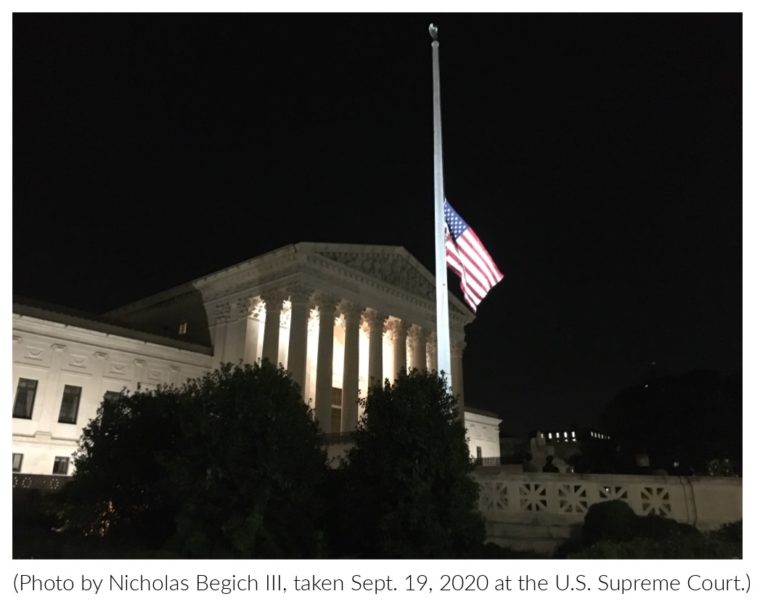
The Supreme Court has ruled that cities can enforce rules about these encampments, but the Anchorage Assembly appears to be unwilling.
The Assembly’s chair for homelessness Felix Rivera says there won’t be any action that makes street takeovers illegal. A recently passed ordinance only bans homeless campsites within a half-mile of a shelter and trims group encampments to no more than 25 tents. It’s unclear which tents will be removed if an encampment outgrows the limits.
The ordinance also says that if the city wants to clear a camp, it needs to give the campers 10 days, rather than the 15 days previously on the books.
Observers of the street village say that at least in one tent on the street, different people come and go all day, popping into the tent and then leaving. People in the village have stolen pallets from stores nearby to create structures and build fires. But police are rarely observed in the area. Anchorage Police have instead been busy ticketing speeders on the highway.
Alaska Airlines flight attendants have a tentative agreement with the airline that could avert a strike or work slowdown. The draft contract boosts pay by 32% and also specifies that flight attendants will be paid for the boarding period before the plane takes off. Currently, they are not paid while passengers board, as wages start when the airplane door gets shut.
The three-year contract must be ratified by the Association of Flight Attendants’ Alaska members, who authorized a strike in February. Negotiations have been going on for 20 months. Before the vote, the association will be doing a “road show” to explain the changes to the voting members.
“After an intense week of negotiating at the National Mediation Board, and the clear deadline we set for the company, we have a Tentative Agreement (TA) for a record contract,” The Association of Flight Attendants said last week.
Flight attendants at Alaska Airlines earn between $42,000 and $74,000 a year, with an average of $56,000.
July 1 marked the start of Fiscal Year 2025 at the Alaska Permanent Fund Corporation.
As it does each year since a 2018 law went into effect, the Permanent Fund has committed some funds to the Percent of Market Value (POMV) draw for the State’s operating budget for the following fiscal year, which is FY 2026. The FY 2025 POMV draw of $3.7 billion supports the current fiscal year’s budget.
The Earnings Reserve Account has realized earnings of $3.9 billion that are available for the FY26 POMV draw.
An annual 5% draw from the Alaska Permanent Fund’s Earnings Reserve Account provides more than 50% of total Unrestricted General Fund revenue, which funds State government operations and the Permanent Fund dividend to qualifying Alaskans. $1.4 billion is set aside for inflation proofing.
Unaudited FY 2024 financial statements that dial in the specifics will be available online at the end of July at apfc.org/report-archive.
Last July’s report showed an overall balance of $78 billion in the fund, with $67.5 billion to total principal. This year, the fund will likely show an all-fund balance of more than $80 billion, about double what it was in 2012. The fund has been riding at about $80 billion for several months.
$80 billion isn’t what it used to be. Although the fund has doubled since 2012, inflation has eaten away at the value. Between 2012 and 2022, the U.S. dollar had an average inflation rate of 2.46% per year, for producing a cumulative price increase of 27.47%. A $20 in 2012 would buy what it took $25.40 to buy in 2022. From July 2022 to July 2023, the Consumer Price Index for all urban consumers increased 3.2%. Therefore, the $2 billion gain in the fund, year over year, is barely keeping up with inflation.
The Permanent Fund has enough to potentially meet the 5% earnings draw for Fiscal Year 2026, but just barely. It will need solid returns in this fiscal year in order to meet demands of the State’s operating budget and annual dividend — and that doesn’t factor in what it will need in 2027.
The Alaska Permanent Fund is a unique fund established to help the state operate once oil was gone and the revenue stopped coming in from the North Slope. The fund was established by Alaska voters in a 1976 vote that added the following language to the Alaska Constitution in Article IX, Section 15:
“At least twenty-five percent of all mineral lease rentals, royalties, royalty sale proceeds, federal mineral revenue sharing payments and bonuses received by the State shall be placed in a permanent fund, the principal of which shall be used only for those income-producing investments specifically designated by law as eligible for permanent fund investments. All income from the permanent fund shall be deposited in the general fund unless otherwise provided by law.”
The constitutional amendment protects the fund deposits by dividing the fund into two parts: the principal (non-spendable) and the Earnings Reserve Account (spendable). The funds are commingled and invested under the same asset allocation. Like other investment funds, the Alaska Permanent Fund is subject to market fluctuations.
The former executive editor of The New York Times gave away the game: The media were in on it.
They helped cover up President Biden’s dramatic cognitive decline and gaslit Americans regarding his mental and physical condition.
In case you just returned from Earth 2, where Mr. Biden is crushing everyone at pickleball, the real Mr. Biden manifested as a confused and tired old man in the first debate of the presidential campaign against Donald Trump on June 27. The media reacted with shock, as if they hadn’t seen any hint of this previously.
In remarks to the news outlet Semafor, former New York Times boss Jill Abramson gently chided the media for not reporting that Mr. Biden was cognitively impaired before he demonstrated it for all the world to see.
“The Biden White House clearly succeeded in a massive cover-up of the degree of the president’s feebleness and his serious physical decline, which may be simply the result of old age,” Ms. Abramson said. “Shame on the White House press corps for not [having] pierced the veil of secrecy surrounding the president.”
But then she let out the truth while apparently failing to realize how big her admission was.
“I worry that too many journalists didn’t try to get the story because they did not want to be accused of helping elect Donald Trump,” she said.
And there you have it.
That’s a political decision, not a journalistic one. And that makes them campaign operatives, not reporters.
But the worst part is that she gave them a pass on concealing stories to protect one side.
“I get that,” she said.
But then, after offering that absolution, she still pretended that everyone was unaware of what had happened when Mr. Biden unraveled.
“It is simply astounding for the entire country, including its most seasoned reporters, to be as shocked as everyone was by the ugly and painful reality of Biden’s debate performance,” Ms. Abramson said.
But millions of Americans weren’t shocked, because they’d seen enough of Mr. Biden to have suspicions. And many White House reporters who frequently see the president shouldn’t have been surprised either.
Former Washington Post reporter Carl Bernstein, famous for helping to topple President Richard Nixon, finally decided it was OK to say something detrimental about Mr. Biden. On CNN, he told Anderson Cooper that people close to the president say they’ve seen him many times in various states of befuddlement.
“There have been 15, 20 occasions in the last year and a half when the president has appeared somewhat as he did in that horror show that we witnessed,” Mr. Bernstein said. “And what’s so significant is the people that this is coming from, and also how many people around the president are aware of such incidents, including some reporters, incidentally, who have witnessed some of them.”
All journalists who have been present when Mr. Biden exhibited incoherence, memory lapses or prolonged breaks with the world around him and who did not report what they had seen because they were protecting their favored candidate ought to resign from journalism immediately.
So should any reporter who dutifully parroted the obvious White House lie that Mr. Biden appeared doddering in videos only because they’d been deceptively edited by Republicans?
And every journalist who tried to shame and silence anyone who ever questioned Mr. Biden’s health should never be awarded a byline again.
All of them rolled the dice. White House staff, Biden campaign staff and national news media.
They were gambling that Mr. Biden could make it through this debate and the next one and get past the challenges he’d face between now and Election Day without figuratively or literally face-planting in public.
They lost that bet, and the media quickly calculated that the charade could not continue. So they have viciously turned on Mr. Biden and disingenuously demanded to know how he could have deceived them all.
Except they weren’t deceived. They were in on it. They’re just mad that Mr. Biden let them down, exposing them all.
It shouldn’t be surprising, because it’s what they do. If Mr. Trump is on one side of an issue, they pick the other.
Mr. Biden isn’t addled; he’s sharp.
He’s not confused; the videos are “cheapfakes.”
COVID-19 didn’t come from a Chinese lab; it originated naturally.
In this case, they didn’t just get the story wrong; they lied about it and tried to hide the fact that the president is functional for only a sliver of each day, at best.
They knew the truth about Mr. Biden but decided you shouldn’t.
And that’s why you should never trust them again.
• Tim Murtaugh is a Washington Times columnist, a communications consultant, the co-host of the “Line Drive Podcast,” and the author of the Amazon bestselling book “Swing Hard in Case You Hit It: My Escape From Addiction and Shot at Redemption on the Trump Campaign.”This column first ran in the Washington Times.
Dr. Kevin O’Connor, the president’s personal doctor, invited a Washington D.C. neurologist to the White House in January for a meeting, the White House visitor logs show.
The New York Post discovered the meeting by reviewing the logs. In addition to Dr. Kevin Cannard, who is a Parkinson’s disease expert at Walter Reed Medical Center, two others convened in the White House residence clinic on Jan. 17, including cardiologist Dr. John E. Atwood of Walter Reed.
While national concerns swirl around Biden’s health, five Democrats in Congress have now come forward to tell the 81-year-old Biden to step aside from his reelection campaign. He continues to refuse.
Rep. Mary Peltola is not among those calling for Biden to drop. But ultimately, she’ll be given her instructions.
Last year, after the State of the Union Address, Peltola leaned on her Yupik background to excuse Biden: “In Yupik culture, we have deep respect for the wisdom of elders, and President Biden has used his experience to achieve bipartisan successes over the past two years.”
When Queen Elizabeth died, she also used the “elder” theme: “Yupiks honor our elders and hold them in the highest regard. Queen Elizabeth was the world’s premier elder. I’m mourning her passing today.”
In December, on Meet the Press, Peltola kept the theme going: “I really have a tremendous amount of respect for elders … I think that Joe Biden’s mental acuity is very, very on. He’s one of the smartest, sharpest people I’ve met in D.C. And as a Native person, I think age is a good thing. Wisdom and experience are a good thing. I think he leads with love and compassion, and I appreciate that in a leader.”
Three weeks later is when the Parkinson’s specialist showed up at the White House for a quiet meeting.
On Saturday, a seventh Democrat in the U.S. House effectively admitted that Biden can’t win. Minnesota Rep. Angie Craig posted her comments on X:
“As an elected leader, I feel a responsibility to be honest about what I believe, even when it’s hard to hear. President Biden is a good man & I appreciate his lifetime of service. But I believe he should step aside for the next generation of leadership,” Craig wrote. “This is not a decision I’ve come to lightly, but there is simply too much at stake to risk a second Donald Trump presidency. That’s why I respectfully call on President Biden to step aside as the Democratic nominee for a second term as President and allow for a new generation of leaders to step forward.”
In addition to Craig, Rep. Lloyd Dogged of Texas, Rep. Mike Quigley of Illinois, and Rep. Raul Grijalva of Arizona have said publicly that Biden must step aside, Two leaders of the Blue Dog Democrats — Rep. Jared Golden of Maine and Rep. Marie Gluesenkamp Perez, who have publicly said that Biden cannot win. Peltola, who co-chairs the Blue Dogs, has said nothing.
Yet, as the support crumbles around Biden, Alaskans may soon hear that “respect for elders” theme once again, as her staff crafts a message that will give her some plausible deniability.
After Biden’s disastrous performance at the debate with Donald Trump, Peltola remained in rural Alaska, campaigning in Kotzebue and Nome and walking in the Fourth of July parade in Ester, where she has supporters.
Empty buses following their routes through Anchorage with just two or three people onboard is not the only problem that the People Mover system has. The city’s bus service also can’t find drivers to move those empty buses around.
Two years after the city had bought 40 new buses to replace the ones that had been in service since 2013, bus service will be scaled back in October due to “significant workforce shortages and challenges.”
The city has paid over $750,000 in overtime since Jan. 22, 2024, and its on-time performance has been just 74%, while it has missed 224 trips in the first 150 days of the year. An unreliable bus system can be a serious problem for people who can’t report to work on time.
A public comment period opened quietly on July 5 and will run through Aug. 5 to help inform the city about which routes could be cut.
“Significant workforce shortages and challenges are affecting attendance and availability to perform the work and impacting the ability to maintain current service levels. This situation is affecting not only riders but also the expectations of the Administration and the Assembly. The Department is working diligently with Municipal partners (Human Resources, Municipal Manager, Legal, and Risk Management) and the Teamsters Local 959 to find solutions. Recognizing this is a hardship for you, your patience and understanding are appreciated as these challenges are addressed,” the municipality says on the website.
But evidently the challenges are not expected to be fixed by the end of October, when the reduction of bus service is going into effect. Thus, it’s not “if” the bus service will be cut, but “which routes.”
The People Mover system is considering two main options:
Option A: All standard and neighborhood routes would have buses coming every 60 minutes, but Route 25 would keep its current level of frequent service. So, Routes 31, 35, 41, 51, 55, and 65 would be most impacted and have buses come every hour all day long. The option would impact 10 routes altogether.
Option B: Route 25 would have buses every 30 minutes all day, instead of 15 minutes. Route 25 is the busiest route, so this change means that trips might take longer because the buses will be fuller and stop more often, People Mover says. But all the other routes will stay the same as they are now. The option would impact just three routes.
Public comment, to be taken in writing, will also be taken at public events:
Although rain and humidity have started to tamp down the 388-acre Riley Fire in the Denali National Park and Preserve, which is closed to the public for the seventh day.
Denali National Park is Alaska’s most popular land attraction. The tallest mountain in all of North America, the peak is surrounded by more than 6 million acres of wilderness.
Golden Valley Electric Association crews restored power to Nenana Canyon on Thursday and most businesses in Glitter Gulch are now reopened. For visitors, the gift shops and snack concessions will be as close as they can get to the park itself.
The Riley Fire is now 25% contained. Fire managers said they are confident that the fire will not cross the containment line. Crews are working to extend the containment line by going further into the burned area and extinguishing hot spots.
“Although the fire may not look very active, a deep layer of organic matter, or duff — roots, leaves, needles, and twigs — continues to smolder. The fire has burned in a mosaic pattern. Some areas are burned black, some trees are partially burned, and large areas within the fire perimeter remain unburned. The result is that a tree canopy remains, which can prevent rain from reaching the ground. The recent rain showers have helped with humidity and cooler temperatures, but vegetation, which is fuel, remains dry,” the Alaska Fire Info website explains.
The Riley Fire has 196 personnel assigned as of July 6.
Showers on Thursday and Friday dropped about a quarter of an inch of rain on the fire. More rain is likely for Saturday and Sunday, and could bring totals for the week near half an inch.
It was cool and windy, with gusts of more than 40 mph on Friday, and Saturday is expected to be even windier. Temperatures will remain cool through Sunday, with highs near 60°F and relative humidity above 40%. Warmer and drier weather is predicted to resume early next week.
The evacuation status in the park is unchanged. All Bison Gulch and Antler Ridge hikers, Riley Creek Campground, and all employees housed at the Denali National Park Joint Venture facility, National Park Service Campus Housing, and Admin Camp should evacuate, the fire managers said.