At its regular Tuesday meeting, the Anchorage Assembly is slated to approve over $1.4 million in additional funding to support ongoing shelter operations and services for individuals who are without shelter. The expenditures are outlined in a series of Assembly Memorandums and represent a continuation of the city’s broader efforts to underwrite and expand shelter capacity amid a crisis in vagrancy and substance abuse addiction that has made Anchorage a daunting place for others to live and work.
The proposed allocations include the following:
$730,000 to Catholic Social Services for continued operations of the Brother Francis Shelter (AM 387-2025). This amendment to the existing grant agreement with the Municipality of Anchorage and the Anchorage Health Department (AHD) would support one of the city’s central emergency shelter facilities.
$50,000 to Restorative & Reentry Services, LLC for professional third-party oversight of emergency cold weather shelters operated by the municipality (AM 404-2025). This contract aims to ensure accountability and quality in the delivery of shelter services during the harsh winter months.
$1,144,847 to Habitat for Humanity Anchorage for property acquisition to be used by the Municipality and the Anchorage Health Department (AM 407-2025). This investment is intended to expand long-term shelter or transitional housing capacity.
$265,710 to MASH Property Management LLC for non-congregate shelter services (AM 413-2025), replacing services previously anticipated to be provided by Henning, Inc.
These proposed allocations follow several other significant expenditures by the city in 2025 focused on addressing homelessness. In previous months, the Assembly approved:
$1.5 million in operational support to expand non-congregate shelter options in early February.
$3.2 million for transitional housing development and support services allocated in March, which included funding partnerships with local nonprofits and behavioral health providers.
$500,000 to the Anchorage Coalition to End Homelessness for data coordination and client services, approved in April.
The Assembly meeting will take place starting at 5 pm the Loussac Library Assembly Chambers on Tuesday.
Here are the appropriations and their links on the agenda:
In 2018, the bumper sticker for then-Gov. Bill Walker claimed that Walker and Lt. Gov. Mallott “SAVED THE PFD FOR FUTURE GENERATIONS.” Walker vetoed half of the dividend that year. His bumper sticker was saying, essentially, he had to burn the village to save the village.
Seven years later, the PFD is still being burned. Now, it could be reduced to ashes for some Alaskans.
House Bill 209 by Rep. Zack Fields sets the PFD at a flat amount of $1,000, but would eliminate the dividend for anyone making over $50,000 a year (or $100,000 per married couple.)
In other words, the dividend would no longer be a share of the oil wealth of the state, but instead would be a welfare payment. HB 209 has been referred to House Judiciary and Finance Committees and is unlikely to pass both bodies this year due to the looming legislative deadline of May 21. It will be on the calendar for Judiciary on Monday.
“Payment of PFDs based on a 1982 formula is no longer practical,” said Fields in his sponsor statement.
Meanwhile, the Alaska Senate may cut the Permanent Fund dividend this year to $1,000 — its lowest level in history, when adjusted for inflation. It’s also lower than what the House passed earlier this year, $1,400.
The reduction in Senate Finance Committee trims an estimated $265 million from the Senate’s version of the budget, potentially bringing the state’s finances into balance without requiring new revenue sources or tapping more heavily into savings. The full Senate is expected to vote on the budget proposal next week. Ironically, several revenue bills are also awaiting action in the House and Senate, such as the controversial Etsy Tax, SB 113.
The PFD, distributed annually to nearly every Alaska resident, is a unique program Alaska lawmakers set up in 1982 that returns a share of the state’s oil wealth to its people.
The wealth originates from the Alaska Permanent Fund, a constitutionally established fund created in 1976 to save a portion of the state’s oil revenue for future generations and to eventually pay for state services when the oil runs out.
Dividend payments began in 1982, via statute rather than constitution, and were intended to ensure that Alaskans directly benefit from the development of natural resources, since private landowners in Alaska do not hold subsurface mineral rights — those belong to the state.
Historically, PFD amounts have fluctuated with oil revenues and investment earnings, but the dividend has become a contentious political issue in recent years as lawmakers find it easy to spend when oil prices are high, but can’t manage to trim when prices slip.
While earlier PFDs regularly exceeded $1,000 — and in some years, such as 2008 and 2015, approached or surpassed $2,000 — recent fiscal pressures have led to smaller payouts. The Legislature has increasingly used Permanent Fund earnings to pay for essential government services, squeezing the portion available for dividends.
This year’s proposed $1,000 check would be the lowest in real, inflation-adjusted terms since the dividend’s inception.
Historical Permanent Fund Dividend Amounts (1982–2024 not adjusted for inflation)
The Republican Party district committee for Alaska House District 27 has formally called on Gov. Mike Dunleavy to veto House Bill 57, citing concerns about government overreach, education spending, and potential violations of constitutional privacy rights.
In a resolution passed on May 2, the Wasilla Republicans argued that HB 57 undermines key principles of the Alaska Republican Party’s platform, particularly individual liberty, limited government, and parental rights.
District 27’s representative in the House, Jubilee Underwood, was a “yes” vote for HB 57. The Valley Republican Women of Alaska issued a statement after the vote, warning that “primaries are coming.”
Only eight Republican legislators in the House and three Republicans in the Senate voted against HB 57, which was the bill that became the Democrats’ funding mechanism for raising spending on schools.
Originally, it was a bill only about cell phone use in schools, but it now appears that Rep. Zack Fields, the lead sponsor, always intended it to be the vehicle for a major increase to the Base Student Allocation. Fields is the former communication director for the Alaska Democratic Party and field coordinator for AFL-CIO.
At the center of the District 27 committee’s opposition is a provision in HB 57 that would require the state to track Alaska’s high school graduates for 20 years after graduation, collecting data on their careers, education paths, and residency. The resolution characterizes this as “unprecedented government overreach” and a violation of Article I, Section 22 of the Alaska Constitution, which protects the right to privacy.
The resolution also criticizes the bill’s financial implications, pointing to more than $220 million in new education spending, including a $700 (12%) increase to the Base Student Allocation (BSA), without what the committee sees as sufficient reforms or accountability measures. Alaska already spends over $21,000 per student annually, and District 27 Republicans argue that the state’s low educational performance rankings warrant structural reform rather than increased spending.
Another point of contention is the bill’s conditional grant funding, which is tied to the future passage of Senate Bill 113 — a tax proposal from Democratic Senator Bill Wielechowski. District 27 Republicans labeled this a political maneuver that aligns with Democrat and union interests, not with the conservative grassroots.
The resolution concludes by urging Dunleavy to veto the bill “in its entirety” and calls on all Republican legislators to support a veto override if necessary.
Here’s the resolution in its entirety:
Resolution Urging the Veto of House Bill 57
District 27, Alaska Republican Party
WHEREAS, the Alaska Republican Party stands for individual liberty, parental rights, limited government, and strict adherence to the Alaska and U.S. Constitutions, as clearly stated in its platform; WHEREAS, House Bill 57 contradicts key principles of the Alaska Republican Party Platform, which surveillance and government abuse of the Alaska Permanent Fund Dividend, and champions results-driven investment in public services, particularly education; WHEREAS, HB 57 mandates the government to track Alaska’s high school graduates for 20 years after graduation, collecting career, education, and residency data—an unprecedented government overreach to be placed in state statute and a violation of the Alaska Constitution’s explicit right to privacy against unwarranted state intrusion (Article I, Section 22); WHEREAS, HB 57 includes contingency provisions tying reading incentive and Career Technical Education grants to the future passage of Senate Bill 113, a tax bill put forward by Sen. Bill Wielechowski (D-Anchorage); WHEREAS, HB 57 represents over $220 million in additional education spending, including a $700 (12%) increase to the Base Student Allocation, with little accountability or reform, at a time when Alaska ranks near the bottom in education outcomes despite already spending over $21,000 per student annually; WHEREAS, Alaskan students need and deserve educational choice, empowered parents, and improved charter school access and effective accountability from school administrators and districts, HB 57 instead rewards and perpetuates the status quo; WHEREAS, HB 57 was largely crafted and championed by Democrat legislators and union interests, despite clear opposition from the conservative base and grassroots Republican organizations across Alaska; NOW, THEREFORE, BE IT RESOLVED, that District 27 of the Alaska Republican Party urges Governor Mike Dunleavy to veto House Bill 57 in its entirety, due to overt betrayal of core Republican values; BE IT FURTHER RESOLVED, that District 27 of the Alaska Republican Party urges all Republican legislators to stand with the Constitution, the Republican Platform, and the people of Alaska by voting to uphold Governor Dunleavy’s veto of House Bill 57. Passed this 2nd of May 2025
Eli Graber Chair District 27 Alaska Republican Party
At Saturday’s Alaska Senate District E constituent meeting, attended by Senator Cathy Giessel (District E), Rep. Chuck Kopp (District 10), and Rep. Ky Holland (District 9), legislators were questioned about a pension plan some intend to resurrect for State employees.
It wasn’t that long ago that the legislature took action to address a funding shortfall for the prior state pension plan, which was unsustainable. The Legislature ended the defined-benefits pension program and replaced it with a 401(k) retirement plan.
This year, the Legislature struggles to identify revenue to fund basic state programs like education.
Sen. Giessel’s recent public position on natural resource development is that Alaska is not a “colony to be pillaged.”
This suggests Sen. Giessel may not support even a modest expansion of natural resource development. But, even if she did, certainly the democratic colleagues of her caucus wouldn’t support such expansion.
At the meeting, Giessel was asked, “What is the simple funding solution to the obvious issues with reinstating a pension plan for the public employees of Alaska?”
Giessel first addressed her position about Alaska not being a place to plunder. She clarified that she envisions Alaska taking over the role of ensuring adequate regulation and controls exist to protect air and water quality. Presumably, this effort would require enabling legislation, a new state agency or expansion of existing agencies, new regulations, enforcement rules, and compliance mechanisms.
Giessel did not provide specific details about her vision for expanding environmental controls over Alaska’s resource development industry. Giessel did, however, express concern over Alaska’s history of experiences with entities plundering Alaska’s resources citing examples like the Klondike gold rush era and the fishing industry’s past practices prior to statehood.
Giessel attributed problems with Alaska’s prior pension plan to a math error committed by an actuary. Her proposed pension plan, she claims, is fully endorsed as a practically fail-safe plan following a review by current state-employed actuaries – barring extraordinary circumstances, of course.
Furthermore, two additional actuaries have reviewed and provided similar endorsements. One of these two additional reviewers is rumored to be a former state-employed actuary himself.
Some have placed the price tag on Giessel’s new pension proposal at over $9B. Senator Giessel believes her plan is a bargain claiming an annual cost of only $45M to $50M and a net savings to taxpayers after accounting for attrition and the associated administrative cost to handle personnel related expenses.
An indicated feature of the new pension plan is that contributions may depend in part on market performance, which helps reduce the possibility that the state could face future pension funding issues.
Questioned later in the constituent meeting about dealing with the Alaska Department of Transportation and Public Facilities, Giessel accused the DOT&PF of being impossible to work with, and said the only way to deal with them is to cut their budget, which she says is exactly what the Senate Finance Committee has done.
Giessel says she had identified an additional $4M reduction, but that reduction had been sidelined.
Cutting the DOT&PF budget, of course, would only make it more challenging to access Alaska’s vast resources necessary to generate new revenue and fund things like a new state employee pension program. It should be noted here that Giessel’s husband is a longtime DOT&PF employee.
There was also a suggestion that the proposed pension plan is cheaper than the current defined contribution plan. If this is true, State employees might question whether Giessel’s plan is truly an increase in benefits to state employees, or a bait and switch. We may never truly discover this, given Giessel’s propensity to disguise herself as both a Republican and a progressive Democrat.
Meeting handouts highlighted how 40.7% of state revenue is from the federal government, 37.3% of state revenue is from Investment earnings, with only 13.8% coming from petroleum. Still, a handful of constituents cheered the idea of increasing and creating new state taxes. Senator Giessel presented her plan to generate new revenue by taxing S-Corporations while painting the majority owner of Hilcorp as an aristocratic polo-club lounger.
If it is true that you get more of what you subsidize and less of what you tax, the writing is on the wall. We can clearly see where Giessel’s plans will lead us.
The race horse Sovereignty galloped to a commanding victory at Churchill Downs in the 151st Kentucky Derby, leaving the pre-race favorite, Journalism, to write its own race recap for near-miss glory.
Journalism, despite 3-1 odds and a compelling narrative leading up to the race, couldn’t quite craft the fairy-tale ending on the sloppy track. While Journalism wrote the lead early on, it was Sovereignty’s late burst, after trailing the majority of the race, that clinched the win for the underdog.
According to theCourier-Journal, all the horses who ran the race were descendants of the famed racehorse Secretariat. Sovereignty was sired by Into Mischief. A $2 bet on Sovereignty paid out $17.92.
Simulated reality? Metaphor of the year? End of fake news? Next race bet: Truth vs. algorithm? Never count on Journalism? The jokes can go on, and some stories just write themselves.
Call it the Etsy tax. Or the Amazon tax — a tax on companies that provide a marketing and logistics platform for small businesses across America.
The Senate Rules Committee’s Senate Bill 113, the proposed tax on the profits of internet-based companies, was heard by the House Finance Committee on Friday. Its presenter, Sen. Bill Wielechowski, told a whopper.
This legislation would amend the state’s corporate income tax code to include out-of-state corporations that are conducting digital business with Alaskan consumers. Think Amazon and Etsy, two online companies that allow small businesses all over the world to have access to the American markets. Whatever portion of profit that Amazon might make from Alaska would be taxed by Alaska.
Alaskans depend heavily on Amazon and other digital platforms to get the goods they need — from medications to top soil, things that are hard to find in rural communities, especially.
But many Alaskans use Amazon Prime, which allows them free shipping. That means the sales to Alaska have a lower profit because people in Nome or Galena can buy top soil from out of state and have it flown in, with the shipping costs all but erasing any company profits. It’s possible that for many Alaska sales, the Lower 48 retailer barely breaks even. This tax could mean that companies start refusing to ship to Alaska.
The bill is projected to generate between $25 million and $65 million annually in new revenue for the State of Alaska — an amount that was once a rounding error in the budget.
SB 113 proposes shifting from the current “cost of performance” method to a “market-based sourcing” approach. This change would tax businesses based on the location of their customers rather than the location of the business itself.
For highly digitized businesses, defined as those deriving 50% or more of their sales in Alaska from intangible property or services delivered electronically, the bill suggests using a single sales factor formula. This method focuses solely on sales to determine tax liability, excluding property and payroll considerations.
In presenting his bill to House Finance Committee on Friday, Sen. Wielechowski said it was the same idea that Gov. Mike Dunleavy Administration had proposed in 2021, when he said he would back a bill that taxed out-of-state businesses doing business in Alaska, if the Legislature took the lead. He’s taking the lead.
“I can’t take credit for this bill. This was not my bill. This was proposed by the Dunleavy Administration a couple of years ago,” Wielchowski said. “And they proposed this idea to the fiscal policy working group.”
It’s false that the governor said he supported this concept. His former Revenue Commissioner Lucinda Mahoney had discussed such a tax at a forum once, but the governor never signed on.
In addition, the Department of Revenue has no understanding of how much this would bring in until FY 28. Wielechowski said the amount is as much as $65 million but it may be closer be $20 million. Few legislators appear to have a solid understanding that Amazon is a platform and that many of the sellers on the platform are very small companies with different taxes that apply to them, depending on their location.
The bill already passed the Senate on a vote of 15-4, with senators casting their votes:
Yeas: Jesse Bjorkman, Matt Claman, Mike Cronk, Forrest Dunbar, Cathy Giessel, Elvi Gray-Jackson, Lyman Hoffman, Scott Kawasaki, Jesse Kiehl, Kelly Merrick, Donny Olson, Bert Stedman, Gary Stevens, Loki Tobin, Bill Wielechowski, and Rob Yundt.
Nays: Shelley Hughes, James Kaufman, Robert Myers, and Mike Shower.
Wielechowski’s bill also increases taxes on oil and gas by changing the formula used to determine what portion of a business’ income is subject to Alaska’s corporate income tax. His changes target how oil and gas producers apportion their income to Alaska by changing the term “business income” to “apportionable income.”
Although the changes are possibly modest for the oil and gas sectors, there are other bills still in the queue by the Senate’s Democrat-led majority that would have a greater impact on Alaska’s producers and job creators, notably:
Senate Bill 112: Proposes reducing the maximum per-barrel oil production tax credits from $8 to $5. The reform aims to create a fairer and more sustainable tax structure for the state and is projected to raise approximately $400 million in new revenue per year. This bill is also sponsored by Sen. Wielechowski.
Senate Bill 92: Applies corporate income taxes to certain S-corporations in the oil and gas sector, specifically targeting companies that make over $5 million in taxable income. Called the Hilcorp tax because it targets one company, the measure is expected to generate as much as $175 million in revenue. It was originally sponsored by Sen. Rob Yundt of Wasilla, who later took his name off the bill. SB 92 awaits a hearing in Senate Finance Committee after passing Senate Resources Committee.
It’s unclear if food and medications purchased through Amazon would be considered part of the taxable base of businesses in the SB 113 tax, which if enacted, would take effect on Jan. 1, 2026.
SB 113 seems destined to pass the House, and it appears to have several Republicans supporting it, as they did in the Senate, as it is seen as an “easy” tax that will have no consequence.
However, there may be consequences unforeseen, such as the choice sellers can simply make to not do business with Alaska. Amazon sellers can choose not to sell to the 49th state due to high shipping costs. All they need to do is configure their shipping templates in the Seller Central tab to exclude Alaska by unchecking the state or setting prohibitively high shipping rates for Alaskans. This is sometimes done to avoid losses on heavy or bulky items, where shipping costs to remote areas can exceed profits.
If sellers, who will have the tax passed along to them, start reconsidering their interest in trading in Alaska, this may be one of the unintended consequences of Wielechowski’s Etsy Tax.
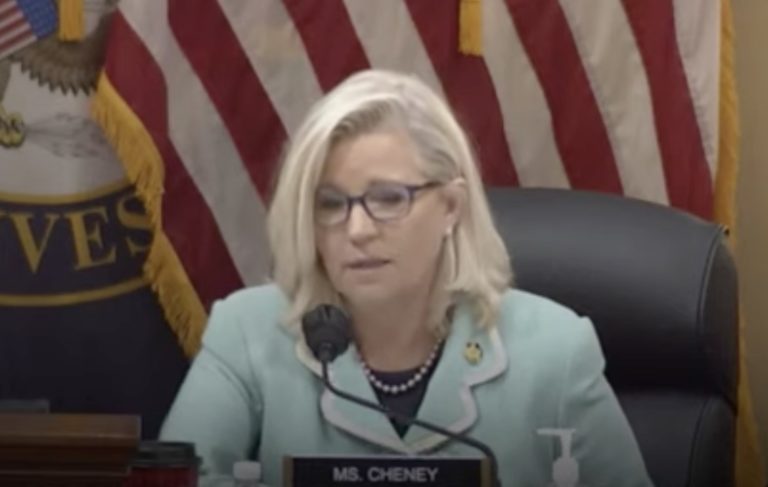
In Anchorage this week, former House Rep. Liz Cheney told an audience of Trump haters that only Sen. Lisa Murkowski is a good senator for Alaska. Apparently, she is not so keen on Sen. Dan Sullivan and she said that Republicans deserve to lose the majorities in the House and Senate.
“You have one good senator,” she said, after complimenting Murkowski profusely, and giving a backhand to Sullivan, who is up for reelection in 2026.
Cheney was paid over $151,000 by the University of Alaska Anchorage to travel to Alaska to trash Republicans as part of the university’s public lecture series. She spent an hour on stage with former NPR reporter Elizabeth Arnold, who asked her softball questions.
The university was effusive in its praise of Cheney, in this promotional note prior to her arrival: “Former Congresswoman Liz Cheney is at the fulcrum in our political divide. Displaying courage, discipline, and integrity in the wake of a national crisis, Cheney’s actions during her last term in Congress laid bare her commitment to country and democracy over politics—and they pose new questions about the future of the American two-party system. Hear Cheney tell the stories of how she arrived at her personal convictions, her remarkable career in Congress, and the road that lies ahead. Her insight into policy, principled leadership, and the future of bipartisanship is unparalleled.”
It was clear from the start that only those who agree with Cheney would be attending, and they packed the Atwood Concert Hall at the Alaska Center for the Performing Arts.
Cheney lost her reelection bid in Wyoming last year, as her voters were fed up with her constant attacks on Republicans. In 2021, her own state Republican Party voted to not recognize her as a Republican.
Cheney, the daughter of former Vice President Dick Cheney, chaired the House Republican Conference, the third-highest position in the House Republican leadership, from 2019 to 2021, and she served as the vice chair of the Select Committee to Investigate the January 6th Attack on the United States Capitol.
Cheney has long blamed Trump for inciting what she called an insurrection on Jan. 6, 2021, and said that he “summoned this mob, assembled the mob, and lit the flame of this attack.”
Her father, former Vice President Dick Cheney, called Trump the greatest threat to American democracy. In 2024, he said, “In our nation’s 248-year history, there has never been an individual who is a greater threat to our republic than Donald Trump.” Both Dick Cheney and his daughter Liz Cheney endorsed Kamala Harris for president, and Liz Cheney campaigned with Harris.
Sergei Vasilievich Rachmaninoff was perhaps the last of the great pianist-composers whose line stretched back to Mozart and Beethoven. The kind of musician whose craft demanded instruments of commensurate quality, the world’s finest pianos: Steinway & Sons. Rachmaninoff called them “perfect in every way.” Part of that perfection was owed to the uniquely excellent acoustic qualities of the Sitka spruce used to build the soundboards.
But not just any tree will do. To achieve its trademark warm, rich tone, Steinway requires spruce sourced from Alaska’s Tongass National Forest, which is today supplied exclusively by Viking Lumber. Located on Prince of Wales Island, it is one of the last sawmills standing in the state and the only one in the U.S. capable of meeting Steinway’s needs.
Now, Viking is threatened with extinction by the caprice of the U.S. Forest and Wildlife Service. In a complaintfiled in the U.S. District Court for the District of Alaska, the sawmill’s attorneys stated that “decades of federal overreach, broken promises, and dereliction of statutorily mandated duties by executive branch agencies have slowly decimated this once thriving industry—jobs continue to evaporate, and many livelihoods have been lost.”
Filed on March 6, the lawsuit against the Forest Service also names the Alaska Forest Association and Alcan Timber as plaintiffs. They are being represented pro bono by Pacific Legal Foundation.
Viking employs 46 people year-round in a small, isolated community, but the ripples of its influence and operations reach much further than that. Everything from helicopter blades to garage doors and the wind tunnels used by our nation’s space agency is made with the lumber it sources in Southeast Alaska. There are hundreds of people—contractors, union workers, storefront businesses—across the country who depend on the sawmill.
In 2016, the US Department of Agriculture enacted a management policy to transition from sales of old- to young-growth timber while promising the availability of a certain amount of old-growth timber from the Tongass on a fixed, annual schedule. The plan was to gradually shift to young-growth timber without inadvertently wiping out an entire industry in Southeast Alaska.
But the Forest Service never kept its promise. According to the complaint, the federal government “ended the harvest of old-growth timber promised in the plan unilaterally—through guidance—without going through proper rulemaking channels.”
“The USDA and the Forest Service have not fulfilled their obligations under either the TTRA” or the 2016 management plan, the complaint states.
The Alaskan timber industry has been the product of compromise for decades. The Forest Service manages the Tongass under rules established by Congress in the Tongass Timber Reform Act. Passed in 1990, it sought to balance meeting market demand for timber with protecting the forest. Notably, the March complaint also states that old-growth timber has “not been offered to a degree” that would meet either the 2016 management plan schedule or the TTRA’s market demand requirement. As a result, the industry has slowly been whittled away.
In 1991, approximately 3,500 people were employed by the Alaskan timber industry. Today, that number has plummeted by 90%.
Viking came to Alaska on a gamble. “I moved my family, sight unseen, in June of ’94,” Kirk Dahlstrom, the general manager of the sawmill’s operations, told Must Read Alaska.
Originally operating in Washington, he made the jump north when the government’s efforts to protect wildlife squeezed the family timber business. Dahlstrom saw a bankrupt sawmill in Alaska and rolled the dice.
Their initial Sitka spruce harvests went primarily to Kawai Musical Instruments in Japan, which, like Steinway & Sons, produces some of the finest pianos in the world. Viking almost immediately struck gold. The gamble paid off.
“In 2016, we became the sole supplier for Steinway,” Dahlstrom said.
That was, of course, the same year the Department of Agriculture decided to enact the new management policy that it never honored. Dahlstrom believes that the agency has been captured over the years by people who go too far in the direction of conservation. Only a fraction of the Tongass is made available for timber management, and Viking harvests a small portion of that each year. The industry that employs Alaskans is at far greater risk than the forest it relies upon.
Fortunately, Viking also entered into negotiations with the Alaska Mental Health Trust in 2016. The Trust Land Office negotiated a 100-million board-foot timber sale with the company, which has helped Viking weather the storm.
But the contract will be completed this year. When that happens, it will put the Dahlstrom family business and all the people employed by it on the brink of disaster.
“We are getting awfully low,” Dahlstrom said.
He praised the state for trying to provide a measure of relief by putting together a “rich timber program.” It will buy them another year at most.
“And then, we’ll be out.”
Dahlstrom is holding out hope that the Forest Service will start producing sales before it is too late. It is another gamble he is being forced to make.
What Dahlstrom and other Alaskans are asking for is for the Forest Service to honor its end of the bargain and not circumvent Congress. All it would take is a change of tune from the new administration.
According to public records dug out by The Alaska Landmine, Alaska Commissioner of Revenue Adam Crum was on an unauthorized vacation to Hawaii when he called up his deputy commissioner, Fadil Limani, and fired him in early April.
In a report sure to make the Dunleavy Administration unhappy, The Landmine brought the receipts showing that Crum didn’t file a leave slip for his trip until after he returned home, and he asked for paid leave; Deputy Chief of Staff Rachel Bylsma denied him that and signed off on his leave slip, noting it was unpaid leave. And although it’s unclear why he fired Limani, writer Jeff Landfield speculates that it was over unknown conversations and developments concerning the Alaska Gasline project.
In political circles, it’s well known that Crum is planning to run for governor in the 2026 election, now that Gov. Mike Dunleavy is finishing his second and final term. The report from the Landmine may complicate the matter for Crum, who started in the Dunleavy Administration as the commissioner of Health and Social Services, managing the crisis created by the Covid pandemic.
Crum and Dunleavy both traveling last week, and Dunleavy has a political action committee, Future 49 PAC, that he is raising money for to support a candidate in the next election. He had a fundraiser on the East Coast for his PAC. There’s no indication yet that he intends to support Crum or Attorney General Treg Taylor, who has also indicated an interest in running for governor.
One of the comments on the Landmine story comes from former Deputy Commissioner of Revenue Brian Fechter, who left shortly after Crum came onboard and who now works in Idaho.
“When I was DC of DOR, Crum told me point blank that he expected me to violate statute to enrich oil companies on public money they weren’t legally entitled to – sounded like they promised to donate to his 2026 election bid. To this day, I get a call every month or so from Tax and Treasury staff telling me about the guy trying to violate statue (sic) to do the craziest stuff. Folks were telling me he tried to get an employee fired at AIDEA for refusing to violate their rules to give the UMV (a company he has financial interest in) a preferential interest rate, he was upset about flying coach and tried to get entry level travel employees fired for not booking luxury accommodations counter to state rules, the list goes on and on,” Fechter wrote.