Monday, May 4, 2026
Home Blog Page 208

Michael Tavoliero: What happened to Sen. Rob Yundt?

By MICHAEL TAVOLIERO

In a recent Facebook comment, newly installed Senator Rob Yundt (R) responded to Suzanne Downing’s Must Read Alaska, “Camel’s nose: Alaska Senate Democrat majority has a surprise tax package to raise cash for state spending”, Feb. 26, 2025, as follows:

“Poor Suzanne, I’m afraid if brains were dynamite she wouldn’t have enough to blow a fart.

“It’s not conservative to have a tax environment that treats one company substantially better than the rest in the same industry. That’s called crony capitalism. It’s also not conservative to allow 743K Alaskan residents to get short changed because of a loophole that was accidentally created nearly 50 years ago. So far that loophole is $732 per resident & will be approximately another $179 per resident next year. It’s hard to fix the PFD if we’re giving our natural resources away at a large discount.

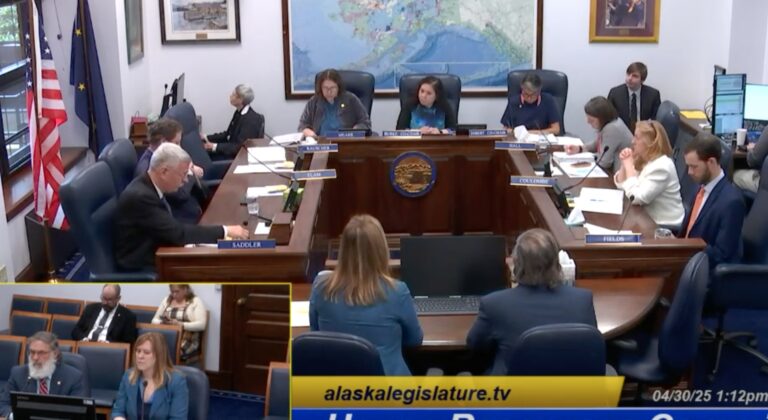
“This subject has been discussed in this building for at least 4 years (picture attached). It’s time to close the damn loophole & stop letting Alaskan residents get ripped off. Nothing more, nothing less. 

“My cell phone is still the same. 907-232-8340, if anyone has any questions give me a call anytime.”

A quick reminder to anyone paying attention. Candidate Yundt’s campaign promise of Feb. 19, 2024, stated his intentions of “Expanding our state economy through responsible mining/timber development so we’re not solely dependent on oil revenue.”

Even more fascinating, candidate Yundt’s campaign promises contain the typical political spectrum of promises for family bonding improvements, municipality land rights, timber harvesting growth, school choice, election integrity and a better Alaska for seniors. Nope, nothing on a new tax or closing that nasty loophole.

Sen. Yundt’s SB 92 surprised most of us conservatives.

Sen. Yundt’s response is a perfect illustration of why Alaska’s government spending problem continues unchecked. Rather than addressing the real issue of bloated bureaucracy, he’s engaging in petty insults and political distractions emblematic of the boring and stupid junior high school insults the public has seen for more than a decade from state democrats and RINOs.

On March 25, 2024, candidate Yundt wrote, “Instead of burdening Alaskans with more taxes, policymakers should prioritize investing in infrastructure, mineral development & reducing red tape. By staying true to our values of personal freedom & self-determination, Alaska can chart a course towards a vibrant & resilient economy for generations to come.”

Senator Yundt’s FB condescending response to criticism, laced with juvenile insults, does not hide the fact that his bill is just another attempt to increase government revenue instead of reforming spending. His so-called “conservative” tax proposal targeting one company—Hilcorp—reveals that Alaska’s elected officials are more interested in shifting tax burdens than making the state’s bloated budget more efficient.

This is not a principled stand against crony capitalism; it is selective taxation designed to generate more state revenue under the guise of fairness. Yundt’s bill aligns perfectly with the broader Democrat-led push to impose new taxes on businesses, including SB 112 (targeting oil production) and SB 113 (taxing out-of-state digital commerce).

Alaska does not have a revenue problem; it has a spending problem.

The unelected state bureaucracy treats fiscal responsibility as an optional suggestion, burning through taxpayer dollars with little accountability. Instead of tackling this, Yundt is focused on closing a tax “loophole” that has existed for nearly 50 years—all while ignoring the far larger and more urgent issue of out-of-control state spending.

Instead of addressing that reality, politicians like Senator Rob Yundt and his Democratic allies are proposing new tax schemes to squeeze more money from businesses and residents—without any plan to curb the out-of-control bureaucratic machine that continues to waste taxpayer dollars.

It’s particularly revealing that his approach to debate is condescension rather than substance. Instead of offering meaningful reforms to cut government waste, reduce inefficiencies, or demand accountability from the entrenched deep state, which appeared as many of his campaign promises, he lied and is now pushing for new taxes under the guise of “fairness.” It’s the same old big-government playbook: when politicians refuse to cut spending, they look for new ways to take more from the private sector.

If Yundt were truly interested in fixing Alaska’s financial problems, he’d be focused on reducing the cost of government, not inventing new ways to extract more money from the economy. Instead, he’s playing into the hands of the bureaucratic machine that believes it is entitled to Alaskans’ wealth, rather than accountable to them.

And his flippant, unprofessional remarks don’t just expose his arrogance, they reveal his complete unwillingness to engage in a serious conversation about fiscal responsibility. If Alaska’s newest Republican senator thinks insults are a substitute for leadership, then Alaskans should take note of exactly who he serves: the bureaucracy, not the people.

Meanwhile, Sen. Cathy Giessel has taken tax advocacy to a bizarre new level—claiming that without tax hikes, more Alaskans will commit suicide. According to this logic, taxation is now a public health initiative, and the only way to prevent despair is by ensuring more money flows into government coffers. The absurdity of this claim underscores just how out of touch Alaska’s ruling class has become.

The real issue isn’t tax loopholes or a lack of revenue. It’s the unchecked expansion of government. Alaska’s unelected bureaucracy, operating without meaningful fiscal restraint, continues to expand, consuming more taxpayer dollars while demanding even greater contributions from the private sector. Meanwhile, these same bureaucratic interests legally funnel a portion of their gains into campaign contributions, effectively bribing state legislators to maintain the status quo. 

Alaska has enjoyed 11 years of tax stability, which has led to major investments in oil production—such as Willow and Pikka, expected to increase production by 30% by 2032. Yet, these new revenue bills threaten to destabilize that progress. SB 112 proposes altering per-barrel oil production tax credits, clawing back deductions that have incentivized investment. It even introduces an investment match requirement, where the government—not businesses—determines whether investments are “worthy” of tax deductions. This is nothing more than state-controlled resource management, a strategy proven time and again to reduce investment and lower long-term tax revenue.

SB 113, on the other hand, is a cash grab disguised as fairness. It seeks to tax digital commerce on out-of-state corporations that do business in Alaska, a move that will ultimately be passed onto consumers in the form of higher prices. Supporters claim it will raise up to $65 million annually, but such estimates are always optimistically inflated, and the broader impact of discouraging business growth and raising costs on Alaskans is ignored.

The bottom line is this: Alaska’s government is addicted to spending, and rather than cutting waste, it is looking for new ways to extract more money from businesses and residents. Yundt’s bill, Giessel’s bizarre reasoning, and Wielechowski’s tax proposals are all part of the same strategy: demand more revenue while refusing to address bureaucratic inefficiency and overspending.

Instead of confronting this reckless spending, Senator Yundt and his colleagues are doubling down on policies that stifle economic growth, deter investment, and push businesses out of the state.

If Alaska’s legislators were truly committed to fixing the state’s finances, they would follow the example set by the Trump administration—cut government bloat, eliminate wasteful agencies, and hold the unelected bureaucracy accountable. Instead, they are doubling down on the same failed policies, not because they believe in responsible governance, but because their real priority is protecting the power and job security of Alaska’s entrenched bureaucratic elite. This isn’t about fiscal responsibility—it’s about keeping the political machine well-fed at the expense of hardworking Alaskans.

Michael Tavoliero writes for Must Read Alaska.

David Eastman: Legislators crossed the line in passing Senate Bill 189

Neither in this or any other issue can the Constitution protect us if we don’t protect the Constitution.” – Thomas Sowell

By DAVID EASTMAN

Senate Bill 189 is clearly unconstitutional. Even so, that didn’t stop 50 legislators (24 of them Republican) from voting to pass it in Juneau last session. Let that sink in for a moment. More than 80% of legislators (more than 70% of Republican legislators) publicly voted to pass a bill that they knew was clearly unconstitutional.

When legislators were debating the bill, SB189’s supporters didn’t even try to defend its constitutionality. When I stood up in the House immediately before the vote, and placed on the record the fact that SB189 was an illegal bill, the response was complete silence.

When Senator Stedman stood up in the Senate immediately before the vote, and explained that SB189 was a blatant violation of the Alaska Constitution, and that it didn’t pass the red face test, the response in the Senate was complete silence.

SB189 was such an affront to the Constitution that Senators Stedman and Hoffman refused to vote either yea or nay when it first came up for a vote.

When the attorney general analyzed the bill, the Department of Law pulled no punches in saying “we believe that [SB189] is unconstitutional because it violates art. II, sec. 13 of the Alaska Constitution.”

SB189 was such a clear violation of the Constitution that the governor refused to sign it, opting instead to allow it to go into law without his signature. In short, SB189 is a travesty.

The Alaska Constitution requires that every piece of legislation be confined to one subject. SB189 addresses at least half a dozen subjects, ranging from marijuana policy, to child care, to hunting moose and caribou.

State law requires that every piece of legislation extending the life of a state board or commission be confined to a single board (AS 44.66.050(e)). SB189 extends the life of no less than four separate state boards and commissions (e.g. The Marijuana Control Board, The Board of Massage Therapists, The Big Game Commercial Services Board, and the Alaska Commission on Aging).

State law guarantees that the public be afforded the right to publicly testify in the House and Senate whenever the extension of a state board or commission is being considered by the legislature (AS 44.66.050(a)). House legislators refused to allow public testimony on SB189.

Article II, Section 12, of the Alaska Constitution requires that the process of passing laws be governed by the same set of written rules in both the House of Representatives and in the Senate. These rules explicitly prohibit legislators from combining or fundamentally altering bills after they have already been passed by the House or the Senate (see Rules 24, 35, 41, and 42). After the Senate passed SB189, legislators in the House abandoned the legislative process, along with the public transparency it requires, in order to stuff five additional bills into SB189. In the end, SB189 was actually six different bills (SB189SB182SB228SB234HB396, and HB89).

Those at Alaska’s Constitutional Convention in 1956 were all too familiar with the practice of stuffing one bill inside another bill in order to get questionable policies through the legislature. To prevent this, they explicitly denied legislators the power to combine bills on different subjects into a single piece of legislation (See Page 1746, Proceedings of the Constitutional Convention). Combining bills on different subjects violates the right of legislators to vote on each individual bill, violates the right of citizens to know how their legislators have voted, and violates the right of the governor to choose whether or not to veto each bill.

The Alaska Constitution (Article II, Section 13) also requires that the “subject of each bill shall be expressed in the title.” Even the travesty that was the SB91 catch-and-release crime bill, with an utterly indefensible title that was 167 words long, has a greater claim to being constitutional than SB189, whose “title” clocks in at well over 200 words.

After the legislature passed SB189, as a mea culpa, legislators passed a non-binding resolution (HCR 23) to retroactively waive their earlier abandonment of the legislative process. Legislators in the House also inserted language into SB189 in an attempt to retroactively “exempt” themselves from the consequences of violating legislative oversight laws (AS 44.66.050).

At Thanksgiving, I filed suit against the legislature’s actions. In doing so, I have invited the court to either uphold the Constitution or join the other two branches of government in publicly acknowledging that this provision of our Constitution (Art. II, Sec. 13) has now given way to political considerations and will no longer be of any force or effect. You can read the lawsuit for yourself. It isn’t long.

Thomas Sowell, channeling James Madison before him, writes: “Neither in this or any other issue can the Constitution protect us if we don’t protect the Constitution. When all is said and done, the Constitution is a document, a piece of paper. If we don’t vote out of office, or impeach, those who violate the Constitution, or who refuse to enforce the law, the steady erosion of Constitutional protections will ultimately render it meaningless. Everything will just become a question of whose ox is gored and what is the political expediency of the moment.”

One of the things they don’t teach you in school is that you can’t have it both ways. You can’t have both constitutional self-government and whatever policies are politically expedient at the moment. The very nature of constitutional government is to limit the power of government officials from doing things that are politically expedient; particularly legislators. When the unrelenting waves of political expediency crash into the Constitution’s firewalls there are only two possible outcomes; either those firewalls will be ably defended by the public, or the Constitution will give way to the ceaseless cries for legislators to go under it, or around it, or through it, on behalf of whatever political issue is popular in Juneau at the moment.

Lawmakers frequently pass bad bills, even unconstitutional ones, out of fear that they will be taken to task by the special interests in Juneau if they vote no. For this reason, special interests are often keen to marry up bad legislation with something popular. Instead of “lawmaker defends the constitution”, the headline will read “lawmaker opposes childcare tax credits” or “lawmaker opposes seniors” or “lawmaker opposes the PFD”. Don’t ask me how I know.

Fortunately, our system of government is designed to always allow members of the public to have the last word. Of course, the pertinent question isn’t whether members of the public value our rights and freedoms enshrined in the Constitution. As children, most of us were taught to value these things. The question is whether members of the public value these things more than the temporary benefits that they and their favorite elected officials stand to gain if a portion of the Constitution is “temporarily” set aside.

As Sowell points outs, the Constitution cannot protect us if we do not protect the Constitution. The Senate handed us a perfectly constitutional bill on April 22nd, when it first passed SB189 and sent it to the House. On May 14th, House legislators voted (31-9) to stuff SB182SB228, and SB234 into SB189. There were nine of us who initially objected to what was, at that point, a clear departure from state law. The next day, on May 15th, House legislators voted (38-2) to next add HB396 to SB189, and then voted (37-2) to also add HB89. Ultimately, this transformed SB189 from a two sentence bill (as passed by the Senate), into a 32-page, unconstitutional monstrosity that sought to change state laws on everything from tax credits, to big game hunts, to childcare and marijuana.

As the only member of the Alaska House of Representatives to consistently vote against the unconstitutional provisions of SB189, it fell to me to file the lawsuit. Either we maintain a plain reading of the Alaska Constitution or brazenly unconstitutional bills like SB189 will become the new normal in Juneau going forward.

Predictably, the ADN responded to the lawsuit with the headline: “Wasilla lawmaker challenges child care tax credit…”. This is the way the game is played today. In truth, some of the bills that ultimately became part of SB189 represent good policy. Some of those bills I publicly campaigned for as a legislator and continue to support. I hope they pass in the current legislature. However, they must be passed constitutionally like every other bill. The mischief waiting to be unleashed if Alaskans ultimately abandon these constitutional safeguards can hardly be put into words.

If, as Sowell warns, the defense of our constitutional rights simply becomes “a question of whose ox is gored and what is the political expediency of the moment”, then the only thing protecting our rights as Alaskans will be whether honoring those rights happens to be considered politically expedient in Juneau at that particular moment in time. I shudder to think what rights and freedoms Alaskans stand to lose if that ultimately becomes the case.

We saw what happened when it stopped being politically expedient to honor the PFD in Juneau. Are we willing to see legislators treat portions of our Constitution the same way? Each of us have a choice to make. By opposing unconstitutional bills like SB189 at every step of the way, I have made mine.

David Eastman is a former House representative for Wasilla.

Michael Tavoliero: Let’s stop playing colony and become the state we were supposed to be

By MICHAEL TAVOLIERO

The Department of Governmental Efficiency (DOGE) initiative is a strategic effort to modernize federal technology, streamline operations, and drive innovation across government agencies to enhance service delivery and efficiency.

What sets DOGE apart is its emphasis on accountability as the foundation for meaningful government reform. As the first initiative of its kind, it aims to transform federal operations by prioritizing effectiveness, transparency, and modernization.

Alaska’s education system is in crisis, a glaring example of government failure driven by bureaucratic inefficiencies, misplaced priorities and the lack of accountability. While some leaders strive for reform, their efforts are akin to patching a sinking ship with duct. Temporary fixes fail to address the deep, systemic flaws undermining student success.

In 2022, the Alaska Reads Act was signed into law, targeting early literacy among children from kindergarten through third grade. The act introduced initiatives like the Comprehensive Reading Intervention Program and the School Improvement Reading Program, which have already shown promising results. For instance, by the end of the 2024 school year, the percentage of students meeting early literacy benchmarks increased from 41% to 57% as reported by DEED. 

Gov. Mike Dunleavy has also introduced comprehensive education reform legislation aimed at strengthening student achievement, expanding school choice, and improving teacher support. His proposals focus on increasing funding accountability, enhancing public school options, and ensuring students graduate prepared for success. 

In January, he advanced legislation to expand public charter schools and allow students to attend any public school in the state, making it easier for families to access high-quality education. These initiatives reflect a commitment to meaningful reform rather than surface-level fixes, addressing long-standing challenges in Alaska’s education system.

Despite these efforts, significant challenges remain. The call for increased public education funding in Alaska’s capital has become a repetitive cycle, echoing without addressing fundamental issues. Public union leaders and school officials continue to push for a higher Base Student Allocation, yet this pattern of increasing spending persists without clear accountability or measurable improvements in student outcomes.

Increasing funding without accompanying reforms will not yield the desired improvements in student outcomes as the history of education spending has demonstrated through the decades and only continue to feed the selfishness of the public education union’s hunger. 

Title 14, which establishes the Alaska school system, reflects a strong legislative focus on protecting student rights to education over those of teachers and administrators, as it should. Despite this emphasis, Alaska’s public education system ranks among the lowest in student performance while maintaining some of the highest costs per student in the nation. Alaska is far from competitive.

This is attributed to several key factors.

  • The Alaska Legislature and the Alaska Deep State have a spending problem. 

Alaska’s education spending reflects high administrative costs at both the Department of Education and Early Development and individual school districts. A significant portion of funding is allocated to bureaucracy rather than direct classroom instruction, covering administrative salaries, regulatory compliance, and program management.

With this resource misallocation, public funds are often spent on non-instructional areas, such as infrastructure, transportation, and support services, instead of academic improvement.

  • Alaska’s education system and school districts have traditionally prioritized compliance over student outcomes, creating a heavy regulatory burden focused on meeting federal and state mandates rather than directly improving achievement. Policies emphasize equal access over academic excellence lower standards to ensure the inclusive rather than driving higher performance.
  • Despite legislative support, teachers complain about facing low morale, heavy workloads, and insufficient professional development, which furthers the claim of these impacting instruction quality. Alaska, like many other states, claims it is experiencing a significant shortage of teachers. ONFOCUS in an article by David Keech, January 24, 2024, disclosed that Alaska is 10th among states with the highest ratios, indicating a substantial demand for more educators with a student-to-teacher ratio of approximately 19.08 students per teacher.

This is coupled with the major concern that the institutional lack of accountability for administrators is missing. While administrators have decision-making flexibility, there is limited accountability for poor outcomes.

  • Military and transient students, covered under the Interstate Compact, which is an agreement among U.S. states designed to ease educational transitions for military-connected students who frequently move due to parental deployments or relocations, experience frequent educational disruptions. 

While student success is strongly tied to parental engagement, legislation often overlooks this factor. Additionally, non-academic challenges, such as the growing demand for mental health services, can shift focus away from core educational performance, leaving gaps in both academic support and overall student well-being.

  • The one-size-fits-all standardized testing and curriculum approach does not address the diverse needs of students. 

As one example, DEED’s September, 2024, update to the Public School Funding Overview indicated that Alaska’s education funding formula, traditional academic programs receive a 20% funding increase through the Special Needs Factor (1.20), while vocational and technical education programs receive a 1.5% increase via the Career and Technical Education Factor (1.015). 

This indicates that academic programs are allocated approximately 13 times more additional funding than vocational programs. Many states spend heavily on academic-based programs but underfund vocational and technical education. Alaska appears to be at the top of this class.

  • The combination of teacher unions and tenure policies creates significant barriers to removing underperforming educators, as due process protections and lengthy evaluation procedures often delay or prevent dismissal. This can lead to inefficiencies in the education system and excessive costs for the tax payer, where struggling teachers remain in classrooms despite consistently poor student outcomes.
  • Despite significant resource allocation, low student engagement persists due to uninspiring curricula and outdated teaching methods that fail to connect with modern learners. Without interactive, relevant, and student-centered approaches, many students struggle to find motivation, leading to disengagement and lower academic performance.

While spending is higher in places like Alaska and New York, funding inefficiencies, administrative costs, and socioeconomic disparities can dilute the impact on student achievement. More spending doesn’t always translate into better educational quality, if resources aren’t efficiently allocated to classroom instruction and student support.

  • Rural states like Alaska face obstacles in education due to geographic isolation and limited resources, while Alaska’s urban districts claim to grapple with overcrowding and socioeconomic challenges. However, advancements in virtual learning and the proven success of schools like Mt. Edgecumbe in the past show that strategic investments and innovative approaches can bridge these gaps, ensuring quality education in both rural and urban environments.

The primary purpose of Alaska public education is to provide universal access to quality learning opportunities, ensuring that all students, regardless of background, acquire the knowledge, skills, and critical thinking abilities necessary to become informed citizens, productive workers, and lifelong learners. These students are the future of our communities, states and nation.

The high percentage of legislative focus on student rights through Title 14 has unfortunately not translated to high performance because the execution of policies, funding allocations, and accountability measures continue to miss the mark and the true purpose of public education. Simply increasing spending per student does not guarantee better results if systemic inefficiencies, lack of performance-driven policies, and socioeconomic barriers persist.

Michael Tavoliero writes for Must Read Alaska.

Lucky Wishbone, an Alaska classic, wins James Beard award

13

For Alaskans, the Lucky Wishbone diner is more than just great fried chicken—it’s a piece of history, a place where families have shared meals for decades, a site where (usually conservative) political activists and pilots gather, and a gentle reminder of the enduring power of good food and community spirit.

Now, the James Beard Foundation has announced Lucky Wishbone as the recipient of its prestigious 2025 America’s Classics Award for the Northwest and Pacific region. The award, presented by HEINZ, recognizes locally and independently owned restaurants with enduring appeal that are deeply cherished by their communities. That’s Lucky Wishbone.

Lucky Wishbone’s sign at 1033 E 5th Ave., Anchorage. Photo credit: Lucky Wishbone Facebook page.

Since its establishment between Elmendorf Field (now JBER) and Merrill Field in 1955, Lucky Wishbone has been a cornerstone of Anchorage’s culinary and aviation scene, serving up timeless comfort food with a side of Alaska history.

Known for its signature fried chicken, hand-formed cheeseburgers, and homemade malts, the restaurant remains a beloved institution through generations, with a drive-thru service offering white cardboard boxes filled with golden-fried delights.

Lucky Wishbone is a taste of nostalgia and community that has lasted since before statehood. It was founded in 1955 by WWII pilot George Brown and his wife Peggy Brown. It weathered the 9.2 magnitude earthquake of 1964.

George, who built the restaurant himself from the ground up, was a familiar face in the dining room until his passing in 2018 at the age of 96.

Today, the legacy continues under the stewardship of co-owners Carolina Stacey, an employee since 1994; Heidi Heinrich-Lervaag, the restaurant’s first hostess hired in 1979; and Patricia Brown-Heller, daughter of the founders, who began her journey in the restaurant peeling potatoes before school.

Anchorage pilots and aviation enthusiasts enjoy Lucky Wishbone’s aviation-themed interior, reflecting its ties to the Air Force base and the state’s rich history of small aircraft pilots.

The menu remains a testament to its roots, with a fried chicken recipe that spans over a century. Accompanying staples like BLTs, fried chicken giblets, and corn muffins with honey have made Lucky Wishbone an Alaskan landmark.

The award places Lucky Wishbone among 100 restaurants nationwide that have received the America’s Classics Award since its inception in 1998.

The honorees will be celebrated at the James Beard Restaurant and Chef Awards ceremony on June 16 at the Lyric Opera of Chicago.

White House prepares for ‘maximum elimination’ of federal workers allowed by law

By CASEY HARPER | THE CENTER SQUARE

The White House sent a memo to several federal agencies telling them to prepare to reorganize and fire high quantities of workers.

The memo is the latest in Trump’s ongoing war against what he calls bloated federal “woke” policies, overregulation, and wasteful spending. About 75,000 federal workers took a buyout to leave their position, and a few thousand have been fired so far.

“The federal government is costly, inefficient, and deeply in debt. At the same time, it is not producing results for the American public,” reads the memo from Russell Vought, director of the Office of Management and Budget, and Charles Ezell, acting director of the Office of Personnel Management.

OMB runs federal agencies for the White House. OPM acts like a human resources department for the federal government.

“Instead, tax dollars are being siphoned off to fund unproductive and unnecessary programs that benefit radical interest groups while hurting hardworking American citizens,” the memo continued.

Trump signed executive orders after taking office directing federal agencies to identify and eliminate wasteful spending. Agencies have until March 13 to prepare “agency reorganization plans.”

The memo says agencies should attempt to cut expenses, reduce its need for office space, and carry out a “significant reduction in the number of full-time equivalent (FTE) positions by eliminating positions that are not required.”

“Pursuant to the President’s direction, agencies should focus on the maximum elimination of functions that are not statutorily mandated while driving the highest-quality, most efficient delivery of their statutorily-required functions,” the memo said.

American Federation of Government Employees National President Everett Kelley, who leads the largest union of federal workers, blasted Trump after the news broke.

“Laying off potentially hundreds of thousands of federal workers will mean fewer services at higher costs for the American taxpayer,” Kelley said.

Kelley argued Americans will receive lower quality federal services with “no discernible savings for taxpayers.”

“This administration has targeted every single federal worker and does not seem to care how much turmoil they cause for either the employees or the American public,” she added. “The chaos is the point.”

Anchorage Fire Dept. blames the victim for fire started by vagrants at Spenard building

24

Be advised, if you own a building and it catches fire, the Anchorage Fire Department may be blaming you for not providing security patrols of your property.

The department issued a statement that assigns blame to the property owner for a major fire last week that was set by vagrants who had taken over a former hotel in Spenard.

“Last week’s fire in Spenard shines a light on the dangers of makeshift sheltering and the need for proactive actions of property owners and the community,” said Chief Doug Schrage, referring to the fire at the former Americas Best Value Inn and Suites. 

A good portion of the rooms were haphazardly and dangerously occupied despite most of the openings and exits being boarded up, according to Asst. Chief Brian Dean, Fire Marshal for the Anchorage Fire Department.

“Witnesses reported 30 to 40 people fleeing from the hotel before our firefighters arrived. Thankfully, they were able to rescue the last four individuals that couldn’t escape.”

Chief Schrage said that people should hire security companies to guard their properties.

“Property owners should check on their properties regularly or hire security to verify the properties haven’t been breached and unauthorized encampments haven’t sprouted. If they have, it needs to be reported so we can hopefully prevent a similar incident. This is a life safety issue. We are fortunate everyone made it out of this fire with their lives.”

Due to significant damage and risk of collapse, AFD investigators were unable to completely excavate the room where the fire started, the fire department said.

“While a definitive cause of the fire cannot be determined, there is ample evidence the fire inadvertently started as a result of improvised heating or cooking arrangements,” the fire department said.

In 2020, the Democrat mayor of Anchorage planned to buy the building and turn it into a homeless shelter. That was the plan of Mayor Ethan Berkowitz, who left office in disgrace before finalizing the purchase. His temporary successor, Austin Quinn-Davidson, scrapped the idea because the cost of renovating the hotel was too great.

The building “was supposed to be unoccupied and secured,” the fire department said. There is no power or water to the building and no smoke alarms or sprinklers that are working.

Numerous “buddy heaters, propane tanks, oil lamps, makeshift cooking arrangements and smoking materials were found throughout the ‘unoccupied’ building,” the department said. These apparently were used by the dozens of vagrants that had taken over the building, all without being discovered by police.

“Property owners have an obligation to keep their properties safe and secure. Vacant properties or suspected illegal occupancies can be reported online at #ANCWorks,” the fire department said, shifting public safety back to property owners, rather than the government, which has the job of public safety.

Camel’s nose: Alaska Senate Democrat majority has a surprise tax package to raise cash for state spending

Facing what is believed to be a $500 million budget shortfall, the Alaska Senate Rules Committee, led by Democrat Sen. Bill Wielechowski, has introduced two bills aimed at addressing the state’s revenue desires by increasing taxes on businesses and oil. Senate Bill 113 will tax profits on out of state companies that do business in Alaska through the internet. Senate Bill 112 proposes a tax increase on every barrel of oil produced.

The push for revenue was forecasted earlier this week by Sen. Cathy Giessel, who said that without revenue for the state, more Alaskans would commit suicide.

These taxes are in addition to the Yundt Tax that Sen. Rob Yundt of Willow introduced last week to target one company: Hilcorp.

SB 113 changes Alaska’s corporate income tax structure to capture more from the digital economy. Under current tax laws, online sales from out-of-state corporations are not addressed. The proposed legislation adopts a system already in place in at least 36 other states, which taxes businesses based on the customer’s location rather than the business’s physical location.

SB 113 introduces a single sales factor to determine tax liabilities for highly digitized businesses operating in Alaska.

“This legislation will not raise taxes for Alaskans or local businesses,” said Senate Rules Chair Senator Bill Wielechowski, D-Anchorage, without explaining why those companies will not just pass the costs to consumers. “It simply ensures that major out-of-state corporations benefiting from our economy contribute just as local businesses do. This establishes a level playing field for all entities operating in Alaska.”

According to one estimate, this could generate between $25 million and $65 million annually in new state revenue.

SB 112 focuses on reforming Alaska’s sliding-scale per-barrel oil production tax credits. This bill makes major changes that undo the work of Senate Bill 21, which passed in 2013.

Under the SB 21 system, these credits provide major North Slope oil producers with tax discounts based on oil prices. Wielechowski says this costs Alaska billions of dollars.

The proposed reform reduces the credit range from $8–$1 per barrel to $5–$1 per barrel.

But it’s not really a credit. It’s a deduction. Right now, the oil producers can deduct $8 per barrel. Wielechowski wants to claw back most of it. This issue has been litigated and debated for years.

Additionally, SB 112 introduces an investment match requirement, which says tax credits are only granted when they align with qualified capital expenditures that the state approves of.

“For years, the size of the per-barrel credit system has cost the state billions of dollars without delivering tangible benefits,” said Sen. Wielechowski. “This simple change ensures that tax credits are granted with accountability and a clear return for Alaskans while continuing to support investment in our oil fields.”

SB 112 has been referred to the Resources Committee and the Finance Committee for further deliberation, while SB 113 has been directed straight to the Finance Committee, which will speed its passage.

The bill will most certainly impact investment and won’t raise what its proponents predict.

Alaska is in the 11th year of tax stability, which has led to the development of Willow and Pikka, North Slope projects expected to boost oil production by 30% by the year 2032.

With these new revenue bills, Wielechowski likely eliminates himself as a viable candidate for governor in 2026.

Congressman Begich assigned vice chair of another subcommittee. Which one?

7

Alaska Congressman Nick Begich has been appointed Vice Chair of the House Subcommittee on Railroads, Pipelines, and Hazardous Materials, a position that will better enable him to champion efforts aimed at strengthening transportation infrastructure, boosting energy security, and expanding economic opportunities in Alaska and the nation.

After being in office for less than eight weeks in Congress, Begich is now on three committees and eight subcommittees, and is vice chair of two subcommittees. His predecessor, Mary Peltola, served on just two committees and was on four subcommittees, with no vice chair positions during her two years in office.

“I am honored to be named Vice Chair of the Subcommittee on Railroads, Pipelines, and Hazardous Materials and look forward to working with Subcommittee Chairman Webster and my colleagues to modernize and expand our nation’s transportation networks,” said Congressman Begich in a statement. “This role presents a tremendous opportunity to advance critical infrastructure projects that will strengthen Alaska’s economy, improve supply chain efficiency, and support energy development.”

House Transportation and Infrastructure Chairman Sam Graves commended Begich’s appointment, emphasizing the importance of his leadership in key infrastructure sectors.

“Congressman Begich is an excellent choice to serve as vice chair of our subcommittee with jurisdiction over railroads and pipelines – infrastructure networks that are critical to Alaska and the entire country. I look forward to working with Nick and Subcommittee Chairman Webster to reauthorize pipeline safety programs, improve rail transportation, and foster America’s energy independence,” Graves said.

A major priority for Congressman Begich in this new role is advancing the long-held goal of connecting Alaska to the Lower 48 via a railroad. Currently, Alaska remains disconnected from the North American rail network, a gap that limits economic growth and trade opportunities.

“Alaska has immense resource potential, but we must have the infrastructure to move goods and energy efficiently. Expanding our rail and pipeline networks will lower costs, create jobs, and strengthen our state’s position in the global economy,” Begich stated.

In addition, Begich has been a vocal advocate for the Alaska LNG pipeline, an 800-mile project aimed at unlocking the vast natural gas reserves of the North Slope and bringing them to market. The pipeline is expected to create thousands of good-paying jobs for Alaskans, reduce energy costs for homes and businesses, and bolster U.S. energy independence and national security.

By leveraging previously untapped resources and facilitating LNG exports, the Alaska LNG pipeline would play a crucial role in strengthening the state’s economic future.

The Subcommittee on Railroads, Pipelines, and Hazardous Materials has jurisdiction over essential transportation agencies, including the Surface Transportation Board, the Federal Railroad Administration, Amtrak, and the Pipeline and Hazardous Materials Safety Administration. The Subcommittee is responsible for ensuring the economic and safety regulation of railroads, pipelines, and hazardous materials transportation—industries that are particularly vital to Alaska’s economy.

As vice chair of the subcommittee, Congressman Begich will advocate for pro-growth, pro-energy policies to enhance Alaska’s infrastructure.

Begich’s assignments are, to date:

  • Committee on Natural Resources
    • Subcommittee on Energy and Mineral Resources (vice chair)
    • Subcommittee on Oversight and Investigations
  • Committee on Transportation and Infrastructure
    • Subcommittee on Aviation
    • Subcommittee on Coast Guard and Maritime Transportation
    • Subcommittee on Railroads, Pipelines, and Hazardous Materials (vice chair)
  • Committee on Science, Space, and Technology
    • Subcommittee on Energy
    • Subcommittee on Environment
    • Subcommittee on Investigations and Oversight

As directed by Trump, Gulf of America officially enters official data base at Board on Geographic Names

The U.S. government has officially renamed the Gulf of Mexico to the Gulf of America. The decision, enacted by the U.S. Board on Geographic Names this month, follows an executive order from President Donald Trump as part of an initiative to restore names that “honor American greatness.”

President Trump’s Executive Order 14172, titled “Restoring Names That Honor American Greatness,” directed Secretary of the Interior Doug Burgum to issue Secretary’s Order 3423, formally implementing the name change. Burgum signed the order on Feb. 7, recognizing the Gulf’s historical and economic significance to the Americas.

“The area formerly known as the Gulf of Mexico has long been an indelible part of America and an asset to our Nation,” the order stated. “The Gulf has played a pivotal role in shaping America’s history and promises to play a vital role in our future, serving as a flourishing natural resource of critical importance to our Nation’s economy and people.”

In conjunction with this change, President Trump issued a proclamation recognizing Feb. 9, 2025, as the first-ever Gulf of America Day.

Federal agencies have begun updating maps, products, and official documents to reflect the new name. The U.S. Geological Survey has now updated its systems, including the National Map Viewer, Lidar Explorer, and Geographic Names Information System Search Tool, to integrate the revised name. The USGS topoBuilder application has been enhanced to accommodate the anticipated high demand for updated paper maps.

The renaming effort extends beyond government agencies, with commercial platforms such as Google Maps and Apple Maps already adopting the Gulf of America designation.

The decision has sparked varied reactions across the country and beyond. Supporters argue that the name change reinforces national pride and acknowledges the Gulf’s deep ties to American history and industry. Critics, however, view the move as unnecessary and diplomatically contentious, given the Gulf’s geographical connection to Mexico and other nations.

The Associated Press refused to go along with the new name and has hence been banned from the White House press conferences. The AP challenged the ruling, but a judge has allowed it to stand. AP did, however, adopt the return of the name of Mt. Mckinley, which was also done by executive order of the president.

As the transition unfolds, businesses, cartographers, and government agencies continue ensuring widespread adoption of the Gulf of America name. The administration has emphasized that this change is a significant step in reaffirming America’s cultural and historical influence on its natural landmarks.

The name change process is expected to continue in phases, with updates rolling out across various official and commercial platforms. The administration has also indicated that additional geographical name revisions may follow as part of its broader initiative to restore traditional American place names.

Today marks the anniversary of the 1917 naming of Mt. McKinley by President Woodrow Wilson. Trump reaffirmed the McKinley name on his first day of his second term in office on Jan. 20, 2025.