Monday, October 12, 2026
Home Blog Page 1489

Permanent Fund bills moving through Legislature

9

ONE IS FOR $1,600, THE OTHER FOR $1,500

House Bill 2003, which is a piece of new legislation to appropriate funds for the Permanent Fund dividend, passed the House on Friday on a vote of 22-12, and was sent to the Senate. The bill provides for funding to pay eligible Alaskans $1,600 dividends this year.

In the Senate, SB 2001 was considered by Senate Finance Committee on Saturday morning. It would provide dividends of $1,500 to eligible Alaskans.

The Senate bill also restores $75 million in vetoed funds to the University of Alaska System, which results in a net reduction to UA of $65 million, including the $5 million reduction recommended by Senate Finance in the committee substitute for HB 39, the operating budget that was passed by the Legislature.

The Senate Finance Committee recessed to the call of the chair, and the Senate will gavel in on the floor on Saturday at 2 pm.

After the floor session, Senate Finance will meet again today, and there will likely be amendments to bring the Permanent Fund dividend back up to the statutorily established level of $3,000.

Gov. Michael Dunleavy is on record in support of a $3,000 dividend.

(This story is a moving target. Check back for updates.)

Game on! Surprise strike is unfair labor practice

41

By ART CHANCE
SENIOR CONTRIBUTOR

The Inlandboatman’s Union’s strike caught the State of Alaska flat-footed.  A good title for a piece about it would be, “At 2 PM We Slept.” Those of a certain age will recognize that as a take-off on a famous book about the Pearl Harbor attack, “At Dawn We Slept.”

What happened to the State of Alaska this week was the labor relations and political equivalent of the opposing team taking the opening kick-off and running it back for a 100-yard touchdown.

It is embarrassing and inexcusable that it happened, especially for me, since some of the people who should have done something are my hires and former subordinates. In their defense there hasn’t been any real controversy between the State and its unions since the 1990s, so none of them has any experience with anything but relative labor peace.

The union has committed multiple unfair labor practices and their own words, and Creepy Joe Biden’s words, are the only evidence one needs.

First the union has an illegal proposal regarding “Cost of Living Differential” pay on the table, and, second, they’ve been all over the media saying that their primary motive is political opposition to the governor’s budget cuts.

Sorry, boys, budget cuts aren’t “wages, hours, and terms and conditions of employment,” the legal duty to bargain. This is largely a politically motivated strike and the union has both statements and proposals that graphically evidence that.

The factual predicate of a legal strike (and the IBU does have a legal right to strike) is the existence of a valid state of impasse in bargaining. A valid state of impasse exists when a party has a good faith belief that further bargaining will not result in an agreement.

An unfair labor practice is a bar to a valid state of impasse and so long as there is an unresolved unfair labor practice, the offending party cannot resort to economic weapons such as a strike or lockout.

Word is they’re bringing in a federal mediator again. In my experience the federal mediators were good company but not good for much else other than it was a step you had to go through to make sure you had valid impasse for employees without a right to strike or with a limited right to strike, such as AMHS employees.

Here’s where it gets complicated, and where the amateurs and State lawyers who do labor relations once in awhile get lost:

The State has valid unfair labor practice charges that it can use to get the Alaska Labor Relations Agency to force the IBU to end the strike and return to bargaining.  Usually reliable sources tell me that the Administration is being advised that it shouldn’t file the ULPs for fear that the Alaska Labor Relations Agency will order the State and the union to arbitration over their contract dispute.

Whoever is giving that advice is either sabotaging the Administration, is a coward, or is simply ignorant.

A reading of the plain language of the controlling authority, AS 23.40.200(a)(2) informs us that only a court can order the State and the union to arbitration. In the unlikely event that the State could demonstrate that a ferry strike poses a threat to public safety, not convenience or economics, but safety, a court could order the IBU back to work and order the parties to interest arbitration to have an arbitrator form their contract subject to Legislative approval.

The Alaska Labor Relations Agency cannot order the State to arbitration; its only power is to order the union to cease the strike and return to bargaining.  This doesn’t even take any legal skill to figure out; if you can read plain English you can read the law and figure it out for yourself.

Unfortunately, the Administration is in Juneau in a sea of lefties and greenies who see the ferry system as the salvation of the Tongass Forest and the prevention of a road to Juneau.   I’ve never met a conservative State lawyer, though I’ve known a few who could be objective. The State lawyers live surrounded by lefties and greenies who love the ferry system and hate Republicans. I’m proud to say that in my 20-odd years with the State, I never asked a State lawyer what I should do. I told them what I planned to do, asked them if they had any legal issues, and assured them that I’d give their concerns due consideration.

It is probably too late for the unfair labor practice findings to do anything meaningful to stop the strike before the end of the summer season if at all, but the State should persist and get an order and decision from the Alaska Labor Relations Agency so that it can use it to buttress damage claims against the union for the illegal strike. The State’s objective should be to economically destroy the IBU over this.

I always figured that few State employees would strike once they were told that they couldn’t take paid leave to strike. For the IBU, Aug.  1 is a red letter day, because if they aren’t in pay status on Aug. 1, they lose their State health insurance. If their strike goes on for over 23 days, they start losing retirement service credit.

It isn’t coincidental that the IBU’s 1977 strike ended at 20 days.

It is likely that the IBU will say it is calling its strike and will report to work on Aug. 1.   They’ll show up on Aug. 1, be in pay status and get their August health insurance and go right back on strike.  That will on cost the State about $700,000 for the August health insurance plus the wages for a day or two will be another several hundred thousand dollars; call it the better part of a million and a half bucks so the Administration can look like it is being nice.

If the Administration lets them do that, they’re idiots.

If anybody in the Administration knew what to do, the State is in the cat bird’s seat; the damage has been done. The tourist season is wrecked, the revenue for this summer season is lost, so why would you want to give the IBU anything now to come back to work.

Lay off the licensed employees other than those necessary to keep the tied up ships safe over the winter.  The people of coastal Alaska and the private sector will figure out a work-around. Look how quickly Allen Marine was able to provide transportation from Juneau to the State Fair in Haines.

[Read: Alaska Life Hack: How to get around Southeast Alaska without the ferries]

If anybody cares if there is a ferry system next spring, maybe the State will have topics about which they can talk to the maritime unions.

Art Chance is a retired Director of Labor Relations for the State of Alaska, formerly of Juneau and now living in Anchorage. He is the author of the book, “Red on Blue, Establishing a Republican Governance,” available at Amazon. 

Is this the right time to JACC up taxes?

By WIN GRUENING

During recent deliberations, Juneau Assembly members reviewed a list of pending projects that have been submitted for financial support in the near term.

City Finance Director, Bob Bartholomew, outlined one-time capital improvement and grant requests totaling between $34 million and $85 million depending on how the state budget picture finally shakes out, as well as a $5 million hit to CBJ’s annual operating budget that needs to be addressed.

Most Alaskans are focused on state budget battles, so it’s easy to lose sight of the impacts on municipal budgets downstream.  Indeed, our local governments should proceed cautiously before making any large new non-essential financial commitments. No one knows what the new budget landscape will look like, but our city leaders should be prepared to deal with a range of scenarios.

This set of circumstances has highlighted the amply publicized new Juneau Arts and Culture Center which has formally requested a $7.5 million grant from the city – to be funded by transferring $4.5 million in sales tax proceeds previously approved for Centennial Hall convention center and adding $3 million from undesignated sales tax revenues. This is in addition to a 2012 $1 million city grant and the donation of city land for the site in the Aak’w Village District.

Proposed originally as an $18 million joint venture between Perseverance Theater and the Juneau Arts and Humanities Council – not needing further public financial support – the project has ballooned in cost, and now requires a substantial infusion of public money.   Here is why:

  • In 2015, Perseverance Theatre withdrew from the partnership citing financial constraints.
  • In 2018, a $12 million general obligation bond proposal for the project failed to pass the Assembly.
  • After several years of fundraising, the project (re-labelled the New JACC) failed to attract enough donations and has only managed to raise $5.5 million, 21% of the now increased $26.4 million cost.

Now, New JACC backers insist the city provide $7.5 million to add to existing donations thereby demonstrating to potential donors a 50% local commitment towards the estimated cost.

The question remains. In these uncertain times, should government expend precious dollars on (or raise taxes to fund) non-essential proposals when it’s clear there are major financial obligations looming that take priority?

Aside from the New JACC, the largest immediate expenditures facing the city are necessary major school maintenance costs (mostly school roof replacements) ranging between $11 million and $46 million and Centennial Hall upgrades of between $5 million and $10 million.

Bartholomew also presented a list of possible ways to pay for some of this.  Unfortunately, very little of it would come from budget reductions. Most of it would presumably come from four main areas:

  • Surplus sales tax revenues over 4 years ($4 million)
  • Depletion of reserves ($4 million)
  • Hotel tax hike of 5% ($12.5 million)
  • Expansion of municipal debt repaid through property taxes ($28 million)

Despite the enormity and uncertainty of potential budget hits and how they would be funded, the Juneau Assembly introduced several ordinances this past week – possibly granting up to $7.5 million for the New JACC and authorizing up to $10 million in a 15-year general obligation bond for Centennial Hall.  Also introduced was a companion ordinance hiking the hotel/motel tax by two percent to partially offset costs of Centennial Hall improvements.

[Read: Connecting the dots between Juneau’s economy and Juneau’s needs]

These preliminary measures, in their final form, are scheduled for a public hearing and Assembly approval on August 19.  The bond proposition and the hotel/motel tax increase must be approved by Juneau voters.  An advisory vote on the New JACC funding would also be on the same ballot in October.

The Assembly apparently thinks it prudent to commit substantial funds to a new performing arts center before concerning itself with the possible need to fix leaky school roofs.

The vast amount of time the Assembly and city staff have invested in placating New JACC proponents has detracted from serious economic development efforts needed to grow Juneau’s population and job base.

How will increasing sales or property taxes or raising taxes on independent visitors improve Juneau’s economy in the future?

Whether the Assembly’s priorities match those of Juneau voters in October remains to be seen.

Win Gruening retired as the senior vice president in charge of business banking for Key Bank in 2012. He was born and raised in Juneau and graduated from the U.S. Air Force Academy in 1970. He is active in community affairs as a 30-plus year member of Juneau Downtown Rotary Club and has been involved in various local and statewide organizations.

Berkowitz civil emergency extended in Anchorage

18

The Anchorage Assembly on Friday extended Mayor Ethan Berkowitz’ civil emergency declaration until Aug. 6. The Assembly also directed the mayor to fund the Brother Francis Shelter, which lost state funding. The 240-bed shelter has been planning to downsize to serve 100 people as a result of those cuts, beginning Aug. 1.

The city is likely to scrape funds from other programs, and take other measures that are allowed under the emergency order , which may include taxes, if the order is extended by the Assembly.

In the mayor’s justification for a civil emergency, he outlined the problems associated with the state budget cutbacks:

  • $5.8 million cut in Anchorage-specific services to homeless, resulting in a projected 800 more unsheltered homeless in our community, adding significantly to the burden of first responders and pushing vulnerable individuals and families beyond their tipping point;
  • the temporary closing of Brother Francis Shelter, forcing 240 homeless individuals to become immediately unsheltered on Aug. 1, and the dramatic reduction of services by 140 people after its reopening on Aug. 5;
  • cuts to Medicaid, senior benefits, legal services, food banks, domestic violence case management and support, and behavioral health, causing public health and public safety emergencies and the eviction of our most vulnerable residents;
  • 41 percent cut to state’s contribution to the University of Alaska, resulting in the projected loss of 700 jobs in Anchorage and projected to push Anchorage into recession.

The emergency declaration allows the municipality to provide housing or temporary structures for emergency shelters, as well as provide social services to homeless individuals and families with no immediate options available to them.

Late sockeye run on the Lower Kenai: Bag limit doubled

2

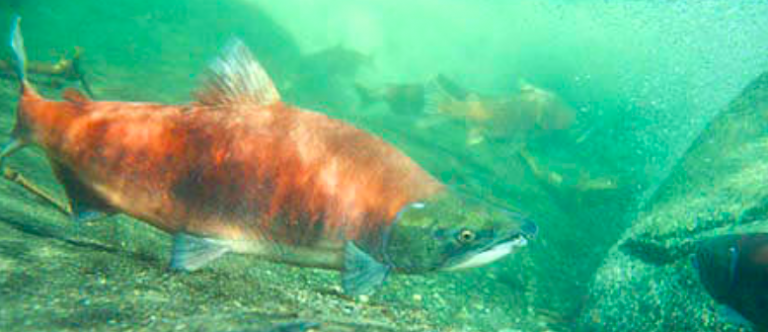
The Alaska Department of Fish and Game has raised the Kenai River bag limit of sockeye salmon from three fish to six a day, downstream of Skilak Lake, beginning at 12:01 am on Sunday, July 28.

Skilak Lake divides the Upper Kenai River from the Lower Kenai River, as it is halfway down the river to Sterling from Kenai Lake. Salmon fishing between there and Cook Inlet is part of this order.

Sockeye can be kept if they are 16 inches or longer, and 12 may be in possession, according to the revised catch limit, with no more than two of those fish being coho.

The liberalization comes as ADF&G has determined that there are 2.3 million sockeye in the late run, the limit set by the Kenai River Late-Run Sockeye Management Plan.

The department reminds anglers to review the Kenai River riverbank closures in place for habitat protection. Those closures and other rules are found in the 2019 Southcentral Alaska Sport Fishing Regulations Summary booklet.

Alaska life hack: Getting to SE Alaska State Fair without the ferries

4

Thousands of people have been inconvenienced by the IBU strike, which impacts communities up and down the coast. But in Southeast Alaska, the private sector has shown up with alternatives for travelers. Here are some options for getting around, with more in the works if the strike continues:

EAGLE ENTERPRISES – KETCHIKAN

Eagle Enterprises has a schedule for the next few days. Call 907-821-5100 to reserve your sail time. They depart/arrive from City float in Ketchikan and arriving/departing from the float plane dock in Metlakatla.

Depart KTN. Arrive MET
Sat. Jul 27. 2pm. 3:30 pm
Depart MET. Arrive KTN
4pm. 5:30 pm

Depart KTN. Arrive MET
Sun Jul 28. 8am. 9:30am
Depart MET. Arrive KTN
10am. 11:30

Depart KTN. Arrive MET
4pm. 5:30pm
Depart MET. Arrive KTN
6pm. 7:30pm

Depart KTN. Arrive MET
Mon Jul 29. 3pm. 4:30pm
Depart MET. Arrive KTN
5pm. 6:30pm

In-state fares offered for communities impacted by the ferry strike for travel now through Aug. 4. No advance purchase necessary.

Check www.alaskaair.com or call reservations at 1-800-alaskaair for specific fares to/from Kodiak, Cordova, Wrangell, Gustavus, Juneau, Sitka, Petersburg, and Ketchikan.

HARRIS AIRCRAFT SERVICES – JUNEAU, HAINES, SKAGWAY

As the ferry system is down until further notice, Harris has multiple flights going to and from Haines each day, 7 days a week. Conveniently, Harris has the Haines State Fair special going on through July 30, where you can get $15 off a Haines one-way ticket using promo code STATEFAIR19. Call or book online for Haines seats at www.harrisair.com.

The carrier also wants to help those making their way to and from Skagway. Passengers needing to get to or from Skagway should call 907-966-3050 and the company will try to add additional flights to help meet the needs of the Skagway community. 

ALLEN MARINE – SITKA, JUNEAU, HOONAH

To further support Southeast Alaska’s residents and visitors this weekend the company announced sailings:

Saturday, July 27

Sitka –> Juneau at 7:30 AM
Ketchikan –> Juneau at 2:00 PM

Sunday, July 28

Juneau –> Hoonah at 10:00 AM
Juneau –> Sitka at 6:00 PM

Special Southeast Alaska State Fair weekend pricing:

Sitka to Juneau (or reverse) Adults $89+tax Children 12 and under $79+tax

Juneau to Hoonah Adults $69+tax Children 12 and under $59+tax

Ketchikan to Juneau (or reverse) $125+tax Children 12 and under $99+tax

Call 1-888-289-0081 for booking, as well as embarkation location and policy information.

Reservations agents will be available July 26th from 6 am to 6 pm. Call volumes are high, so the company advises patience. Walk-ups are allowed but space availability is not guaranteed.

FJORDLAND – JUNEAU, HAINES

Extra runs on the catamaran to Haines, departing Juneau 11am. Pick up at Downtown Marine Park at 9:45 am or Airport at 10 am. $135, snack and bus transfer included. Departing Haines back to Juneau at 1 pm. Call 1-800-320-0146 and reference extra runs for available seats.

ALASKA SEAPLANES

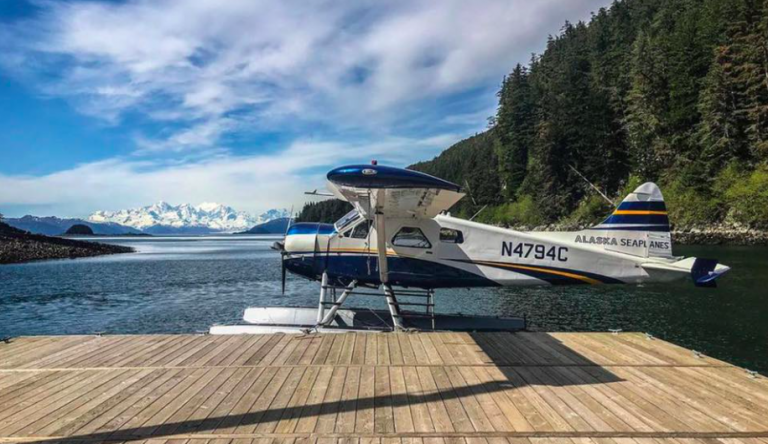
Alaska Seaplanes has scheduled extra trips between Haines and Juneau airports.

HAINES-SKAGWAY FAST FERRY

A foot ferry runs between Haines and Skagway all summer.

Saturday, July 27:
Juneau –> Haines at 6:00 and 8:30 AM
Haines–> Juneau at 7:30 PM
Sunday, July 28:
Haines –> Juneau at 5:30 AM
Juneau –> Haines at 6:30 AM
Haines –> Juneau at 5:30 PM
Southeast Alaska State Fair Special Pricing: Adults $79.99+ tax; Children 12 and under $69.99+tax (one-way)
Call 888-289-0081 for booking, as well as embarkation location and policy information.

INTERISLAND FERRY – KETCHIKAN, HOLLIS

The AMHS strike has not changed the IFA schedule. If you have travel set up with a tied-up state ferry,  call IFA and they will assist you, refund tickets, or hold a credit balance.

If you have paid reservations and would like to keep them and see if this situation can get resolved before your travel, call IFA so the company can make a note on your reservation that you’re trying to connect with an AHMS ferry.

If you have paid reservations with the IFA and need to cancel your travel with the IFA, the company can refund you in full. IFA will hold a credit for you until the IBU strike situation is resolved.

Hollis gives riders access to:

ALASKA MARINE LINES

Have a car or freight to ship? Check with Alaska Marine Lines. The company also has a mobile app.

DO YOU HAVE A TRANSPORTATION HACK FOR DEALING WITH THE FERRY STRIKE?

Add your ideas and comments below.


Juneau Empire reporting alumnus said this about a beloved PBS children’s show

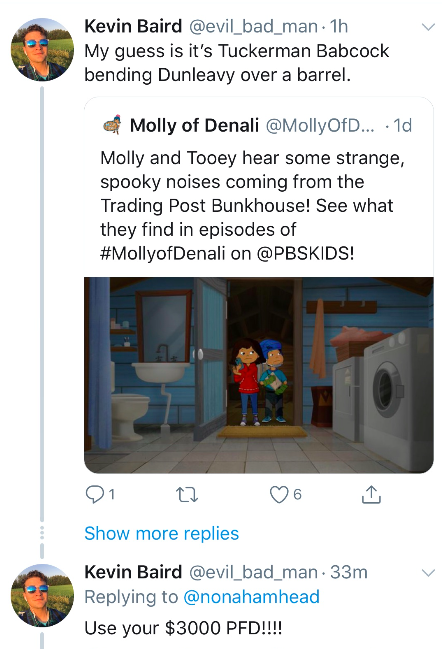
Kevin Baird may no longer write Alaska politics for the Juneau Empire, but he still has an opinion on social media, about the Dunleavy Administration. He doesn’t like Gov. Michael Dunleavy, and he has taken great pains to show it.

Baird, who quit or was fired from the Empire in April, after working as the Capitol reporter, goes by the handle of @evil_bad_man on Twitter.  He went out in a blaze of invectives on a leftwing blog when he separated from the Empire and has been writing smack about the Dunleavy Administration ever since on social media.

Most of his social media posts are on the vulgar side but this one is especially nasty and homophobic. It’s Baird’s analysis of the latest PBS Molly of Denali episode. The show is for children:


It’s always difficult to find good reporters who will work for a reporter’s wage (less than waiters make in Juneau, typically). And it’s getting harder to differentiate the mainstream media from the Democratic Party. Baird, it should be noted, also had been a reporter for the Fairbanks News-Miner.

Among the Alaskans who hit the “like” button on Baird’s little homophobic joke were Olivia Garrett, former staffer to Sen. Scott Kawasaki, Nona Dimond, former staffer to Sen. Gary Stevens (she recently referred to MRAK’s editor as a “monster,”) and Chris Dimond, Nona’s husband, who is employed by the carpenters union in Juneau. It’s a unique tribe of social media “likers,” particularly since Olivia Garrett is the avowed socialist who took down Rep. Dean Westlake for allegedly groping her. She was also one of the radicals who occupied the Wasilla special session and pounded on tables and screamed.

Baird’s colleagues in the mainstream media may be relieved he’s no longer in the Capitol to embarrass them. The former reporter has moved to Portland, Ore., where his comedy skills may be put to good use.

University of Alaska: A culture of coverup and failure

33

By MAE MARSH

“When…” asked the crisis management consultant, “are you going to address your culture of failure and cover-up?”

That question was asked back in 2015 when UA (specifically UAF) went public with the Title IX crisis.

The crisis was preceded by the LARS federal fine of $127,000 in the die-off of 12 musk oxen, and by the crisis involving an injection of an unauthorized solution in the medical assistant program.

More recent, UA crisis management includes the loss of the UAA education program accreditation when it was clear three years prior that the changes were essential, and the federal lawsuit based on sexual harassment in the UAA archaeology program.

Now UA is in yet another crisis – the budget crisis.  The question at hand…is this a crisis or just another example of an organizational culture that has an inability to listen, to see, and to take calculated risks to address gaps before they create failure and another crisis to manage.

So, I am taking this opportunity to uncover a UA fundamental issue and make a recommendation.

I am a retired federal civil servant.  I had a 27-year career with the federal government, serving in Maryland, Washington, Germany, The Netherlands, and for Alaska, I was a Budget Analyst, a Program Analyst, and the Equal Employment Opportunity (EEO) Manager for Forts Wainwright, Greely, and Richardson.  My last assignment with the feds was in Virginia as a GS-14 Deputy Director of Equal Opportunity at the agency level.  I have served as an advisor to top leaders and know sound leadership when I see it.  After retiring, I returned home to Fairbanks when I was selected to serve as the UAF Director of Diversity & Equal Opportunity and their Title IX Coordinator.

In my professional opinion, the glaring issue for UA is lack of leadership.

It is common knowledge that oil revenues are down.  We have known that for quite a while.  In order to keep afloat, just like the federal government “changed the color” of our social security contributions and used those funds to pay for government, under the Walker administration our Alaskan Legislators “changed the color” of PFD money and used it to fund our state government. Now we are questioning that tactic.

Even if the Dunleavy line items vetos are reversed and we use the PFD funds towards government rather than for their original purpose – we have to ask, is that wise, legal, ethical, and sustainable?  I understand that every dollar spent by the state is important to someone – the young, the homeless, the employee, the student – but can we sustain our current level of spending?

I am disappointed with UA President Jim Johnsen’s response to the reductions.  Johnsen referred to the $135 million funding reduction as “draconian cuts” thus indicating the reduction is harsh, severe, or too restrictive.  Further, he engaged in cantankerous behavior by prompting employees, students, and citizens to contact legislative representatives demanding the reinstatement of the funding.

Johnsen responded with angst and victimhood rather than leadership.

While employed at UA, I went to Johnsen with a sound strategy to get into Title IX compliance prior to the finalization of the federal review. Johnsen dismissed me and implanted an individual that was not trained in Title IX to be his direct advisor.  Johnsen did not hear me, he did not close the gaps, and he did not guide the institution to compliance. Ultimately, it took the 2017 federal settlement agreement, which mirrored my 2014 plan, before UA finally complied.

The pending $135 million reduction is an excellent example of leadership not hearing and not responding with courageous action.  Yes, this reduction may be unprecedented, however, it ultimately puts Alaska more in alignment with the level of support provided by states across the country.  The average state support to a university is 25% but according to Moody’s Investor’s Service, in 2015 UA was receiving 50 percent.  That’s double the national average.

On June 4, 2015, a warning shot was fired over UA’s bow when Moody’s revised the UA credit rating outlook to ‘negative’ stating:

“The outlook revision to negative is based on University of Alaska’s (UA) high reliance on the State of Alaska (Aaa negative) for operating and capital support, with expected increased pressure on university operations as the state copes with lower revenues from the oil production and moderates funding.”

The inability to sustain the high level of funding to UA is and has been a well-known fact and the reductions have been looming since 2015.  UA’s high reliance on the state ultimately weakens their credit rating and if the reductions are not implemented this year, they will continue to haunt the institution. More state money is not the answer. Sound leadership is needed and the message is clear: UA can come out of this a stronger institution by reducing their dependence on the state.

During my tenure between 2012 and 2016, almost annually, plans were developed to implement reductions. Some became a reality and some were shelved. Planning for program reductions are complicated by the lead time necessary to take care of currently enrolled students. I only hope UA has been proactive in taking the forward-thinking steps necessary to care for students and that they stand ready to take the reductions, if not this year, then next year. It will be painful but there will also be benefits.

Which brings me back to my opening thesis regarding the UA culture.

The UA culture was described as a “culture of failure and cover-up” by their crisis management consultant. He asked why UA was constantly in crisis management, why they go from crisis to crisis and fail to address the root cause.

I have an observation to share. In my professional opinion, the root cause and the biggest impediment to improving the culture and subsequently improving leadership within the UA system is the overreaching power and authority of their General Counsel.

The fact that the General Counsel has overreaching tentacles down into the organization was affirmed to me when GC hired an attorney to investigate Title IX failures.  The investigator told me organizational lawyers typically provide advice and then leadership decides if they will or will not follow the advice – which is not the case for UA.  That was also my experience working for the federal government – the lawyers are legal advisors and do not direct.  However, in the UA system, to question, to oppose, or to not follow General Counsel’s “advice” is a career death sentence. Survival in the UA system requires acquiescence to the General Counsel’s power and control.

Individuals who do not follow the dictates of General Counsel are discredited, marginalized, and pushed out. I saw an Associate General Counsel lie to the Board of Regents to dishonor a chancellor, apply pressure, and eventually constructively discharge him.   I saw a coworker who voiced discrimination by stating that decisions were “falling out on gender lines” called a “terrorist” by an Associate General Counsel.

When called out on the inappropriateness of his labeling and name-calling, he revised his statement and claimed he said the coworker’s behavior was “terrorist-like”.  This coworker was also subsequently ‘moved on’.

As UAF’s Title IX Coordinator, I also experienced the General Counsel’s wrath.  Federal guidance states, “The Title IX coordinator’s role should be independent to avoid any potential conflicts of interest” and further identifies, “designating a disciplinary board member, general counsel, dean of students, superintendent, principal, or athletics director as the Title IX coordinator may pose a conflict of interest.” (bold print added by me).

At UA, Title IX authority was usurped and the AGC became the self-appointed “Title IX Czar”.  I pushed back and my chancellor warned me to expect a “counter-attack.”  Below are a few tactics that ensued. The General Counsel’s office…

  • Threatened to go to the BOR and report that UAF didn’t have a “viable program” when UAF questioned the General Counsel’s guidance.
  • Interfered in investigations and the campus sanctioning process.
  • Made calls to supervisors and applied pressure when directors pushed back or questioned the General Counsel’s interference.
  • Perpetuated a falsehood that UAF Title IX didn’t talk to or keep the General Counsel informed.
  • Removed cases from UAF and gave them to other campuses to order to maintain control.In one case, UAF was pressured to complete a report over a three-day weekend because the General Counsel said it was urgent. The case was subsequently moved to another campus where they were allowed months to finalize the case.
  • Drug their feet on updating policy.
  • Created disruption and conflict by providing different and opposing advice to UAF staff members.
  • Conscripted the newly arrived interim chancellor by labeling UAF Title IX as “uncooperative” and “resistant” before he had a chance to meet the team or review the program.
  • Heightened scrutiny and put UAF on the front line of publically confessing failures while the other campuses also had failures but were not compelled to go public.
  • Referred to UAF’s fact-based reports as “a creative work of fiction”.
  • Overused, abused and hid behind attorney-client privilege. At the previously mentioned crisis management meeting, the UA’s Associate General Counsel explained attorney-client privilege and the consultant rolled his eyes and responded, “That’s the first time I’ve ever heard it explained like that.”
  • Violated my rights by refusing to give permission for a Department of Education investigator to interview me without the Associate General Counsel’s presence. The Associate General Counsel claimed I was his client and justified the interference with the pretext that he had to oversee the interview to ensure I provided “accurate and truthful answers” and because he had to be present to “deal with legal issues such as privilege.”  The preceding months I was put in public as the Title IX face of failure and had successfully provided “accurate and truthful answers” during the public disclosure and had maintained their “privilege”.  Ultimately, the issue of Associate General Counsel’s presence in my interview was pushed up through the federal legal channels and the interview was later conducted without the Associate General Counsel’s presence.

What I have been exploring are the larger, more public failures but the culture starts with small failures that are not corrected and put on the right path.

It starts with things like not holding non-performers accountable because of fear of a lawsuit, like appointing untrained individuals to critical roles, like continuing a program that has not graduated a student in six years, like athletic leadership taking off to a conference in Florida following a report of a Title IX violation and leaving a stunned and traumatized team unaided. Or like asking why Title IX couldn’t just tell the feds that UA couldn’t get into compliance due to budget constraints when the feds contribute millions of dollars annually to the institution. Or the Associate General Counsel  placating an unruly professor by buying the professor a beer and subsequently the professor was set up to deliver a Title IX presentation to the Board of Regents, an opportunity not afforded to the coordinators with the responsibility for Title IX.

These are only some of the small failures that are not addressed due to the risk-averse and retaliatory environment.

The bottom line is that the General Counsel’s interloping is damaging to the UA culture and a major contributor in failures.  Their overreach hinders appropriate action, creates adversarial relationships, and strangles progress. It results in corruption and violation of a basic organizational management principle – having defined roles.

The defined role of the General Counsel is to be an adviser, to dig into detail, to warn of legal risk, and to protect the institution using adversarial tactics to win.  To reduce costs, some universities contract with one local legal firm to provide as-needed services, therefore, they do not have the expense of maintaining their own legal staff and they do not have issues of interference.

At UA, not only does the General Counsel’s encroachment harm the university, it also impacts off-campus  Because the General Counsel mismanages their time, they end up farming-out work to the state’s best lawyers and legal firms for a fee – which increases costs.  This practice, ultimately limits legal representation to individuals that believe they have been harmed by UA.  The state’s best lawyers serve UA and it would be a conflict of interest for them to take a UA employee or student as a client.

The defined role of a leader is to build the vision, take calculated risk, and to collaborate and build strong teams to win. Leaders are the ones that conduct business, solve problems, make decisions, and manage change.  With the UA culture of GC usurping leader’s rights and roles, there is a resulting culture of fear, indecision, and ultimately, failure and cover-up.

I believe in education and agree that Alaska needs a strong university. But to build UA Strong, it will take more than state money added to their budget. It will take a restructure of power, as well as, a fundamental change in who leads and how they lead.  That change must include taking the reins out of the hands of General Counsel and giving the reins back to leaders.

UA Strong!

Mae Marsh is the former UAF director of Diversity & Equal Opportunity, and Title IX coordinator.

Joe Biden tells Alaska governor to fully fund ferries

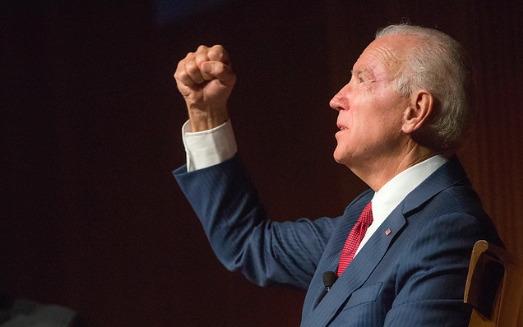
(Corey Brown photo)

Joe Biden, Democratic candidate for president, has an opinion about the Alaska State budget. He’s telling Gov. Michael Dunleavy to fully fund the Alaska Marine Highway system. Dunleavy made some $78 million in cuts to the system, although a good deal of those cuts — about $35 million — have been restored by the Alaska Legislature in subsequent legislation this month.

In a Twitter message that went out Friday, Biden says the “marine transit system in Alaska is vital to rural communities…”

“IBU is on strike to ensure this lifeline for Alaskans will continue to serve communities from Ketchikan to Kodiak,” Biden wrote, wading into the quicksand of what may be an illegal strike. Striking for political reasons is an unfair labor practice, and the Inland Boatmans Union has now indicated it’s striking to change state policy that has nothing to do with its contract.

“The governor must restore full funding immediately,” Biden wrote, trying to be helpful but actually sealing the case that Commissioner of Administration Kelly Tshibaka has been making, that the current strike is illegal.

[Read: IBU spokesman tips the hand of union — strike is about state funding cuts]