Tuesday, April 28, 2026
Home Blog Page 1445

The graph that tells the story

TAXES WON’T KEEP UP WITH GOVERNMENT GROWTH

By LANCE ROBERT

Just when you think you’ve seen the worst year of government in Alaska, you find out you were wrong. The last four years were awful. We had a fiscal crisis but nothing was being done about it. There were attempts to raise revenue, but even if they had succeeded, it wouldn’t have come close to solving the problem.

Examine the attached graph, the most important one for the year, and you’ll see what every legislator knows. If you use the Permanent Fund dividend to fund government, you lose it in two years.

If you use the Earnings Reserve balance then you get about 10 more. If you then implement taxes you won’t get more than a few years (Walker’s attempt would have only raised $700 million).

The natural increase of government (a conservative 4 percent in this graph) will outpace the increase in revenue. This is what Gov. Michael Dunleavy realized when he was looking at the budget issue. It’s impossible to fix our budget based on revenues alone. If you try, you’ll just bankrupt the State in about a dozen years. You’ll then lose the University, all the retirement plans and all of those other programs you might love.

This explains why more cuts have to be made because, to get to a sustainable budget, you have to make a lot of cuts over the next few years.

The governor is making the hard decisions on how to get there and is taking a lot of heat for being laser-focused on his campaign promise to fix this fiscal situation. It may be enough to cost him a second term, but that shows the courage he has to face the problem.

Now comes the irony. The Legislature is split in two factions. There is the anti-governor faction who want to repeal all of the cuts and not pay anything close to the statutorily mandated dividend, and they are fighting the governor every step in a way that mirrors the national level politics.

An example of this is their push for an unconstitutional forward funding of education, which left no real funding in the budget for education.

Then there are those who want some to none of the vetoes repealed and want to work with the governor to solve the problem. They had tried to amend in funding for education but it was rejected by the other side. 

The governor called the special session to deal with the undone Permanent Fund dividend issue, and to give them a chance to repeal the line-item vetoes. The irony is because the anti-governor group has decided to break the law and meet somewhere else than the governor chose, they don’t have enough legislators in attendance to overturn the vetoes.

After the cuts came out they should put their heads together and come up with a compromise to restore a bunch of the cuts and fund a full dividend. The governor made such large cuts that it made for an obvious compromise. What the anti-governor group has done is to “cut off their nose to spite their face”. Sometimes in politics you just have to compromise to get important stuff done. 

So now we have all the vetoes in place, a capital budget that has no funding and we have no dividend. Legislators are talking about amending something into the capital budget, but that can also still be line-item vetoed, so they have to get three-quarters of themselves to agree. Since a few members have been thrown out of the caucus because they stood for rule of law, it’s going to be pretty hard to get that agreement now.

One of the biggest mistakes of the last administration was cutting the Permanent Fund dividend for three years. That took over $2 billion out of the economy in a recession, so this governor is pushing hard not to replicate that mistake.

A deal will have to be made, so when you’re writing all those emails and letters to the legislators, you might want to ask them to act more maturely and make some kind of deal that will work for everybody.

Email the House Minority to thank them for standing for rule of law and letting them know that you are OK with some veto or partial-veto overrides, as long as they make the trade for a full PFD.

We finally have a governor intent on solving the problem. We just need a legislature that acknowledges the issue and will rise above childish nose-thumbing to solve it.

Lance Roberts is an engineer, born and raised in Fairbanks. He is a former member of the FNSB Assembly.  

Divided they stand

As the legislators walked into the Wasilla Middle School gymnasium to take their seats on Friday morning, the audience stood and cheered. And cheered. And cheered.

To the 200 conservatives who had come to support the 18 lawmakers who stayed in Wasilla rather than flying to Juneau, these elected Alaskans were heroes, and they received the heroes’ welcome.

On Friday, unlike Wednesday, security was beefed up in the gymnasium, with Wasilla police at every door and legislative staffers standing on watch.

Wednesday’s spectacle of the takeover of the meeting by unruly radicals didn’t repeat — no protesters were present on Friday.

Instead, every seat was filled with a supporter of the legislators who stayed in Wasilla. It was standing room only. The area for the legislators was cordoned off, and signs warned that no firearms or backpacks would be allowed — this was a middle school, after all.

[Read: Raging protesters take over legislative meeting in Wasilla]

The prayer was not disrupted on Friday, as it had been on Wednesday. The Pledge of Allegiance preceded a vocal performance by Adele Morgan of the Alaska Flag Song, and everyone cheered before taking their seats to observe democracy in action.

Sen. Mia Costello stood at the podium and announced the obvious: There was no quorum, but she reiterated that those present believed that the Special Session was to take place in Wasilla, where the governor had called it, which is why they all had determined to follow the law.

She said that negotiations were continuing with the governor and the two thirds of the Legislature that has been meeting in Juneau.

Meanwhile, in Juneau, both the Senate and House held separate technical sessions, with nine House members present and four Senate members present.

Their efforts to override the governor’s vetoes had failed and most members had left Juneau for the weekend. The Senate and House are adjourned until Wednesday.

The Democrat-led Majority in the House and the Senate leadership issued a press release on Friday that listed fall-out expected from the vetoes. They predicted dire consequences, such as:

  • The University of Alaska will meet Monday to start down the path of declaring financial exigency, effectively a bankruptcy proceeding, which could lead to hundreds of job losses, campus closures, and rushed liquidation of assets. Exact steps to deal with the $135 million reduction need to be identified by July 30.
  • Scholarships were abruptly revoked from 12,000 of the most qualified students in the UA system, many of whom lack resources to attend college otherwise.
  • Alaska’s most financially vulnerable elders who rely on Senior Benefits Program payments are doing without food and medication: 1,742 people with $942 monthly income or less lost out on a $250 payment as a result of the vetoes.
  • The Brother Francis Shelter in Anchorage is ending its day service, which provides case management and a clothing room for homeless people.
  • Nonprofit grant recipients are starved of resources, leaving service providers facing dire choices. Hospice of Anchorage, for example, is unable to bathe and feed dying people.
  • In mid-August, DOT will be forced to stop work on some highway projects already in progress during summer construction season, including on the Sterling Highway.
  • Without a compromise, there will be no Power Cost Equalization benefits this winter, dramatically increasing energy prices on rural residents.

The $444 million cut represents a 12.5 percent cut to the budget presented by Gov. Bill Walker, which had grown larger than the spending plan of the previous year.

Gov. Dunleavy has said that budgets must come into alignment with available revenues, and that Alaskans should get the full Permanent Fund dividend they are promised under Alaska law.

Shadowy group forms to ‘recall governor’

63

TRUE PURPOSE IS TO MINE THE DATA OF PETITION SIGNERS

A group funded by a special interest group called Future North PAC has announced it will attempt to recall Gov. Michael Dunleavy.

The group started a website earlier this year but lists no details of the organizers. A search in Alaska Public Offices Commission shows Adam Lees as the treasurer.

Lees was associated with a caper in 2016, when candidate Ross Beiling posted on Facebook that he had photos of Lees tearing down Beiling’s campaign sign. He was a field organizer for the Alaska Democratic Party and is an aide to Anchorage Assemblywoman Suzanne LaFrance. The Future North PAC address is the same as Lee’s mailing address.

The group announced it will try to recall the governor because of his vetoes of some $440 million, which represents 12.5 percent of state spending.

But those who sign the petition to recall Dunleavy are being duped — their names and contact information are being mined.

The group has no intention of trying to gather an ungodly number of signatures — north of 70,000 spread between every district in the state is needed to even take it to the ballot. But it’s not likely to even get that far, because the group has no legal grounds for a recall.

What the group is doing is data mining for the 2020 election season ground game for Alaska Democrat candidates and the Democrat who has that party’s nomination.

Every signer on the petition will be fair game for targeted messages for the Democrats to excite the anti-Dunleavy (and anti-Trump) base against candidates the Democrats will target in the House and Senate.

The Dunleavy recall petition is the easiest way to get addresses, emails and phone numbers of those who disagree with the vetoes. And the group is sophisticated enough to know that now is the best time to try to find those motivated people who will sign the petition. They’re striking while the iron is hot.

On the group’s website, DunleavyLied.com, the authors plead with readers to be sure to follow and support the political blogs of Dermot Cole, Alaska Landmine, AKLedger, and MidnightSunAK, all of which are anti-Dunleavy and anti-conservative operators.

MRAK Almanac: Bear Paw Festival Edition

The MRAK Almanac is your place for political, cultural, and civic events, events where you’ll meet political leaders or, if you are interested in getting to know your state, these are great places to meet conservative- and moderate-leaning Alaskans.

Alaska Fact Book

Question: Is it true that there are more caribou than people in Alaska?  

Answer: Yes. According to the Alaska Department of Fish & Game, there are 32 known herds of caribou living in Alaska. The total population of these herds is estimated to be over 950,000 individual animals. Recent data shows that there around about 737,000 people in the state, meaning that caribou outnumber humans by around 200,000. The Western Arctic Caribou Herd is by far the largest herd in the state with some 300,000 animals. Fish and Game allows for approximately 22,000 caribou to be harvested by hunters each year.

7/12: Interior Alaska GOP weekly luncheon in Fairbanks. Guest of honor this week is Bryce Ward, mayor of the Fairbanks North Star Borough. Lunch is at Denny’s at 11:30 am.

7/12: Juneau Summer Block Party at the Juneau Arts & Culture Center. Begins at 5:30 pm. There will be outdoor live music, games, and local food vendors. Bring the family.

7/12: The Regulatory Commission of Alaska will meet in Anchorage at 9 am. There will be an opportunity for public testimony. Read the agenda here.

7/12: A series of Occupy to Override rallies are expected in Anchorage’s Delaney Strip Park starting today. Hosted by Defend the Sacred AK, the same group that organized the occupation of Wasilla Middle School last Wednesday. Visit the event’s Facebook page here.

7/12: 3rd annual North Pole Food Truck Festival, one of the largest events of the year in North Pole. Entrance is free, and there will be many local food vendors with unique and delicious fare for the whole family to enjoy. Starts at 5 pm outside the North Pole Worship Center next to Sourdough Fuel.

7/12: The University of Alaska Task Force on University Structure will hold a special meeting in Anchorage at 9 am. The task force will be meeting in room 107 of the Lee Gorsuch Commons. No public testimony will be heard, but the public is welcome to attend.  

7/13: Anchorage Young Republicans (AYR) fundraiser and executive board elections. Bring a friend to this free event and get to know fellow young conservatives in the Anchorage area. More information at this link.

7/13: Arctic Lightning Airshow at Eielson AFB near Fairbanks. This is the first time there has been an air show at Eielson in several years, so don’t miss out on the chance to see our country’s finest in action. There will be demonstrations of the new F-35, the F-22, the F-16, and several others. Gates open at 8 am and wheels are up around noon.

7/13: Tired of weeds that don’t belong in Alaska? Participate in the 8th annual Invasive Weed Smackdown in Palmer. Meet at the downtown pavilion at 10 am and spread across downtown pulling weeds until around noon. Immediately followed by the Midsummer Garden and Art Fair. Learn more here.

7/12-7/13: Annual Pyrah’s Pioneer Peak Farm Strawberry Festival in Palmer. Come enjoy this year’s strawberry harvest with the whole family. There will also be hayrides, frozen lemonade, and live music. Tickets are required, visit this link for more details.

7/12-7/13: 2nd annual Alaska Yoga Festival in Ester, about 10 minutes outside of Fairbanks. Last year, the festival attracted over 100 participants and they are hoping to grow this year. Yoga classes will be taught on the hour from morning till night. No prior experience required, visit this link to register.

7/12-7/13: 16th annual Copper River Salmon Jam in Cordova. Join the Cordova community to celebrate a magical time of year complete with blooming fireweed, fresh salmon, and live music. Further information at their Facebook page here.

7/14: Golden Days River Regatta in Fairbanks. Watch teams float down the Chena River in makeshift rafts and vote for your favorite. Float starts at 11 am in downtown Fairbanks, read more or register a team here.

7/14: Drag races at the Alaska Raceway Park in Palmer starting at 10 am. Races will be running all day. Ticket purchase is required, more details here.

7/13-7/14: Downtown Market & Festival in downtown Anchorage—largest outdoor market in Alaska. Runs from 10 am to 6 pm.

7/13-7/14: Yard Sale at the Alaska Zoo in Anchorage from 9 am to 3 pm. Come out and support the zoo by purchasing animal care items, holiday decorations, and vintage zoo items that are no longer needed. Read more here.

7/10-7/14: 34th annual Bear Paw Festival in Eagle River. There will be rides and amusements for the kids, vendors, live music, and a talent show. Most entertaining of all is the Slippery Salmon Olympics, an annual tradition. Sponsored by the Chugiak-Eagle River Chamber. See the full schedule here.

Alaska History Archive:

July 12, 1959—60 years ago: The cornerstone of Alaska Methodist University (now APU) was officially dedicated in a ceremony outside Grant Hall. Alaska Methodist University was founded with a priority of Alaska Native education in mind, and offered its first classes in the fall of 1960. In 1978, it was renamed Alaska Pacific University but still retains its Methodist affiliation. Today, around 500 students attend APU.

July 14, 1868—151 years ago: By a vote of 113 to 43, the United States House of Representatives passed the appropriation needed to purchase Alaska from Russia. The price had been previously agreed upon—$7.2 million or about 2 cents per acre. Anger over the purchase of “Seward’s Icebox” continued from years after the U.S. gained the territory, but subsided nearly immediately when gold was discovered in the Klondike in 1896.

Plot twist: Aggressive activist now claims she’s a victim

37

NO GOOD DEED GOES UNPUNISHED

A radical Native rights activist who participated in the occupation of the legal meeting of legislators in Wasilla on Wednesday is now claiming that she was assaulted by not only the mayor of Wasilla, but the House Minority Press Secretary. They touched her arm without her permission as she attempted to sit in a legislator’s seat without permission.

Her account of victimization has made national news and has been relayed as far away as the complicit Democrat organ, the New York Times.

In fact, the woman was barely touched as officials attempted to convince her to not trespass and occupy the seats of elected officials.

The narrative, however, has fascinated the media and plays into the overall picture of Wasillans and Republicans as violent people.

Zach Freeman, press secretary who is the unfortunate target of activist Haliehana Stepetin, said the activists had the advantage of surprise, and “In the moment, no one knew if the individuals were planning to harm members of the legislature. I was impressed with the way our legislators and members of the audience remained calm and maintained decorum while facing yesterday’s attempted hostile takeover of an official government meeting.”

Haliehana told the mainstream media that she plans to seek a public apology from Mayor Bert Cottle.

The AP report was quick to point out that in video, Cottle “gripped” the woman’s arm for five seconds, while Freeman barely touched her arm. The report goes on to remind readers that Wasilla is the home of Sarah Palin, former governor and former vice presidential candidate.

As for Cottle, no good deed goes unpunished with the Left, as Cottle had not given direction to Wasilla police to arrest the protesters, but allowed them to take over the meeting and prevent elected officials from conducting business.

It’s almost as if it the Occupy Wasilla group planned to provoke an encounter where they could file charges against the host.

Tammie Wilson out as Finance co-chair, leaves caucus

44

REP. JENNIFER JOHNSTON IS NEW CO-CHAIR

Rep. Tammie Wilson, who joined the Democrat-led Majority in February to become the powerful co-chair of House Finance, is out of the Majority.

News of her departure from the 25-member caucus spread quickly through the Capitol as she began packing her spacious Finance Chair suite to move into one of the tiny offices that minority members are assigned to.

The original majority caucus had eight Republicans and is now down to six of them, after Rep. Gabrielle LeDoux announced her departure from the group in May. LeDoux voted against the operating budget because she agrees with those who believe the $3,000 Permanent Fund dividend is statutorily correct.

Reps. Gabrielle LeDoux, center, and Tammie Wilson, right, are no longer part of the Democrat-led Majority.

Wilson on Wednesday was the lone vote against an override of Gov. Michael Dunleavy’s $444 million vetoes of the budget. For this, and for having attended the alternate legislative meeting in Wasilla, she paid the price.

The way she left the caucus is also subject to different versions. She said she was kicked out; the Majority caucus framed it as thanking her for her service and wishing her well in her future endeavors.

Wilson told reporters she would be heading home to Fairbanks. The Republican Minority, which Wilson left in February to join the Democrat-led Majority, has reached out to her, but it’s unclear where she stands. After LeDoux left the Majority, she is alone without a caucus, and the same may hold true for Wilson.

The House Majority is down to 23. In actuality, there are 23 Republicans elected to the House, but Reps. Louise Stutes, Bart LeBon, Steve Thompson, Gary Knopp, Jennifer Johnston, and Chuck Kopp caucus with the Democrats, leaving the Republicans with just 16 in their caucus.

[Read: 24 hours: House Majority looks for a Hail Mary]

24 hours: Juneau session attendees look for Hail Mary

With just 24 hours to go to override the governor’s vetoes, the two-thirds of the legislature that is in Juneau is trying to figure out a last-ditch effort to restore $440 million in government spending through veto overrides.

They didn’t have enough people in the room to succeed, however, even if everyone voted to override.

During their floor speeches about the operating budget in Thursday’s joint session, their speaking tones were not quite as defiant as on Wednesday. They pleaded. They begged their colleagues in Wasilla to join them.

Only Sen. David Wilson of Wasilla had heeded the call to come to Juneau, and they all knew he was a no vote on an override.

They were in the process of suffering from a humiliating defeat by the more conservative legislators — the “Thrifty One-Third” who have sided with Gov. Michael Dunleavy’s call for the second Special Session to be held in Wasilla.

Sen. John Coghill speaks about the cuts to the University of Alaska.

Sen. John Coghill expressed sadness. His community of Fairbanks will take a major hit when the University of Alaska restructures to adapt to a $135 million cut. The university of one of the three pillars of the Fairbanks economy, he said, along with mining and military. He cautioned that many small businesses that exist because of the university employment base will go belly up.

Sen. Tom Begich’s voice broke as he talked about losing the state he loves. He reminisced about working as a legislative aide during the days when the oil money flowed and spending was reckless.

Rep. Andy Josephson said he would fight on until his last breath:

“This ship will be righted or I will die trying. We will do everything we can through every mechanism before us,” Josephson said. He said he thought all the people who want a full PFD will probably get in their Winnebagos and leave the state if they don’t get them.

Rep. Chuck Kopp called on all to compromise, but seemed to especially want the governor to compromise, likening the Legislature to a lighthouse — immovable — and the governor to a battleship that had better change course. At least that was how the analogy was delivered, although Kopp may have meant something different.

Rep. Bryce Edgmon withdrew his motion to rescind the vote from Wednesday that failed to override the operating budget vetoes. To vote again was futile. He spoke in conciliatory terms at the end of today’s joint floor session, saying that all sides need to work together.

Session adjourned at 12:25 pm on Thursday as rumors flew through political circles about how Friday would play out, with a noon deadline for veto overrides looming: Would legislators in Juneau get on a plane and come north?

Or will legislators in Wasilla fly south so that at least the capital budget veto override motion, offered today by Sen. Lyman Hoffman, can be voted on.

Legislators in Juneau silent on ‘Occupy Wasilla’ takeover

69

READ SEN. GIESSEL LETTER ON VETOES DESTROYING ECONOMY

Legislators in Juneau have been actively explaining themselves to the public and their voters about where they stand on the governor’s budget vetoes and why they oppose them.

On the floor of the joint House and Senate, Rep. Steve Thompson described his feelings this way: “We’re mad as hell and we’re not going to take it anymore!”

He may have been paraphrasing a movie script from the 1996 movie “Network.”

The “mad as hell” scene from the movie “Network.”

But Thompson was also channeling the anger of the anarchist-led mob who took over a legal meeting of legislators that was being held in Wasilla at the same time.

A protester continues yelling while Rep. Lance Pruitt takes a selfie in Wasilla on Wednesday during the anarchists’ takeover of the legislative meeting.

No legislator in Juneau has yet condemned the takeover of the Wasilla meeting by the radical, screaming mob that came from other communities to occupy a legally assembled Wasilla legislative meeting.

The Democrat-led House Majority seemed to want more disruption:

“We will keep fighting until this assault on our economy and state ends … but our efforts will only succeed if everyone disturbed by these reckless cuts continues to raise their voice,” the House Democrat-led Majority wrote.

The Senate President today issued a long explanation of why she supports a veto override, and she, too, made no mention of the “Occupy” group that illegally invaded the Wasilla meeting — a meeting she does not recognize as legitimate.

Her words are newsworthy and deserve wider readership. Here’s Giessel’s letter in full:

Sen. Cathy Giessel, Senate President

SEN. CATHY GIESSEL LETTER TO CONSITUENTS

On Wednesday, July 10th, the House and Senate met together in order to consider overrides to the Governor’s vetoes of the Operating Budget. That override was not successful.

Alaska has, in its Constitution, the highest requirement for a veto override vote of items struck from a budget- ¾ of the Legislature need to vote in order to undo the actions of a governor. All other states require 2/3, 3/5 or simple majority.

We did not have 45 legislators present for the vote. The missing members equate to a NO vote on the override. That means the override was not attainable.

We have recessed the joint session until today. We are hopeful that the missing legislators will decide to come to Juneau to participate in this critical vote.

The Finance committees have been meeting. One of the missing Senators called in to participate in the Senate Finance meeting on Tuesday morning. Clearly, Senators understand that the work being done in Juneau is legitimate and urgent for the state. 

The Constitution of our country and of the State of Alaska clearly defines a representative form of government. In fact, the Alaska Statehood Act, the compact the people of Alaska voted into existence, states that “the State of Alaska shall always be republican in form.” This means that the people elect representatives who bring their ideas to bear when government decisions are made.

There are 3 branches of government – Executive, Judicial and Legislative. James Madison, in the Federalist Papers, noted that the most powerful branch is the Legislative. His reason? The Legislative branch is elected by small groups of people, and so it is therefore closest to the people. The Legislator brings the voices of each smaller area into the larger discussion of what should become law.

Legislators represent the diverse opinions of people across our state. The 40 Representatives and 20 Senators are different. With all the different life experiences, professions, families and cultural backgrounds, hailing from communities in the Arctic, in the temperate rainforest, in the tundra, and in the Pacific swept island chains, how could we not be different?

When you see big divides in the Legislature, understand that this represents a multitude of opinions across our state. An example of this is seen in the contrasting views on the budget and the Permanent Fund Dividend.

Operating Budget – The Legislature held lengthy meetings, full of debate and disagreement. At the end, we constructed a budget that reduced spending back to 2004 levels of unrestricted general funds, resulting in the largest real education in state history. At the same time, legislators worked cooperatively with organizations affected to negotiate reductions. The reductions were about $250 million. The Senate voted unanimously on that budget.

Operating Budget Now – The Governor made reductions of $444 million more, above and beyond what the Legislature has done collaboratively as 60 lawmakers. We now face destruction of key parts of the state’s economy.

Mental Health Budget – This budget is never controversial…until this year. The Governor has vetoed some of the funds in this budget as well.

Vetoed Items:

University – The University of Alaska is a key research facility. It is known, world-wide, for Arctic research. The U.S. is an Arctic nation because of Alaska. 

Yet, the U.S. government has little expertise on Arctic topics outside of the work pioneered by UA. The University prepares our professional workforces. In fact, the presence of the University was one of the reasons that the military decided to deploy fighter jets here.

Head Start, Adult Dental, Senior Benefits, WWAMI (medical education scholarships to bring doctors back to Alaska), University of Alaska Performance Scholarships for high school seniors, behavioral health and homeless grants and more have been targeted by the Governor’s red pen  over 180 items vetoed that impact Alaskans of every age, geographic area, demographic.

I am asked if I am a fiscal conservative who wants to reduce the size of government. The answer is yes; just ask the many folks who criticized me for most of my time in the Legislature for being a “rabid right winger” on fiscal issues. I voted for a fiscally conservative budget in the Operating Budget this year. The Legislature performed careful surgery. The vetoes are reckless amputations.

Veto Override Session:

As I presided over the Joint Session, I could see each legislator’s face as they spoke about the impact of the various vetoes. Many strong men and  women had to fight back tears as they spoke about the damage caused by cuts that undermine their communities. These lawmakers were seeing the faces of the men, women, and families in their districts. They were envisioning their neighborhood streets with ‘For Sale’ signs in front of homes and ‘Closed’ signs on businesses. It was heart-felt grief for our Alaskans and our economy that drove those remarks on the floor yesterday.

Some people think Legislators are aloof, wealthy, detached elites. Fake news!!! We are Alaskans, citizens just like all of you. We worked hard to meet the need to reduce spending without creating mortal injury to our families, businesses and jobs. We came together, as Alaskans of different backgrounds, in this Special Session, to repair Alaska from the impacts of these vetoes. Sadly, 22 of our colleagues didn’t share the same level of concern.

Thursday, July 11 – Rescind Action and vote again to override

We have made allowance for our absent colleagues. There is a motion to pull back the failed vote to override and return to the Joint Session on Thursday to vote again.

The time for that last vote will be at 10:30 AM. This allows our absent colleagues to arrive in Juneau and get to the Capitol. There was a flight last night available, or they could come down on this morning’s early flight. We are offering them every opportunity possible to do the right thing for Alaskans.

Click here for legislators’ floor speeches on Tuesday, June 9th.

Kind regards

Cathy

Alaska gasline agency downsizing by two thirds

8

The Alaska Gasline Development Corporation is reducing its staff by two third and refocusing its mission.

By August, the agency that had 26 staff members in the 2019 fiscal cycle under Gov. Bill Walker will be down to eight, plus some contractors who will provide technical work. 12 current employees of the agency are being laid off; others are already gone.

AGDC will pursue the permitting for an Alaska liquified natural gas project, but will once again look to the private sector to shoulder the development and risk of the project, which is estimated to cost between $43 and $60 billion and involves two major processing plants and an 800-mile gasline from the North Slope to Nikiski.

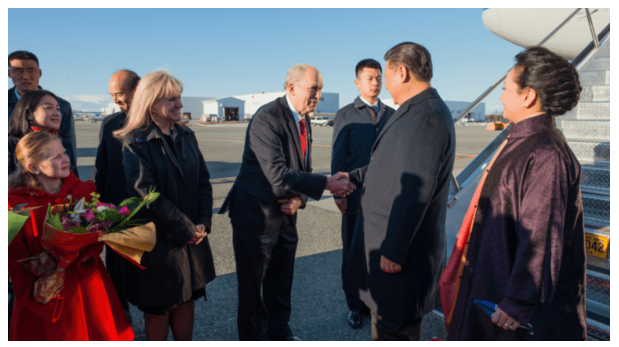
Under Walker, AGDC was the lead on the project and the owners of Alaska gas — BP, Exxon, and ConocoPhillips — were chased off because they were not moving fast enough for Walker. Walker had signed agreements with China, as well as Japan, and Korean entities to buy the gas, and had all but put China in the driver’s seat as the project developer and financier.

[Read: Walker strikes a deal with China, Sinopec]

The CEO of the agency, Joe Dubler, released this statement on Wednesday:

“AGDC is restructuring to reflect our primary focus on completing the FERC permitting process to advance the Alaska LNG project. AGDC will continue to pursue (Federal Energy Regulatory Commission) authorization, expected in June 2020, with an eight-person technical staff plus contract support as needed, and reduce employee headcount by twelve. Completing the permitting process will substantially de-risk Alaska LNG and open the door to a wider range of potential project parties with the broad expertise required to unlock the value and manage the risks associated with a project of this magnitude.”