Wednesday, April 22, 2026
Home Blog Page 1359

‘Pirate’ has left Fairbanks

25

Update: Confirmed — Pirate has been photographed in Redding, California, panhandling at an intersection.

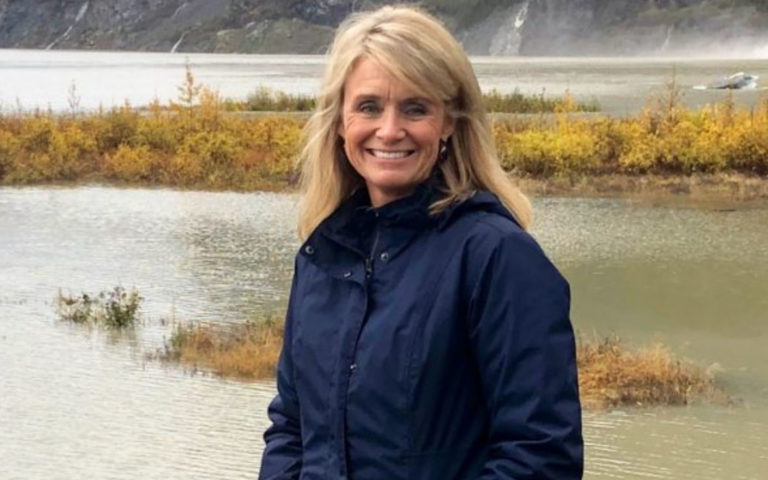
In early December, a man named Pirate reappeared in Fairbanks and caused alarm: He’d been accused of brutal rape and sexual assault in cases in other states, as well as Alaska, and now he was a vagrant, without a place to live and with no visible means of support. What could possibly go wrong? People warned each other to lock their doors.

Pirate, who had legally changed his name in 2013 from Daniel Lloyd Selovich, was hard to miss, with a face covered in Polynesian-style tattoos and a mouth that is missing teeth. The community of Fairbanks became concerned, even fearful, and a Facebook group was started to track his every movement. After all, in the dead of winter, it was as though a boogyman had descended upon the northern community — a man with a face designed to scare and a rap sheet to match.

Now, he has evidently left the state; he was last seen boarding a plane for Seattle on Dec. 24, 2019.

He had been escorted Fairbanks Memorial Hospital by security guards earlier that day after an extended stay, witnesses said.

Pirate had been charged in the kidnapping and extended raping of a woman in a cabin near Manley Hot Springs over a period of five weeks in the fall of 2015. Those charges were dropped in 2016 after the woman died of unrelated causes.

Pirate was extradited from Alaska to Nevada in 2016, where authorities had connected him via DNA to a Las Vegas rape 12 years earlier. In 2018 he pleaded guilty to sexually motivated coercion and was sentenced to serve up to five years, but was given credit for 645 days served.

He had also been convicted of rape in California in 2004. A string of arrests from Florida to Missouri included everything from vagrancy, panhandling, forgery, burglary, and vandalism.

In early December, he was hanging around inside a McDonald’s restaurant in Fairbanks, and telling people he was living in the woods near the University of Fairbanks. And then, poof, he disappeared, and rumors surfaced that he had been admitted to the hospital.

With Pirate back in the state, the Fairbanks District Attorney’s office reviewed whether it could reopen the dismissed case against him for rape and kidnapping.

Ultimately, the State decided it could not pursue those charges from 2015 for the same reasons they were dismissed in the first place after the death of the victim. There was simply no way to cross examine the victim, which would have led to an unfair trial.

“The Department of Law has completed its review of the evidence and concluded the dismissal of the 2015 case, while extremely frustrating, was appropriate under the law,” the department wrote in a press release on Dec. 12.

In Fairbanks, some say they think Pirate headed back to Las Vegas, while others say they heard he was heading to Oregon. The Facebook page that was tracking him was put into warm storage, with administrators stating they would be ready to restart the page if Pirate ever appears in Fairbanks again.

Daylight comes back to Utqiagvik next week

3

Utqiagvik, the northernmost community in America, is just days away from sunrise. The sun will rise at 1:09 pm on Jan. 23, skimming the horizon for about an hour before setting at 2:09 pm. Solar noon is at 1:38 pm.

The community has not had sunlight since Nov. 18, 2019, but the twilight is gaining momentum this week.

On Jan. 24, the second day of daylight in 2020, the town will gain 37 minutes more than it had the day before, and by the end of January will have gone from zero to 147 minutes of daylight in just nine days.

(The photo above was from the FAA webcam in Utqiagvik, facing south today.)

University Regents bump tuition by 5 percent

0

Students enrolled at the University of Alaska System will see their tuition raised by 5 percent in 2021, a trend that continues the increases that have occurred annually for several years.

At the same time, the University of Alaska Board of Regents directed President Jim Johnsen to allot $1.5 million as financial aid to be distributed proportionally across the three campuses, in an effort to mitigate those increases for lower-income students.

The regents are meeting all day in Anchorage today on the University of Alaska Anchorage campus. Budgets are at the top of the agenda.

The discussion on the tuition increase lasted until midday, and included, at one point, an amendment to only raise tuition by 2 percent. That failed, while the 5 percent tuition passed with six regents in favor, and five opposed.

The UA system’s tuition is still well below the average of other universities in the western states.

The system is having to absorb over $70 million in budget reductions across a three-year timeframe, an agreement made and signed by President Johnsen, the former chair of the Board of Regents, and the governor.

The current tuition structure at University of Alaska Anchorage:

Using that tuition chart, a resident would pay $11.15 more per credit, or about $33.45 more per three-credit course. A 12-credit load will cost students about $134.00 more in 2021 than it does now at the Anchorage campus.

Quick Poll: Should Sanders, Warren, Klobuchar recuse themselves from vote?

15

Must Read Alaska is running a poll on Facebook asking people if they think that senators running for president should recuse themselves from voting on the articles of impeachment sent over from the House of Representatives. You can take part in the poll at this link:

Anchorage election season is off to the races on Friday

0

Those interested in serving on the Anchorage Assembly or on the Anchorage School Board can file for office with the Anchorage Election Division today through Jan. 31. The election begins when ballots are mailed out to known Anchorage voters on March 17, and ends on April 7.

Seats that are in this election are for three-year terms:

  • Seat B, Downtown Anchorage
  • Seat C, Eagle River/Chugiak
  • Seat E, West Anchorage
  • Seat G, Midtown Anchorage
  • Seat I, East Anchorage
  • Seat K, South Anchorage
  • School Board Seats C and D
  • Service Area Boards of Supervisors, multiple seats on various boards

A candidate for municipal office must be …

  • a resident of the Municipality of Anchorage, and
  • a qualified voter of the Municipality of Anchorage and the State of Alaska, 
  • qualified through other criteria.

There are specific steps candidates must take in order to appear on the Regular Municipal Election ballot. Detailed instructions are in the filing packets for each office:

Questions about the election may be directed to MOA Elections by calling the Voter Hotline at 907-243-VOTE(8683), emailing [email protected], or visiting muni.org/elections.

Outside dough spilled to screw up Alaska’s elections

THE ANCHORAGE DAILY PLANET

Who knew there could be so much dough in trying to persuade Alaskans to screw up a fairly straight-forward election system?

Alaskans for Better Elections is pushing a 25-page ballot initiative that would, if it wins a spot on the ballot and voters eventually approve, make transformational changes to the state’s election machinery – none of them good.

It wants to institute ranked-choice voting, open or “jungle” primaries and limit campaign contributions. Additionally, candidates no longer would have to disclose a political affiliation when their names go onto the ballot.

The initiative would do all that – and destroy political parties – without the first hint of legislative input, review or debate. It is sponsored by former independent state Rep. Jason Grenn, Bonnie L. Jack, and former Gov. Tony Knowles’ attorney general, Bruce Botelho.

Well, make no mistake, trying to make those kinds of changes – changes aimed at getting more Democrats and centrists elected – costs money. Luckily for the initiative group, getting Outside money and help has not been a problem.

Its fourth-quarter Alaska Public Offices Commission campaign disclosure report, filed Tuesday, shows the effort has taken in at least $619,590, the vast majority of it from Outside groups – with $600,000 alone coming from Denver-based Unite America, formerly the Centrist Project. United America endorsed former Gov. Bill Walker’s failed re-election bid.

In a 10-day APOC report, filed Dec. 3, 2019, the group showed a debt of $315,000 to a Dallas-base political consulting firm, Advanced MicroTargeting, for signature-gathering.

Backers of the proposed ballot initiative Jan. 9 turned in more than 41,068 signatures in a bid to qualify the measure for this year’s ballot. It needed only about 28,000.

Alaska state law holds payment to signature-takers, or petition circulators, as they are called, to no more than $1 a signature, plus a small amount for meals and such when they travel more than 100 miles from home.

That means the circulators should be paid in the neighborhood of $41,068, leaving about $275,000 for Advanced MicroTargeting. That means every signature cost $7.67.

The late Washington Post political columnist, David Broder, was no champion of initiatives. He said they were a way for demagogues and charlatans to get around the legislative process to further their own ends; a way to have laws without government. One of the things he lamented in is book, “Democracy Derailed” was that grassroots campaigns too often are turned into a lucrative political industry – and anything but citizen-driven.

The money involved in the Alaskans for Better Elections initiative is a case in point. It is Outside money, from only a few sources, aimed at furthering an Outside group’s political interests.

How is any of that good for Alaska?

[Read The Anchorage Daily Planet at this link.]

Must watch video: Drone footage of battling the Willow Creek ice dam

0

Workers cleared a channel on Willow Creek on Jan. 9, the second day of battling an ice dam that has caused flooding of some homes in the area. Mat-Su Borough Public Works Director Terry Nolan narrates the work being done on this short explanatory video:

Borough contractors improved the flow on Willow Creek using an excavator and grader. Deneki Meadows Bridge and homes in that area are now reachable, although sudden warming could soften the road surface and four-wheel vehicles are advised.

Last week, the contractors continued dislodging ice under the bridge, with extreme low temperatures contributing to equipment malfunctions, which slowed the work, the Borough reported. Local heating fuel providers successfully used the roadway and bridge to deliver fuel to residents.

Noteworthy in the video is that the drone used to shoot the aerial footage held up in the sub-zero temperatures.

Fairbanks News-Miner lays off staff, seeks nonprofit status as path for survival

19

WILL FOUNDATIONS START MASSAGING NEWS COVERAGE?

The Fairbanks Daily News-Miner has laid off four of its 55 employees, more than 7 percent of its entire staff.

The newspaper is owned by a nonprofit foundation but is operated as a business that supports itself with subscriptions and advertising. But times are tough in the newspaper industry.

Now, the Helen E. Snedden Foundation, which has owned the News-Miner since 2016, is gearing up to apply to the IRS for nonprofit status for the newspaper, so it can accept donations directly and apply for grants.

This month, the Juneau Empire laid off two people from its news staff — the staff photographer and the sports reporter. The news staff is down to four from a high of 20 or more in the 1990s. Last year, it stopped printing on Mondays and shuttered the Capital City Weekly, which it owns, because it was competing with the daily paper.

The Homer Tribune folded last year, leaving that community with one weekly newspaper.

But the News-Miner may survive under its new nonprofit model with the help of major grants.

“Community support could eventually come through an additional means. The company will be applying to the Internal Revenue Service this year to become a 501(c)(3) nonprofit corporation as a community asset, which could open the possibility of receiving grants and other types of financial support,” the News-Miner wrote to its readers.

According to the Pew Research Center, total U.S. daily newspaper circulation (print and digital combined) in 2018 was 28.6 million for weekday and 30.8 million for Sunday, down 8 percent and 9 percent respectively, from 2017.

Weekday print circulation decreased 12 percent and Sunday print circulation decreased 13 percent in one year.

With that trend having continued and no relief in sight, last year the Salt Lake City Tribune became the largest newspaper yet to seek 501(c)(3) status, a request that was approved by the IRS in October.

The Tampa Bay Times has been owned by the nonprofit Poynter Institute, and the Philadelphia Inquirer is owned by the Lenfest Institute. Like the News-Miner, they have remained for-profit entities owned by Foundations.

Nonprofit foundations are also driving the news narrative. A series on crime and lawlessness in Alaska is now in its second year at the Anchorage Daily News, with funding from ProPublica, which itself receives a large portion of its support from the Sandler Foundation. The Sandler Foundation supports numerous liberal political causes, including the Center for American Progress, which is pushing the impeachment narrative, and anti-Trump/anti-oil messaging. ProPublica does not fit the mold of a more neutral news organization, such as Associated Press or Reuters.

The role of foundations in influencing news coverage has some journalists skeptical of the strings that are attached. But their very jobs increasingly depend on the kindness of strangers: Journalism philanthropy has nearly quadrupled since 2009, according to Nieman Labs. The Institute for Nonprofit News reported that 43 percent of its members’ revenue now comes from foundations.

Brooks Range Petroleum gets new lease on life from AIDEA

2

The Alaska Industrial Development and Export Authority Board of directors approved a resolution allowing the agency to modify terms of its loans related to development of the Southern Miluveach Unit (known as the Mustang Field).

The loan modifications come with a $60 million investment commitment from Brooks Range Petroleum Corporation (Brooks Range) shareholders in the USA, Asia, and Western Europe.

Brooks Range Petroleum has been in default since October.

The 2020 commitment into the Alaska company is intended to bring the Mustang Field into sustained production, and begin repaying creditors while putting Alaskans to work. 

The company has a long list of creditors with familiar names in the Alaska oil patch, including Doyon Remote Facilities and Services, Fairweather LLC, Nana Construction, North Slope Borough, and Little Red Services, among dozens of other Alaska-centric businesses. The list includes large companies, such as ExxonMobil, as well as small ones, such as the Alaska Legislative Digest, owned by Tim and Mike Bradner, and Petroleum News.

AIDEA consented to the sale of certain oil field equipment and other assets that are not essential to the Mustang Field, with proceeds to be applied to past-due Brooks Range payables. Most of these payables are owed to the Alaska companies, but the total amount owed to companies exceeds $17 million.

If certain financial benchmarks are met, including establishing a debt service reserve fund and hitting specified oil production targets, AIDEA will allocate additional funds through a mid-year line of credit that can only be used for drilling additional wells necessary to meet state lease requirements, the agency wrote.

“The AIDEA mission to advance economic development and create job opportunities can sometimes run into delays, disappointments, and missed production deadlines,” said AIDEA Board Chairman Dana Pruhs. “Brooks Range startup problems and the oil tax credits veto three years ago, along with other factors, created the largest workout situation at AIDEA as identified by the Dunleavy transition team in early 2019.

“With the increasingly favorable state business climate, together with oil price and tax stability, Brooks Range owners and creditors took another look at Mustang. So here we go, and I hope the equity holders can obtain a buy-in from the entire list of creditors,” Pruhs concluded.

AIDEA took a $10.5 million allowance from earnings for Fiscal Year 2019 when Brooks Range failed to meet targets. Other creditors are agreeing to workouts with similar rationales, but thus far not every creditor has come on board, AIDEA acknowledged in its press release. AIDEA and equity holders generally concur that final agreement on these matters is needed by the end of January 2020.

“I want to thank the AIDEA Board and Governor Dunleavy for assigning a high priority to fixing this problem,” said Brooks Range CEO Majid Jourabchi. “Brooks Range and our contractors on the North Slope are completely aligned in what needs to be done, and the urgency to have it be so.”

The Alaska Industrial Development and Export Authority is a public corporation of the state whose purpose is to promote, develop and advance the general prosperity and economic welfare of the people of Alaska.