Wednesday, July 8, 2026
Home Blog Page 1338

A devastating decision

70

By RALPH SAMUELS

I was born and raised in Alaska and have had a job since I was 15-years-old. I don’t recall ever crying at work. Until yesterday.

I work for Holland America Line and Princess Cruises and the Alaska tour company we operate, HAP.

HAP operates the Princess Lodges, Westmark Hotels, a large bus company and a train company. It is a large and complex operation that generally spends the entire year planning on a five-month season and serves as a transportation and hotel company for hundreds of thousands of visitors to Alaska.

Yesterday, we notified civic leaders, business leaders, local government officials, federal officials and elected State leaders that HAP would not operate on the rail belt this summer. The 3,500 seasonal workers we normally hire will not be hired. The 34 restaurants and coffee shops we operate will not open, and the bed taxes and sales taxes our guests generate for local governments have simply disappeared.

The Denali Borough has a population of only about 1,400 residents, but 80% of their budget, mostly for their schools, comes directly from bed taxes. Those bed taxes are overwhelmingly generated by visitors who came off of cruise ships.

While cruise ships are the transportation of choice by which more than half of the visitors to Alaska make their way north, the backbone of the tourism industry are the dozens of tour operators that show off our State to people who have had it on their “bucket list” and have finally made their way here. The visitors may be adventurous, sedentary, old, young, single, with a large family, American or international. But they all want to see and feel Alaska. Mountains, rivers, wildlife, glaciers and our unique culture are all shown off by the small Alaska owned tour companies.

These small companies depend on our volumes of guests, and we depend on their tours to best experience Alaska. In the long term neither of us can succeed without the other.

Not operating HAP this year was a very difficult decision, knowing the impacts on communities and the small businesses that depend on our many guests. But as the potential opening of the business got pushed further and further back, the decision simply had to be made. We are not capable of hiring and training the necessary thousands of employees for a five-week season.

When advised of this decision, most people were not surprised, but that doesn’t mean they were not troubled. As difficult as it was to make those phone calls, it was much worse to receive them. Our hundreds of year-round employees were notified in the morning, and like the employees in many industries, they are also very concerned. A month ago, our staff was busy hiring seasonal mechanics, waitstaff, cooks, drivers, tour guides, luggage handlers, housekeepers, bartenders, and myriad others.

Critics of the cruise industry often don’t like our large size, but they usually fail to recognize the many individuals who make up our diverse, unique and dedicated work force – the true fabric of our company. They don’t know the guy from Salcha who started his career washing busses, and 25 years later has earned his position of managing almost 3,000 guest rooms spread all over remote Alaska.

The critics rarely meet the woman who trains and manages specialized tour guides year-round, and on weekends runs 100 mile footraces in Alaska in February. And they certainly don’t know the born-and-raised Alaskan and UAF graduate who serves as the Board President of the Anchorage Civic Orchestra. At our company, we have hundreds of individuals with their own unique stories who are vibrant members of our community, and collectively make tourism work for Alaska.

Our employees and our tour partners are essential to tourism in Alaska.

As I said a number of times on the phone yesterday, there isn’t much of a silver lining to the news of HAP not operating on the rail belt this summer. ATIA President Sarah Leonard summed it up best in a media report when she simply said, “It’s devastating.”

Here is where Alaskans can offer to help. Go flight-seeing, hike in Denali, go river rafting or on a kayak trip. Help out the small tour companies until we can resume the higher number of visitors that are required to sustain our visitor industry for the long term.

These small companies do a great job of showing off our state’s rare beauty and providing one-of-a-kind adventures, and they are all right here, in our own back yard.

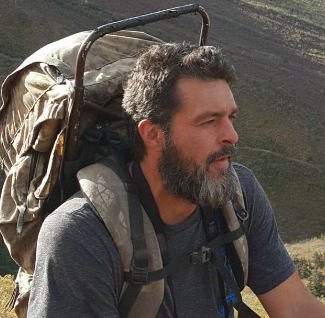
Ralph Samuels is a lifelong Alaskan that has worked in aviation, public service, tourism, and even had a stint as a bartender. He is the Vice President of Holland America Group.

Dunleavy: New mandate means doctors can see patients starting Monday

6

Gov. Mike Dunleavy issued Health Mandate 15 today, which supersedes some of his previous orders that had ratcheted down medical care in Alaska for almost all conditions except COVID-19.

It’s not exactly a roll-back of Health Mandate 5, but close.

Starting Monday, a wide range of health practitioners, including acupuncturists, massage therapists, occupational therapists, and even religious healers will be able to return to their normal practices, while observing strict health protocols to keep patients, staff, and themselves safe from the contagion that has spread across the globe from Wuhan, China.

Must Read Alaska sources said that Monday was chosen as the target date because medical clinics need to staff up and ensure they have enough personal protective gear, and also be ready to follow the specific protocols that come with Health Mandate 15.

Providers, according to this new mandate, should continue to use telemedicine, and phone consultations when possible, and create physical barriers between providers and patients. They must employ universal masking procedures for all employees, including front desk staff. All patients need to be screened for COVID-19 symptoms, recent travel, or recent exposure to COVID-19. To the extent possible, doctors should begin testing all admitted patients for the coronavirus.

Lobbies and waiting rooms will need to be marked for social distancing and limited occupancy.

The governor emphasized that Alaskans need to be able to be treated for their illnesses that are not COVID-19. Fewer than 300 people in the state have been diagnosed with the coronavirus, but there are only 187 active cases. Nine Alaskans have died, seven of those died in the state.

“The suspension of non-essential procedures and health care have been beneficial in slowing the spread of the disease. The benefits of suspension must also be balanced with delayed health care and other health outcomes,” Dunleavy wrote in his latest health mandate.

On May 4, the restrictions on other elective medical procedures will ease for health care services that cannot be delayed without posing a significant risk to quality of life.

The full description of the new health mandates are at this link.

National Guard is not a pooper scooper brigade

THE ANCHORAGE DAILY PLANET

City officials are asking the Alaska National Guard be pressed into service to help clean up the city’s homeless camps, along with their attendant piles of trash and human waste, as the snow melts and we continue to struggle with the COVID-19 pandemic.

The request is a terrible idea on almost too many levels to comprehend, appearing to be little more than the city taking advantage of available federal CARES Act funding to deal with an expensive, chronic problem.

The notion of uniformed National Guard troops razing the camps, seizing private property – destroying this, carting off that – is mind-boggling. What happens when one or more of our recalcitrant urban sportsman decides to take them on? Imagine the pictures. Imagine the headlines: “Jackboot thugs beat homeless, mentally ill man.’

Calling out our the National Guard would, of course, be a quick, easy fix on somebody else’s dime for a social problem that has plagued Anchorage over recent years, but you have to ask: At what point did our service members become our garbage collectors and trash pickers? Do we really want uniformed troops carrying out such tasks? Their training, of course, is to break things and kill people.

Logistical support, distributing food, transporting essentials and necessities, building temporary communities. Those are all things right up the National Guard’s alley in a peacetime disaster setting, but clearing homeless camps? Hardly.

We would hope Gov. Mike Dunleavy would summarily reject the request. Using the Guard in such a manner would solve a city problem – and, yes, save it some money – but it is not in anybody’s best interest.

Sen. Shower takes to Livestream to ask tough questions on shutdown

Juneau, Alaska (KINY) – State Sen. Mike Shower, who represents the Wasilla area, has been hosting a number of Facebook Live events in recent weeks to address the COVID-19 pandemic.

During many of his live events, and in an interview with News of the North, Shower says the virus, while deadly, is killing mostly those with advanced age or underlying conditions.

“The virus is here and it’s going to continue to be here until we achieve what they call herd immunity where enough people have it,” Shower said. “The reality is only a very small fraction of the population, usually the very elderly or those with underlying health conditions, have any significant impact of dying from it.”

Shower says business owners and workers in his district, and statewide, are being negatively impacted by the protracted lockdown orders.

“I got back to my district and I have gotten hundreds of emails, phone calls, and Facebook messages, and they all are saying the same thing… that we’re dying out here not from the virus, but we’re dying from the cure,” Shower said. “[We’re] shutting down the economy and businesses and people have lost their jobs by the thousands and businesses are being shuttered by the hundreds. People are not going to survive economically.”

When it comes to the lockdown, Shower said he has issues with the constitutionality of the orders in Alaska and in the lower 48.

“We have a little bit of a constitutional issue I’m concerned about because we’re in a quasi-state of martial law without really having declared it, where we are interrupting people’s right to assemble, due process, shutting down businesses, and travel,” Shower said. “I want to be crystal clear that I’m not minimizing the disease, that it does spread quickly and that people get it and some people are affected, but a very small portion. I’m asking the hard questions because everybody wants to take the more emotional [approach].”

COVID-19 update: Another 8 diagnosed, no new deaths

24

Eight more Alaskans have been diagnosed with COVID-19 since the last state report midday Tuesday.

A total of 293 cases have been identified in Alaska, with 106 of those cases known to be recovered, for a total of 187 active cases.

A total of nine Alaskans have died from the illness, including two who died out of state. None were reported in the last 24 hours.

There have been two more hospitalizations, bringing that total to 34. However, most of those people are not currently hospitalized; nine have died and others have been released to recover at home.

The death rate in Alaska is currently 3 per 100 cases of the Wuhan coronavirus that is believed to have started in Wuhan, China late last year.

Alaska communities that added cases in the past 24 hours were: Anchorage (3), Kenai Peninsula (1), Juneau (3), and the first case diagnosed in the Nome area (1).

Total cases that have been diagnosed in Alaska, (including recovered and deaths):

  • Anchorage: 139
  • Kenai Peninsula: 16
  • Fairbanks/North Star Borough: 79
  • Southeast Fairbanks Census Area: 1
  • Yukon-Koyukuk Census Area: 1
  • Mat-Su Borough: 15
  • Nome Area 1
  • Juneau: 21
  • Ketchikan: 15
  • Petersburg: 2
  • Craig: 2
  • Bethel: 1

Mayor Berkowitz gets emergency powers extended only through June 5

31

MAYOR EXTENDS STAY-HOME ORDER TO MAY 5

Mayor Ethan Berkowitz wanted his emergency authority extended through Nov. 15, but the Anchorage Assembly said that was too long, and amended his power only as far as June 5.

During Tuesday night’s meeting, Berkowitz, speaking through a cloth face mask, extended the “hunker-down” orders in Anchorage for another 24 days until May 5.

The hunker-down order means people in Anchorage are supposed to be confined to their houses except for critical jobs, or to handle errands like groceries, or get health care, or to get exercise out of doors, if they don’t come near others.

Anchorage is responding to the COVID-19 coronavirus in a way that many in the business community say is crushing commerce and will have long-lasting, generational effects.

A restaurant trade group, for example, estimates that 75 percent of family-owned restaurants in America will not reopen after the national health emergency has passed.

The National Restaurant Association estimated has said that the entire industry would lose $225 billion in the coming three months and shed five to seven million employees, according to the New York Times.

[Read the hunker-down order here.]

Several members of the public testified by telephone on Tuesday that it’s time for Anchorage to reopen the businesses that can operate while observing the current six-foot-rule mandate and other hygiene mandates. Assembly members acknowledged that they had heard from many members of the public over the past few days.

Changes to the mayor’s hunker-down order include:

  • Nonessential businesses (those deemed by the city as nonessential) may have two staff member on the premises to do essential work. But these businesses will still not be allowed to have curbside service.
  • Fabric stores are now allowed to do curbside pickup or delivery.
  • Farmers markets, landscapers and food trucks are now deemed “critical businesses.”

Breaking: Governor ends limits on elective surgeries

17

Health Mandate #5, which had put the State government in between doctors and their patients and prohibited many forms of diagnosis and treatment, has been lifted by Gov. Mike Dunleavy.

Elective procedures and surgeries may go forward, he said, but added notes of caution.

“We came to the conclusion that society and Alaska is better off if we open up this sector sooner rather than later,” Dunleavy said.

The medical sector is the first of all the economic sectors to open up, he said. If there is a large increase in coronavirus cases, he said the State could see the need to throttle it back to preserve medical equipment.

“We are assessing it on a daily basis, assessing PPE (personal protective equipment), where we are getting it, how much is being used. We are constantly trying to fine tune things and get life closer to the normal life we once had.

“With time we are going to understand what is happening with this virus,” he said.

“We’re hoping we are entering into a period where we can manage this. You’ve done a fantastic job, Alaska,” Dunleavy said. “We’re very fortunate that we have Alaskans that understand what’s happening and are informed and know what we have to do with Alaskans to deal with this. We’re hoping we’ve bent a curve.”

Princess Cruises won’t open its lodges or offer train, bus tours in Alaska this summer

MOST ALASKA CRUISES CANCELED

Princess Cruises, Holland America, Seabourn, and Carnival Cruise Line have canceled all sailings worldwide through early summer.

Princess Cruises, Holland America and Seabourn said their cancellations include the majority of their Alaska cruises in 2020, and Princess will not open any of its lodges in Alaska this year or operate sightseeing trains or buses.

Princess Lodges and tours impacted in Alaska are at this link.

Princess has also delayed the debut of its newest ship, the Enchanted Princess, until Aug. 1. The Diamond Princess is canceled through Aug. 4, and the Sun Princess won’t sail until at least Sept. 4.

The Princess/Holland America announcements followed Carnival, which canceled all sailings through June 26.

Previously, the four cruise lines had only canceled sailings on most of their ships through the middle of May.

The Centers for Disease Control has extended its “no sail” mandate for cruise ships sailing from U.S. ports, and the mandate may be in effect until August.

Princess and Holland America are the dominant cruise lines for the Alaska market, dedicating nearly half of their ships to Alaska every summer.

Disney Cruise Line has also canceled all sailings through May 17 and all Alaska sailings through the end of June.

COVID-19 update: 8 new cases, one new death

19

Eight more Alaskans have been diagnosed with COVID-19 since the last report midday Monday, and one new death was recorded.

A total of 285 cases have been identified in Alaska, and 98 of those cases are recovered, for a total of 187 active cases.

Total hospitalizations have been 32, but not all of those cases are still in the hospital.

The death rate in Alaska is currently 2.8 per 100 cases.

Five of the new cases are in Anchorage, one is in Juneau, one in the Mat-Su, and one in Craig.

Total cases by community, including those who have recovered:

  • Anchorage: 136
  • Kenai Peninsula: 15
  • Fairbanks/North Star Borough: 79
  • Southeast Fairbanks Census Area: 1
  • Yukon-Koyukuk Census Area: 1
  • Mat-Su Borough: 15
  • Juneau: 18
  • Ketchikan: 15
  • Petersburg: 2
  • Craig: 2
  • Bethel: 1