Sunday, April 19, 2026
Home Blog Page 1339

Ferry Tazlina heads back into service from Auke Bay

13

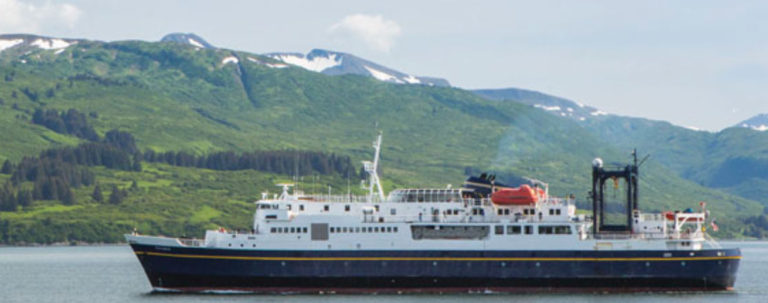
The M/V Tazlina docked at Auke Bay near Juneau on Sunday, where it’s tied up next to the broken down M/V Matanuska. It was brought north from the Ketchikan shipyards, where it’s been undergoing refitting so it can service more ports.

The ferry will start back into service on March 5, after it fuels up and gets its quarterly U.S. Coast Guard inspection. The crew also has to perform a number of safety and abandon-ship drills.

The ferry will begin servicing Northern Lynn Canal communities, including Angoon, Hoonah, Haines and Skagway.

[M/V Tazlina schedule can be found here]

Meanwhile, a vessel from Allen Marine in Sitka has been contracted by the State ferry system to provide service to some smaller communities. The M/V Melinda Leigh will next depart Tuesday for a run to Kake, Angoon, and Tenakee.

That run, on a vessel usually used in summers for tours, will cost the State $11,250 per trip. Passengers from Juneau to Tenakee will pay just $56 in fare for the 9-hour voyage to Tenakee. The Melinda Leigh does not carry vehicles.

The contract for the route from Juneau to Sitka will cost the State $10,900.

Brena’s oil tax initiative has valid signatures for ballot

9

BUT GROUP’S FINANCIAL REPORTS SHOW MESSY MONEY TRAIL

The oil tax ballot initiative spearheaded by Robin Brena has exceeded the number of valid signatures it needs to get its question on the ballot — some ballot, at a time still to be determined.

As of Feb. 28, the Alaska Division of Elections posted that 32,378 signatures were validated out of the 36,252 signatures reviewed by the State.

Brena’s group had collected more than 44,000 signatures, turning them in on Jan. 17, 2020. It needed 28,501 of those signatures to be from registered voters from at least 30 of the state’s 40 House districts.

Brena, business partner to former Gov. Bill Walker and long-time oil tax proponent, wrote the “Fair Share” ballot initiative to recalculate taxes on oil companies and undo the reforms of Senate Bill 21, which passed the voters in 2014. Brena is the also primary funder of the initiative.

The Fair Share group used Texas Petition Strategies and paid $43,333 for professional services for the the signatures gathered in Alaska since taking possession of petition booklets in October.

Brena was the source of that $43,333, having contributed the identical amount to the Fair Share group.

The group also has transactions with another Texas company, Advanced Micro Targeting of Dallas, in the amount of $72,500 for signature gathering services.

Brena was also the source of that expenditure, donating that exact amount to his Fair Share group in a separate set of transactions.

Alaska law limits the amount that can be paid to signature gatherers to $1 per signature. With all funds expended to date, the group appears to have spent well over $5 per valid signature, although there’s no evidence the worker-bees with the clipboards were getting more than $1 per name.

‘FAIR SHARE’ APOC REPORT? WHAT A MESS

The campaign finance reporting for the Fair Share group is unclear as to what the group is spending its money on.

Among its several reports filed this year it shows money flowing back and forth between Brena, the Fair Share group, and the two Texas contractors who specialize in signature gathering. The reporting appears to have errors throughout.

More curious is this recent report from February. In it, the Fair Share group (19OGTX) admits it is coordinating signature gathering with the “move the legislature” ballot group (19MALA), as seen in these sample expenditure items.

The 19MALA “Equal Access” group shows no such coordination in its APOC reports, however.

The Fair Share group has filed four conflicting APOC reports in February, some of which make little sense to campaign experts that were asked to review them by Must Read Alaska.

“These people can’t even fill out a simple report telling who they paid what to, and for what purpose, but they want to be in charge of rewriting a tax code that has hundreds of millions of dollars of impact on our state,” commented one of the reviewers. “All of Alaska’s future budget depends on this group that cannot even file a proper financial statement for less than $350,000 in income?”

Overall, the Fair Share group has reported $340,293 in contributions, more than a third of it coming from Brena himself, with much smaller amounts from other oil tax proponents, such as David Gottstein, Robert Waldrop, Ken Alper, and retired Supreme Court Justice Walter Carpeneti.

WHEN WILL IT BE ON THE BALLOT?

While it has not yet been certified by the Division of Elections, the Fair Share measure could be put on a ballot as early as Aug. 18, 2020, the date of the Alaska Primary, although that depends on whether the Legislature gavels out in 90 days, which would trigger that ballot assignment. The 90-day session appears unlikely to many political observers.

The question could also be put on the “next statewide ballot,” which could be a special election for the Recall Dunleavy effort, led by former Gov. Bill Walker cabinet members that are struggling to collect over 71,200 signatures. Under some circumstances, both of these questions could be in the same “special election” either in July or in the fall.

Having both the recall of a governor and an oil tax hike on the same ballot would set up an epic campaign battle for various interests across the state, and would even pit Native corporations against each other. The scenario could have an impact on other political races by capturing all the attention and available funds for campaign efforts.

WHAT DOES THE BALLOT MEASURE PROMISE?

The Fair Share ballot measure would:

  • Tax more heavily the legacy North Slope fields that produce a minimum 40,000 barrels daily over the most recent calendar year and 400 million cumulatively;
  • Increase government take of oil profits by 62-72%;
  • Increase the gross minimum production tax for the larger fields from 4% to 10% and increase the 10% minimum by up to a maximum of 15% for every $5 increase in oil prices above $50 per barrel;
  • Eliminate an $8 per barrel tax credit starting at $50 per barrel;
  • Add another 15% tax on producers’ profits starting at $50 per barrel of profit.

Transgender runner finishes in middle of pack of women

6

Megan Youngren of Soldotna was among 450 women to compete in the U.S. Olympic marathon trial in Atlanta on Saturday.

As the first transgender athlete to participate in the marathon trials, h/she finished in 2:50:27, which was 230th place out of 390 women who finished.

Youngren, 28, started transitioning to living as a woman in 2011, first with hormone drugs, before going public to openly identify as a woman in 2012. H/She began running to control weight gain associated with hormone treatments and deal with a reoccurring case of shingles.

Youngren only learned last week that h/she had low enough hormone levels to qualify in the women’s division.

Other Alaska women racers in Atlanta included:

  • Keri McEntee of Fairbanks: Did not finish.
  • Anna Dalton of Anchorage: 2:49:24, finished 212nd out of 390.

Alaska men running in the Olympic marathon trial in Atlanta included:

  • Aaron Fletcher of Anchorage: Did not finish.
  • Anthony Tomsich of Fairbanks: 2:25:16, finished 102nd out of 174 men.

Joe Biden wins S.C, while Tom Steyer throws in towel

5

POPULAR VOTE PUTS SANDERS FAR AHEAD

With 95 percent of the votes counted, Joe Biden had an overwhelming lead and will win the South Carolina Democrat primary handily.

Only Biden and Bernie Sanders will be awarded South Carolina delegates, with Biden getting 29 and Sanders getting 9 delegates (these numbers are subject to change). Candidates had to have reached a 15 percent threshold to be awarded delegates. 54 of the 63 delegates from South Carolina are awarded based on today’s primary vote.

Now comes Super Tuesday. In just three days, the largest block of votes will come in, as 14 states go to the polls: Alabama, Arkansas, California, Colorado, Maine, Massachusetts, Minnesota, North Carolina, Oklahoma, Tennessee, Texas, Utah, Vermont, and Virginia. Those states are worth 1,357 delegates.

American Samoa has a Democrat caucus that’s worth 11 delegates the same day.

Meanwhile, Tom Steyer, the billionaire from California, has exited the field after spending $24 million in South Carolina, only to come away with a third-place finish and no delegates. Overall, Steyer has spent more than $175 million and has not been able to earn a single delegate.

To win the nomination, a candidate will need 1,991 delegates. To date it’s Bernie Sanders-53, Joe Biden-42, Pete Buttigieg-26, Elizabeth Warren-8, and Amy Klobuchar-6.

Mike Bloomberg didn’t compete in the South Carolina Primary. He will appear in several Super Tuesday primaries.

As for the popular vote, Bernie Sanders is far ahead with 163,258 votes, Pete Buttigieg coming in second with 133,314, Amy Klobuchar with 87,270, Elizabeth Warren with 74,062, and Joe Biden trailing with 67,721.

None are as low as Bloomberg, who only has won 4,793 votes so far, in part because he entered the race late.

Recall Dunleavy group asks Division of Elections if it can collect names out of state

26

MEANWHILE, IN HOMER THEY TOOK OVER GOVERNMENT PROPERTY

The Recall Dunleavy Committee says it is asking the Division of Elections if it can continue to gather signatures from Alaskans out of state. Must Read Alaska has reported that four states are now sites for petition booklets to recall the governor, even though that practice is illegal.

[Read: Fourth illegal recall petition site pops up in Palm Springs]

GOVERNMENT PROPERTY ELECTIONEERING?

A woman standing in the entry of the Homer Post Office on Saturday with a petition to recall Gov. Mike Dunleavy was asked to move along by postal workers after a complaint was lodged against her for breaking a federal law prohibiting “collecting signatures on petitions, polls, or surveys.”

Recall Dunleavy has conducted extensive training for signature gatherers around the state in recent days, but may not have given its paid contractors guidance on federal property.

After resisting for a while, the woman moved off the property, but she had collected several signatures during the time she was there.

Around Alaska, reports of petitioners using government property to collect signatures is becoming widespread. In rural areas, post offices were abused during the initial application stage, but there was never any pushback. The pattern appears to be repeating for the group that is trying to gather over 71,200 signatures so they can put Gov. Dunleavy back on the ballot for an up-down vote.

During the middle of the day on Saturday, the Sullivan Arena kick-off signature gathering in Anchorage was sparsely attended, while nearby crowds gathered for Fur Rondy races and other related festivities.

The arena has been rented by the well-funded Recall Dunleavy Committee to make access easier for those in Anchorage to stop by and sign a petition. But over the course of ten minutes of observing, only two people went in the front door.

In Juneau, signature gathering was reportedly brisk at the Mendenhall Library, while downtown at the Juneau Arts and Humanities Council, a woman sawed a totem of Gov. Mike Dunleavy in half as”Cutting Him Down to Size” performance art.

Fourth illegal recall petition pops up in Palm Springs

26

ALSO OREGON, ARIZONA, AND HAWAII HAVE PETITION BOOKLETS

A fourth illegal site for collecting recall signatures has popped up in Palm Springs, California.

Dawn Sadler of Fairbanks is looking for people to sign in the Palm Springs area, as well as Arizona, and Las Vegas, Nevada, where she’ll be traveling to collect more illegal signatures to recall the governor of Alaska, Mike Dunleavy.

She is in possession of petition booklet #62.

The Recall Dunleavy group has removed its official “roving” Arizona signature-gatherer, Mike Garner, from its published list but it appears the efforts to collect signatures in Arizona are continuing in spite of the group’s official stance.

The paid director of the group, Meda DeWitt, shared her approval with Sadler on Facebook:

Must Read Alaska reported on Friday of the Arizona illegal activity, and on Saturday morning of the signatures being gathered in Oregon and Hawaii:

First COVID-19 death in Seattle, King County

8

FURTHER TRAVEL RESTRICTIONS TO IRAN, ITALY

12:45 pm Update: Gov. Inslee has declared a state of emergency in Washington state.

Gov. Jay Inslee today declared a state of emergency in response to new cases of COVID-19, directing state agencies to use all resources necessary to prepare for and respond to the outbreak.

“This will allow us to get the resources we need,” Inslee said. “This is a time to take common-sense, proactive measures to ensure the health and safety of those who live in Washington state. Our state agency directors have been actively preparing since the nation’s first case appeared in Snohomish County. Washingtonians can be assured we’ve taken this threat seriously and have been working in collaboration with our health care partners to develop plans and procedures to prepare for what could likely be a world-wide pandemic.”

Original story:

Public health officials in Washington State say that a person who had contracted the COVID-19 virus has died in King County.

“It is a sad day in our state as we learn that a Washingtonian has died from COVID-19,” Gov. Jay Inslee said. “Our hearts go out to his family and friends. We will continue to work toward a day where no one dies from this virus.”

Across the U.S., some 68 people are believed to have contracted the virus. Some of those were cruise ship passengers from the Diamond Princess. Some 22 are currently fighting the infection, according to officials.

This is the first known death in the country. On Friday evening, two new cases were identified in Washington State, one in King and and the other in Snohomish County. The woman had not traveled, so this case is considered a case of community contact. She died at EvergreenHealth Medical Center in Kirkland.

The patient who died was a medically high-risk patient in her late 50s, according to an announcement by President Donald Trump. All other sources refer to the deceased Washingtonian as a man.

According to the Washington Health Department, more than 50 others at that facility are ill with “respiratory symptoms or hospitalized with pneumonia or other respiratory conditions of an unknown cause.” The department awaits the results of tests for coronavirus.

Additional cases are likely but healthy individuals should be able to fully recover, he said. Speaking to the media this morning, he and Vice President Mike Pence announced further travel restrictions.

Pence said further restrictions would be implemented on Iran, banning travel from Iran, including any foreign national who visited Iran in last 14 days.

Pence said the U.S. is increasing to Advisory Level Four — do not travel level — to specific regions in Italy and South Korea. He urged Americans to not travel to those areas.

“The average American does not need to go out and buy a mask,” Pence said. There are more than 40 million face masks, and a contract with 3M has been signed to manufacture more masks, which would be for health care professionals.

The president said that closing travel with China early was key to slowing down the spread of the disease in the United States and that the medical community is working at a high level of professionalism.

He asked the media to not do anything to incite a panic, because there’s no reason to panic.

Oregon, Hawaii now have illegal petition circulating to recall Alaska’s governor

32

ARIZONA’S LISTING SUDDENLY PULLED BY RECALL GROUP

After an official recall petition was sent to an Arizona man to pick up the signatures of snowbirds in that state, other illegal recall petition activity has been identified by Must Read Alaska readers in Oregon and Hawaii.

The Recall Dunleavy Committee had listed an Arizona contact for those out of state who want to recall Gov. Mike Dunleavy. After Must Read Alaska’s story that brought up the illegality of gathering signatures out of state, that listing was removed from the group’s official page.

Readers sent in notices for two other sites — Oahu, and Astoria, Oregon, where signatures have already been picked up by one eager petition booklet holder:

Astoria is the home to many seasonal Alaskans who work in the commercial fishing industry in the summer, and winter over in the Lower 48.

This weekend is the 23rd annual “FisherPoets Gathering” for writers and creative types in Oregon celebrating commercial fishing.

Alaska Statute 15.45.575 that says petitions may only be circulated in person throughout the state and in person.

Recall committee breaks law by gathering petition signatures out of state

35

That didn’t take long.

The Recall Dunleavy Committee is already in violation of Alaska Statute for collecting signatures out of state. In Arizona, to be exact.

According to the plans announced by the committee, people in Arizona who are in the Phoenix area can contact the roving signature gatherer there by contacting Mike Garner at 907-982-7328 or sending an email to [email protected] .

Collecting signatures out of state is in violation of Alaska Statute 15.45.575 that says petitions may only be circulated in person throughout the state.

Today was the official kickoff day for signature gathering for the recall petition. Petitioners, led by former Gov. Bill Walker’s disgruntled top advisers Scott Kendall and Jahna Lindemuth, need 71,252 legitimate signatures in order to have the question put on the ballot. How will the State of Alaska be able to ensure those signatures will be gathered legally? That’s going to be hard to police.

Several paid signature gatherers were around Anchorage, standing in front of stores and chasing people on the UAA campus, but the main event was a somewhat lonely venue at the Sullivan Arena, where the volunteers outnumbered the signers much of the day.

Update: The recall group has deleted the Arizona reference from its list of places to sign the petition, but MRAK has a screen shot: