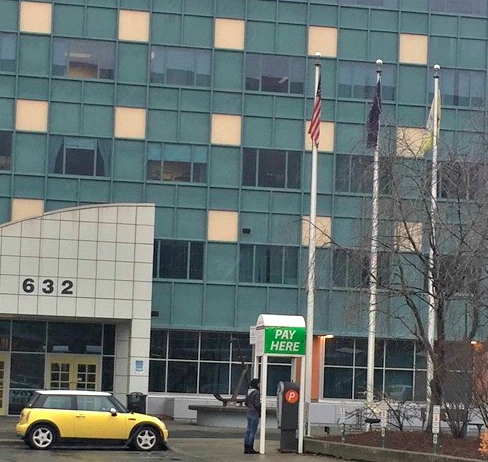
Acting Mayor Austin Quinn-Davidson has closed Anchorage City Hall on Wednesday, Inauguration Day.
The memo to staff said City Hall is not only closed to the public, but to City Hall staff. Acting Mayor Quinn-Davidson is concerned about the safety of employees, even though there are no known threats to the facility. The closure is “out of an abundance of caution.”
AQD’s memo to staff said:
As I shared last week, APD has been working with our state and federal partners to monitor security concerns at MOA buildings leading up to inauguration day. We have not identified any specific threats at this time; however, since the safety of employees is our first priority, we will close City Hall to employees and the public tomorrow, Wednesday, January 20, 2021. Security will be present on site as an extra precaution.
All City Hall employees should work from home tomorrow. Any requests for exemptions to work in City Hall tomorrow due to urgent needs or deadlines should be posed to your Department Director.
As a reminder, employees who have specific and immediate security concerns should report them to their supervisors, and then to APD. Examples include someone creating a disturbance at City Hall, or a social media post suggesting someone is coming to a MOA workplace to commit an act of violence. Finally, there’s never a bad time to prepare for actions in case of an emergency. Please take a moment to review the security procedures the MOA has in place. You must be on the MOA network to open this PDF.
We will provide timely updates to you as needed. I appreciate your attention and consideration at this time.
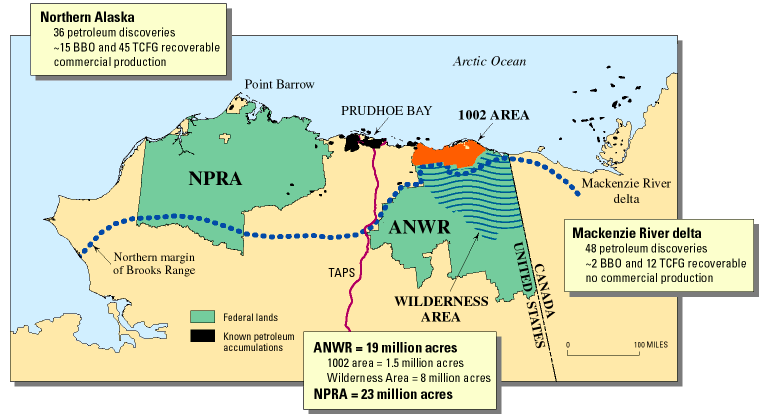
The Bureau of Land Management announced today that it signed and issued leases on nine of the tracts that received qualifying bids from the first-ever oil and gas lease sale for the Coastal Plain of Alaska’s Arctic National Wildlife Refuge.
This means the BLM has now issued leases on 437,804 acres of some of the most highly prospective land on Alaska’s North Slope, with the U.S. Geological Survey estimating nearly 8 billion barrels of recoverable oil on the Coastal Plain.
Lease awardees include Alaska Industrial Development and Export Authority (AIDEA): 7 tracts; Knik Arm Services, LLC: 1 tract, and Regenerate Alaska, Inc.: 1 tract.
“These leases reflect a solid commitment by both the state and industry to pursue responsible oil and gas development on the Alaska’s North Slope in light of recent assessments,” said BLM Alaska State Director Chad Padgett. “While any further actions on the ground will require additional environmental analysis, this is a hallmark step and a clear indication that Alaska remains important to meeting the nation’s energy needs.”
The Alaska Senate Republicans have announced their leadership organization with the following senators:
Shelley Hughes, Majority Leader
Mia Costello, Whip
Gary Stevens, Rules
Finance co-chairs: Bert Stedman and Click Bishop
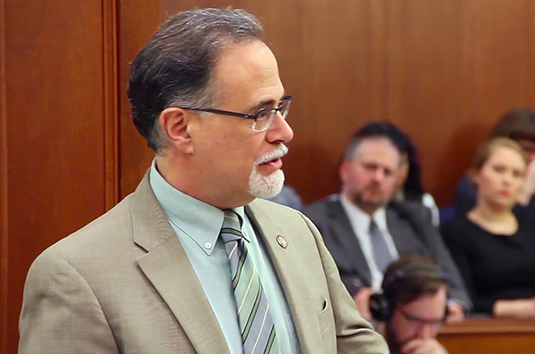
President, Peter Micciche
The caucus is based on the principle of a “Caucus of Equals” philosophy, “recognizing the diverse nature of the group and the districts throughout the state represented by the members.”
Committee assignments, including committee chairs and membership, will be forthcoming, the Senate Majority wrote.
Democrats in the Alaska Senate were first to announce that they are in the minority, with the 13 Republicans in the Alaska Senate organizing a majority.
The organization makes Peter Micciche of Kenai the Senate President. Micciche has been working with Republicans since August to try to keep the diverse group of senators, representing wildly different constituencies, together to form an organization.
At 10:45 am, the Senate was preparing to gavel into session with Lt. Gov. Kevin Meyer presiding, and then the process of taking a vote for a Senate leader will take place.
Update: The vote for Peter Micciche as Senate President was taken and there was no objection.
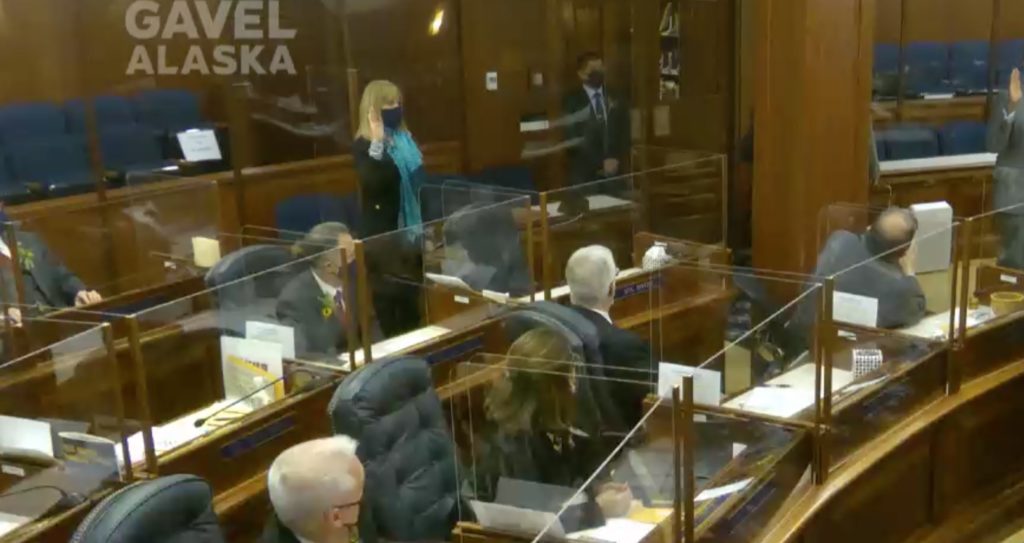
10:50 am: The swearing in ceremony has begun in the Senate, and senators are doing their oath of office in groups.
This story will be updated as more positions in the Senate organization are assigned.
“We had many conversations with members of the Senate, but unfortunately, some of those members will not put party politics aside in favor of working with Democrats in a bipartisan fashion for an Alaska agenda that seeks to help all of us recover from the difficulties of this past year,” said Senate Democrat Leader Tom Begich of Anchorage. “Our state faces great challenges and we must put political difference aside.”
He added that getting 11 votes on a budget would not be an easy task for the Republican Majority.
The Senate Democrats have re-elected Tom Begich as the Senate Democrat leader.
According to national news sources, two members of the National Guard have been removed from duties surrounding the inauguration of Joe Biden. The New York Times says they had “links to right-wing extremist movements,” citing a Pentagon official who declined to provide details about what type of vetting is being done on the 25,000 men and women being assigned to protect the inauguration. The two were from two different states.
Acting Defense Secretary Christopher C. Miller said that the FBI is aiding the military in vetting the troops for the inauguration, which takes place on Wednesday amid a strong public backlash from those who believe the election was stolen.
A new report says that the NRA, Turning Point USA, and Patriot Guard Riders are three of many non-militia groups on the list that FBI is using to cross reference in vetting for potential “extremists.”
Gov. Greg Abbott of Texas said he was outraged about the extra political purity test being given to National Guard members and said he would not have sent his troops had he known about it.
Of the 25,000 guardsmen deployed to Washington, D.C., 80 were from Alaska.
Update: Due to road conditions, in-person classes will not begin today in Anchorage.
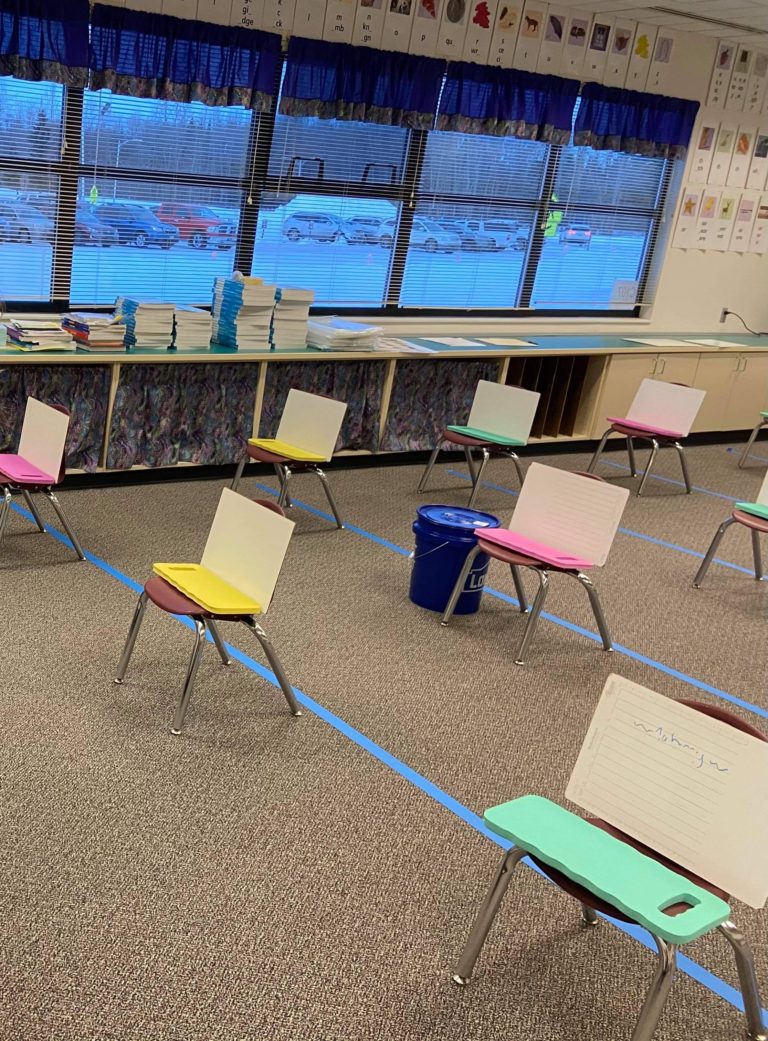
Some of the youngest students returning to classes today in Anchorage will enter a dystopian classroom world, where they must kneel for hours on end on the floor while masked, and have no recess or art or physical expression.
Pre-K–2, K–6, self-contained special needs programs, and the Whaley School (clarification, not pictured in this article) are returning to in-person learning at Anchorage School District classes on Tuesday, Jan. 19.
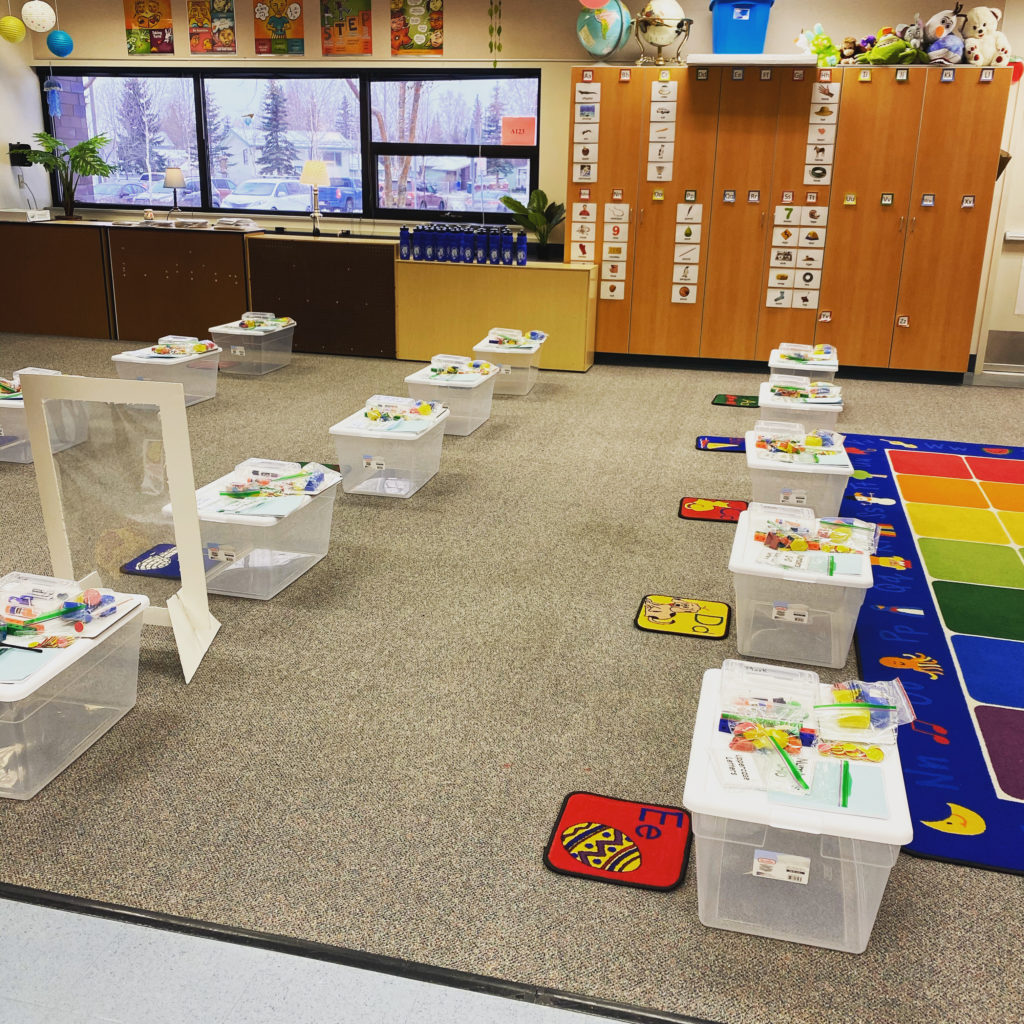
Parents who viewed the classroom above that their students will be returning to expressed shock: All desks have been removed. Students will kneel on gardening pads and use chairs as their desks for 5.5 hours.
[Parents, send photos of your children’s classroom conditions to this address: suzanne @ mustreadalaska.com]
Rather than lockers, they will have to bring a five-gallon utility bucket to store their lunch, jackets, and supplies in. The parents were told all students will be masked over their nose and mouth.
“We wouldn’t allow terrorists to be treated like this,” said one concerned parent, who asked to be kept anonymous.
Another parent has sent in this photo of her child’s classroom in Anchorage.
The new classroom design represents one solution to keeping children apart so they do not spread the COVID-19 virus.
Some of these young students have never been to school before, so they may not see the situation as abnormal. Anchorage schools have been closed due to the coronavirus since last March.
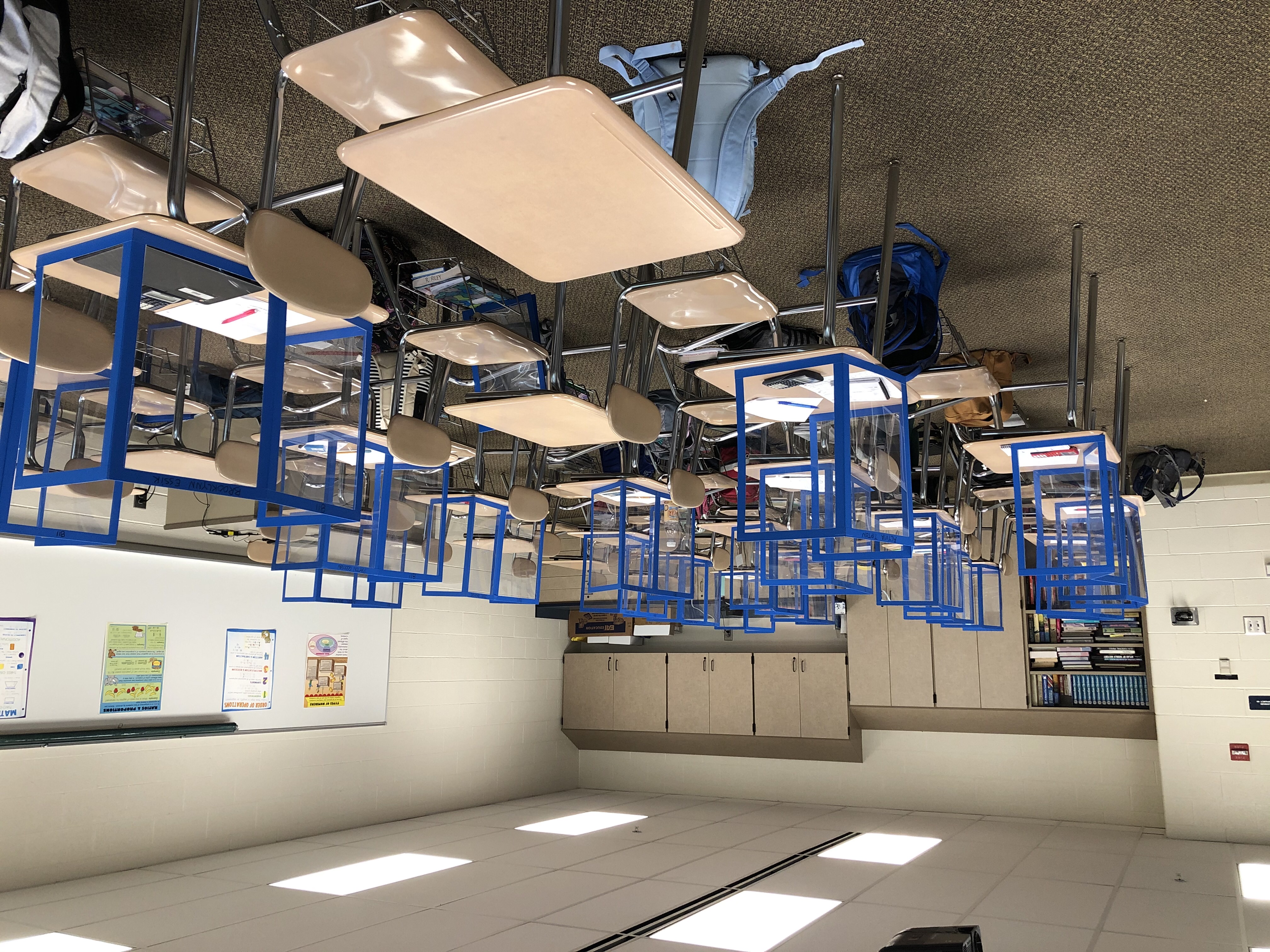
In at least one Ohio school, the desks are in place, but plastic barriers have been placed around each one, to contain moisture coming from students as they breathe through their masks, as shown from this parent’s photograph:
Grades 3–6 will continue with current Zoom and online classes for now in Anchorage. The District has a goal of bringing them back “as soon as possible after our first tier of students.”
Select middle and high school students who need extra support will also begin in-person, small-group classes for 5.5 hours each day on Jan. 19. All middle and high school students will return to in-person learning at the beginning of the fourth quarter, the District says.
“It may be hard to remember what ‘school in school’ was like. That’s okay! We will transition to a new routine together. We are paving the way for a new approach to learning in-person. The District is prepared with Individual School Safety and Mitigation Plansthat are in line with CDC guidelines and customized by school principals and staff to ensure the mitigation works for each unique schools’ building and culture,” the district said.
Meanwhile, Anchorage Education Association, the union for teachers and staff, has sent highly detailed instructions to all of its members telling them exactly how to document their discontent with returning to in-person learning, so that they may file a successful grievance against the school district.
AEA has already filed its first grievance, demanding that teachers may refuse to carry out orders that they feel threaten health. The letter to teachers points out the dangerous situation that will occur when students remove their masks to eat and drink in the classrooms:
“With many students returning to buildings next Tuesday, many of you will have difficult decisions to make regarding your health and safety. The District’s position is that they have plans in place that mitigate and minimize exposure to COVID-19. AEA is focusing on student and staff safety as we return to face-to-face learning.
“AEA has filed a grievance asserting violations of Article 421B: “A member may refuse to carry out an order that threatens health (excluding normal childhood diseases including but not limited to colds, flu, mumps, measles, chicken pox) or physical safety; or which is a violation of federal or state statutes. If the member refuses, the member shall have the burden of proof.” Page 48 in the AEA Contract.
“This grievance includes any members who refuse to carry out an order that they believe threatens their health or physical safety. The specific safety violations are in these areas:
“Classrooms are being set up that do not have six feet of distance between students.
“Student are being allowed to remove masks and eat in the classroom.
“SEL mask breaks in buildings do not comply with CDC guidelines.
“Classrooms may not meet CDC, OSHA, or other regulatory requirements for proper air circulation and filtration to minimize COVID-19 exposure.”
The entire union letter to teachers and staff is at this link:
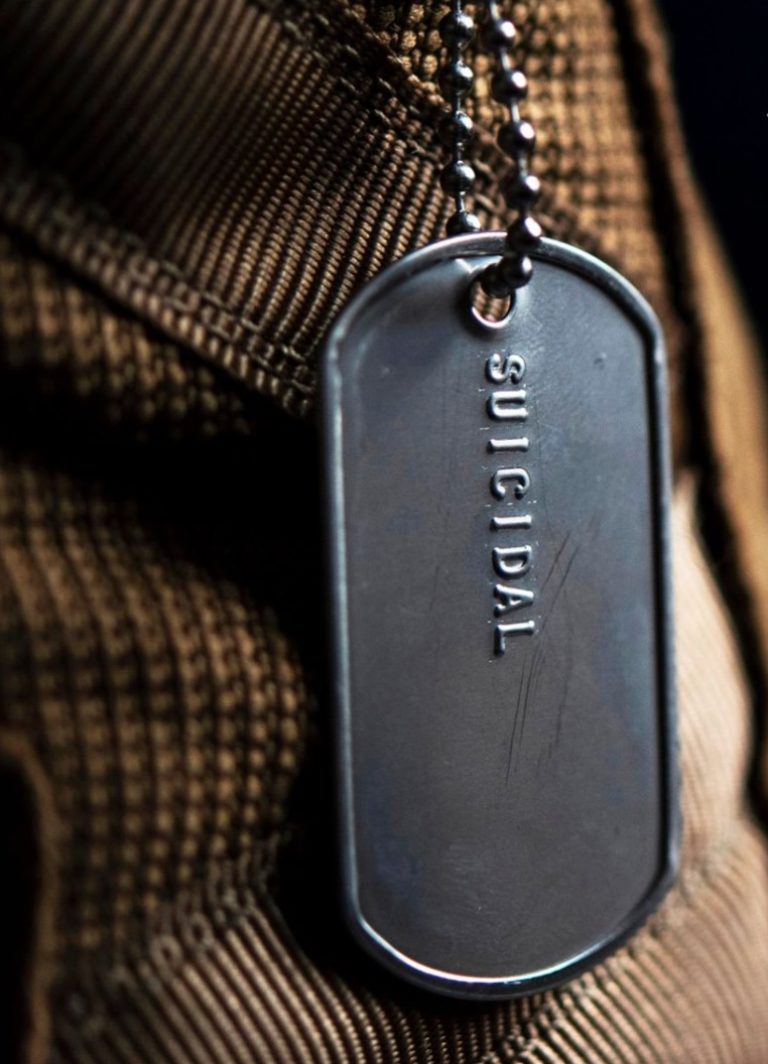
Joint Base Elmendorf-Richardson announced on Facebook that, as of Jan. 15 it has banned the sale of alcohol on base between 10 pm and 5 am, in an effort to reduce suicide attempts and to generally lessen consumption.
The announcement was made on Facebook on Jan. 14.
“The number 1 priority of JBER leadership remains the health and safety of our people,” the post said. “Several scientific studies reviewed by the National Institutes of Health have concluded that restricting the hours when alcohol may be sold is an effective strategy for reducing excessive alcohol consumption and related harms.”
There were more than 290 comment on the Facebook post, many of them not favorable toward the new policy.
The 1776 Commission, created by executive order of President Donald Trump and comprised of scholars and historians, released its report rebutting reckless “re-education” attempts, such as the New York Times’ 1619 project, which seek to reframe American history around the idea that the United States is not an exceptional country but an evil one.
The report comes out on the penultimate day of the president’s four-year term.
The 45-page report Monday offers “a definitive chronicle of the American founding,” according to the White House.
“States and school districts should reject any curriculum that promotes one-sided partisan opinions, activist propaganda, or factional ideologies that demean America’s heritage, dishonor our heroes, or deny our principles,” the report said.
Until proven otherwise, many legislative observers are saying that Alexei Painter, the young director of the Alaska Legislative Finance Division for the past five months, is the real deal: A knowledgeable, politically neutral, good-faith analyst working to inform the Legislature about the realities of the state’s budget.
He’s somewhat of a rarity in liberal-washed Juneau.
Just after being hired by the Legislature, Painter produced his first comparison of where the State of Alaska’s fiscal situation is at, weighing the matters of current policy and current law.
He presented the current Legislature’s policy as one in which the Permanent Fund dividend is the last item funded by the Legislature. But he did so without judgment.
On Friday, he presented a clear-eyed analysis of the governor’s proposed budget, which had been submitted to the Legislature in December. His analysis was neither friendly toward it, nor full of “tone,” as sometimes was the case with his predecessor David Teal.
“The overview provides a starting point for legislative consideration of the Governor’s spending and revenue plans. It does not discuss the merits of budget plans; it focuses on outlining the fiscal situation and presenting the budget in a way that provides simple, clear information to the legislature,” Painter wrote. Indeed.
Painter went on to describe how Alaska is in its ninth straight year of deficit spending.
“Though the State has reduced UGF expenditures by 43% over that time and increased revenue by setting up a structured draw from the Permanent Fund, we still face a structural deficit. During this period, the State has gone from $16.3 billion in reserves to under $1 billion at the end of this year. The Governor’s FY22 budget request is smaller than the FY21 budget (other than the Permanent Fund Dividend) but still leaves a deficit of over $2 billion, which the Governor fills by increasing the draw from the Permanent Fund beyond the statutory sustainable draw,” he wrote. In fact, that is the case.
“The Governor also draws an additional $1.2 billion from the Permanent Fund for a second dividend payment in FY21, for a total of $3.2 billion in overdraws from the Fund,” he wrote.
That, too, hard to argue with. It’s just the facts.
“The Governor recognizes that this is unsustainable, however, and in his budget release he emphasized that these draws are necessary because of the COVID—19 pandemic. The Governor’s long-term plan calls for balancing the budget in FY23 by adding $1.2 billion of unspecified new revenue, reducing the dividend by $400 million, and further reducing agency operations,” he wrote.
The unspecified new revenue is something that has caught the attention of others, as well. The plan seems vague.
“The legislature faces dual problems: a state struggling with a historic pandemic that has caused record unemployment and economic hardship, and a long-term budget crisis that has drained the State’s budget reserves. The incoming legislature faces difficult choices that will have a lasting effect on the State of Alaska,” he wrote.
Painter fills in a role recently vacated by Pat Pitney, who is now interim President of the University of Alaska system, and David Teal, who was the budget guru for the Legislature for 22 years, who seemed to lose patience with the Republicans in the Legislature during his final few years, while siding with Democrats who sought broad-based taxes, such as an income tax or state sales tax.
Painter returned to the Legislative Finance Division after serving as a Policy Analyst with the Alaska Office of Management and Budget. He had earlier served for more than five years as a fiscal analyst, senior analyst and capital budget coordinator for the Legislative Finance Division. And he was an economist for the Alaska Department of Revenue. He and his wife own a small bookstore in Juneau, Rainy Retreat Books.
Although he most certainly comes from the Democratic tradition — the son of State workers and a former aide to Reps. Beth Kerttula and Reggie Joule — Painter has found a way to present budget choices in a nonpartisan manner.
A member of CIRI, he is especially interested in Alaska Native issues, and appreciates what policy has done to better the lives of Natives.
“When I think of how Native policies were implemented, I really think about how lucky we are as Alaska Native people. For the most part, we have the opportunity to live close to our original lands and enjoy our traditional values, if we so choose. Compared to California, we have a much better ability to control our own destiny,” he told the CIRI blog while he was finishing up his master’s degree at U.C. Berkeley.
See his budget overview and reports at these links: