Thursday, June 4, 2026
Home Blog Page 1168

Murkowski votes ‘guilty’ but Trump is acquitted

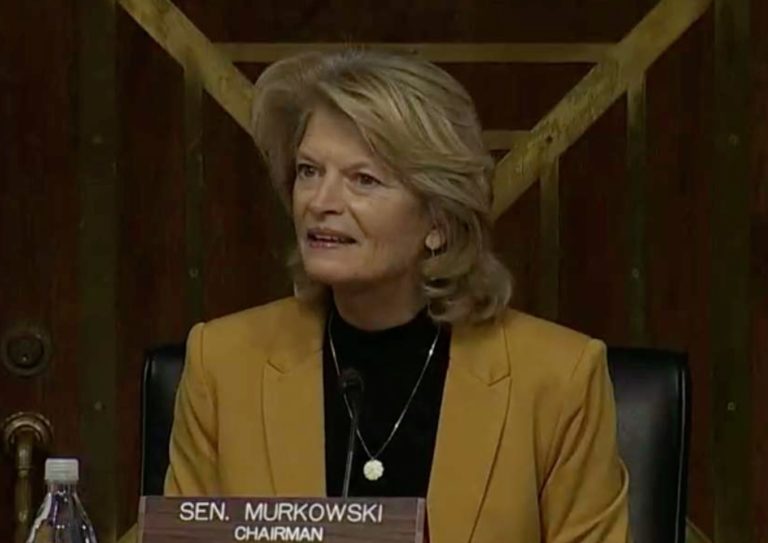
Sen. Lisa Murkowski voted “guilty,” on the one charge in front of the U.S. Senate, which had assembled itself into a court and tried a former U.S. president for inciting what the Left and media is calling an “insurrection” at the U.S. Capitol on Jan. 6.

Sen. Dan Sullivan voted to acquit former President Donald J. Trump.

The 57-43 vote was a majority vote to convict but it was not the two-thirds needed. The Senate came up short by 10 votes. Murkowski was among seven Republicans who voted to convict.

The trial was historic in that it was impeaching a person who is now a citizen, not a president.

This was the the second impeachment of Trump in one year, and the second acquittal. Trump’s attorneys said that the trial was unconstitutional, because Trump is no longer in office and that his speech, which encouraged peaceful and patriotic protest, is covered by the First Amendment of the Constitution. Also, no Supreme Court Justice presided over the trial because it was seen by the Supreme Court as illegitimate.

The other six Republicans who voted with the Democrats were: Richard Burr of North Carolina, Susan Collins of Maine, Bill Cassidy of Louisiana, Mitt Romney of Utah, Ben Sasse of Nebraska, and Pat Toomey of Pennsylvania.

After the acquittal, Sen. Mitch McConnell gave a speech in which he eviscerated Trump for his behavior.

“There’s no question, none, that Pres. Trump is practically and morally responsible for provoking the events of that day. No question about it,” he said. But he said the question of impeaching a former president is unconstitutional. If Trump was convicted, then the House of Representatives could hold impeachment trials for any private citizen, he said.

“Article 2, Section 4 must have force,” he said. ‘Donald Trump is no longer the president … Removal is mandatory upon conviction. That mandatory sentence cannot be applied to someone who has left office. The entire process revolves around removal.”

Hear McConnell’s speech at this link.

Murkowski and four GOP senators vote to call witnesses in Trump trial

31

Although many expected the impeachment trial of former President Donald Trump would end today with a vote to acquit, this morning brought a surprise: There will be witnesses.

Five Republican senators — Lisa Murkowski, Mitt Romney, Susan Collins, Ben Sasse, and Lindsey Graham, voted for a last-minute change in the trial, to include sworn testimony from Republican Rep. Jamie Herrera Buetler of Washington State, who says she overheard a conversation between House Minority Leader Kevin McCarthy and Trump during the invasion of the Capitol by protestors of the certification of the Electoral College. There would likely be others who would be also called to provide sworn testimony.

The Trump defense team said that if the trial is going that route, they will call House Speaker Nancy Pelosi as a witness.

CNN reported, “In an expletive-laced phone call with House Republican leader Kevin McCarthy while the Capitol was under attack, then-President Donald Trump said the rioters cared more about the election results than McCarthy did.”

“‘Well, Kevin, I guess these people are more upset about the election than you are,’ Trump is reported to have said. There are as many as 10 GOP lawmakers who were witness to the McCarthy side of the call, CNN reported.

The indication from Senate Democrats is that McCarthy and those with him that day will all be called as witnesses.

Also today, Sen. Mitch McConnell said he is probably going to vote to acquit Trump, although his comments came before the surprise announcement about witnesses.

Snapshot: Alaskans are surviving Covid far better than national average

18

Of the over 54,282 cases of Covid-19 that have been diagnosed in Alaskans, only one-half of a percent of them have died from the illness or conditions caused by the illness.

According to the State’s Covid-19 data dashboard, 280 Alaskans have died from the virus. 1,196 have been hospitalized because of the severity of their experience with Covid-19. That means about 23.5 percent of those who are hospitalized with Covid-19 end up dying.

That number can be misleading, because some of those hospitalizations were for people who were already near the end of their lives due to other illnesses or age. Because of privacy laws, it’s unknown just how many, however.

This is not to say the virus isn’t dangerous or life-changing. Some of those who have survived Covid-19 say that they have lingering maladies, such as loss of taste and smell, joint pain, shortness of breath, and difficulty thinking with clarity.

Alaska’s death rate from or with Covid-19 is significantly better than the national average. Of the more than 23 million people who have been diagnosed with Covid-19 in the United States, some 473,699 have died, or 1.74 percent of known cases, according to the Centers for Disease Control and Prevention.

As for vaccinations, 175,135 vaccines have been administered to Alaskans, which is 24 percent of the entire population (of all ages) of the state.

Adding together those who have been vaccinated and those who have had the virus, some 229,417 Alaskans should now have greater immunity to Covid. That equates to over 31 percent of the entire population.

Biden starts ‘common sense’ campaign for gun control

ANCHORAGE DAILY PLANET

Heaven help us all. The Biden administration is beginning its drive for the “common sense” gun control he threatened during the election.

The centerpiece for the effort is the heady notion of expanded, universal background checks, something that sounds good, but any rational person knows would have absolutely no affect on gun violence.

The idea is to curb private sales of firearms, channeling those sales, instead, through licensed dealers so buyers would be subject to the federal National Instant Criminal Background Check System.

But what about the millions of firearms already in circulation? Gee, gun control backers will say, to make background checks work we must have registration of firearms. And registration, no matter what anybody says, is the first step toward mandatory buyback or confiscation, something several Democrats were promising during the elections.

So it begins. The Biden administration, according to the Wall Street Journal, has started outreach to gun control advocates.

Activists, the newspaper says, are pushing for legislation, including expanded background checks and items Biden could pursue without the closely divided Congress – read, executive orders – including appointing a senior aide tasked with gun-policy oversight and pursuing stricter enforcement of existing rules.

Biden during the campaign pledged to ban AR-15 style firearms and seek background check legislation. Biden, instrumental in passage of the failed Brady Handgun Violence Prevention Act, also supports mandatory buy-back programs. The vice president, Kamala Harris, wants to use executive orders to accomplish the administration’s goals if Congress does not act within 100 days.

This administration is perhaps the most anti-gun in this nation’s history and presents a serious and determined threat to Americans’ Second Amendment rights and their very freedoms.

Make no mistake, when the Second Amendment is gutted, the rest of the Constitution will not be worth the paper it is written on.

Group files as Recall Rivera

7

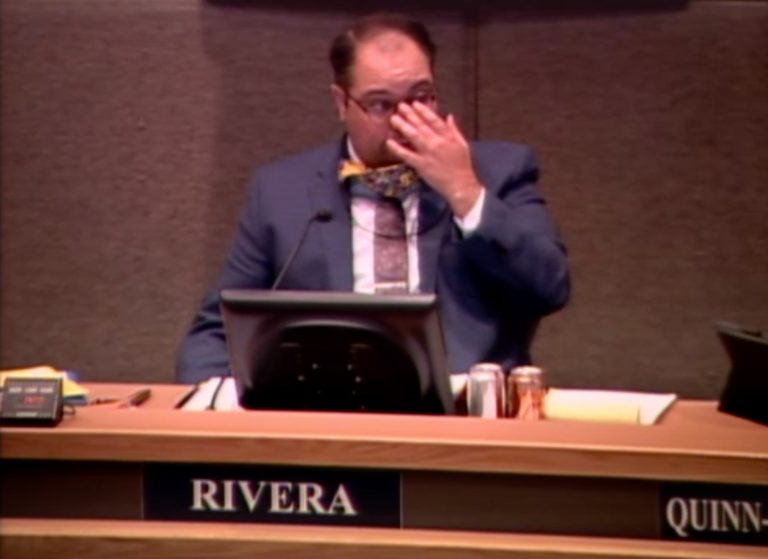
A group called “Recall Rivera” has launched and announced its existence with the Alaska Public Offices Commission, official filings show. It’s an “independent expenditure” group.

Recall Rivera is chaired by Dr. Russell Biggs, with treasurer Julie Brophy. Biggs was behind the successful petition to put Rivera on the ballot in April. He also fought the matter in court when Rivera’s team tried to block the recall legally.

Rivera represents District 4, Seat G, and voters in that district will be the only ones deciding his fate.

On Feb. 5, another group registered with the commission to mount a campaign to save Rivera from being removed from office.. That group, “No on Rivera Recall,” is chaired by Dr. Peter Mjos. On that team is Democrat operative Amber Lee, who is employed by Lottsfeldt Strategies, owner of the Midnight Sun AK political blog.

The dueling doctors’ groups will work to raise funds and try to persuade voters to either sack Rivera or save him on the municipal ballot.

The voter registration deadline is March 7. Ballots for the April 6 election get mailed approximately March 16.

House Republicans align with Senate in request for 30-day disaster declaration

6

Members of the Alaska House Republicans sent a letter today to Gov. Michael J. Dunleavy offering support for a limited 30-Day Disaster Declaration. 

Fifteen Republicans signed the letter, including Rep. Kelly Merrick, who made news this week by siding with Democrats to install a member of the Democrat-led coalition as House Speaker.

“Acknowledging many Alaskans immediate need for the resources allocated through a disaster declaration, the Alaska House Republicans support a new 30-day disaster declaration,” the letter reads.

“We intend that this temporary extension will lead to the good-faith negotiations needed for all Alaskans to get the help they need, while also providing a pathway for Alaska to turn the page on the COVID-19 pandemic.”

In the months ahead, “we look forward to working with all parties to ensure Alaska recovers and maintains its strength and independence.”

Signers also include Mike Cronk, Steve Thompson, Kevin McCabe, Sara Rasmussen, David Nelson, Bart LeBon, Ken McCarty, Ron Gillham, Mike Prax, Sarah Vance, Tom McKay, Cathy Tilton, James Kaufman, and Laddie Shaw.

Earlier in the day, the Senate voted 11-6 to request the governor to sign a 30-day disaster declaration. Both actions are seemingly to assist the governor in continuing to manage the vaccination, testing, and general statewide response to the Covid-19 pandemic.

The two actions also acknowledge that Senate Bill 56 is note going to be passed in time this weekend before the existing disaster declaration expires at midnight on Feb. 15.

Gov. Mike Dunleavy issued a statement: “In the absence of a declaration, my administration is fully prepared to manage the rollout and distribution of the vaccine to ensure anyone that wants a vaccination will be able to get one. We will also continue to respond to COVID-19 as we begin the process of getting back to normal as soon as possible by focusing on the economy and assisting Alaskans in staying healthy. As we move forward, we will notify Alaska and stakeholders of our plans.”

Earlier in the week, 20 House Democrats sent a letter to the governor supporting a continued disaster declaration.

Technically disordered: No majority, no committees in the Alaska House

19

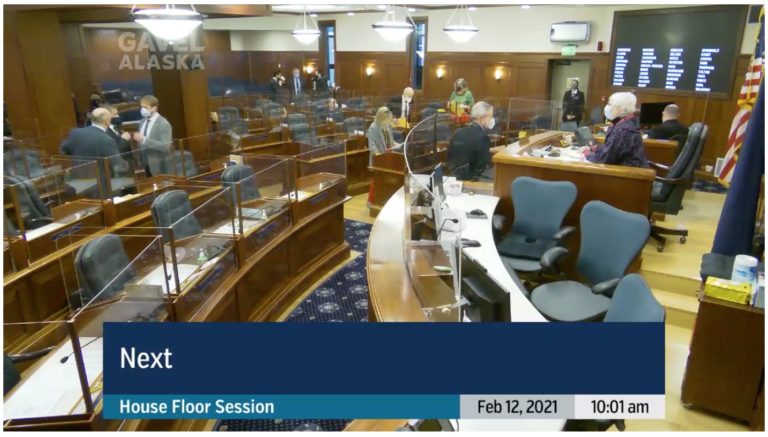
A handful of House members in session wasn’t enough today. Newly minted Speaker Louise Stutes of Kodiak had to call a technical session just nine minutes before the Alaska House of Representatives was scheduled to meet.

The only order of business was to gavel out.

Already, three key members of the House had headed for the airport — Republicans Kelly Merrick, Steve Thompson, and Bart LeBon. Others were on the Friday afternoon flight north, leaving Stutes and her Democrat surrogates wandering the halls of the Capitol, looking for another Republican to poach into the new Stutes-Democrat majority.

Stutes couldn’t get a Committee on Committees together to meet, so no report was issued with the names of committee chairs. Without committees, there is no organization, just a Speaker who replaced the Speaker Pro Tem. Stutes couldn’t get any of the Republicans to give her the time of day — the ones who remained in Juneau were busy caucusing all day.

Stutes had, on Thursday, become Speaker after a surprise secret side deal by Democrat Rep. Zack Fields and Republican Rep. Kelly Merrick was crafted. Republicans didn’t know about the deal on Thursday until they were walking down the hallways to the House Chambers.

Democrats had only learned of the play on the evening prior. When the nomination was made and the vote called, Merrick was in the first group of legislators to hit the green button. Among the last to vote were Josiah Patkotak and DeLena Johnson. Johnson is often one of the last to vote, while Patkotak was serving as Speaker Pro Tem.

Patkotak seemed ready for the change as he was reading from a script to execute the play.

Stutes, a Republican, has caucused with the Democrats for several years. Must Read Alaska has learned that even she was unaware of the deal between Fields and Merrick. Merrick, of District 14 Eagle River, became the 21st vote.

“This is the most dysfunctional House that I’ve seen,” said a longtime observer. “You’ve got a majority that has the far, far left in it, with Geran Tarr, Ivy Spohnholz, Liz Snyder, and Zack Fields, and then you have moderate people like Chris Tuck, who are stuck with these people who are like having four David Eastmans for the Democrats.” (Eastman has in the past been difficult for Republicans to form a caucus with because he is often uncompromising.)

Merrick stated in a press release that she was not, in fact, joining the Democrat caucus, but she slipped out of the side door after the vote in the House Chambers, put her phone on mute, and then headed for the airport before daylight. Republicans remaining in the building fought rumors that Merrick had, in fact, joined the Democrat caucus and it’s unclear if that was a bit of disinformation floated by the Democrats to force her over to their caucus.

Fields, who closed the deal with Merrick, was a longtime employee of the Laborers Union 341, where Merrick’s husband is the Business Manager. Fields and the Merricks are close friends.

A 21-member caucus is considered unstable because any one member can hold the entire caucus hostage. But as of Friday night, there is no majority caucus. There is a Speaker and 39 House members who are in even worse disarray than they were before she became Speaker.

Alaskans own the Permanent Fund, and 50% of earnings lawfully belong to them

24

By JIM CRAWFORD

Tim Bradner, an otherwise reasonable person, made a couple outrageous statements is his column printed in the Anchorage Daily News.  

It caught my eye because in it he questioned how good conservatives (and I count myself as one) could support a socialist idea, giving money away.  

Are Permanent Fund dividends giving money away?  Historically, economically, by intent and in practice over the last 42 years of Alaska Permanent Fund Corporation performance, the answers are no, no, no and no.

The dividend program is a result of a conservative decision and statewide vote for a Constitutional Amendment by Alaskans in 1976.  The Amendment required the State to save 25% of the royalties from our mineral wealth.  This voluntary act continues to save a portion of our wealth for the individual benefit of Alaskans.  Individually Alaskans, acted to establish a Trust to manage the money.  Gov. Jay Hammond was the man who pushed the savings plan for the benefit of all Alaskans.  

The investment on our behalf was made the same way you would go to your credit union and open a savings account.  Or go to a stockbroker or real estate broker to establish an investment account.  The money you use to open an account, is still your money, not the bank’s.  The money set aside for deposit and the earnings to the APFC are yours, just managed jointly with other Alaskans.

The APFC is legally a trust and that demonstrates who owns the money.  You do and I do.  All Alaskans do.  Perpetuating the myth that our investment income is not ours but somehow mysteriously morphed into just another fund of the state of Alaska is subterfuge. “Giving money away” as Tim opines could only be true if the state owned the Fund.  It does not.  

The second Bradner broadside was the fallacy that economists have a difficult time assessing the economic impact of the dividend.  My UAF prof in Accounting would issue an F for that laziness.  Economic 101 clearly teaches the Multiplier Effect on cash coming into an economy.  

My economics text said, “As money is expended in the state’s channels of business, it changes hands several times. To measure the multiplier effect, we must focus on how much total business or income results from the original expenditure. The individuals and businesses receiving a payment return it to the income stream as payment of expenses. At this point, the all-important leakages emerge. When an individual or a business returns dollars to the income stream, they return part within the state and part outside. The portion spent outside no longer creates more business or income within the state.  The portions of the money retained within the state determine the true multiplier.”  

That means that each time a buck turns over, it is counted as new money for the portion spent in state.  

In my banking career, I read hundreds if not thousands of financial statements. I developed an easy kind of accounting that I call intake and exhaust. All the money in, all the money out.  What is left?  That is income for each Alaska enterprise and cumulatively is the gross state product for Alaska. All income, both public and private, determines the health of the Alaska economy.  

Look at Tom’s insurance agency as an example. Tom’s multiplier effect is dependent upon how many employees, how much they make and their spending habits, local or national.  

The historical multiplier effect of cash generated in a consumer economy like Alaska is 7.  

Money turns over and touches seven spenders before it reaches the end of its life cycle.  Does it matter where the employee gets the money?  Commissioned, salaried, hourly or investor, just count the cash and determine the multiplier effect.   

Now throw in the Permanent Fund dividend as income to that employee’s funds, another $5,000 to the annual income of the employee as the governor proposes. That is how you measure the value of the PFD to the economy of Alaska.  And it is huge.    

Cash is paid to all employed, retired, military and unemployed Alaskans.  Then it follows the normal economic pattern and multiplies just like bunnies. A dividend paid has the same multiplier effect as the wages to each employee, around seven times. From the financial statement of the APFC for FY 2019, the dividend appropriation for that year was $1,015 billion.  The net multiplier effect ($7 X 1.015 billion) was therefore $7.105 billion. Huge.      

Is the economic effect of tourism spending difficult to calculate? No. Is the economic effect of the oil and gas sector spending difficult to calculate? No.  The APFC dividend’s economic effect is no more difficult to calculate.  

Instead of calling it the Alaska Permanent Fund, the Trust could instead be named the Exxon Shareholders Fund. Would any Alaskan receiving a dividend complain if their dividend went up? Refuse to accept it? Criticize those fellow shareholders who get it? No, shareholders only revolt if their board of directors (just like our Legislature) cut their dividend when earnings are stable.  How long do you think the board of the fictional Exxon Shareholders Fund would last in their job by shortchanging their shareholders?  

The more cash in the economy, the healthier the Alaskans economy.  Our Alaska Permanent Fund earned $9.419 billion in the first six months of this fiscal year.  Huge. Without touching the principle, the fund’s available unspent earnings are $13.047 billion. Are we broke?  Not by a long shot. Let us count our blessings not our problems.    

So, Alaskans, buy local. Make certain our APFC income is tracked by Generally Accepted Accounting Principles. We agreed that 50% of our income should be paid out in dividends. And that other 50% may be paid out for government expenses. That agreement is still in statute.  Ask your legislator to honor it.      

Jim Crawford is a third-generation Alaskan entrepreneur who resides in Anchorage with his bride of 37 years, Terri.  The Alaska Institute for Growth is a local think tank which studies and reports on and may sponsor projects of sustained economic growth for the Alaskan economy.  Crawford known as the Permanent Fund Defender was a member of the Investment Advisory Committee, appointed by Governor Hammond to plan and execute the Alaska Permanent Fund Corporation.

Breaking: Public Safety commissioner departs Dunleavy administration

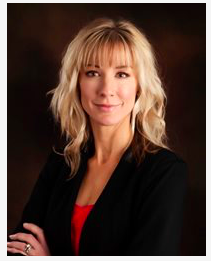
Amanda Price, commissioner of Public Safety, was asked by Gov. Mike Dunleavy to resign, which she did today in writing. She sent notification to her staff, and word leaked to media immediately.

Price said she had taken a personnel action the governor disagreed with.

Price is the first female Department of Public Safety Commissioner in Alaska history and has been with the Dunleavy administration for his first two years. She did not come up through the police ranks, but had come from a law enforcement family, and brought years of experience in management and government affairs.

Dunleavy has appointed long time DPS employee Kelly Howell to serve on special assignment as the head of the department until a new commissioner is appointed in the near future.

On Facebook, she wrote:

As of 1000am this morning, Friday February 12, I am no longer the Commissioner for the Department of Public Safety. My resignation was requested by Governor Dunleavy – actually to be specific, the governor didn’t face me and instead chief of staff, Ben Stevens made the request.After more than two years of consistent, measurable success running the DPS, and after only having had conversations with the GOA highlighting my success in the role, the COS said today when requesting my resignation that the GOA is “taking public safety in a different direction.”I believe I was removed for two reasons, the only two issues which the governor has ever discussed with me as challenges, and which he reiterated directly in a phone conversation we had on Feb 8: 1. I loudly advocated to improve 911 dispatch services to rural communities in spite of the Governors reluctance to do so. This work that needs to be done, quite literally, to save lives. Though the DPS experts, men and women who have done this work for decades along with a nationally renowned telecommunications expert, presented a detailed, strategic plan to provide life saving improvements to 911 dispatch services in our most vulnerable and underserved communities, a plan that would have saved the state approx 700k annually (documented fact), the governor elected to instead require the DPS to continue issuing multi million dollar contracts to the Mat Su and the Kenai Peninsula Boroughs- actions which will cost the state more money (documented fact – this is not opinion)for the same level of service, foregoing the improvement to rural Alaska public safety. I opposed this vehemently. My strenuous objections are noted in emails directly to the GOA, the COS and the working group. 2. The second pinnacle was reached when I made a recent personnel decision. I am limited in my discussion of this action. On its face this personnel decision is a decision well within my statutory authority (Alaska Statute 44.17.40). However there are some mitigating factors that made my removal of this individual untenable to the Governor. There is much documentation on each of these incidents. As a person that helped get this governor elected, I (like many Alaskans) am more than disappointed in him.People before politics, candidate Dunleavy said. Fix government, he said. No status quo, he said. And his favorite thing to say was “don’t get Stockholm syndrome” – his reference to his expectation that as leaders, we make changes that are right, regardless of politics. Candidate Dunleavy and his philosophies are not how Governor Dunleavy governs.I was humbled to serve among the incredible professionals within the DPS, extremely proud of all that we achieved, and eternally grateful for their exceptional service to Alaskans. I count this experience as a true blessing and will value the memories, while being incredibly proud of the team I worked with and all we achieved. DPS is a bright spot in our state – filled with incredibly dedicated and relentlessly hard working men and women, and it was my true privilege to work for them, and for Alaska.