On Tuesday, June 2, U.S. Senator Dan Sullivan (R-Alaska) chaired a Senate Commerce Coast Guard, Maritime, and Fisheries Subcommittee hearing on “The Blue Economy: Advancing American Fisheries, Maritime Strength, and Coastal Economies.” The hearing featured testimony from four expert witnesses, three of whom are Alaskan: Tommy Sheridan, director of the Alaska Blue Economy Center at the University of Alaska Fairbanks; Jeremy Woodrow, executive director of the Alaska Seafood Marketing Institute; and Nathan Wardwell, managing partner of JOA Surveys, LLC. Sen. Sullivan has led efforts in Congress to secure America’s place in the global Blue Economy through enforcement, environmental stewardship, infrastructure investment, and workforce development.
“The Blue Economy supports millions of American fishermen, processors, mariners, sport fishermen, welders, scientists, engineers, military personnel, charter operators, tourism workers, and small business owners across the United States,” said Sen. Sullivan. “Yet workforce shortages remain one of the great challenges across nearly every sector. We are serious about advancing the Blue Economy. We must invest in workforce development, training, apprenticeships and educational opportunities to prepare the next generation of maritime professionals.”
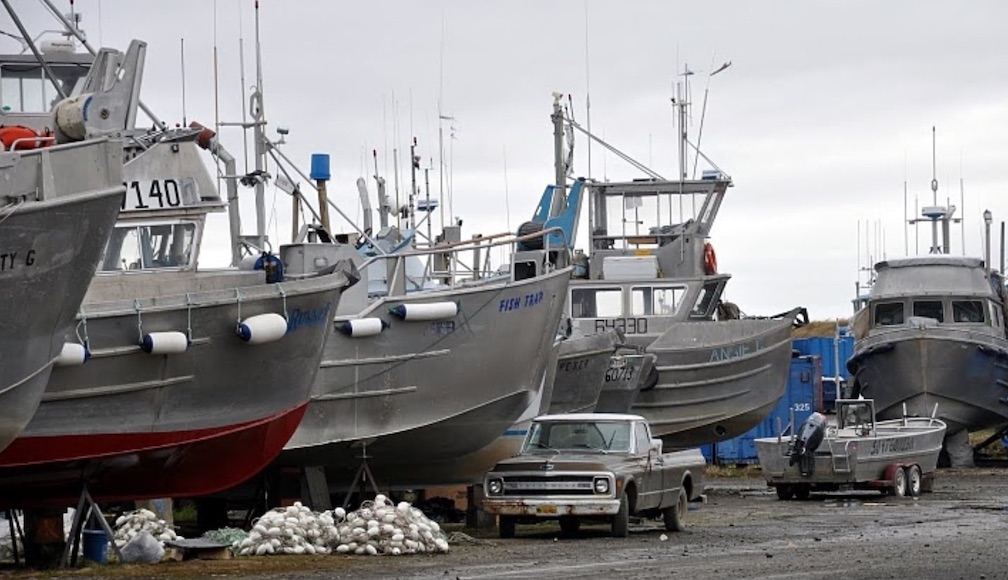
The Blue Economy is vital to America’s economic strength, food security, and national security, especially in Alaska, which harvests over 60 percent of America’s commercial, sport, and subsistence seafood and holds more coastline than the rest of the country combined.
Below is a transcript of Sen. Sullivan’s opening statement in the hearing.
“Good morning. I want to welcome our distinguished witnesses. Apologize for my tardiness, but I think at least three of you understand. I just got in from Alaska last night, and you know what that’s like. So welcome, especially to the Alaskans. And this is a subcommittee hearing that examines the importance of America’s Blue Economy and the opportunities that presents for economic growth, innovation, job creation and national security.
The Blue Economy encompasses, the industry’s activities and, of course, the communities that rely on our oceans, coasts, Great Lakes to create economic opportunities, support jobs, strengthen national security, and sustain coastal communities, including the American fishermen. The Blue Economy is also central to America’s economic strength. In 2022, it generated more than $470 billion in goods and services and supported 2.4 million jobs.
It is one of the fastest growing sectors in America, in our economy and indeed the world, encompassing commercial fisheries and seafood, sport, fisheries, subsistence fisheries, maritime transportation, ports, tourism and recreation, and much more. For the United States, and especially for coastal states like my state, the great state of Alaska. These industries and community are not optional. They are essential.
I always do a little bit of bragging about the great state of Alaska here, but when we talk about coastline, we have more coastline than the rest of the country combined. I have a colleague from Minnesota here; I respect a lot. She talks about her state having 10,000 lakes. My state has 3 million lakes. America is a maritime nation.
Our economic success, food security, supply chains and national defense depend on safe, healthy and productive oceans. This hearing comes at a critical time as our nation races to strengthen our maritime industries and secure our place in the global Blue Economy, but so are other countries. The federal government is making significant investments in taking important steps to ensure America remains competitive and our coastal communities, continue to thrive.
Seafood and of course, our fishermen coastal communities remains one of the pillars of the Blue Economy. Alaska is the superpower of seafood, I’d like to say, producing more than 60%. Harvesting more than 60% of all commercial, sport, and subsistence seafood in America, and providing roughly 10 billion meals of healthy protein wild Alaskan fish each year. Our fisheries support thousands of jobs, sustain coastal communities, and help feed both our nation and the world.
President Trump’s executive order on restoring American seafood competitiveness recognizes an important reality. Seafood competitiveness is economic security and even national security. At the same time, illegal, unreported and unregulated fishing remains a major threat, not just a global fish stocks and fair competition, but to the economic and national security of the United States. That is why my bipartisan fighting foreign illegal seafood harvest, or the FISH Act, which strengthens enforcement and proves international coordination and targets foreign bad actors, particularly China, is so important to stop this illegal fishing, what Senator Whitehouse calls pirate fishing.
We passed that in the Senate recently, and I believe it’s going to be passed in the House soon. That will be the most comprehensive IUU fish legislation in the history of the country.
This builds on the bill’s Senator Whitehouse and I passed the Save Our Seas Act, the Save Our Seas 2.0 Act, which were the most comprehensive ocean cleanup legislation in American history. And right now, in this committee, we are working on my comprehensive bycatch bill that we introduced last year.
We are hoping to mark that up. That will be the most comprehensive bycatch legislation in American history. Healthy oceans are both an environmental priority and an economic necessity and a national security issue. Tourism, charter fishing, wildlife viewing and countless small businesses depend on sustainable fisheries and healthy marine ecosystems. Alaska is also seeing exciting innovation through our growing mariculture industry, where kelp and shellfish growers are creating new opportunities and jobs in coastal communities.
Science and data collection are foundational to the long-term success of the American Blue Economy. Fisheries, fishery surveys and stock assessments support sustainable fisheries management, and that is NOAA’s key mission in this committee reminds them of that very regularly. Likewise, hydrographic services, including coastal mapping, charting and biometric surveys are essential for safe navigation, commerce and maritime operations across every sector of the American Blue Economy.
Advancing our Blue Economy also requires strengthening America’s maritime transportation network; ports, marine highways, vessels, terminals, and logistics systems are essential to moving goods supporting coastal states, maintaining resilient supply chains while enhancing our national security. That is why the administration’s maritime action plan is so important. Strengthening America’s maritime transportation will require long term investment, workforce development, and strong public private partnerships that improve port capacity, modern infrastructure, support domestic vessel operators and ensure reliable transportation networks for coastal communities within and across states.
Tourism is another driver of the American Blue Economy. Visitors bring significant revenue directly to our local communities, making it important that America remains competitive as a global destination. That is why I introduced the Visit USA Act to fully fund Brand USA, the public private partnership responsible for promoting the United States as an international travel destination. Ultimately, this all comes back to people.
The Blue Economy supports millions of American fishermen, processors, mariners, sport fishermen, welders, scientists, engineers, military personnel, charter operators, tourism workers, and small business owners across the United States. Yet workforce shortages remain one of the great challenges across nearly every sector. We are serious about advancing the Blue Economy. We must invest in workforce development, training, apprenticeships and educational opportunities to prepare the next generation of maritime professionals.
The United States possesses some of the richest ocean resources in the world, the best managed fisheries in the world. With the right investments, policies and partnerships, we can unlock the full potential of America’s Blue Economy while strengthening our economic and national security and supporting coastal communities for generations to come. I look forward to hearing from our witnesses today, many of whom traveled far from the great state of Alaska like I did last night, and to opportunities ahead, challenges they face and the policies needed to ensure a strong and prosperous maritime future in Blue Economy for America.”
Press release and transcript provided by Arianna Erkmann, Press Assistant at the Office of U.S. Senator Dan Sullivan.