Saturday, October 17, 2026
Home Blog Page 1148

John Morris: Next steps in addressing homelessness in Alaska’s largest city

21

BY DR. JOHN MORRIS

Homelessness is the foundational problem of our city. Not because it stands in the way of downtown revitalization and economic development, adds to crime, or decreases property values, but because it cuts at the soul of our city. A community is a living thing and when a part of us is hurting and we don’t seem to be able to do anything about it, it hurts us like a wound that does not heal.  

It is expected that cities of our size provide professional fire, police, and ambulance services. Government, not just private charity, steps in when we are hurt, in danger, or threatened.  

Why doesn’t having a safe place to sleep at night make the list? By the best counts available, nearly a dozen of our neighbors die on the streets or in our woods each month in winter. Fires happen daily. Not to mention the crimes, the injuries, the assaults, the overdoses, the frost bite…

Mayor-elect Dave Bronson and I believe that this is wrong, that if one more person dies on our streets, and we could have prevented it, then we could have done better. For what is government then, if not to protect the weak?  

The strategy is simple: Build enough shelter capacity to provide a safe place for every one who needs it. Fast. Go out and find our homeless neighbors where they are, engage them with teams of people who can earn their trust, with lived experience and training, carrying the message that there is a better, safer place for them. Not everyone will come. But a safe place will be offered to all and, when accepted, provided.

This is not another three-year plan to end homelessness. It is emergency treatment to end the suffering.  We think of it as building an ambulance and an emergency room, as distinguished from building a whole hospital. The emergency room stabilizes you, treats your pain, gives breathing room and time to find permanent solutions, a diagnosis and a cure. A hospital does surgeries, gives antibiotics and therapy, the definitive treatment. The municipality will build the ‘ambulance’ and the ‘emergency room,’ we will rely on our partners to build the ‘hospital.’ 

Much has been made of the law enforcement component of our plan and it is true we will enforce our laws. Our public spaces will be restored to the use of us all and our streets will be made safe. But we promise you this – before the arm of the law extends to any of our poorest neighbors our city will first offer a helping hand.  Ideally more than once.  If you care about someone, you help them, this is understood. But we believe that when you truly care for another, you care enough to tell them no. 

We do not promise to solve homelessness, rather we act to address it. Compassionately, practically, and systematically. It is too big for any one charity or service provider or private group to handle alone, and the problems are perhaps too personal and individualized for government on its own. It takes all of us.  The municipality will provide emergency shelter, so not one of our neighbors must sleep out in the snow or under a plastic sheet.

Our city’s excellent private organizations are ideally suited to engage our homeless neighbors, learn their stories and help show them that there are other, better ways than a life on the streets. Anchorage’s businesses and charities have successfully built the various types of low cost or supportive housing people need, and can do so again. And our city as a whole, our people – all of us – must act together with both compassion and wisdom.

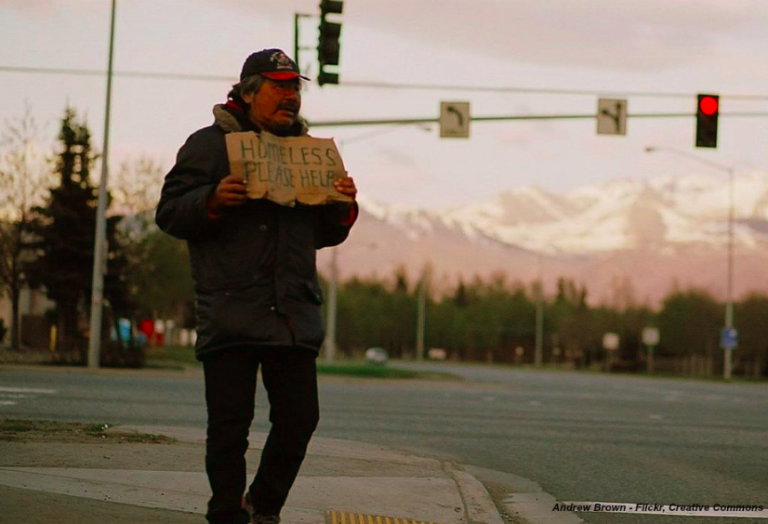
Understanding that giving to a panhandler on the street helps neither them nor their neighbors, but knowing instead that giving that money to a group that can help that same person find a solution can change a life.  

Mayor Elect Bronson has asked me to join his transition team as homeless coordinator. Not homeless guru, director, or czar. It might be better to call the job title ‘convener.’ Anchorage does not need another person claiming to have the solution to homelessness.

What we need is a team that brings together the great people we already have in this town, who are experts in the field and – I don’t know another word for it – coordinate with them. Take the next step. Unifying our efforts, measuring outcomes, and raising the bar on what we want to accomplish.  We aren’t inventing something new, we are taking the next step, building on our community’s successes.

Over the past weeks and months we have been meeting with homeless service providers and other stakeholders, first learning from them and then sharing our vision, building just such a team of people who agree and share that vision. Vision and team. That is what real leadership is and that is what Mayor Elect Bronson is bringing on July 1. 

Dr. John Morris, M.D., is a board-certified pediatric anesthesiologist and transition team leader for homelessness for Mayor-Elect Dave Bronson.
Alaska Rep. David Eastman tours audit of election results in Maricopa County, Arizona

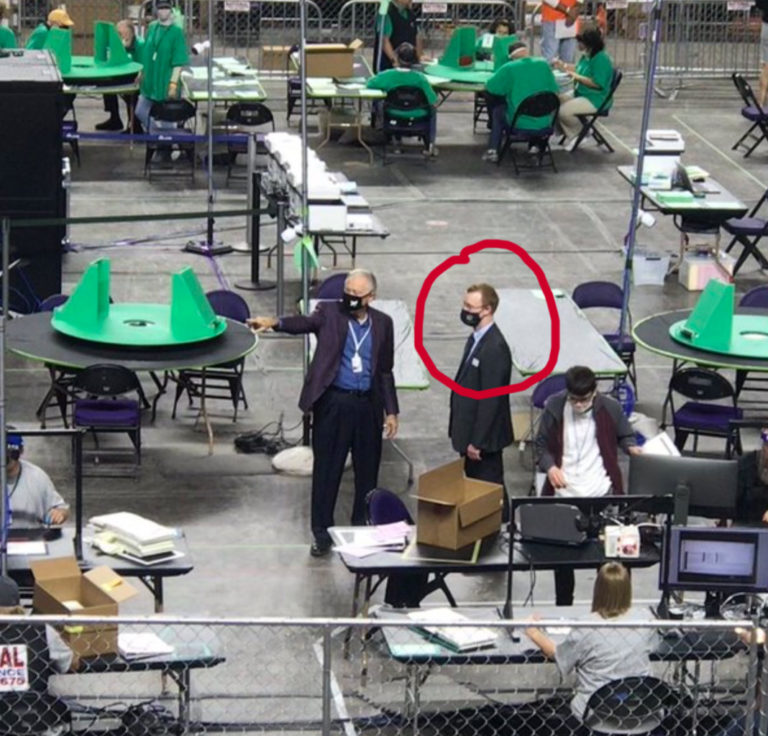
Rep. David Eastman of Wasilla was spotted touring the facilities in Maricopa County, Arizona, where an audit is being conducted of the 2020 presidential election.

In addition to Eastman flying on his own dime from Anchorage to take a tour of the ongoing audit, delegations from Pennsylvania, Colorado, Nevada, and Georgia have been at Veterans Memorial Coliseum. The night before, Eastman had attended a party celebrating the victory of Dave Bronson as the next Anchorage mayor.

Arizona Senate Republicans approved an election audit — a recount of all 2.1 million Maricopa County ballots. The county, where Phoenix is the largest city, accounts for 60 percent of the ballots cast in Arizona.

While the audit won’t overturn the results of the presidential or U.S. Senate races, the method is being closely monitored by both ends of the political spectrum — Republicans say it will create more trust in elections or could prove election fraud, while Democrats and the mainstream media say it will destroy the Democracy as we know it.

Arizona Senate Republicans hired a private company out of Florida called Cyber Ninjas to lead the effort that involves subcontractors. According to sources in the building, the hand count is about 80 percent complete.

The audit can be watched via numerous stadium cameras at this azaudit.org site.

Murkowski is part of new bipartisan group negotiating with Biden on ‘infrastructure’

The bargaining between the Republicans in the Senate and President Joe Biden came to an impasse Tuesday, and the president broke of the talks. He is instead working with a group of 20 senators on a massive infrastructure bill that at least one Democrat lawmaker has admitted is much ado about climate change, rather than roads and bridges.

Senator Shelley Moore Capito, (R-W.Va.), was the lead Republican negotiator to the White House when she got the call from Biden on Tuesday, breaking off the talks.

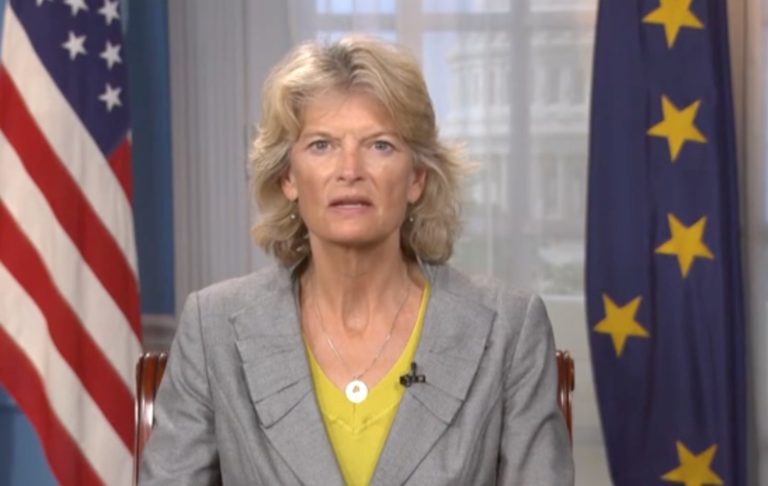
The new bipartisan group of senators now working with Biden includes Alaska Sen. Lisa Murkowski, a Republican, along with Sens. Kyrsten Sinema (D-Ariz.), Rob Portman (R-Ohio), Mitt Romney, (R-Utah), Joe Manchin, (D-W.V.), and Sen. Jon Tester (D-Mont.). The group of senators began meeting together on Tuesday to come up with an offer for the president.

Rep. Tom Malinowski, (D-NJ) said at a June 4 town hall: “President Biden, on the other hand, proposed a bill that defines infrastructure more broadly… and, on top of that, included some things that probably most people would not think of as infrastructure but that many of us think are really important for the country.”

That is the big sticking point for conservatives, who have seen everything from climate change to day care redefined as “infrastructure” by the Biden Administration.

The talks with the Republicans also broke off because the conservatives in the Senate would not spend more — the GOP’s final offer was about $700 billion too little for the president to accept; his package wants more than $2.3 trillion in new federal borrowing over the next eight years. It would take 15 years for Biden’s proposed corporate tax hike to generate enough revenue to pay for the projects.

As for paying for day care with borrowed federal dollars, the children will be graduating from high school before their federally funded day care is paid off, conservatives note.

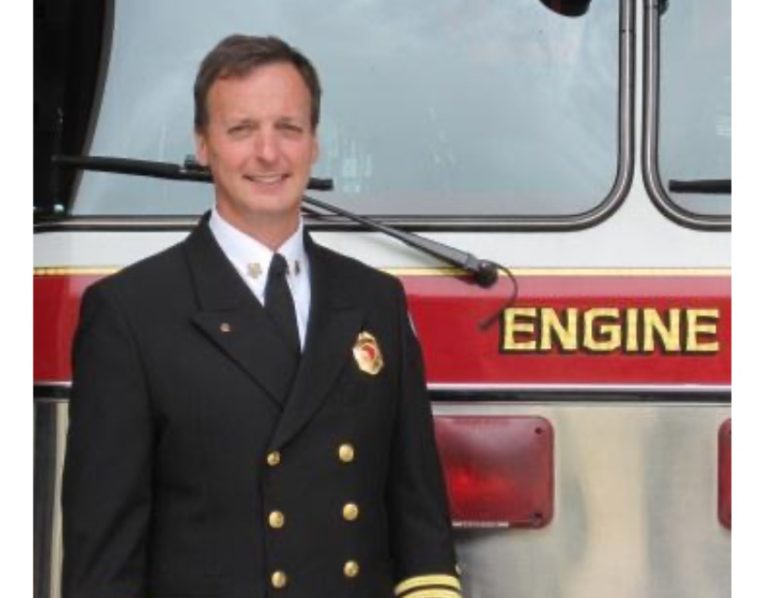
Doug Schrage named fire chief, and new city attorney Patrick Bergt appointed by Mayor-elect Bronson

Dave Bronson, mayor elect of Anchorage, named Doug Schrage as the new fire chief for Anchorage.

Schrage is a former chief operating officer of the Anchorage Fire Department and has been serving as the fire chief of the University of Alaska Fire Department in Fairbanks, where he has overseen the education of firefighters across the state.

When serving in Anchorage for over 25 years, he held every rank through deputy chief at the fire department. He began his career in 1981 as a student fire fighter in the University Fire Department.

Current Fire Chief Jodie Hettrick said in March that she plans to retire and the end of June.

Bronson also named Patrick Bergt as the incoming municipal attorney. Burgt is a lifelong Alaskan and served as a district attorney in Anchorage, prosecuting violent, drug, and property crime. He also served in private practice and as an attorney for public lands. Raised in Anchorage, he is a graduate of Service High School.

The municipal attorney serves as chief legal counsel to the executive branch, including the mayor, and all executive, departments, agencies, boards and commissions. He supervises and control all civil and criminal legal services performed by the department and contract counsel for the Municipality.

The current municipal attorney, Kate Vogel, was appointed by Mayor Ethan Berkowitz.

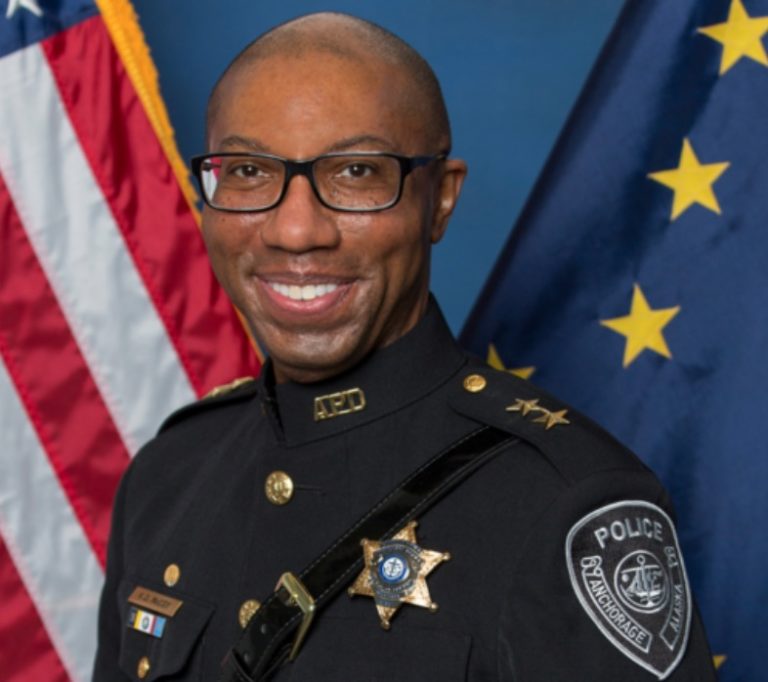
Anchorage Acting Police Chief McCoy will keep his job in Bronson Administration

Anchorage Mayor-elect Dave Bronson surprised left-wing critics and mainstream media reporters today by announcing that Acting Anchorage Police Chief Ken McCoy will stay in that role in the Bronson Administration, which starts July 1.

McCoy was deputy police chief until the resignation of Justin Doll, when he was made acting chief by acting Mayor Austin Quinn-Davidson. That move was acclaimed by the race-sensitive progressive community in Anchorage, which noted that Anchorage had met a milestone by having its first black police chief in its 117-year-history.

McCoy has been with the Anchorage Police for 27 years. When he was named acting chief he said his top priority would be to build trust in the community with minorities.

During the spring municipal election, McCoy was featured at a BIPOC (Black Indigenous People of Color) get-out-the-vote event in May by a group that had promoted the candidacy of Forrest Dunbar, while many members of the police union had supported Bronson for mayor.

McCoy in on record saying that the department is too white and needs more sworn officers who are non-white to better reflect the community of Anchorage, which is two-thirds white. The department has four-fifths sworn officers who are white. Today he said it is still a priority to have the police force reflect the community and the challenge is to recruit qualified people.

Before joining the APD, McCoy attended the New Mexico Military Institute where he received his commission into the United States Army in 1990. He served 10 years with the Alaska Army National Guard, and left with an honorable discharge, at the rank of captain, in 2000. 

McCoy is a graduate of Bartlett High School, and has a bachelor’s degree in justice from the University of Alaska Anchorage and a criminal justice certificate from the University of Virginia. He is a graduate of the FBI National Academy and the FBI National Executive Institute.

Bronson announced Gerard Asselin as deputy police chief. Lt. Asselin has been with APD for 20 years and has served as Commander of the Investigative Support Unit, SWAT, Explosives Ordinance Division, K9 Unit, the Technical Support Unit, and Crisis Negotiations Team. He joined the command staff after serving as a sergeant in the Patrol Division for almost 10 years. He’s also served as a detective, crime scene investigator and union president.

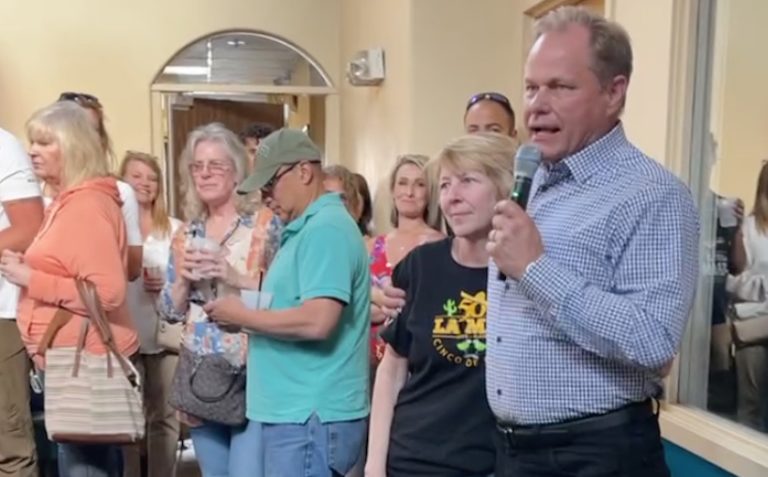
Bronson kickoff party draws 150 to La Mex

Over 150 people attended the volunteers-and-friends party to kick off the inauguration season for Anchorage Mayor-elect Dave Bronson. The event took place Monday evening at La Mex, which had closed its doors on Saturday night but reopened for the party on Monday.

Bronson hugged and thanked La Mex owner Trina Johnson (shown above) for being one of his first supporters after he announced that he would be running for mayor last summer, and he complimented her on her courage as a businesswoman during pandemic policies from the municipality that essentially drove her out of business, and for fighting City Hall on behalf of all restaurant owners in Anchorage.

Johnson, hosting the event on behalf of the Inauguration committee’s nonprofit, put out a Mexican-themed buffet, while D-J Corinthian Wiley, state director for Blexit, kept the music going, and people who had worked hard to get Bronson elected enjoyed dinner, fellowship and the sense of victory.

Among politicos attending were former Mayor Dan Sullivan, Rep. Kevin McCabe, Rep. Tom McKay, Rep. David Nelson, Sen. Mike Shower, Sen. Roger Holland, former Assemblywoman Amy Demboski, former Rep. Larry Baker, and a host of potential candidates for Assembly during the next campaign cycle.

Also spotted were area pastors Ron Hoffman of Anchorage Baptist Temple, Pastor Prince Nwankudu of God’s Family Church, and Pastor Cheston McCrea of Praise Temple Way of the Cross Church of Christ.

Trump says again he will campaign against Murkowski; Tshibaka goes on Hannity with Lara Trump

In a statement on Monday, former President Donald Trump said that he will be in Alaska to campaign against Sen. Lisa Murkowski in 2022. He said Murkowski did not prevent Biden from killing oil development in the Arctic National Wildlife Refuge, which he did starting the first day of his administration.

“Senator Lisa Murkowski has cost the great people of Alaska billions and billions of dollars by voting for Radical Left Biden appointees, which in turn led to the revocation of ANWR drilling, which Alaskans have been fighting to see happen for six decades. Not only did Murkowski kill the biggest economic stimulant for the State but also one of the biggest energy producing sites in the world. Nobody thought ANWR could be opened. We got it done, and she allowed it to be killed. She’s the best friend Washington Democrats ever had — and Alaska’s reward for that betrayal is an empowered Left coming after their wealth and jobs. I think she will be met very harshly by the Alaska voters in 15 months, and I will be there to campaign against her!”

Some observers say that the Biden Administration decided to defend the Willow oil project in Alaska to appease industry, but then traded it for killing oil drilling in the Arctic National Wildlife Refuge. Willow is in the National Petroleum Reserve-Alaska.

Murkowski’s main opponent for Senate, Kelly Tshibaka, appeared on the Sean Hannity Show on Monday with Lara Trump, the daughter-in-law of Donald Trump. During the show, Hannity said that Murkowski was not an asset to the Republican Party or Alaska.

“I would wrap it up as courage and common sense is missing … It is in the heart of every American and we definitely have it in the hearts of every Alaskan,” Tshibaka said.

“I’ve seen three waves of conservatism in my lifetime…,” Hannity continued. “One, Ronald Reagan. Two, Newt Gingrich. And three, Donald Trump. That to me is the modern conservative agenda. Republicans like Lisa Murkowski who are rhino Republicans who don’t fight for these principles, I don’t see any need for them in the Republican Party. They’re weak, they’re ineffective, and in the case of Lisa Murkowski, she’s not even fighting for her state.”

Lara Trump agreed with Hannity, saying “We’ve got to have people who are fighting for the future of America. Joe Biden and Kamala Harris are running this country into the ground. We need Republicans who are going to stand up and stand for Americans and fight, fight, fight.”

While Lara Trump didn’t endorse Tshibaka, it’s evident that Tshibaka is now on the radar of the Trump family, which could help rocket her name ahead across America as the Murkowski-Tshibaka race continues to shape up as the marquee race of 2022.

Will Senate Finance co-chairs ‘pocket veto’ the PFD constitutional amendment?

With only 10 days left in the legislative special session, the Senate Finance Committee has yet to hear SJR 6, the governor’s request that the Legislature allow Alaska voters to vote on a constitutional amendment for the Permanent Fund dividend calculation.

The resolution has been sitting in Senate Finance since May 14, with nothing on the schedule to indicate that the co-chairs Sen. Click Bishop and Sen. Bert Stedman plan to hear the governor’s proposal.

This is shaping up to look like a “pocket veto,” where a lawmaker just stuffs a bill into his/her proverbial pocket and it never sees the light of day.

The other legislators do have recourse. Uniform Rules says they can bounce SJR 6 out of Finance and into Rules, where it would either get locked down by the Rules Chair similarly, or proceed to the floor for a vote.

Bouncing a bill out of committee effectively means rolling the chair, which isn’t likely to happen in Finance, considering the makeup. But Uniform Rule 24 says that chairs are obligated to not just consider bills that come before them, but must act on them in some way. They don’t get to just sit on bills.

If they do sit on SJR 6, there’s also Rule 48, the “right to discharge” a bill from a committee. Either the majority of the committee can send a request in writing to the presiding officer, requesting the bill be scheduled, which it then must be within three days, Or a member of the body on the floor of the Senate can make an oral motion to have the bill discharged. That is not always successful, but can be.

In 2018, Sen. Mia Costello wanted the repeal to SB 91 (the lenient crime bill ) to move from Senate Judiciary Committee. Costello, Sen. Mike Shower, and Sen. Bill Wielechowski rolled Judicary Chair John Coghill, forcing the bill to move along.

The governor originally proposed HJR 7, which is currently in House Judiciary and does not reflect the improvements of SJR 6 made in Senate Judiciary. SJR 6 would take the annual calculation of the Permanent Fund dividend out of political hands and protect it in the Constitution. It would similarly protect the Power Cost Equalization Fund.

Ronald Reagan’s D-Day speech

By THE ANCHORAGE DAILY PLANET

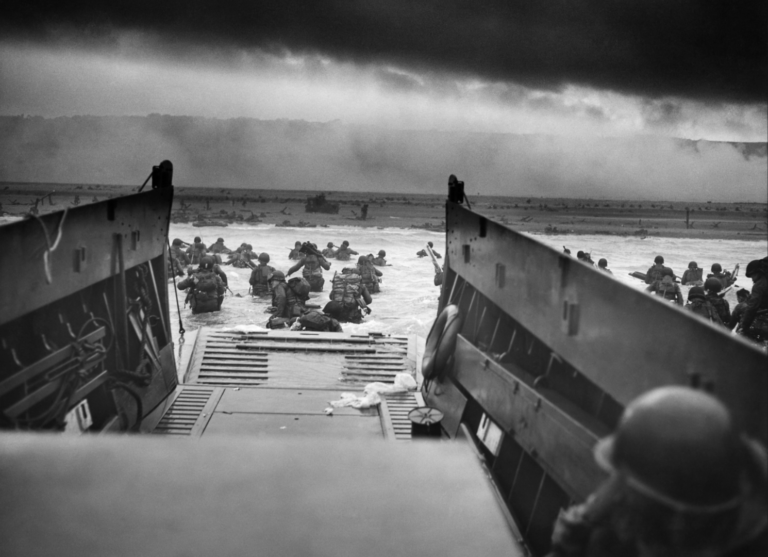
On June 6, 1984, President Ronald Reagan spoke at the dedication of the U.S. Ranger Monument at Pointe du Hoc, France. In the audience were 62 of the surviving Rangers who attacked the cliffs of France 40 years before. These words are from Reagan’s speech that day.

We stand on a lonely, windswept point on the northern shore of France. The air is soft, but 40 years ago at this moment, the air was dense with smoke and the cries of men, and the air was filled with the crack of rifle fire and the roar of cannon. At dawn, on the morning of the 6th of June, 1944, 225 Rangers jumped off the British landing craft and ran to the bottom of these cliffs. Their mission was one of the most difficult and daring of the invasion: to climb these sheer and desolate cliffs and take out the enemy guns. The Allies had been told that some of the mightiest of these guns were here and they would be trained on the beaches to stop the Allied advance.

The Rangers looked up and saw the enemy soldiers at the edge of the cliffs shooting down at them with machine guns and throwing grenades. And the American Rangers began to climb. They shot rope ladders over the face of these cliffs and began to pull themselves up. When one Ranger fell, another would take his place. When one rope was cut, a Ranger would grab another and begin his climb again. They climbed, shot back, and held their footing. Soon, one by one, the Rangers pulled themselves over the top, and in seizing the firm land at the top of these cliffs, they began to seize back the continent of Europe. Two hundred and twenty-five came here. After two days of fighting, only 90 could still bear arms.

Behind me is a memorial that symbolizes the Ranger daggers that were thrust into the top of these cliffs. And before me are the men who put them there.

These are the boys of Pointe du Hoc. These are the men who took the cliffs. These are the champions who helped free a continent. These are the heroes who helped end a war.

Gentlemen, I look at you and I think of the words of Stephen Spender’s poem. You are men who in your “lives fought for life . . . and left the vivid air signed with your honor.”

I think I know what you may be thinking right now, you are thinking, “We were just part of a bigger effort; everyone was brave that day.” Well, everyone was. Do you remember the story of Bill Millin of the 51st Highlanders? Forty years ago today, British troops were pinned down near a bridge, waiting desperately for help. Suddenly, they heard the sound of bagpipes, and some thought they were dreaming. Well, they weren’t. They looked up and saw Bill Millin with his bagpipes, leading the reinforcements and ignoring the smack of the bullets into the ground around him.

Lord Lovat was with him — Lord Lovat of Scotland, who calmly announced when he got to the bridge, “Sorry I’m a few minutes late,” as if he’d been delayed by a traffic jam, when in truth he’d just come from the bloody fighting on Sword Beach, which he and his men had just taken.

There was the impossible valor of the Poles who threw themselves between the enemy and the rest of Europe as the invasion took hold, and the unsurpassed courage of the Canadians who had already seen the horrors of war on this coast. They knew what awaited them there, but they would not be deterred. And once they hit Juno Beach, they never looked back.

All of these men were part of a rollcall of honor with names that spoke of a pride as bright as the colors they bore: the Royal Winnipeg Rifles, Poland’s 24th Lancers, the Royal Scots Fusiliers, the Screaming Eagles, the Yeomen of England’s armored divisions, the forces of Free France, the Coast Guard’s “Matchbox Fleet” and you, the American Rangers.

Forty summers have passed since the battle that you fought here. You were young the day you took these cliffs; some of you were hardly more than boys, with the deepest joys of life before you. Yet, you risked everything here. Why? Why did you do it? What impelled you to put aside the instinct for self-preservation and risk your lives to take these cliffs? What inspired all the men of the armies that met here? We look at you, and somehow we know the answer. It was faith and belief; it was loyalty and love.

The men of Normandy had faith that what they were doing was right, faith that they fought for all humanity, faith that a just God would grant them mercy on this beachhead or on the next. It was the deep knowledge — and pray God we have not lost it — that there is a profound, moral difference between the use of force for liberation and the use of force for conquest. You were here to liberate, not to conquer, and so you and those others did not doubt your cause. And you were right not to doubt.

You all knew that some things are worth dying for. One’s country is worth dying for, and democracy is worth dying for, because it’s the most deeply honorable form of government ever devised by man. All of you loved liberty. All of you were willing to fight tyranny, and you knew the people of your countries were behind you.

The Americans who fought here that morning knew word of the invasion was spreading through the darkness back home. They thought — or felt in their hearts, though they couldn’t know in fact — that in Georgia they were filling the churches at 4 a.m. In Kansas they were kneeling on their porches and praying, and in Philadelphia they were ringing the Liberty Bell.

Read more at the Anchorage Daily Planet.