Thursday, June 4, 2026
Home Blog Page 1096

Dan Fagan: When it comes to the PFD, they fixed what wasn’t broken

By DAN FAGAN

If Legislators followed the law and paid the 2021 Permanent Fund dividend based on the statutory formula that is on the books, each available Alaskan would likely get $3,687 this fall. That’s based on the money in the Earnings Reserve Account on June 21.

Traditionally, the check amount is calculated at the end of the fiscal year on June 30, so the $3,687 figure is not that far off from what this year’s statutory formula will end up being.  

This is all moot, since former Gov. Bill Walker changed things by ignoring the statutory formula used for decades and instead allowed legislators to determine how the money in the earnings reserve account is spent. 

And since Republicans-in-name-only and Democrats outnumber conservatives in the Legislature, when it comes to how to spend money from the Permanent Fund Earnings Reserve Account, the people are thrown left over scraps. 

Mike Dunleavy, elected to undo Walker’s ignoring of the law and resulting PFD thievery, has been unable to fulfill his campaign promises.   

If Dunleavy was able to make good on his campaign promise to go back to following the law and paying the full statutorily required dividend and repay the money removed since the change, a family of four would be looking at a check for $43,200 this year. 

Do you think Alaskans would have ever voted for Walker if they knew it would cost a family of four that much cash? 

The legislature passed a budget with a $525 dividend this year. If it holds and the governor ends up signing it, each eligible Alaskan will lose out on $3,100 this year that’s legally theirs. 

Since state leaders started ignoring the PFD statutory formula still on the books, Alaskans are now out a combined $10,800, including the $3,100 this year, assuming the current budget stands. 

Some argue Alaskans don’t deserve that kind of money because they haven’t earned it. Sen. Natasha Von Imhof even called Alaskans who asked legislators to follow the traditional statutory formula law greedy. 

Those opposed to paying the full dividend say our state is embroiled in a fiscal crisis and we can’t afford to hand out money to Alaskans. 

And yet oddly enough, the most conservative members of the Legislature are the ones who support the full dividend the most. Almost all Democrat and RINO legislators oppose paying the full dividend. 

But aren’t conservatives supposed to be against government handouts and free unearned money? 

The money from the Alaska Permanent Fund originally came from the oil industry. It’s now so huge and capable of growth it has become quite the money maker. It grew from $65 billion last June to $81 billion this year. The fund grew so quickly over that time, it earned enough money to pay the full statutorily required dividend for this year in less than two months. 

So why are conservative legislators supporting the full dividend, while the RINOs and most Democrats opposing it? Two words: special interests. 

RINOs and Democrats are government-centric types. They’re in it for the public employee union bosses, the non-profit cabal, lobbyists, Alaska businesses benefitting financially from government bloat, deep state bureaucrats, and the Juneau swamp. They know if the money produced by the Permanent Fund goes to regular working people, it means less for the special interests. 

If you were to summarize in a sentence the legacy of Bill Walker it would be this: He changed the focus of the Permanent Fund away from a mechanism designed to share Alaska’s resource wealth with the people to one now catering to special interests. 

And yet nothing’s really changed under Dunleavy. He’s not a dictator; the Legislature is the culprit in denying Alaskans their legally required full dividend.

But Dunleavy has not used his bully pulpit in calling out anti-dividend legislators. His effort to keep his PFD promises during the campaign has been lackluster at best. 

Recently, the governor gave up on the traditional statutory formula by announcing a new plan. It’s a plan similar to the one proposed by Dunleavy’s opponent, Mark Begich. 

The traditional statutory formula suffered its final death blow when the Senate voted it down recently. Senators Peter Micciche and Josh Revak, both of whom campaigned on favoring the full dividend, were the deciding votes to kill it.  

The traditional statutory formula was working and did not add a penny to the state’s budget. Taking a five-year average of the earnings account to pay a dividend guaranteed the corpus of the fund would always grow. If the earnings reserve account had a good five years, Alaskans got a big dividend. If the earnings were off, the dividend would shrink. 

The plan was working until Walker tried to fix something that wasn’t broken. The special interests and government-centric types couldn’t be happier. 

Some opposing the full dividend also argue as the Permanent Fund grew so would the dividend. They claim the check would become so large it might attract freeloaders to the state. The $3,600 that would have been paid this year is a good example. 

If the fund continues to grow as it has in the past year, it won’t be long until we would have seen a $10,000 dividend for each eligible Alaskan under the traditional statutory formula.    

And that is a legitimate concern, although to qualify for that big check you’d have to live in the state a full year. Alaska is an expensive place to live, and the winters are long and cold. For a single person to uproot themselves and live somewhere more expensive for a year in hopes of getting a dividend check seems unlikely.  

For a large family it might make more sense. A family of five would get $50,000 once the $10,000 dividend check became a reality. 

This is something state leaders could deal with in the future if it becomes a problem by capping the dividend.

Bottom line is the PFD statutory formula the state has been using for decades was working. It’s true the state spends more than it takes in, but that’s because we spend close to triple the national average of other states.  

Under the traditional formula the state could still use half of the five-year average of the earnings of the fund to help pay for government. It had not done so in the past, but it could have.

The governor’s PFD proposal is better than what Walker has given us. But it’s a shame Dunleavy gave so little effort to fight to keep the PFD formula we’ve been using all along. Now that Dunleavy gave up on it, it’s dead for good.

Dan Fagan hosts the number one rated morning drive radio show on Newsradio 650 KENI.  
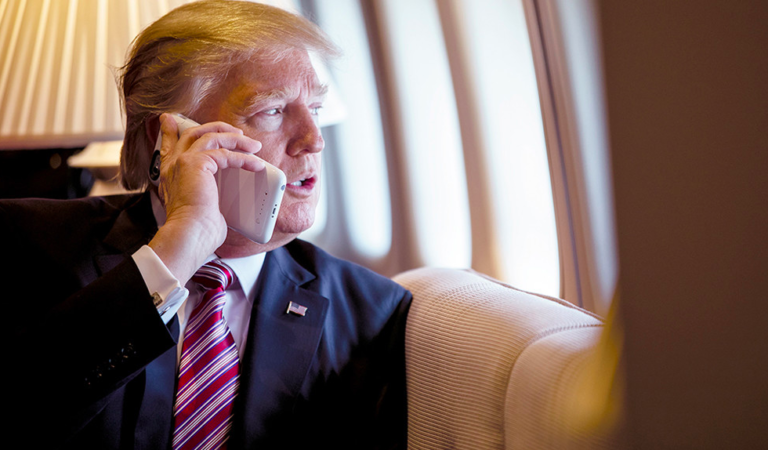
Who has Trump endorsed besides Tshibaka? He’s now endorsing GOP chair candidates

Former President Donald Trump has not yet announced a trip to Alaska, but he’s now on the road, making the rounds in the country’s heartland, with stops in Ohio on Saturday for his first big rally, as he seeks to leverage his profound influence on elections.

More than 74.2 million voters chose Trump in the 2020 election and many of them still believe in Trump’s agenda for America.

Trump has, to date, made at least 24 endorsement in races for governors, Congress, or for state Republican chairs. He apparently is looking far ahead to ensure that Republican state party chairs are actively supporting conservative candidates in line with Republican values.

In Alaska, the Republican Party under former Chairman Glenn Clary voted by 77 percent to censure Sen. Lisa Murkowski. Clary has since resigned and now-Chairwoman Ann Brown is the leader until next March, when he party conducts elections. Brown, during the most recent State Central Committee meeting, voted against censuring Murkowski.

Governor endorsements

  • Gov. Greg Abbott, Texas
  • Sarah Huckabee Sanders, Arkansas
  • Henry McMaster, South Carolina
  • Glenn Youngkin, Virginia

U.S. Senate

  • Sen. John Boozman, Arkansas
  • Rep. Mo Brooks, Alabama
  • Sen. Mike Crapo, Idaho
  • Sen. Ron Johnson, Wisconsin
  • Jerry Moran, Kansas
  • Sen. Rand Paul, Kentucky
  • Sen. Marco Rubio, Florida
  • Sen. Tim Scott, South Carolina
  • Kelly Tshibaka, Alaska

Trump has also said that he wants Herschel Walker to run for Senate in Georgia, against the well-funded Democrat Sen. Raphael Warnock. Walker, formerly of the NFL and U.S. Olympic Bobsled Team, has not yet announced.

U.S. House

  • Mike Carey, Ohio
  • Rep. Virginia Foxx, Virginia
  • Julia Letlow, Louisiana
  • Max Miller, Ohio
  • Susan Wright, Texas

State Republican Party Chairs

  • Frank Eathorne, Wyoming Republican Party chairman
  • Drew McKissick, South Carolina Republican Party chairman
  • Bob Paduchik, Ohio Republican Party chairman
  • David Shafer, Georgia Republican Party chairman

Trump has said at least twice that he intends to come to Alaska to campaign against Sen. Lisa Murkowski. He said it once in March, to The Hill newspaper: “I will not be endorsing, under any circumstances, the failed candidate from the great State of Alaska, Lisa Murkowski. She represents her state badly and her country even worse. I do not know where other people will be next year, but I know where I will be — in Alaska campaigning against a disloyal and very bad Senator.”

Earlier this month he restated that he intends to come to Alaska: “I look forward to campaigning in Alaska for Kelly,” he said in his endorsement statement on June 18.

Read: Trump endorses Kelly Tshibaka for U.S. Senate for Alaska

Jim Crawford: Simple math on the PFD

By JIM CRAWFORD

We hear a constant barrage from folks who want to decrease the Alaska Permanent Fund dividend and reinstate the personal income tax.  

With the price of oil going up, tourism roaring back and the corpus of the Permanent Fund growing 25 percent in the first ten months of FY2021, you’d think there would be room for optimism in today’s discussion.  There is around the state, but a sour note blares by the Legislative majorities in the House and the Senate.  Their latest gambit is to threaten folks to cut our dividend to $525.  

Here is the math that effects this fiscal year’s PFD.  The fiscal year ends June 30, 2021.

Beginning PFDC accumulated capital as of June 30, 2020,              $65,302,000,200

Value June 17, 2021,                                                                          $81,037,400,000

Increase over the last 11 months                                                        $15,735,400,000.        

Admittedly, I use intake and exhaust accounting.  You know:  How much in?  How much out?  What is left?  Just like when we do a home budget.

This year, $3.1 billion was drawn by the Legislature for more Jabba the Hutt spending.  Most went to state spending.  But that does not end the debate.  That still leaves $13.1 billion left in the fund from past earnings to increase investments for future Alaskans. Add another $6.5 billion in covid fed funds and another $1 billion for next year.  We received over $20 billion in spendable cash for Alaska above and beyond normal state expenditures.         

The legislative leaders, however, have a different perspective. They voted to cap Permanent Fund distributions at 5 percent of the Fund, regardless of the actual earnings of the Fund. They got $3.1 billion and kept the rest. This year, the fund so far has earned 25 percent more than our beginning balance.  Now, they use that POMV cap as an excuse to cut the dividend, again. Some even say we do not have the money. Shamelessly untrue. Government never has enough, it’s a bottomless pit.

If you had an overdraft of $1,000 in your credit union checking account and did not count the $1 million, you had in savings, you could be a Senate leader. That’s what the Legislature did last year when they had more than enough cash in the General Fund and Earnings Reserve Account to pay for the budget for this year but claimed we were broke. You can prove we have the money just as easily.  

We can easily afford to pay out the full statutory dividends this year in 2021. I’ll take mine without a hint of greed or feeling of entitlement. These guilt trips are nuts. Alaskans made a good decision 40 years ago to save 25 percent of royalty income.  We hire people to invest it for us and even agreed to allow the Legislature to spend 50 percent for government as long as the other 50 percent directly benefited Alaskans through the dividend.  It’s private sector, capitalism driven, and a successful exercise in economics. Now, if the Legislature cannot accomplish our objectives, a Constitution Convention can.      

The 5 percent percent of market value (POMV) cap is a statutory recommendation from one Legislature to the next and can be changed by a simple majority in both houses. 

In Alaska, our Constitution says that we cannot dedicate funds without public assent. This means that the portion of the earnings reserve account with $11.3 billion on April 30, 2021, can fund the dividend. The statute on the books requires dividends be paid based upon earnings, cumulative and averaged for five years. The formulae worked for 40 years until the Legislature trashed it.  

Last year’s POMV draw, which overran earnings, reduced the principal balance of the Fund by $998 million.  Just check the financial statements of the Alaska Permanent Fund for Fiscal Year 2020.  In investing, what counts is the earnings, not the balance in the Fund. Returning to an earnings requirement is the only way we can guarantee our grandchildren will receive an equitably shared, sustainable dividend.  

Legislators now argue that they cannot adjust the cap they themselves created with the POMV.  They obviously can, and they should. Our population in Alaska has shrunk. Our employment is on the mend but has a long way to go.  Our people need cash to rebuild their lives and businesses.  

The good news is that our state has more natural resources including cash on hand than any other state in the United States. Alaskans are unique that we saw the opportunity to invest our savings and turn barrels of oil into barrels of renewable cash. But legislative leaders demand more spending for government and smaller dividends for Alaskans.

In politics, I’ve heard the admonition: “Lead, follow, or get out of the way”.  These legislators must get out of the way for Alaskans to prosper. 

Jim Crawford is a third-generation Alaskan entrepreneur who resides in Anchorage with his bride of 37 years, Terri.  Capital Alaska LLCis a capital funder which studies and reports on and may sponsor projects of sustained economic growth for the Alaskan economy.   Mr. Crawford known as the Permanent Fund Defender was a member of the Investment Advisory Committee, appointed by Governor Hammond to plan and execute the Alaska Permanent Fund Corporation.

Dan Sullivan: Another Permanent Fund plan

By DAN SULLIVAN

As the State Legislature grapples with how to deal with the future of the Permanent Fund, I propose a solution that is a hybrid of some of the ideas that have been submitted past and present.

Two decades ago, then Sen. Jerry Mackie proposed distributing half of the Permanent Fund to the people, which would have been a significant windfall for eligible recipients and no doubt would have had a significant positive impact on the state economy during a time of low oil prices and severe stress on the state budget.

The earnings from the remaining 50% of the Fund would have been available for state government spending. This was proposed when none of the earnings had been previously used for state spending.

Currently, Sen. Natasha Von Imhof has proposed taking $6.7 billion dollars from the Fund earnings and setting up a new Permanent Fund Dividend account whose earnings would be strictly for dividends. Under her proposal, up to 5% of the earnings from the remaining $75 billion would be available for government spending.

We need to think bigger for Alaskans. I propose allocating $28 billion (about 35% of the total fund) to the new “People’s Fund,” an amount equivalent to about $40,000 per person, assuming an eligible population of 700,000 (last year approximately 670,000 Alaskans qualified for a PFD so I rounded up).  

The remaining $53 billion remains in the existing Fund and under a traditional POMV formula, up to 5% of the value can be appropriated by the Legislature

This produces about $2.65 billion for government and thus may require additional cuts to state spending for a balanced budget.  I share the belief of many that there are hundreds of millions of dollars of additional cuts that could be made to state government to achieve that balance.  Higher oil prices and increased production that we are currently experiencing will help close any gap as well.

Similar to Sen. Von Imhof’s proposal, the $28 billion People’s Fund would be invested as a separate account within the Permanent Fund.  A draw of 5 percent of the $28 billion corpus would yield $1.4 billion.  Divided by 700,000, the initial dividend would be $2,000, near the historic high. 

Just a decade ago, the Permanent Fund was worth about $41 billion.  Through wise investments and the annual deposit to the Fund from 25 percent of mineral/petroleum royalties (approximately $100 million last year), the Fund has doubled over that ten-year span.

Using the same percentage I have proposed for the two funds, 35 percent of future royalty deposits would go into the People’s Fund and 65 percent into the government fund.  Assuming the continued good stewardship of the Permanent Fund managers, we would see significant long turn growth in the principal of both funds, even with the inevitable market corrections that occur.

Here’s where it gets fun.  Channeling the Mackie Plan, eligible dividend recipients could choose to take $25,000 as a one-time payment and relinquish any claim to future dividends. While this would lower the corpus of the new fund, it would also proportionally eliminate the number of folks drawing a dividend. 

For example, if 200,000 people took the cash, that would equal $5 billion dollars.  The People’s Fund balance would now be $23 billion.  A 5 percent draw would equal $1.15 billion and divided by the remaining 500,000 eligible Alaskans, equals a dividend of $2,300. Not too bad.

Some folks planning to leave the state anyway would take the money and run. For those forced to move due to job loss or other economic reasons, this would help them get a new start.  

Others may simply prefer to make their own investments or use the money to help re-open a business shut down by government during the pandemic. Some may spend the money unwisely. Your money, your choice.

If parents decide to take the payout for the whole family, kids could have their money kept in a custodial account until they are 18.

There is no doubt that such a payout provision would be a large and timely stimulus to the Alaskan economy. 

This proposal guarantees adequate funding for government and guarantees that the dividend program is sustained.  As Governor Dunleavy has proposed with his 50/50 plan, this would need to be enacted as a Constitutional amendment requiring a vote of the people, but it would end the debate about the purpose of the Fund once and for all.

Finally, as the Governor has also proposed, a true and enforceable spending limit would also have to be enshrined in the Constitution to prevent overspending when our pockets are flush with cash. Old habits are hard to break.

I believe this proposal has something for everyone and gets us closer to what can realistically be agreed on by our elected officials.  It also properly involves the citizens of Alaska who would get to exercise their right to vote on such an important decision. 

I have been part of the chorus supporting the original statutory formula for calculating the dividend. I don’t think our laws should be so easily ignored. I merely offer this as a compromise that might get us off high center and back on the road to a sustainable future.  

What say you?

Dan Sullivan was mayor of Anchorage from 2009-2015         

High court favors Alaska Native Corps getting CARES Act funds

10

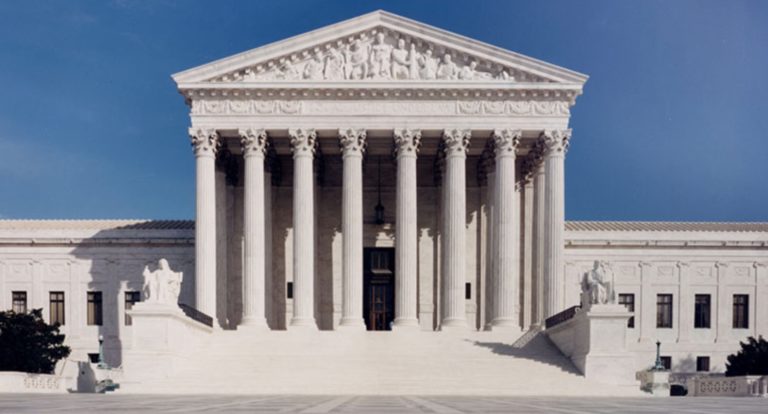
 In a case that pitted Lower 48 Native American tribes against Alaska Native corporations, the U.S. Supreme Court ruled for the corporations, saying they will be able to receive Covid-19 relief funds.

By a vote of 6 to 3 on Friday, the  high court confirmed that the Native corporations, are the same as Indian tribes as defined by the Indian Self-Determination and Education Assistance Act. As such, they are entitled to funds from the CARES Act.

“The court today affirms what the federal government has maintained for almost half a century: ANCs are Indian tribes under ISDA,” Sotomayor wrote in the 28-page ruling in Yellen v. Confederated Tribes of Chehalis Reservation. “For that reason, they are Indian tribes under the CARES Act and eligible for Title V funding.”

As a result, the corporations are entitled to receive up to $500 million that had been allotted to them under the CARES Act, passed by Congress in March 2020. 

“This decision means Alaska Native corporations will be treated fairly when it comes to accessing federal CARES Act funding,” said Gov. Mike Dunleavy. “We applaud the court’s balanced and even-handed ruling regarding economic relief funding to these entities.”

Fake news alert: Operative Scott Kendall tries to shame governor for being out of state, but his troll work comes up short

Recall Dunleavy lawyer Scott Kendall went on Twitter today to tell the world what a shame it is that Gov. Mike Dunleavy is in New Jersey with former President Donald Trump at a fundraiser for Dunleavy’s reelection bid.

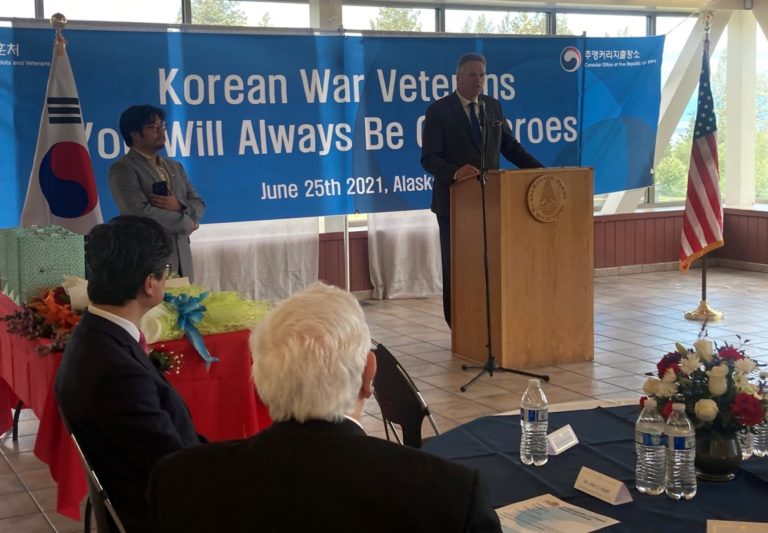
Only it just wasn’t true. One look at Dunleavy’s Facebook page makes it clear that he is in Alaska on Friday, and in fact was at a ceremony to thank Korean War veterans that was held at the Kincaid Chalet in Anchorage.

Dunleavy had planned to go on a fundraising trip to the Bedminster Golf Club in New Jersey, but when the Legislature failed to pass a budget, and a shutdown of state government loomed, he changed his plans. Evidently no one told Scott “Scooter” Kendall.

“Where is @GovDunleavy? Well he’s on his way to a big $ fundraiser back East (charging $5k for a photo must be nice!” Hanging out in New Jersey while AK suffers. SAD!” Kendall wrote.

While Kendall was busy critiquing on social media, Dunleavy was posting his own message: “What a privilege to join and honor our Korean War Veterans in Anchorage this morning. On the eve of Korea-Alaska Friendship Day, we thank our heroes who served our country and answered freedom’s call.”

Win Gruening: Public sector unions vs. the First Amendment

10

By WIN GRUENING

In 1962, President John Kennedy issued Executive Order 10988, paving the way for federal workers to organize and bargain collectively. 

Few knew then the far-reaching effects of that order.

During the 60’s and ’70s, states and cities followed with a flood of laws granting state and local public employees collective-bargaining rights.  These laws required government employers to negotiate with unions regarding pay, benefits, and working conditions. They also required nonmembers to pay so-called “agency fees” to the union for its representation.

After the initial surge, the public-sector unionization rate remained steady for 40 years, with around 40 percent of government workers unionized. That rate began declining in 2011, due to passage of right-to-work laws in Michigan, Wisconsin, Indiana, Kentucky and West Virginia. 

In the last decade, government-labor relations has become intensely political. It has topped many state legislative agendas and been the subject of litigation in state and federal courts, including the Supreme Court.

The cost of union-negotiated public-sector pay and benefits (which can exceed what comparable private sector workers earn), combined with hundreds of billions of dollars in unfunded pension liabilities for retired government employees, are crushing state and city budgets. 

This has led many governors to attempt to roll back overly generous public-sector union contracts hoping to reduce the cost of government and improve employee efficiency.

Right-to-work laws now exist in 27 states, guaranteeing that no person can be required, as a condition of employment, to join a union, nor to pay dues to a labor union. 

In 23 other states, including Alaska, where public sector employees have been forced to join the union or pay agency fees, worker dissatisfaction has continued to mount with escalating annual union dues that increasingly are funneled to local, state, and federal political campaigns.  Often, unions take political positions and make contributions to candidates and causes in direct conflict with many union members’ own wishes.  

An egregious example of this was when the Los Angeles teachers union demanded, as a condition for re-opening schools last fall, a federal school bailout of $500 billion; Medicare for All; a $10 billion wealth tax; a $4.5 billion millionaire tax; defunding of the police; and eliminating charter schools.

Yet, teachers who disagreed had no recourse but to continue paying union dues if they wanted to keep their jobs.

In 2018, the U.S. Supreme Court’s landmark Janus decision affirmed the First Amendment rights of all public employees. No longer can state or local government employees be forced, in order to take or keep a job, to belong to or pay union dues unless they “affirmatively consent” to do so. Agency fees are now illegal in all 50 states. In short, the decision extended right-to-work to all public-sector workers throughout the country. 

But the fight is far from over.

Some states are passing union-backed legislation making it more difficult to leave a union.  Many workers remain unaware of their rights under Janus.

In Alaska, Governor Dunleavy issued an administrative order in 2019 making it easier for workers to know their rights through an “opt-in” program where unionized state employees affirmatively agree to have union dues deducted from their paychecks.

Under Alaska’s new policy, state workers must declare each year that they want to opt into the union and acknowledge they are not required to have such representation. 

Unions immediately filed objections to this interpretation of the Janus decision and a judge temporarily halted implementation.  But, while the legal case advances, public employees still have the right to “opt-out”.

Predictably, union opposition to Janus in Alaska has reached hyperbolic proportions. The leadership of NEA-Alaska, representing our state’s teachers, is begging employees to ignore social media ads advising of them of their right to “opt-out” and declaring the ads are seeking to “destroy unions and public education across America”.

Nothing in the Janus decision suggests that. Individuals must have the right, but cannot be compelled, to join a labor union. Union membership, whether you’re a teacher, police officer, ferry worker, or clerk, should be a personal choice with each person weighing the pros and cons of joining. 

That is the freedom all Americans enjoy under the First Amendment. 

After retiring as the senior vice president in charge of business banking for Key Bank in Alaska, Win Gruening began writing op-eds for local and statewide media. He was born and raised in Juneau and graduated from the U.S. Air Force Academy in 1970. He is involved in various local and statewide organizations and currently serves on the board of the Alaska Policy Forum.

Engineering marvel: Two Alaska fast ferries head to Spain on ‘the mother of all ships’

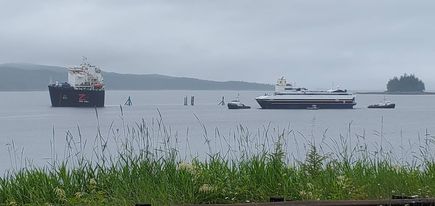
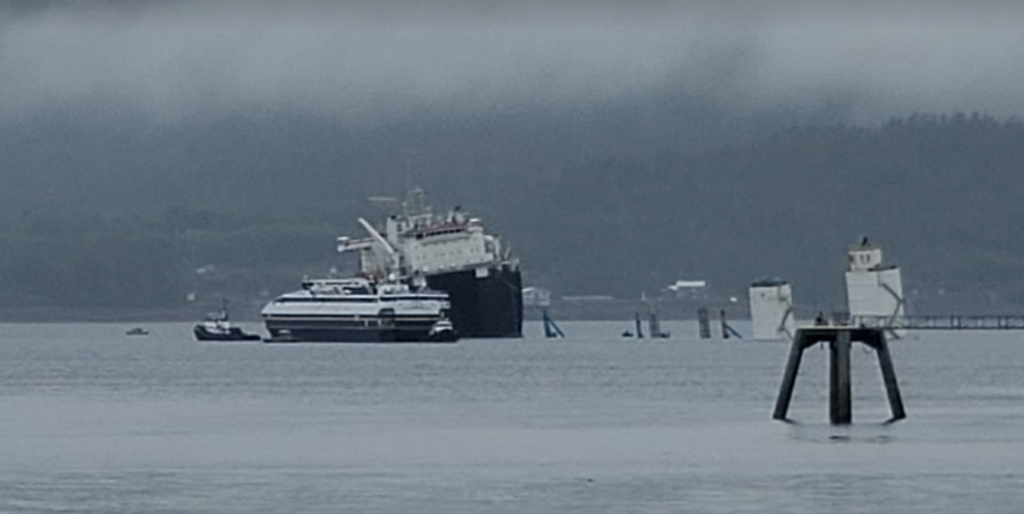
The fast ferries MV Fairweather and MV Chenega were towed in Ketchikan today to be loaded onto a massive submergible freighter, where they will be transported to Spain for ferry service between Spain and Ibiza.

It is quite the spectacle in Ketchikan and a scene that is seldom seen around the maritime world, but is happening now at the mouth of Ward Cove. (Photo credit: Michael Mastin)

The Fairweather is a catamaran that entered service in 2004, and was sold in March to Servicios y Concesiones Maritimas Ibicencas, along with the Chenega, which entered service in 2005 The vessels sold for a total of $5.17 million this year.

Amak Towing hauled the ferries to the Red Zed 1 heavy lift ship on Friday, using tugboats Ethan B and Jenny B. The Red Zed 1 has been in Ketchikan since April 2, while cribbing and blocking materials were brought in and other preparations have been made.

The transport of the ferries was delayed because of concerns they would sustain structural damage en route to Spain, and alternate methods were subsequently devised to secure the ferries to the Red Zed 1.

The Red Zed 1 will be lowered by pumping water into ballast tanks, and then when the ferries are loaded, the water will be pumped out, similar to how it works in this YouTube video:

Alaska teachers among those who signed pledge that no law will stop them from teaching Critical Race Theory

73

The Zinn Education Project has a pledge online that it hopes teachers will sign. It states that the signers will violate the law, if that law prohibits the teaching of Critical Race Theory, which is a broad-stroke description of teachings many parents feel amount to radical revisionism.

Alaska educators are among those signing the pledge, even though there is no Alaska law prohibiting Critical Race Theory being used in the classroom, and in fact Anchorage School District has essentially approved the curriculum.

CRT is an indoctrination program to label all whites as racist and the nation as systemically racist, sexist, and homophobic, rather than the learning, growing, changing, and largely tolerant society that it is.

The theory is being pushed by radicals across the country into classrooms of children as young as kindergarten age, where white children are being discriminated against as they are told they cannot help but be racist since they are white and therefore privileged.

Named after Howard Zinn, a controversial radical historian and anti-American, the pledge reads simply that teachers will not lie about history, which on its face seems benign.

But the pledge pretends that it’s about historical truth, rather than Critical Race Theory. It supports the false narrative of the New York Times 1619 Project, which seeks to distort the historical record. One has to dig deeper in the narrative to see what is occurring.

Several Alaska teachers have signed the pledge, and they are listed at the bottom of this story.

A teacher from Buffalo, New York commented, along with his signature, that “I never learned in school that Abraham Lincoln freed the slaves with the sole intention to use them for the war, and then send them off to Liberia. That whole part of history never existed in my classroom. Why was that left out?”

A teacher from Virginia wrote, “Racism is real today and can be traced back to the foundation of the United States which was built on white supremacist ideas. More information about this historical truth leads to action, not guilt.”

And a teacher from San Diego, California commented, “Students deserve to know that biology does not work the way conservative, far-right members of the legislature claim it works. They are wrong about race, sexual identity, sexual preference, how women’s reproductive organs work, global climate change, the need for regulations and oversight for pollution, and many other things.”

Here’s the narrative that the teachers are signing onto:

Lawmakers in at least 21 states are attempting to pass legislation that would require teachers to lie to students about the role of racism, sexism, heterosexism, and oppression throughout U.S. history.

A bill introduced in the Missouri legislature exemplifies a rash of similar bills — in Texas, Idaho, Arkansas, Iowa, Louisiana, New Hampshire, Oklahoma, Rhode Island, West Virginia, Arizona, North Carolina, and more states — that aim to prohibit teachers from teaching the truth about this country: It was founded on dispossession of Native Americans, slavery, structural racism and oppression; and structural racism is a defining characteristic of our society today.

Specifically, the Missouri bill bans teaching that: identifies people or groups of people, entities, or institutions in the United States as inherently, immutably, or systemically sexist, racist, anti-LGBT, bigoted, biased, privileged, or oppressed.

But how can one teach honestly about the nature of our society without examining how today’s racial inequality is a systemic legacy of this country’s history?

From police violence, to the prison system, to the wealth gap, to maternal mortality rates, to housing, to education and beyond, the major institutions and systems of our country are deeply infected with anti-Blackness and its intersection with other forms of oppression. To not acknowledge this and help students understand the roots of U.S. racism is to deceive them — not educate them. This history helps students understand the roots of inequality today and gives them the tools to shape a just future. It is not just a history of oppression, but also a history of how people have organized and created coalitions across race, class, and gender.

The Missouri bill names these leading social justice education groups as those whose curricula would be banned: 1619 Project initiative of the New York Times, the Learning for Justice Curriculum of the Southern Poverty Law Center, We Stories, programs of Educational Equity Consultants, BLM at School, Teaching for Change, Zinn Education Project, and any other similar, predecessor, or successor curricula.

The proposed legislation fails to name a single lesson that is inaccurate or that misleads students about U.S. history.

We the undersigned educators will not be bullied. We will continue our commitment to develop critical thinking that supports students to better understand problems in our society, and to develop collective solutions to those problems.  We are for truth-telling and uplifting the power of organizing and solidarity that move us toward a more just society.

“Pledge to Teach the Truth: Despite New State Bills Against It.”

The Alaska teachers who have so far signed the pledge include:

Adak, Ak

Mark Biberg

Anchorage, Ak

Dr Paula Williams, Heidi Northover, Lyn Franks (running for House District 15), Megan McBride, Michelle Wagner, Rozlyn Grady-Wyche, Toni Biskup

Eagle River, Ak

Danyelle Kimp (running for House District 13), Mary Richards

Fairbanks, Ak

Stephanie Ferrara

Kenai, Ak

Amanda Trower

Palmer, Ak

Sam Jordan