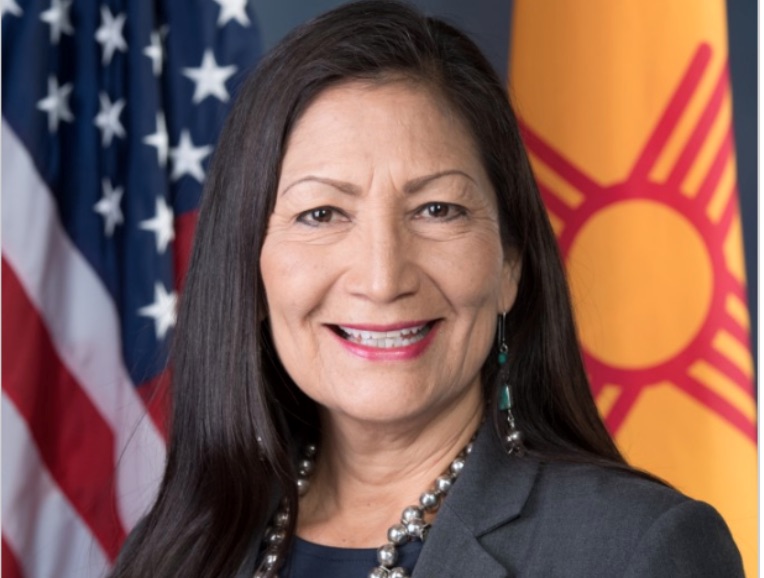
U.S. Interior Secretary Deb Haaland is slated to visit with residents of King Cove during a visit to Alaska in September.
During her confirmation meetings, she reportedly promised U.S. Sens. Lisa Murkowski and Dan Sullivan she would meet with villagers to talk about a short, one-lane gravel road skirting the edge of the 330,000-acre Izembek National Wildlife Refuge to reach Cold Bay’s all-weather airport for medical evacuations in inclimate weather.
Haaland’s department over the years, and under different administrations, generally opposed the road between the communities. When Interior, under President Donald Trump, approved a land swap that would allow the road to be built, U.S. District Judge John Sedwick rejected the deal. Trump’s administration appealed and Biden’s Department of Justice has filed a legal brief in the 9th U.S. Circuit Court of Appeals defending the exchange.
The Aleut fishing village of about 950 has fought for decades to get such a road to the Cold Bay all-weather runway for medical evacuations in poor weather, but without success. The roadway would be routed along the edge of the 330,000-acre Izembek refuge. Environmental groups claim such a road would endanger migratory birds and eel grass they feed on – despite there already being more than 40 miles of roads in the refuge used by hunters.
The 11-mile stretch would complete a 30-mile road that would provide a reliable ground link to Cold Bay’s all-weather runway when the area’s notoriously fierce weather grounds small planes.
King Cove is the poster village for the disconnect between Alaska and those who value a duck more than a human life. It is emblematic of forgotten federal trust responsibilities for Native Alaskans. Environmental interests fear allowing such a road would set precedent and pave the way for bars and convenience stores in refuges across the nation. That somebody surely will die at King Cove someday trying to reach medical help without the road is of little consequence to them.
King Cove is a tiny pin hole in a very large map, a wind-blown fishing village in the Aleutians East Borough. Located on the Pacific Ocean side of the Alaska Peninsula, out near its end, it is about 600 miles southwest of Anchorage and hard against the Izembek refuge.
Residents have been trying to get a road built since before the refuge was designated mostly as wilderness by the Alaska National Interest Lands Act in 1980. Unsurprisingly, they say, nobody bothered to tell villagers there would be a wildlife refuge nearby, or that it would contain wilderness or affect construction of a road to Cold Bay.
Ferocious weather grounds or delays King Cove’s aircraft about half the time. Eleven people have died in unsuccessful medical evacuations and other plane trips in and out of King Cove over the past four decades. The worst accident was in 1981, when a medevac crash killed all four aboard. Trying to reach Cold Bay by boat in bad weather is dangerous, too. It is a harrowing two- to three-hour trip through life-threatening, tumultuous seas.
Coast Guard helicopters regularly are used to evacuate residents in horrid weather. Each medevac mission presents a very real danger to pilots, crew and residents. Watching videos of the missions will make the hair stand up on the back of your neck.
Congress has done about everything it can do to appease environmentalists and avoid building a road. In 1997, it provided $37.5 million for a clinic and water access to Cold Bay that included a $9 million hovercraft later beached because of expense and reliability issues.
It turns out, a simple, gravel road is the only safe way to medically evacuate those who need to reach Anchorage, no matter the weather. Without the road, somebody, some day, again is going to die in King Cove trying to reach medical help.
It is simply a matter of time. Perhaps Haaland will see the importance of valuing human life over ducks and eel grass.
The new Anchorage chief equity officer, who makes $115,000 per year, was hired in the final days of Acting Mayor Austin Quinn-Davidson’s 8-month duration at the helm of Anchorage City Hall.
This is one of the positions that could be trimmed by the new Mayor Dave Bronson, conservatives say.
After all, it’s Critical Race Theory in practice, something that conservatives find reprehensible.
Some who voted for Bronson have expected that the position had already been eliminated, since there’s already an equal opportunity officer at the city.
Clifford Armstrong, the director of equity and justice, cannot be fired or laid off, no matter how egregious his actions may be, without the express consent of the Assembly. The position cannot be left vacant, now that it has been filled.
That clause is written right into the ordinance. The mayor doesn’t get to decide if he is doing his job, which according to the ordinance, is to improve the lives and livelihoods of people with certain skin color, disability, and LGTBQIA+ status.
Enabling legislation job description is downloadable here:
The “equity” term refers to “equal outcome,” as opposed to equal opportunity, which is why people who believe in hard work and merit-based rewards object to the new fad that has come from the Critical Race Theory concept.
Armstrong runs the Anchorage Office of Equity and Justice, which has been structured in the same way as the Office of Internal Audit. The auditor also can’t be fired without the approval of the Assembly.
“After the initial appointment effective immediately, the term of office for the chief equity officer shall be four years, ending on December 31, effective with appointment to the term beginning January 1, 2021,” the ordinance read. It went into effect before former Mayor Ethan Berkowitz left office after a major scandal involving a local news reporter.
“The chief equity officer may be dismissed by the mayor only for cause shown, and only with the concurrence of a majority of the assembly,” the law reads. According to the ordinance, “The office of equity and justice shall have such assistants and employees as are necessary to perform all required duties.”
There are no clear deliverables for the job, so firing the equity officer “for cause shown” is clearly an impossible task, unless the majority of the Assembly is flipped to conservative, which is unlikely in Anchorage. The next election is in April.
According to the ordinance, Clifford’s contract will remain for four years, beyond the next mayoral election. He will get to cruise for four years, collaborating with radicals who control the Assembly and passing information to the Alaska Democratic Party. All on the taxpayers’ dime.
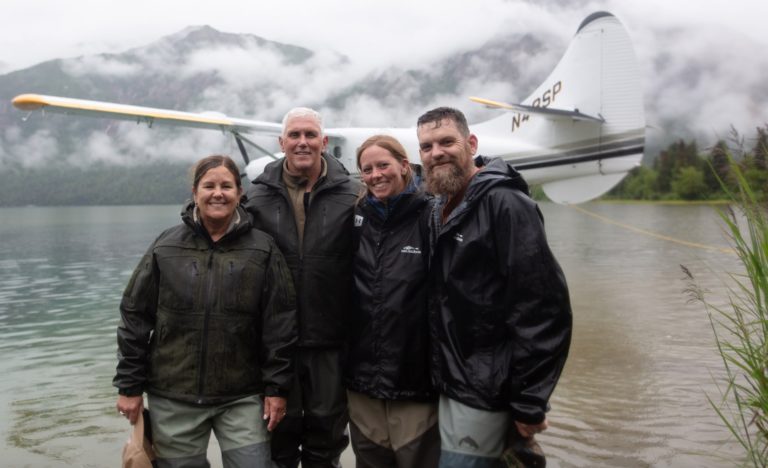
Former Vice President Mike Pence and his wife Karen slipped quietly into the Lake Clark area over the past few days to visit with military veterans and their spouses at the Samaritan’s Purse’s Operation Heal Our Patriots lodge at Port Alsworth, where wounded veterans and their spouses have solace and support for their marriages and their faith in God. Plus, they get to fish and hike.
“What an encouragement to these couples who have sacrificed so much,” said Franklin Graham, President and CEO of Samaritan’s Purse and the Billy Graham Evangelistic Association.
Thanks to supplemental Federal unemployment benefits ending last month, Alaska workers, like those in many other states are finally getting back to work. Republican officials across the country have long claimed that generous unemployment benefits were a disincentive for returning to jobs.
In what has become a national trend, many Alaska business owners have not been able to fill open positions.
In a recent ADN article, Misty Stoddard, an owner at Rain Proof Roofing in Anchorage said she wasn’t getting many applications. Some people have told her they’d prefer to continue collecting unemployment benefits.
Many business owners in the local hospitality industry have similar stories to tell. Trina Johnson, owner of La Mex restaurant in South Anchorage, said she’s had trouble finding workers.
A record-high 48% of small business owners in the U. S. reported unfilled openings in May, according to the National Federation of Independent Business. Alaska’s reliance on the visitor industry has disproportionately affected our state as restaurant owners, tourism related businesses, and their suppliers are experiencing a growing labor shortage as the economy tries to recover.
In many cases, the $300-a-week benefit, which was reduced from the $600-a-week payment authorized under the original CARES Act last March, meant that many unemployed workers were earning the same or more by not working. According to the Center on Budget and Policy Priorities, based on a 40-hour work week, the average unemployed American was getting the equivalent of $17.17 an hour – more than twice the Federal minimum wage. In 21 states, unemployed households could potentially earn the equivalent of $25/hour while not working.
In March 2021, there were 31,841 Alaskans collecting state unemployment benefits, over three times the number collecting unemployment benefits a year earlier. Yet, the Dunleavy administration had been hearing from employers for some time that a growing labor shortage was preventing businesses from fully re-opening as pandemic related precautions eased. According to Alaska Commissioner of Labor, Tamika Ledbetter, the state’s available-jobs database had more openings than the number of people on unemployment. Based on that information, on May 14, Gov. Dunleavy made the decision to discontinue the Federal supplemental payment beginning in June.
In doing so, Alaska joined 17 other states that announced they planned to end the special Federal benefit. A week later, at least 25 states, including Alaska —all with Republican governors—had announced similar plans. Some states even decided to offer bonuses to employees that returned to work. “In Arizona, we’re going to….encourage people to work…instead of paying people not to work,” Governor Doug Ducey said announcing Arizona would be offering one-time bonuses to returning workers.
Dunleavy’s action was praised by Republican officials and many private sector business leaders. Some Democratic lawmakers, UAA economists, and labor unions disputed that the higher unemployment payments discouraged people from work and criticized the cut.
However, evidence has continued to mount since then that ending the benefit has positively affected many states across the country, including Alaska.
Recently released U. S. Labor Department data on unemployment claims reflect welfare rolls expanding in the states where the unemployment bonus remains in place. Conversely, the number of people on welfare is shrinking in the states where the supplement expired.
States that announced an end to enhanced federal unemployment benefits in June saw a 13.8 percent drop in residents receiving benefits from mid-May through June 12, according to an analysis by Jefferies LLC. States announcing an end to the federal unemployment in July saw a 10 percent decline in residents receiving state benefits. Meanwhile, some studies show states that continued the bonus posting increases in initial claims.
In Alaska, total unemployment claims dropped from nearly 30,000 the week before the extra federal benefit ended to just under 26,000 in late June, according to state data. They peaked at more than 66,500 a year ago.
As visitor numbers begin to increase across the state, it is critical that Alaska businesses are able to staff up to meet the demand.
Thanks to Governor Dunleavy, one more impediment to accomplishing that has been removed.
After retiring as the senior vice president in charge of business banking for Key Bank in Alaska, Win Gruening began writing op-eds for local and statewide media. He was born and raised in Juneau and graduated from the U.S. Air Force Academy in 1970. He is involved in various local and statewide organizations and currently serves on the board of the Alaska Policy Forum.
The Wasilla City Council will on July 29 take up a resolution that opposes a proposed Matanuska-Susitna Borough ordinance that would place a 1.5 percent areawide sales tax to pay for transportation projects.
The tax would go into effect on July 1, 2022 for five years or until $73.6 million is collected, after which the tax would expire.
The sales tax question would be on the Nov. 2 regular borough election ballot, if passed by the Matanuska-Borough Assembly at its Aug. 3 meeting.
Then, if borough voters agree, the 1.5 percent areawide sales tax would be added to the Wasilla 2.5 percent sales tax for a total of 4 percent, which would harm Wasilla, especially when the City of Wasilla comes to voters to ask for a future project to be paid for by its forward-funding, no-debt method of paying for capital projects.
“Though the City is not opposed to infrastructure improvements, the 22 projects listed in MSB Information Memorandum No. 21-155 provides for only two projects within the City of Wasilla with a total cost of $5.5 million or 7.4% of the total bond package of $73,685,000.
Wasilla consumers would bear a disproportionate burden for the borough tax, as Wasilla is the economic powerhouse for the borough.
“Further, the MSB does not address the fiscal impact, administration of, or collection of a 1.5% areawide sales tax, which further undermines cities within the Borough and citizen confidence,” the report says.
“With the MSB currently generating revenue from the City of Wasilla in the form of property tax ($11.5m), cigarette tax ($4m), bed tax ($150k) along with alcohol tax and motor vehicle tax, an additional areawide sales tax ($12.5m) would be excessive,” it continues.
“The City of Wasilla has a proven track record with our citizens, where we have completed three major projects: The Curtis D. Menard Memorial Sports Complex early debt extinguishment, Library, and the Wasilla Police Department,” the Wasilla staff report says.
The City of Houston City Council has also approved a resolution opposing the tax.
The Wasilla City Council meets at 6 pm on July 29 at Wasilla City Hall.
The Senate Armed Services Committee has approved language in the 2022 National Defense Authorization Act that would require women to register for the military draft.
Currently, only men must sign up for Selective Service when they are between the ages of 18 and 25. The all-volunteer U.S. military has not drafted anyone since last draft call on Dec. 7, 1972, near the end of the Vietnam War. The Selective Service may, however, be reinstated in a national emergency.
The language came out of the subcommittee on personnel, led by Chairwoman Sen. Kirsten Gillibrand, a Democrat from New York. The ranking Republican member is Sen. Thom Tillis of North Carolina.
Highlights of the Act include a 2.7 percent pay raise for both military and the Department of Defense civilian workforce, as well as a change to the Military Selective Service Act to require the registration of women for Selective Service.
The Act also authorizes fiscal year 2022 active-duty end strengths for the Army of 485,000 (up from 480,000); the Navy, 346,200 (up from 332,528); the Marine Corps, 178,500 (down from 186,000); the Air Force, 329,220 (up from 327,878); and the Space Force, 8,400. It authorizes reserve component military end strengths in line with President Joe Biden or his successor’s request, with the exception of Air National Guard military technicians and full-time Reserve and Guard personnel, which are frozen at FY21 levels.
From the readiness and management support subcommittee, where Sen. Dan Sullivan is the ranking Republican minority member, the bill has language that requires defense contractors to publicly disclose employee training materials “for review and identification of Critical Race Theory or similar theoretical instruction.”
Sen. Jack Reed, of Rhode Island is the committee’s chairman, and Sen. Jim Inhofe of Oklahoma is the Republican minority’s ranking member.
Starting Friday, the City and Borough of Juneau is reinstating 50 percent capacity limits at bars and gymnasiums. Indoor gatherings are once again limited to 50 people or less, with masks required, unless the gathering has an approved Covid-19 mitigation plan on file with the city. Already, the city has made masks mandatory in city-owned buildings, including the Augustus Brown Swimming Pool.
This, in a small city that has seen about 65 percent of its residents completing their vaccinations against Covid-19, and over 200 new vaccinations being administered per week. Over 78 percent of Juneau residents have at least one shot of the two-shot series. In addition, more than 1,545 Juneau residents have had a bout with the virus, and three have died, with their deaths attributed to the virus.
It appears herd immunity is difficult to attain even in such a compliant community.
Health officials say that there’s an uptick in coronavirus cases in Juneau, sparking these new mandates. Juneau saw 29 new cases of Covid-19 on July 20-21, and 16 new cases on July 22.
In addition to the capacity measures, personal service businesses in Juneau must now require appointments, and cannot have waiting areas inside.
The Legislature will gavel into special session on Monday, Aug. 2, but it’s not certain there will be many legislators in Juneau as the first day is predicted to be a technical session, with no quorum to conduct business.
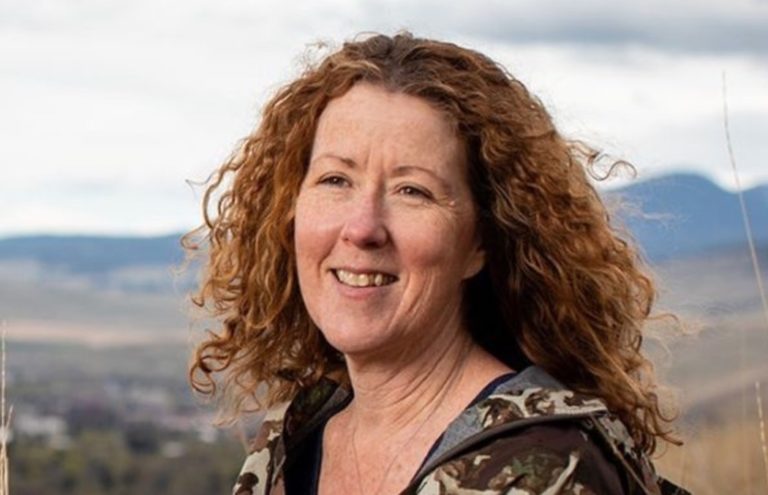
Radical eco-leftist Tracy Stone-Manning’s nomination to run the Bureau of Land Management split the Senate Energy and Natural Resources Committee, with a 10-10 vote to move her nomination to the floor. As such, Senate Majority Leader Chuck Schumer will need to use his powers to “discharge” the nomination from the committee.
Stone-Manning has been a senior advisor at the National Wildlife Federation based in Montana, and was chief of staff to Democrat Gov. Steve Bullock. She was a senior aide to Democrat Sen. John Tester.
But when she was younger, she was supportive and actively enabled a radical Earth First! initiative that involved driving metal spikes into trees in order to harm loggers and discourage the forest industry.
The vote was along party lines, with Alaska Sen. Lisa Murkowski voting no. Murkowski said that in addition to the nominee’s troubling past involvement with eco-terrorism, Tracy Stone-Manning has shown no evidence she supports multiple uses of public lands.
Senate Energy and Natural Resources Committee Chairman Joe Manchin, a West Virginia Democrat, praised Stone-Manning’s history of bipartisanship and said the charge of eco-terrorism was not to be believed.
Sen. John Barasso of Wyoming, the ranking Republican member of the committee, spoke afterward at length against her nomination:
“I come to the floor today to oppose the nomination of Tracy Stone-Manning to be the director of the Bureau of Land Management. This morning the Senate Energy and Natural Resources Committee voted on her nomination. Every Republican on the committee voted no. Before our business meeting was over, Senator Schumer came to the floor and praised this nominee to the skies.
President Biden and the Democrats have wrapped their arms around this nomination and they won’t let go.
So the question is – who is this nominee that the Democrats are embracing and every Republican voted against?
Tracy Stone-Manning, as a graduate student, collaborated with eco-terrorists. These are people who hammered hundreds of metal spikes – 500 pounds of metal spikes – into trees in our national forest in Idaho. Tree spiking involves hammering these rods into a tree.
Why did they do that? Well, they want to stop progress in terms of logging. They want to stop progress in terms of firefighting. Because if a logger or firefighter were to hit this rod with a chainsaw, the chainsaw would shatter. Devastating injuries have occurred as a result. If the saw is used in sawmills, and were to hit one of these as they’re planing through the tree to produce boards, the entire blade shatters. It’s been described to me by someone who has worked in one of these mills – it’s like a hand grenade going off – damaging people all around the vicinity. The results can be fatal, and there are examples around the country where this has actually happened.
Even the Washington Post has labeled tree spiking as eco-terrorism.
Tracy Stone-Manning, as a member of a radical group, edited, typed and then anonymously sent a profanity-laced letter threatening the U.S. Forest Service.Here are just a few quotes from the letter.
She typed, ‘You bastards go in there anyway and a lot of people could get hurt.’
She typed, ‘I would be more than willing to pay you a dollar for the sale, but you would have to find me first and that could be your WORST nightmare.’
She then mailed this threatening letter to the target of the tree spiking, the U.S. Forest Service.She and her circle were investigated.They were investigated for their involvement with this ring of eco-terrorists and this eco-terrorist attack.
She was subpoenaed. She was ordered to give hair sampling, palm sampling, handwriting sampling, fingerprint samples to the investigators.
She knew full well who the tree spikers were.She could have easily gone to the authorities to identify them.She did not.
She covered it up for years, refused to cooperate with investigators. Recently, in the last couple of months, Tracy Stone-Manning came before the Senate Committee on Energy and Natural Resources.She came for her confirmation hearing.
Since that hearing and the statements that she made to the committee, an affidavit she swore under oath and signed, since that time – several people involved in her original case have come forward to the press and to the committee to set the record straight from the record of the story she told the committee at the time.The lead investigator on this case wrote a letter to Chairman Manchin and me.
That investigator, who has worked as a special criminal investigator for the United States government for 28 years, been a long time member of the U.S. military – served in Vietnam, and retired as a criminal investigator because of death threats made to him and his family by the group that worked on this eco-terrorism.
He wrote to the committee that she was the ‘nastiest of the suspects.’ He said she not only had knowledge of the plan to spike these trees, she was one of the planners.
He wrote to us, ‘It became clear that Ms. Stone-Manning was an active member of the original group that planned the spiking of the Post Office timber sale.’ Then just last week, one of the convicted tree spikers – one of the people that actually went to jail because of that, he came forward in an interview with the press.
In an interview with E&E News, the convicted tree spiker confirmed Tracy Stone-Manning knew of the plan to spike the trees ‘well in advance.’ According to the investigator’s letter, Ms. Stone-Manning’s lack of cooperation set back the initial investigation many years.
Eventually, when she was identified and received an investigation target letter, she had to make a decision.
The lead investigator said she only agreed to testify after she was caught, and after her lawyer negotiated an immunity deal.
Tracy Stone-Manning helped plan the tree spiking. She covered up for the terrorists and their activity for years. She refused to cooperate with the authorities. She only testified when she was caught and given immunity. After all of this, she created a story and lied to our committee about the incident.
On a sworn affidavit in her committee questionnaire, she said it was it was an ‘alleged’ tree spiking and that she was not the subject of an investigation. I specifically asked her, ‘Did you have personal knowledge of, participate in, or in any way directly or indirectly support activities associated with the spiking of trees in any forest during your lifetime?’
Her response under oath was ‘no.’
Both the cop – the criminal investigator – and the criminal – the man who went to jail for this – both came forward after her hearing to say Tracy Stone-Manning was lying to the Senate.
Over the past 30 years, she has made contradictory statements about this eco-terrorist incident. In 2013, she told a Montana State Senate Committee she was intimidated into sending the letter by a stranger. Yet in courtroom testimony she admitted the tree spikers were her friends. She was one of the ring leaders of the group. Mr. President, there are many qualified Democrats who could run the Bureau of Land Management. Within the federal government, this is the group that oversees an eighth of all of the land in the United States.
It is astonishing to me that Democrats are digging in to defend a proven liar and an eco-terrorist collaborator.
Senator Schumer came to the floor today and made it very clear that he will support this deeply flawed nominee. Will other Democrats do it as well? Will other Democrats that have millions of acres of BLM land in their states join him? Things have certainly changed since, and it’s interesting what has happened to the Bureau of Land Management nominees because Preside Obama’s BLM director, Bob Abbey came forward. He said her actions ‘should disqualify her’ from leading this important agency.One Biden administration official admitted to NBC News that her nomination was ‘a massive vetting failure.’
There will be more to say about this nominee when an attempt is made to discharge her out of the committee – if they get to that point – the cloture vote on the floor and again her vote on confirmation. Lots to be said, more information will come out.
It is hard for me, as the ranking member of that committee, to imagine a nominee more disqualified than Tracy Stone-Manning.
She collaborated with eco-terrorists.She lied to the Senate.She continues to harbor extremist views that most Americans find reprehensible.
I strongly oppose her nomination.
I urge all of my colleagues to do the same.
Tracy Stone-Manning is unfit to serve.
Her nomination will now go to the Senate for a full vote.
Alaska Sen. Dan Sullivan has asked President Joe Biden to withdraw the nomination, but it appears that Stone-Manning will be confirmed by the thinnest of margins.
The legislative working group tasked with presenting a long-term solution to the state’s fiscal imbalance has met a few times, but has little to show for their work since convening July 7. Many of the financial presentations that have been staged for the group have been heard numerous times during the regular session.
Now, the working group will begin meeting every day until the Aug. 2 special session, and may continue meeting even after that session begins, until the group has a product to offer the Legislature.
The Thursday, July 22 meeting will be a public meeting, beginning at 2:30 pm with an overview of constitutional amendment proposals. The governor has requested that the Legislature allow the voters to decide if the Permanent Fund dividend calculation formula should be in the State Constitution. Documents are at this link. The meeting will beteleconferenced at this link.
Friday, July 23 will be an “internal work session,” not open to the public. More of these private meetings will continue Saturday and Sunday.
The next public meeting will be Monday, July 26 at 3 pm, with presentations from the different members on their proposed fiscal plans.
On Tuesday and Wednesday, they’ll go back into “internal conversation,” otherwise known as executive session.
Thepublic will be able to provide testimony next Thursday, Friday, and Saturday:
Thursday, July 29, 6-9 pm: Anchorage
Friday, July 30, 6-9 pm: Mat-Su
Saturday, July 31, 1-4 pm Fairbanks
At this point, the public doesn’t have the information to inform their testimony and it’s unclear when the public will be given the draft proposals.
Sunday, Aug. 1, the co-chairs hope to wrap up “if we have anything to show for it,” according to the group’s schedule.
Monday, Aug. 2 is the first day of special session. The House Speaker and Senate President may gavel in and out in a “technical session” if there is nothing from the working group to look at, and this could be the case for many days after special session starts.
The working group’s co-chairs are Sen. Lyman Hoffman, the longest serving legislator in Alaska history, and Rep. Jonathan Kreiss-Tompkins. Both are Democrats.
The group is trying to solve the problem created by Senate Bill 26 four years ago. That bill created a structured “draw” from the Permanent Fund Earnings Reserve Account to help pay for government. But SB 26 did not address how the Permanent Fund dividend would be paid, and since SB 26 passed, the dividend has been relegated to a “what’s left over” status, in violation of Alaska Statute.