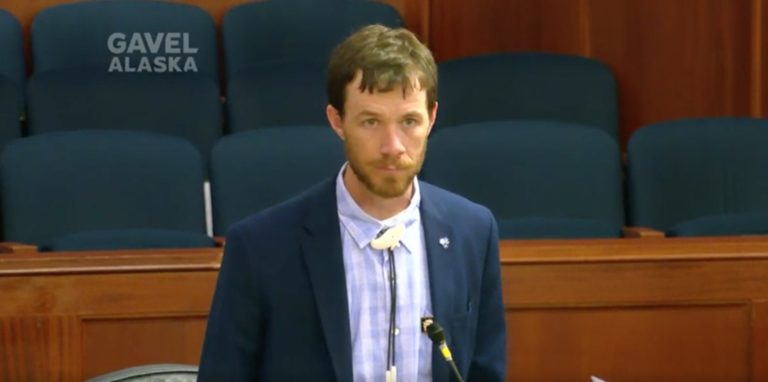
Rep. Zack Fields, a Democrat legislator who represents downtown Anchorage, has written to the CEO of Facebook and blamed him for the increase of Covid-19 cases in Alaska because of blogs like Must Read Alaska’s Facebook account.
Must Read Alaska enjoys using Facebook and Twitter, and welcomes a robust community discussion from all points of view on many topics about Alaska.
Fields is the former communication director for the Alaska Democratic Party and works for the Alaska Laborers union as a field organizer at the same time he holds down a job as a legislator.
On Twitter, Fields summarized his letter, saying Facebook is the “primary vector of misinformation on COVID-19, and it’s killing Alaskans.” He linked stories from Must Read Alaska and the Alaska Watchman, with a strong implication that they should be censored from the platform. Lawmakers demanding that news organizations be censored are in violation of the U.S. Constitution’s First Amendment. Fields threaded that needle of government censorship, but not as carefully as he thinks and has left himself open for legal action.
Must Read Alaska earlier this year reported on Fields, unmasked, having a beer pong and leg wrestling contest on the Alaska Capitol campus in Juneau with a liberal blogger and some married women legislators, while everyday Alaskans were prohibited from entering the Capitol due to Covid.
Some of his other proclivities in Juneau have gone unreported as of yet, but Fields has every reason to want Must Read Alaska to fail, based on what it has already reported about him and his extra curricular activities.
“I am writing to demand that you bear witness to the carnage of Covid-19 in Alaska, which is almost entirely the result of anti-vaccination conspiracy theories,” Fields wrote to Zuckerberg. “As the largest ‘media’ outlet in the state, you bear unique responsibility for these deaths.”
Fields continued, “To be sure, there are politicians who have put short-sighted political calculation ahead of public heath — but they only have an anti-public health base In pander to because of your digital network. Certainly, there are local bloggers that have spread misinformation — but their primary reach is through Facebook, not the blogs themselves.”
In fact, Must Read Alaska’s primary reach is through direct access to its website, not through Facebook, with over 56 million impressions through search engines and syndication partners.
“In short, you have provided the infrastructure to spread deadly misinformation with maximum efficiency, and rather than do anything meaningful to fix it your company has maintained algorithms that continue to prioritize inflammatory and false information,” Fields continued.
“As I wrote this letter, approximately 1,000 Alaskans are testing positive for Covid-I9 every day and every day more will die as our hospitals are packed far beyond their capacity to provide reasonable care,” Fields wrote.
“You are aware of this reality on a national level and have chosen to do nothing, because meaningfully changing Facebook’s algorithms would undercut profitability,” Fields continued.
“I want you to see the individual people in Alaska who are dying because they made the fatal mistake to participate in your company‘s network and trust the information they find there,” Fields wrote.
The New York Times says doctors in Alaska are now having to make a choice about who lives and who dies.
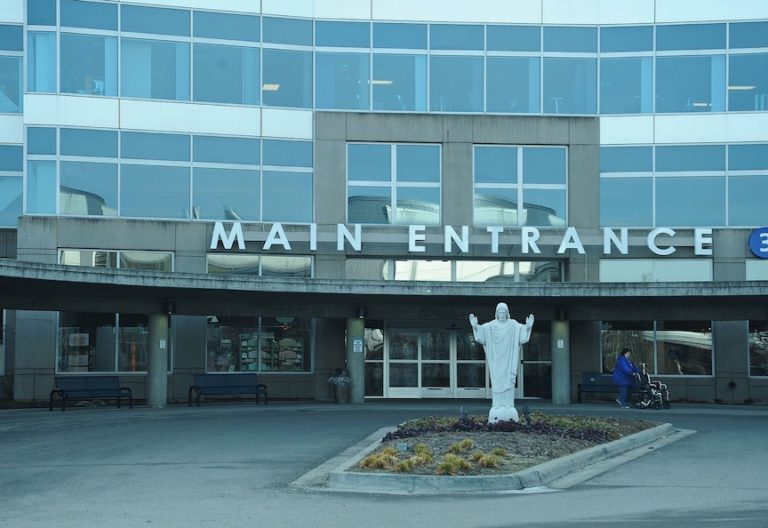
In a front-page story, Providence Alaska Medical Center Dr. Steven Floerchinger is quoted saying he gathered with his crisis triage colleagues for an agonizing discussion: One patient in the emergency room had a better chance of making it than the other patient, so the other person would have to wait for a bed in the intensive care unit.
“That patient died,” the story says.
“This is gut-wrenching, and I never thought I’d see it,” the newspaper quoted Floerchinger, who lives in Oregon and travels to Alaska to work at Providence Alaska Medical Center. “We are taxed to a point of making decisions of who will and who will not live.”
“Since that night, more grim choices have had to be made as Alaska confronts what is currently the nation’s worst coronavirus outbreak. Nearly two years after the virus began circulating in the United States, some of the scenes here on the country’s northern frontier echo the darkest early days of the pandemic: testing supplies are depleted, patients are being treated in hallways and doctors are rationing oxygen. With emergency rooms overwhelmed, the governor has asked hundreds of medical workers to fly in from around the country to help,” the story says.
Medical workers across America are indeed suffering from burnout, and some are leaving the field. Others are being fired because they will not take the Covid-19 vaccine, but hospitals tell mainstream media reporters that the vaccine requirement is not the cause of the staffing shortages.
Must Read Alaska has reached out to doctors in Anchorage who are disputing that care is being rationed in Alaska.
“Neither I nor any of my close colleagues have seen or heard of a single example,” one doctor said. In fact, the shortage is still not beds, but nursing staff, and it’s not helping that people are being driven from the field by vaccine mandates.
Because of the heavy-handedness of the hospital administration and the intense politicization of care at Providence Alaska Medical Center, the doctors in this story cannot be identified. It’s where they work. It’s where they have to thread the needle with their criticism, trying to preserve their jobs, while advocating for better patient care.
“There is nothing magical about the ICU,” one doctor said. “It’s merely a lower patient-to-nursing ratio, and each room has all of the fixings pre-installed. But do you think we can’t provide ventilation, oxygen, IV drugs and monitoring in any bed? I would like to know why that patient died. My guess is they would have died anyway.”
Another doctor agreed. He, too, cannot be identified because of the risk of being ostracized.
“Medicine has always been triaged here in Alaska — it’s a matter of resources. Does an 80-year-old person need a double heart valve operation when it will only extend his life three years? Probably not, but if you delay that surgery because of Covid ICU bed status and they die in the meantime, it makes a good headline and has a patina of truth,” he said.
“A community doctor trying to get an ICU transfer has to jump through a lot of hoops and that often involves a lot of factors like insurance, transport logistics, and current hospital resources. Sometimes patients that are pretty sick don’t make the cut and sometimes patients that probably shouldn’t do [make the cut] but that’s often ultimately decided by the ICU doc on call in conjunction with the administrator. A quasi elective heart surgery can be (and often was) delayed if it looks like there won’t be staff to cover what is likely to be a 2-3 day stint in the ICU recovering. Covid has complicated this because these patients, once intubated and vented, rarely get better and often take a month to die,” he said.
“The community docs, like they always have done, have to figure out who to triage. My nursing friends at Providence are doing 3:1 ICU management and that’s really hard and leads to burnout. Also leading to burnout is seeing the traveling nurses get signing bonuses, but full time staff not getting retention bonus. So a lot of people are leaving,” he said.
Most ICU nurses are vaccinated, but he believes up to 30 percent of floor nurses are not vaccinated and some of those “are getting out to fill positions at local facilities that have signaled they won’t have a mandate, which makes overall staffing harder because the hospital can’t staff the step-down units (which are for almost-sick-enough-to-be-in-ICU patients) and the ICU patients can’t be discharged to one of those beds,” the doctor said.
The Wall Street Journal also has a story on Sunday about the rationing of healthcare in Alaska. It carries the same message as the New York Times and reports no opposing views.
“In recent weeks, a triage team of doctors at Providence Alaska Medical Center in Anchorage have been using a formula to score patients on their potential for dying and consulting with an ethicist on the decisions they make. The patients include those sick with Covid-19 and with other ailments,” the Journal wrote.
“Recently, the team had to choose which of two patients critically ill with Covid-19 should use a single specialized dialysis machine. The team saw little hope for one patient and selected the other to start dialysis. The patient who had to wait died,” the newspaper wrote.
“’We have the most highly sophisticated medicine and advanced training in the world, and we’re having to ration care,” Dr. Javid Kamali, an intensive-care doctor at Providence, told the Wall Street Journal. “We didn’t sign up for this.”
But the five doctors Must Read Alaska spoke to said neither they nor their close colleagues have seen rationing. One doctor pointed out that Alaska Regional Hospital, which has not mandated a vaccine for its employees, is not using the media to tell the story of rationing care, like Providence is doing.
The New York Times went on to describe what happened to Providence medical staff when they waded into the political arena by asking the Anchorage Assembly last week to mandate masks for everyone in the city over the age of 2. They were met with open hostility.
“When the Anchorage Assembly considered a mask mandate last week, some of the doctors who came to speak were jeered at. “Do you use ivermectin?” someone in the crowd shouted, referring to a deworming medicine that has been touted as a Covid-19 treatment on social media even as the Food and Drug Administration has warned people against taking it,” the Times wrote. Ivermectin has been used for decades to treat parasites and is now successfully used in other countries to help open up the airways of those who have become infected with Covid. But the American medical establishment appears to be firmly against the drug, which is relatively cheap and has had millions using it successfully in India.
“As a group of doctors left the meeting, one person followed them outside, heckling. “You guys have sold out and are liars,” he shouted. Others outside holding signs — “Liberty or Tyranny,” one of them said — also mocked the physicians,” the newspaper wrote, illustrating the very difficult position Providence has put itself in by stepping into what is a political battle at the Assembly.
That event was coordinated by one of the local unions in collaboration with Assemblyman Forrest Dunbar, who stepped down from the dais before the meeting to advise the group on testimony.
Now, it appears the pro-mask advocates are taking their stories to the national media, which is only telling their views, at the exclusion of others.
The Anchorage hospital has had over a year and a half to prepare for a surge in the infectious disease and to develop treatment protocols, but instead, some residents claim, are sending people home with no treatment options until their lips turn blue from lack of oxygen, after which they can be admitted to the hospital to face a very uncertain outcome.
This is the seventh in a series of stories of people losing their jobs because they have declined to take the required Covid-19 vaccination. The identities of these workers are being kept confidential because they fear reprisal.More stories will be included in future editions of this series as it continues this week. Previous interviews in this series are listed at the bottom of this story. Send your story to [email protected].
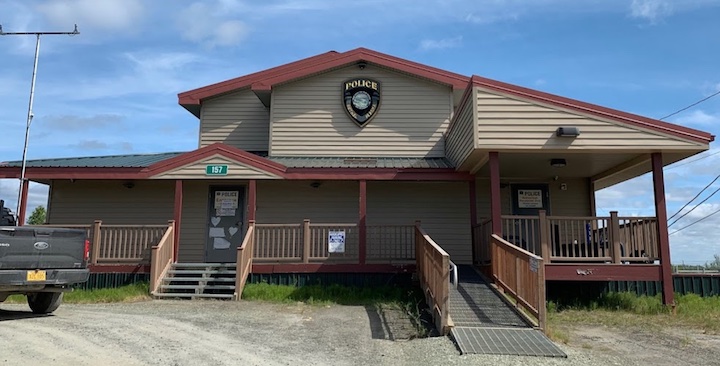
Bethel has a chronic police shortage. The city of 6,470 souls, on a good day, has trouble finding people to serve in law enforcement. The police department, always in recruitment mode, has a women and Native preference hire policy, and it’s now requiring all officers and staff to be vaccinated for Covid-19. That narrows things in a town that is a hub community for Western Alaska.
The vaccine mandate policy went into effect for all city workers on Sept. 27, and since then, Investigator Vincent Garay has been cooling his heels back in Wasilla, where he lives when not on his two-week shift. Half of the Bethel Police force lives out of Bethel, and several live in Georgia or Minnesota.
Garay, who immigrated from the Philippines decades ago, has served in law enforcement for 27 years. Last year, he joined the Bethel police force after serving as the chief of police in Fort Yukon. Much of the work in Bethel policing consists of dealing with drunks, drugged-out people, and domestic violence, but his work covers the gambit; earlier this year he was giving a commendation award for giving rides at a carnival in town so children could see the inside of the police car.
But as a devout Roman Catholic, he is declining to get the vaccine and he filed for a religious exemption. One of his colleagues asked for a religious exemption as well and was granted one. Garay’s request was turned down. Garay thinks it is because his colleague is nondenominational, while as a practicing Roman Catholic, Garay thinks his request was denied because the Archdiocese of New York has given approval for Catholics to take the Covid-19 vaccine.
Garay says it doesn’t matter what the New York Archdiocese says on the vaccine, or what the Pope says, for that matter. Garay believes that because the development of the vaccine used aborted fetal tissue, he won’t have it injected into his body. It’s contrary to his pro-life beliefs, grounded in his faith. He basis his belief on the New Testament Revelations 13 and the “mark of the beast.”
The mandate came down a few weeks after an initial action two months ago by the police department. All employees were divided into lists of “vaccinated,” “unvaccinated,” and “declined to say.” Garay declined to say.
Those in the category of “unvaccinated” or “declined to say” were mandated to be tested for Covid every time they started their two-week rotation.
But then came the new mandate covering all city employees: Vaccinate, or be placed on administrative leave for seven days, without pay. If the employee still refuses, he or she will be placed on 30-day administrative leave. After that, they won’t be scheduled to work; essentially, they will be fired.
Garay was placed on leave; his gun and badge were taken away from him. That’s never happened to him in his entire law enforcement career.
As of the Sept. 27 deadline, six City of Bethel employees faced being fired for refusing the vaccine. Before that deadline, seven police officers were not vaccinated, but now all but two have gotten the vaccine. One got a religious exemption, but not Garay. His was denied on Sept. 29 by the city’s Human Resources director.
Garay is not quitting. He will require the City of Bethel to fire him, if it comes to that. Four other employees of the city face firing, which is 5 percent of the city’s workforce.
“It’s about conviction,” Garay said. “I was born in the Philippines. I am Filipino Roman Catholic, ultra conservative. I don’t even eat an hour before receiving Holy Communion.” Garay has also asked for a medical exemption because of a severe allergy to aspirin. Although the vaccine for Covid doesn’t contain aspirin, he is taking no chances. His doctor would not sign the form after testing him for antibodies, so he withdrew his request for a medical exemption.
In addition to its hiring preferences for women and Natives, the Bethel Police Department posts itself as an Equal Opportunity employer, respecting all aspects of religious beliefs:
“In accordance with Title VII of the Civil Rights Act (Pub. L. 102-166), all applicants for employment with the City of Bethel shall be afforded equal opportunity in all aspects of employment without regard to race, creed, color, religion, gender, sex, gender identity, sexual orientation, age, national origin or ancestry, marital status, disability, political affiliation, genetic information, pregnancy, parenthood, veteran status, or any other status or condition protected under federal, state, or local laws.”
I like to think I am an optimist. Based on the overwhelming testimony I have heard against the proposed Anchorage Assembly ordinance AO 2021-91, I am optimistic that it will fail, as there are many things more dangerous than the Covid-19 virus, which has a 1.6% mortality rate for the entire population. For those under the age of 19, their Covid virus survival rate is 99.997% if untreated.
I want to believe the authors of the ordinance are just misinformed or unaware of these statistics. I’m clinging to the remote possibility that the writer of the ordinance will withdraw it before she rips this city to pieces, leaving a permanent scar on the history books that will be written about how Anchorage reacted to the Covid virus.
I am optimistic that there will be some acknowledgement of the physical and mental damage that has been done to our children who suffer through every day at Anchorage School District schools, wearing masks 6 to 7 hours a day. Perhaps they just need to be reminded of Alaska’s Chief Medical Officer, Dr. Anne Zink’s position on mask problems when she summarized the ill effects of breathing through a warm moist mask for hours on end day after day.
I would like to think that the passing of this ordinance won’t eventually lead to mandatory vaccines when the masks don’t work, as we have seen in this community and around the world.
I would like to think that hospitals and employers in general will stop using coercion and threat of termination to compel doctors, nurses and everyone to accept an injection that does not stop the spread of infection.
I’m optimistic that mandatory vaccines won’t lead to vaccine passports required to travel, like is being done in Canada and many other places ,or to enjoy the things like dining out or going to any public space as New York or to put our children in public schools, like they are doing in Los Angeles.
I’m hopeful that lockdowns will not be reinstated when the mask mandate proves ineffective. I’m optimistic that our freedom will not be restricted as it has been in Australia, and that our police force will not use rubber bullets tear gas and mace in the name of health and to keep us from gathering in public, moving about freely and venturing more than three miles from our homes.
I’m extremely optimistic that science will prevail and the ineffectiveness of a mask to stop a virus will be recognized and that Ivermectin and hydroxychloroquine will return to our pharmacies in Anchorage, as they are both proven therapies that keep Covid patients out of the hospital.
I’m really optimistic that natural immunity will be recognized for the superior protection that it provides against infection compared to current so called vaccinations and endless booster shots.
Being a generally positive person, I’m bothered a bit by the pessimism of this ordinance. This mask mandate has revealed an inherent distrust and dislike of the citizens of Anchorage by its authors. The authors might amend out the provisions that would turn neighbor against neighbor, but it is too late. In case there was any doubt, they have now been exposed for the pessimistic tyrants that they are. The authors are convinced that they know what’s best for the people who elected them to serve. I’m reluctantly optimistic that they will listen to the contrary view points expressed by their constituents.
If this was the only example of their behavior I would be more positive about the expected outcome of these assembly hearings and their intentions. But there are other measures and ordinances they put forth to transfer power from the executive branch to the legislative. They would vote themselves even more power than that, if they thought they could. I am unable to express much optimism that their thirst for power will be quenched any time soon. Ultimately however, I am optimistic that the security, integrity and faith in our election system will be restored and they will be replaced. I am optimistic because the majority of people in Anchorage elected Dave Bronson as our mayor!
The mask mandate is the first step down the slippery slope of tyranny. I would like to think that the Covid virus will someday go away and that elected officials and bureaucrats will stop using it as an opportunity for political gain. I continue to hold out hope that it will not lead to an irredeemable amount of authoritarianism.
Even if this ordinance passes, I am optimistic that the negativity behind its creation will fail. As I listened to the vast majority of testimony from the people of Anchorage against this ordinance, I am certain that this run at tyranny will fail, freedom will prevail and I am extremely confident the people of Anchorage will not comply with a medical device mandate issued by the tyrants who wrote it and those that might vote for it.
There are two kinds of people in the world, pessimists and optimists. The pessimist says “It can’t get any worse!” And the optimist replies. “Oh yes it can!” I guess by that definition I am indeed an optimist. I am sure that others are as well. Let’s stop the Anchorage authoritarians’ efforts right here and right now.
Dan Smith is a lifelong Alaskan and Anchorage resident.Public hearings on the mask decree continues at the Loussac Library on Monday, Oct. 4, at 6 pm.
A case of mistaken identity earlier this year led law enforcement officers to search and damage the home of Marilyn and Paul Hueper in Homer.
The couple was shocked and mystified that the federal agents left with their electronics, such as laptops, phones and tablets. Federal agents were convinced that Marilyn was the person who stole House Speaker Nancy Pelosi’s laptop during the Jan. 6 incursion into the U.S. Capitol by protesters of the Electoral College certification. They even told her so.
In the botched raid, the FBI broke through their door and, along with Capitol Police and other law enforcement, held them at gunpoint for hours before telling them what they were searching for: The Pelosi laptop. They took the Heuper’s copy of the U.S. Constitution with them as evidence against Marilyn Hueper.
The photo of Marilyn Hueper in Washington, D.C. on Jan. 6, on the left, and Maryann Mooney-Rondon, inside the Capitol, on the right.
Now, the Justice Department has unsealed charges against a New York mother and son, who is also accused of stealing an escape hood from the Senate Chamber and entering House Speaker Pelosi’s conference room on January 6.
Maryann Mooney-Rondon, 55, and her son Rafael Rondon, 23, were arrested Friday and appeared in Syracuse, New York before a judge, charged with helping to steal Pelosi’s laptop. Agents reportedly seized a sawed-off shotgun in the dwelling of Rafael Rondon during their arrest of the two. The two were released on pre-trial conditions.
The Watertown, N.Y. mother has admitted to helping steal the laptop by giving gloves and a scarf to a man who actually stole it, according to reports from Syracuse news media, whose source material were unsealed court documents. The son is also charged with stealing an “escape hood” from Pelosi’s office. Escape hoods have respiratory filters that give members of Congress about 30 minutes of protection from certain contaminants.
The most serious charge is obstructing an official proceedings. The six other charges are misdemeanors: theft of government property, entering a restricted building, disorderly conduct in a restricted building, illegally entering and remaining in the Gallery of Congress, illegally entering and remaining in areas of the Capitol Building; and disorderly conduct in a Capitol Building.
Since the federal raid of her home in Homer, Marilyn Hueper has been added to the TSA no-fly list and has said she feels targeted by law enforcement in her own home town, where she was stopped and accused of driving under the influence this summer, a charge she said was motivated.
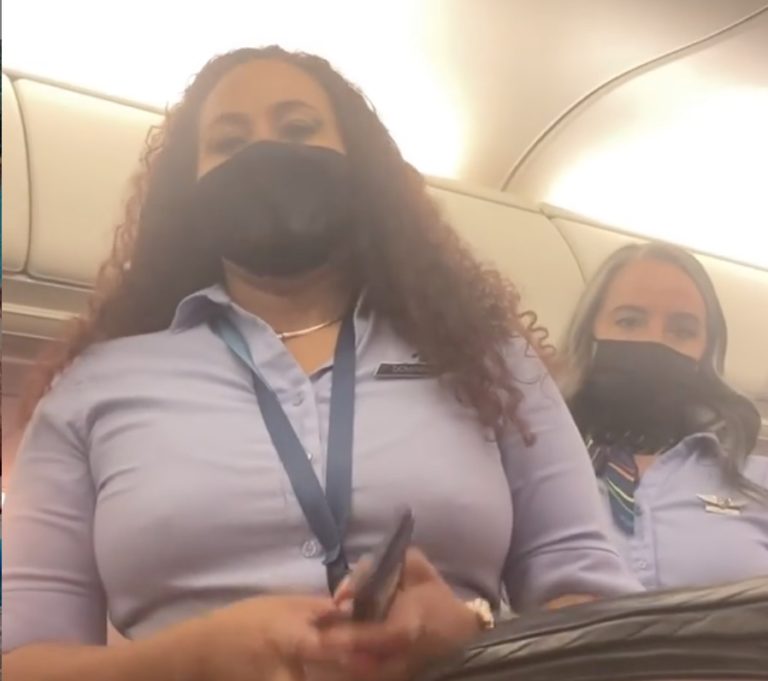
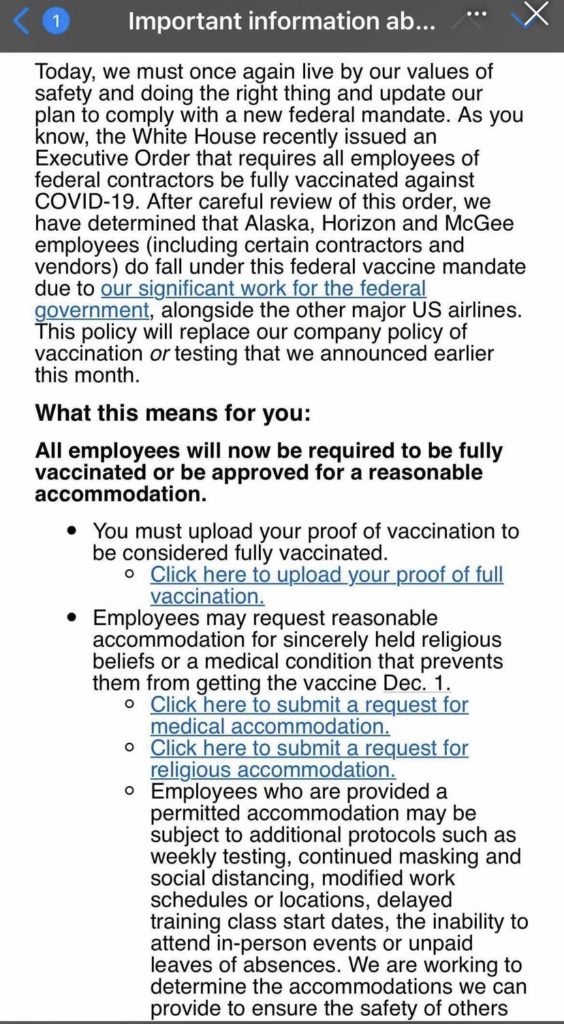
Alaska Airlines will require all employees to take injections of Covid-19 vaccine in order to keep their jobs.
The Seattle-based airlines has not set a firm date for when the requirement will be in effect, but said in an email to employees of Alaska Airlines and Horizon Air that they must either take the injection or receive an exemption from the company.
Those with an exemption granted may be required to be tested weekly for Covid or may be assigned different work environments, such as being segregated from other workers. Those who are not willing to take the injection will likely be given unpaid leaves of absence before being “not scheduled” for duty.
The company blames the new rule on the Biden Covid-19 vaccine mandate and says that it has numerous contracts with the federal government, which makes the mandate applicable to the company.
The shocking part of the Anchorage budget submitted by the new mayor is just how much was spent during the Berkowitz Administration. In short, spending exploded.
The Dan Sullivan Administration, which lasted from 2009 to 2015, left the Ethan Berkowitz Administration with an $18.1 million surplus over the 12 percent of savings known as the “fund balance.” That is the amount the city is required to have to cover bonds.
But the Ethan Berkowitz Administration in its six years spent it all down and then some. It left the Dave Bronson Administration an $18.9 million deficit in that fund balance this July, when Bronson took over. That’s a $37 million swing from a surplus to a deficit position in savings required by bondholders.
While spending went up by 20 percent during the Berkowitz Administration (including the eight months when Austin Quinn-Davidson was acting mayor), Mayor Bronson proposes to cut $7.5 million out of the next budget cycle. And there will be another $1.2 million in reductions in enterprise services; those are rates people pay that are governed by the Regulatory Commission of Alaska.
During the Berkowitz spending growth years, the Municipality of Anchorage’s population decreased from 299,330 to 285,400 residents. The Bronson Administration said it believes government should begin right-sizing unsustainable spending to reflect the decreases in population that have occurred.
“Upon taking office, my administration has been working to stabilize Anchorage’s fiscal future to ensure we steady the growth in government spending, right size our services through efficiencies, and better delivery of government services to the taxpayers and the residents of Anchorage,” said Mayor Bronson. “This budget reflects months of work across all departments to evaluate our programs and explore all possibilities to maximize savings. As a result, I sincerely believe we are on a strong glide path to a more effective and efficient MOA while maintaining the services Anchorage has grown to expect.”
“Now is the time to act, to eliminate the level of uncertainty Anchorage residents and taxpayers have felt for years. This budget is a call to action for us. I will continue to seek a decrease in government spending and seek to take the burden off the tax cap for all people of Anchorage,” Bronson said. “We don’t want our children and grandchildren to have to pay the debts incurred today.”
The 2022 proposed budget is $550 million, a reduction in spending from the 2021 actual spending.
These reductions were achieved by implementing efficiencies in operations and eliminating a number (53 total) of non-essential positions, including 34 vacant positions and 19 currently occupied positions, the Mayor’s Office said. People in positions subject to elimination will have the opportunity to obtain employment with the Municipality of Anchorage.
Key items of interest in Mayor Bronson’s 2022 budget:
Threats are being made online against Mayor Dave Bronson.
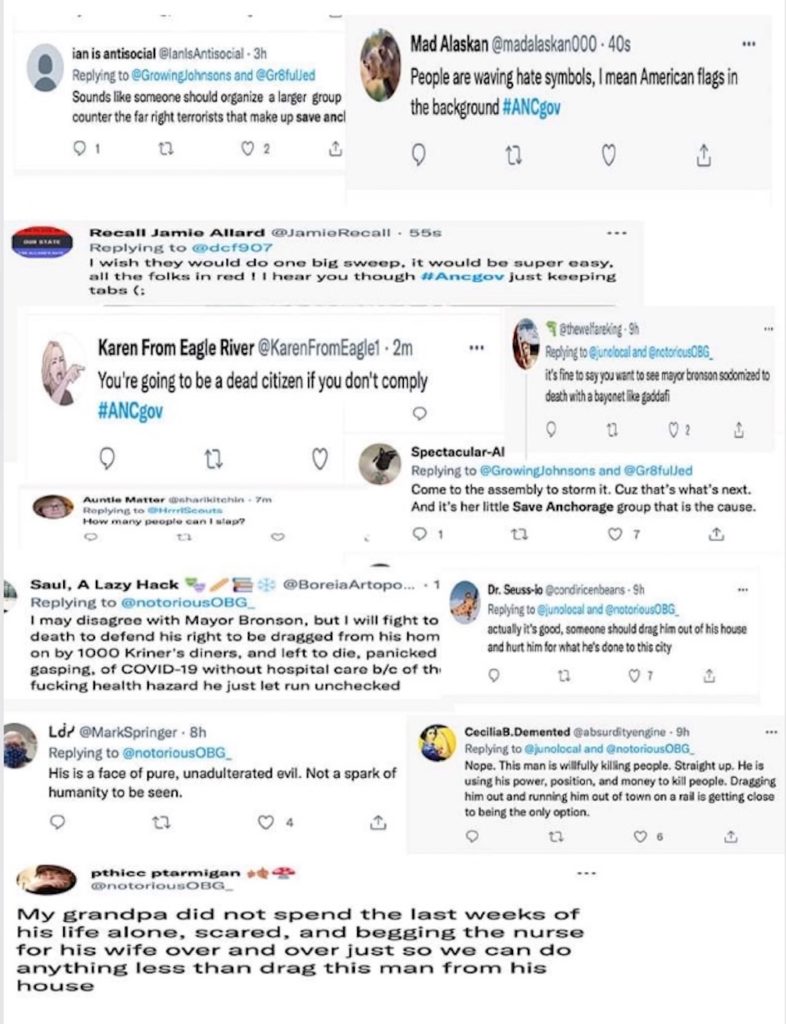
Among the worst of the threats came from a Twitter thread of comments started by Olivia Garrett, who was a legislative aide for Sen. Scott Kawasaki in 2017 and was at the center of a “me too” scandal that took out the career of Democrat Rep. Dean Westlake. She later was a organizer with the Alaskans for Bernie Sanders and was a 2016 delegate to the Democratic National Convention.
Garrett wrote that the mayor of Anchorage needs to be dragged from his house.
“My grandpa did not spend the last weeks of his life alone, scared, and begging the nurse for his wife over and over just so we can do anything less than drag this man from his house,” Garrett said, commenting on an Anchorage Daily News story about Mayor Bronson and his stance against universal masking of Anchorage residents.
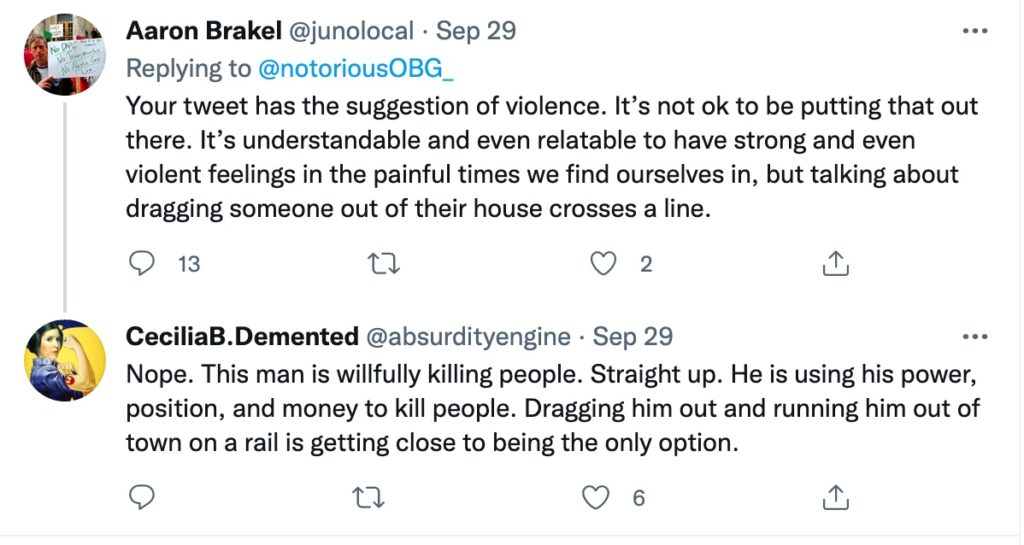
Others chimed in. One associate of Garrett’s said that Garrett should delete the message because it advocates violence. She retorted that she’ll cyberbully anyone she wants. There was an F-bomb involved in her retort.
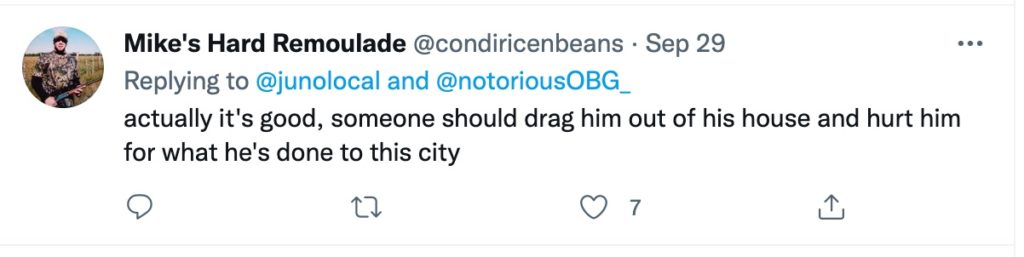
Another man said dragging Bronson from his house was not enough.
Yet another Twitter user said, “I may disagree with Mayor Bronson, but I will fight to the death to defend his right to be dragged from his home by 1000 Kriner’s diners, and left to die, panicked and gasping, of COVID-19 without hospital care b/c of the fucking health hazard he just let run unchecked”
Even the @JamieRecall Twitter account got in on the act.
An account run by CeciliaB.Demented wrote, “Nope. This man is willfully killing people. Straight up. He is using his power, position, and money to kill people. Dragging him out and running his out of town on a rail is getting close to being the only option.”
“it’s fine to say you want to see mayor bronson sodomized to death with a bayonet like gaddafi,” one Twitter user offered.
An account run by Mark Springer, formerly chair of the Marijuana Control Board who is s running for reelection to City Council in Bethel, wrote “His [Bronson] is a face of pure, unadulterated evil.”
The eighth floor of City Hall has also been subject to threats and Municipal Manager Amy Demboski said security measures are now being taken and upgraded, although she declined to elaborate. But there have been incursions from people trying to barge into the mayor’s office. Once, she had to use her body to block a man at the mayor’s conference room door.
The mainstream media has focused its attention on protesters of the proposed Anchorage universal mask law, after they wore yellow stars to protest fascism, which they feel begins with things like Anchorage Ordinance 2021-91, which gets people to report to authorities on those who disobey the mask law. The media has ignored the actual threats of violence against the mayor, however.
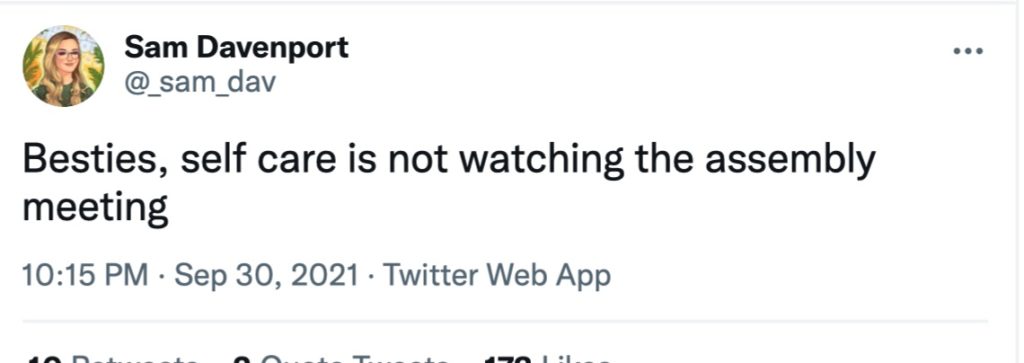
Helpfully, reporter Sam Davenport had a suggestion for the violence frenzy, telling people the best thing for their mental health was to not watch the Assembly meeting:
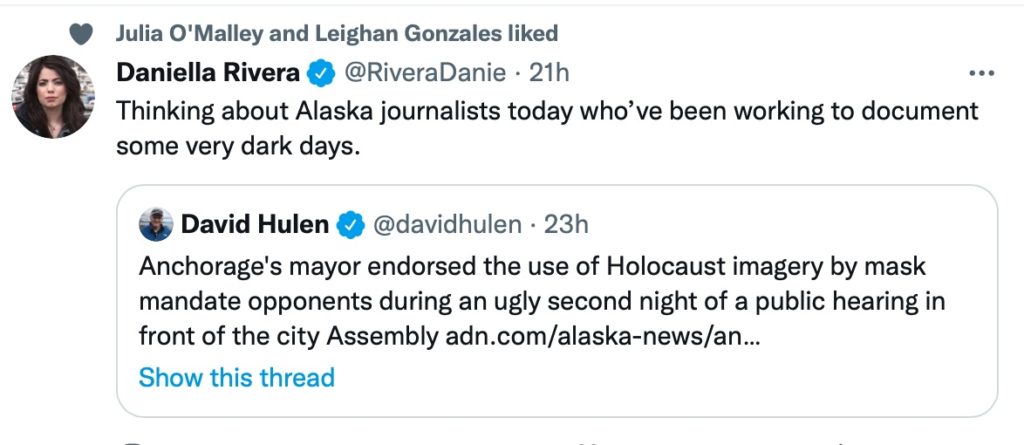
Journalists Dave Hulen of the Anchorage Daily News, and Daniella Rivera, formerly of Alaska’s News Source, focused on the protesters and how tough this all is on journalists, with a dog-whistle to the Twitter mob:
In a third night of testimony, the Anchorage Assembly continued to get an earful about a proposed mask ordinance, that would require all in Anchorage over the age of 2 to mask up — or else. The “or else” part depends on people ratting each other out to the authorities and facing fines of $300 for a first offense.
The Assemblywoman Meg Zaletel proposed penalty for not wearing a mask would also to have a smudge on one’s record for creating a public health nuisance. All of this has been cooked up by the leftist on the Assembly, led by Zaletel, who is refusing to show up to meetings until everyone is masked, and properly spaced to her satisfaction.
At least 40 minutes of the Thursday meeting was spent in parliamentary procedural disagreements, as Assembly Vice Chair Christopher Constant repeatedly attempted to prevent Assemblywoman Jamie Allard from asking questions of the testifiers. Constant said was purposefully trying to slow things down. Allard responded with her own parliamentary procedures, trying to override Chairwoman Suzanne LaFrance, who was siding with Constant.
Constant’s word of the night was “dilatory,” the purposeful delaying of the proceedings.
The matter kept being referred to the Assembly’s Attorney Dean Gates, who was befuddled and unable to answer the questions being asked of him on the ruling of the chair; Chair Suzanne LaFrance sided with Constant at every turn.
In the end, the Assembly had burned up more on the clock debating whether asking questions of the testifiers was dilatory than they would have if they had just allowed Allard to ask the questions, which is a long-standing practice in the Assembly.
Constant and Kameron Perez-Verdia also tried to limit the way that testimony was given, saying that many of them strayed off the topic of the mask and into things like vaccines. Only 35 people were allowed to testify on Thursday in a meeting that stretched six hours.
Assemblywoman Crystal Kennedy argued that the “Whereas” clauses in the ordinance were so sweeping, that people should be allowed to testify on any range of topics that were covered by them, but the leftists on the Assembly continued to interrupt testimony, saying it was not relevant.
Although the testimony was passionate, it was not as raucous as the nights prior. The line remained long at the end of the meeting, which was continued to Monday night at 6 pm for still more testimony.
The reason Chair LaFrance stopped kicking people out of the chamber for clapping is because the Assembly’s attorney advised her to stop doing it. Unlike previous nights, LaFrance on Thursday asked people to stop clapping but she refrained from having security guards remove them for clapping, or having police trespass them off the public property. The attorney warned LaFrance she was infringing on the public’s constitutional rights by throwing them out of the meeting and would not win in court, should someone sue her.
A three-minute clip from the last piece of testimony of the night from a cancer patient’s perspective is a must-see, as Mayor Dave Bronson intervenes to ensure the woman can finish her heartfelt, difficult testimony (many more clips of the week’s testimony at the Must Read Alaska Facebook page: