WEKA, which operates a monoclonal antibody infusion center at the former Golden Lion Hotel on 36th Avenue, has been open since early October, and has been collecting voluntary data from Covid patients who have received the treatment and are offered a survey.
To date, the survey suggests that a majority of people coming into the center for the treatment have already been vaccinated for Covid-19, and yet have become infected and are checking in for the treatment, the goal of which is to help prevent hospitalizations, reduce viral loads, and lessen symptom severity.
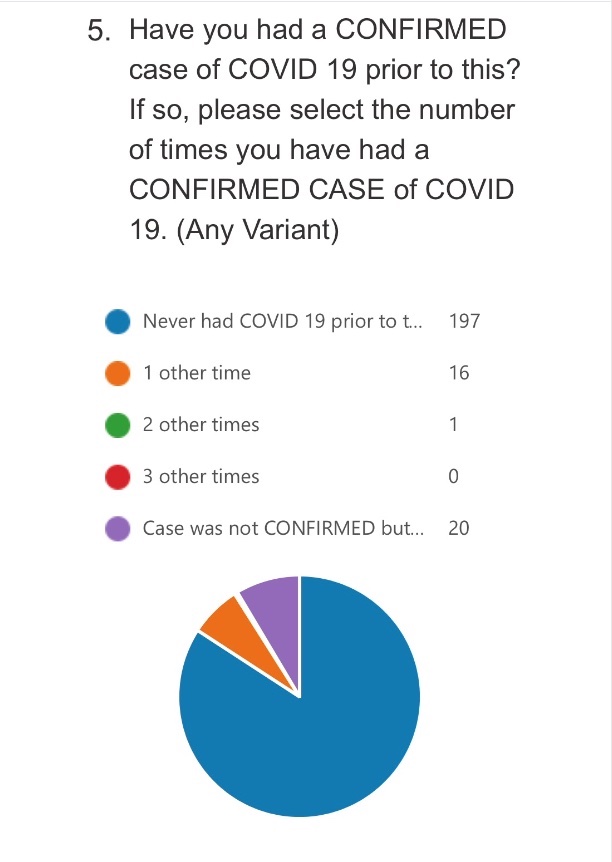
According to information obtained by Must Read Alaska, out of 235 patients who took the post-therapy WEKA survey, 197 had never had Covid-19 prior to the infection that led them to theWEKA center.
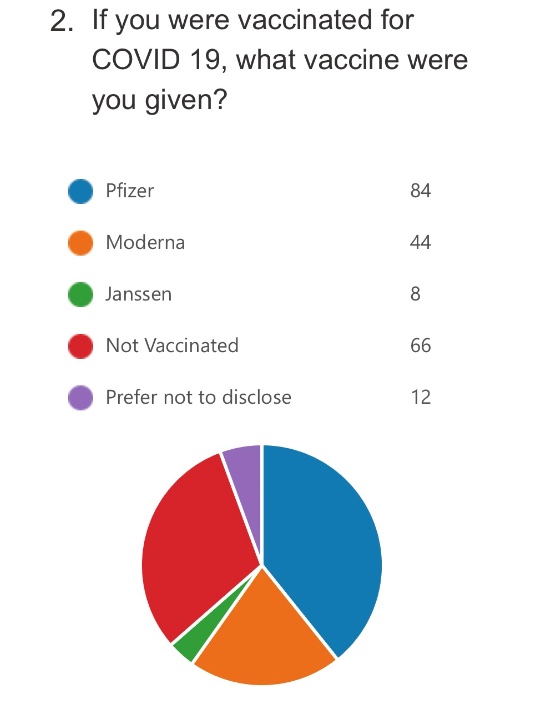
The takeaway is that of the 237 people who were treated for Covid with MAB, 135 were vaccinated (109 of which were vaccinated twice), and only 65-89 were unvaccinated. The conclusion may be that the pandemic is not among the unvaccinated, as President Biden claims.
The survey was voluntary and some of the participants did not answer all questions the same way.
For these clients, most had been vaccinated. Out of the 235 clients, 70 had not been vaccinated, while 125 had been vaccinated. That means 30 percent of the clients have been unvaccinated, while over 53 percent of the clients had been vaccinated. Three could not recall, and 12 preferred to not disclose their vaccination status.
Of the ones who had been vaccinated, 109 of them had received two doses of a two-dose series. Twelve more had had the two doses plus a booster shot.
The survey points to the increase in breakthrough cases of Covid, which is a phenomenon that has been characterized by medical officials at the CDC as rare.
“However, vaccine breakthrough infections occur in only a small fraction of all vaccinated persons and account for a small percentage of all COVID-19 cases,” the Centers for Disease Control and Prevention reports on its website.
Monoclonal antibody treatment is only available for those with a positive Covid diagnosis, and not all who sign up for it are eligible.
Monoclonal antibody treatment is available to individuals who:
Are high risk for developing severe Covid-19 and
Have a positive Covid-19 test and have not yet been admitted to the hospital and
Are 12 years of age or older (and at least 88 pounds) and
Are suffering from mild to moderate Covid-19
Contact the WEKA website if you get a positive test for Covid and are not needing hospitalization.
Up to 30 students in West High School were engaged in a brawl Monday that ended up putting that school and nearby Romig Middle School into “stay put” mode for several hours in the afternoon.
School officials reported there were no serious injuries, and a few minor injuries. Principal Svend Gustafson said there were no weapons involved.
Must Read Alaska sources said it was an inter-family brawl among of Polynesian students and that without the school safety officers, people may have been killed. It’s unclear if the students were of Samoan, Tongan, Hawaiian, or other islander heritage, and the officials did not refer to this aspect of the incident.
According to an eye witness, there was blood all over the hallways, which is one reason they didn’t let students go to their fourth-period classes. Police presence remained for several hours.
West High School, the oldest of ASD’s eight major high schools, has an enrollment of about 1,800 students, which means more than one out of every 100 students at the school was involved in the lunch hour fight, which started in the cafeteria. There are about 125 faculty members at the school.
A filing today in court reinforces the argument that Ballot Measure 2, which remade Alaska’s election laws, is unconstitutional.
The brief was filed by former Lt. Gov. Mead Treadwell and former State Rep. Dick Randolph, who are represented by former Attorney General Craig Richards of Anchorage, and lawyer Daniel Suhr of the Liberty Justice Center of Chicago.
The appeal says that because Alaska is a younger state and its constitutional convention was more recent than other states, there are a plethora of documents available to understand what the authors of the Alaska Constitution meant when designing Alaska’s election system.
“…courts and counsel have a myriad of resources to know exactly what the delegates thought as they crafted the state’s founding charter. The journal, the staff reports, the committee drafts and notes, the models from other states, all are available in PDF at the click of a mouse,” the court filing says.
“Here, those reams of historical materials all point to a single definitive conclusion for this case: major portions of the recently adopted Initiative 2 transforming Alaska elections are entirely unconstitutional. The voters were closely split on whether the reforms adopted in Initiative 2 are good policy, but both the courts and the statutory initiative process ‘have no power to rewrite constitutional provisions no matter how clearly advantageous and publicly supported a policy may appear to be,'” the appellants say in their brief.
Last November, with millions of dollars spent to convince voters to upend the primary and general elections, Ballot Measure 2 passed, ushering in a voting method that eliminates the primary election in its traditional sense. The current August election is not a primary at all, but has all names on a single ballot regardless of party, with the top four vote-getters advancing to the General Election, where they battle it out in a ranked-choice ballot scenario. Such a scheme has never been tried before anywhere in America.
It’s not constitutional, Treadwell and Randolph argue.
“Courts must enforce the Constitution as written, and the people may only change it by going through all the safeguards of the amendment process,” their brief says.
“Initiative 2’s election procedures are incompatible with that that Constitution. Instant Runoff voting for the office of governor is incompatible with the plurality principle embedded in the state constitution, and Initiative 2’s failure as to the governor’s office cannot be severed from other offices. Similarly, the non-party primary is incompatible with the design of the governor-lieutenant governor ticket in the state constitution, and this failure cannot be severed from other offices,” it continues.
“The non-party primary also violates the freedom of association for political parties built into the structure of the state constitution’s design for elections. For these reasons, much of Initiative 2 must be enjoined as violative of the state constitution,” it says.
Article III, Section 8 of the Alaska Constitution requires that the governor be elected by a plurality of voters, not a majority as required by Initiative 2. That makes. BM-2’s instant-runoff voting for governor unconstitutional.
The appellants say that the meaning of the Constitution is clear: “‘The greatest number of votes’ means a plurality of votes. Black’s Law Dictionary 955 (6th ed. 1990) (‘when there are more than two competitors for the same office, the person who receives the greatest number of votes has a plurality, but he has not a majority unless he receives a greater number of votes than those cast for all his competitors combined.'”).
Treadwell and Randolph also argue that even if ranked-choice voting is considered a “method of voting,” it still must abide by other constitutional provisions.
“If the Alaska Legislature passed a law excluding a group of people from voting based on race, to pick an extreme example, that would clearly violate Article I, Section 1 of the Alaska Constitution (‘all persons are equal and entitled to equal rights, opportunities, and protection under the law’) even if it were a “’method of voting . . . prescribed by law.’ The point is that any new ‘method’ or ‘system’ of voting, like instant-runoff voting, must be consistent with the other provisions of the Constitution, including the plurality requirement of Art. III, Sec. 3,” they say.
The Constitution’s authors were cognizant that at times people are elected with a plurality and not a majority, and yet accepted this method for Alaska:
“This language requiring only a plurality to elect the governor reflected a conscious choice on the part of the delegates. In the pre- convention materials provided by the Public Administration Service, the delegates were advised: ‘In all states the governor is elected by popular vote. In most states the candidate receiving the highest number of votes is elected, even if that is less than the majority of the total vote. Under the two-party system, plurality elections usually give the same results as a majority requirement. But with three or more candidates, the election might go to one receiving less than an absolute majority, and a few states have special provisions for such a contingency.'”
Treadwell and Randolph are entering the case with an amicus brief; the original case was brought by Scott Kohlhass, a libertarian who has run for office several times.
State and intervener briefs are due Dec. 6, and the case is scheduled for oral arguments on Jan. 18. The Treadwell-Randolph amicus brief in its entirety:
Kirsten Giesler, owner of Be-Well Medicine & Functional Medicine of Alaska in Kenai, has been seeing hundreds of patients via Zoom (teleconferencing), and has been prescribing a course of treatment for Covid-19 that mainstream doctors have criticized.
Giesler, who is a prescribing nurse practitioner, last week published results that speak to the possible successes of the treatment protocols that she and other groundbreaking medical professionals are using, sometimes called Frontline Covid Critical Care Alliance protocols:
During a four week period, she saw 184 patients related to Covid-19, with most of them seeking help with Covid.
95 of the 184 total patients were seeking prophylaxis treatment, in other words, some advice and help before getting Covid. Nearly 52 percent of her patients were seeking this assistance.
89 of those 184 patients were actively sick with Covid, all now improving.
2 patients were suffering from Covid vaccine issues, both now improving.
62 patients came to Giesler for early treatment (less than 5 days into Covid infection) which is 33.70 percent of total seen or 69.66 percent of of the 89 sick patients seen.
20 of her patients came for late treatment (they had had Covid for more than 5 days) which is 10.87% of total seen or 22.47% of the 89 sick patients seen.
5 of her patients were “long haul” Covid patients, (having been suffering for more than 11 days), which is 2.72% of total seen or 5.62% of the 89 sick patients seen.
29 of her patients were sick and vaccinated, which is 15.76% of total seen or 32.58% of the 89 sick patients seen.
60 of her patients were sick and not vaccinated, which is 32.61% of total seen or 67.24% of the 89 sick patients seen.
54 of her patients were vaccinated, over 29.35% of total patients seen.
130 of her patients were not vaccinated which is 70.65% of total patients seen.
“Many of the Covid cases I’ve seen in my community are eating a standard American diet and little to no supplements,” Giesler said. She encouraged Alaskans to eat a plant-rich and paleo (unprocessed food) diet, and said the patients she has who are eating healthy are not getting as sick, and are recovering faster. Giesler advises that Alaskans load up on Vitamin D, Zinc, and other nutrients and nutraceuticals she has on her list to prepare their bodies for the attack that the coronavirus makes on their immune system.
These two literary fables, “How Swan Found Happiness” and “The Quarrel between Sun and Moon,” are incorporating the style and motifs found in the northern oral narratives. The main purpose of these fables is to explain, to teach, and to exemplify how to behave in society.
Although my literary tales do not provide an authoritative moral code by which to live, they convey a moral directive in imploring readers to examine the extent to which we humans are victims of circumstances versus the extent to which we are the makers of our own destiny.
While written in a traditional style, my tales contain lessons relevant to today’s social and political challenges, such as regional conflicts and territorial disputes, displacement of people from their homelands to foreign lands, adaptation to new social and physical environments, and the search for happiness, faith and peace in the turbulent and ethnically diverse global society in which we now find ourselves. In other words, how we might begin to get along with one another and understand, respect, and tolerate our neighbors’ traditions, beliefs, customs, accents, and rights, while at the same time preserving our own unique ethnic identities and core cultural values.
How Swan Found Happiness
This happened long, long ago, when people lived off the gifts of the land and sea, when winter did not quarrel with summer, and when Rivers of Ice (majestic glaciers) proudly stood in the mountain valleys. In those faraway times, Raven reigned as master of the sky; Wolf prowled deep into the tangled forest; Beaver swam unbothered in the secluded ponds; and Fox hunted freely alongside the flowing brook. All of these creatures lived where they should be living, where their ancestors, after living there many long years, had left them a memorable legacy. They were at home.
Only white Swan was a stranger in this faraway land, struggling to find his natural place. A ferocious wind had blown up from the sea and swept him away from his native flock, carrying him far inland into this strange land. When he tried to rest in a forest meadow, Raven would screech down at him and Wolf would chase after him. If he landed in the middle of the pond, Beaver would threaten him and chase him off, too. When he landed on the river, Fox, fussing about on the bank, would rush toward him, defending her burrow from the foreign white bird.
So, it was that Swan found himself hurrying from one place to another in search of a welcoming, compassionate, cozy home—in search of happiness.
Owl, noticing the lone Swan flying about unable to find his place, spoke to him. “Listen, Swan, you will never find peace on this land that is so strange and foreign to you. You will never find love and happiness here. You should fly away to another place.”
Ruffling his feathers, Swan replied, “And where would I fly to? A wind from the sea carried me here against my will. It took me away from my native flock. Time will pass,” he assured Owl, “and my forest neighbors will become friendly. One day, they will accept me into their world.”
Owl listened attentively, turned his head to the right, then to the left, peered at Swan with huge round eyes, blinked, and said, “Come see me in the spring, when the salmonberries begin to ripen and the red salmon are just about to swim up the river to spawn. If by spring you have found happiness, a new home, and love in this land, I’ll give you my respect. If not, I’ll give you my advice.”
Swan flew away into the cold winter. For months he hid in the forest out of sight of the animals, away from their homes. When spring arrived, he flew back to where he had met Owl and confessed to him, “I’m so tired. I haven’t been able to find happiness, a new home, and the love of others in this land. Tell me what to do! Where should I go? Where should I live?”
Owl pondered for a moment and replied, “To find the happiness you seek, you must overcome your fears. You will be tested three times. Each time you must defeat evil and cowardice with kindness and bravery. Here is my feather. Fly wherever it flies and stop wherever it stops.”
The feather took flight, sailing off toward the setting sun, Swan flying along behind it. How long they flew, who can say? They flew across seven forests. The feather flew ahead, finally alighting in a forest meadow. Landing behind it, Swan caught sight of Wolf sitting still in the meadow. His leg was caught in a trap! Seeing Swan approaching, Wolf growled softly at him, then yelped in pain.
Having no choice, Wolf begged Swan to help him get free from the trap. Swan pricked up his ears, thinking: “He chased me out of the forest. He wanted to rip me to pieces, to shred me. How can I trust him? I will only make myself easy prey for him! But, if I help him, maybe we will become friends, and he will share with me his forest home.” Swan wanted to trust Wolf, but he was afraid. Wolf yelped in pain again. He looked at Swan, his eyes filled with desperation. “I must help him, even if he might try to tear me to shreds,” decided Swan.
Swan approached the howling Wolf. Using all of his strength, he pressed his beak between the trap’s jagged jaws and pried with all of his might, until at last the trap sprung open, freeing Wolf’s leg. Wolf stood up on all fours and limped away. At the forest’s edge, he turned and smiled his thanks to Swan.
Owl’s feather took to the sky again, and Swan followed. They flew across seven lakes. The feather, light as a faded autumn leaf, softly descended onto a lonely, sleepy lake. And so did Swan. Swan’s heart began pounding when he heard Beaver’s tail slapping the water nearby. “Oh, Beaver will attack me and kill me,” frightened Swan whispered to himself, as he paddled quietly to the edge of the lake to hide in the tall grass.
Beaver was building a dam. But spring thaw had brought a flood. No matter how many sticks and branches Beaver put in place, he could not stop the water that poured out of the lake and into the stream. Swan watched as Beaver swam back and forth with branches, crawling along more and more slowly with each trip as he ran out of energy; he could not do it by himself. Swan knew if Beaver did not get his dam built, he would never survive the cold winter.
So, Swan said to Beaver, “I can help you build the dam. I can bring you many twigs and branches, and together we will stop up this stream. And for my help, maybe you’ll allow me to live on this lake.”
In response, Beaver turned his back and set off to weave some branches into the dam. “Well,” contemplated Beaver to himself, “I can’t do this by myself. I need help. The lake is big, enough for two.” Turning back to Swan, Beaver indignantly muttered, “Fine, help me. And you can live here, too. But only at the other end of the lake.” Beaver then sank into the water and continued his work.
Swan brought many twigs and branches. Working together, Beaver and Swan built a dam so strong no flowing stream could penetrate it. Swan watched as Beaver used his last ounce of energy to dive down and crawl into the safety of his dam.
The feather flitted off over Swan’s head, again floating in the direction of the sunset. Swan took flight behind it. They flew across seven rivers. The feather landed on the bank of a tumbling brook, with Swan landing beside it, not far from Fox’s den. Spotting Swan, Fox, fearing for her kits, began to fuss. She tried to fool Swan, walking slowly away in hopes of enticing the white bird away from the den.
“Don’t be afraid of me,” pleaded Swan. “I have landed here in search of happiness, and not to get your kits. I’ll be a kind and true neighbor; I’ll protect your den.”
Swan turned to Fox for an answer, but Fox squinted her eyes and looked back at Swan in puzzlement. “Protect us?” she wondered. “That strange white bird could be trying to trick me. But, then, he does seem to be sincere.”
“I’ll warn you of danger from the sky and bravely defend your home and your kits,” continued Swan.
“Swan would be able to see everything from up in the sky,” considered Fox. “Indeed, he could be a very helpful neighbor and is too proud and trustworthy for deceit.”
“All right, I’ll share this place with you, but right now I need to go hunting,” she said, running off into the woods.
“What’s that?” Swan puzzled. Suddenly he found himself standing right at the very place Owl’s feather had first flown from in search of happiness. All around him, on the lakes and ponds, water lilies burned fire red, birds sang… And directly in front of him stood a female Swan of unusual beauty. He had never seen such a graceful swan in all his life. Behind the female Swan sat Owl, looking at him with frank admiration.
“In following the feather, you feared nothing; you listened to your heart, not your fears,” said Owl. “You withstood all tests and challenges. You defeated evil with good deeds. By offering help, you gained friendship; and by your courage, you acquired freedom. Thus, you have found happiness, love, and your home.
”The two swans thanked Owl for his wisdom and good words. They spread their wings wide, and together flew into the unbounded blue sky, over the forests, lakes, and rivers—their new place.
So, the two swans became mates. They loved each other and lived happily in their new home for many, many years.
The end.
The Quarrel between Sun and Moon
So, it was. One time, Sun and Moon got into a quarrel about who was more important and who should be the master of Earth.
Said Sun to Moon: “When I rise, every living thing on Earth rises with me—the people, animals, forests, and fields. I bring them warmth and light. Every living thing originates from me and every living creature depends on me. Without me, there would be no life.”
Moon replied, “And when you disappear beyond the horizon, I come to replace you. I bring quiet and comfort to all. The oceans and seas are attracted to me with their incoming and outgoing tides. I reveal the stars in the heavens. At night, I become a beacon for all living creatures, a compass for people and animals. Without me, there would be no life.”
Sun and Moon argued endlessly on and on, neither able to convince the other who was more important and who deserved to rule Earth. They were so stubborn, they could hear only their own voices; neither could hear the other’s reasons.
Finally, growing tired of arguing, they agreed to ask Day and Night to decide which of them was more important.
“Day—tell us. Which of us is more important? Who has the right to be the master of Earth? Sun or Moon? You decide!”
Lit up in bright, iridescent colors, Day, drawing from his own brilliant insight, pondered the questions and replied, “From sunrise to sunset, I see Sun; I encounter only him. He brings light, warmth, joy, and energy to all. Yes, yes, sometimes he does also bring misfortune—drought, harsh heat, fires . . . But without Sun, I would not have a place on Earth! Yes, Sun is more important. Sun should be the master of Earth!”
Sun smiled at Day with gratitude, glowing yet brighter from a thrilling pride. “Yes, I am more important,” he muttered to himself giddily.
Sun and Moon then turned to Night.
“Night—tell us. Which of us is more important? Who has the right to be the master of Earth? You be the judge!”
Night grew dark, then even darker—pitch dark, becoming quiet, like a dove. Then said Night in a soft voice, “From sunset to dawn, I see only Moon. I live alone with Moon and all of the stars. Moon brings serenity, rest, and mystery, and, after sunset, she lights the Earth. Yes, sometimes her tides are too high. And sometimes she disappears, leaving the world in darkness.”
Night’s voice was so quiet and calm, Sun, Moon, and Day had to lean in to hear it. “But without Moon,” continued Night, “I could not exist! She is my partner and my neighbor. Moon is worthier. Moon should rule Earth!”
Shining bright and full, Moon glanced at Night gratefully; and with a newfound confidence Moon whispered under her breath, “Yes, sometimes a whisper speaks louder than a shout. All in all, I am more important!”
Thus, Sun and Moon failed to resolve their argument. They did not know whom to ask or where else to turn for advice.
Hovering silently nearby, Wind, hearing the quarrel of Sun and Moon, grew exasperated by their pride and arrogance. Suddenly blowing in from all directions, Wind addressed Sun and Moon in a loud voice, “I exist in all regions. I travel everywhere. I gather clouds that neither of you can penetrate, devastating Earth at will with hurricanes, storms, and tornadoes. When I come with my frost, I freeze the entire land. I cover the rivers and lakes with ice. And when I arrive with snow, I cover all of the land with it. I hide everything under the snow. But I also bring cool, drying breezes and caress all living creatures.
“I watch over you from all remote corners of Earth during both day and night. I scatter clouds to reveal your beauty and power. If not for me, you would remain hidden behind the clouds forever. Indeed, without any one of the three of us, there would be no life on Earth.
“Who of you is more important, you ask? I’ll tell you,” Wind resumed. “To me, everything is equal and everyone is important. But it is the one who lives in peace, the one who appreciates others and treats them with kindness, and who endeavors to make life better for everyone—that one is worthiest!”
Embarrassed, Sun and Moon lowered their heads. Memories of their long debate now filled them with shame. “So, how should we settle our argument? How can we once again find peace between us? Doesn’t someone have to be the master of Earth?” they asked Wind sheepishly.
Wind stepped back and drew a deep breath. Puffing up his powerful cheeks, his huge round eyes of an ox wide and bulging, he looked at Sun and Moon with a penetrating stare.
“You agree between yourselves,” he spoke. “Day is for Sun. And Night is for Moon.”
Sun and Moon lowered their eyes; they stood silent and still.
“You are both important and worthy,” continued Wind. “Each of you is the master of your own realm. Live in this world in peace—for yourselves and for others!”
And that’s all.
Alexander B. Dolitsky was born and raised in Kiev in the former Soviet Union. He received an M.A. in history from Kiev Pedagogical Institute, Ukraine, in 1976; an M.A. in anthropology and archaeology from Brown University in 1983; and was enroled in the Ph.D. program in Anthropology at Bryn Mawr College from 1983 to 1985, where he was also a lecturer in the Russian Center. In the U.S.S.R., he was a social studies teacher for three years, and an archaeologist for five years for the Ukranian Academy of Sciences. In 1978, he settled in the United States. Dolitsky visited Alaska for the first time in 1981, while conducting field research for graduate school at Brown. He lived first in Sitka in 1985 and then settled in Juneau in 1986. From 1985 to 1987, he was a U.S. Forest Service archaeologist and social scientist. He was an Adjunct Assistant Professor of Russian Studies at the University of Alaska Southeast from 1985 to 1999; Social Studies Instructor at the Alyeska Central School, Alaska Department of Education from 1988 to 2006; and has been the Director of the Alaska-Siberia Research Center (see www.aksrc.homestead.com) from 1990 to present. He has conducted about 30 field studies in various areas of the former Soviet Union (including Siberia), Central Asia, South America, Eastern Europe and the United States (including Alaska). Dolitsky has been a lecturer on the World Discoverer, Spirit of Oceanus, andClipper Odyssey vessels in the Arctic and sub-Arctic regions. He was the Project Manager for the WWII Alaska-Siberia Lend Lease Memorial, which was erected in Fairbanks in 2006. He has published extensively in the fields of anthropology, history, archaeology, and ethnography. His more recent publications include Fairy Tales and Myths of the Bering Strait Chukchi, Ancient Tales of Kamchatka; Tales and Legends of the Yupik Eskimos of Siberia; Old Russia in Modern America: Russian Old Believers in Alaska; Allies in Wartime: The Alaska-Siberia Airway During WWII; Spirit of the Siberian Tiger: Folktales of the Russian Far East; Living Wisdom of the Far North: Tales and Legends from Chukotka and Alaska; Pipeline to Russia; The Alaska-Siberia Air Route in WWII; and Old Russia in Modern America: Living Traditions of the Russian Old Believers; Ancient Tales of Chukotka, and Ancient Tales of Kamchatka.
Climate change is an anti-developer’s dream. It’s a topic everyone is familiar with and it can assign dire warnings to virtually anything, because it is a prediction of the future.
Remember I asked you to develop your own filter so you can pick your experts? Before you panic, check if the source has correctly predicted anything. Nonetheless, regulations have been established that account for that fear-based future. I’ll introduce one in a bit. In the meantime, recognize this about the future. Identify and examine these last ditch arguments about development projects in Alaska.
“Well it might be alright for now, but what about the unknowable future?”
The predictions have been all wrong for generations. From the Competitive Enterprise Institute, just a few of the more flamboyantly wrong predictions:
1966: Oil gone in 10 years
1967: Dire famine by 1975
1968: Overpopulation
1969: Everyone will disappear in a cloud of blue steam by 1989
1970: World will use up all its natural resources by 2000
1970: Urban citizens will require gas masks by 1985
1970: Nitrogen buildup will make all land unusable
1970: Decaying pollution will kill all the fish
1970s: Killer bees!
1970: Ice Age By 2000
1970: America water rationing by 1974 and food rationing By 1980
1971: New Ice Age coming by 2020 or 2030
1972: New Ice Age by 2070
1972: Oil depleted in 20 years
1974: Space satellites show new Ice Age coming fast
1977: Department of Energy says oil will peak in 1990s
1978: No end in sight to 30-year cooling trend
1980: Acid rain kills life in lakes
1980: Peak oil in 2000
1988: Regional droughts (that never happened) in 1990s
1988: Temperatures in DC will hit record highs
1988: Maldive Islands will be underwater by 2018
1989: rising sea levels will obliterate nations if nothing done by 2000
1989: New York City’s West side highway underwater by 2019
1996: Peak oil in 2020
2000: Children won’t know what snow is
2002: Famine in 10 years if we don’t give up fish, meat, and dairy
2002: Peak oil in 2010
2004: Britain will be Siberia by 2024
2005: Manhattan underwater by 2015
2006: Super hurricanes!
2008: Arctic will be ice free by 2018
2008: Al Gore predicts ice-free Arctic by 2013
2009: Prince Charles says we have 96 months to save world
2009: UK Prime Minister says 50 Days to ‘Save the planet from catastrophe’
2009: Al Gore moves 2013 prediction of ice-free Arctic to 2014
2013: Arctic ice-free by 2015
2014: Only 500 days before “climate chaos”
We deal with climate every day in our lives. We can handle the future. We prepare to the best of our ability; we monitor how that preparation is doing; and we react to adjust that preparation. You do it all the time with your insurance policies, your finances, your education, your job and so forth.
In the Pebble project, the developer had excellent knowledge of the climate at the site because of the existence of the Iliamna airport about 18 miles away. The project has nearly 80 years of meteorological data.The engineering requirements for the main water collection pond are formidable.
Here is how you must design it:
First, account for the wettest 20 consecutive years at the site, then lay over that the largest snowpack in 100 years, with the assumption that it will all melt in 24 hours (that’s a bunch of heat and wind).
Add to that the largest 24-hour rainfall in the data (which you might expect in July or August). Then add additional safety (called freeboard) to the holding capacity.
This accounts for the “500-year flood” with an additional safety margin.
This is required even though the last 17 years have shown less precipitation than the average and the last 30 years have very little variance. Now, the requirement is not terribly hard to design for; it just means you will have to build a bigger containment pond than you might otherwise, and there is nothing lost having it about 1/3 full for the life of the mine.
What frustrates me a little is this simple reality; if such events happened, if you really believed they were remotely possible, to heck with the mine that by this engineering requirement would still be standing; what about the villages along the rivers in Bristol Bay? They would all be washed to the bay. So what if the mine is still standing? If these are conceivable future events, let’s begin to fortify or relocate the human beings certain to be in danger with or without a mine.
The “Pebbled” series at Must Read Alaska is authored by Mark Hamilton. After 31 years of service to this nation, Hamilton retired as a Major General with the U. S. Army in July of 1998. He served for 12 years as President of University of Alaska, and is now President Emeritus.He worked for the Pebble Partnership for three years before retiring.
Congressman Don Young filed last April to run for his 26th term in Congress. But some have asked if he is really running or if he is a lion in winter.
On Nov. 15, 2021, he let Alaskans know Don Young is in it to win it.
Young announced his campaign team, with Art Hackney, vice president of Axiom Strategies, in charge as lead strategist, and Matt Shuckerow as consultant and advisor. Curtis Thayer is treasurer of the campaign, and Sen. Josh Revak is the campaign chair. It’s a team that has a lot of election wins in its sails.
Young is the Republican Party’s longest-serving member of the House of Representatives and of Congress in history, having represented Alaska for 25 terms. He has never lost an election since 1973.
He is Dean of the House, the longest-serving current member.
Young is being challenged by four other Republicans: Gregg Brelsford, Randy Purham, Shannon Scott Evans, and Nick Begich III.
“A lot has been said about my intentions to seek reelection, but let me be clear: I’m running to continue serving the Alaskan people in Congress and I’m running hard,” Young said.“I’m excited to announce key members of my 2022 campaign team, including my friend and fellow Army tanker Senator Josh Revak as my Campaign Chair. With so much on the line in 2022, including the likelihood we retake the House with a robust Republican majority, I’m running to ensure Alaska has a strong and experienced voice to effectively challenge the Biden administration’s many failed policies, including their constant attacks on our economy and the Alaska energy sector. I look forward to once again working with Alaskans from across the state to build a strong and successful campaign.”
Revak, a Purple Heart recipient, previously served as military and legislative affairs liaison for both Congressman Young and Sen. Dan Sullivan before being elected to the Alaska State Legislature.
“The fire in Don Young’s belly remains as strong as ever and he’s focused on running another hard-fought campaign to represent Alaska in the U.S. House of Representatives,” Revak said. “Congressman Young has time and again proven that he is an effective and tireless voice for Alaska; someone willing to speak loudly and carry a big stick when it comes to advancing our priorities and pushing back against Nancy Pelosi and Joe Biden’s radical anti-Alaska agenda.”
Hackney is a longtime political consultant and now vice president for Axiom Strategies (the strategy firm behind Virginia Governor-elect Glenn Youngkin recent campaign victory). Hackney has helped advise the Young campaign in 21 previous election cycles. Hackney most recently served a senior strategist and consultant on the winning Bronson for Mayor campaign in 2021.
“Don Young is a no frills, straight shooting advocate for Alaska. He’s never backed down from a challenge, especially when it comes to battling it out over Nancy Pelosi and AOC’s misguided policies,” Hackney said. “Don is the type of leader that wins the fights Alaska can’t afford to lose. We’re confident we’ll have the resources and grassroots support to build an energized campaign in 2022.”
Longtime political aide Matt Shuckerow has experience as a Young alumnus, having served as press secretary for Young in the early part of his career. He also worked for Gov. Mike Dunleavy, Anchorage Mayor Dave Bronson, and recently led U.S. Sen. Dan Sullivan’s 2020 reelection bid as campaign manager. Shuckerow has a new political communications firm, Fathom Strategic, based in Anchorage.
“I’m honored to have worked with our congressional delegation over these many years to advance Alaska’s interests,” Shuckerow said. “Having been on the ground firsthand, there’s no question Don Young is the type of leader Alaska needs in Congress. No amount of political ambition can replace Don Young’s experienYounce. He gets it done, he knows the path of least resistance for Alaska priorities, and he works closely with the Governor, the Legislature, and communities and mayors across the state to ensure doors always open for Alaska.”
Young is consistently ranked as one of the most effective lawmakers in Congress by the nonpartisan Center for Effective Lawmaking.
No Democrats have filed to challenge Young. Alyse Galvin ran against him with the backing of the Democratic Party during the last two election cycles, but during her second run, she suffered a greater loss than her first run, when her name recognition was a barrier. Once Alaskans got to know her, fewer of them voted for her in 2020, and Young won 54.5 to 45.3 percent.
Today the Alaska Municipal League is holding a multi-day conference in Anchorage. This event brings hundreds of elected officials together to discuss topics of mutual concern to influence State and Federal decision making. As Mayor of the Ketchikan Gateway Borough, I want to be there, but I can not in good conscious attend for the following reasons.
For the first time in AML’s history, attendees have been notified that they must submit proof of vaccination or a negative test, and agree to a release of liability. It’s straightforward they say…upload your proof of either to an app, get a green stamp next to your name and you are now worthy to attend.
It’s not like you have to be vaccinated, they say… you can be tested. For me, the mere statement of “you can be tested” as some alternative, infers a complete personal disconnect that they have already been conditioned to accept a new normal, as if in their mind the process of showing health papers to engage in an activity is somehow materiality different than showing vaccination papers to do so.
In response to the “show your papers” requirement, I asked the director of AML for a few minutes to address (remotely from Ketchikan) my peers….the request was denied.
I had hoped to start a discussion on how these actions normalize a behavior that has on many occasions in our past turned into a grave error.
That grave error is segregation and discrimination. We have done this before with Native, African and Japanese Americans…and here we go again, this time with the unvaccinated and those who refuse to submit to unnecessary health procedures (testing without symptoms). In each case the justification was exactly the same, just repackaged…always about safety of one group vs. the other.
Additionally in each instance, the majorities at the time supported the efforts, and as we now look back they were seen as being on the wrong side of history… every time.
In our lives if we are lucky, we get one or two “Braveheart moments.” These are opportunities to truly stand against the many, to take the difficult path, and make a difference for those that come after.
With that in mind I say to the elected officials at the AML conference…
I see many of my countrymen, assembled in Anchorage, normalizing actions in support of tyranny. You took an oath to support the rights of free men (and women) and free they are. But what are you as elected officials if they loose their freedoms?
Will you fight for their rights? Or will you run from your responsibility to maintain your elected status? Fight and you may die (politically); run, and you’ll maintain your elected status…at least a while.
And at the end of your elected career, many years from now, would you be willing to trade all the days, from this day to that, for one chance – just one chance – to truly stand for the very principle this country was founded on, and tell the citizens we serve that you were willing to risk your political lives so that they would never loose their freedom?
Please consider the side of history you want to be on.
As for me, I’ll stay here in Ketchikan with my fellow Alaskans, including those being turned into 2nd class citizens for their personal health decisions. I stand with those unwilling to allow their rights to be turned into privileges, doled out on the basis of their obedience. Enjoy your conference.
These are my own personal comments and I am not speaking for any other entity.
A Homer, Alaska couple, whose home was wrongly raided in April by federal agents who said they were looking for House Speaker Nancy Pelosi’s stolen laptop, can relate to what happened to investigative journalist James O’Keefe last Saturday.
O’Keefe, the founder of the conservative-oriented Project Veritas, had his home raided by the FBI this month, looking for evidence that O’Keefe had stolen President Joe Biden’s adult daughter’s diary. FBI also raided the homes of other members of the Project Veritas team.
O’Keefe runs the investigative news organization that has conducted dozens of video sting operations, exposing waste, fraud, abuse, and election and government malpractice. He uncovers things that the mainstream media never thinks of looking at.
And he did, in fact, come into possession of the diary, but he never published any of it, and he turned it over to the police, he said, so it could get back to Ashley Biden.
Similar to what happened to Marilyn and Paul Hueper of Homer in late April, the FBI handcuffed O’Keefe during the raid and made him stand in his underwear for hours, while they ransacked his home in Westchester County, NY.
The raid on O’Keefe’s home was so egregious that even the liberal ACLU has issued a statement condemning it, saying “the precedent set in this case could have serious consequences for press freedom. Unless the government had good reason to believe that Project Veritas employees were directly involved in the criminal theft of the diary, it should not have subjected them to invasive searches and seizures. We urge the court to appoint a special master to ensure that law enforcement officers review only those materials that were lawfully seized and that are directly relevant to a legitimate criminal investigation.”
The Biden Administration’s Justice Department blundered similarly last April, when FBI agents decided that Marilyn Hueper had illegally entered the U.S. Capitol, made her way to the House Speaker’s Office, and had stolen the laptop. It was not until October that the FBI found the real culprits — in New York. It was a case of mistaken identity, when the raid took place at the Huepers’ home. A review of the documents in the case show sloppy investigation methods and a rush to judgment by the FBI and other federal agents, such as the Capitol Police.
But by then, the Huepers had found their lives made much more difficult, as they’ve been put on a special “search” list at TSA. Air travel has become all but impossible for them.
Unlike the New York ACLU, which has strongly condemned the FBI in the O’Keefe raid, the Alaska chapter of the ACLU was silent on the raid of the Huepers’ home.
In the case of O’Keefe, the matter got even weirder, as the FBI apparently leaked secret information gained in the raid to the New York Times, which then published a story.
O’Keefe is a frequent critic of mainstream media outlet such as the Washington Post and the New York Times. He is reviled by America’s corporate media. Critics are charging collusion between the FBI and the New York Times.
“This is just beyond belief,” said University of Minnesota law professor Jane Kirtley, a former executive director of the Reporters Committee for Freedom of the Press to Politico. “I’m not a big fan of Project Veritas, but this is just over the top. I hope they get a serious reprimand from the court because I think this is just wrong.”
O’Keefe has said that as a journalist, he was denied legal protections afforded to other journalists. His lawyers are, like the ACLU, asking for the oversight of a special master when the phones’ data are reviewed.
“The Department of Justice’s use of a search warrant to seize a reporter’s notes and work product violates decades of established Supreme Court precedent,” O’Keefe lawyer Paul Calli wrote to prosecutors, Politico wrote.
In the April raid in Homer, the FBI also took a cell phone and computer belonging to Marilyn Hueper, and didn’t return them for weeks, after agents had combed through everything.
Reached in Homer, Marilyn Hueper said she was surprised that the FBI would conduct such a raid against a journalist, but after her own experience, not all that surprised. She has still not been paid back for the damage the federal agents did to her home, although the agents did return to her the copy of the U.S. Constitution that they took from the house as evidence against her.
“O’Keefe already turned the diary over to the police, and never reported on it. They were coming after his sources,” Hueper said. “This is a direct assault on freedom of the press, and the confidentiality of their sources. And all the same unnecessary, over the top shock and awe tactics the FBI used against us — guns and handcuffs and battering rams and agents climbing all over the place.”
She said that an investigation could have been done with a knock on the door. “They just can’t help but push the max intimidation button,” she said. “Are we in Cuba or America? Can anyone tell any more? I can’t.”
I awoke to the news that apartments and homes of Project Veritas journalists, or former journalists, had been raided by FBI agents. It appears the Southern District of New York now has journalists in their sights for the supposed “crime” of doing their jobs lawfully and honestly. Or at least, this journalist.
I had to think long and hard before making this statement. It’s a decision that only I can make. They don’t want me to defend myself and immediately tried to silence me. That’s why the cover letter for the Grand Jury Subpoena we received contains this language:
The Government hereby requests that you voluntarily refrain from disclosing the existence of the subpoena to any third party. While you are under no obligation to comply with our request, we are requesting you not to make any disclosure in order to preserve the confidentiality of the investigation and because disclosure of the existence of this investigation might interfere with and impede the investigation.
But while the Department of Justice requested us to not disclose the existence of the subpoena, something very unusual happened. Within an hour of one of our reporters’ homes being secretly raided by the FBI, The New York Times, who we are currently suing for defamation, contacted the Project Veritas reporter for comment. We do not know how The New York Times was aware of the execution of a search warrant at our reporter’s home, or the subject matter of the search warrant, as a Grand Jury investigation is secret.
The FBI took materials of current, and former, Veritas journalists despite the fact that our legal team previously contacted the Department of Justice and voluntarily conveyed unassailable facts that demonstrate Project Veritas’ lack of involvement in criminal activity and/or criminal intent. Like any reporter, we regularly deal with the receipt of source information and take steps to verify its authenticity, legality, and newsworthiness. Our efforts were the stuff of responsible, ethical, journalism and we are in no doubt that Project Veritas acted properly at each and every step.
However, it appears journalism itself may now be on trial.
Late last year, we were approached by tipsters claiming they had a copy of Ashley Biden’s diary. We had never met or heard of the tipsters. The tipsters indicated that the diary had been abandoned in a room in which Ms. Biden stayed at the time, and in which the tipsters stayed in temporarily after Ms. Biden departed the room. The tipsters indicated that the diary included explosive allegations against then-candidate, Joe Biden. The tipsters indicated that they were negotiating with a different media outlet for the payment of monies for the diary. The tipsters were represented by attorneys who handled the negotiations with Project Veritas.
We investigated the claims provided to us, as journalists do. We took steps to corroborate the authenticity of the diary. At the end of the day, we made the ethical decision that because, in part, we could not determine if the diary was real, if the diary in fact belonged to Ashley Biden, or if the contents of the diary occurred, we could not publish the diary and any part thereof. We attempted to return the diary to an attorney representing Ms. Biden, but that attorney refused to authenticate it. Project Veritas gave the diary to law enforcement to ensure it could be returned to its rightful owner. We never published it.
Now, Ms. Biden’s Father’s Department of Justice, specifically the United States Attorney’s Office for the Southern District of New York, appears to be investigating the situation, claiming the diary was stolen. We don’t know if it was, but it begs the question: in what world is the alleged theft of a diary investigated by the President’s FBI and his Department of Justice? A diary! This federal investigation smacks of politics. Project Veritas never threatened or engaged in any illegal conduct.
Should the Southern District of New York try to take away our First Amendment rights to uncover and publish newsworthy stories without government intimidation, be assured, Project Veritas will not back down.
Nothing stops at Project Veritas.
Let me be clear. Our mission is to serve the public’s right to know by illuminating, revealing and exposing information others wish to hide for the wrong reasons. To quote Lord Acton, we believe everything kept secret degenerates. We don’t mislead or conceal. We investigate facts and potential newsworthy information. Sometimes, as was the case here, after we investigate, we decide to not publish a news story. Project Veritas will run from nothing, and we will hide from nothing. We exist for the very purpose of discovering and revealing the truth, in hope to make the world a more transparent place.
Now, this is not the first time we have been attacked and it will not be the last. We know why. We’ve investigated powerful people, and, in many ways, we are the tip of the spear, but we never break the law. Our rule is to act as if there are 12 jurors on our shoulders all the time. The truth will vindicate us.
When the FBI and the Southern District of New York seize reporter’s notebooks, it is not just an attack on Project Veritas. It is an attack on every American and our sacred right to free speech and a free press. The First Amendment is first for a reason: it guarantees all the other rights that follow, because it’s about accountability. Without accountability, freedom itself is an illusion.
So, the great question is: Is this an indicator in the direction that America is going?
We’ve gone far beyond the point of partisan politics in this country. They ask us to focus on our divisions. They don’t ask us to focus on the things which unite us. What unites us is so much more powerful than what divides us.
The First Amendment doesn’t just matter to people on one side. It matters to people on all sides.
That is why I’m calling on all Americans, and especially all journalists, to stand with us for the right to free speech, the free press, and to send a message that the politics of fear will not prevail in the United States of America.