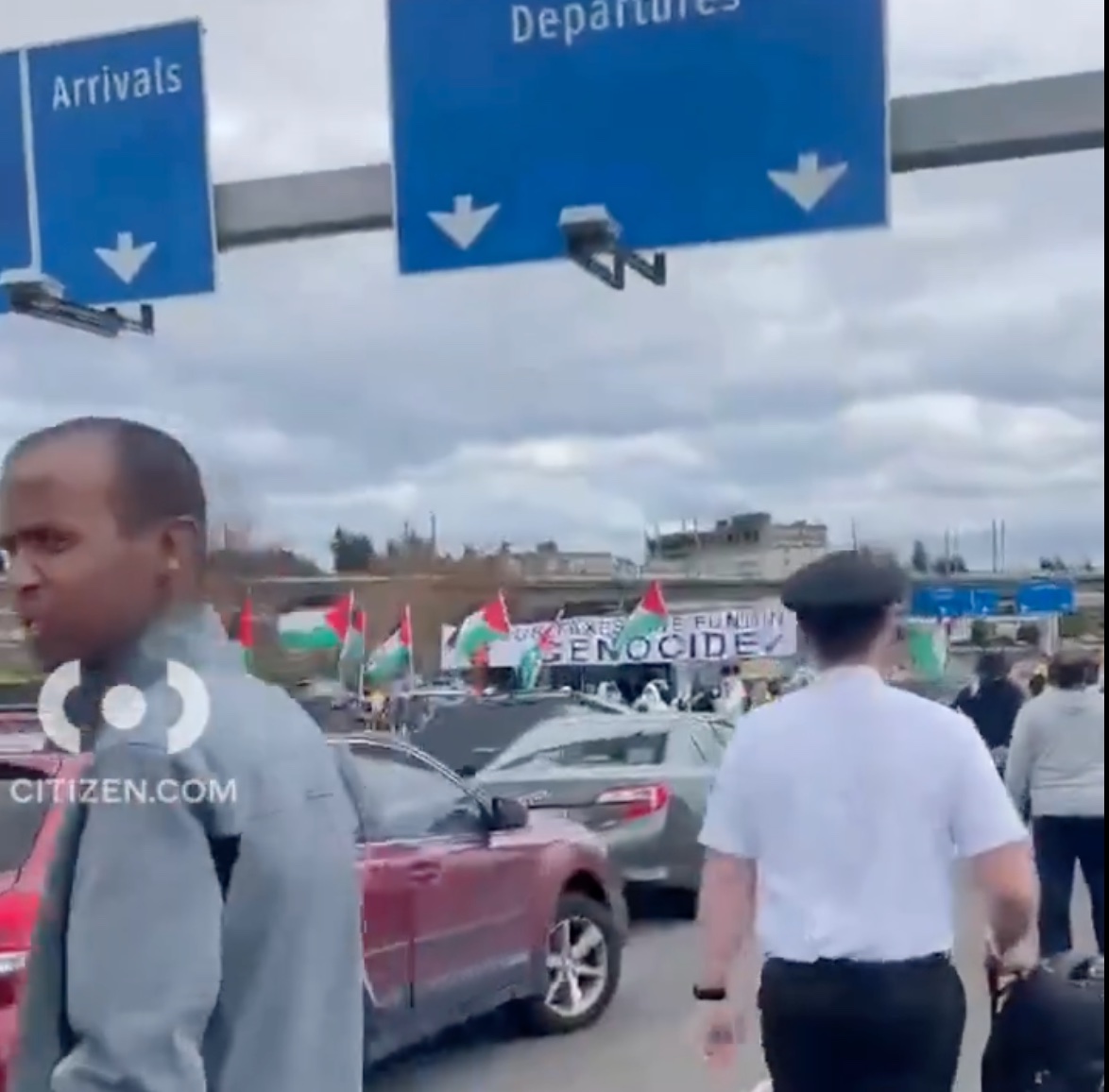
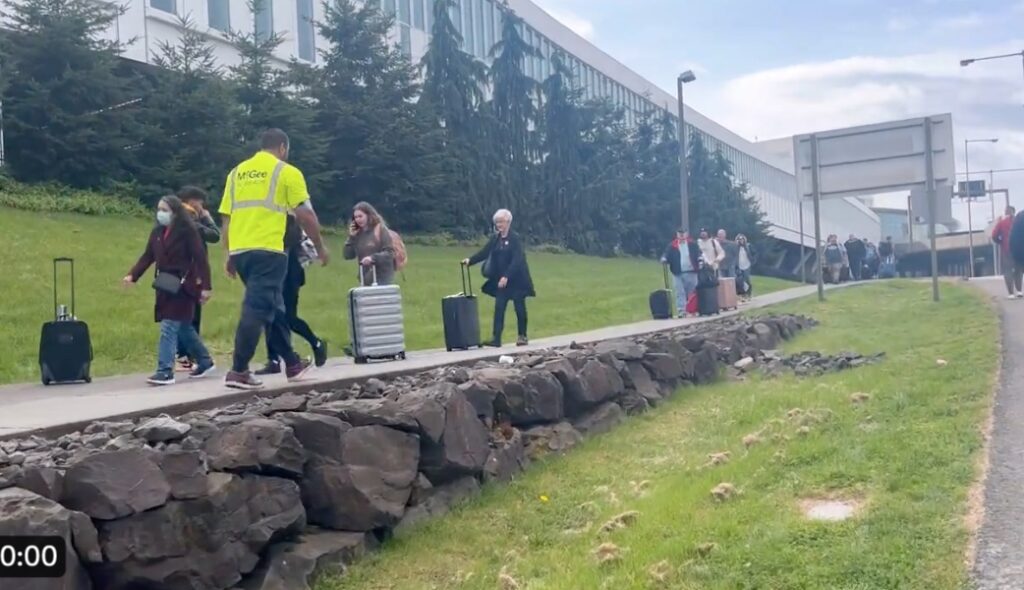
On Monday, pro-Palestinian protesters shut down roads and bridges across America. Passengers, pilots, and crew trying to get to the Seattle-Tacoma International Airport had to walk a great distance. The Golden Gate Bridge in San Francisco was blocked. In Oakland, protesters chained themselves to traffic barrels on I-880, and others spread banners across the highway, blocking both north and southbound traffic.
The protest event, coordinated by a secretive pop-up group called A15action, was repeated in Miami, Chicago, New York, San Antonio, and other major cities. The leaders of the group have encrypted email addresses and are not revealing their identities. For all anyone knows, the coordinators of these blockades could be Russian, Chinese, or Iranian actors.
Alaska Gov. Mike Dunleavy saw this happening around the country weeks ago with similar road-blocking protests that were had climate change as a topic and has drafted House Bill 386 that makes such traffic-interfering actions illegal without a permit. At least two of these sudden road takeovers have happened in Anchorage recently.
Leftists say he’s trying to limit free speech. But Alaska is just one of just eight states that has no specific law on the books requiring a permit for taking over streets, bridges, highways, or runways.
“This legislation ensures that our public spaces remain safe and accessible for all Alaskans,” said Dunleavy, when he released House Bill 386 in February. “It is important to distinguish between peaceful expression of rights and actions that pose risks to public safety and emergency response efforts.”
The bill’s Senate version is SB 255.
Attorney General Treg Taylor was grilled by the Senate Judiciary Committee, dominated by far-leftists led by Chairman Sen. Matt Claman, about free speech violations and the fairness of the proposed penalties, which could include a class C felony in certain circumstances. The Alaska Senate is a Democat-run body, with a handful of Republican enablers.
Claman, a trial lawyer, made the argument that higher penalties do not deter people from committing crimes. His example was that states with the death penalty have higher murder rates.
Mississippi, Louisiana, New Mexico, Alabama, and Illinois have the highest murder rates in the nation. They are among the 27 states that have capital punishment, (Alabama, Arizona, Arkansas, California, Florida, Georgia, Idaho, Indiana, Kansas, Kentucky, Louisiana, Mississippi, Missouri, Montana, Nebraska, Nevada, North Carolina, Ohio, Oklahoma, Oregon, Pennsylvania, South Carolina, South Dakota, Tennessee, Texas, Utah, and Wyoming.)
The state director for Planned Parenthood testified against the bill, saying it would criminalize homelessness and could be “weaponized by government.”
The bill says, in part, “A person may not place an object on the surface of a public use airport that because of its nature or location might cause injury or damage to an aircraft or person riding in the aircraft.”
It also addresses liability of those who obstruct roads, airports, and other infrastructure, especially if it impedes the passage of firefighters, emergency responders, or life-saving personnel, or if it causes substantial harm to others, such as the death or injury of a person who cannot get to a hospital because of the blockade.
The House Judiciary Committee will take public testimony on HB 386 on Wednesday at 1 p.m.
Information about the committee hearing is at this link.
Watch the public testimony on Gavel Alaska at this link.