Wednesday, June 17, 2026
Home Blog Page 986

Lucas Smith: Marxism makes inroads in schools under guise of mask ‘science’

The Municipality of Anchorage Assembly, the Anchorage School Board, and the Alaska Coalition of BIPOC Educators are an ideal match for the American Academy of Pediatrics’ Marxist agenda. Together, they are a formidable force.  

Read: Anchorage students may return in January free of mask mandate, but local pediatricians are trying to block it – Must Read Alaska

Karl Marx sought to destroy the family, individuality, eternal truths, nations, and the past. In a modern American context, Marxism as a political movement can be viewed as one that seeks to expediently replace American liberty with communism by escalating social unrest to violence, through the amplification and exploitation of differences. 

A video by the Communist Party USA in 2017 defines Marxism as “a method of scientific critical thinking.”

Marxism’s close association with science is conspicuous. “Science” is increasingly used as justification for government dictates that violate our most fundamental individual liberties for the claimed benefit of public health.  Curiously, in this new Covid era the population is authoritatively instructed by politicians and bureaucrats to, “follow the science.” 

One clear connection exists between school children and the growing Marxist political movement: Mask mandates. 

Here is where one of Vladimir Lenin’s famous quotes rings true: “Give me just one generation of youth, and I’ll transform the whole world.” The mask mandate on our children is transforming our whole world.

In 1963 Clarence Carson wrote, “Im­plicitly, and sometimes explicitly, commonism is the view that the individual exists for society.”  Carson also wrote that commonism has the disadvan­tage of differing from communism by only one letter in its spelling, but it is apt for de­scriptive purposes.

Commonism? There may be no better teaching tool in existence for indoctrinating a generation of impressionable young school children into commonism than a face mask mandate. It’s one step away from communism, as Carson implied.

Marxist aspects of the Anchorage School District’s mask mandate include destructive destabilization of families and the loss of individuality. 

Forced to wear a face mask for more than a year now, an entire generation of children are now imprinted like baby ducks to a mother goose with the commonist belief that they exist for society. Furthermore, we are told, science justifies it and parents are powerless against it. 

What class conflicts have been borne of these circumstances for Marxist amplification and exploitation? To start with, mask proponents vs. mask objectors and vaccine proponents vs. vaccine objectors. 

Communist organizations and influencers are gaining influence at local levels across the country. Here in Anchorage, the Democratic Socialists of America – a derivative of Communist Party USA – established an Anchorage chapter as recently as February 2018.

The American Academy of Pediatrics cannot be left out of the local Marxist movement equation. 

As a national organization, AAP influencers are deployed and working at the local level.  In October this year, AAP members penned a letter opposing Anchorage’s very qualified Chief Medical Officer Michael Savitt, MD.

Read: Wading into politics, a group of Anchorage pediatricians go hard against Muni top doc – Must Read Alaska

Spreading “disinformation” is a popular accusation thrown around by those seeking to censor criticism and opposing viewpoints. Incompetence is a bold accusation to make by one small group of medical professionals against another, but very safe when made from under the protective umbrella of the AAP. 

Language published by the American Academy of Pediatrics is fraught with the same kinds of perspectives and language that are the building blocks of another example of Marxist philosophy permeating the public education system: Critical Race Theory. 

CRT themes are often disguised within initiatives like social justice, equity, and inclusion. Terminology you’ll find frequently used in these kinds of programs are “implicit bias” and “systemic racism.” Educational organizations like the Zinn Education Project are associated with a pledge to teach the “truth.” 

A supporter of the Zinn Education Project, Noam Chomsky, is celebrated among anti-capitalist and anti-imperialist movements. 

American Academy of Pediatrics’ parrots the equity and inclusion mantra:

American Academy of Pediatrics Equity and Inclusion Efforts

Excerpts include:

“Celebrating the diversity of children and families and promoting nurturing, inclusive environments means actively opposing intolerance, bigotry, bias and discrimination. The AAP is committed to using policy, advocacy and education to encourage inclusivity and cultural effectiveness for all.” 

“These efforts include… applying an equity lens to Academy policy, advocacy, and education.”

“The AAP Equity Agenda sets forth explicit and intentional action to support the Academy’s commitment to equity, diversity, and inclusion (EDI) and ensures this action permeates all aspects of the Academy’s functioning.”

“While the Equity Agenda is broad, the AAP Board of Directors has articulated the goal of advancing racial equity with an emphasis on addressing anti-Black racism in year one. To that end, proposed action items were informed, in large part, by the AAP policy statements The Impact of Racism on Child and Adolescent Health and Truth, Reconciliation, and Transformation: Continuing on the Path to Equity. It is important to note, however, that this document does not represent the sum of all the work that needs to be done to achieve this goal. Rather, the workplan prioritizes activities that are feasible and will be impactful over the next 12 months.”

“There is a need for urgent action. However, this action must lead to sustained, transformative change.”

The Year 1 Workplan of the AAP Equity Agenda indicates clinicians are to:

“Explore opportunities for the Maternal and Child Health Bureau to incorporate guidance for screening children, adolescents, and families about racism and other forms of bias and discrimination into Bright Futures.”

“Disseminate tools to help pediatricians develop and implement an action plan to advance racial equity through clinical practice.”

The Year 1 Workplan of the AAP Equity Agenda also includes Policy & Advocacy:

 “Use the Academy’s advocacy resources to promote federal, state, and community-level advocacy that addresses health inequities, advances racial equity, and promotes social justice.”

 “Advocate with other pediatric and medical education organizations (eg, Association of American Medical Colleges, American Board of Medical Specialties, American Board of Pediatrics) to promote diversity and inclusion throughout the field of pediatrics.”

 “Establish and enhance interdisciplinary partnerships with other organizations that have developed campaigns against racism.”

 “Partner with organizations and groups that advocate to remediate the effects of structural and systemic racism on child health outcomes.”

 “Coordinate and align advocacy effort with state chapters to advance the AAP Equity Agenda.”

Equity materials associated with the Anchorage School District identify some rather disturbing views about the role equity may ultimately be expected to play in ASD decision making.  Based on AAP publications it could be assumed the American Academy of Pediatrics views equity in a similar light:

“Equity is a concept that encompasses many other ideas of justice and fairness. Equity umbrellas nondiscrimination, diversity, and inclusion. Equity is also not the same as equality.  Equality might be the correct course of action in some circumstances, but in most, students deserve to have their needs met on their level. A definition of equity must be carefully crafted to not interchange these terms.”

“Equity is a lens through which all other decisions should be viewed… Equity is the vehicle for viewing decisions and outcomes are the metric of success.”

The Alaska Coalition of BIPOC Educators’ motto as published on their website is “Equity Until Equality.”  Their mission statement is “to champion equity in education for communities of color in order to achieve equality.”  AK BIPOC representatives are regular school board meeting attendees and testifiers. 

With their first priority being the health and safety of educators, students, and communities of color, Alaska BIPOC representatives consistently advocates for the strictest COVID protocols and mandates.  Local events in Anchorage organized by AK BIPOC have been supported by the Zinn Education Project and Black Lives Matter At School. 

If you are the least bit concerned about the Anchorage School District producing a generation of Marxist socialists and the potential threat of other Marxist tactics being deployed against the 40,000 children enrolled in the Anchorage School District, please take the time to share your thoughts with the Anchorage School Board before their meeting on Monday at 6 pm.

Lucas Smith is a concerned parent of an Anchorage School District student.
Welcome home planned for Miss America Emma Broyles at Anchorage airport at 2:30 pm Sunday

5

Alaskans are invited to be at the Ted Stevens Anchorage International Airport at 2:30 pm on Sunday to welcome home Miss Alaska / Miss America, according to her family and Bonnie Faulks, executive director of the Miss Alaska/Miss America organization, who is also returning on a separate flight from the Miss America pageant in Connecticut.

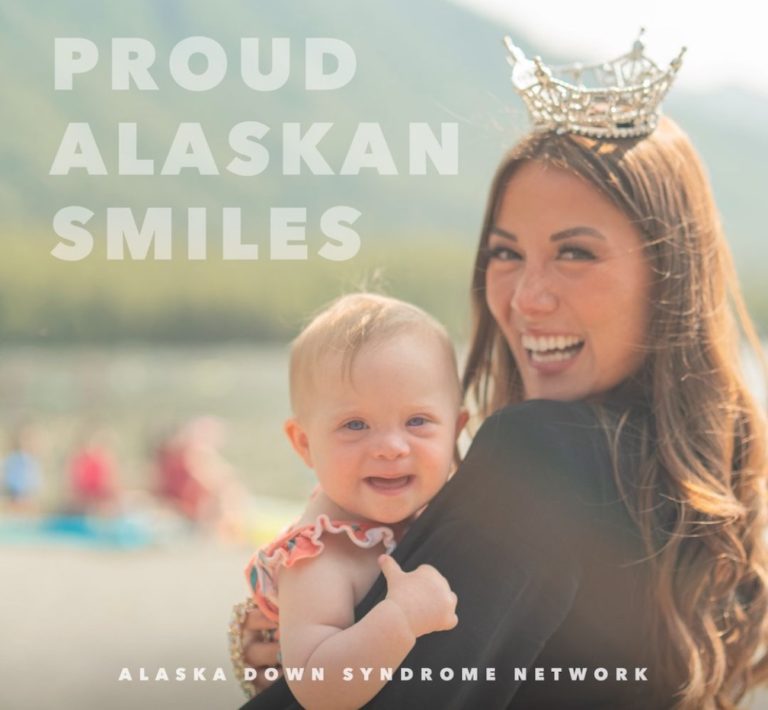
Emma Broyles is the first Alaskan to ever be crowned Miss America in the organization’s 100-year history. A graduate of Service High School in Anchorage, she is a student at Arizona State University and hopes to become a dermatologist.

Broyles is also the first American of Korean heritage to be crowned Miss America.

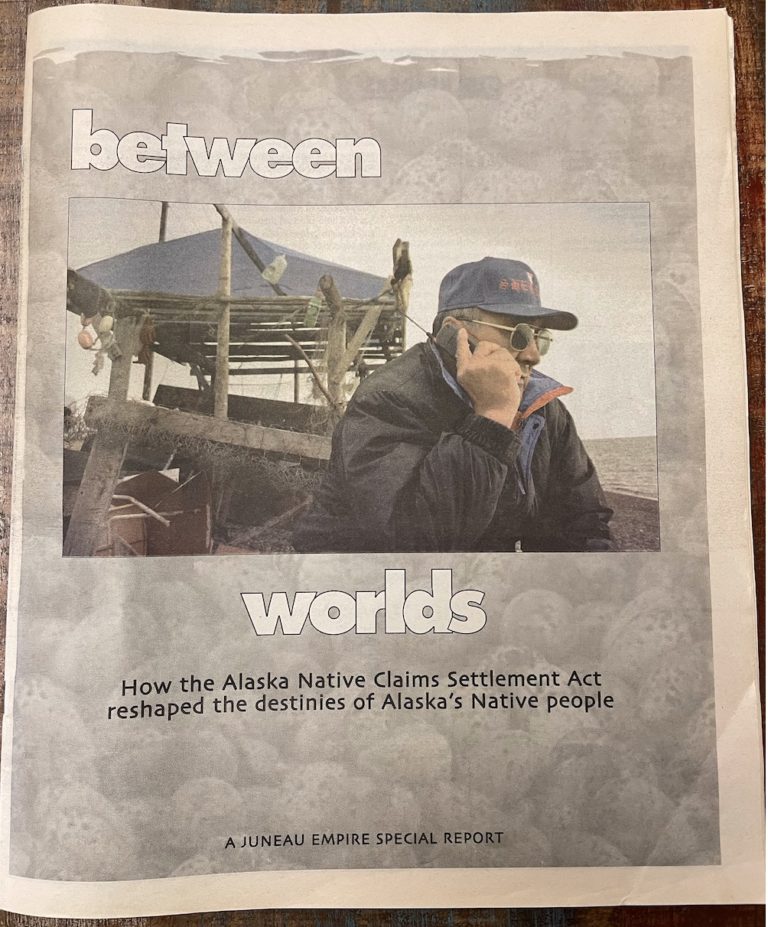
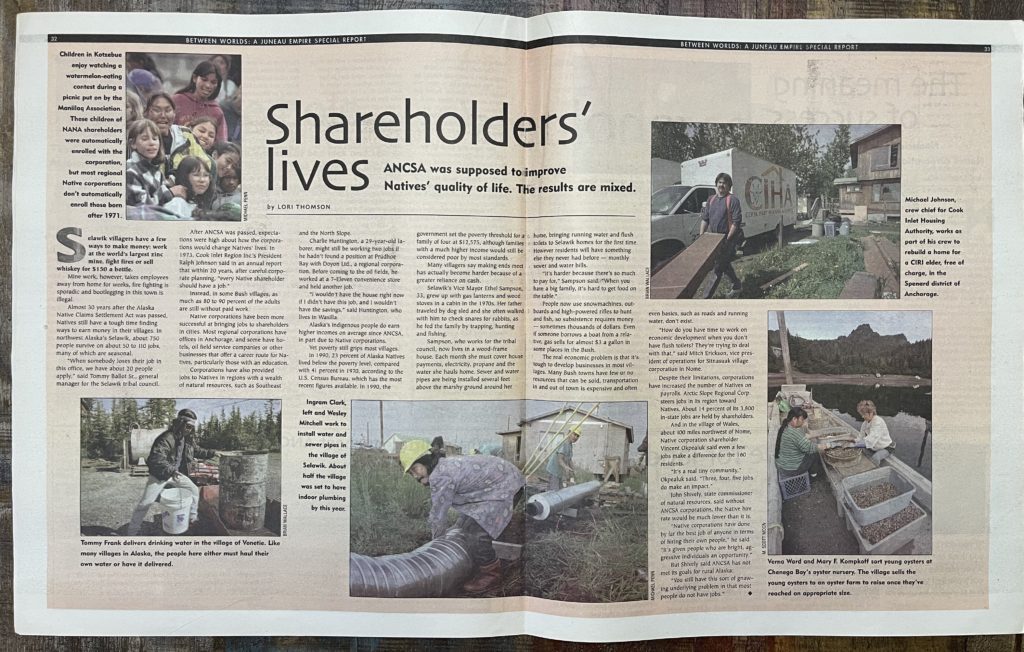
Between Worlds: Special report from the archives tells story of ANCSA at its 25-year mark

In 1998, Must Read Alaska Editor Suzanne Downing, who was editor of the Juneau Empire, and John Winters, then-publisher, led a team of writers, editors, photographers, and designers to document the progress of Alaska Natives and Alaska as a state 25 years after the passage of the Alaska Native Claims Settlement Act. It was an anniversary project that was a big ambition for what was a small newspaper, with a Sunday circulation of just 9,000.

In 2021 it is still one of the most exhaustive reports on the Alaska Native Claims Settlement Act, reporting the perspectives of Native Alaskans who were there from the outset of the historic agreement that created Alaska Native corporations, and Alaska as an oil-producing state.

The questions the project sought to answer were: What has been the result of the Alaska Claims Settlement Act? Has the Native corporate structure set up by ANSCA been a success? Have Alaska Natives benefited from ANCSA? How has the creation of Native corporations changed the cultures of Alaska’s Native peoples?

Reporters Cathy Brown, Lori Thomson, and Svend Holst, and photographers Brian Wallace and Michael Penn, combed the state from Atka and Savoonga in the West, Utqiagvik in the north, and Angoon in Southeast, — 37 communities in all — to to document the stories of those who helped with the passage of ANSCA, as well as those Natives impacted by the landmark legislation, and to document their perspectives on its successes and failures.

“In their travels to dozens of towns and villages, reporters talked to hundreds of people from all walks of life, seeking the viewpoints of Natives, anthropologists, economists and historians across the state, along with the opinions of Native corporation executives and everyday shareholders,” Publisher Winters wrote in the introduction to the series.

Other contributors to the project were Jon Holland, Doug Loshbaugh, M. Scott Moon, Tim Bradner, Davida Doherty, Mona Entwife, Kristan Hutchison, James Folker, Cathy Martindale, and Ed Shoenfeld.

The stories are captured in Between Worlds, the special project that was funded by William Morris III, then the owner of the Juneau Empire.

One fraction of the project is printed in part here, with links below to the entire project, which is now housed digitally at the Alaska Humanities Forum in its Alaska history course. Although print copies exist, they are few and far between.


Alaska’s first people stood between Big Oil and a pipeline. They negotiated the best deal they could.

By CATHY BROWN, LORI THOMSON, AND SVEND HOLST

Her first sight of the huge rock filled Lydia George with shock. Then tears.

A Tlingit Indian from the village of Angoon in Southeast Alaska, George was a teacher at the University of Alaska Fairbanks in the 1980s when students showed her a rock as big as a table on display in the library. A Raven design was chiseled on the rock’s face.

During the long fight over Native land claims, George had heard Tlingit elders talk about such rocks, used for hundreds of years as titles to land; it was a type of land claim the government never recognized.

“What is it doing in the library? When the government did not give it recognition, why are they showing it off to tourists?” George said. “I touched it and tears just flowed down my face.”

The rock serves as a painful reminder of the battle Alaska Natives waged for more than 100 years to claim ownership of their land. The fight culminated with the Alaska Native Claims Settlement Act in 1971, but began soon after the United States purchased Alaska from Russia in 1867.

Tlingit leaders in Southeast Alaska protested the sale, saying Russians, who established their first permanent Alaska settlement in 1784, couldn’t sell what wasn’t theirs; Natives, after all, had lived on the land for centuries.

They pressed the point in a 1947 lawsuit in the U.S. Court of Claims. As Westerners spread throughout Alaska, other Native groups also at times protested encroachment on their land.

But it was Alaska’s statehood in 1959 that escalated those conflicts to a critical stage.

The statehood act gave Alaska the right to select more than 100 million acres of land as its own to develop. It soon became clear to Alaska Natives that development was going to work against their traditional lifestyle.

Some of the development projects proposed for Alaska threatened Natives’ very existence.

In 1963, the U.S. Army Corps of Engineers wanted to build a 530-foot-high dam on the Yukon River to generate electricity. The dam would have put Athabascan villages under water and forced about 1,200 Natives to leave their homes.

The U.S. Atomic Energy Commission planned to set off a nuclear explosion at Cape Thompson to create a harbor for shipping minerals and other goods from northwest Alaska.

The proposal, called Project Chariot, drew national attention to Alaska Natives’ plight and helped prompt establishment in 1962 of the Tundra Times, a newspaper funded in part by Forbes’ magazine’s Malcolm Forbes.

Inupiat Eskimo Howard Rock of nearby Point Hope was outraged that no one considered the danger of radioactive contamination to Natives living there. Rock became editor of the Tundra Times, the first statewide vehicle for Natives to communicate about land claims and other issues.

A year later, the Alaska Federation of Natives was launched, creating the first united front for Natives across the state. Land claims were at the top of its agenda.

Native leaders pressed for a freeze on all land transfers until Native claims had been resolved, a freeze that U.S. Interior Secretary Stewart Udall granted in 1965.

It was a critical victory for Natives. Robert Willard, a Juneau leader in the claims battle, remembers Natives’ reaction: “Everybody said, ‘He did what?’ Then everybody from our side realized this is pretty serious.”

Non-Native homestead applications were stalled and business plans faltered, said Emil Notti, who was the AFN president at the time.

“If it was an Indian problem, we’d still be working on it,” Notti said. “When it became a problem for the state of Alaska, homesteaders, oil companies, cities, it became everybody’s problem.”

The discovery of oil on the North Slope in 1968 sped up the need to resolve land claims, and big oil companies joined the ranks of those trying to gain access to land tied up in Native land claims.

Willard was at the table when the AFN board met with oil company executives developing the trans-Alaska pipeline. He recalled how Joe Upicksoun, an Arctic Slope Native, made clear the Native position:

“Not one drop of oil, not one inch of pipe will come from the Arctic Slope until the Native claims settlement act is settled.”

Oil executives responded that nothing would stop the pipeline. They would take Alaska Natives to court if they had to, but of course that would probably take a hundred years.

“We – can – wait,” Upicksoun said.

Willard’s eyes lit up and a thin smile crossed his heavily creased face as he recalled that moment. Then he said quickly, “Well, Big Oil couldn’t wait 100 years.”

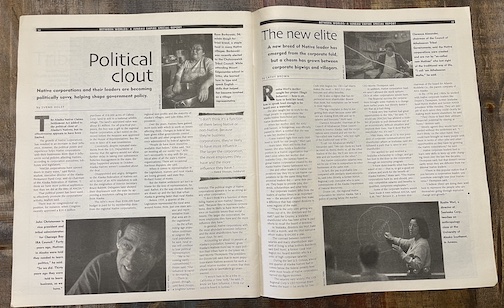
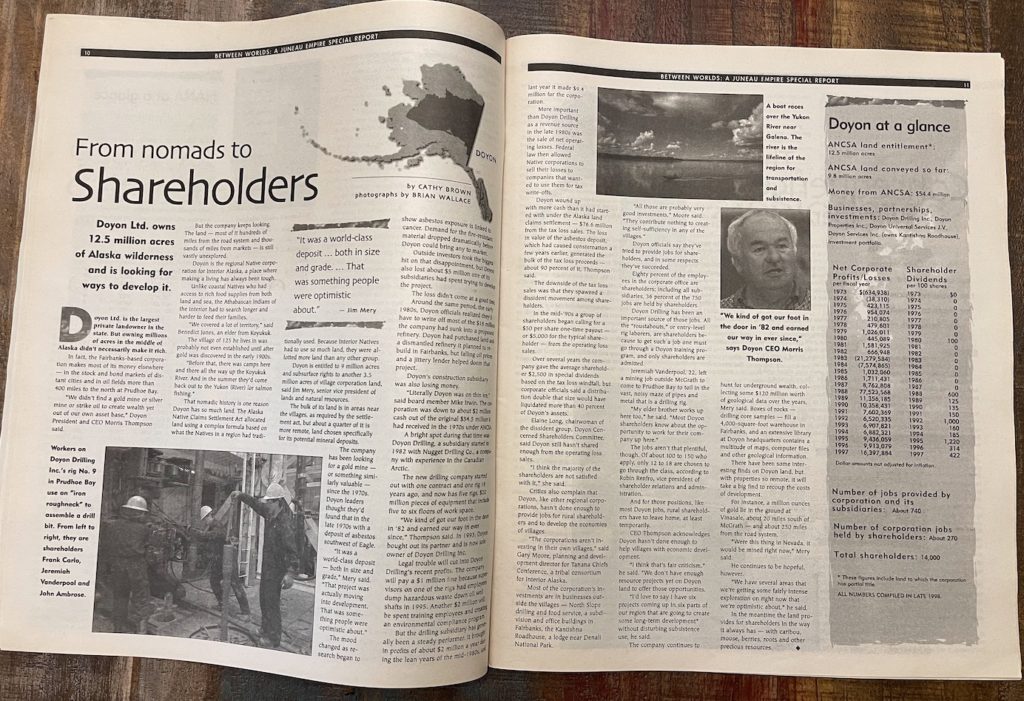
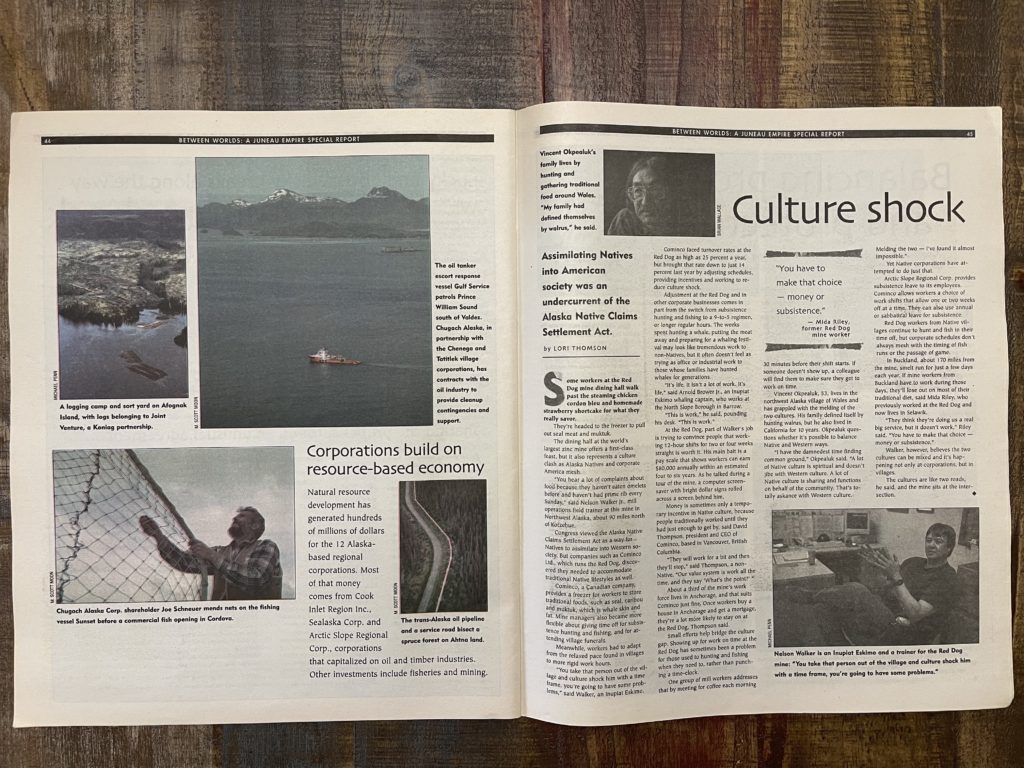
Pages from the Between Worlds series by the Juneau Empire reporting team.

That was the critical turning point when oil companies threw their weight behind the Natives. And it’s why the settlement act passed in 1971 instead of 2010, said Steve Haycox, a University of Alaska history professor.

In 1968, a task force appointed by Gov. Walter Hickel recommended Natives receive title to 40 million acres and 10 percent of oil income from certain lands, among other provisions.

A bill based on those recommendations was introduced in Congress, but died. For the next three years, Congress, Native leaders, oil companies, chambers of commerce, mining interests, sportsmen and others argued over a host of land claim proposals.

The AFN lobbied on a shoestring budget. Villagers held bingo games and raffles to raise cash for the cause, and AFN borrowed money – $100,000 from Natives in Tyonek who sold oil leases on their reservation, and $200,000 from Yakima Indians in Washington, said Don Mitchell, a former attorney for AFN.

Another avenue of funding was the Alaska Rural Affairs Commission, a commission created by Hickel. By then the governor realized he needed to negotiate with AFN and couldn’t do so if Native leaders couldn’t afford to travel to meetings, Mitchell said. They used their gatherings to work on the land issue, although there was just enough money to meet in Anchorage once a year.

“But we could only afford one hotel room,” said John Schaeffer, former president of NANA Regional Corp. “So all 15 of us stayed in one hotel room.”

The land freeze fell into jeopardy when Richard Nixon was elected president in 1968. He replaced Interior Secretary Udall with Alaska’s Hickel, who threatened to lift the freeze. “What Udall can do by executive order I can undo,” Hickel said.

But first he needed to be confirmed. With powerful conservation groups working against him, Hickel needed the support of Natives. They, however, had won the ear of certain senators and refused to endorse Hickel. He finally buckled and promised to extend the land freeze.

By 1971, it was clear there would be a settlement.

Native representatives traveled to and from Washington, D.C. as a number of proposals and settlement bills were debated. They spent days meeting with pipeline contractors, unions, the Sierra Club and others, and knocked on doors of congressmen to keep the land claims issue in front of them.

It was a lot of work for the 43 Native lobbyists.

“That’s when we found out there were 435 congressmen and 100 senators,” Willard said….

John Hope, a Tlingit and Juneau resident involved in land claims, described the years immediately following the land settlement this way:

“It’s like you and I never saw a baseball game in our lives. We’d never seen mitts or bats or baseballs. All of a sudden you were told, “Here’s your mitts. Here’s your bats. Here’s your balls. Tomorrow you play the Yankees.”

More from the series at the Alaska Humanities Forum:

Shareholders’ lives

The meaning of success

A struggle for land

Solving problems

Economic powerhouses

Culture shock

Balancing profit and protection

SubsistenceTribal sovereignty

Political clout

The new elite

Investing in culture

Cultural assimilation or protection?

Village corporations

Voting methods

Dividends

The new generation

In conclusion

Overview of regional native corporations:

Arctic Slope Regional Corp.
NANA Regional Corp.
Doyon Ltd.
Bering Straits Native Corp.
Calista Corp.
Cook Inlet Region, Inc.
Ahtna, Inc.
Bristol Bay Native Corp.
Chugach Alaska Corp.
The Aleut Corp.
Koniag, Inc.
Sealaska Corp.
The 13th Regional Corp.

Watch: New documentary tells story of Alaska Native Claims Settlement Act

2

A documentary produced by the Ted Stevens Foundation captures the oral history of the most significant bill shaping the destiny of Alaska since the Alaska Statehood Act.

“50 Years of Promise: The Beginning of ANCSA” was edited by Cale Green and Sockeye Red Services, with support from the Atwood Foundation and Arctic Slope Regional Corporation. The film features interviews with Ron Birch, Julie Fate-Sullivan, Willie Hensley, Marlene Johnson, Oliver Leavitt, Guy Martin, Sen. Lisa Murkowski, Marie Matsuno Nash, Ben Stevens, and Congressman Don Young. The 30-minute documentary is narrated by Tara Sweeney, who served as the head of the Bureau of Indian Affairs during the Trump Administration.

Alaska became a state on Jan. 3, 1959, but the claims to the land clearly belonged with those inhabiting it, and there needed to be a settlement with those people. Dec. 18 marked the 50th anniversary of the ANCSA, which created a series of Native corporations, land grants, and cash that would allow the building of the Trans Alaska Pipeline System, and the oil wealth that followed.

For another resource on the history of ANCSA, check out the 1998 “Between Worlds” special report by the Juneau Empire under the leadership of Publisher John Winters and Editor Suzanne Downing and funded by former Empire owner Billy Morris III.

Reporters Lori Thomson, Cathy Brown, Svend Holst and photographers Brian Wallace and Michael Penn spent the summer traveling the state in search of the story of ANCSA and its impact on the Native people of Alaska. That report is now included in the Alaska history course at the Alaska Humanities Forum:

Between Worlds, a Special Report

Free rides to Prince of Wales Island for one week in January

11

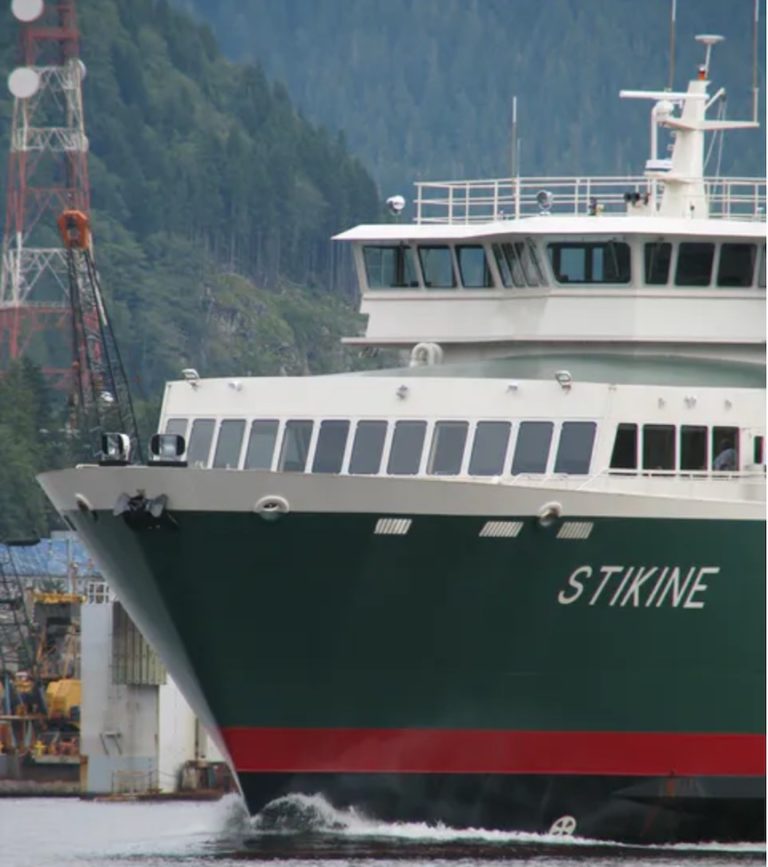
To celebrate the 20th anniversary of the Inter-Island Ferry Authority, the ferry will give free rides between Ketchikan and Hollis, Prince of Wales Island, from Jan. 8 through Jan. 14, 2022.

“During this week, Passenger travel will be discounted 100%,” the nonprofit ferry authority announced on its website. Vehicles will be charged regular rates. Those wanting to travel that week need to book the reservation by calling, rather than booking online.

The Inter-Island Ferry carries more than 50,000 passengers and 12,000 vehicles between our Hollis and Ketchikan ports annually.

In 2015, the IFA brought 3,000 tourists to Prince of Wales Island, where they spent more than $10 million on hotels, fishing expeditions, and dining – generating hundreds of summer jobs across the island, the authority says. It also moves millions of pounds of seafood every year and ensures people of Prince of Wales Island can get to medical care, even if the weather prevents flights, which it often does in Southeast Alaska.

The ferry takes shoppers, students and other to and fro from Hollis to Ketchikan; in 2015, there were 3,100 trips taken by students in 13 Alaska school districts.

The ferry also travels from Metlakatla to Ketchikan four days a week. The service is paid mainly through fares, but has a subsidy from the State of Alaska of about $250,000 per year.

Reservations can be made by calling 866-308-4848.

MatSu fundraiser for governor at Evangelo’s

33

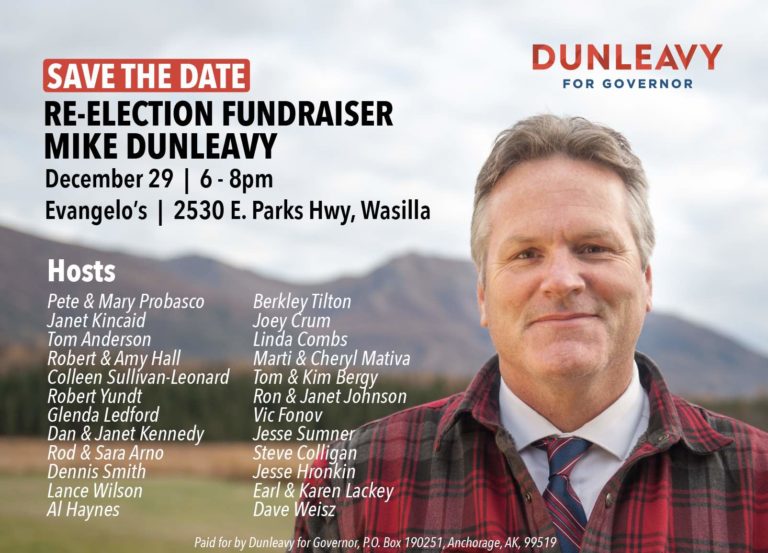
Gov. Mike Dunleavy’s next campaign event is Dec. 29 at Evangelo’s, 2530 E Parks Hwy, Wasilla, Alaska 99654. Dunleavy is running for a second term.

Also running for governor is former Gov. Bill Walker and former Rep. Les Gara.

Anchorage students may return in January free of mask mandate, but local pediatricians are trying to block it

Anchorage School Superintendent Deena Bishop advised parents Thursday that when students return on Jan. 3, 2022, face mask wearing will be optional. Masks have been mandatory since the beginning of school this year.

Bishop, who in November announced her resignation effective June 30, 2022, said that with lower case counts of Covid, it was time to transition to normalcy.

But whether the School Board will go along is another story. The board has received at least 50 emails from parents and pediatricians objecting to the lifting of the mask mandate on students, and only about five emails from those supporting it. At Monday’s meeting, the radical leftist board may take it upon itself to override the superintendent.

Among those writing to demand the continued masking of children is the Alaska Chapter of the American Academy of Pediatrics, who wrote a letter Friday to the board, leaning on board members to continue the mask use in schools, as “it is imperative that we protect our children by requiring masks in the setting where they spend the majority of their day.”

The pro-mask pediatricians may be persuasive with the board, as they were with the Anchorage Assembly when they waded into politics regarding masks in October.

Those parents who have an opinion on lifting of the mask mandate on children may wish to weigh in before the Monday board meeting. Letters may be sent to the board at [email protected] and to Superintendent Bishop at [email protected].

The board meets at 4 pm in executive session, and meets in public section at 6 pm Monday. The public meeting may be viewed on the district’s YouTube channel here. The meetings are held at the Board Room at the ASD Education Center, 5530 E Northern Lights Blvd.

The pediatricians’ letter said:

“We are writing to you to encourage the Anchorage School District to continue to implement the AAP guidelines for mask use in schools. As you know, vaccines are the most effective tool we have to end the COVID-19 pandemic, but unfortunately, this is not providing the necessary levels of protection in Anchorage at this time. According to the Alaska COVID-19 Vaccination Dashboard, the number of fully vaccinated 12-18—year—olds in the Anchorage Municipality is currently at 53% and the number of fully vaccinated 5-11-year-olds is at 14.3 %; both of these numbers are far below the national average for comparable ages. with these facts in mind, it is imperative that we protect our children by requiring masks in the setting where they spend the majority of their day.

“The AAP Clinical guidance states that “mask wearing has proven effective in reducing the transmission of virus from infected individuals. . and that “a significant portion of the student population is not yet vaccinated. Masks provide protection against COVID-19 for unvaccinated students and reduce transmission.” In addition, newer variants have demonstrated that they can continue to be spread by and to other vaccinated individuals, which makes masking a powerful tool in helping to protect the school community.

“In Alaska we are not yet seeing an influx of the Omicron variant, but we are still experiencing the continued wave of the Delta variant. A concern shared by many, is that numerous children will be traveling outside of Alaska for winter break or hosting out of state visitors in their homes. School resumes on January 3 and potentially exposed children will be returning to the classroom right after holiday break. As there are no travel testing requirements in place, we could potentially have children with COVID-19 returning to the classroom. It would be prudent to add a layer of safety and ensure that children are masked in school for a least several weeks after winter break.

“Given the effectiveness of safety precautions when used consistently, schools can remain open and safe for children. We know that children are at a higher risk of suffering mental health issues and developmental setbacks if they miss out on in- school learning due to COVID-19 illnesses or schools needing to close due to outbreaks. The best way to keep schools open with children in classrooms is to continue using best safety practices which include universal masking school-age children.

“The full AAP guidelines on masking and school health can be found here: COVID-I9 Guidance for Safe Schools (aaporg). The full document outlines the current concerns as well as full recommendations. We welcome you to contact our Alaska Chapter with any questions about the current AAP guidance.

Anna Ogena, MD, FAAP

Jody Butto, MD, FAAP

Lily Lou, MD, FAAP

Kevin Kollins, MD, FAAP

Matthew Serna, MD, FAAP

Patti Clay, MD, FAAP

Benjamin Westley, MD, FAAP

Head of Anchorage water utility says water is safe and fluoride was never an issue

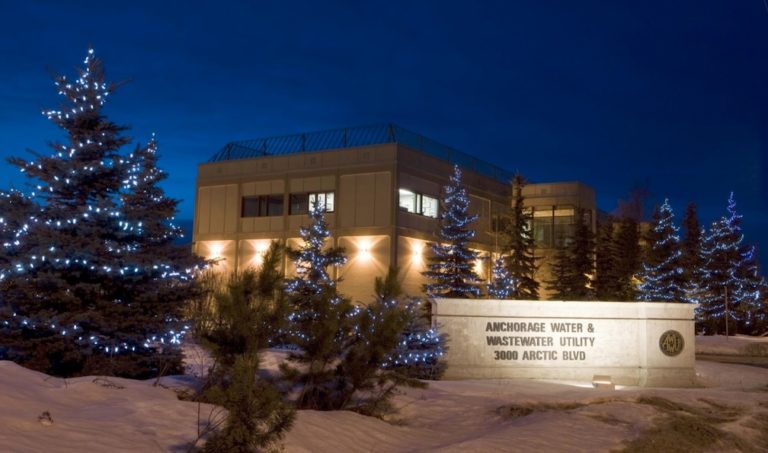
The head of the Anchorage Water and Waste Utility has issued a statement confirming that staff at the Eklutna Water Treatment Facility had indeed expressed concern about the irritation some had experienced due to handling fluoride, which is added to the water system.

“AWWU staff did express to the Mayor that the handling of the fluoride chemical used to add to our water is a dangerous hazardous chemical. While they are professionals and well trained in handling it, the general sentiment of the operators who work with it would be to prefer not to handle it as they have experienced occasional unreportable health and irritation effects after handling it, even with all the proper OSHA compliant protocols and PPE being used,” wrote General Manager Mark A. Corsentino.

Corsentino was responding to wildly inaccurate and speculative reporting in mainstream media and leftist blogs that the mayor had endangered the public by temporarily shutting off the fluoride after his tour of the Eklutna. Reporters from Alaska to the national media have cast doubts that anyone complained about irritation caused by the fluoride.

ADN headline casting doubts on mayor’s intent during fluoride pausing event.

News of the mayor’s actions have made national news in the New York Times on Friday, almost certainly as a story planted by leftist partisans who oppose the Bronson Administration.

The Anchorage Assembly liberal majority has taken it upon itself to conduct an investigation and has demanded all emails from the Bronson Administration relating to the matter. The Assembly leadership has said that the emails don’t match the reality of the situation, and alternately that they didn’t get the emails from the Bronson Administration.

“In reading these emails, it is clear that there’s a difference between the Mayor’s account of events and what AWWU employees are reporting,” said Vice Chair Chris Constant. “Ensuring that our drinking water meets municipal regulations and code requirements is critical to the health and safety of our community. It is imperative that we get to the bottom of this so we can understand why and how this happened, and safeguard against this type of interference in the future.”

Chairwoman Suzanne LaFrance falsely stated that the Administration had not been responsive to her records request: “while the Bronson Administration has responded to the media, Assembly leadership has yet to receive a response to our records requests sent to the Administration on December 12. Clearly this is a matter of serious public concern and Assembly leadership is committed to following through on our fact-finding inquiry. We need to hear from everyone involved, including the Mayor, so we can reconcile the conflicting reports and learn the truth.”

Corsentino backs up the mayor’s reporting of the incident.

“It was brought up that while its addition is an Assembly ordained requirement, fluoride is not necessary for safe drinking water, and many municipalities around the world had stopped adding it to public water systems over the last decade. From a strategic standpoint, AWWU has an approximate $1M proposed upgrade to rehabilitate the fluoride system in the near future; and, if it was to come up with the community and Assembly for removal, now is the time to bring it up before money is spent for an expensive upgrade,” Corsentino wrote.

“The mayor took that into consideration in his decision, with concurrence from AWWU, after we let him know the system is oftentimes down and offline for corrective and preventative maintenance reasons. We let him know that we have learned that it can be down for hours and days at a time without any code issues because fluoride has a long residual in our water system, which would allow ample time to reverse his decision before any impacts would be towards meeting code. It is in fact down as of yesterday for an equipment failure, and we expect to have it up and running early next week when repair parts arrive,” Corsentino reported in his statement.

“First and foremost, as the General Manager of the Anchorage Water and Wastewater Utility (AWWU), I can say, with confidence, that I would never compromise the safety of our water, the community, or our employees. AWWU’s water is pristine; it has and continues to meet and exceed all federal, state and local requirements for treatment and distribution to our customers. Our customers can drink with ease and confidence knowing that AWWU’s drinking water is some of the purest and cleanest water on the planet,” he wrote.

“With that being said, AWWU does add fluoride to our water. Fluoride in drinking water is a topic that recycles its way back-and-forth into the media and public spotlight from time-to-time, as we are seeing now and have seen over the last few decades since first being introduced to our water many years ago. AWWU has, and continues to remain, neutral in regards to the addition of fluoride to our water; we add it to the water as directed to us by Municipal Code via Assembly Ordinance. 

“Fluoride is not something that is necessary to provide safe drinking water. It is identified as a contaminant, in the Federal Safe Drinking Water Act, that must be removed from certain community water sources where it naturally occurs in their water at elevated levels. Fortunately, at the lower levels in which we add it to our water, the CDC and U.S. Health and Human Services recommend it as a way to prevent tooth decay and promote good oral health.

“If you want to know more about fluoride, we have a fact sheet on AWWU’s public website: Fluoride and Anchorage’s Drinking Water (https://www.awwu.biz/about-us/frequently-asked-questions/fact-sheets).”

At the end of the day, Corsentino wrote, there were no federal, state or local code compliance violations with the municipal water. “It is as safe to drink after the tour as it was before, and still remains that way today and will tomorrow. “

Sixth Circuit Court reinstates Biden mandate on large vaccines at large companies

The Sixth Circuit Court of Appeals has on Friday overturned a ruling by the Fifth Circuit that had blocked President Joe Biden from forcing companies to fire workers who aren’t vaccinated or not tested for Covid weekly.

The Biden mandate affects about 80 million workers in America at companies with more than 100 workers. The ruling lifts an injunction placed against the implementation of the mandate in November.

The Sixth Court says that the Occupational Safety and Health Administration proved there is a “pervasive danger that COVID-19 poses to workers—unvaccinated workers in particular—in their workplaces.”

Alaska had joined in the lawsuit, along with several other states. Friday’s ruling will most certainly be appealed to the Supreme Court.

Read: Alaska joins other states suing Biden over private company mandates

Judge Jane B. Stranch wrote that the “old normal” is not going to return and that Congress gives OSHA the authority to regulate workplaces in regard to viruses:

“The COVID-19 pandemic has wreaked havoc across America, leading to the loss of over 800,000 lives, shutting down workplaces and jobs across the country, and threatening our economy. Throughout, American employees have been trying to survive financially and hoping to find a way to return to their jobs. Despite access to vaccines and better testing, however, the virus rages on, mutating into different variants, and posing new risks. Recognizing that the “old normal” is not going to return, employers and employees have sought new models for a workplace that will protect the safety and health of employees who earn their living there. In need of guidance on how to protect their employees from COVID-19 transmission while reopening business, employers turned to the Occupational Safety and Health Administration (OSHA or the Agency), the federal agency tasked with assuring a safe and healthful workplace. On November 5, 2021, OSHA issued an Emergency Temporary Standard (ETS or the standard) to protect the health of employees by mitigating spread of this historically unprecedented virus in the workplace. The ETS requires that employees be vaccinated or wear a protective face covering and take weekly tests but allows employers to choose the policy implementing those requirements that is best suited to their workplace. The next day, the U.S. Court of Appeals for the Fifth Circuit stayed the ETS pending judicial review, and it renewed that decision in an opinion issued on November 12. Under 28 U.S.C. § 2112(a)(3), petitions challenging the ETS—filed in Circuits across the nation—were consolidated into this court. Pursuant to our authority under 28 U.S.C. § 2112(a)(4), we DISSOLVE the stay issued by the Fifth Circuit for the following reasons.

Read the court’s reasons at this link: