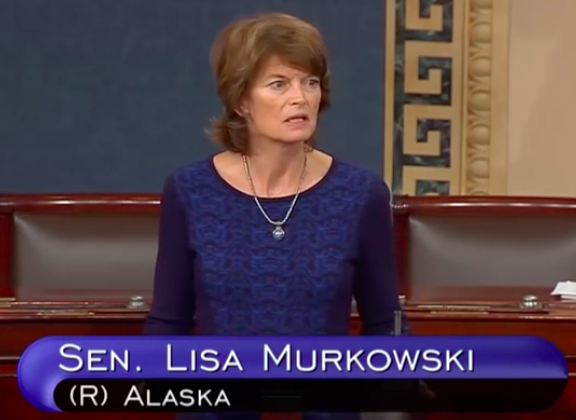
U.S. Senator Lisa Murkowski posted thank you notes she received from Alaska leaders who are grateful for the congressionally directed spending allocations to over 65 local projects in Alaska in the Fiscal Year 2022 Consolidated Appropriations Act. The act is expected to be signed into law this week by President Joe Biden.
Metlakatla: $540,000 to provide the Metlakatla Indian Community with an emergency backup generator.
“We are thrilled to hear the news that two of Metlakatla’s capital requests have been funded! We thank Senator Murkowski for hearing us and working hard to deliver on these appropriations which are critical to Metlakatla’s economic development, environmental stewardship, and energy security. Senator Murkowski has always been a good, faithful friend and strong ally of ours, like family, like Uncle Ted who we know would be very proud, today, because your victories are Alaska’s victories. So, thank you, Aunty Lisa, for keeping our people close to your heart. We won’t forget it.”
– Albert Smith, Mayor, Metlakatla Indian Community, Annette Islands Reserve
Kenai: $385,000 to implement the community’s wildfire hazard mitigation plan, which includes addressing spruce bark beetle infestation that can lead to catastrophic wildfire.
“This funding is critical to the City of Kenai as we look to address the devastating impacts of the spruce bark beetle infestation in our community and mitigate the increasing danger of wildfires created by the vast number of spruce trees killed by the spruce bark beetle. With this funding we will be able to remove thousands of hazardous trees in the City to protect homes and public facilities.”
– Brian Gabriel, Mayor of the City of Kenai
Anchorage (Alaska Native Tribal Health Consortium): $27.6 million to the Alaska Native Tribal Health Consortium to expand the Alaska Native Medical Center Emergency Department.
“We are extremely grateful to Senator Murkowski for securing the funding to expand and renovate the emergency department at the Alaska Native Medical Center (ANMC). This funding will address longstanding limitations in space and appropriate environment of care challenges in the emergency department and for people experiencing a behavioral health crisis. Quyana (thank you) to Senator Murkowski for your tireless work on behalf of Alaska Native people.”
– Valerie Nurr’araaluk Davidson, President/CEO, Alaska Native Tribal Health Consortium
Wasilla: $1.5 million to the Mat-Su Food Bank for warehouse renovations and equipment to improve the ability to collect and distribute food to those in need.
“The MatSu Food Bank is extremely grateful to Senator Murkowski for her recognition of our mission to fight food insecurity for the Alaskan people and the Matanuska Susitna Borough community. The $1,500,000 Congressionally Directed Spending award that she obtained for the Food Bank will allow us to build infrastructure we so desperately need to provide for local emergency food needs. On behalf of the staff, Board of Directors, and volunteers of the MatSu Food Bank, I express our sincerest gratitude to Senator Murkowski for helping us to help our community to fight food insecurity.”
– Eddie Ezelle, Executive Director, MatSu Food Bank
Juneau: $420,000 for Alaska Heat Smart to support the installation of air-source heat pumps in lower-income households.
“The Board of Alaska Heat Smart, a Juneau-based nonprofit, thanks Senator Murkowski for her Congressionally Directed grant. This funding will reduce heating costs by about $1,000 annually for more than 50 lower-income Juneau households by replacing inefficient heating systems with heat pumps. This is particularly timely given the recent surge in heating oil costs. Operating on clean hydroelectricity these heat pumps will also improve indoor air quality and contribute to Juneau’s climate goals by reducing carbon emissions.”
– Steve Behnke, President of the Board, Alaska Heat Smart
Kotzebue: $27.7 million to the City of Kotzebue to support the construction of an access road from Kotzebue to Cape Blossom.
“The funding for the Cape Blossom Road is the next step towards building a deep water port that will help us reduce the cost of goods coming into our community. It will provide much needed economic relief and stimulate economic growth as well. We are grateful for the efforts of Senator Murkowski in supporting Rural Alaskans in this area through this bill.”
– Sandra Shroyer-Beaver, Mayor, City of Kotzebue
Nome: $1.5 million to the Nome Community Center to provide housing and public health services for chronically homeless individuals through the Housing First Project of Nome.
“The Housing First project in Nome will provide permanent supported housing for chronic homeless. The federal funding for the project helped us to secure the additional funding needed for construction. If the federal government believed in the project, then state and local funders felt it was viable. The project was launched by Nome Community Center after years of working on solutions for ending homelessness in Nome.”
– Rhonda Schneider, Executive Director, Nome Community Center
Skagway: $10.2 million to expand capacity at the Wastewater Treatment Plant, which has recently experienced capacity difficulties due to increased use.
“On behalf of the Municipality of Skagway, I want to sincerely thank our federal delegation for once again working hard to support our community. We are thrilled that $10.2 million has been included in the FY22 appropriations bill for our Wastewater Treatment Plant upgrade; the funding will ensure that we can continue to operate safely for the health and safety of residents and visitors alike.”
– Brad A. Ryan, Skagway Manager, Municipality of Skagway
Fairbanks: $2 million for the University of Alaska Fairbanks to support the research, testing, and evaluation of counter unmanned aerial systems (C-UAS) in law enforcement operations.
“The Alaska Center for Unmanned Aircraft Systems Integration (ACUASI) at the University of Alaska Fairbanks thanks Senator Murkowski for securing $2M for Counter Unmanned Aircraft Systems (C-UAS) research in support of our law enforcement colleagues. We look forward to working with our Alaskan colleagues to identify and test C-UAS technologies that will work in Alaska’s challenging environment to protect law enforcement personnel, assets, and infrastructure from careless, clueless, and criminal UAS activities.”
– Dr. Cathy Cahill, Director, Alaska Center for Unmanned Aircraft Systems Integration, Geophysical Institute, University of Alaska Fairbanks
Anchorage (University of Alaska Anchorage): $295,000 to update and expand medical skills workforce labs at UA.
“The shortage of health care professionals is particularly detrimental to Alaska. We face an aging population, health inequities, as well as high rates of domestic violence and sexual assault. This funding helps UAA grow our health workforce through technology and cutting-edge training for our graduates. We are grateful for Senator Murkowski’s support to strengthen Alaska’s health care workforce.”
– Andre Rosay, Dean of the College of Health at the University of Alaska Anchorage
Sitka: $840,000 to the Sitka Sound Science Center for renovation of educational facilities used for aquaculture training programs.
“Sitka Sound Science Center is thrilled about this news. We are grateful that Congress is investing in aquaculture education in Alaska through our organization. This facility will support salmon, be a place of learning for generations to come and be a symbol of community spirit in coastal Alaska.”
– Lisa Busch, Executive Director, Sitka Sound Science Center
Statewide (Sealaska Heritage Institute): $250,000 to increase early literacy among Alaska Native children.
“I have to thank Sen. Lisa Murkowski and Rep. Don Young for their hard work to fund our award-winning early literacy program Baby Raven Reads. This appropriation means we can continue the Baby Raven Reads program, which has been a boon to Native children across Southeast Alaska since it began in 2015. Studies have shown significant progress in early literacy skills among Baby Raven Reads participants, and the family activities and books developed through the program have proven to be a model for early-literacy programs. This program has succeeded because we teach children through the Native world view. They see themselves and their culture in our activities and books, and that makes learning and reading fun for them.”
– Dr. Rosita Worl, President, Sealaska Heritage Institute
Girdwood: $800,000 toward the construction of a new Community Health Clinic.
“We are very excited and grateful to Senator Murkowski for her many years of support for healthcare services in Girdwood. This funding will allow us to complete the final phases of our new clinic building so that we will have space to provide fully integrated behavioral health care in addition to primary care. This could include group therapy, support groups and health education seminars and other specialty care for the community. This is a wonderful boost!”
– Tawny Buck, Executive Director, Girdwood Health Clinic
Petersburg Borough: $8 million for the construction of a new hospital.
“Alaska’s population consists of 32 percent living in isolated rural communities off the road system, which results in unique challenges in providing timely and comprehensive quality healthcare to its residents. Over the past two years, rural community healthcare facilities were critical in maintaining routine operations of preventative, chronic and emergency care while quickly and efficiently mitigating the ever-changing risks of Covid-19. Petersburg Medical Center is a community based critical access hospital, long term care facility, primary care clinic and home health agency. Through its efforts to educate, vaccinate, treat, and care for patients, PMC helped lead the community in keeping its citizens, workers, schools, and economy safe from the disastrous results of Covid. PMC is one of the largest employers on Mitkof Island and is housed in a building that is at the very end of its useful life. This project is critical to the health and economic viability of the Borough of Petersburg and the people who call it home.”
– Phil Hofstetter, Petersburg Medical Center CEO
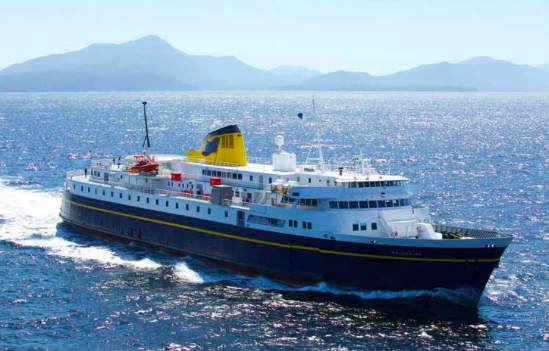
Juneau: $2 million to Southeast Conference to help establish a pilot program for electric ferries.
“Since 1958, Southeast Conference has helped guide community, regional, state and national maritime priorities into a ferry system that has historically met the transportation needs of coastal Alaska. This investment is timely and will inform and facilitate strategic implementation of the next generation of a modernized fleet that meets Alaska’s community transportation needs!”
– Robert Venables, Executive Director, Southeast Conference
Wrangell: $2.08 million to the City & Borough of Wrangell to fund a connection pipe between the Upper Reservoir and the Water Treatment Plant as a means of accessing the upper reservoir’s water.
“We greatly appreciate the work to help get the funding approved. This project will greatly improve the safety of our upper dam reservoir and assist with the quality of our drinking water.”
– Jeff Good, Borough Manager, City & Borough of Wrangell
Kodiak: $3.25 million to replace a failing wastewater lift station.
“The City of Kodiak is pleased to receive this funding appropriation spearheaded by Senator Murkowski and supported by our Alaskan Delegation. The residents of Kodiak can be assured infrastructure as important as safe water and sewer are maintained and functioning, allowing our community residents this basic amenity. This $3.25 million will be used to replace our largest wastewater lift station after a catastrophic failure occurred in May 2019. Thank you Senator for your steadfast support of residents of Alaska.”
– Mike Tvenge, Kodiak City Manager
Old Harbor: $1.5 million to provide Emergency Operations Center Grant Program funding to the Alutiiq Tribe of Old Harbor to construct a new tsunami shelter community center.
“On behalf of the Alutiiq Tribe of Old Harbor, we would like to say Quyanaa ‘Thank you’. This funding opportunity will help provide a tsunami shelter above the tsunami inundation zone for our community. Most of our main infrastructures are located within the threat zone. During evacuations most of our families are all huddled in their cars and trucks on the landfill road, gas is very expensive so when tsunami warnings go for hours on end, families would turn their vehicles off and sit in the cold to preserve fuel. The funding for this shelter would be able to provide safe gathering and harboring during a time of crisis and keep our families safe from the elements.”
– Loyd Ashouwak Sr., Alutiiq Tribe of Old Harbor Tribal President
Fairbanks: $5 million for the Alaska Division of Geological & Geophysical Surveys to support efforts to map coastal and nearshore Alaska.
“We very much appreciate Senator Murkowski’s strong support for mapping Alaska, including mapping our coastlines and nearshore areas. Many of Alaska’s coastal communities face serious challenges from flooding and erosion, and the basic data needed to help those communities is lacking. These funds will fund the basic mapping and data collection needed to assess and mitigate flooding and erosion impacts, and improve community resilience. The State of Alaska views this as an opportunity to expand our coastal mapping collaborations with NOAA and collectively prioritize the use of these funds to address some of our many overlapping community-focused mapping objectives.”
– Steve Masterman, Outgoing State Geologist & Director of the Alaska Division of Geological & Geophysical Surveys
Juneau: $2.5 million to United Human Services of Southeast Alaska to build a facility that will host multiple organizations providing public health and social services for vulnerable populations, to be known as the Teal Street Center.
“We’re delighted Teal Street Center will receive this essential support. Teal Street Center will be the social services hub that serves thousands of Southeast Alaskans every year, bringing together programs for seniors, low-income households, veterans, youth and people with disabilities on one convenient campus. This funding will help us complete construction and open the doors for our nine tenant agencies by the end of this year. Senator Murkowski has been a longtime champion of Teal Street Center, and we’re grateful for the time and effort she and her staff have dedicated to supporting social services in Juneau.”
– Joan O’Keefe, Executive Director, United Human Service of SE Alaska
Anchorage: $2 million to the Alaska Housing Finance Corporation (AHFC) to support the development of housing units for essential professionals in rural Alaska.
“All Alaskans seek access to safe, quality, affordable housing. In rural communities, too often critical jobs that support community health and wellbeing go unfilled because there’s no place for families to live. We’ve heard stories of teachers who accept jobs in remote Alaska, land and visit their classroom and find out that the school building itself will also serve as their bedroom. The State of Alaska has long committed funds to our Teacher, Health and Public Safety Housing and we’re proud of the 500 units that have been constructed to meet community needs. Senator Murkowski’s announcement of $2 million she secured along with her colleagues for teacher/health professional and public safety housing will support AHFC and the State’s investment, improving health, safety and the lives of Alaska’s youth and elders.”
Bryan Butcher, CEO/Executive Director of Alaska Housing Finance Corporation.
Statewide (CDVSA): $5 million for the Council on Domestic Violence and Sexual Assault to provide programmatic support for victim service organizations statewide
“Thank you Senator Murkowski! Your commitment to meeting the needs of victims and survivors of domestic and sexual violence is unsurpassed. CDVSA is grateful for the $5.0 million set aside included in the FFY2022 federal budget, to meet the needs of Alaska programs serving victims, survivors and their families of domestic, sexual and other violent crimes. Due to the significant drop in federal 2021 VOCA funding, CDVSA has struggled to fully fund our 35 community-based grant programs; these one-time funds provide CDVSA with needed time to build a stable budget to support critical programs across Alaska.
– L. Diane Casto, Executive Director of the Council on Domestic Violence and Sexual Assault.
Statewide (Fish and Wildlife Service): $750,000 for an Invasive Species Early Detection Rapid Response Strike Team in southcentral Alaska
“The Service works closely with our partners to protect Alaska’s environment, economies, and ways of life from invasive species. Thanks to a strong statewide partnership, including the state of Alaska, we have been able to keep the number of invasive species in Alaska low. The funding for a new early detection and rapid response team in Southcentral Alaska invests in that successful partnership and will expand capacity in an area at high risk for invasive species introduction and spread.”
– Martha Williams, Director of the U.S. Fish and Wildlife Service.
Ketchikan: $236,000 to Women in Safe Homes (WISH) to support the final stages of construction of the WISH Shelter in Ketchikan.
“Women In Safe Homes (WISH) has seen an over 20% increase in the number of individuals seeking our service in the past 2 years. The federal funding was critical for the completion of the renovation of the new WISH domestic violence shelter. Our new shelter allows us to provide an ADA accessible, family supportive shelter for victims and their families as they work to move forward with their lives. WISH would not have been able to meet the growing demand for our services in our former location.”
– Agnes Moran, Executive Director, WISH
Bethel: $500,000 to the University of Alaska Anchorage to launch an Alaska Native Science and Engineering Program (ANSEP) Acceleration Academy at the Bethel campus.
“This is another step towards ANSEP’s goal to provide a quality education and a life of unlimited possibilities for every Alaskan. Together we are making a profound and positive impact on the lives of the students, their families, their communities, the state and within our strategic partner organizations that will endure for generations. I’d like to thank Senator Murkowski for her steadfast support of ANSEP and for providing high-quality educational opportunities in the State of Alaska.”
– Dr. Herb Schroeder, Vice Provost for ANSEP and Founder
Anchorage (Covenant House Alaska): $500,000 to implement a statewide training program to address youth, child, and family homelessness in Alaska.
“The support from this funding will be transformational for young people who are experiencing homelessness and human trafficking in Alaska. It is our goal to help our statewide partners implement the highly successful, mobile case management program, known as the Permanency Navigator model. Young people in communities all across Alaska will benefit from having individualized navigation services to help them complete their education, land jobs and find permanent housing. This funding will also ensure statewide partners have the data framework to track their outcomes in order to lift the voices of our future generation of leaders. Senator Murkowski has been a tireless advocate for vulnerable young people and we thank her for ensuring all Alaska youth will get access to the support they need.”
– Alison E. Kear, Chief Executive Officer of Covenant House Alaska
“We are thrilled to receive this much needed support to bring increased coordination and training to agencies serving youth and young adults experiencing homelessness. Alaska is a national leader in innovative service delivery given our unique geographic, transportation, and cost of development challenges. This funding will help agencies across the state have better access to training resources as well as provide unprecedented opportunities for youth with lived experience to continue to be the drivers of our work to prevent and end homelessness.”
– Brian Wilson, Executive Director of the Alaska Coalition on Housing and Homelessness.
Anchorage: $2 million for the Pacific States Marine Fisheries Commission to support Alaska fisheries and the adoption of 21st century technology.
“The North Pacific Fisheries Association (NPFA) continues to advocate for the use of electronic monitoring (EM) as a tool to provide informative data to fisheries managers. NPFA welcomes the news that Senator Lisa Murkowski’s Congressionally Directed Spending (CDS) request for $2 million to the Pacific States Marine Fisheries Commission for the implementation of EM was included in the FY22 Omnibus Appropriations Legislation. Senator Murkowski and her staff continue to demonstrate a commitment to EM and robust fisheries management data. Thank you.”
– Malcolm Milne, Board President of North Pacific Fisheries Association
“On behalf of the Alaska Longline Fishermen’s Association, I would like to thank Sen. Murkowski for her continued support of electronic monitoring technologies that meet the needs of Alaska’s community based commercial fishermen. Her recent Congressionally Directed Spending (CDS) request of $2 million to the Pacific States Marine Fisheries Commission to support the purchase of EM systems for use in Alaska’s fisheries will provide at-sea monitoring data that is critical for sustainable fisheries management for years to come.”
– Linda Behnken Executive Director of the Alaska Longline Fishermen’s Association
Kodiak: $987,000 for the Alaska Research Consortium to develop a refrigeration certificate training program for Alaska seafood processors.
“Participants from this program will be highly employable and meet the ongoing demand by the seafood industry for skilled ammonia refrigeration technicians in Alaska. Individuals will receive an industry certificate for each level, clearly stating the skill levels acquired during the training. This will give seafood processing managers a clear understanding of the skill-level of an employee applying to work in ammonia refrigeration. The program will provide a career path for Alaskans in the seafood industry and ensure that processors have the personnel needed to sustain Alaska’s reputation for the highest quality seafood.”
– Jay Stinson, president of the Alaska Research Consortium.
Wasilla: $23 million to the MyHouse Mat-Su Homeless Youth Center to fund the construction of a commercial building to support programs that offer services to homeless youth, which will be known as the Carson Cottle Center. This project would expand MyHouse’s successful job training programs statewide and offer additional space for the programs offered.
Wasilla: $1 million for MyHouse Mat-Su to support additional programmatic services for clients, including job training, sex trafficking recovery support services, as well as transitional housing wrap-around services.
“MY House will use this funding to fulfill the needs of the homeless youth population we serve by offering a facility to bring together community-based partnerships with local businesses on the ground floor, offering job training and experience to clients and open to the public. This project will also provide office space for additional community partners, needed services for clients, a variety of housing options that are currently not available and will serve difficult-to-house youth and young adults in an effort to prevent adult homelessness in our community and across Alaska.
This building is designed to be a sustainable green build by an architect that graduated from local Colony High School, who has a degree from Harvard University in Architecture and won a Time Magazine Award for a building design on Skid Row in Los Angeles. This will be a landmark facility for Alaska being built for our community by MY House, an organization that has received recognition both locally and nationally for effective services and very positive outcomes for homeless youth.”
– Michelle Overstreet, Founder and Executive Director of MY House
Anchorage (United Way of Anchorage): $1 million to make improvements to the 2-1-1 system.
“Through earthquakes, pandemic, and countless everyday challenges, 2-1-1 has been a crucial lifeline to every Alaskan for 15 years. Today, whether they live in the heart of the city or far off the road system, 2-1-1 has risen to meet the challenge of the pandemic and connect Alaskans with badly needed testing, vaccine appointments, rent and utility help, and so much more. The federal funding that Senator Murkowski secured will allow United Way of Anchorage to expand and improve the 2-1-1 system to meet increasing demand. I thank Senator Murkowski for always putting Alaska first and working to fund Alaskan priorities like 2-1-1 that build more resilient communities.”
– Clark Halvorson, President and CEO of United Way of Anchorage