Wednesday, July 29, 2026
Home Blog Page 975

Breaking: Mat-Su schools drop masks

The Matanuska-Susitna School District has dropped its mask requirement for students and staff in the schools when a school is in the “Yellow Zone” of infection, which is the moderate level.

Currently, the majority of the schools in the borough are in the Yellow Zone, with just 12 schools in the “Green Zone” of low infection. The change goes into effect on Monday.

View all schools in the Mat-Su and their status in the Covid mitigation recommendations here. Note that the plan has not been updated to reflect the district’s new direction announced Friday afternoon.

According to a note to parents, while the current prevalent variant of Covid is more transmissible than previous variants, Omicron “may represent a step toward more normalcy for our district. Omicron is simultaneously less severe for most people who catch the disease despite being more transmissible. A more transmissible variant that is less serious has the potential to increase the general population’s immune response to future infections,” the district’s superintendent wrote.

Superintendent Randy Traini noted that there is much resistance in the community to the mask recommendations, and said that Covid vaccines are widely available for most students and staff. He said that those who have tested positive for Covid can return to campuses after Day Five of their infection being diagnosed, and will need to mask up for five days after they return.

“On Monday, the World Health Organization announced that they anticipated an end to the emergency phase of the pandemic and that the Omicron variant ‘offers a plausible hope for stabilization and normalization,'” Traini wrote.  “Further, the Director of the National Institute of Allergy and Infectious Disease, offered this week that while new variants are likely to emerge, the combination of vaccination, new drug therapies, testing, and masks during surges could lead us into a time where COVID, particularly the Omicron variant, is ‘essentially integrated into the general respiratory infections that we have learned to live with.'”

“While in a Yellow Operational Zone, we will strongly urge staff and students to wear masks but they will no longer be required,” Traini wrote. “As always, the HAT [Health Advisory Team] team will continue to monitor the COVID environment and respond accordingly. Hopefully, we can continue on a trajectory towards a more normal school experience; however, if future variants warrant, the HAT team is prepared to reinstate any and all mitigation practices if needed.”

In the fall, the Mat-Su School District adopted a campus-by-campus approach to Covid mitigation, unlike the one-size-fits-all campus approach in Anchorage, where masking has been required in recent weeks. In Anchorage, one parent has reported that a teacher has been taping the masks to children’s faces.

Where bills go to die: House Community, Regional Affairs, the committee that refuses to meet

The Legislature’s House Community and Regional Affairs Committee has not yet met this legislative session, and a logjam is growing as the committee holds up the progress of 23 bills — everything from protecting Alaskans from government vaccine mandates and firearms restrictions, to holding legislative sessions on the road system and the use of gold and silver as legal tender.

The committee has reported out — or moved out to the next committee of referral — just eight bills since January of 2021. Most of the bills that were moved were sponsored by people associated with the Democrat-led majority caucus.

Bills reported out in 2021:

Last year, the committee met just 12 times. But the committee now has so many bills from people who Co-Chair Sara Hannan considers political enemies, it appears she has slipped the schedule a Quaalude so that the legislation from her enemies will pass out during this second session of the 32nd Legislature. Bills that don’t progress by the end of this session would have to be reintroduced next year as new legislation and start the process all over.

The year before Hannan rose to power as co-chair, the committee processed over 20 bills through to the next committee of referral.

Co-chairs Hannan of Juneau and Calvin Schrage of Anchorage, both part of the Democrat-led majority, have not even scheduled the committee to meet next week, the third week of session.

Before Hannan became co-chair of CRA, the committee processed out 27 bills to the next committee of referral.

See the data on the 30th Community and Regional Affairs Committee at this link.

Steve Wackowski rejoins Murkowski staff as state director

Former Murkowski aide Steve Wackowski has rejoined the official staff of Alaska’s senior senator as the state director. He replaces Leila Kimbrell, who served as Murkowski’s State Director since 2017, is now the executive director at the Resource Development Council.

During the Trump Administration, he worked for the Department of Interior as the Alaska senior advisor, and the person who the news blog Politico called determined to deliver Trump’s Alaska oil promise.

Read: The man determined to deliver Trump’s Alaskan oil promise

“I’m excited to welcome Steve back to my team. His work experience—not only in Alaska but also around Congress at large—expertise in the resource development industry, and his passion for our state make him a great fit for this position. Steve is a guy that just gets how Alaska works,” Murkowski said in a statement. “Throughout the many years I’ve known Steve, he has proven to be a leader of integrity and character, and extremely hard-working. I’m confident he will continue to serve Alaska well in his new position.”

Wackowski is a lifelong Alaskan who grew up in Anchorage and spent summers in Ninilchik working at his family’s campground and fishing business. He signed up for ROTC two days before Sept. 11, 2001.

Read: Tales from the battlefield

After graduating college, he received a commission in the Air Force Reserve and served on the staff of Senator Ted Stevens in Washington, DC. he left DC to move home to Alaska with his wife, Lindsay, to start their family. He has broad career experience spanning the private sector, military, and federal service, including working on Murkowski’s 2010 and 2016 campaigns.

A combat veteran, Wackowski served in contingency operations throughout the world including in Afghanistan, Iraq, and Haiti. He also conducted award-winning research in graduate school on unmanned aerial systems in the Arctic while serving on Active Duty in 2011. More recently, he served at the Department of the Interior as the Senior Advisor for Alaskan Affairs and as the Chief of Staff for Alaska Aerospace Corporation.

Wackowski is a lieutenant colonel in the Air Force Reserve currently serving on an Active Duty tour at the 611th Air Operations Center at JBER. He will assume full-time duties in Sen. Murkowski’s office starting in late February.

Dave Bronson: Resolving the Port of Alaska crisis is essential to food security

By MAYOR DAVE BRONSON

When I came into office, resolving the homelessness crisis in Anchorage was my number one priority. However, as my team and I assessed the dire situation at the Port of Alaska, it became quite clear that rebuilding and modernizing the Port had to become the chief focus of my administration. 

I know Anchorage residents, and folks across our state, have heard about problems at the port for many years. I’m not here to talk about past issues, mistakes made, or score any political points. I am focused on the future, ensuring food security for our state, and rebuilding our great Port of Alaska.  

The Port of Alaska is the single most important piece of infrastructure in our state. Yes, we have the Trans-Alaska Pipeline System, world-class mines, the Ted Stevens Anchorage International Airport, and other critical infrastructure that support commerce throughout our state. But without the Port of Alaska, none of these would be possible.

Why is the port so essential to our economy and way of life as Alaskans? Here are a few pieces of information to consider when thinking about the Port of Alaska:

  • Ninety percent of Alaskans depend on goods handled by the port
  • Fifty percent of all cargo shipped into Alaska crosses the port
  • Annually, the PoA supports $14 billion worth of economic activity
  • It’s the only functioning tsunami-proof port in Alaska
  • Eighty percent of cement used in Alaska crosses the port
  • All aviation gas for the state comes through the port

Unfortunately, the Port of Alaska is in dire need of significant repair and upgrades. Right now, 1,400 pilings supporting port structures are considered seismically unstable. Approximately 1,000 of those piles were reinforced with jackets in the past, but those repairs are nearing the end of their useful life.

Cook Inlet’s harsh environment is rapidly corroding the piles and jackets. Recent engineering analysis indicates the docks may only have six to eight years left of remaining life before vertical load capacity restrictions would have to be imposed. 

The 7.1 magnitude earthquake that struck Southcentral in 2018 caused extensive damage to the port. As a result of that quake, 20 percent of the pilings at our newest dock – built in 1974 – failed.

The 2018 quake lasted 38 seconds. Experts have informed us that had it continued for another seven seconds, widespread liquefaction could have occurred, possibly leading to a total failure and collapse of one or more of the docks. Liquefaction occurs during an earthquake when the soil is shaken and mixed with enough water that it essentially becomes liquid, leaving it unable to support the dock.

It is hard to underestimate the destruction that losing the Port of Alaska would cause for our state. Roughly ninety percent of the food we consume in Alaska is imported, the majority coming across the port. On average, grocery stores have less than six days of food on hand. If we lose the port in an earthquake, and Matson and TOTE are unable to offload their ships, no food will be available in a matter of days. A society without food cannot function. Every household and business from Anchorage, to Bethel, to Kodiak, to the North Slope oil fields would be impacted if the port fails. 

Some have said that we could simply truck or fly in our food and supplies. This simply won’t be practical. Over 700 747 cargo jets would be needed on a weekly basis to replace the food and goods that cross the Port of Alaska.

As a former cargo pilot, I can tell you there aren’t enough idle jets in the world to fill that gap. 

I know this is a stark picture to paint. I was just as concerned as you likely are when I learned of this situation. The time for addressing this problem is now. We cannot wait until a disaster happens to talk about fixing the Port.

The good news is that we have a broadly supported plan and vision for how to fix the Port of Alaska and get us to what I call food security for Alaska. There are two cargo docks at the Port of Alaska. Food security requires we have one-seismically resilient dock that can off-load goods and supplies like clockwork. Currently, we don’t have food security as both docks are seismically unstable.

The technology exists for us to construct seismically resilient cargo docks. The Petroleum and Cement Terminal, which will be fully completed this spring, withstood the 2018 earthquake by utilizing modern engineering technology and design. Our plan for the cargo docks will mimic this same design and technology. 

The entire Port of Alaska Modernization Program is a $1.6 – $1.8 billion construction project. To get us to food security, which is one seismically resilient dock, we need $600 million.

The Municipality of Anchorage is requesting $600 million from the State of Alaska to rebuild cargo dock #1. The Assembly and Port users are supportive of our plan. Recently, the Assembly and I approved a $165 million revenue bond to support this project. We have skin in the game; I am asking the Legislature and Gov. Mike Dunleavy to join in our efforts.

The people of Anchorage cannot do this alone. Alaskans must come together to fix the Port once and for all. Our economy depends on it. Our way of life depends on it. We must save the Port.

Dave Bronson is the mayor of Anchorage.

New York City’s mayor piles on Sarah Palin for dining outside while Covid positive

Leave it to former Alaska Gov. Sarah Palin to mix it up with New York City’s Covid cops.

In addition to the sitting judge in Palin’s trial against the New York Times announcing to the New York media that Palin had tested positive for Covid and is “of course unvaccinated,” the mayor of the nation’s biggest city has decided to pile on and discuss Palin’s medical status publicly, without proof or authorization.

New York Mayor Eric Adams criticized Sarah Palin on Thursday for dining outside at Manhattan restaurants while infected with Covid-19, an allegation of which he had no way to verify, since Palin could very well have been negative by the time she went out to eat. Her Covid test was Monday and the mayor could have no way of knowing when Palin came in contact with the virus.

Mayor Adams’ spokesman, however, singled out Palin as a pariah.

“We encourage any New Yorker who came into contact with Sarah Palin to get tested, just as we encourage all New Yorkers to get tested regularly, especially those who believe they may have been exposed to COVID-19,” said Adams spokesman Jonah Allon, in a statement to the New York Daily News.

“By repeatedly flouting CDC guidelines, Ms. Palin has shown a complete disregard for the health and safety of small business workers and her fellow patrons,” said the spokesman. “The city offers multiple resources to support isolation for those who test positive for COVID-19, and we encourage Ms. Palin to join the 98 percent of New Yorkers who report they have followed guidance on isolation and have helped New York City stop the spread.”

New York City has reportedly had 2.22 million cases of Covid since it arrived in the United States in early 2020, resulting in a reported 38,034 deaths.

Palin had tested positive on Monday, the first day of the trial. She had dined out at Elio’s over the weekend, and was again spotted by media trackers on Wednesday, dining outside.

According to mainstream media, Palin’s dining partner, former professional hockey player Ron Duguay, got up from the table, approached one of the paparazzi photographer’s who had asked Duguay if he was concerned that Palin had tested positive for Covid.

“Are you looking for trouble?” Duguay allegedly asked the photographer before knocking the tracker’s camera to the ground.

The New York Post reached out to the restaurant for comment.

“S– happens! People come to eat, we are not the border police,” a worker told the Post.

New York City has a Covid passport law, requiring most businesses to enforce the vaccine mandate. The vaccine passport is called “Key to NYC,” and businesses that don’t check for the vaccine passports are subject to steep fines. People can show proof in the form of a CDC vaccination card, NYC vaccination record, the New York state Excelsior Pass or the NYC Covid Safe App.

It appears Elio’s didn’t ask the visiting former governor of Alaska to show proof of her vaccine when she dined in on Saturday. Palin is leery of the Covid vaccine and told Turning Point USA’s Charlie Kirk last month that she will not be getting it.

Her case against the New York Times will begin on Feb. 3, unless there are more delays.

Shocking: Reading scores in Anchorage dropped between fall and winter of 2021

By DAVID BOYLE

Anchorage School District leaders presented an update on reading proficiency in grades K-2.  The results are disappointing and unsettling. In summary, reading proficiency from the fall to winter of 2021 dropped in every demographic.

This is not good news for parents, students and Anchorage School District staff.  Most of the board members were silent when this information was presented on Jan. 18.  Anchorage Board Member Dave Donley asked about a 2019 report regarding the correlation between the new curriculum and reading progress. The district had no relevant response.

Most schools in Anchorage underperformed.  Here is a summary of the K-2 students at or above grade level showing the decrease in achievement from fall to winter:

The scores for all the K-2 grades decreased from nearly 42% above the benchmark to about 35% above the benchmark from fall to winter, a dramatic fall of about 20% of all K-2 students from the benchmark.  

Clearly, something is broken.

Only the white/non-Hispanic and the lottery schools (charter and alternative) performed above targeted goal. Here is the chart broken down by every demographic:

Note that even the white and wealthy children dropped in achievement from fall to winter.  

Anchorage and Alaska has provided adequate funding, according to Superintendent Deena Bishop, yet our children are failing in reading. It’s important to note that children were back in the classroom when these data were collected.  

Is the curriculum not working? Are the teachers ineffective in teaching reading to K-2? Are the face masks impeding the learning process? 

Superintendent Bishop stated that the lottery schools did well because they are probably upper socio-economic class. Lottery schools are attractive to parents who want to send their children to a school not within their designated area. They are hard to get into and the applications must be made annually and are not guaranteed year to year.

Bishop said, “It isn’t that our kids haven’t learned the longer they are with us. It’s that they’re trying to catch up but the goalposts keep moving for them. It doesn’t mean there is not growth, it’s just not the expected growth.”

The chart above would seem to contradict the fact that “kids haven’t learned the longer they are with us.” Board Member Carl Jacobs questioned if the assessments were too ambitious and implied that he wants to lower the standards so the students would look more proficient. 

Lowering the goalposts will not improve reading proficiency. But that will make it appear there are improvements.

School Board Member Kelly Lessens probed deeper by asking about the cause of the drop in reading, or the “elephant in the room.”  

Bishop said that there were several factors. She named them: consistent (or lack of consistent) instruction, staffing shortages, behavioral issues, Covid, and the earthquake. Thus, student learning took a backseat.  All these barriers were the “elephant in the room.”

Note that the earthquake occurred several years ago (2018) and the K-2 students were not in the classroom then. Why isn’t there not consistent instruction? 

Twenty schools were above target and 38 schools were below target in the fall. That dropped to 13 schools above target and 51 schools below target in the winter.  

Bishop said, “Wealth probably has the most to do with that, or socio-economic status.”

But all children decreased in proficiency, regardless of socio-economic status.

The district should drill down to the classroom level and determine what teachers are the most effective in teaching reading. Take those best practices and implement them in all classrooms.

The per-student cost in the ASD is more than $19,000, according to its audited report. Money is not the solution.  Pre-K is not the solution if the district cannot teach K-2 children to read at grade level.  

David Boyle is former executive director of the Alaska Policy Forum and is Must Read Alaska’s education writer.

Last day to file for Anchorage elected office

The final day to file for an elected position in Anchorage is Friday, Jan. 28, at 5 pm. While some people have filed a letter of intent with the Alaska Public Office Commission, as of the close of business on Thursday, the following people have officially filed with the Anchorage Municipal Clerk:

Anchorage Assembly

District 2 – Seat A – Eagle River/Chugiak

     Cross, Kevin​ – Filed 01/21/2022

District 3 – Seat D – West Anchorage

     Perez-Verdia, Kameron​ – Filed 01/24/2022

     Williams, Nial Sherwood​ – Filed 01/14/2022

     Vazquez, Liz​ – Filed 01/27/2022

District 4 – Seat F – Midtown Anchorage

     Zaletel, Meg​ – Filed 01/26/2022

     Henslee, Kathy – Filed 01/18/2022

District 5 – Seat H – East Anchorage

     Taylor, Stephanie – Filed 01/14/2022

     Dunbar, Forrest – Filed 01/18/2022

     Hall, Christopher​ – Filed 01/19/2022

District 6 – Seat J – South Anchorage

     Colbry, Darin – Filed 01/24/2022​​​

     Weddleton, John​ – Filed 01/25/2022

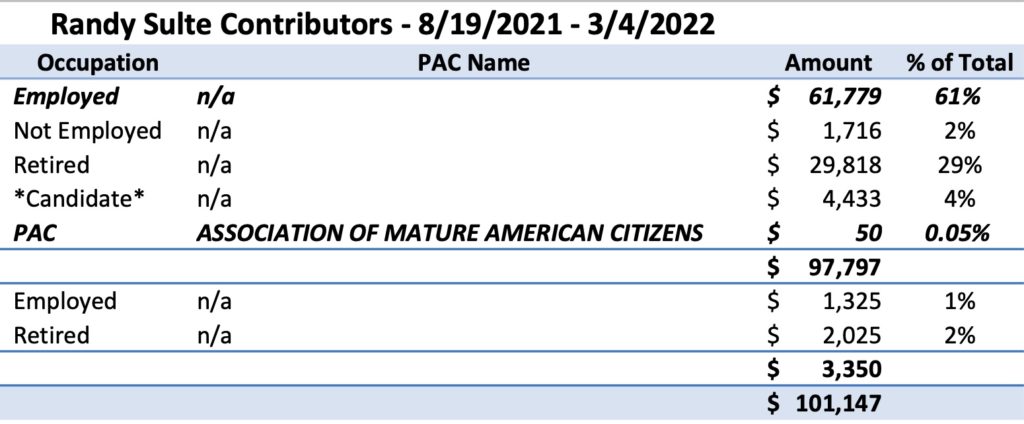
     Sulte, Randy – Filed 01/20/2022

School Board

School Board Seat A

     Murray, Cliff – Filed 01/20/2022

     Bellamy, ​Margo – Filed 01/19/2022 

     Cox, Mark Anthony – Filed 01/24/2022

School Board Seat B

     Murray, Cliff – Filed 01/14/2022 – Withdrawn 01/20/2022

     Lessens, Kelly – Filed 01/14/2022

     Baldwin, Benjamin R. – Filed 01/18/2022

     Darden, Dustin​ – Filed 01/27/2022

     Ries, Rachel – Filed 01/18/2022

Service Area Board of Supervisors 

Bear Valley LRSA – Seat B

Birchtree/Elmore LRSA – Seat C

     Lees, Adam​ – Filed 01/26/2022

Chugiak Fire Service Area – Seat C

     Stoltze, Bill – Filed 01/24/2022

Girdwood Valley Service Area – Seat C

     Wade, Guy​ – Filed 01/18/2022

Glen Alps Service Area – Seat C

Glen Alps Service Area – Seat D

     Marks, Roger​ – Filed 01/19/2022

Homestead LRSA – Seat A

     Parret, David​ – Filed 01/20/2022

Lakehill LRSA – Seat A

Mt. Park Estates LRSA – Seat C

     Redlinger, Bob – Filed 01/21/2022

Mt. Park/Robin Hill RRSA – Seat E

     Leary, Collin – Filed 01/20/2022

Paradise Valley South LRSA – Seat A

Rabbit Creek View/Heights LRSA – Seat C

     Pexton, Scott R. – Filed 01/27/2022

Raven Woods/Bubbling Brook LRSA – Seat C

Rockhill LRSA – Seat C

Section 6/Campbell Airstrip Road LRSA – Seat D

     Brown, Lonnie – Filed 01/25/2022

Section 6/Campbell Airstrip Road LRSA – Seat E

     Trueblood, Ted B.​ – Filed 01/18/2022

Sequoia Estates LRSA – Seat C

     Valantas, Robert A.​ – Filed 01/19/2022

Sequoia Estates LRSA – Seat D

     Mikko, Dagmar​ – Filed 01/19/2022

Skyranch Estates LRSA – Seat C 

     Wallow, Brian​ – Filed 01/27/2022

South Goldenview RRSA – Seat D

South Goldenview RRSA – Seat E

SRW Homeowners’ LRSA – Seat B

Talus West LRSA – Seat C

     Jorgensen, Lawrence – Filed 01/25/2022

Totem LRSA – Seat A

     Jensen, David​ – Filed 01/14/2022

Upper Grover LRSA – Seat C

     Dwiggins, Leon – Filed 01/14/2022

Upper O’Malley LRSA – Seat C

Upper O’Malley LRSA – Seat D

Valli Vue Estates LRSA – Seat C

     Strand, Paul​ – Filed 01/20/2022

Villages Scenic Parkway LRSA – Seat B​

Legislative committee to spend $100,000 to investigate why Permanent Fund Corp president was removed by board

The Legislative Budget and Audit Committee emerged from an executive session on Thursday to vote to approve spending $100,000 on a legal team and inquiry into the firing of Angela Rodell, former executive director of the Alaska Permanent Fund Corp.

Last week, the committee called the chair of the board of Alaska’s sovereign wealth fund before the committee. Craig Richards, however, was careful to not answer the committee’s specific questions, although many of those questions may have been answered in the public release of Rodell’s annual performance review.

The committee’s chair, Sen. Natasha von Imhof, was given subpoena power by the committee to force people to appear before the committee to answer questions.

The motions appear to be the first time in Alaska legislative history that the Legislature will get into the day-to-day business of the corporation, which is run as a separate entity owned by the State of Alaska. Breaking through the firewall that has separated the corporation from politics may be a bridge that, once crossed, forever changes the way the Permanent Fund Corporation is managed.

“We will provide a list of people that we would like the firm to contact and depending on what that person says when they initially answer the phone or email or whatnot, if they agree then the firm will proceed,” said von Imhof. “And if they say ‘I don’t want to agree’ then we will discuss.”

It’s especially meaningful that the investigation is being done in an election year, with von Imhof being talked about as a potential candidate for governor.

Legislature rejects salary commission’s recommendation on legislators’ per diem and salary

On Day 10 of the 2022 legislative session, the Alaska House of Representatives voted unanimously to oppose a plan by the State Officers Compensation Commission, which would have restructured pay for legislators, commissioners and the governor and lieutenant governor. The Senate had already voted to reject the commission’s salary and per diem schedule.

The bill is expected to head to Gov. Mike Dunleavy’s desk late Thursday or Friday; he has 15 days — subtracting Sundays — to sign it, veto it, or allow it to go into law without his signature.

With an unanimous House and Senate, it’s unlikely Dunleavy will want to get into a veto fight so early in the session, when it’s clear the Legislature has the votes to override a veto.

The State Officers Compensation Commission earlier this month voted to cut the per-diem allowances for legislators from $307 a day to $100, and at the same time raise salaries from $50,400 to $64,000 a year.

The way the math would have worked is that for the legislators claiming the most per diem, the commission was giving them a haircut of about $11,000 per year.

The commission’s proposal would have gone into effect next January if the Legislature had not taken action.