Wednesday, July 29, 2026
Home Blog Page 964

Anchorage school resource officers appear to be done with masks in schools; what will leftist school board do now?

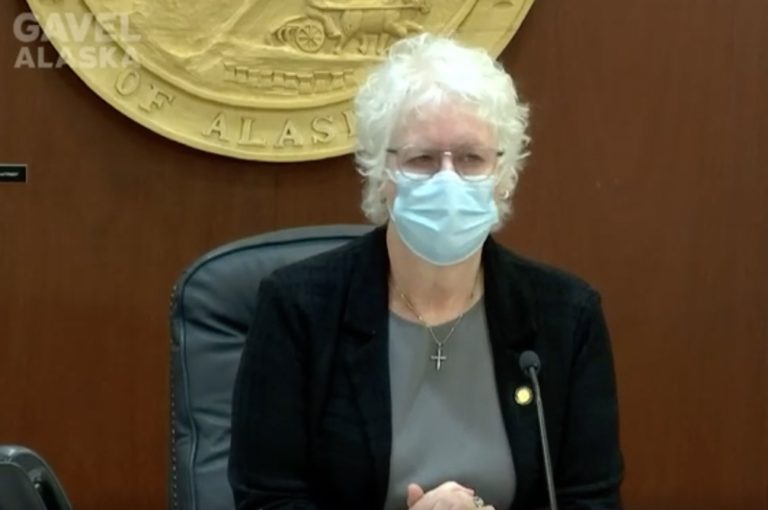
In a post on social media, the Anchorage School District has shown its appreciation for school resource officers — and none of them are wearing face masks in a school district where masks are the law.

Surely it was intentional. Maybe the school district leadership is trying to telegraph to the greater community that it’s done with mandatory masking. But will the Anchorage School Board keep forcing masks on kids in schools, or allow children to see each other’s faces — and the faces of their teachers and safety personnel?

The school board extended the mandatory masking of the kids into 2022, in an action that some parents view as the crime of the century. A growing body of evidence shows the pandemic policies of the past two years had led to a mental health crisis among the young. Superintendent Deena Bishop, who turned in her resignation due the board’s anti-child policies, is going to make another attempt at moving to a “mask choice” policy in the coming days, Must Read Alaska has learned. At this point, only school board member Dave Donley seems to support a lifting of the mask mandate.

Former ADN editor wants you to join ‘Fight the Fascists’ at rally for Dunbar, Zaletel, Weddleton, Perez-Verdia

34

Newspaper reporters and editors wonder why people don’t trust the media. In Alaska, it’s fairly easy to see the reason for the mistrust.

Exhibit A: The former Anchorage Daily News editor Pat Dougherty wants you to join him and “fight the fascists” running for Assembly. He invites you to an event in support of his candidates — the sitting Anchorage Assembly incumbents who brought the city to an economic standstill over the past three years, with their allegiance to former Mayors Ethan Berkowitz and Austin Quinn-Davidson.

The “Fight the Fascists” event is at Cuddy Park in support of incumbent Assembly members Forrest Dunbar, Meg Zaletel, Kameron Perez-Verdia, and John Weddleton, all who will be making an appearance at the Fight the Fascists event.

According to Dougherty, Save Anchorage is a fascist organization and is also an “insurrectionist” group. Save Anchorage is a Facebook page for centrists in Anchorage who object to the city being taken over by leftists on the Assembly and School Board.

Dougherty’s invitation to a campaign event to “Fight the Fascists”

In Dougherty’s thinking, opponents of the current Assembly members are fascists to be fought.

A look at Dougherty’s “fascists”

Democrat Forrest Dunbar, representing East Anchorage, is challenged by Stephanie Taylor, an African-American mother and volunteer who came to Alaska as a child, when her father transferred in the military. She is a traditional, conservative, church-going and community-volunteering resident of East Anchorage who has taught many classes in youth leadership. Dougherty would classify this as “fascism” that needs to be fought.

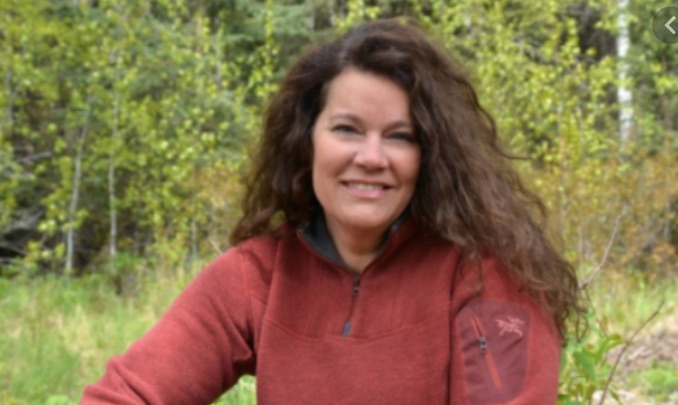
Stephanie Taylor is running for Anchorage Assembly District 5 – Seat H – East Anchorage

Democrat Meg Zaletel, in midtown-south, is being challenged by Kathy Henslee, a mother and grandmother who works as a real estate agent and tries to not be the first in the room to whip out photos of her grandchildren. “As I have watched the public servants in my beloved city ignore the citizen’s needs and make everyday life more and more difficult with restrictive regulations, out of control spending, and harmful social ideas I felt the need to act,” Henslee says on her campaign site. Her core principles are “Respect very person, Protection for our personal freedom, Humbly serving my neighbors, Upholding the rule of law for every citizen, the same way, every time, and A smaller government that encourages its citizens to pursue life, however, they want to live it, and then purposefully tries to stay out of the way,” she says on her campaign site.

In Pat Dougherty’s mind, this represents “fascism.”

Kathy Henslee is running for District 4 – Seat F – Midtown Anchorage

Democrat Kameron Perez-Verdia, who serves on the Assembly for West Anchorage, has a challenger in Liz Vazquez, who served in the Alaska House of Representatives. Vazquez was born in poverty in Puerto Rico, and pulled herself up by her bootstraps, graduated from law school.

Vazquez says, “I am an American of Puerto Rican heritage and an example of the American dream. I started school in Puerto Rico and learned English as a second language. My parents never finished high school and I was the first in my family to graduate from college. After eating a lot of macaroni and cheese, I obtained my law degree and later, my two master’s degrees.”

She is a former assistant attorney general for the State of Alaska, and a former criminal prosecutor, administrative law judge, who served four years on the Anchorage Equal Rights Commission.

In Pat Dougherty’s mind, this represents “fascism.”

Liz Vazquez is running for District 3 – Seat D – West Anchorage

“The road hasn’t always been easy, but it has been worth it, and it has taught me to see challenges as opportunities. The great reward has been serving Alaskans,” Vazquez said.

Democrat-associated John Weddleton, the Assemblyman for South Anchorage who is running for reelection, is being challenged by Randy Sulte.

He moved to Anchorage in 2004 with his wife and children. An Eagle Scout, Sulte attended the Colorado School of Mines and Seattle University Albers School of Business, where he earned a MBA. He is an engineer and a pilot. He is also chief operating officer of Kakivik Asset Management and CCI Industrial. Sulte has served for 16 years on the board of Youth Exploring Adventure (Hill Top Ski Area), where the board brought back ski racing, made significant site improvements, and in 2021 opened a new lift served bike park.

In Pat Dougherty’s mind, this represents “fascism.”

Randy Sulte is running for District 6 – Seat J – South Anchorage

Dougherty, who boasts a Pulitzer Prize during his long career at the Anchorage Daily News, is still a now-and-then contributor to the newspaper’s opinion pages and spends his days holed up in his south Anchorage home, retweeting savage messages from the Anchorage Press, the Blue Alaskan blog, Anchorage Action, and Dermot Cole, all extremists propaganda machines of the Left that are out of step with everyday Anchorage residents who voted for a conservative mayor who will fight the hard-leftists on the Assembly.

Dougherty hid his extreme views well when he was the editor of the Anchorage Daily News, but in retirement has let loose his true nature, liberally pouring on the “fascism” label as the next next municipal election approaches.

Dougherty may be doing more to undermine journalism in Alaska than the leftist crowd that currently runs the ADN.

A Gallup poll released in October found that just 36% have a “great deal” or “fair amount” of faith in what they see and hear in the news media. Pew Research also released results last summer, showing that conservatives don’t trust the media, while liberals do:

“Nearly eight-in-ten Democrats and Democratic-leaning independents (78%) say they have “a lot” or “some” trust in the information that comes from national news organizations – 43 percentage points higher than Republicans and Republican leaners (35%) – according to a new Pew Research Center survey conducted June 14-27, 2021. This partisan gap is the largest of any time that this question has been asked since 2016. And it grows even wider – to 53 points – between liberal Democrats (83%) and conservative Republicans (30%).”

Video shows Donald Trump backing away from support for Gov. Mike Dunleavy

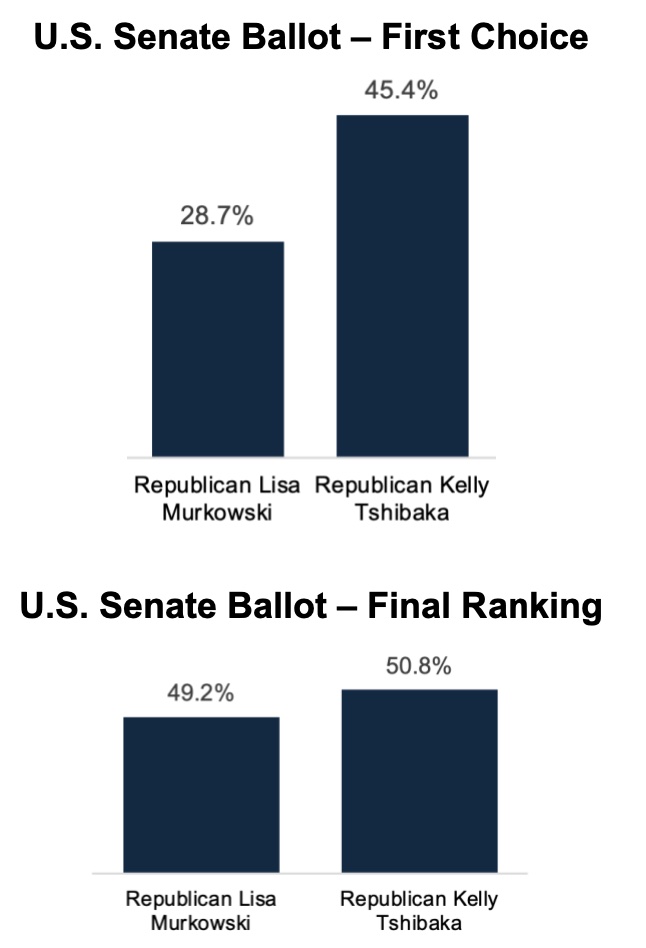
In a short video posted by an anonymous account on Twitter, former President Donald Trump can be seen at Mar-a-Lago saying he’s “not happy” with Gov. Mike Dunleavy of Alaska, because he hasn’t seen Dunleavy supporting candidate Kelly Tshibaka, who is running against Sen. Lisa Murkowski.

Trump said he was displeased about Dunleavy’s neutral stand in the Tshibaka-Murkowski race for Senate. Trump opposes Murkowski, supports Tshibaka, and was hosting a fundraiser for the Alaska Republican challenger at his six-star resort in Florida last week, where someone in the crowd took the video.

Gov. Mike Dunleavy is running for reelection and has taken pains to not involve himself in the Senate race between the senior senator for Alaska and Tshibaka, who is his former commissioner of the Department of Administration. He finds himself in a tricky spot because Trump also endorsed Dunleavy and had a fundraiser for Dunleavy’s recall fight at the Trump National Golf Club Bedminster in New Jersey last year. Now, he thinks Dunleavy should support Tshibaka.

Dunleavy is challenged by former Gov. Bill Walker, former State Rep. Les Gara, Kenai Borough Mayor Charlie Pierce, and Rep. Chris Kurka, as well as a small crowd of other candidates, as he runs for his second term.

Dunleavy has been a big supporter of Trump, due to Trump’s pro-Alaska policies, and Trump has been a fan of Dunleavy’s, but the feelings may have cooled at the moment, according to the video. See the video here.

Alaska Redistricting Board will appeal a judge’s ruling that favors mob rule

The Alaska Redistricting Board will appeal a decision by Anchorage Superior Court Judge Thomas Matthews, who on Tuesday rejected two parts of the new political boundaries set by the board for Alaska’s Senate and House districts.

The board deliberated in executive session and then voted 3-2 to challenge Matthews’ ruling, which ordered the panel to “take a hard look” at a Senate district that has a piece of Anchorage’s Muldoon neighborhood in the same Senate seat as Eagle River. Matthews also said the board had not given enough weight to the public testimony in Skagway and downtown Juneau — those two neighborhoods want to be paired together and exclude the apparently unhip Mendenhall Valley, a Juneau residential community. Skagway’s mayor said the people in the Valley could not possibly understand the tourism concerns that they share with downtown Juneau. Ironically, most who live in downtown Juneau work in government jobs, and the alignment of Skagway with north Juneau is geographically more compact.

The board’s lawyer, Matt Singer will challenge the rulings on key points of argument.

  1. The judge gave more weight to public testimony than to the informed decision-making by the Redistricting Board, and in doing so sets a huge precedent. If it stands, whichever group can pack a public hearing room will win, under this logic.
  2. The ruling by the judge was overly political, because he ignored the political boundary challenges of conservatives in the Mat-Su and Valdez, and ruled in favor of liberal challenges in East Anchorage and Skagway/Downtown Juneau.
  3. The judge also placed more emphasis on in-person testimony, to the disadvantage of working members of the pubic who cannot attend the public hearings, but send in their written comments.
  4. The board was not given due process during the court challenge. The judge set the rules of procedure, which only allowed the board to respond to the accusations of the challenging attorneys, and did not afford them the opportunity to explain why they made the decisions.

The board’s challenge to the Alaska Supreme Court must be filed by Thursday, Feb. 17.

Voting against the legal challenge were the two leftists on the board, Nicole Borromeo and Melanie Bahnke. Borromeo was appointed to the board by then-House Speaker Bryce Edgmon, and Bahnke was appointed by then-Supreme Court Justice Joel Bolger. The two women align with Democrats and favor Matthews’ ruling because it gives more power to Democrats.

More information about the redistricting process can be found at this link.

Financial reports show Bill Walker with the cash

The year-start report with the Alaska Public Offices Commission shows former Gov. Bill Walker in the lead with funds raised for his gubernatorial campaign, as of Jan. 30.

By law, candidates must file year-start reports with APOC by Feb. 15 to show the public what they raised and spent to date, and this report reveals that between Walker and Democrat Les Gara, the liberal side of the governor’s race is bringing in the majority of the cash — and it’s coming to their campaigns from major donors who are giving them the maximum allowed by law.

Walker and Gara raised more than $1.2 million between them in their separate-but-friendly races for governor, while Dunleavy and Republican challenger Chris Kurka raised $411,648 between them. Kurka did not announce his campaign for governor until just before the legislative session and is not allowed to raise money for campaigns during session, but raised a significant amount, considering the time he had.

Here’s the breakdown:

$311,380 – Gov. Mike Dunleavy, Republican. The incumbent began with $48,426, raised $311,380, spent $89,874, ended Jan. 30 with $269,932 cash on hand, and $16,525 of debt. Most of the funds are from Alaska small donors. This is more money than Gov. Parnell and Gov. Walker raised at this point in their re-election campaigns; neither of them won their re-election.

$100,268Chris Kurka, Republican, plus $3,599 raised for Paul Hueper, who is Kurka’s running mate and who is now receiving the donations, since Kurka cannot raise money as a sitting lawmaker. Kurka began with $4,847, spent $35,429, and closed out with $69,686 cash on hand. Kurka made it to the $100,000 mark by declaring about $15,000 in non-monetary contributions, such as furniture, used sign frames and in-kind consultants; and he posted a $10,000 check from himself to his campaign.

Charlie Pierce, Republican. Pierce filed a letter of intent on Jan. 22, but has not yet filed a year-start report for the eight days in January prior to the Jan. 30 APOC deadline. His year-start report shows $1,000 from his own bank account.

$667,943 – Bill Walker, undeclared. The former governor spent $94,605, and had $ 573,338 cash on hand, with just $12,500 in debts owed. An additional report he filed with APOC shows him bringing over $46,699 from a prior campaign.

$533,583 – Les Gara, Democrat. He began with $5,901 cash, reported income of $533,583, spent $84,778 so far, and had just $1,047 in debt.

Walker has a lot of big donations, with more than 100 donors giving the maximum of $1,500; Gara has 60 donations of $1,500 or more.

In comparison, Dunleavy has gotten nearly all his donations from small donors. Some 1,387 of the 1,800 total donors to the Dunleavy campaign were in the $5-200 range, which indicates his base is still with him. He has far more donors than either Walker or Gara.

Dunleavy donations averaged $174, while Walker’s donations average $571 and Gara’s donations average $257.

Gara, who is is raising a lot of money from out-of-state lawyers, shows $21,500 raised from Washington (mostly Seattle area) lawyers.

As of Feb. 1, 82 attorneys gave to Gara, who is an attorney, while 61 attorneys gave to Walker, another attorney, and 31 gave to Dunleavy, a former school teacher and superintendent.

Anchorage Muni conservative candidates file big fundraising reports

Candidates running for local (and statewide) offices had until midnight on Feb. 15 to file their first big cash reports with the Alaska Public Offices Commission.

The “year start” reports, showing campaign money raised last year through Feb. 1, give politicos a sense of how strong the campaigns may be. If this year is a sign, the race for Assembly Seat 5 between Stephanie Taylor and Forrest Dunbar is the one to watch most closely.

For conservatives, this report is stunning in that many of the Republican candidate are competitive, and this may be some of the most money ever raised by Anchorage municipal conservatives, outside of a mayor’s race, especially in an off year.

For example, Rick Castillo, a Republican, filed a year start report in 2021 for $16,000 in his race for Assembly. In 2020, Christine Hill, another Republican, posted a year-start report of just under $20,000 for her Assembly race. This year, the conservatives are raising more money than most legislative candidates.

Some year-start fundraising highlights for the Anchorage Municipal Election, which is April 5:

$109,913 – Stephanie Taylor, a Republican challenging Democrat Forrest Dunbar for Assembly District 5.

$167,414 – Forrest Dunbar, Anchorage Assembly District 5 Democrat incumbent.

– Notable is that in 2019, Dunbar reported raising $37,000 for his year-start report. This year’s heftier bankroll indicates Dunbar realizes he has a true contender in Stephanie Taylor, pictured above, who is well-known and respected in the East Anchorage neighborhood. Dunbar has more cash on hand, $144,016 to bring the heat toward the end of the campaign. Union political action committees have poured money in to the Dunbar campaign. Taylor reported having $66,499 on hand before Feb. 1.

$87,245 – Kathy Henslee, a Republican challenging Democrat Meg Zalatel for Assembly District 4.

$50,256 – Anchorage Assembly District 4 Democrat incumbent Meg Zaletel.

– Zaletel recently survived a recall attempt, and spent over $180,000 to prevent being removed from the Assembly. She has $45,000 cash on hand, as of the year-start report, compared to Henslee’s $63,000 cash on hand.

$62,178 – Republican Randy Sulte, challenging liberal incumbent John Weddleton for Assembly District 6.

$57,575 – Liberal Anchorage Assembly District 6 member John Weddleton.

– Not only has Sulte raised more money, he has more cash on hand for this south Anchorage seat.

$37,038 – Republican Liz Vazquez, challenging liberal Kameron Perez-Verdia for Anchorage Assembly District 3.

$70,310 – Liberal Anchorage Assembly District 3 incumbent Kameron Perez-Verdia.

– Perez-Verdia has $54,867 cash on hand, while Vazquez, who entered the race in December, has $32,459 cash on hand for the West Anchorage race.

$57.62 – Democrat Gretchen Wehmhoff, for the Eagle River District 2 seat on the Anchorage Assembly.

$15,362 – Kevin Cross, Republican for the Eagle River District 2 seat on the Anchorage Assembly.

– Notable in this race is that the incumbent, Assemblywoman Crystal Kennedy, is nor running for reelection and that Cross just entered the race on Jan. 10; Wehmhoff also entered late.

$46,378 – Democrat Anchorage School Board Seat A incumbent Margo Bellamy.

$71,726 – Democrat Anchorage School Board Seat B incumbent Kelly Lessens.

$12,308 – Republican Rachel Ries, challenging Anchorage School Board Seat B Democrat Kelly Lessens

The April ballot will feature these candidates:

Anchorage Assembly

District 2 – Seat A – Eagle River/Chugiak

     Cross, Kevin​ – Filed 01/21/2022

     Wehmhoff, Gretchen​ – Filed 01/28/2022

     Stephens, Vanessa​ – Filed 01/27/2022

District 3 – Seat D – West Anchorage

     Perez-Verdia, Kameron​ – Filed 01/24/2022

     Williams, Nial Sherwood​ – Filed 01/14/2022

     Vazquez, Liz​ – Filed 01/27/2022

District 4 – Seat F – Midtown Anchorage

     Zaletel, Meg​ – Filed 01/26/2022

     Henslee, Kathy – Filed 01/18/2022

District 5 – Seat H – East Anchorage

     Taylor, Stephanie – Filed 01/14/2022

     Dunbar, Forrest – Filed 01/18/2022

     Hall, Christopher​ – Filed 01/19/2022

District 6 – Seat J – South Anchorage

     Colbry, Darin – Filed 01/24/2022​​​

     Weddleton, John​ – Filed 01/25/2022

     Sulte, Randy – Filed 01/20/2022​

School Board

School Board Seat A

     Murray, Cliff – Filed 01/20/2022

     Loring, Dan – Filed 01/28/2022

     Bellamy, ​Margo – Filed 01/19/2022 

     Cox, Mark Anthony – Filed 01/24/2022

School Board Seat B

     Lessens, Kelly – Filed 01/14/2022

     Baldwin, Benjamin R. – Filed 01/18/2022

     Darden, Dustin​ – Filed 01/27/2022

     Ries, Rachel – Filed 01/18/2022

Judge says Senate redistricting map needs do-over, and that Skagway-Juneau House seat needs another look

3

Anchorage Superior Court Judge Thomas Matthews says the new political map for Alaska is imperfect, and some of the process for drawing it was also flawed, violating the Alaska Open Meetings Act by going into executive sessions. He said in his late Tuesday night ruling that the Senate map needs to be redone and one House district involving Skagway and Juneau also needs different lines.

His decision will most certainly be appealed to the Alaska Supreme Court. Matthews based much of his reasoning on the misuse of executive sessions by the Alaska Redistricting Board.

Five various lawsuits were brought against the board by interests ranging from the City of Skagway to the Doyon Native corporation and Tanana Chiefs Conference. Most were not mentioned in the judge’s decision, but he focused on the Skagway-Juneau and Eagle River-Muldoon areas.

“This Court finds that the Board’s refusal to consider and make a good-faith effort to incorporate public feedback relating to the placement of Skagway and the dividing line in Juneau was arbitrary and capricious, and thus unreasonable. The same holds true for the East Anchorage senate pairings. if the Board could simply ignore the preponderance of public testimony and make decisions based on a single Member’s personal views, then Section 10 would be rendered superfluous.

“This Court therefore orders a remand of the final plan to the Board with instructions to take a “hard look” at House Districts 3 and 4 and Senate Districts K in light of public testimony. On remand, the Board must either redraw these districts to incorporate the reasonable requests supported by the clear weight of public testimony, or the Board must offer an explanation as to why it believes the constitution, federal law, or other traditional redistricting criteria make it impossible to achieve those results,” Matthews wrote.

Skagway didn’t want to be paired with the Mendenhall Valley and Auke Bay, but wanted to jump over those more contiguous neighbors and be paired with the very liberal downtown Juneau. Others in that area — Haines and Gustavus — didn’t object to being paired with the area where a large majority of Juneau lives, north of Juneau, where the transportation access to their communities is.

Regarding East Anchorage being paired with Eagle River in Senate Seat K, Matthews said “For East Anchorage, the Board obviously violated the ‘hard look’ standard by ignoring public comment on the senate pairings. The Board left itself almost no time for comment devoted to senate pairings. Despite that abbreviated time period, the support for keeping Muldoon and Eagle River separate was loud and clear. And yet the Board ignored it to accommodate the wishes of a single Member, even though it was constitutionally possible to keep those communities together. Having fgailed to take an appropriate “hard look” at the Senate pairings, the Board violated the constitutional rights of East Anchorage Plaintiffs under Article l,& 7 of the Alaska Constitution.”

The inclusion of Muldoon with Eagle River has raised the ire of Democrats in Anchorage.

The redrawing of political boundaries is an exercise that takes place every 10 years after the national census, as a method to even out the populations between districts and ensure equal representation in the Legislature, and in other states, congressional seat boundaries. Members of the Alaska Redistricting Board are politically appointed by the governor, Senate president, House speaker, and Chief Justice of the Alaska Supreme Court. This board’s bios are at this link.

The entire decision can be found at this link.

Sen. Natasha von Imhof bows out of 2022 races

Sen. Natasha von Imhof said on Twitter Tuesday that she will not run for her Senate seat, nor any other political office in 2022. She will complete her term as senator for Southwest Anchorage, formerly known as Senate Seat L. Redistricting had pushed von Imhof and Sen. Mia Costello into the same district; both are Republicans, and a race between them would have been difficult.

On Twitter, von Imhof wrote, “Due to family circumstances, I will not be seeking reelection or participating in the ’22 election. I will serve out my term and then step away from politics to focus on my family. Thank you to my constituents and supporters for allowing me to serve our great state.”

Von Imhof has been rumored to be interested in running for governor, but with the recent passing of her father, Ed Rasmuson, she may now be planning to take a greater role in the family foundation, the Rasmuson Foundation.

Anchorage Young Republicans endorse Nick Begich III, criticize Don Young

The Anchorage Young Republicans club has awarded its endorsement to Republican Nick Begich III for Congress.

In announcing the vote, the Anchorage Young Republicans said, “Nick Begich does not share the same political views as his [Begich Democrats] family; he is an actual conservative and aware of all the major issues facing our state and country. We strongly encourage you to make it to one of his events and question him to confirm this for yourself.”

The group’s decision was influenced by recent actions from Congressman Don Young, including:

  1. – Rep. Young’s decision to introduce and endorse Deb Haaland, a radical leftist environmentalist, to the U.S. Senate during her confirmation hearing for Secretary of the Interior: “She has been as predictably bad for Alaska resource development as her record indicated she would be,” the YRs said.
  2. – Rep. Young’s vaccine mandate for his official office and revelations that he fired a young woman on his staff who chose not to get vaccinated for Covid.
  3. – Rep. Young’s “yes” vote on the PRO Act: “This was an anti-small business & pro-union bill that was (luckily) shot down in the Senate.”
  4. – Rep. Young’s attendance record. A recent article in Roll Call reported that the congressman was absent from attending committee markup sessions for more than 19 months. “When Speaker Pelosi instituted proxy voting during the pandemic, Congressman Young signed onto the Republican lawsuit calling proxy voting unconstitutional. However, he is one of the most prolific and regular Republican users of proxy voting,” the group stated. “Nick Begich represents a new generation of leadership for our state. His views on policy more closely align with ours and he has the energy to show up for work. While we continue to respect Don Young and those who still support him, we can no longer do so in good conscience. We are proud to endorse Nick Begich and hope you will consider supporting him as well,” the group wrote.

Congressman Young has served as Alaska’s sole member of Congress since 1973, after Nick’s grandfather, who was Alaska’s congressman, disappeared in what is believed to be a plane crash over Prince Williams Sound.

Begich also gained more endorsements from elected officials. He now has 11 Republican members of the Alaska House and Senate supporting him, including two Senate members and nine House members. New endorsements have come daily, with former Alaska Republican Party Vice Chairman Frank McQueary, State Rep. Ben Carpenter, and Kenai Republican activist Jill Schaefer, Anchorage activists Monte Dyson and Jeff Garness, Karen Lasseter of Sterling, JocQuis Scoiners of Anchorage, Kathy McCollum of Wasilla, and John Wisel of Fairbanks announcing recently that they are with Nick.