Thursday, July 30, 2026
Home Blog Page 957

Important business in the Alaska Legislature: Anchorage Democrat’s bill would rename Glenn Highway

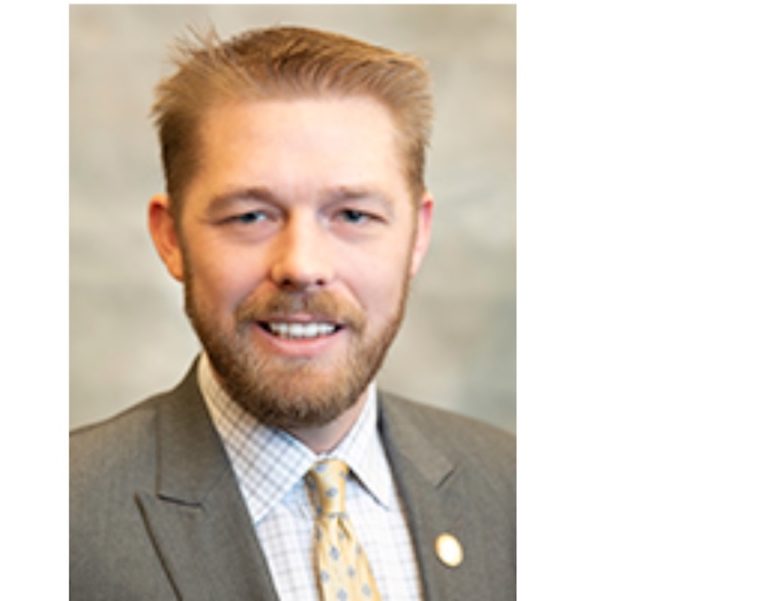
Democrats in the Alaska House are busy trying to rectify history. While Rep. Geran Tarr has offered a bill to rectify “outdoor equity,” Rep. Zack Fields of Anchorage has offered to rectify the name of the Glenn Highway, because, according to him, it’s named after a war criminal.

HB 352 would have the Alaska Department of Transportation set up a consultation process with tribes to rename the Glenn, likely into an indigenous name offered by the tribes of the area.

The bill itself is simple. It “amends the uncodified law of the State of Alaska to establish a process for consulting Alaska tribes, Alaska Native organizations, and communities along the Glenn Highway to provide input for renaming the Glenn Highway.”

But the reasoning is where it gets complicated. Fields provides documentation from the Anchorage Daily News, The New Yorker Magazine, and his own reasoning that Edwin Glenn tortured Filipino suspects during interrogations while serving in the Philippine-American War.

Fields reports that the Glenn Highway was along a trail used by Dena’ina, Knik and Eklutna tribes for trade and commerce between Cook Inlet and the Copper River Valley. The road itself was built and completed in 1942 to help defend Alaska against invasion by Imperial Japanese forces. Glenn was a judge advocate and captain in the Army who commanded the initial expeditions to chart the route.

Later, Glenn was sent to the Philippines, where he was a warrior in the style of his generation. He was said to have waterboarded the mayor of one town, and ordered another town burned to the ground — both actions not unheard of in wartime.

President Theodore Roosevelt had Glenn returned to San Francisco to face court martial. He was found guilty and relieved of his command for an entire month, and fined all of $50.

“Further, Glen’s conviction as a war criminal should disqualify him on being the namesake for one of Alaska’s longest highways,” Fields said in his explanation for wanting to change the name.

“Alaska has more Native American language speakers than any other state, and over 200 existing languages today. In combination with precedent in state and federal law for tribal consultation, the State should consider consulting with local communities and tribes along the highway to consider a more appropriate name for the Alaskans who live there,” Fields said.

So far, the bill has only Fields as a sponsor and has been referred to the House Transportation Committee, where it was heard on March 1, with invited public testimony from groups and individuals supportive of the change, including Anchorage Daily News columnist David Reamer, who has written about what he sees as a problematic name.

Murkowski gives mixed praise, Tshibaka pans Biden speech

Alaska Sen. Lisa Murkowski issued the following statement following President Joe Biden’s first State of the Union speech, which was given on Tuesday evening in the U.S. Capitol:

“We just listened to President Biden’s first State of the Union address to Congress. And I believe he started his address appropriately and with the right tone, indicating that the world is watching the devastation in Ukraine, the atrocities that we are seeing delivered by President Putin out of Russia, reminding us all as a nation that we cannot stand by, the United States cannot stand by, the free nations of this world cannot stand by while Russia invades an innocent country, with innocent lives being lost.

“It was a reminder to us again of the strength of the spirit of the Ukrainian people and a reminder that democracy is something to fight for every day, and we will stay committed to that fight and the Ukrainian people and the many around the world are coming together.

“So, I think the emphasis the President placed at the outset was very, very important for us in the United States but for the world to hear as well.

“I wish that there had been a greater emphasis, however, on the role of the greatest sanction of all. I certainly appreciate what has been put in place with financial sanctions, but we see how Putin has used energy as a weapon, as a tool in this effort in Ukraine and clearly with Europe. The President has chosen to not engage, to not engage literally with energy as a means of sanctions. He has made the announcement this evening that additional reserves from the Strategic Petroleum will be released to help alleviate temporarily the pressure that we are seeing on prices.

“But, this is inconsistent and, in my view, almost hypocritical that we would allow Russia to be able to provide this country with oil while we provide dollars to Russia to help them finance this war against Ukraine. This was a missed opportunity of President Biden tonight and one that I hope in the days ahead he sees the light and he recognizes that this is an area that we must look if we wish to really put the directed twist to Putin. 

“He attempted to point out those areas of common ground, those areas that we should seek bipartisan unity. And I think he highlighted a few key areas where we have good work to do. There’s good support to addressing the issue of burn pits to help our veterans. He spoke to the issue of mental health and what more needs to be done. He raised the issue, again, of something that I care very much about and that’s violence against women and what more we can be doing when it comes to public safety. So those are areas that I think he was right to point to.

“But it was a bit incongruous when he cited specifically to some measures that have been taken before the Congress and resoundly defeated on a party line basis. And he’s asked us to basically run that play again. That to me doesn’t deliver the kind of unity that we need. That to me is not where we want to be focusing our energies.

“We need to be working together on these areas of common ground. We need to be working together to, again, show the world a unified front when we are engaged in aspects of a very, very difficult situation in Europe. We need to be behind our military, behind our veterans, behind those that are truly putting everything that they have out on the line for us.

“The President hit some good points when it came to Ukraine and Russia, but I think he failed when trying to bring the nation together in a manner and a way that strikes the right chord on unity.”

Republican Senate challenger Kelly Tshibaka was not as charitable toward the speech — or toward Murkowski. She issued the following statement:

“Of course, what we needed to hear from Joe Biden was exactly what he didn’t say. He should have said he was wrong to attack Alaska’s resource industries because he now sees that squandering our energy independence has disastrous ramifications on the world stage. He should have said he was wrong to prioritize a pipeline that Vladimir Putin wanted over the production of energy back home. And he should have said he intends to sanction Putin’s energy industries as punishment for invading Ukraine, while increasing our own energy output to compensate.

“But he didn’t say any of those things because he can’t. The radical environmentalists who are in control of him and his administration won’t allow it. This means that, fundamentally, environmental radicals are in charge of America’s foreign policy.

“Biden is a failure of a president, but incredibly, Lisa Murkowski continues to enable him. She cast the tie-breaking committee vote to advance Interior Secretary Deb Haaland to final confirmation, putting Haaland in power to lead Biden’s energy-annihilating agenda. Murkowski’s excuse is that her vote really didn’t matter because all this was going to happen anyway with Biden as president. This ignores two things: first, Murkowski helped enable Biden to become president by vocally opposing President Donald Trump, and second, the job of Alaska’s senator is to fight for Alaska, regardless of who is president.

“When I’m the next senator from Alaska, I won’t just throw up my hands in futility. When something is bad for us, I’ll fight like hell for Alaska and do everything in my power to stop it.”

Alaska Airlines suspends partnership with Russian S7, Aeroflot airlines

Alaska Airlines’ partnership with the Russian Airline company S7 came to an end today, as the company said that it was concerned about Russian aggression against Ukraine.

” We are deeply concerned by the humanitarian crisis taking place in Ukraine. As a result, we are temporarily suspending our partnership with the Russian airline S7, a fellow oneworld member,” Alaska Airlines said in a statement. “Starting today, March 1, our guests will not be able to earn miles on S7. Our ongoing work to enable redemptions on S7 will also stop.”

Alaska Airlines also suspended the more limited “interline relationships” with Aeroflot, the largest carrier in Russia. Interlining allows passengers on one airline to be ticketed on a competing airline for various issues, such as bad weather.

In Washington state, where Alaska Airlines is headquartered, Gov. Jay Inslee said the state will sever ties with Russian entities doing business with Washington agencies, and he urged private businesses to end ties with Russian entities as well.

Assembly puts reapportionment public hearing at end of Tuesday agenda to avoid public comment

At tonight’s meeting of the Anchorage Assembly, the Assembly leadership has placed the reapportionment public hearing at the end of the agenda, when most of the public will have left the meeting.

Reapportionment is the redrawing of the Assembly districts, a process that takes place every 10 years. A public hearing is scheduled for Tuesday, March 1, but the item is 14I on the agenda. There are eight other public hearings in front of it. Assemblyman Chris Constant, who serves as the chairman of the reapportionment committee, is also vice chair of the Assembly, and is pushing forward his maps, as he tries to take the military community away from Eagle River.

At the Feb. 25 meeting of the reapportionment committee, Constant said that the Hillside of Anchorage was full of privileged people who were bound and determined to get their way on the redistricting maps.

“We’re going to allow the people of privilege to get their way for the next 10 years,” he said, objecting to the map that many feel is appropriate, allowing Eagle River to retain its ties to the military neighborhoods of JBER.

Listen to Constant talking about the Hillside residents here.

The meeting starts at 5:15 pm on the ground floor at the Loussac Library, at the corner of 36th Ave. and Denali Street in Midtown.

The Assembly agenda can be found at this link.

Art Chance: Diving under the desk to avoid nuclear bomb

By ART CHANCE

The hydrogen bomb and I were born in the same year, 1949. I grew up surrounded by major military bases including a strategic air command base– the guys with the nukes — about 75 miles away. Today, the U.S. military has a few hundred active duty aircraft at any given time, but in the 1950s and 1960s, it had several thousand. 

A major military exercise produced an aluminum overcast. Our fields and lawns were littered with strips of aluminum foil; the WWII term was “window,” that they dropped to confuse radar. Let me assure you that a B-52, an 8-engine, intercontinental range nuclear bomber with a 180-foot wingspan is a very impressive sight and sound at 500 feet over your head when you’re a young boy. 

There was a mid-air collision involving a B-47, a smaller 6 engine cousin of the B-52, a few miles off Tybee Island, Georgia, on Feb. 5, 1958. The B-47 was damaged but still aloft, so it dropped a 7,600-pound Mark 15 nuclear bomb load offshore to lighten its load; the bomb has never been found, or at least nobody has admitted finding it.

To a 10-year-old boy who loved trucks, trains, boats, and planes it was an almost idyllic existence. For a boy who hadn’t yet really discovered sex, it didn’t get much better than a B-58 Hustler, 4-jet, delta wing supersonic bomber flying over at the better part of a thousand miles per hour with a wall-shaking sonic boom in its wake.   

But there was a price; every couple of weeks you heard the piercing scream of the air raid sirens and got to dive under your desk at school and wait for the blinding flash of the nuclear bomb. Major buildings all had that yellow and black sign that designated a “Fallout Shelter.”   People who were wealthy enough built and supplied personal bomb/fallout shelters. The rest of us took the traditional Southern “God will make it right” attitude and went about our lives, but for most who still lived very close to the land, food and survival supplies were just what you put in for winter every year.

In October of 1962, I had just turned 13; I was grown, and I knew everything there was to know, and just wanted to be on my way to ruling the world. In the election of 1960, John F. Kennedy had made politics into a popular television show. NBC’s Huntley-Brinkley Report and CBS’ World News Tonight with Walter Cronkite dominated American dinner tables and opinions. Only if you lived in a major urban area did you have the choice of one or the other; most of America had one TV channel in those days, and a good bit of the country still had no television service.  

Longtime Alaskans recall that the first live TV broadcast ever in Alaska was the moon landing in 1969 and it took the entire resources of the Congressional delegation and the US Department of Defense to bring it to Alaska. If it is any comfort, I was going to college in Southeast Georgia about 100 miles from a good sized city; I watched the moon landing on a small black and white TV with rabbit ears and a very snowy picture. Nobody had 200 HD channels in those days. When I came to Alaska in 1974, the evening news was at 7 am the next day — if the plane from Seattle got in with the reels.

I lived in the Huntley-Brinkley World; we didn’t have one of those rotators that could turn your TV antenna toward a different city.   I climbed up on the house to turn it to the CBS station to watch The Beatles on Ed Sullivan a few years later. If you were a kid in those days, your information was the evening news, whatever there might be on “educational TV” at school, and whatever you got from your parents at the dinner table.   

Most families took the paper, both the daily from a nearby big town and the local weekly, and they read it cover to cover and the covers too, especially the local paper. Everybody understood what the political bent of a particular paper was. In Georgia, the Atlanta Constitution was the paper the Yankees loved; liberal, by Southern standards, and was New Deal supporting. The Constitution won Pulitzers. The Atlanta Journal was the business-oriented paper, but not business enough to be seriously considered a Republican paper. The Augusta Chronicle was old-time Southern, as was the Macon Telegraph. The Savannah Morning News was the one and only Republican paper in Georgia in those days. You made a political declaration by the newspaper box on your mailbox, just as you once did here in Anchorage. 

Radio was still somewhat important but not so much as it had been a decade before. Radio had become more of an entertainment medium than an information medium, but if you had the radio on in the car, you got their minute or two of what passed for news. We had a lot less information in those days, but in my view it was better if not always objective information.

Even if you were a kid, you couldn’t escape world events. The movie “October Skies” was very real and we all went out at night to see Sputnik tracking across the sky. It was as good an education as federal money provided to Southern schools. The first telecommunications satellite went up that summer, Telstar, which brought the first live transatlantic television and other modern telecommunications.

In retrospect, it might seem a tense period, but in reality, it had been a tense period for our whole life, and we were accustomed to it. And then it got tense. The news started to bubble up that the Soviets were placing nuclear missiles in Cuba. It was still unsettled in those days just what Fidel Castro was; some said a Cuban patriot, some said a Soviet puppet. Soviet missiles 90 miles from the U.S. settled that question. The Soviets/Cubans shot down a U.S. U-2 reconnaissance plane trying to take a peek, which only increased the tension, and this wasn’t long after the Soviet shoot-down of a U-2 over the Soviet Union, so nerves were raw.

The truth was as rare then as now, and nobody knew that the US had nuclear missiles in Turkey as close to Moscow as the Soviet missiles in Cuba were to Washington. The U.S. demanded the removal of the Soviet missiles from Cuba and the Soviets said “Nyet.”

The interstate highways weren’t yet finished in The South in 1962, so the way to Florida was the two lane blacktop of the old federal highways.   My home town has the singular distinction of being the first place that two transcontinental federal highways intersected.   US 80 from San Diego to Savannah and US 1 from somewhere in Maine to Key west cross at the Courthouse Square in my old home town, though the courthouse isn’t there anymore and there isn’t much traffic. In 1962 there was still a lot of traffic and soon came a lot more.

In October of 1962, my world turned olive drab green. The roads were clogged with military convoys headed for Florida. Soon our intersections were supervised by MPs and we were limited to only certain hours on the major roads. Endless miles of convoys of troop transports and transports for tanks and other military vehicles. The rickety old Georgia and Florida Railroad, built to haul Florida watermelons to Yankee markets, carried never before seen traffic as it hauled tanks and heavy vehicles south to Florida. The skies were filled with aircraft.

I don’t know that I was afraid; I was a young teen and immortal. But my parents were afraid. They heard from their grandparents first-hand memories and recollections of Sherman’s troops in the yard; they knew something about war. And then calmer minds intervened. The Soviets agreed to remove their missiles, maybe, from Cuba. The U.S. agreed to remove its missiles from Turkey so long as it didn’t have to admit that it had them, and the Soviets went along.

The hydrogen bomb and I have had a good run; we’re still here after 70-odd years. For a few years there, I thought we were done with this.   Nikita Khrushchev was a rational actor, as was John F. Kennedy. I’ve long said that we are all alive because the Russians loved their children.   In my 72 year,s this is the first time that I’ve heard a Russian leader threaten nuclear war out right, and I’ll confess to being afraid. 

Art Chance is a retired Director of Labor Relations for the State of Alaska, formerly of Juneau and now living in Anchorage. He is the author of the book, “Red on Blue, Establishing a Republican Governance,” available at Amazon. 


Bipartisan: Two Alaska lawmakers send letter to Permanent Fund, urging divestment from Russian assets

Two Alaska lawmakers from opposite sides of the political spectrum sent a letter to the Permanent Fund Corporation urging immediate divestment from its Russian assets.

The Alaska Permanent Fund’s investments in Russia are about $210 million, which represents 0.2 percent of the total assets of the $81 billion state-owned corporation.

Rep. Zack Fields, who is nearly at the farthest left of the Democrat caucus, and military man and Republican Rep. David Nelson signed the letter addressed to Permanent Fund Board Chair Craig Richards, saying that Russia’s aggression towards Ukraine had put a significant portion of Alaskan public dollars at risk through economic sanctions.

“Russia’s unprovoked attack can not go unanswered,” Nelson said. “The reports I’m hearing that the Russian army is targeting Ukrainian civilians is beyond the pale. Alaska must respond as swiftly as possible and divest the Permanent Fund Corporation’s investments in Russia.”

“This is not only a matter of our moral obligation, but also one of exposure to the Permanent Fund Corporation’s investments,” Fields said. “Divestment would protect Alaskans’ investments and reduce resources available for Putin’s war machine.”

The Alaska Permanent Fund is a sovereign wealth fund owned by the State of Alaska, which was started with proceeds from the sale of oil from Alaska’s North Slope.

Sullivan blasts Biden over ‘holy war’ on American energy

In an interview on Fox News’ The Ingraham Angle on Monday, U.S. Sen. Dan Sullivan demanded President Joe Biden and his administration end their “holy war” against domestic energy production.

Sen. Sullivan revealed that he sent a letter to the president in advance of the State of the Union outlining specific actions the Biden administration can take to restore domestic energy production in order to lower skyrocketing energy prices and to help America’s European allies be less dependent on Russian oil controlled by President Vladimir Putin’s regime.

“The Biden administration needs to wake up to the fact that we’re in this new era of authoritarian aggression led by dictators from Russia, but China as well. And you’ve done a great job focusing on that,” Sullivan said. “I’m sending a letter to the President tomorrow, before the State of the Union, with a number of Republican senators saying you need to course correct on some key issues in one of the biggest [areas]—exactly what you said—the holy war. You’re right. With the far left, it’s a holy war against American energy. It’s driving up the price of energy for American working families, it’s laying off workers in my state, the great state of Alaska, and here’s the other thing. It’s empowering dictators, like Putin. It’s killing us in three different areas. It makes no sense. But you’re right. It’s a holy war for so many on the far left.”

Huge fundraiser for Assembly candidates builds momentum for turning the corner in Anchorage

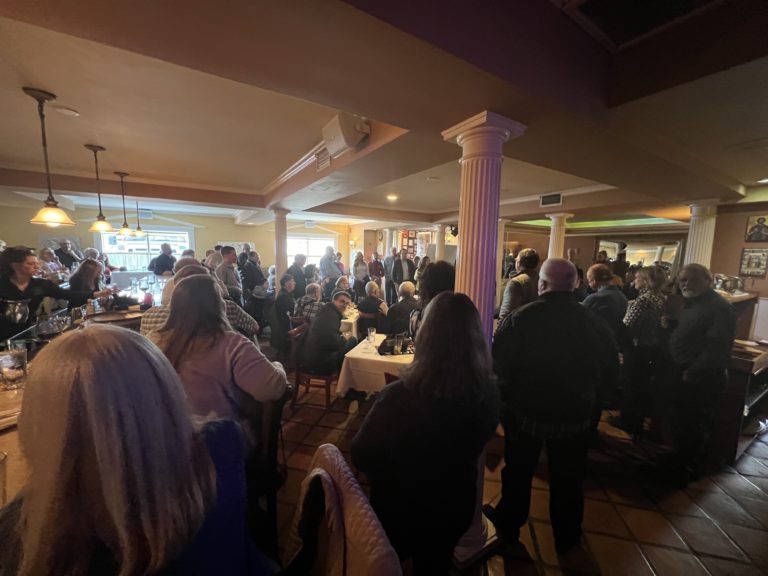
According to long-time politicos, people have rarely seen such a big fundraiser for Anchorage Assembly candidates as they did on Monday night at the Main Event, off of Old Seward Highway at 76th Ave.

More than 150 people crowded into the Mardi Gras party for five candidates who hope to bring reason and balance back to the Anchorage Assembly — Stephanie Taylor, Kathy Henslee, Randy Sulte, Kevin Cross, and Liz Vazquez. The mood was festive, the room was loud, and several people came dressed in Mardi Gras costumes. Sources said $40,000 was raised between the five candidates, the event organizers said.

Emcees Rick Green and Dave Stieren introduced the candidates and ran a Jeopardy-style game show program with them, with questions such as, “Which Assembly member says he is not a Democrat but records show he only has donated to Democrats?” The answer, easily given by candidate Randy Sulte was Assemblyman John Weddleton, who represents south Anchorage, District 6, Seat J.

Assemblywoman Jamie Allard of Eagle River said she hopes to get some help on the Assembly. She has served as nearly the lone voice for conservatives for the past two years.

She pointed out the qualities that each of the five candidates would bring to the Assembly: Integrity, ethics, legal background, judgment, listening to the people of Anchorage, and working on issues that matter in an reasonable way.

Anchorage Mayor Dave Bronson attended and spoke. Also spotted in the crowd were congressional candidate Nick Begich and State Senate candidate Tuckerman Babcock, School Board member Dave Donley, and school board candidates Rachel Ries and Mark Anthony Cox.

Craig Campbell: This is our city, so let’s vote like we’re saving its life

By CRAIG CAMPBELL

On July 1, 2021, Dave Bronson was sworn in as our Anchorage mayor.  He brought with him a vision of smaller government, budget discipline, revitalizing our depressed economy, streamlining the development process, reducing homelessness, and tackling crime. It was a positive message focused on reversing the negative trends of the previous six years. I was proud to be one of the first to join his administration.

The honeymoon with the Anchorage Assembly was short lived. Friction between two very different visions for Anchorage collided almost immediately. I watched as initiatives presented by the mayor were dismissed by the Assembly. Theatrics usurped the public’s business.  Tensions grew and each side became more polarized. In fact, never in my almost 40 years of public service, to include nearly a decade on the Anchorage Assembly, have I witnessed such a bitter relationship.

I departed the Bronson Administration in late October to assist a new chief executive officer at my old company, Alaska Aerospace.  It provided me an opportunity to view the interactions between the Administration and Assembly from outside the organizations. I watched, as most did, as tensions continued to fester.  

While I believe Assembly members and Mayor Bronson share a passion for serving our municipality, we have seen a wee bit too much passion these past few months. Truth is, at least nine members of the Assembly have a drastically different view of Anchorage than does Mayor Bronson and they have been anything but cooperative with the Administration. Elections will sort out that situation.

Tension between the legislative and executive branches of government is healthy in a democratic society. However, when tension becomes destructive, and sometimes even personal, representative government fails. I do not believe any of our elected officials seriously desire that outcome, despite some of the recent harsh rhetoric, but this constant fighting is causing a breakdown in good governance for Anchorage.  It’s time to lower the temperature. While the Administration cannot control how the Assembly acts, it can provide the leadership Anchorage residents expect to guide our city towards a bright future.

You would never know it from the media, but Mayor Bronson is making some significant achievements. Inheriting an $18.9 Million deficit from the previous administration, Bronson proposed a reduction in the size of government and submitted a FY2022 budget $7.5 Million below the Tax Cap. Unfortunately, the Assembly increased the budget back to just under the tax cap. 

The tax and spend mentality of the Assembly majority of nine, with an objective of more government control over our lives, is one of the primary reasons Anchorage has been in decline.  

Bronson is right: “Spending in the Municipality ballooned 20% from 2016 to 2021, while our population declined by nearly 15,000 residents.  We must reign in spending and put taxpayers first.”

Mayor Bronson’s vison for Anchorage is a vibrant, safe community where individuals control their own lives, not subservient to government regulations and mandates, such as the useless and oppressive mask mandates.   

To accomplish this, he recently obtained Assembly approval for the ground lease between the Anchorage Community Development Authority and the 6th Avenue Center LLC to build a new multi-purpose structure that will include a hotel, apartments, a restaurant, and retail space in downtown Anchorage.  Renovation of the downtown Key Bank building damaged in 2018 continues, with completion expected this year, which will further stimulate increased business activities in downtown.  

Bronson is also moving forward with establishing a new downtown library, a priority of the Anchorage Library Foundation. A long overdue renaissance for downtown is underway. These projects are just the beginning to revitalizing the Anchorage economy. 

He is on track to repair and modernize the deteriorating Port of Alaska dock, winning the lawsuit against the US Maritime Administration and working with state and federal agencies to secure the needed funding. After years of mismanagement by the previous administration, Bronson is making the Port of Alaska a world-class port that will serve nearly 90% of Alaskans for decades to come.  

We are seeing an improvement in the homeless situation. Winter homeless camp clearings are making a difference. Closing the Sullivan Arena Homeless shelter this summer should be another positive step in developing a long-term program to assist the homeless in addressing each individuals underlying issues, rather than warehousing them or leaving them in the woods or on the streets.  

Despite the continuous friction between the executive and legislative bodies, exacerbated by a liberal media that highlights the theater but mostly ignores the successes, Mayor Bronson is accomplishing the goals he established when elected mayor.  It would be good if he had more support from the Assembly.  

The next municipal election is April 5.  Ballots will be mailed out soon — March 15.  Every vote matters. 

To bring more balance to the Assembly, I highly recommend voting for Kevin Cross, Stephanie Taylor, Kathy Henslee, Randy Sulte, and Liz Vazquez for the Anchorage Assembly. These fresh faces would put the brakes on the Assembly’s progressive agenda of blocking Mayor Bronson’s efforts to reduce the size and cost of government, reduce government control over our lives, and bringing back a vibrant Anchorage economy. 

When government gets out of the way, society can flourish. Let’s bring back some balance to the Assembly, stop the Tuesday Night Fights, and make Anchorage an “All American City” again.

Craig E. Campbell served on the Anchorage Assembly between 1986 and 1995 and later as Alaska’s Tenth Lieutenant Governor.  He was the previous Chief Executive Officer and President for Alaska Aerospace Corporation.  He retired from the Alaska National Guard as Lieutenant General (AKNG) and holds the concurrent retired Federal rank of Major General (USAF).