Will the next Fairbanks mayor be Republican David Pruhs or Democrat Valerie Therrien? With the current mayor Jim Matherly, a Republican, running for State Senate, Fairbanks will have a new mayor after its Oct. 4 municipal election.
Conservatives in the heart of the Interior are on guard for keeping the mayor’s office in the red column at a time when Anchorage has struggled with leftists taking over important roles in city government.
David Pruhs has been a real estate broker for 20 years, and also runs a real estate education firm for new licensees. He was a commissioner on the State of Alaska Real Estate Commission, a two-term city council member, and the present director of the Fairbanks Neighborhood Housing Board, a nonprofit focused on affordable housing. The lifelong Fairbanksan is also the founder of the Alaska Barbecue Association, which puts on a competition every year that brings in people from all over the country to Fairbanks.
Pruhs is also the founder and chairman of the Polaris Working Group. The famous building downtown has been boarded up for years and is in disrepair; it is considered unsalvageable but removing it has been wrought with regulatory barriers. The group has secured funds to demolish it, but still has to work through the problem of where to take the asbestos; members have worked closely with the D.C. delegation to secure the funds for the city, which is the unfortunate owner of the property due to unpaid taxes of the previous owner.
Pruhs is also past chair of the borough planning commission and past member of the borough board of equalization. Pruhs’ campaign website is at this link.
His opponent is a liberal lawyer who serves on the Fairbanks City Council. Valerie Therrien signed the recall petition against Gov. Mike Dunleavy in 2017, when supporters of former Gov. Bill Walker tried to have Dunleavy removed from office, just months after he was elected. She is a member of the League of Women Voters, American Association of University Women, is a registered Democrat and longtime activist in Democratic politics who has lived in Fairbanks for 46 years.
The last Democrat to hold the mayor office was John Eberhart, who was beat by Matherly in 2016.
More information about candidates in this and other elections related to Fairbanks can be found at interiorrepublicans.org.
Nearly 100 Republican members of Congress have called on House Speaker Nancy Pelosi to hold accountable President Joe Biden for what they say is his “illegal $300 billion student loan giveaway.”
Initially, the cost estimate was $300 billion. However, since then, the Committee for a Responsible Federal Budget (CRFB) projects that “cancelling up to $20,000 for some borrowers will cost taxpayers between $440 billion and $600 billion over the next ten years, with a central estimate of roughly $500 billion.”
The federal government’s overall actions on student loans since March 2020 have cost roughly $800 billion, it notes. “Of that amount, roughly $750 billion is due to executive action and regulatory changes made by the Biden Administration,” it states.
The president has proposed canceling $10,000 for individuals earning $125,000 or less per year or married couples earning less than $250,000 a year. Those who received federal Pell Grants and earn less than $125,000 would also be eligible for total forgiveness of $20,000.
At a news conference on Friday, White House Press Secretary Karine Jean-Pierre said it’s a very targeted plan that’s going to give relief to 90% of Americans who are making less than $75,000 a year. That is important. This is a campaign promise that the president made and kept and he went beyond, not just the $10,000 but up to $20,000.”
Republican U.S. Reps. Jody Hice of Georgia and Elise Stefanik of New York led a coalition of 94 Republicans who sent a letter to Pelosi on Friday arguing the president’s plan is illegal.
“Noticeably absent from the President’s plan is any plausible legal authority to implement such a policy,” they write. “No provision of the Constitution nor any act of Congress, including the Higher Education Act, grants President Biden or the Secretary of Education the authority that they falsely claim to wield through this unilateral action.”
They quote a July 2021 claim Pelosi made in which she said, “People think that the president of the United States has the power for debt forgiveness. He does not. He can postpone, he can delay, but he does not have that power. That has to be an act of Congress.”
Of Pelosi’s claim, Hice said in a statement that he was “demanding that Speaker Pelosi decisively act and stand by her previous statement – a direct repudiation of President Biden’s executive overreach.”
Many TV ads falsely credit Sen. Lisa Murkowski with helping the military. Because of her voting approximately 90 percent of the time with Obama and Biden,
Murkowski supported:
Punishment and removal of Sergeant Phillip Monk for his views on traditional marriage.
Technica Sergeant Layne Wilson had his 6-year re-enlistment reduced to one year because of simply voicing a moral objection to homosexual “wedding” in the base chapel.
Navy Chaplain LCDR Wes Modder quoted a Bible verse during private counseling and was terminated of his award-winning career and was relieved of duty.
Marine Lance Corporal Monifa Sterling was given a bad conduct charge and reduced from a rank of E3 to E1 because she posted a scripture, “No weapon formed against you shall prosper” Isaiah 54:17
Air Force Colonel Leland Bohannon was denied promotion and removed from command for refusing to sign a marriage certificate.
Chaplain Gordon Klingenschmitt lost his 16 year career, millions of dollar pension, his home and the honor of serving his country because he dared to pray in Jesus name. Thanks to a wave of support formed across the heart of America, Congress later struck down reversed and rescinded the Navy’s unconstitutional policy restoring the rights of chaplains to freely express their faith and to pray in Jesus’ name.
(Documentation from Chaplain Gordon James Kingenschmitt, Ph.D. PrayInJesusName.org, Colorado Springs, CO 80970)
Vote for Kelly Tshibaka. She’s is the daughter of a Vietnam veteran and comes from a family of true patriots.
She can be trusted and has integrity, applying our original U.S. Constitution, Bill of Rights, and Declaration of Independence when decision-making.
While the long wait for the Division of Elections to resolve the special primary is clearly making ranked choice voting less popular with Alaskans, Must Read Alaska predicts that someone with the last name starting with the letter “P” will win: Either Sarah Palin or Mary Peltola will prevail by the closest of margins and there may need to be a recount.
It could come down to 500 votes either way. We’ll know on Aug. 31, when the Division runs the second level of ranked choice voting counting.
With the regular primary now basically complete, it’s time to remind readers that for most seats in the House and Senate, the same candidates who were on your primary ballot will be the ones who appear on your general election ballot. Because of ranked choice voting, the top four go to the general, but in the vast majority of House and Senate races, there were only three or fewer candidate to begin with, which makes the whole primary just an expensive poll.
That said, a couple of observations:
Dunleavy/Dahlstrom had 40.42% of the vote, with Walker/Drygas at 22.77% and Gara/Cook at 23.07%. Considering the Walker and Gara votes will be trading back and forth in ranked choice voting, one of them could reach 45.84, not enough to reach the 50+1 needed to win. Dunleavy will probably pick up Charlie Pierce’s 6.59% voters for 47%, and he’ll be the second choice for the libertarians and constitution party voters. Still, it’s no sure bet.
For Alaska Senate Seat E, Anchorage hillside, former Sen. Cathy Giessel is the leader at 35.64%, with Democrat Roselynne Cacy in second at 33.67%, and Sen. Roger Holland trailing with 30.69%. In this race, Giessel could pick up the ranked second choice votes from either Cacy or Holland and is in a good position to win her seat back from Holland at this point. He has work to do to reverse that result.
In Senate Seat P, Fairbanks, Sen. Scott Kawasaki is in the lead with 48.80%, but Republican Jim Matherly has 44.44% and Republican Alex Jafry has 6.76%. If Jafry is eliminated and his voters choose Matherly second, Matherly is in position to win in November and retire Kawasaki. But he’s not measuring the drapes just yet.
In House District 7, Soldotna, moderate Republican Justin Ruffridge took the lead with 56.80%, and conservative Republican Rep. Ron Gillham is trailing with 43.20%. With just two in that race, will Nov. 8 be a repeat of the primary? Will Gillham start to campaign?
In House District 13, Democrat Rep. Andy Josephson and Republican Kathy Henslee are tied with 1,781 votes apiece. Who will the Alaskan Independence Party’s Tim Huit votes go to, presuming he is first to drop of the three who will be on the ballot in November?
In House District 15, Anchorage, David Eibeck, a Republican, peeled off 11.46% of the vote from Republican Rep. Tom McKay, leaving McKay with barely an edge over Democrat Danny Wells, 44.32% to 44.21%. If the Eibeck voters pick McKay second, he’ll win reelection.
In House District 17 urban core Anchorage, Democrat Rep. Zack Fields has the slight edge, but Democrat Rep. Harriet Drummond is only 92 votes behind him and she is perhaps better liked than Fields in Democratic circles.
In House District 28, Wasilla area, it’s neck and neck between Steve Menard and Jesse Sumner, with only 36 votes separating the two. There are two other Republicans in the race, and so it will come down to how voters choose their second picks in this four-candidate race.
There are other races to look at, but plenty of time to do so.
Events: At the top of the page, Kelly Tshibaka, running for U.S. Senate, and her family were all at the Kelly for Alaska booth at the Alaska State Fair on Saturday. The fair runs through Sept. 5.
Mary Peltola had a campaign kickoff event for the general election at King Street Brewery, a locally owned brewhouse in Anchorage. On Tuesday, she will have a birthday bash and fundraiser at Muse, the restaurant inside the Anchorage Museum. She is turning 49 years old. Her campaign theme seems to be “a regular Alaskan.” And “pro-choice.”
Sen. Mike Shower and Rep. Kevin McCabe held a fundraiser in Big Lake on Sunday. Spotted, Nick Begich for Congress.
Endorsements: Rep. Tiffany Zulkosky of Bethel went off the Democrat reservation and endorsed Bill Walker for governor. She pointed out that he has good character.
The AFL-CIO has endorsed Mary Peltola for Congress.
Nick Begich for Congress got the endorsements of known conservatives Pat Purcell of Palmer, Cathy Mosher of Wasilla, and Cindy Glassmaker of Soldotna.
Giessel is all in for Walker: At a Walker fundraiser on Aug. 23, former Sen. Cathy Giessel scorned Gov. Mike Dunleavy, saying he never talked to legislators, while saying Walker always talked and listened. Her speech was described as “impassioned.”
Nick Begich for Congress spotted at the Alaska State Fair on Sunday.
All’s quiet on the Palin front:Sarah Palin for Congress has been quiet lately, with little other than a radio ad, and that was a small buy, with just three stations and $4,000 spent.
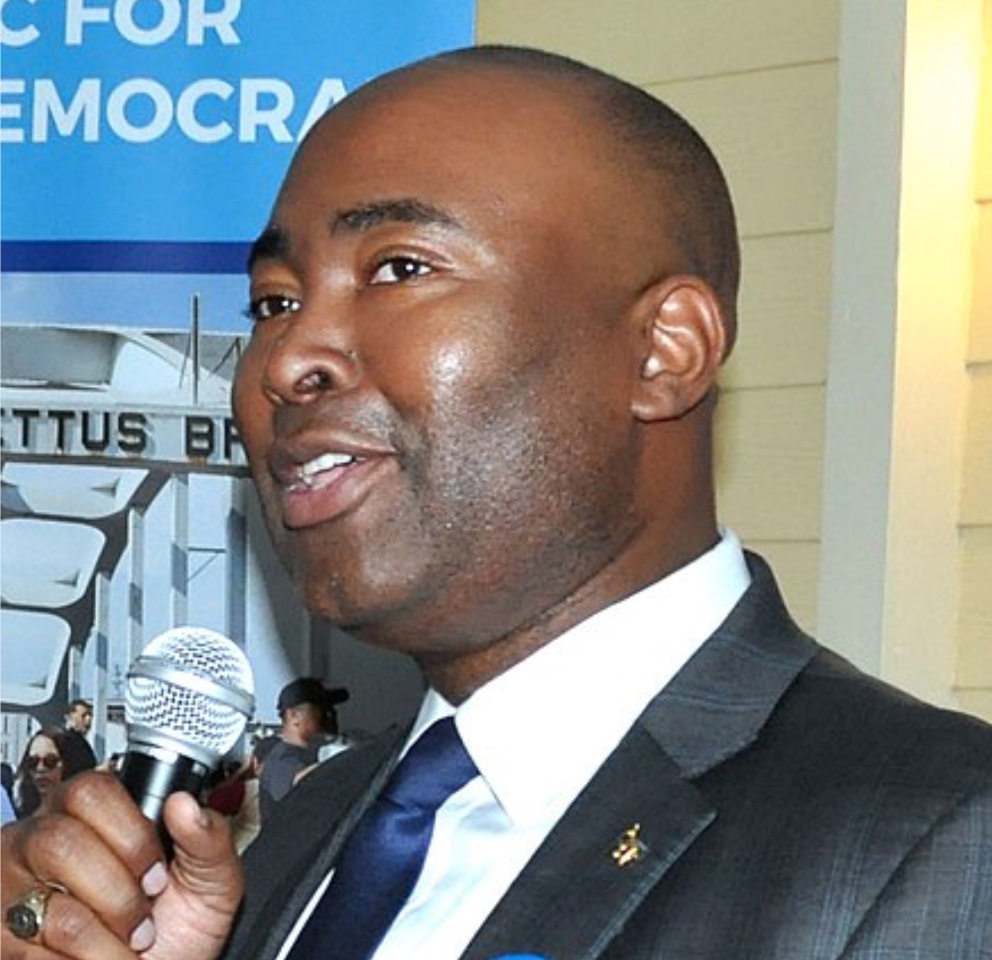
In an interview with Major Garrett on CBS, the chair of the Democratic National Committee said he agrees with President Joe Biden’s description of Trump supporters or Make America Great Again Republicans as “semi-fascists.”
Here’s the section of the interview from Face the Nation, transcribed:
Jamie Harrison: Well, the one thing that President Joe Biden has been is always been consistent, and he has always been somebody who does what my grandfather used to do, which is speak it plain, say it plain to the American people.
And what we see right now is a full frontal attack by these extreme MAGA Republicans in this country. And that extreme attack in our freedoms…
Major Garrett: And so you — you — Mr. Chairman, you embrace…
Harrison: Freedoms as a people.
Garrett: Mr. Chairman, you embrace the rhetoric semi-fascism to describe the Republican Party?
Harrison: Well, it’s not about the embracing. It’s calling what it is what it is.
Garrett: Mr. Chairman, you embrace the rhetoric semi-fascism to describe the Republican Party?
Harrison: Well, it’s not about the embracing. It’s calling what it is what it is.
For nearly two decades, Lisa Dunseth loved her job at San Francisco’s main public library, particularly her final seven years in the rare books department.
But like many librarians, she saw plenty of chaos. Patrons racked by untreated mental illness or high on drugs sometimes spit on library staffers or overdosed in the bathrooms. She remembers a co-worker being punched in the face on his way back from a lunch break. One afternoon in 2017, a man jumped to his death from the library’s fifth-floor balcony.
Dunseth retired the following year at age 61, making an early exit from a nearly 40-year career.
“The public library should be a sanctuary for everyone,” she said. The problem was she and many of her colleagues no longer felt safe doing their jobs.
Libraries have long been one of society’s great equalizers, offering knowledge to anyone who craves it. As public buildings, often with long hours, they also have become orderly havens for people with nowhere else to go. In recent years, amid unrelenting demand for safety-net services, libraries have been asked by community leaders to formalize that role, expanding beyond books and computers to providing on-site outreach and support for people living on the streets.
In big cities and small towns, many now offer help accessing housing, food stamps, medical care, and sometimes even showers or haircuts. Librarians, in turn, have been called on to play the role of welfare workers, first responders, therapists, and security guards.
Librarians are divided about those evolving duties. Although many embrace the new role — some voluntarily carry the opioid overdose reversal drug naloxone — others feel overwhelmed and unprepared for regular run-ins with aggressive or unstable patrons.
“Some of my co-workers are very engaged with helping people, and they’re able to do the work,” said Elissa Hardy, a trained social worker who until recently supervised a small team of caseworkers providing services in the Denver Public Library system. The city boasts that some 50 lives have been saved since library staffers five years ago began volunteering for training to respond to drug overdoses. Others, Hardy said, simply aren’t informed about the realities of the job. They enter the profession envisioning the cozy, hushed neighborhood libraries of their youth.
“And that’s what they think they’re walking into,” she said.
Across the U.S., more than 160,000 librarians are employed in public libraries and schools, universities, museums, government archives, and the private sector, charged with managing inventory, helping visitors track down resources, and creating educational programs. Often, the post requires they hold a master’s degree or teaching credential.
But many were ill prepared for the transformation in clientele as drug addiction, untreated psychosis, and a lack of affordable housing have swelled homeless populations in a broad array of U.S. cities and suburbs, particularly on the West Coast.
Amanda Oliver, author of “Overdue: Reckoning With the Public Library,” which recounted nine months she worked at a Washington, D.C., branch, said that while an employee of the library, she was legally forbidden to talk publicly about frequent incidents such as patrons passing out drunk, screaming at invisible adversaries, and carrying bed bug-infested luggage into the library. This widespread “denial of how things are” among library managers was a complaint Oliver said she heard echoed by many staffers.
The 2022 Urban Trauma Library Study, spearheaded by a group of New York City-based librarians, surveyed urban library workers and found nearly 70% said they had dealt with patrons whose behavior was violent or aggressive, from intimidating rants and sexual harassment to people pulling guns and knives or hurling staplers at them. Few of the workers felt supported by their bosses.
“As the social safety net has been dismantled and underfunded, libraries have been left to pick up the slack,” wrote the authors, adding that most institutions lack practical guidelines for treating traumatic incidents that over time can lead to “compassion fatigue.”
Library administrators have begun to acknowledge the problem by providing training and hiring staff members experienced in social services. Ensuring library staffers did not feel traumatized was a large part of her focus during her years with the Denver libraries, said Hardy. She and other library social workers in cities such as San Francisco and Washington have worked in recent years to organize training programs for librarians on topics from self-care to strategies for defusing conflict.
About 80% of librariansare women, and the library workforce skews older, with nearly a third of staff members over 55. As in many professions, salaries have failed to keep pace with rising costs. According to the American Library Association-Allied Professional Association, the average salary for a public librarian in the U.S. was $65,339 in 2019, the most recent year for which data is available.
In Los Angeles County, with more than 60,000 people who are homeless, the past few years have tested the limits of a public library system with more than 80 sites.
“The challenge is that the level of need is off the charts,” said L.A. city librarian John Szabo. “Unfortunately, we are not fully and effectively trained to deal with these issues.”
Libraries began their transition more than a decade ago in response to the number of patrons seeking bathrooms and temporary respite from life on the streets. In 2009, San Francisco decided to formally address the situation by hiring a full-time library social worker.
Leah Esguerra leads a team of formerly homeless “health and safety associates” who patrol San Francisco’s 28 library sites looking to connect sick or needy patrons with services big and small, from shelter beds and substance use treatment to public showers, a model that has been copied in cities around the world.
“The library is a safe place, even for those who no longer trust the system,” said Esguerra, who worked at a community mental health clinic before becoming the “library lady,” as she’s sometimes called on the streets.
But hiring a lead social worker hasn’t erased the many challenges San Francisco’s librarians face. So the city has become more aggressive in setting standards of behavior for patrons.
In 2014, then-Mayor Ed Lee called for library officials to impose in response to rampant complaints about inappropriate conduct, including indecent exposure and urinating in the stacks. Soon after, officials released an amended code of conduct that explicitly spelled out the penalties for violations such as sleeping, fighting, and “depositing bodily fluids on SFPL property.”
The city has installed extra security and taken other steps, like lowering bathroom stall doors to discourage drug use and sex and installing disposal boxes for used needles, although people still complain about conditions at the main library.
Some rural libraries have sought to make social services more accessible, as well. In Butte County, along the western slope of the Sierra Nevada in Northern California, library workers used a $25,000 state grant to host informational sessions on mental health issues such as depression, anxiety, and schizophrenia, as well as how to help people access treatment. Books on these topics were marked with green tags to make them easier to find, said librarian Sarah Vantrease, who helped build the program. She now works as a library administrator in Sonoma County.
“The library,” said Vantrease, “shouldn’t just be for people who are really good at reading.”
KHN (Kaiser Health News) is a national newsroom that produces in-depth journalism about health issues. Together with Policy Analysis and Polling, KHN is one of the three major operating programs at KFF (Kaiser Family Foundation). KFF is an endowed nonprofit organization providing information on health issues to the nation.
Stephanie Queen, city manager for Soldotna, described on Wednesday the actions she is taking to possibly revise the terms and conditions for renting park facilities. A drag queen performance in front of children at Soldotna Creek Park caused an uproar in this Kenai Peninsula community on June 17, and it’s still the talk of this Kenai community.
During the Soldotna City Council meeting, Queen said she met with Parks Director Andrew Carmichael and Assistant Director Joel Todd on Aug. 15, and would soon meet with the Parks and Recreation Board, which would have a large role in creating any new boundaries that groups renting the stage would need to stay within.
Queen said would bring back to city council any recommendations for how to better protect children from obscene live shows at public parks. She said the process will take time to ensure the final standards meet any legal tests and she set an expectation for a draft agreement “later this fall.”
It appeared to some in the audience that the process was being dragged out to save the campaign for House by one of the council members: Justin Ruffridge, who ended up being the subject of much of the testimony from the public over the 20-minute public testimony period of the meeting.
That foot-dragging by the city was not satisfying for members of the community who spoke up during the 20 minutes they were given for testimony.
Tom Bearup former mayor of Soldotna, said the drag queen who danced suggestively before children at the park during the Pride Festival in June had not apologized to the community, as some have claimed, but had actually apologized to the local LGBTQ community for the backlash that the performance had drawn. Bearup said he had been personally abused by members of the LGBT community for his stance against the drag queen show for kids at the Soldotna Creek Park.
Isaac Kolesar, a citizen who has spoken publicly about the inappropriateness of the performance, asked the city council if it would be OK for a man to put a sock over his penis, cover his anus, have his wife wear pasties, and go down to the public park to perform for the kids. He was making a point, which was that all reasonable people would consider that obscene.
He said that in Mayor Paul Whitney’s own email, the mayor acknowledged that the performance was inappropriate for an open venue. “You believe it’s inappropriate. You work for the people. Yet you do nothing,” Kolesar challenged Mayor Paul Whitney.
Kolesar said had even more harsh words for Councilman Ruffridge, as did most who testified.
“You spoke to my wife and I for almost a month about this issue, during which time and through two city meetings you did nothing. You never took a public stance and did nothing,” Kolesar said.
“You said you heard ‘the people and it was 50/50.’ No it was not. It was 50-1. You heard the LGBT community say they want their rights. They got ’em. What you missed was us asking for verbiage covering public obscenities, which has nothing to do with any group. Even if the LGBT community thinks it’s an attack on them, it’s not,” he said.
“If you want to count the first meeting and say that there were two opposing sides and it was 50-50 you can. But the city council presented only a small portion of the emails publicly. Now that we have the emails we know that people that want change out number the others approximately 1 to 50,” Kolesar said, explaining that he had copies of all the emails the council received.
Kolesar explained that he is not against the LGBT community, and even LGBT citizens don’t support public obscenities targeting children.
“If you did your job and checked your emails on the matter you’d know this,” he said.
Kolesar also scolded the council for not keeping the matter as a priority on the agenda.
“You have/had the ability to bring it onto the agenda during that time and even until now — and you never did. You constantly assured us that you were appalled by what took place and agreed that ordinances or definitions should be looked at to prevent public obscenities. You did nothing,” he said. “You told my wife and I it was not on the agenda and it ended up it was [on the agenda.] I feel you were misleading us.
The event coordinators of the drag queen show now support Ruffridge in his run for Alaska House, Kolesar said, adding that it makes sense that Ruffridge won’t take a stand for fear of losing votes.
Kolesar’s notes to the council continued, but his three minutes were up. What he was not able to say was, “We are not like you. We have convictions that we are willing to stand up for. We have been drug through the dirt, slandered against, threatened with physical harm, I could go on. Unlike you, we are convicted and actually care enough to stand up for what’s right. I hope you’re taking notes on what conviction and standing up for what you believe in looks like.”
Josh Sclizo, who owns a business in Soldotna and is a father of six children, also spoke about the need to protect children and families from sexually charge content in public spaces.
“Whether it’s lewd dance performances or internet porn, it’s part of the grooming process that provides pedophiles with a field of vulnerable victims. Our community has enough problems with the sexual exploitation of children without inviting more,” he said.
Another Soldotna man explained that he grew up in gang culture, and understood well how people can be desensitized to things like violence from a young age. He said sexualized performances for children were a way to desensitize them.
Mayor Whitney stopped the man just as he was making a veiled threat that if the council did not act, there were people who would act. He was escorted out by police.
Nearly all of those providing testimony had a pointed message for Councilman Ruffridge, who is running for House against Rep. Ron Gillham, a known conservative in the district. They told Ruffridge if he thought he was ready for higher office, then he’d better learn how to take a stand.
The testimony of concerned parents is captured on the Must Read Alaska YouTube channel at this link:
Wednesday was the second time the public has testified to the council about the performance, and the citizens were frustrated that the council and the city manager have not acted in any substantive way. In July, dozens of Soldotna residents showed up at the city council chambers to voice their discontent with the city for allowing drag queens to perform for children — children who were then encouraged to shove dollars at the performers who twerked and mimicked nudity in what was clearly adult material.
Some who testified in July in favor of the drag queen performances for children blamed Must Read Alaska for creating the controversy. Threats against business owners who have spoken out against the burlesque children’s event have been ongoing, according to documentation seen by Must Read Alaska.
The Anchorage School District and Joint Base Elmendorf-Richardson have signed an agreement to allow active duty Airmen with the 673rd Logistics Readiness Squadron to transport students who attend school on base for the next 90 days. The Anchorage School District is lacking dozens of school bus drivers, which has led to headaches for parent, students, and drivers just trying to get through traffic near the schools, which are jammed with private vehicles dropping off or picking up students.
The military drivers have undergone training this week and will be ready to drive Sept. 1, according to the district.
Superintendent Jharrett Bryantt said that will free up four bus drivers to take on non-base routes this coming week and said the district is on track to be fully staffed before October. However, that only will happen if more people apply for bus driving jobs.
“We currently have 162 bus drivers active on routes and 25 more in training. We are currently interviewing 21 potential candidates. Additionally, we will have 17 late return drivers joining us by Sept. 19. We are offering new bus drivers up to $2,500 extra and new bus attendants up to $500 extra for the first semester of the 2022-23 school year,” Bryantt wrote.
To learn more about becoming a bus driver, click here.
Nearly 2,000 people have signed up to volunteer in the Anchorage schools, with most applicants wanting to help as bus attendants and crossing guards.
“This is a tremendous response from our neighbors, and I am overjoyed to see the community step forward. Thank you!” Bryantt wrote.
“We’ve made progress in alleviating some of the traffic congestion. Since the start of school, we have teamed up with our transportation partners at the Municipality of Anchorage and the State of Alaska to identify areas with the heaviest congestion and make changes. For example, the intersection of Abbott and Elmore traffic flow has become 30 minutes quicker than last week,” he wrote.
“With the understanding that this is both a systemic issue and a national issue, I have launched a third-party audit of operations to make sure this doesn’t happen again. This includes the possible use of a new, state-of-the-art routing software. All options remain on the table, including school start times, as the effect could free up more drivers.”
Anchorage Assemblyman Forrest Dunbar told his fellow Assembly members last week that not only should the public not be allowed to vote on an ordinance that would ask voters if they want the Municipal Clerk to be elected, he didn’t even want to hear the public testimony on it.
The public, Dunbar said, spews misinformation about elections, and he was opposed to allowing the citizens to speak.
The ordinance, AO 2022-13, was offered by Mayor Dave Bronson in response to the discontent among many Anchorage voters about how elections are managed in Anchorage. The Clerk, who oversees Anchorage’s controversial elections, is beholden to a highly partisan Assembly. If elected, she would be responsible to the people.
“It has been the case in the last year or so that when we start to testify on items regarding elections, we tend to give a platform for people spewing misinformation on our elections…” Dunbar said.
The audience groaned and Chairwoman Suzanne LaFrance banged her gavel loudly so Dunbar could continue to describe his constituents.
The Assembly then voted 9-3 to table the ordinance indefinitely, effectively killing it, as requested by Dunbar.