Home Blog Page 728

Passing: Fred Hosford, a Skagway original, 1949-2023

Fred Lawrence Hosford was born May 4, 1949, at the White Pass Hospital in Skagway, Alaska. He died April 13, 2023.

Nicknamed Fritz as a child, he was the second of five children born to Ed and Frances (Jigger) Hosford. He was raised between Haines and Skagway/Dyea. Fred attended the Pius Mission School as well as Haines and Skagway Schools. In high school, he played basketball, was voted prom King, and graduated in 1967.

Fred’s family built a cabin at the Hosford Sawmill located at 3-mile on the Chilkoot Trail. They also logged and built the road up West Creek. Growing up around logging operations, Fred developed a strong work ethic and a generous heart of gold. Anyone who was blessed to know Fred, witnessed his compassion and knows that he’d give the shirt off his back or the shoes off his feet to someone in need, which he did on multiple occasions.

Fred was also known for his unique sense of humor and prankster behavior. He had a habit of bestowing nicknames on people he loved and got a kick out of signing folks up to receive silly or irrelevant junk mail. And if you just happened to be in the grocery store at the same time as Fred, beware — you may have been surprised to find embarrassing items in your basket during check-out while Fred stood giggling off in the distance. Fred loved to laugh, and it was infectious.

Fred initially met his future bride Kathy’s family (the Ericksons) in the mid-1960s during one of his father’s logging operations in Thomas Bay.  In 1969 when Fred was drafted into the United States Army, Kathy’s family stayed in touch with him by sending cards and cookies. During his deployment, Fred was stationed in Vietnam and Germany.

Upon his return in 1971, Fred went to work for the White Pass & Yukon Railroad as a trackman/section laborer. The following year Fred went to work for Glacier Timber, his father’s logging export business. He later was part of the crews that helped build the Trans-Alaska Pipeline as well as the Klondike Highway (including the Moore bridge).

The lucky person who Fred chose to spend his life with was his loving wife, Kathy. They married in 1976 and had two children, Desi and Eric, and raised them all over the state of Alaska. Fred worked as a service oiler/mechanic and Kathy was a flagger/heavy equipment operator.

They lived in Skagway, Petersburg, Kihei (Hawaii), Girdwood, Hollis, Chicken and eventually Fairbanks, where they planted for 14 years. During that time, Fred worked at different pump stations along the pipeline, and he eventually retired in 2001 from the Operating Engineers.

Fred was a devoted father and gave his kids the most amazing experiences due to their unique upbringing, spending summers in road construction camps. He taught Desi and Eric, along with his grandkids and many cousins and friends, to drive at very young ages.

In 1999, Fred and Kathy moved back to Skagway where they would start building their “retirement project.”  Not long after, the Chilkoot Trail Outpost became recognized and remains one of the finest lodging accommodations in the state of Alaska.

In August 2018, one of Fred’s lifelong dreams came true when he was invited to be adopted into the Raven Clan. Growing up in the Chilkat Valley, many of Fred’s closest friends were Tlingit, and he felt a very deep connection to their heritage. He was given the name Sampo and wore it proudly.

Fred had a strong faith in God and attended church at every opportunity. He looked to Jesus, his Lord and Savior, as the miracle worker who carried him through this life and into the next.  Fred was a perfect example of how to love thy neighbor. He was a selfless man who always put others first.

Fred also worked hard to remember the names of each person he met. He always carried a notepad in his pocket to write them down. Fred had a uniqueness in keeping in touch with friends- dropping occasional notes in the mail and writing out hundreds of Christmas cards every year. And if you hadn’t seen Fred for a day, a week, month, or year, you always picked up right where you left off, as if time never passed.

Fred’s kids and grandchildren meant the world to him. He will be greatly missed by his family, friends and all who knew him. Fred was preceded in death by his parents, Ed and Jigger, his brother Pete, and his sister Janet. He leaves behind his wife, Kathy, daughter Desi (Trent), son Eric, and six grandchildren: Carson, Kalina, Armour, Cannon, Diesel and Rockwell. Fred also leaves behind his brothers Ray (Beryl) and Mike, along with many beloved nieces, nephews and friends- who were his extended family throughout Alaska, the Yukon and across the globe.

His grandchildren would like us all to remember on his birthday each year, May the Fourth (and loving memories of Fred) Be With You!

A Celebration of Fred’s Life will be held on Saturday, May 27 starting at 5 pm at the Chilkoot Trail Outpost in Dyea. The service and sharing of memories will begin at 6:30pm. The family would love any memories to be shared in the guestbook below as well. 

To help the family plan accordingly (they want to be sure to have enough food), please RSVP here: https://www.signupgenius.com/go/10c0948a8af2ca3f49-fred 

Read comments under this obituary and view the photo gallery of Fred and his family at McMillen Mortuary.


On a wilding: Clark Middle School locked down after fight spreads

A fight between two students at Clark Middle School on April 18 escalated into a violent incident that resulted in the school being placed on lock-down.

Clark Middle School is in the Mountainview neighborhood of North Anchorage.

According to initial reports, one of the students involved in the altercation called three high-school-aged juveniles for assistance. The situation quickly spiraled out of control as the four juveniles attempted to forcefully gain entry into the administrative office where staff and students were located.

School staff intervened and separated the students, but the four juveniles, who were not students at Clark, began to aggressively try to break windows and doors to gain access to the office. A school resource officer who happened to be at the school following up on an unrelated case responded to the situation and attempted to diffuse it while calling for backup.

However, the juveniles refused to cooperate and ignored the officers’ commands. One of the juveniles struck the SRO in the face, while another juvenile started throwing items at the glass window.

In response, the SRO deployed a taser to prevent the forced entry into the office. Another SRO arrived at the scene, but the juveniles continued to resist and ignore commands, police said.

Pepper spray was deployed by the SRO to gain control of the situation until additional officers arrived. The juveniles were then removed from the school and treated by medics at the scene for exposure to pepper spray, and one juvenile received treatment related to the taser deployment. The four juveniles were subsequently arrested, and charges were forwarded to the Division of Juvenile Justice.

No staff or other students reported any injuries, though the officer sustained minor injuries and received treatment at the scene. Clark Middle School remained on lock-down for a brief period during the incident, and parents were notified of the situation. The school district and law enforcement are continuing to investigate the incident, and additional security measures may be implemented to prevent similar incidents in the future.

The incident reflects other recent youth wildings in cities like Chicago, where more than 100 young people rampaged through downtown Saturday night, torching and smashing vehicles, and brawling in the street.

According to U.S. News and World Report, Clark Middle School has about 800 students grade 6-8. Just 12% of students scored at or above the proficient level for math, and 22% scored at or above proficient level for reading. The school’s minority student enrollment is 94% and the student-teacher ratio is 18.

Gender dysphoria fad shows no sign of abating

By LARRY SAND | FOR KIDS AND COUNTRY

Fads aren’t always harmful things. Hula hoops, goldfish swallowing, and flagpole sitting have come and gone and generally were not toxic.

In the 1970s, various eating disorders were the rage. But they were treated as physical disorders and serious mental health problems.

Writing in Psychology Today, Dr. Emily Deans observed, “Eating disorders in adolescents are strongly predicted by the earlier presence of depression, bipolar disorder, and anxiety.”

Her treatment recommendations included, “A personalized approach, based on treating underlying depression, anxiety, nutritional deficiencies, and teaching that our bodies deserve to be nourished with proper, whole foods can be surprisingly effective.”

But today, bulimia and anorexia are passé and have been replaced by gender dysphoria, which is being used as a political cudgel by many with a nefarious agenda. In fact, the organized nature of the movement has left many parents in a horrible position.

For example, in Washington State, SB 5599 was just passed, which allows the state to legally take children away from their parents if they don’t consent to their child’s gender transition surgeries.

Washington State Senator Marko Liias issued a statement that summed up the new law. “Under current law, if a child who has run away from home goes to a licensed shelter, that shelter is required to notify the parents unless a compelling reason applies. The bill allows certified shelters to contact the Department of Children, Youth, and Families (DCYF) in lieu of parents in certain additional instances, such as when a youth is seeking reproductive health services or gender-affirming care.”

But what is the depth of the problem?

A staggering 99.4% of the population does not have the physical traits that cause someone to become transgender, according to UCLA’s Williams Institute, an LGBTQ advocacy group. The 0.6% of the adult population who are gender dysphoric – a condition that causes extreme distress – certainly deserve empathy and respect.

Much of the gender dysphoria battlefield takes place in our schools, which have become breeding grounds for this dangerous fad. To that end, Congress passed H.R. 5 in late March. Among other things, the bill, which prevailed in a 213-208 vote, would give parents the right to inspect the books and other reading materials in the library of their child’s school. It would enable them to know if the school operates, sponsors, or facilitates athletic programs or activities that permit an individual whose biological sex is male to participate in an athletic program or activity that is designed for individuals whose biological sex is female. The bill also enables parents to know if their child’s school allows an individual whose biological sex is male to use restrooms or changing rooms designated for individuals whose biological sex is female.

An article that purports to denounce H.R.5 inadvertently sells the bill. In “Republican education bill would increase interference in classrooms.” Aileen Arrreaza laments, “H.R.5 would create more problems than it solves.” And that is just the point. It is supposed to create problems, much in the same way that the cops create problems for bank robbers who are caught in the act.

Sadly, however, H.R. 5 seems to be dead in the water; chances are slim that it will make it through our divided Senate…

Read the rest of this column at ForKidsandCountry.org. The author, Larry Sand, is a former classroom teacher and is now the president of the non-profit California Teachers Empowerment Network – a non-partisan, non-political group dedicated to providing teachers and the general public with reliable and balanced information about professional affiliations and positions on educational issues. The views presented here are strictly his own.

FDA says some types of Covid vaccines no longer authorized in U.S.

39

At a time when the Covid-19 vaccine recommendations seem to change with the season, the Food and Drug Administration now says people ages 65 and older and those who are immunocompromised are allowed to receive an additional dose of Covid-19 vaccine this spring, if they want one. Also, some of the earlier versions of the Covid vaccine are no longer authorized in the United States.

“This action includes authorizing the current bivalent vaccines (original and omicron BA.4/BA.5 strains) to be used for all doses administered to individuals 6 months of age and older, including for an additional dose or doses for certain populations. The monovalent Moderna and Pfizer-BioNTech COVID-19 vaccines are no longer authorized for use in the United States,” the agency said. A monovalent vaccine has just one strain of a virus. A bivalent vaccine is a vaccine with two strains of a virus.

“Many different vaccines have both monovalent and bivalent versions, including flu vaccines and COVID- 19 vaccines,” the FDA explains, confusing the matter.

The updated Pfizer and Moderna Covid-19 boosters are bivalent — they target more than one strain of Covid. They were created with the original strain of Covid-19, and newer omicron variant strains, BA.4 and BA.5.

The original Covid-19 vaccines for most primary series and original boosters from early 2021 are monovalent. These vaccines were created from the original strain of the virus and are the ones no longer approved. The Novavax booster is monovalent and does not target recent strains, such as Omicron.

According to the new guidance, people 65 and older should only get another shot if at least four months have passed since their most recent Covid booster, according to the FDA. For those immunocompromised individuals, the FDA suggests a two-month interval. Immunocompromised people could get additional doses after that “at the discretion of, and at intervals determined by, their health care provider.”

The announcement was made on Tuesday. On Wednesday, the Centers for Disease Control and Prevention’s Advisory Committee on Vaccine will meet to make its recommendation on the Covid-19 vaccine schedules. The agenda is at this link.

The FDA is following Canada and the United Kingdom, which earlier announced that only older adults, adults who live in care facilities, and people who are immunocompromised would have access to an additional booster of vaccine this spring. In the U.K., adults 75 and older are eligible, while only Canadians 80 years or oder can receive the extra dose.

The FDA also said children 6 months through 5 years of age who have received one, two or three doses of a monovalent COVID-19 vaccine may receive a bivalent vaccine, but the number of doses that they receive will depend on the vaccine and their vaccination history.

Read more at this FDA advisory link.

Lost at sea? Sailing couple from Girdwood missing off coast of Baja

Searchers on Monday and Tuesday said they found no sign of the sailing vessel Ocean Bound, which was sailing from Mexico to San Diego with three souls onboard, two of them with Alaska connections.

The U.S. Coast Guard and the Mexican Navy are looking for the 44-foot sailing yacht that has Kerry and Frank O’Brien of Girdwood and William Gross of Pennsylvania on board.

The crew was last heard from off of the Baja Peninsula near Mazatlan on April 4.

The Mexican Navy said has used four patrol boats and a twin-engine prop airplane to search.

“Search and rescue coordinators have contacted marinas throughout Baja, Mexico, with negative sightings of the vessel. Urgent marine information broadcasts have been issued over VHF radio requesting all mariners to keep a lookout for the missing persons and vessel,” the Coast Guard said in a statement.

The O’Briens have 50-ton captain licenses with sailing endorsements and decades of combined experience sailing. Kerry works in both Southern California and Alaska in the maritime and hospitality fields. Gross is also a seasoned sailor, according to his friends.

The seas in the area were reportedly rough with 15- to 20-foot swells. Since then, there have been no radio communications from the Ocean Bound.

Public testimony opportunities for Wednesday, Thursday

Alaskans are invited to give public testimony on these legislative items on Wednesday and Thursday:

HB 143ADVANCED RECYCLING AND FACILITIES
Supporting documents
H RESOURCESApril 19 1 pm
SB 53FIVE-YEAR INVOLUNTARY COMMITMENTS
Sponsor statement
S FINANCEApril 19 1:30 pm
SB 70OWNER & CONTRACTOR CONTROLLED INSURANCE
Sectional analysis
S JUDICIARYApril 19 1:30 pm
SB 85PERM FUND; EMPLOYMENT; ELIGIBILITY
Sectional analysis
S LABOR & COMMERCEApril 19 1:30 pm
SB 126ARCHITECT/ENGINEER REGISTRATION BOARD
Sponsor statement
S LABOR & COMMERCEApril 19 1:30 pm
HB 145LOANS UNDER $25,000; PAYDAY LOANS
Sponsor statement
H LABOR & COMMERCEApril 19 3:15 pm
HJR 11ADDRESS AIR POLLUTION IN FAIRBANKS
Sponsor statement
S RESOURCESApril 19 3:30 pm
HB 124LICENSE REQUIREMENTS: COMM. DRIVERS
Sponsor statement
H TRANSPORTATIONApril 20 1 pm
HB 58ADULT HOME CARE; MED ASSISTANCE
Governor’s sponsor statement
H FINANCEApril 20 1:30 pm
HB 59MEDICAID ELIGIBILITY: POSTPARTUM MOTHERS
Governor’s sponsor statement
H FINANCEApril 20 1:30 pm
SB 41APPROP: CAPITAL/SUPPLEMENTAL
Budget documents
S FINANCEApril 20 1:30 pm
SB 62ELECTRIC-ASSISTED BICYCLES
Sponsor statement
S STATE AFFAIRSApril 20 3:30 pm
SB 95LICENSE PLATES: SPECIALTY ORGANIZATIONS
Full text
S STATE AFFAIRSApril 20 3:30 pm

Consequence of politics and policy? Portland REI closing due to crime

Walmart announced it was out of crime-ridden Portland, Ore. earlier this year, and now the outdoor gear company, REI announced that it, too, will close its downtown Portland store as well.

Recreational Equipment Inc. made the announcement in a Monday statement:

“We are sad to share that our store in Portland’s Pearl District will close early next year,” the company wrote. “For nearly 20 years, REI has proudly served our members and the outdoor community from this location. We’ve had a presence in Oregon for over half of our 85-year history, opening our third store nationally at Jantzen Beach in 1976. The safety of our employees, members and customers is always our number one priority. In recent years, Portland has been dealing with increased crime in our neighborhood and beyond. Last year, REI Portland had its highest number of break-ins and thefts in two decades, despite actions to provide extra security.”

The company added that “we have outgrown this location and as a result are not able to provide the level of customer and employee experience we strive for at REI. For these reasons, we are no longer confident in our ability to serve you in this location. We remain dedicated to serving our community in the area and are continuously evaluating opportunities for new locations. While we do not believe a downtown Portland location will be possible in the near term, our stores in Tualatin, Hillsboro and Clackamas remain open and ready to outfit you with the gear and advice you need to enjoy life outside.”

REI has two stores in Alaska — one in Anchorage and a new location in Fairbanks. It has over 165 locations in 39 states. It’s a liberal company whose former CEO Sally Jewell became Secretary of Interior under President Barack Obama in 2013.

Other companies that have left downtown Portland include Daimler Chrysler, Airbnb, Banana Republic, Microsoft, Cracker Barrel, Umpqua Bank, Rains clothing, to name a few.

“Theft is an issue. It’s higher than what it has historically been,” Walmart CEO Doug McMillon told CNBC. He added that “prices will be higher and/or stores will close” if cities don’t crack down on shoplifting crimes.

Walmart also announced it is closing four Chicago stores that are “underperforming.” Most observers recognize that is code for “losing money from looters and shoplifters.” That leaves four Walmart stores in a city of 2.7 million people.

Juneau Empire going digital, will print just two editions a week

The Juneau Empire will focus more effort on its digital edition and less on newsprint. On May 3, it will only provide a printed paper two days a week, and that paper will be printed in Lakewood, Wash., south of Tacoma.

Publisher David Rigas said it was a change needed to keep the newspaper viable.

“This is a significant change in the way the voice of Alaska’s capital city does business and it’s not something we take lightly,” Rigas said in the Empire today. “However, it’s a change that needs to happen and one that will mean improved presentation of local news.”

The print department is being laid off. Print subscribers will be offered a reduced rate for a print edition that will only be available on Wednesdays and Saturdays. That means the bundles will be flown into Juneau, where weather can sometimes cause flight delays. The newspaper didn’t say where its existing printing press will go, but these speciality items are harder and harder to sell, as newspapers around the country continue to reduce print editions. It may be worth more as scrap metal.

In the 1990s, the Juneau Empire launched the Sunday edition and had a circulation of over 8,000 copies in a town that had about 10,000 households.

It launched its online edition in 1998, under the direction of Publisher John Winter and then-Managing Editor Suzanne Downing, who is now publisher of Must Read Alaska.

The Empire was founded in 1912 as the Alaska Daily Empire. It was owned by Major John Franklin Alexander Strong, who owned several newspapers, prior to his term as territorial governor of Alaska. Strong served as the editor of the Empire until May 24, 1913, after which John W. Troy took over. Troy was inaugurated governor on April 19, 1933.

The Empire, in its early days, had an editorial and political stance that was a counter to the socialist newspaper, the Alaska Sunday Morning Post. The paper aimed to unseat “Bull Moose” Republican James Wickersham from the congressional delegation by any means possible, according to an account by the Library of Congress.

The paper changed its name to the Daily Alaska Empire from Dec. 8, 1926 until July 21, 1964. It became the Juneau Alaska Empire through July 8, 1968, before switching to the Southeast Alaska Empire until February 8, 1980.

Finally, the paper changed its name to the Juneau Empire, which it retains to this day. William S. Morris III purchased the newspaper in 1969 and made it part of Morris Communications.

In 2017, the Empire was sold by Morris Communications to Gatehouse Media, which sold it to Sound Publishing, the largest community news organization in Washington state, with dailies and weeklies in Washington and Alaska. The parent company of Sound Publishing is Black Press, of British Columbia. Headquartered in Surrey, British Columbia, Black Press was founded and is majority owned by David Black, who is not related to another Canadian-born media mogul, Conrad Black. (Disclosure: This writer was the editor of the Bainbridge Review on Bainbridge Island, when David Black owned that weekly.)

Galvin head tax would need 70 more state workers to collect $120 million

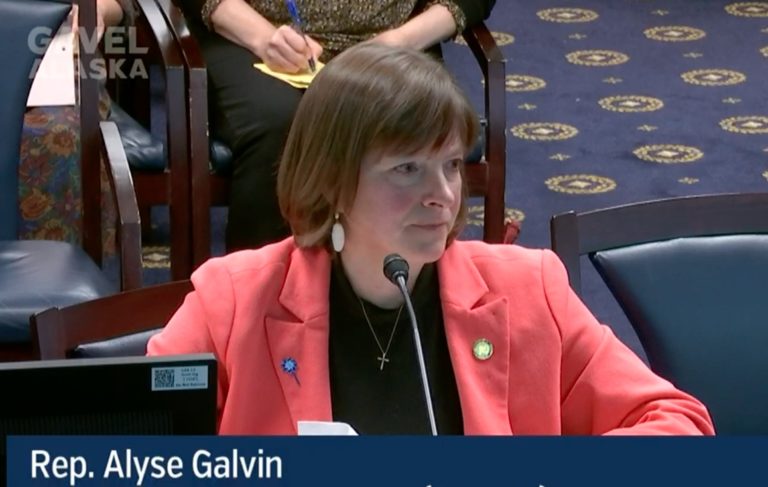
Rep. Alyse Galvin introduced a fiscal note to HB 159, a bill that would create an income tax for Alaskans. In it, the state Department of Revenue says it would need to increase Revenue tax agents and auditors by 70 people. Over the first two years, the cost would be $19 million, and the net revenues that would be collected would be $120 million after the first full year of implementation.

During her presentation to House Ways and Means Committee, Galvin made no attempt to conceal the fact that this is the starter-pack tax, which could be built onto in the future by the government. It’s a tax that gets an income tax back on the books for Alaska, to be increased at a later date by an insatiable government.

This was the bill’s first hearing. Like so many Alaska Democrats in decades before her, Galvin said that taxes were essential to saving Alaska’s state budget. Her presentation notes are here.

The Galvin tax would charge every working Alaskan $20. Those who make more than $200,000 a year would pay 2% on every additional $100 they make. Thus, oil company executives in Alaska would pay $2 for every additional dollar they earn. A person earning $1 million a year in income would pay about $16,000 to the State of Alaska as their head tax.

There is also a capital expenditure associated with the tax, as the Revenue Department says that the complexity of the proposal would require a contractor to build out an income tax module into the Tax Revenue Management System, which would cost about $9.5 million for initial implementation. Successful Alaska business owners might relocate out of the state to avoid the tax. Almost all government workers would only pay $20.

“After initial implementation, continued maintenance and support by FAST for the individual income tax module is estimated to be $2.25 million in CY2025 and $1.5 million in CY2026 and beyond. Continued maintenance and support by FAST for the FIVS module is estimated to be $500,000 in each year,” the fiscal note says.

As part of the Department of Revenue’s research into the potential costs to administer the head tax, officials spoke with tax administrators in the States of Montana and Vermont, which have population sized close to Alaska’s and which have individual income taxes.

Montana and Vermont employ approximately 102 and 60 people, respectively, to administer each state’s individual income taxes.

“Using a simple per‐capita adjustment, these numbers translate to 68 and 70 employees needed to administer an individual income tax in Alaska. Given the complexities that come with administering nonresident and pass‐through corporation returns, and the sheer volume of estimated new taxpayers and returns, combined with the fact that our staff would have little to no experience in state individual income tax administration to start off with, the Department expects to need 70 people to administer an individual income tax in Alaska. The new staff would be roughly split between the Juneau and Anchorage offices. The Department would continue to look for ways to automate administration of this tax and look for efficiencies,” the fiscal report states.