The three largest airline pilot unions in the country have expressed concerns about a reauthorization of Federal Aviation Administration Act, which has provisions changing training standards and raising the mandatory retirement age for commercial pilots from 65 to 67. The use of certain types of simulator training time would count as flight hours for first officers.
In an open letter to President Joe Biden and Congress, Allied Pilots Association, Air Line Pilots Association (ALPA), and Southwest Airlines Pilots Association said that such changes could compromise safety standards in the aviation industry.
“Today’s requirements are the product of the collaborative efforts of the FAA and a cross-section of aviation industry subject-matter experts that have served the airline industry and the traveling public well for more than a decade and should not be relaxed. Similarly, the current 65 mandatory retirement age for commercial airline pilots is supported by data and conforms with International Civil Aviation Organization (ICAO) standards. Those advocating for raising the retirement age have not produced sufficient data relating to the safety implications of such a change,” the letter said.
The bipartisan legislation was introduced by Transportation and Infrastructure Committee Chairman Sam Graves (R-MO), Committee Ranking Member Rick Larsen (D-WA), Aviation Subcommittee Chairman Garret Graves (R-LA), and Aviation Subcommittee Ranking Member Steve Cohen (D-TN).
The sponsors of the bill says it does several important things, including streamlining the regulatory process and improving training standards.
But the unions say that there is no actual pilot shortage and that the plan to create short-term “certificates” that churn out pilot certificates rather than creating the best possible pilot is shortsighted.
“Some lawmakers are interested in increasing the pilot retirement age from 65 to 67 to solve the fake pilot shortage. This so-called ‘fix’ would not increase pilot numbers, nor would it address flight delays and cancellations. It would, however, introduce additional risks into the system,” the Air Line Pilots Association letter said.
However, the list of those organizations supporting the bill is long. Air clubs supporting the bill include the Alaska Airmen’s Association, representing 2,000 members in a state that has more licensed pilots per capita than any other state.
The last FAA reauthorization was passed in 2018 and lasted five years. Congress must pass a new reauthorization bill before the current law expires on Sept. 30.
The Senate is working on its own version of an FAA reauthorization bill but both the House and Senate are in recess until after Labor Day weekend, Sept. 5, as members head back to their districts for August.
With just a month before school starts, families who have children enrolled in some charter correspondence programs and private schools were shocked to learn that the Anchorage School District is clawing back their financial allotment for students.
Alaska’s Correspondence School Allotment Program allows eligible families to be reimbursed up to $4,500 per student enrolled in classes at the private school of their choice.
In the past, a student could be enrolled at Family Partnership Charter School, and dual enrolled at a private school, such as Montessori. Families would be able to use their “funding follows the child” allotments to pay for some of the costs of educating their children outside the Anchorage School District’s standard system.
Then, earlier this year the Anchorage School Board stripped Family Partnership Charter School of its charter, even though it is the most well-attended charter school in the state and has the highest educational outcomes of any school in the district, owing to its unique structure. The vote was 6-1, with Board Member Dave Donley the only one opposing the takeover of Family Partnership.
At the time, Jharrett Bryantt, the superintendent of the Anchorage School District said that parents would not see much change, even as the charter school was consumed by the district and would lose its independence.
The school board also made promises to the parents attending meetings that the funds dedicated for Family Partnership Charter School would stay with the school, and not be swept into the district’s other fund pools, even as it came under the district’s supervision and command structure.
The superintendent said it was time to earn the trust of the families whose children were enrolled through the Family Partnership Charter School.
“It is time to pivot our focus to supporting the Family Partnership communities, and earn the trust of all families to choose the wonderful opportunities that Family Partnership offers. It’s time for us to begin the healing process, and that won’t happen overnight,” Superintendent Bryantt said in a public meeting in April that was attended by many concerned parents.
But according to a new memo from the district, that was then.
Now, the school district is saying that if a student is dual enrolled at a place like Family Partnership, Frontier Charter School, or AK Choice Charter School, and full time at a private school, they will receive no allotment.
For some faith-based schools, the curriculum that involves faith is separated out, while in others, the faith-based portions are infused throughout the curriculum. But parents in those programs were always allowed to bank their allotment (public money from local, state, and federal taxes) and use it for either extra-curricular enrichment such as hockey, or for a high school program where the classes involving faith are separated from other classes. Parents with children at Grace Christian were banking the funds so that as their students moved into high school, they would have those funds to pay for classes.
This is a “funding follows the child” approach that made Family Partnership unique in its excellent education outcomes.
But it’s not just religious-based schools. The parents cannot use any of their allotment for any full-time private school education, according to the district.
On June 25, the principal of Family Partnership wrote to parents, saying:
“I am writing to inform you of a recent clarification regarding the use of homeschool allotments for private school classes. Please see the attached memo for clarification. In short, full-time private school students are ‘not permitted to use their allotment to pay any portion of the private tuition or to supplement the student’s private school education.’ This means that full-time private school students will not be provided with an allotment. Part-time private school students may use ‘half or less’ of their allotment for non-sectarian private school courses. Thank you for understanding.”
The attack on private education by the Anchorage School District comes at a time when private school enrollment is going up, and the enrollment in traditional Anchorage public schools is dropping. Parents have voted with their feet to remove children from low-performing school environments that are controlled by the National Education Association and are pushing gender ideology, and critical race theory on their children.
The new memo from Director of Charter Schools Dr. Jason Hlasny to all the correspondence schools in the district explains the district’s interpretation of the Alaska Constitution. Under the district’s interpretation, the parents of the correspondence school students can continue to “buy” courses from private schools, but cannot be enrolled more than half time.
“The purpose of this memo is to clarify district and administrative procedure consistent with the Alaska Constitution, Alaska Statute, and the July 2022 Deputy Attorney General guidance as it relates to the appropriate implementation and use of student allotments and private school education.
“Under Alaska law, correspondence schools receive funding through the local school district in which they reside. In turn, correspondence schools usually allocate an allotment of funds for each student, which the student can spend for certain materials to fulfill a student’s individual learning plan.
“The Alaska Constitution provides: ‘No money shall be paid from public funds for the direct benefit of any religious or other private educational institution.’ The Alaska Legislature has provided that student allotments for correspondence students may not be used for sectarian services or materials. Alaska law requires each school district to ensure that allotment monies are not used in a manner that violates Alaska law.
“The following are uses of allotments not permitted by the Anchorage School District:
“Student is enrolled as a full-time student at a private school and the student’s allotment is not permitted to be used to pay any portion of the private tuition or to supplement the student’s private school education.
“More than half of a correspondence student’s allotment is not permitted to be used to pay for private school tuition, materials, and fees for non-sectarian classes.
“Any portion of the allotment is not permitted to be used to pay for sectarian courses or materials.
“The following are uses of allotments permitted by the Anchorage School District:
“Student is enrolled in a public correspondence school and half or less of the student’s allotment is permitted to be used to pay for part-time enrollment to take nonsectarian courses at a private school.
“Student is enrolled in a public correspondence school and the student’s allotment is permitted to be used to pay for extracurricular activities such as swimming lessons, attendance at music or drama performances, or participation in athletic competitions.”
The Alaska Policy Forum will hold a webinar on Monday to help people learn about some of the options Anchorage families have outside of the district. Register here to join the webinar.
Danielle Runyan, senior counsel with First Liberty Institute, provided revealing testimony to a House select subcommittee on Thursday, exposing stark differences in Covid-19 vaccine mandates between the U.S. military and other Executive Branch-level entities.
Despite the recent 2023 National Defense Authorization Act language requiring the Department of Defense to revoke the vaccine requirement, national security remains in jeopardy as military service members grapple with the aftermath of the mandates, she said.
Runyan underscored how military vaccine mandates outlasted those in other government sectors. Service members who lawfully objected to the vaccination faced illegal treatment, contributing to an ongoing threat to national security.
Following the World Health Organization’s declaration of the Covid-19 outbreak as a public health emergency in January 2020, vaccines were available by December of the same year. Initial expectations posited that herd immunity could be achieved if 75% to 80% of Americans received the vaccine.
However, by May 2021, experts, including Dr. Anthony Fauci, director of the National Institute of Allergy and Infectious Diseases and the president’s top Covid adviser, conceded that herd immunity was not attainable.
With a shift from the herd immunity approach, the Executive Branch began incentivizing vaccination with tax credits for employers offering vaccine-related paid leave.
By mid-2021, supply of the vaccine surpassed demand due to various factors including public skepticism. As a result, creative public health efforts emerged to increase vaccination rates.
Concerns escalated in June 2021 when a study found higher than expected rates of heart inflammation, or myocarditis, in U.S. service members following vaccination.
All participants in the study were previously healthy, physically fit males who developed the condition within four days of receiving the vaccine.
In contrast to these findings, President Joe Biden guaranteed complete protection from infection, sickness, and death from the virus for those vaccinated. This claim was later challenged, as increasing occurrences of “breakthrough” infections were reported and the implications of the delta variant remained unclear.
In July 2021, vaccination mandates were issued for federal employees, federal contractors, and military service members.
Despite growing evidence suggesting vaccinated individuals could still transmit Covid-19, these mandates continued to be enforced, significantly affecting the American workforce.
Despite eventual rescission of the mandates due to constitutional, statutory, financial, and other harms inflicted upon citizens, service members, and businesses, the military mandate remained.
An estimated 1.4 million active-duty and reserve service members were subject to the mandate, including members of the National Guard.
Runyan’s testimony offers a crucial glimpse into the sustained impacts of the military vaccine mandates, igniting concerns over national security and highlighting the need for further investigation into the management and outcomes of these mandates.
The U.S. Navy and the Department of the Air Force issued stringent Covid-19 vaccine mandates in 2021, with severe repercussions for service members who refused vaccination on religious grounds.
The Navy issued “Trident Order #12 – Mandatory Vaccination for COVID-19” on Sept. 24, 2021, declaring all SEALs and Special Warfare Combatant Craft Crewmen (SWCCs) who sought a religious exemption “non-deployable.”
The Chief of Naval Operations issued NAVADMIN 225/21 on Oct. 13, 2021, stating that members refusing the vaccine, absent a pending or approved exemption, shall be processed for administrative separation.
It also threatened to recoup training costs, bonuses, and special and incentive pays from unvaccinated service members. This potentially crippling financial penalty, which was not forward-looking but targeted past expenditures, could exceed $1 million per Special Operations service member, Danielle Runyan testified.
Following these orders, the Navy issued NAVADMIN 256/21 on Nov. 15, 2021, stipulating that service members whose vaccination exemption request was denied had to receive the Covid-19 vaccine within five days. Refusal could lead to immediate separation processing, adverse performance evaluations, denial of promotion, and possible loss of Veterans Affairs benefits.
The discriminatory policies led to Navy SEALs 1-26 v. Biden, a lawsuit brought by First Liberty Institute and Hacker Stephens on behalf of 35 religious service members, alleging violations of the Religious Freedom Restoration Act, and the First Amendment. The court found in favor of the plaintiffs on Jan. 3, 2022, concluding that the vaccine mandate substantially burdened their religious beliefs and failed strict scrutiny.
Similar circumstances led to the filing of Doster v. Kendall, a class action lawsuit citing discriminatory treatment by the Department of the Air Force against service members requesting religious exemptions from the vaccine requirements.
On Sept. 9, 2021, President Biden issued EO 14042, which impacted over 5,138 government contractors in the US. Biden required that federal contracts include a clause stating that contractors must comply with all guidance published by the Safer Federal Workforce Task Force regarding Covid-19 vaccinations.
However, on Dec. 7, 2021, the U.S. District for the Southern District of Georgia issued an injunction against the order, determining that it went beyond promoting efficiency and economy in procurement and contracting and instead acted as a public health regulation. This development maintained the status quo, allowing entities to encourage vaccination without mandating it.
These controversial mandates have significantly impacted the U.S. military and federal contractors, inciting legal action and drawing scrutiny to the balance between public health needs and individual rights, Runyan told the House Committee.
“Considering a total of 19,460 service members remained unvaccinated as of October 4, 2022, this means we could lose millions in training costs, and hundreds of thousands of years of invaluable institutional knowledge,” Runyan said. “At a time when young Americans have no desire to join the military and military members are telling their children not to join the military, we should consider this a significant national security crisis.”
Select Subcommittee on the Coronavirus Pandemic Chairman Brad Wenstrup, who is a medical doctor, told the committee of a friend in the Department of Defense who was negatively impacted by the mandate.
“Further, not only did these mandates damage Americans’ trust in public health and in vaccines and cause people to lose their jobs, they also negatively affected our military. A good friend of mine, a physician no less, battling breast cancer was unfairly harmed by the Department of Defense’s vaccine mandate. Her oncologist advised against the vaccine for medical concerns.”
The woman asked for an exemption but was denied. She still refused.
The review board voted to retain her in the Navy, they also “substantiated that she committed misconduct for refusing the vaccine,” Wenstrup said.
U.S. military branches, which are not meeting recruitment goals, can look to the vaccine mandate for one of the reasons, he said.
“Besides what may be right or wrong in this case, our military recruitment and retention has been negatively affected,” Wenstrup said.
Another witness to the committee said the public trust has been badly damaged by the Covid vaccine mandates.
“Our analysis strongly suggests that mandatory Covid-19 vaccine policies have had damaging effects on public trust, vaccine confidence, political polarization, human rights, inequities and social wellbeing. We question the effectiveness and consequences of coercive vaccination policy in pandemic response and urge the public health community and policymakers to return to non-discriminatory, trust- based public health approaches,” said Kevin Bardosh, affiliate assistant professor at the University of Washington. His testimony can be seen here.
On Thursday, the House of Representatives passed H.R. 4366, Military Construction, Veterans Affairs, and Related Agencies Appropriations Act for fiscal year 2024.
The measure was approved with a vote of 219 to 211, with every Democrat voting against the bill, including Alaska’s Democrat Rep. Mary Peltola.
The Military Construction, Veterans Affairs, and Related Agencies Appropriations Act includes a total of $317.441 billion in funding for the Department of Defense (Military Construction and Family Housing), Department of Veterans Affairs (VA), and related agencies.
Of the total, $155.701 billion is provided as discretionary funding, and $161.740 billion is provided for mandatory programs.
Some $17.5 billion is for Department of Defense military construction projects, which is nearly $800 million above President Biden’s budget request.
The bill fully funds the Department of Veterans Affairs for Fiscal Year 2024 by appropriating $137.755 billion in discretionary funding in addition to the $20.268 billion included in the Fiscal Responsibility Act of 2023 for the Cost of War Toxic Exposures Fund.
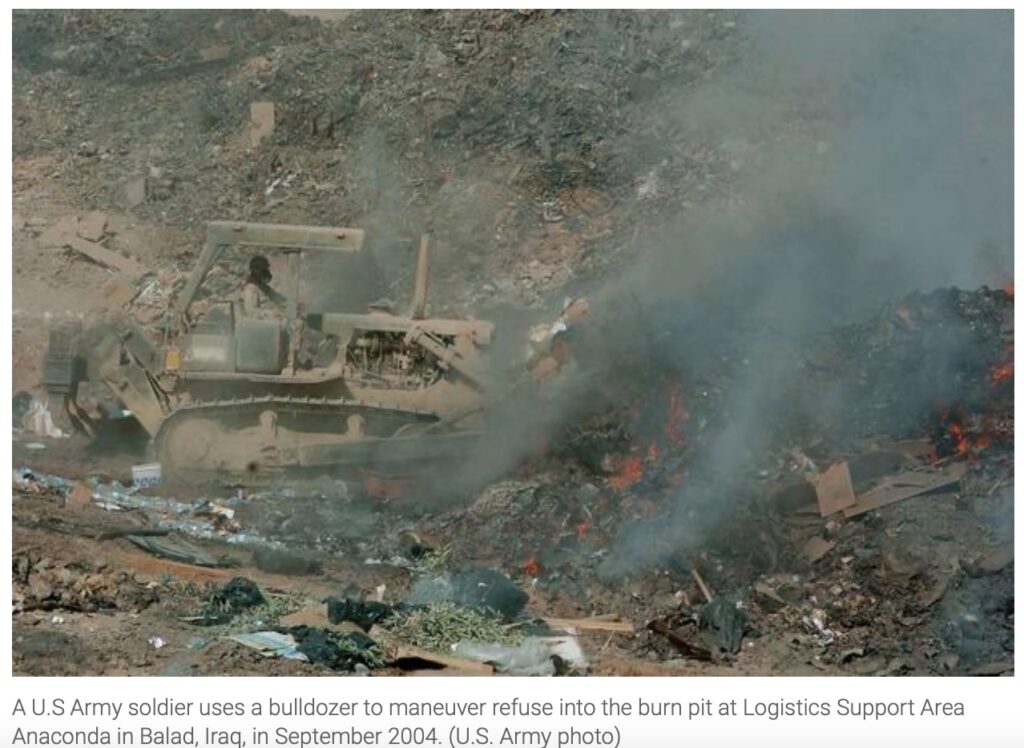
Cost of War Toxic Exposures Fund also has funding for the Honoring Our PACT Act, which extends health coverage for veterans exposed to burn pit smoke and other environmental hazards that caused cancers and other illnesses during while they were serving our country.
Earlier this month, Peltola voted against the National Defense Authorization Act because it did not provide enough money for abortions and transgender surgeries.
Peltola is running for reelection in 2024, and has been challenged by Republican Nick Begich, who has come out strongly in favor of national defense and military families.
“Alaska has more military veterans per capita than any other state in the nation. It’s critical that our sole representative in the House show up and deliver on the promises made for those who have chosen to serve our country,” Begich said.
“Mary Peltola’s betrayal of veterans and active duty troops may be her worst betrayal of Alaskans yet. Peltola votes the extreme Democrat party line even when that means targeting the health care and benefits veterans earned serving our country in uniform — or blocking pay raises for active duty troops,” said NRCC spokesman Ben Petersen.
Anchorage Assemblyman Kevin Cross took heavy fire on two talk radio shows this week over his perceived ethical conflicts as a real estate broker leading the charge to change zoning codes.
On the Mike Porcaro Show on 650 KENI, host Porcaro played a recording of Cross explaining to a group of realtors that since he was going to change the zoning laws, now is the time to take advantage of what’s coming. The audio:
The audio that Porcaro played had Cross implying that the time is right to buy or hold onto large parcels of land because the zoning changes will be advantageous to developers. He then described how he had purchased a five-ace parcel in order to take advantage of the changes he is spearheading on the Anchorage Assembly.
He also described Assemblywoman Meg Zaletel as a fantastic person, who he agrees with on the need for zoning changes. Zaletel has a building and she wants to add units onto it so she can rent them out, he said.
Cross is one of the proponents of a radical zoning change to take Anchorage zoning to just two districts — one for housing and one for other uses. He says the Assembly is onboard.
While some praise the move to a one-residential zoning plan, others say it will create chaos and cost homeowners who have paid high property taxes for years, only to see their home values degraded. Some argue that density will lead to impassible streets during winter snowfalls, with no place to put the snow.
Then, on the Amy Demboski Show on Thursday morning, Demboski played more taped recordings of Cross, which she had received from a source.
On one of them, Cross was bragging that people would not recognize the land use process when he is done with them, and he is “nobody’s bitch” and he doesn’t care if he goes against his own community councils in Eagle River and Chugiak.
Demboski then played audio of Cross describing how to manipulate the Veterans Administration loan process. He said that a person can get loan for a four-plex, not move into it themselves for 90 days, collect the cash from renters of the units, then refurbish the basement and convert it into a five-plex.
The advantage for such a scheme would be to get the cheap VA loan rate with little or zero down payment. On the Amy Demboski Show, Cross said it was perfectly legal, while Demboski pushed back and said it sounded like loan fraud.
Cross was on the defense during both shows, saying that he has no professional conflicts.
Assemblyman Randy Sulte called into the Demboski Show and he had heard the fist clip and he that while he understand the challenges with Title 21, which is the zoning code, he doesn’t agree with the process or the current draft ordinance, because it doesn’t recognize the unique characteristics of Chugiak, Eagle River, Hillside, or Girdwood.
Demboski responded, “Why would we ever have one residential zoning for whole muni? Why would we want Girdwood to look like downtown Anchorage?”
When Demboski asked Assemblyman Cross if he had gone to any community councils to discuss the radical changes, the phone went awkwardly silent for several seconds. Later, Cross said maybe he would remove Chugiak, Eagle River, and maybe he would even take his name off the controversial ordinance as a sponsor.
Bidenomics and its evil twin, the climate con game, have infiltrated every facet of the Biden Administration. The ramifications for most Americans have felt like a kick in the teeth.
Readers will recognize the substantial shift within the Department of Interior under President Joe Biden. It morphed into a largely conservation-centric agency, rendering Western federal lands inaccessible for oil extraction, mining, and other practical uses. Indeed, even constructing a single-lane, gravel, lifesaving road from King Cove to Cold Bay, Alaska has been delayed by the Administration because it’s viewed as an existential climate change threat.
In parallel, the Department of Agriculture is shifting terrain away from traditional forestry, instead opting to invest in “carbon storage.”
Not even the Pentagon escapes this trend, as it allocates taxpayer money toward making its military killing machines more eco-friendly.
Among these overt transformations, the U.S. Treasury Department’s new direction is a subtle yet profound instance of Bidenomics chaos.
As the second-oldest department in U.S. history, the Treasury was tasked with managing the national debt and financing the Revolutionary War. It initially issued redeemable “bills of credit,” which gave birth to the first national debt. Few could have imagined the United States would permit its debt to spiral out of control.
Yet, here we stand. Even the Treasury Department has deviated from its congressional mandate, pivoting toward climate change as the be-all, end-all.
This week, Treasury Secretary Janet Yellen appointed Ethan Zindler as the second “climate counselor” for the department. He’s now responsible for leading the department’s “Climate Hub,” a group guiding the department’s climate goals.
In Yellen’s words, “I believe it is imperative that we continue to take decisive action to fight climate change, for the sake of our planet and for the benefit of the global economy.”
There, she said it: The Treasury Department is leveraging its authority to bolster the global economy, even as our national debt is plundering our pockets.
With national debt growing from 52% of the gross domestic product in 1960 to 123% of GDP today, each American taxpayer is now burdened with $253,000 in debt to offset the staggering $32.6 trillion the country owes.
Economists understand that debt exceeding 100% of GDP for a sustained period of time can jeopardize a nation’s ability to repay its lenders.
The Federal Reserve’s solution is simple: Print more money and elevate interest rates. In the last 17 months, the Fed has raised interest rates 11 times in its 12 meetings, propelling the federal rate to a two-decade high.
The repercussions for American citizens are tangible. For instance, rising mortgage rates are a huge hurdle for first-time millennial homebuyers, many of whom are now compelled to stay under their parents’ roofs.
When Biden took office, the average interest rate for a 30-year fixed mortgage was at a historic low of 2.7 percent. This was the economic climate inherited from President Donald Trump.
Today, a mortgage costs 7.688 percent, marking a 184 percent surge in home loan rates in merely three years—the fastest recorded increase in recent memory.
This is an untenable trajectory.
Credit card debt is also exerting immense pressure on Americans, with interest rates hitting a record high of 20 percent amidst record levels of outstanding credit card debt.
According to a WalletHub analysis, the latest rate hike will cost credit card users an additional $1.72 billion in interest charges over the next year.
Maybe you can just live in your car? The cost of car financing has risen from 5.2% to 7.2% within just one year. For a $40,000 vehicle financed over 72 months, this translates to an additional cost of $2,278, almost a 6% hike on the vehicle’s price.
Under Biden, and in Yellen’s own words, the Treasury Department prioritizes the global economy over domestic economic health. Our Federal Reserve resorts to money printing to manage this conundrum, placing our economy at an elevated risk of inflation.
As President Ronald Reagan asked in 1980, “Are you better off now than you were four years ago?”
For most Americans, the response is a vehement no.
Despite President Joe Biden’s assertions that Bidenomics is performing as anticipated, it uncomfortably echoes President Jimmy Carter’s advice in 1977 to don a sweater if we couldn’t afford winter home heating. That didn’t fly with the public then, and Bidenomics isn’t flying with the public now.
Former Anchorage School District Superintendent Deena Bishop was named the new commissioner for the Alaska Department of Education and Early Development on Wednesday.
The Board of Education, which makes the decision for the post, last year appointed Heidi Teschner as the interim commissioner while looking to replace former Commissioner Michael Johnson, who left in June, 2022 for another position. The appointment came near the end of the regular quarterly meeting of the board.
Bishop served on the University of Alaska Board of Regents and has been an educator in Alaska since 1991. She served as a teacher, assistant principal, principal, assistant superintendent, and the superintendent of the Mat-Su Borough School District. Recently, she has been a top education adviser to Gov. Mike Dunleavy. In 2021, she was a finalist for chancellor of University of Alaska Anchorage.
Bishop holds a bachelor of science degree in education with a specialization in bilingual education, a master of education degree in administration, and a doctor of education degree in learning assessment and system performance. She is a graduate of the American Association of School Administrators National Superintendents Certification two-year program.
On Wednesday, the House Oversight Subcommittee on National Security, the Border, and Foreign Affairs held hearings during which a former military intelligence official, now a whistleblower, explained that U.S. military personnel have been attempting to reverse engineer unidentified aerial phenomena, known as UAPs or UFOs. The government has actively concealed these endeavors from the public, he said.
It was the first time in American history that a government panel has taken testimony from former military and intelligence officers about extraterrestrial activity the government has purportedly kept the lid on.
Some of the other statements made under sworn oath by witnesses during Wednesday’s House Oversight Committee hearing:
Former Intelligence Officer David Grusch: “I was informed in the course of my official duties of a multi-decade UAP crash retrieval and reverse engineering program.”
Rep. Jared Moskowitz: “Mr. Grusch, as a result of your previous government work, have you met with people with direct knowledge or have direct knowledge yourself of non-human origin craft?”
David Grusch: “Yes. I personally interviewed those individuals.”
Grusch said the U.S government is in possession of UAP’s: “I know the exact locations and those locations were provided to the Inspector General.”
Grusch told Rep. Alexandria Ocasio-Cortez that he will provide her with specific names and locations of unacknowledged UFO Special Access Programs in a classified setting.
Grusch said, “I know the exact locations” of UAPs of which the federal government has possession.
Grusch said he has personal knowledge of people being physically harmed in attempt to keep UFO information from being disclosed to the public. He indicated attempts to silence people also led to murder, although he stopped short of detailing that by saying he could not talk about it.
Grusch stated that the government has retrieved non human biological material from crashedUAP.
Grusch personally witnessed “very disturbing”‘” injuries to his colleagues by UAPs: “I know of multiple colleagues of mine that got physically injured…The activity that I personally witnessed…was very disturbing.”
David Fravor, a retired Navy pilot who videotaped a UAP off the California coast, said the technology “is beyond anything we have. There’s four sets of human eyeballs [who saw the UAP]. We’re all very credible. It’s not a joke.”
Ryan Graves, an ex-Navy pilot, told the committee that he saw UAPs “every day for at least a couple years” over the Atlantic Ocean. “As we convene here, UAPs are in our airspace, but they are grossly underreported. These sightings are not rare or isolated; they are routine. Military aircrews and commercial pilots, trained observers whose lives depend on accurate identification, are frequently witnessing these phenomena.”
Graves said that some of the flying crafts he saw could not be of domestic origin because they were staying absolutely stationary in Category 4 hurricane winds and then accelerated to supersonic speeds.
Two men who live in Fairbanks were indicted by a federal grand jury on July 20, charged with multiple federal offenses related to an illegal big-game guide-outfitter operation.
Jun “Harry” Liang, 59, and Brian Phelan, 51, are alleged to have conducted guided hunts for caribou and brown bears without proper licensing from the state, the indictment says
According to court filings, Liang, operating without a guide-outfitter license, collected around $11,000 in 2021 and $60,000 in 2022 for these illegal services.
The indictment contains eight counts against Liang, including one count of Lacey Act conspiracy, two counts of wire fraud, one count of Lacey Act false labeling, two counts of illegal alien in possession of a firearm, and two counts of money laundering.
There are no charges relating to the provisions of prostitutes, as that is not a federal crime.
Phelan, also unlicensed, faces charges of Lacey Act conspiracy and Lacey Act false labeling.
Both charges under the Lacey Act, a federal conservation law that prohibits trade in wildlife, fish, and plants that have been illegally taken, possessed, transported, or sold, point towards the seriousness of the offenses committed.
The U.S. Fish and Wildlife Service conducted a sting, in which it developed a complaint that was filed with the federal court in Alaska on July 12.
Investigators found that Liang was using a Chinese social media platform called xiaohongshu.com, which is also known as “Little Red Book.” It’s described as “China’s foremost fashion and luxury shopping platform.”
Liang posted in Mandarin on the Little Red Book his services as a guide for big-game hunts, specifically targeting Chinese-speaking clients who are Chinese nationals living in the United States or who are Chinese nationals. Once a potential client was interested, the communication continued on another Chinese messaging app called WeChat. Screen shots of the advertising of the hunts were translated by investigators using Google Translate.
Liang reportedly entered the U.S. on a tourist visa that expired in 2016 and has been living in Fairbanks. He purchased a Mercedes with some of the proceeds of the hunting scheme, the affidavit says. Liang is also the owner/operator of AK Aurora Travel Inc., which offered sightseeing and Northern Lights tours.
Liang was arrested and made his initial court appearance on July 14 before U.S. Magistrate Judge Scott A. Oravec of the U.S. District Court for the District of Alaska. Phelan is scheduled for his initial court appearance in August.
If convicted, Liang could face a maximum of 20 years in prison, while Phelan could face up to five years. The actual sentence will be determined by a federal district court judge, considering the U.S. Sentencing Guidelines and other statutory factors.
U.S. Attorney S. Lane Tucker of the District of Alaska announced the indictment. The case is currently under investigation by the U.S. Fish and Wildlife Service, the U.S. Department of Homeland Security, Homeland Security Investigations, and the IRS, with the assistance of the Alaska State Troopers, Wildlife Investigations Unit.