
Home Blog Page 597

Peltola applauds hookup grant in Nuiqsut that costs U.S. taxpayers up to $320,000 per house

50

American taxpayers will fork over between $25 million to $40 million to connect a tiny North Slope village with high-speed internet.

The village of Nuiqsut, in the middle of the North Slope oil patch, is home to about 520 people. It has 125 households, which means the total cost of high-speed internet per household is at least $200,000.

Rep. Mary Peltola lauded the pork project for Nuiqsut. She says, however, that it is a $40 million grant, although she does not say where the other $15 million is coming from. Some industry sources and the USDA website, it’s clear Peltola is not reporting the grant accurately.

“These projects put money into the pockets of Alaskan workers and make rural life more feasible. Excited to see more grants like it!” Peltola wrote.

At $40 million, it would bring the cost up to $320,000 per household, compliments of American taxpayers from the West Coast to the East Coast who will be footing the bill in years ahead.

Many of the people who live in Nuiqsut do not reside there year-round, but leave for Fairbanks, Anchorage, or the Lower 48 at various times during the year. The Department of Agriculture describes the village, which is incorporated as a municipality, as “socially vulnerable.”

It’s not that the people in Nuiqsut are poor. The poverty rate is low — under 7% — because of the oil money that comes into the North Slope Borough and its communities through royalties. According to the U.S. Census, 12.4% of Americans now live in poverty, an increase from 7.4% in 2021. But Nuiqsut’s poverty rate is just 6.68%. For many who live there, oil dividends are the primary source of income.

The Nuiqsut Trapper School, with an enrollment of 125, has a 5% proficiency rate for math and English, although English is the primary language spoken in home and business in the town. More than 50% of the students are chronically absent from school. The Alaska Department of Education says that over 90% of the students are from low-income families, although that doesn’t match up with the community’s enviably low poverty rate. The average income in the town is over $105,000 per year.

The fiber optic project being paid for involves installing fiber optic cable, network infrastructure upgrades, and the linking of broadband services to homes and businesses. The fiber would go to the Quintillion undersea cable that stretches around Alaska. That cable broke this summer and the entire Arctic lacked internet for months.

Many of the internet users in the Arctic switched to Starlink during the Quintillion outages, and many of those customers have not gone back to the fiber optic broadband. There’s been no reported survey of households that are committed to hook up to the fiber.

Starlink satellite internet is already available in Nuiqsut, thanks to Elon Musk. Starlink plans, which require an upfront investment in a $599 satellite dish, would cost Nuiqsut residents $90 a month.

The fiber hookups being paid for by taxpayers are priced higher for lower speeds than Starlink has available, and at four times the cost. But the ASTAC internet provider is not even trying to compete with Starlink because the money is coming to the company in corporate welfare, no matter what.

Nuiqsut’s economy is mainly government-based employment, with more than 54% of working residents having employment in either the school district or local government or Native entities. There is also subsistence hunting, fishing, and whaling; the land provides caribou, seals, moose, waterfowl, whitefish, Arctic char, grayling, and bowhead whales at various times of year.

Nuiqsut, which was established in the 1970s after 27 Utqiagvik families moved overland to the area to be closer to Prudhoe Bay oil development, and the Arctic Slope Regional Corporation funded the construction of the grid-like village, is served by scheduled and chartered flights with Wright Air Service from Utqiagvik. Freight arrives year-round by air. It is also the northernmost town in America accessible by road, having access to the Dalton Highway four months of the year.

Across the nation, similar grants are being announced for remote communities that don’t have strong internet speeds. The entire list is at this link.
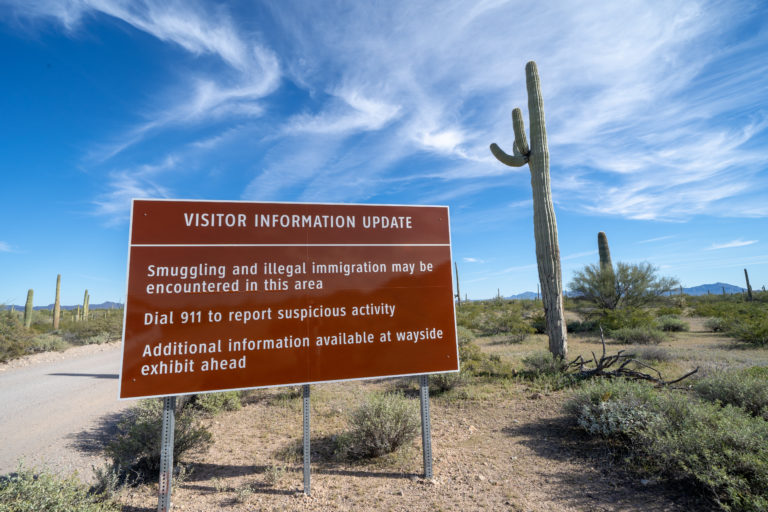

Alaska Attorney General, 25 others, call on Congress to pass bill allowing states to enforce immigration — if federal government won’t

By BETHANY BLANKLEY | THE CENTER SQUARE

A coalition of 26 state attorneys general, including Alaska’s Treg Taylor, is calling on the new U.S. Speaker of the House to pass a Florida-sponsored bill that would grant states the authority to enforce federal immigration law when the federal government refuses to do so.

The AGs, led by Florida Attorney General Ashley Moody, sent a letter to Speaker Mike Johnson, R-Louisiana, on Monday. In it, they called on Congress to pass U.S. Rep. Bill Posey’s bill, the Immigration Enforcement Partnership Act. Posey, R-Florida, first filed the measure in 2022 and again in March 2023.

“On day one, [President Joe] Biden began intentionally dismantling our public safety immigration structure,” Moody said. The president and U.S. Department of Homeland Security Secretary Alejandro Mayorkas “have outright ignored federal law, and we have uncovered numerous ‘secret plans’ to allow for the mass release of unvetted and inadmissible migrants,” she said, referring to Florida’s border-related lawsuits against the administration.

The administration’s parole and mass release policies are “not only in direct conflict with federal law, but it has also put Americans’ safety in jeopardy,” Moody said. Despite Florida’s repeated wins in court, Moody said, “more needs to be done. I like to believe we at least slowed the invasion to some degree. However, it is becoming clear that the judicial system is not an adequate battlefield to quickly address the urgent crisis Biden has created.”

Posey on Monday called for Mayorkas to be impeached. In posts on social media, he said, “The border crisis is at unmanageable levels of mass migration. Simply put, Sec. Mayorkas isn’t doing his job. In the real world, if someone fails to do their job, they are fired. Sec Mayorkas has failed at the southern border. I support the initiative to impeach Mayorkas.”

Posey’s bill, HR 1337, would allow state officials to require the DHS secretary to enforce federal immigration law in certain circumstances. It gives DHS the option to enforce the law or deputize state officials to carry out federal immigration duties instead.

According to the bill, state attorneys general would identify how DHS isn’t fulfilling its non-discretionary duties under Title II of the Immigration and Nationality Act, which includes arresting, detaining and removing criminal and arriving illegal immigrants. It also requires the courts to expedite proceedings related to these actions to the greatest extent practicable, according to a summary of the bill.

If enacted, the measure “authorizes a state attorney general to request in writing that the Department of Homeland Security adequately fulfill certain duties related to immigration enforcement. Within 30 days of receiving such a request, DHS must ensure that such duties are adequately fulfilled by DHS officers and employees or authorize that state’s officials to fulfill such duties. The state attorney general may sue DHS for failure to meet this bill’s requirements,” according to the bill language.

“Maintaining operational control over our borders is critical to our security and our ability to stop drug smugglers, human traffickers, and those on terrorist watch lists, who are invading our country and mean to do harm to our communities,” Posey said when he introduced the bill earlier this year. “When the federal government abdicates its role in securing our nation’s borders and refuses to enforce immigration laws, states should have authority to protect their citizens.”

The AG’s argue in their letter, “Had Congress acted sooner, the U.S. might not be setting yet another record for CBP encounters at the border. We will never know, but if we take action now to give states the authority to do the job Biden and Mayorkas refuse to do, we could prevent another record next year.”

The letter points out that in September alone, enough fentanyl was seized in the Rio Grande area of the Mexico-U.S. border to kill 25 million Americans, or the entire populations of Washington, Oregon, Montana, Idaho, Montana, Nevada, Utah, New Mexico, Wyoming, and South Dakota combined.

They urged Johnson “to at the very least, expeditiously give” Posey’s bill a hearing.

Joining Moody in the coalition are the attorneys general representing the states of Alabama, Alaska, Arkansas, Georgia, Idaho, Indiana, Iowa, Kansas, Kentucky, Louisiana, Mississippi, Missouri, Montana, New Hampshire, North Dakota, Ohio, Oklahoma, South Carolina, South Dakota, Tennessee, Texas, Utah, Virginia, West Virginia and Wyoming.

The Texas Senate for the third time last month passed a bill that authorizes the state to enforce border security. It would create a new state crime for entering Texas illegally and authorize Texas law enforcement officers to arrest illegal border crossers who enter Texas between ports of entry. The measure has gone nowhere in the state House.

The coalition letter misstates border apprehension data, appearing to confuse southwest border apprehension data with national apprehension data, and underreports the number of known, suspected terrorists who’ve illegally entered the U.S. and been caught.

It states, “record-breaking numbers of inadmissible immigrants flooding in – more than 7 million illegal immigrants have walked freely into the country since Biden took office – including more than 280 individuals encountered on the terrorist watchlist since fiscal year 2021.”

According to official U.S. Customs and Border Protection data and preliminary gotaway data obtained by The Center Square, the numbers are significantly higher.

There were 736 known, suspected terrorists apprehended in fiscal 2023 alone, the highest in recorded history. The majority, 66%, were apprehended at the northern border, The Center Square first reported.

There were nearly 4 million illegal border crossers reported nationwide in fiscal 2023, and over 10 million illegal border crossers reported since January 2021, including gotaways, The Center Square first reported.

There have been roughly 1.7 million gotaways reported since January 2021, although this number is estimated to be closer to 2 million, The Center Square first reported.

Russia tests intercontinental nuke-capable missile, backs away from test ban treaty

13

Russia’s decision to withdraw its ratification of the Comprehensive Nuclear Test Ban Treaty prompts concerns about another nuclear arms race, especially in light of Russia’s increased military presence in the Arctic and the ongoing war over Ukraine.

Russia President Vladimir Putin says the country doesn’t intend to resume nuclear weapons testing, but does need to achieve parity with the United States.

The nuclear test ban treaty, which is signed by 177 countries (without Russia), may be in severe jeopardy. The treaty is not actually in force because six countries, including China and the United States, have signed it, but not ratified it, and three major nuclear powers — North Korea, India, and Pakistan — haven’t even signed it.

But in spite of what Putin is saying about not ratcheting up nuclear arms, last week the Russian military revealed that it had launched a successful intercontinental ballistic missile that can carry nuclear warheads from a submarine called the Emperor Alexander III. The test was conducted in Russia’s White Sea, and hit a testing range in the Kura Missile Test Range of eastern Kamchatka, some 3,442 miles away. The test may have occurred in late October.

It’s not the first intercontinental missile launched by Russia and won’t be the last, but it comes at an interesting time in world geopolitics.

In 2017, the submarine Yuri Dolgorukiy launched an intercontinental ballistic missile from the Barents Sea at Kura targets in Kamchatka, again from an underwater position. Kamchatka is about 1,540 miles from Dillingham, Alaska.

As the nuclear test ban treaty appears to be crumbling around the edges, and as Russia amps up its nuclear missile capabilities, Alaska has missile tracking capabilities at Clear Space Force Station, about 300 miles north of Anchorage, and interception launching capabilities at Fort Greely, 100 miles southeast of Fairbanks. The 100th Missile Defense Brigade (Ground-based Midcourse Defense) destroys intercontinental ballistic missiles in mid-course to defend the United States. 

In September, Russia fired cruise missiles at mock targets in waters between it and Alaska, which Moscow said was an exercise to protect its shipping routes in the Bering Sea. That exercise involved submarine-launched missiles, as well as ship- and land-launched ballistics. About 10,000 Russian military personnel took part in the exercise, which was observed by U.S. Coast Guard.

Alaska, Florida recruiting Chicago police, offering large bonuses, no state income tax

By GREG BISHOP | THE CENTER SQUARE

Efforts to recruit police officers from Illinois to other states continue.

While Gov. J.B. Pritzker recently approved a measure allowing non-citizens on work permits or Deferred Action for Childhood Arrivals to be sworn in as police officers in Illinois, other states like Florida and Alaska are offering thousands of dollars in recruitment bonuses.

Earlier this month, Florida Gov. Ron DeSantis’ office announced that the Sunshine State has now recruited 47 law enforcement officers from Illinois, offering $5,000 bonuses to relocate. In September, that number from Illinois was 37. 

Of those officers from Illinois, three have moved to Florida following billboards placed in Illinois, “encouraging officers to make the move to a state that consistently backs the blue,” DeSantis’ office said.  

“With a national lack of support for the important work law enforcement officers do daily, Florida has stood up for what is right,” DeSantis said in a statement. “Our back the blue policies have brought officers from all 50 states and two U.S. territories to Florida. We will continue to support law and order and make investments in the people that keep our communities safe.”

Jurisdictions in Alaska are offering up to $30,000 bonuses for lateral hires and $15,000 bonuses for new recruits. Fairbanks, Alaska, has a lateral recruitment effort with $60,000 in bonuses. 

Chicago Fraternal Order of Police Lodge 7 President John Catanzara said both these states have other incentives. 

“A state with no state [income] tax and a whole lot of other perks,” Catanzara told The Center Square. “Everybody is having recruitment issues. Everybody is doing everything they can. And I consider it flattering that they want to come and steal the best and brightest officers and well-trained officers in the country from Chicago.” 

Retention bonuses from Chicago are important, he said. 

“Explain to them the necessity of an incentive bonus for retention and try to give the 20-year veteran officers a reason to stay a little bit longer,” Catanzara said. 

There are other things Catanzara said Illinois and Chicago should do.

“Address the mandatory retirement age at 63 and make it equal to whatever the Medicare age is so officers can go straight there without having to worry about paying for health care when they retire,” Catanzara said. 

Beyond that, Catanzara said curbing anti-police policies can go a long way.

“Until the climate of anti-police profession kind of dissipates, I don’t know how long. Everybody kind of expects that to last several, five more years, so it’s not going away anytime soon,” he said. 

Not his time: Tim Scott suspends campaign for president

Sen. Tim Scott announced on Sunday that he is suspending his campaign for president. The South Carolina senator made the announcement on Fox News on Sunday, and it evidently was unknown to even his own campaign staff.

“I love America more today than I did on May 22nd, but when I go back to Iowa, it will not be as a presidential candidate. I am suspending my campaign,” Scott told Trey Gowdy on “Sunday Night in America with Trey Gowdy.

“I think the voters who are the most remarkable people on the planet have been really clear that they’re telling me, Not now, Tim,” he said.

Scott filed for president in mid-May. His withdrawal comes at the same time the Republican National Committee has increased its requirements for candidates to take part in the fourth Republican presidential debate.

To qualify for the fourth debate, which is Dec. 6 in Tuscaloosa, Ala., candidates must get at least 6% in two approved national polls, or 6% in one poll from two separate early-voting states: Iowa, New Hampshire, Nevada and South Carolina, according to the Republican National Committee. Participants also need to show at least 80,000 unique donors, with at least 200 unique donors per state or territory, in 20 or more states. Candidates have until 48 hours before the debate to satisfy the requirements.

Tim Barto: Riley Gaines is calling it like it is

By TIM BARTO

Last week, Must Read Alaska ran a column I wrote about evil. I felt it necessary because too many of us on the side of common sense and traditional values have allowed a cultural shift to be ushered in where up is down and good is bad.

It’s not a small thing to call someone or something evil. It takes a firm commitment and even some courage because doing so brings out vile and vicious attacks, usually accompanied by what has become meaningless labeling; i.e., racist, sexist, misogynist, homophobic. 

So it was with great delight that I read about Riley Gaines, the former All-American swimmer from Kentucky, calling out evil for what it is. Having competed directly against Lia Thomas, the male swimmer from the University of Pennsylvania who decided he was female and was allowed to transfer from the men’s swim team to the women’s swim team, Riley was the first female athlete to speak out against the gross injustice that was Thomas’ run as a female athlete.

Riley has made it her life’s mission to bring an opposing point of view on this issue. As the mainstream media, including Sports Illustrated and ESPN, were gushing over Thomas’ “groundbreaking” achievements and calling any statements to the contrary to be transphobic and hateful, Riley began speaking out. 

And she has found an appreciative audience. Last week, she was speaking on the campus of UC Davis, near the California capital of Sacramento, when she referred to her cause as spiritual warfare and said it was no longer a battle of good versus bad, right versus wrong, but one of moral versus evil.

Further, Riley argued that the misogynist label belongs to those who disdain women so much they allow men to claim themselves as women and push true women aside in the process. 

The woman has guts. She was out there all alone, but her courageousness has been infectious, allowing other female athletes to speak out against males competing as females. One of those is Paula Scanlan, who was on the UPenn women’s swim team when Thomas was allowed to join their team. Pressured into hiding her true feelings about sharing the locker room with a fully genitally intact male swimmer, Scanlan has found courage from Gaines. 

Hopefully, there will be other female athletes who are willing to speak out against men competing as women and for keeping girls’ and women’s sports for girls and women.

Paula faces a gauntlet of criticism, as has Riley. What these two women need is to know that people support them, that the radical idea that a man can just decide he’s a woman and therefore compete against women is just that – a radical idea, and a deeply flawed and insulting one.

Whether it’s calling out the unfairness of men competing as women, or assigning blame for the October 7thattack on Israel to the actual Hamas terrorists who committed the atrocities, evil must be identified for what it is. Going along with outrageous theories because those who espouse them are loud and extraordinarily arrogant is not the right thing to do. 

Riley Gaines and Paula Scanlan do not go along with those theories. They know truth –real truth, not some subjective truth – and speak it, and they are courageous for doing so.

You have a chance to hear Riley Gaines in person, as she is coming to Alaska on Nov. 17 and 18 to spread the truth and call out evil for what it is.

Tim Barto is a regular contributor to Must Read Alaska, and is vice president at Alaska Family Council, the organization that is bring Riley Gaines to Alaska.

Legal case emerges: Is transgender treatment of kids a form of ‘conversion therapy,’ prohibited by Anchorage local ordinance?

26

In a groundbreaking legal case in Boston, Mass., the transgender trailblazing clinic Fenway Community Health Center is at center of a controversial lawsuit that has implications for Anchorage.

The case, Shape Shifter v. Fenway Community Health Center, could reach the Supreme Court and ultimately inform what it means to conduct “conversion therapy.”

In 2020, Anchorage Assembly banned conversion therapy for youth, which the extremists on the Assembly view as any attempt to dissuade youth from expressing themselves as gay or transgender. However, the practice of coercion continues in the opposite direction in Anchorage, with the group Identity Inc. as a lead promoter of transgender puberty-blocking hormones and therapies to lock-in youth and adults with non-biological gender expressions. The ordinance in Anchorage is vague and does not define what conversion therapy actually is, but it acts as a warning to therapists to not engage in counseling youth about their sexuality.

The Boston case is based on civil rights. The plaintiff, a gay man, accuses Fenway Health of engaging in what he describes as “gay conversion” practices by approving him for transgender hormones and surgeries. This lawsuit is unprecedented in the United States, marking the first time “gender-affirming care” is being legally challenged as a potential form of anti-gay discrimination.

At the heart of the Boston case is a complex clinical reality surrounding gender dysphoria, which the lawsuit argues has multiple developmental pathways.

The man’s legal team is using Section 1557 of the Affordable Care Act (ACA), which prohibits discrimination “on the basis of sex” in healthcare settings. They are drawing upon the 2020 Supreme Court ruling in Bostock v. Clayton County, which expanded the definition of “discrimination because of… sex” to include discrimination based on homosexuality.

The lawsuit asserts that federal law offers specific protections to gay men and lesbians, which are allegedly being undermined by clinics that are operating with a bias towards transgender care, an argument that opens a new frontier in the debate over gender identity, sexual orientation, and medical ethics.

The case, Shape Shifter v. Fenway Health is explained by the plaintiff himself at his legal team’s website:

Ever since I was a young kid, I exhibited gender nonconforming behavior. Even before I hit puberty, I knew I was romantically attracted to males. However, as I grew older I realized that my femininity and homosexuality were not accepted by society and by my parents. I was constantly bullied in school. My parents were ashamed of my femininity. My dad told me that I will never be a real man because I am too emotional and soft. My mum told me that she wished I were taller and more masculine like other boys my age. All of that made me hate everything about myself including my body, my height, and my feminine manners. I just was “not masculine enough.” No matter what I did, I could not hide my feminine mannerism or grow any taller. So, when I came across transgender ideology in grad school I quickly became convinced that I was a ‘straight’ woman trapped in the wrong body. Suddenly, everything made sense. Transgender ideology seemed to explain why I never fit in and felt uncomfortable with my own body. It was finally my chance to escape all the bullying and torment I faced my whole life for being an effeminate gay man. But, after fully transitioning, I realized that my issues had not resolved, and after deep self-reflection, I came to understand that I suffered from internalized homophobia,” he wrote.

“Fenway sold me a hardware fix for a software issue,” the man said.

The complaint summary notes that Fenway knowingly and willfully removed safety procedures known as “gatekeeping” from its transgender healthcare practice. This shows that Fenway was pursuing the goal of acquiring more transgender patients.

Under the “gate-keeping” model of care internalized homophobia is a contra-indicator to transition, because studies have identified it as the leading cause of transition regret, the lawsuit says.

The lawsuit states that Shape Shifter was rapidly medicalized, and his sexual orientation and symptoms of internalized homophobia were treated with deliberate indifference.

Under Fenway’s “undifferentiated care and undue influence Shape Shifter underwent a number of surgical procedures and fully transitioned. Shape Shifter should have been treated for internalized homophobia, instead he was converted to transgender. The lawsuit alleges that Fenway’s apathetic attitude toward Shape Shifter’s sexual orientation and its associated distress violated his civil rights, and caused him irreversible, irreparable physical and mental injury. As a result of transitioning, Shape Shifter cannot express himself as a gay man, and must live with dissonance between who he is and how he appears.”

In spite of heavy snow and global unrest, Alaska’s Jewish Cultural Gala goes on

With quiet concern for anti-Jewish actions from supporters of Hamas terrorists, the 18th annual Alaska Jewish Cultural Gala went off without a hitch on Saturday night, under high security — both seen and unseen — at Anchorage’s Dena’ina Convention Center. The historic snowfall in Anchorage also did not deter men and women from donning their finest for an evening to support the Jewish community.

The annual gala is one of the dressiest events of the year in Alaska, a time when men sport bow ties and tuxedos and women wear gowns.

Political leaders in attendance included Sen. Dan Sullivan, wearing his Marine dress blues, Sen. Lisa Murkowski in a classic gold gown, and Mayor Dave Bronson. All three were recognized for their friendship to the Jewish community.

This year, the gala honored Providence Alaska CEO Ella Goss, who began as an emergency room nurse and is now the chief executive officer of Alaska’s largest medical provider. She was introduced by Alaska’s Chief Medical Officer Dr. Anne Zink.

Rep. Kurt Olson, 1948-2023

Kenai former Rep. Kurt Olson of Soldotna died Thursday after a brief battle with pancreatic cancer.

Olson was a Republican from the Kenai Peninsula. He moved to Alaska and lived in Anchorage from 1977 to 1982, and then moved to Kenai, where he lived until 1995, before moving to Soldotna.

Olson graduated from Cupertino High School in 1966, obtained a bachelor’s degree from California State University Long Beach in 1977, worked as an Alaska legislative aide, insurance broker for Commercial Lines, and custom seafood processor in Kenai. He also served in the United States Air Force. He served on the Soldotna City Council and in the Alaska House of Representatives from 2004 to 2016.