Sen. Dan Sullivan issued the following message for Veterans Day:
Today, across Alaska and across our great nation, American communities throughout our country will be taking the time to recognize, celebrate and honor their veterans and those who continue to serve.
For our state, this is a really important day, and I’m looking forward to spending time in Anchorage and in the Mat-Su Valley on Veterans Day.
Why is this so important to us? Because we are the state with more veterans per capita than any state in the country. That is a special patriotic element of our culture and heritage in Alaska, and it means so much to everybody.
Speaking of Alaska veterans, we just had the opportunity here in D.C. to honor Alaska veterans from World War II, the Korean War, and Vietnam, who came to Washington, D.C. as part of the Last Frontier Honor Flight. This is such a great organization, and they’re just celebrating this year, their 10th anniversary. They do incredible work for our great state.
I have tried to make sure, whenever the Honor Flights come to Washington, D.C., and I’m here, I am ready to greet these great American and Alaskan heroes at the monuments. And we always bring donuts! “Pogey bait,” as we call it in the Marine Corps. But our veterans love the Dunkin Donuts that we bring.
My message to all of our veterans on this Honor Flight and to all veterans today is this: Thank you for protecting our liberties and defending our nation.
And, importantly, it’s not just what you’ve done to protect America. Think about this fact, and it is a fact that is not often repeated: Whether you’re a World War II, Korean War, Vietnam, Iraq, Afghanistan, War on Terror—any veteran, any American who has put on the uniform of your nation, you are part of an incredible heritage. And that heritage is this: The U.S. military over the years has done more to liberate men and women and children around the world from oppression and tyranny than any other force in human history. Hundreds of millions of people are free today because of America’s military. That is an incredible legacy. That is one of the many things that makes our nation, America, an exceptional nation.
On this Veterans Day, I want to again thank all of our Alaska veterans, all veterans across the United States, and, of course, their families who, in many ways, sacrifice as much, if not more, than so many of our veterans.
I tell my wife, Julie, and our three daughters, even though they’re not wearing the uniform, they have sacrificed for their country so much in support of someone who has worn the uniform.
So for all Alaskans on this very special day, thank you to our veterans for their service. God bless our great state and God bless our great country.
There’s no sugarcoating it — this has been an historic snowstorm.
In some parts of Anchorage, the power went out late Tuesday night and just came back on Friday night, after a major snowstorm walloped Alaska’s largest city this week.
One resident in the Turnagain neighborhood reported all of his freezer and refrigerator contents had to be tossed. The Chugach Electric Association power outage map is at this link.
Those with electric cars in some neighborhoods were out of luck With power out, there was no charging up, unless they had gas-powered generators.
About 1,500 in Anchorage were without power on Friday afternoon. As of Friday night, nearly 1,000 customers were still dark, including some on the Hillside, where snow depth reached 30 inches.
For the second day in a row, there was more than 9 inches of snow in Anchorage, and the snow depth of 21 inches exceeds the greatest for so early in the season, according to the National Weather Service. The season-to-date snow of 27.4″ already exceeds the 25.1″ for all of 2014-15, NWS said.
In other areas of Southcentral, outages are still reported in Halibut Cove, a few outages are current in Homer, and 341 in the Kenai area.
Mike Johnson opened his tenure as Speaker of the House with a speech citing the creator God mentioned in the Declaration of Independence. The speech drew criticism from columnists in the Washington Post, Time, PBS, and the New York Times, among others. Much of it shifted between Johnson’s support of Trump, his church affiliations, and his penchant for employing biblical language.
Each of the columns raced to the accusation that Johnson is a Christian nationalist. Yet none of them offered a counterargument to the fact that the Declaration of Independence actually does reference God in the course of justifying America’s separation from the British. The Declaration in fact makes four references to God, using the parlance of the 18th century.
The first reference is in its opening paragraph, which appeals to “the Laws of Nature and of Nature’s God,” thus grounding the legitimacy of the new “thirteen united States of America” in natural law and its divine author. This nation endeavors to conform to God’s moral order from its inception.
The second reference comes in the first sentence of the next paragraph and is the most famous: “that all men are created equal, that they are endowed by their Creator with certain unalienable Rights, that among these are Life, Liberty, and the pursuit of Happiness.” The securing of these rights concisely expresses the American understanding of government’s purpose. Government derives its “just powers from the consent of the governed.” But both government and the people are subordinate to the Creator, who stands outside the material world and brought all things into existence.
Thomas Jefferson and the Second Continental Congress presumed a common (although not coerced) belief in God. Without God, the fight for independence was unjust. Without God, the new nation had no duty to protect life and liberty. Without God the people’s right to pursue happiness, understood by the founders as the classical pursuitof goodness and virtue, would deserve no mention. Without God, the Declaration’s claims become sophistry, because the very concepts of justice, goodness, and truth are subject to constant redefinition based on the whims of the moment.
This understanding of God-given rights is why another body of representatives, including six who had signed the Declaration, enshrined religious liberty in the Constitution. Some things belong only to humanity’s Creator and must remain untouched by human officials. America’s limited government might assert faith in God, but it would not trample on conscience or coerce belief; even those citizens who deny the existence of God deserve life, civil liberty, and religious freedom.
The Declaration then moves through its specific condemnations of Britain’s monarch, explaining how the king has violated the Laws of Nature and Nature’s God and the liberties granted by the Creator. The concluding paragraph then makes a logical shift to the final two references.
It opens with the representatives’ appeal “to the Supreme Judge of the world for the rectitude of our intentions.” This bold invocation asks God to judge not only their words but their motives. This appeal hearkens back to the medieval concept of a trial by combat, where God will vindicate the just and punish the evil. Using an Enlightenment framework, Congress was arguing that virtuous citizens using their reason could achieve a victory by acting in accordance with the moral framework of the universe.
The closing sentence reiterates this belief in God as the cosmic judge. Congress pledges its “firm reliance on the protection of Divine Providence,” knowing that if they are proven wrong they will lose their “Lives,” “Fortunes,” and “sacred Honor.”
Even the least religious of the founders feared the judgment of God. Jefferson references God throughout his “Notes on the State of Virginia,” once again describing God as the Creator of the earth, man, and animals. Man is unique because he is the only animal that can create like the Creator. This sense of humanity as being created in the image of God prompted Jefferson to fear God’s “wrath” on a country that still allowed human beings to enslave one another, for liberty is “the gift of God.” Jefferson, a man deeply troubled by his own guilt in perpetuating slavery, wrote: “Indeed I tremble for my country when I reflect that God is just: that his justice cannot sleep for ever.” The same perfectly ordered and just being whom he believed would protect America during the Revolution would punish America if it did not end slavery.
So why does exploring the founders’ reliance on God in the Declaration matter today? Because it is the most fundamental matter at the root of every political question. Why are humans equal? Because God created them so. Why do all humans have dignity? Because they are created in the image of God. Why can government not solve every problem? Because it is not God. Why can our magistrates wage war or kill criminals? Because God delegated authority to civil government to punish evil and promote good. Why is governmental power limited in society and why must it protect human liberty? Because God distributed power to other human institutions (such as the family and the church), and every human being has a unique soul.
Civic theism for the authors of the Declaration moved beyond a narrow set of religious practices or beliefs. Individual founders differed in their doctrines, and yet they unanimously advocated for a theistic republic. It was built on the premise that a good God not only created the world but demanded justice, liberty, and equality from those who govern it.
Remove its foundation, and a republic such as this is doomed to fracture and collapse.
Steele Brand is Professor of History at Cairn University. He serves as a residential scholar at the John Jay Institute and is a faculty fellow with the Jack Miller Center.
This article was originally published by RealClearReligion and made available via RealClearWire.
Part Two: The story of how Alaska’s property tax assessment process has failed the Haines community
By BRENDA JOSEPHSON
The first part of this story was published in Haines, we have a problem. Details were provided on the implementation of the first phase of a new mass appraisal methodology for Haines Borough’s 2023 property tax assessments.
In the name of “uniformity and equity,” an exotic hybrid valuation model of replacement costs with some market data that ignores actual market sales conditions, resulting in inflated assessment values in excess of full and true value.
What happened in Haines was a perfect storm of process failures combined with unjust actions from government officials. While these issues have come to light at a local level, the catalyst was due to a failure of Alaska’s municipal taxation statutesto protect individuals’ rights and the public interest from bad actors on a local level.
Haines municipal elections last month brought forth considerable change in leadership. Haines now has a new mayor and half of the assembly seats are now held by newcomers who were sworn in on Oct. 24.
The new assembly’s first action was to schedule a property tax workshop to research what went wrong with the 2023 assessments. Their second action was to introduce an ordinance in a special meeting to delay penalty and interest on property tax payments for two months.
The public was encouraged by the responsiveness of the new assembly. Mayor Tom Morphet even listed the assessment issues as top priorities in his Mayor’s Corner blog.
However, hope of any real change appeared fleeting during the property tax workshop. Assembly Member Debra Schnabel called for delaying corrective action and instead hiring an outside company to “audit” the fiasco that has caused so much public distrust of their government.
If the insult of spending taxpayer funds to delay action was not enough Haines Borough fiscal officer, Jila Stuart stated at the end of the meeting that the new methodology in 2023 created winners and losers and those that are upset and speaking out are just the losers. Her words are memorialized 2 hours and 46 minutes (2:46) into the audio recording of the assessment tax workshop.
The issues that plagued the 2023 property assessments started with the implementation of a systematic reevaluation not authorized by a public act of the assembly. The exotic cost-based hybrid valuation model was implemented under the guidance of contract assessor Michael Dahle. But the true injustices came to light during the appeal process. Instead of receiving serious inquiries and site visits in response to their appeals many appellants received intimidating emails that indicated that if they pursued their appeal their assessment would be increased even further.
Alaska’s property tax assessment process has been set up to protect the municipality’s interest not the residents. Even the State Assessor’s mission statement identifies his mandate is “to advise and assist municipalities on assessment and tax issues”. There is no advocate to protect the rights of citizens from the heavy hand of their local government.
Alaska’s property tax assessment process fails to protect individual rights due to the following:
Board of Equalization– When the elected officials are siting as the Board of Equalization, ex parte communication restrictions prevent the citizens from contacting their assembly members while they are an appellant in advance of the BOE hearings. If process errors or unjust actions from bad actors are occurring an appellant is thereby denied their first amendment right to redress their grievances with their representatives. Statute does not protect citizens by establishing a pool of unelected members to serve as BOE members.
BOE Hearing – Statue establishes that appellants bear the burden of proof but fails to protect due process to guarantee appellants their right to a fair hearing. Alaska Statutes have no provisions to require:
Sufficient notice of appellants’ hearing date for continuation hearings.
Assessor’s office staff reports to be provided with sufficient time for an appellant to prepare for the hearing.
The ability to reject a BOE panel member which is a normal part of the selection of jurors.
Assessment to be based on recognized uniform standards of appraisals.
Protection for public from punitive actions of an assessor with threats to increase assessments if appeals are not withdrawn.
Licensing– Alaska does not protect the public’s interest by requiring licensing for assessors. Licensing would provide a pathway to assure the public that the assessor has met eligibility requirements, maintains proficiency through required continuing education, and provide a process for reporting violations of standards to the licensing board.
Full and True Value – By statute property assessments are required to be at full and true value. However, statute fails to specify that an appeal must be treated as a single-property appraisal. Clarification of the intent of this statue must make it clear that the mass appraisal method shall fade into the background when valuation is contested by a property owner.
Assessment Notice – Statute stating “sufficient notice is given if mailed by first class mail 30 days before the equalization hearings” fails to consider that receipt of notices mailed from out of state can be significantly delayed for Alaska’s rural communities.
Each one of the failings listed above played a part in the failure of the 2023 property tax assessment process in Haines. This failure has created a loss of trust, respect, and goodwill of the people toward their government.
The assessment fiasco started with the implementation of a new mass appraisal cost-based hybrid valuation model implemented under the guidance of contract assessor Michael Dahle. Dahle was hired by Haines Borough Manager Kreitzer without holding a certification as an assessor or an appraisal license. Keitzer defended hiring this contract assessor without professional assessment credentials in a memo dated October 28, 2023.
Kreitzer’s justification was because “In the State of Alaska, there is no licensing for assessor’s, other than a business license (same for Haines Borough). Although some municipalities require certain levels of certification with the Alaska Association of Assessing Officers, the Haines Borough does not.”
The statement that the State of Alaska does not require licenses for a contract assessor is correct. This is shocking given the fact that in a BOE hearing the assessor’s opinion is valued so highly that appellants bear the burden of proof to overturn an assessed value. In Alaska the real estate profession is highly regulated. You cannot sell, appraise, or even inspect real estate without a licensed issued by the State of Alaska.
Licenses are so commonplace in our society even the person cutting your hair or giving you a massagemust be licensed. But the State of Alaska fails to require the person that is presumed to be correct in a quasi-judicial BOE hearing to maintain credentials.
During the appeal process a disturbing trend of misdescriptions of property resulting in excessive assessments and threats of increases in assessments came to light. One homeowner went on the record about the threats he received from the Assessor’s Office that all four of his assessments would be increased if he refused to withdraw his appeals.
You can hear the appellant’s BOE testimony yourself from the Haines BOE hearing on October 11, 2023, starting at 26 minutes and 10 seconds (26:10) at this Haines BOE Oct. 11, 2023 link.
In response to appellants expressing a feeling of extortion Haines Borough attorney provided a legal opinion. The municipal attorney confirmed that statutedoes indeed allow for the contract assessor to adopt a tactic of threatening to increase assessments if relief is pursued to the BOE.
Dahle was able to do this not because it was just and fair, but rather just because. It is allowable because there is no check on an assessor’s power in the Kangaroo Court, that the BOE hearing process allows under State of Alaska statutes.
The public’s frustration was compounded with borough administration’s refusal to address appellants’ concerns about process errors. Instead of addressing issues, the borough administration acted in bad faith by unilaterally changing the BOE rules for the hearing procedure which required the assessor’s staff report to be made “available to the appellant at least five working days prior to the hearing”.
An appellant pointed out that he was denied due process at his BOE hearing for a variety of reasons including failure to be provided with the staff report on a timely basis. The response from the administration was to simply change the hearing procedure to eliminate the five day requirement. The new BOE hearing procedure only requires the staff report to be made “available to the appellant prior to the hearing”.
This creates an unreasonable standard of delaying the information to the appellate in a quasi-judicial proceeding right up to the moment before the hearing begins.
My journey through this year’s assessment process began in April when I received a corrected assessment notice with a building value for a single-family residence on a vacant lot. It was my expectation that this obvious error would be easily resolved. Instead of receiving resolution I received an email on April 29, 2023 stating that the assessor closed the appeal and issued additional corrected assessment notices.
The corrected assessment notices included a 45% increase on the vacant lot and the transfer of the value of a single-family residence to the adjacent parcel that already was assessed with a residence. The assessor’s office ignored the information submitted with the appeals in June and did not perform a site visit to the properties.
When my appeals were heard by the BOE on October 18, 2023 we were able to successfully articulate the following:
Intentional misdescription for the purpose of excessively increasing the tax assessment in appeal 2023-226 by valuing an outbuilding as a single-family residence.
The regressive nature of the hybrid cost-approach with inappropriate manipulation of costing and depreciation factors.
The failure of the new insurance-based replacement cost computer program for homebuilt and rural buildings common in remote areas. This was stated directly by Dahle during the hearing and can be heard on the hearing recording at approximately 1 hour and 36 minutes (1:36) BOE October 18, 2023 audio.
The lack of professionalism and use of intimidating techniques. There was no effort by the assessor’s office to approach the appeals with honest inquiry, a desire to find truth, or to properly correct the tax assessment record.
Although truth and justice prevailed in these cases they exposed a systemic problem with process failures, retaliatory increases in assessments, and intentional misdescriptions. It showed by example the inherent flaws that can be exploited in Alaska’s property tax assessment process.
Most appellants did not receive justice in their cases. Many were intimidated into dropping their appeals and others were less successful during their BOE hearings.
It is well known that ‘you can’t fight city hall’. Statewide policies and statutes must be written to guide the process and protect the public from the heavy hand of local government that can occur due to unintended consequences and bad actors.
Often it takes failings of this magnitude to raise enough awareness to make our public officials understand that action must be taken. We need to prevent this from happening again throughout the State of Alaska.
The appeal process for property tax assessments should not be adversarial. If public officials demonstrate that they are unable or unwilling to conduct themselves responsibility, then there ought to be a law.
We can and must do better.
Brenda Josephson has held elective office on the Haines Borough Assembly and Haines Borough School Board. She also served her community as a Haines Borough Planning Commissioner and as a member of the Haines Chamber of Commerce Board of Directors. She is licensed by the State of Alaska for real estate sales and is a federally licensed tax professional authorized by the US Department of Treasury to practice as an Enrolled Agent before the Internal Revenue Service.
Brenda Josephson is a resident of Haines. The information provided in this article is what she believes to be true and accurate after months of research and personal experience. Hyperlinks to source documents are provided throughout for independent verification of information. People have been called out by name and dates have been provided to tell the full story. The intent is to raise awareness of the systemic flaws in Alaska’s property tax assessment process.
The Anchorage School District and the Anchorage Education Association have agreed to a one-year contract, which must be approved by a vote of AEA members. The agreement covers the July 1, 2024 through June 30, 2025, and addresses compensation and working conditions for approximately 3,000 educators.
The new agreement has salary increases, an increase in health contribution benefits to be paid by the district, and various other agreements that have been hammered out since the last contract was ratified.
“Today’s announcement of a tentative contract agreement between ASD and AEA is a historic moment. We are putting forward the largest single-year wage and health benefits increase provided to educators in more than a decade,” said Superintendent Dr. Jharrett Bryantt. “We have some of the hardest working and most dedicated teachers, counselors, nurses, and other educators at ASD, who work diligently to advance our mission and improve student outcomes. This tentative agreement represents our collective commitment and dedication to those on the frontlines who give students the skills they need to succeed in life.”
Anchorage schools have notoriously low testing scores. Just 43% of middle school students tested at or above the proficient level for reading, and 43% tested at or above that level for math. Some 44% of high school students tested at or above the proficient level for reading, and 32% tested at or above that level for math.
“Attracting and retaining qualified educators remains paramount to ASD, and we believe this contract can do just that. Given the structural deficit faced by ASD and other districts around Alaska, it’s in the best interest of both ASD and AEA to enter into a one-year agreement, in the hope that the Legislature and Governor will work together this coming legislative session to appropriately fund education,” the superintendent said.
Corey Aist, AEA president, said,“Every day, I wake up with a singular purpose: to discover solutions that enable ASD educators to continue their teaching journey here in Anchorage. Over the past three years, we’ve witnessed the departure of more than 1,150 educators to more enticing offers in other districts or entirely different career paths. This one-year agreement seamlessly extends our current contract, offering financial security and well-deserved raises to our dedicated educators.”
List continued, “This tentative agreement demonstrates AEA’s commitment to our educators, educator retention, and unwavering support for our students and their families. It’s high time our legislature and governor step up and play their part by increasing the Base Student Allocation (BSA), allowing us to offer more competitive contracts to help retain and attract exceptional teaching talent.”
Union members will now review the tentative agreement before taking a ratification vote in late November. The Anchorage School Board would then consider the ratified agreement for approval and adoption at its meeting on Dec. 5. A copy of the tentative agreement and additional letter of agreement may be found here and here.
The IRS must be calculating inflation differently than the Social Security Administration.
The IRS increased its tax brackets by about 5.4% for tax filers for 2024, including for those filing as married couples or those filing separately. The IRS adjusts tax brackets each year to adjust for inflation.
At the same time, the Social Security Administration has calculated increases to its 71 million recipients at 3.2% to keep up with inflation.
There’s no real explanation about why the government would determine inflation differently, depending on the agency.
For the IRS changed, the tax tops out at 37% for individual taxpayers with marginal incomes greater than $609,350 ($731,200 for married couples filing jointly).
The other rates are:
35% for incomes over $243,725 ($487,450 for married couples filing jointly) 32% for incomes over $191,950 ($383,900 for married couples filing jointly) 24% for incomes over $100,525 ($201,050 for married couples filing jointly) 22% for incomes over $47,150 ($94,300 for married couples filing jointly) 12% for incomes over $11,600 ($23,200 for married couples filing jointly)
The lowest rate is 10% for incomes of single individuals with incomes of $11,600 or less ($23,200 for married couples filing jointly).
The Alternative Minimum Tax exemption amount for tax year 2024 is $85,700 and begins to phase out at $609,350 ($133,300 for married couples filing jointly for whom the exemption begins to phase out at $1,218,700). For comparison, the 2023 exemption amount was $81,300 and began to phase out at $578,150 ($126,500 for married couples filing jointly for whom the exemption began to phase out at $1,156,300).
The tax year 2024 maximum Earned Income Tax Credit amount is $7,830 for qualifying taxpayers who have three or more qualifying children, an increase of from $7,430 for tax year 2023. The revenue procedure contains a table providing maximum EITC amount for other categories, income thresholds and phase-outs.
For tax year 2024, the monthly limitation for the qualified transportation fringe benefit and the monthly limitation for qualified parking increases to $315, an increase of $15 from the limit for 2023.
For the taxable years beginning in 2024, the dollar limitation for employee salary reductions for contributions to health flexible spending arrangements increases to $3,200. For cafeteria plans that permit the carryover of unused amounts, the maximum carryover amount is $640, an increase of $30 from taxable years beginning in 2023.
The annual exclusion for monetary gifts to individuals increases to $18,000 for calendar year 2024, increased from $17,000 for calendar year 2023.
The maximum credit allowed for adoptions for tax year 2024 is the amount of qualified adoption expenses up to $16,810, increased from $15,950 for 2023.
The personal exemption for tax year 2024 remains at 0, as it was for 2023. This elimination of the personal exemption was a provision in the Tax Cuts and Jobs Act.
For 2024, as in 2023, 2022, 2021, 2020, 2019 and 2018, there is no limitation on itemized deductions, as that limitation was eliminated by the Tax Cuts and Jobs Act.
The Assembly continues to say that Mayor Dave Bronson has no authority to create policy and that it is only a function of the legislative branch. This behavior is dangerous and compromises our democracy.
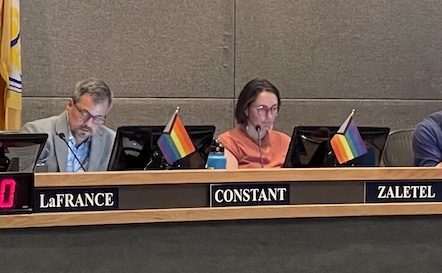
The attack on the executive branch by the Assembly (in particular Chris Constant, Meg Zalatel, and Felix Rivera) is detrimental on many levels. They continue to claw away at the mayor’s executive authority while simultaneously calling the mayor and his administration “incompetent”.
Constant loves to talk about incompetencies almost as much as he likes to talk about fantasies, but let’s focus on incompetencies for now. At the Tuesday, Nov. 7 Assembly meeting, the Assembly proposed an ordinance to approve an operating agreement by the administration between O’Malley Ice and Sport and the municipality to operate the Sullivan Arena.
During over an hour of arguments, some Assembly members continued to berate and accuse the Bronson administration of not following the law, of being incompetent and placing blame on Bronson for the very mess that Constant and Zaletel created. They seemed to be actively practicing the adage of “a lie said often enough, loudly enough becomes true.”
I watched the entire debacle and the behavior of some Assembly members is abhorrent – namely Chris Constant, Meg Zalatel and Felix Rivera. They couldn’t seem to grasp the concept that the administration has no obligation to seek Assembly approval for operating agreements. Talk about incompetence. It’s their job to understand the code. They could not wrap their heads around the fact that operating agreements are not leases (incompetence again), and even after hearing lawyers and real estate professionals explain what an operating agreement is, they continued to accuse the mayor of lying, not following process, and wasting tax payer dollars by not informing them of an operating agreement.
The mayor apologized for not bringing it to their attention out of courtesy … but he really didn’t need to do that. As a member of the electorate, I strongly believe it is they who owe the mayor an apology. The patience the administration practiced during that assembly meeting was an act of God.
Anchorage, pay attention! Constant is doing everything in his power to prevent Bronson from winning his mayorship next year. He called the mayor a “squatter” in the municipality and is doing everything in his power to have him removed including by spreading misinformation, lying, and stripping the executive branch from the authority it has.
The future of our city depends on who is elected this coming April. Do your homework, don’t just listen to media that’s being maniuplated by certain assembly members who are attempting to usurp what and who YOU voted for.
Jill Stein announced her presidential bid under the Green Party ticket on Thursday. Stein is a East Coast physician, activist, and repeat political candidate for the Green Party; she was its nominee in 2012 and 2016 elections. She was also the Green-Rainbow Party’s gubernatorial candidate in Massachusetts in 2002 and 2010.
Stein announced her bid on X/Twitter: “The political system is broken. Over 60% of us now say the two-party establishment has failed us and we need a party that serves the people. I’m running for President to offer a better choice for the people. Join us!”
In 2020, former Minnesota Gov. Jesse Ventura was the Green Party candidate for president, for the Green Party of Alaska. Nationally, the candidate was Howie Hawkins, who has also announced he is running as a Green Party presidential candidate for 2024.
The Green Party of Alaska is not affiliated with the national Green Party. Instead, the national party is working with an Alaska group organizing as the Aurora Party, “and they plan to apply for accreditation with GPUS. If you want to be part of this process in Alaska, please contact the Ballot Access Committee so that we can connect you with them. The political party named Green Party of Alaska is not affiliated with the Green Party of the United States,” the Green Party says on its website.
The Aurora Party of Alaska is recognized as a political group, rather than an actual political party, by the Division of Elections. Its chair is Jonathan Alexander of Anchorage. The Green Party of Alaska is also seen as a political group, not a political party, due to its low enrollment.
The Green Party of Alaska opposes oil and gas development in the Arctic National Wildlife Refuge, supports wind and solar power, and a government single-payer healthcare system, i.e. Medicare for all. Robert Shields of Fairbanks is the group’s chairman.
Stop me if you’ve heard this before: Alaska must cease its resource development opportunities because we are destroying the planet in the process.
This old argument is once again on full display in the recent opinion piece by Homer’s Marilyn Sigman. In her nearly 800-word attack on Alaska’s economy and Gov. Dunleavy, Sigman deployed fear tactics at three projects critical to Alaska’s future: the Ambler Access Road, the 800-mile liquified natural gas pipeline (AKLNG), and the Manh Choh gold development.
In her attack on the ‘bad carbon math’ allegedly shown by project supporters, Sigman conveniently forgot a few critical details around each opportunity.
First, there is widespread support for each from government leaders, organized labor and private-sector businesses. Second, regarding the Ambler and AKLNG projects, bipartisan congressional and presidential authority are granted, including from Democrats. Third, and most importantly, each would bring much-needed regional jobs, revenues and enhanced energy security to our state and nation.
The Ambler project will hire nearly 1,000 full-time workers, with a local hire preference in-place through the developers’ relationships with regional and village Native corporations. The AKLNG project will add hundreds to private-sector oil and gas jobs, adding to the one-sixth of all Alaskans already working for the oil and gas industry. Manh Choh will keep hundreds of employees working, with approximately 100 new truck drivers joining the mine’s workforce.
The Ambler Access Project, a private, 211-mile road to the Ambler Mining District that has been authorized under the Alaska National Interest Lands Conservation Act. Accessing the world-class mineral deposits throughout the district will enhance the domestic supply chains for ‘green’ energy components, a major goal of the Biden administration. Ignoring the strategic importance of the project is a move only eco warriors would try. The widespread support for this project and its previous authorization should trump climate positioning every time.
Likewise, the AKLNG project incurs Sigman’s wrath because its construction and ongoing operation would generate a carbon footprint. Maybe she has conveniently forgotten that Cook Inlet gas currently powers her Homer lifestyle, including her ability to write her anti-development points. Physics, economics and logic say the Railbelt will never be able to achieve power and heat from renewable energy sources at any significant levels, the AKLNG pipeline is necessary for families and businesses for ongoing power production. The North Slope has enough natural gas to provide the Railbelt with decades of capacity, as well as provide exportable LNG to Asia and Pacific countries. Even the eco-centric Biden Administration understands this, as it has provided the project with federal loan guarantees.
While the Manh Choh project may not have the strategic energy security importance of the two projects above, the regional jobs it is creating in Interior Alaska are significant. Sigman’s argument that trucking the ore from the mine to its processing facility is bad has been used by project opponents since the plan was announced. However, the plan was adjusted throughout the process, as the developer listened to opponents, and the overall plan passed environmental and regulatory reviews. Forcing an onsite processing facility would make the project economically infeasible, thereby denying hundreds of families throughout the area financial stability.
The green utopia envisioned by leading environmentalists is simply not grounded in reality, a lesson our friends around the world are learning the hard way. After previously announcing plans to be carbon free by 2045, Germany recently announced the restarting of coal plants to ease the energy crunch because of the ongoing war in Ukraine. If Sigman and others had their way, we would have no carbon, and – because Alaska will never be able to be run exclusively on wind, solar or other renewables – no heat or electricity either.
While it might be politically convenient in today’s environmental narrative to bemoan projects as “carbon bombs,” it is equally irresponsible to do so. It is too bad that articles like Sigman’s overlook economic benefits and both national and energy security implications, while attempting to scare Alaskans into opposing solid projects that balance environmental stewardship with responsible development at every turn.
Rick Whitbeck is Alaska director for Power the Future.