Thursday, June 4, 2026
Home Blog Page 35

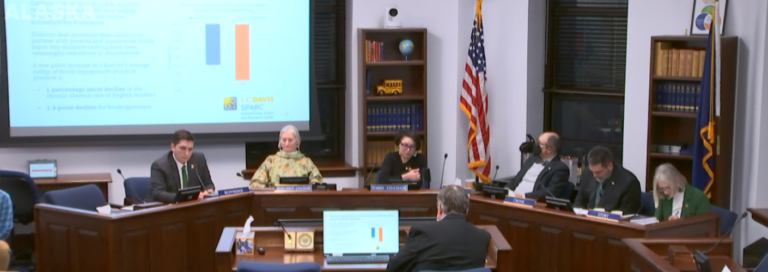
Senate Labor and Commerce Committee Discusses Defined Benefits Plan

Friday, Jan 23, the Senate Labor and Commerce Committee discussed HB 78: “An Act relating to the public employees’ retirement system and the teachers’ retirement system; and providing certain employees an opportunity to choose between the defined benefit and defined contribution plans of the public employees’ retirement system and the teachers’ retirement system.” 

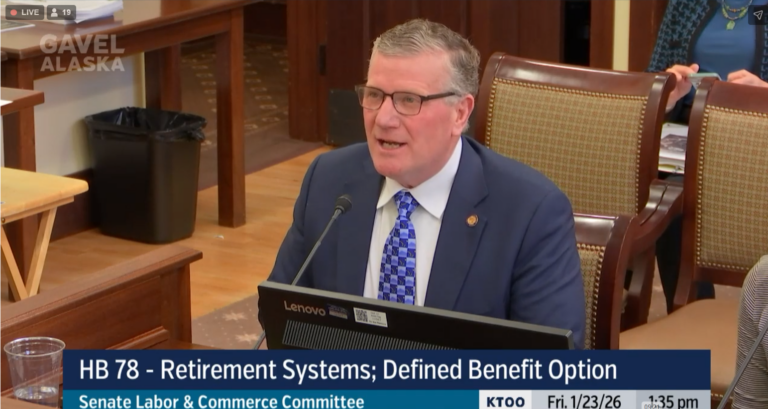
The bill is sponsored by the House Finance Committee. Representative Chuck Kopp (R-Anchorage) presented the bill on behalf of the committee.

Why Was HB 78 Written?

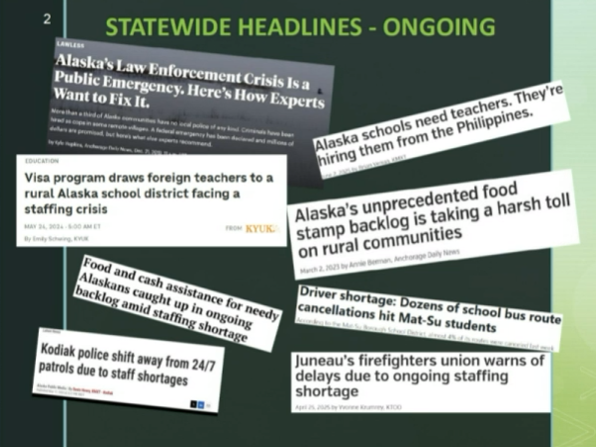
Rep. Kopp began his presentation with acknowledging the headlines resulting from the State’s current retirement system. According to Kopp, Governor Dunleavy’s budget “highlights critical struggle of recruitment and retention in most public service agencies.” The State Auditor says errors are going up exponentially, causing the State to incur expensive fines. Plus, high turnover in public employment has forced many agencies to be stuck in training mode, costing the State and local governments millions. HB 78 addresses those issues.
HB 78 Is Not the Old Legacy Plan

Rep. Kopp emphasized that HB 78 is “completely divorced” from the State’s failed Legacy defined benefits system. The State of Alaska is currently paying off debt accrued by the system which was discontinued decades ago. Debt from the Legacy system is expected to be fully paid by 2039. Kopp says the actuaries assure that the new defined benefits plan will not lead to increased liability.

What If We Keep the Current System?

Addressing “the cost of doing nothing,” Rep. Kopp stated that the current retirement system is not incentivizing people to stay in public service positions. Due to a high turnover rate, the State is experiencing service disruptions that are expensive and impactful to Alaskans. 50% of the workforce in the public sector stays only 1-4 years. Many people are cashing out their benefits after 5 years and leaving public service. Some leave Alaska altogether. Rep. Kopp also shared some numbers on which agencies have the highest rate of vacant positions. DOT&PF has the highest rate at 24.5% vacant positions.

The question, according to Rep. Kopp, is: “Do we want Alaska to be competitive again?” Rep. Kopp emphasized that people used to move to Alaska for competitive jobs in the public sector, but now Alaska is struggling to fill critical workforce positions. “We have to compete on a national scale,” he stated.

Why Adopt the New Plan?
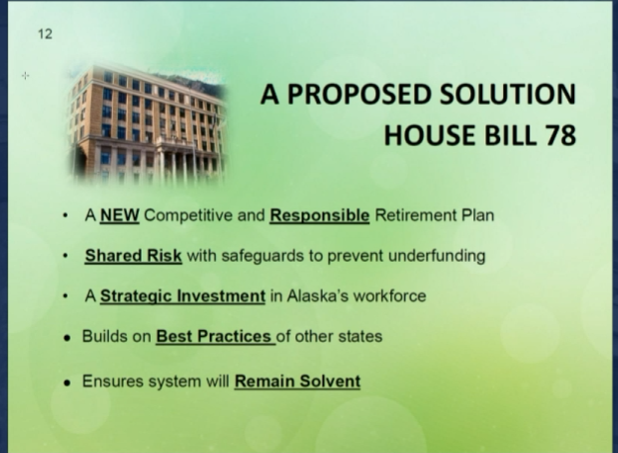
The new proposed defined benefits plan will use a variable employee contribution rate that responds to the market, meaning employees will contribute between 8-12% of their income depending on the market. Rep. Kopp stated that the variable contribution rate sets the plan apart, creates shared risk that enhances sustainability of the plan, and works well in other states that have implemented it.

He also highlighted the plan’s inflation protection as another reason this plan will work better than the current system or past systems.

Under HB 78, employees enrolled in the Teachers’ Retirement System (TRS) or the Public Employees’ Retirement System (PERS) if not in a public safety position will be able to receive their benefits at 60 years of age with 5 years of service or at any age with 30 years of service.

Employees enrolled in PERS who hold a public safety position will be able to receive their benefits at 50 years of age with 25 years of service or 55 with 20 years of service.

Committee Discussion

Following Rep. Kopp’s presentation of HB 78, the Senate Labor and Commerce Committee launched into a discussion revolving around the bill’s tenability and advantage for the State.

Senator Jesse Bjorkman (R-Nikisiki) asked if there is any state with a similarly structured plan that is experiencing trouble financing the plan. Rep. Kopp answered that he has not found any such state during his work on this bill, which he has been working on since 2016. States with similar defined benefits plans have funded their plans 80-100%. He also emphasized that the State’s actuaries and a third-party actuary say they do not foresee any unfunded liability with this plan.

Senator Rob Yundt (R-Wasilla) asked what happens if a person works a certain amount of time in the public sector but does not work the required years for the full pension payout. According to Rep. Kopp, that person would be able to collect the accrued percentage of their base pay, but they will have to wait longer to collect than someone who served the full pension years.

Additionally, Rep. Kopp highlighted that employees would have 180 days to decide whether to stay in their current defined contribution (DC) plan or switch to the new defined benefits (DB) plan. New employees will be default enrolled in DB, but they can opt out of DB and into the DC plan if they wish. After 5 years, the plan will be locked in and employees can no longer switch.

Sen. Yundt then asked if there has been any discussion regarding not offering an option between DC and DB and just offering DB. Rep. Kopp replied that there has been discussion about that. The option was retained because engineers and other technical professions would likely prefer a DC plan and excluding that option may negatively impact the State’s ability to attract those professionals. Sen. Yundt agreed that allowing the choice is a good idea and will help attract talent. However, Sen. Bjorkman expressed concern, stating that the DC plan allows 100s of million dollars to flow out of the state because people can cash out and leave after a few years. Whereas DB stays in the State of Alaska until the pensioner reaches a certain age or years of service. 

Rep. Kopp wrapped up the conversation by highlighting that the defined benefits plan proposed by HB 78 will improve Alaska’s economy by lowering training costs, lowering turnover rates, and increasing the quality of services. According to economist Dr. Teresa Ghilarducci, the plan will save the State a minimum of $76 million. Kopp also emphasized that the plan has been carefully reviewed by three actuaries that act as independent checks without invested interest.

The bill was set aside for future consideration. The Senate Labor and Commerce Committee will hear public testimony regarding HB 78 today at 1:30pm. The meeting will be livestreamed at AKL.tv.
Massive Drilling Rig Topples on Alaska’s North Slope

24

Editor’s Note: This story was updated on 1/26/26 to clarify that ConocoPhillips’ original statement said the rig was traveling on an ice road, but this was later corrected to gravel road.

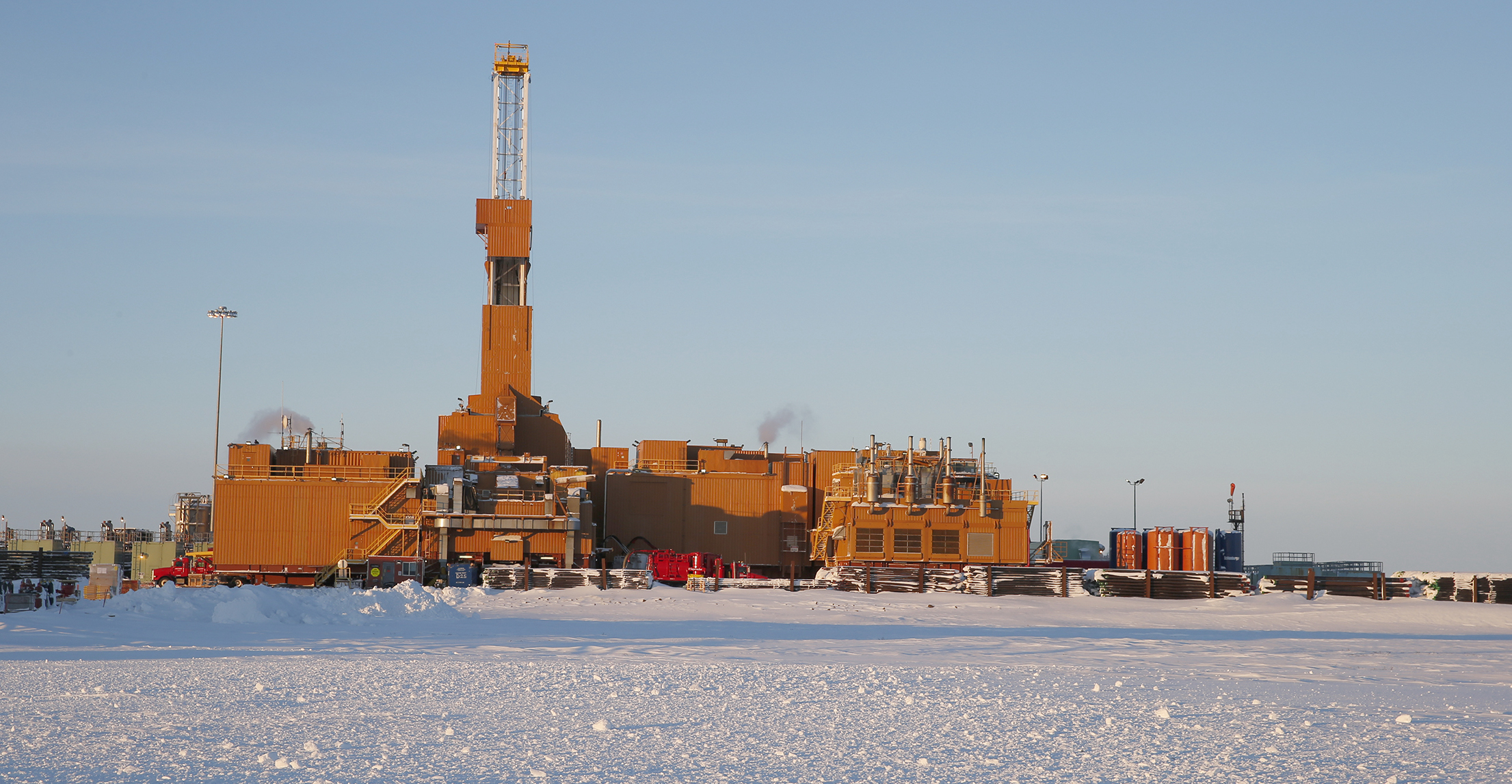
A dramatic incident unfolded on Alaska’s remote North Slope late Friday afternoon when Doyon Drilling Rig 26, one of the largest mobile land rigs in North America, toppled over during transport. The event occurred around 4:45 p.m. on January 23, 2026, while the rig was traveling on a gravel road on the North Slope of Alaska. ConocoPhillips’ original statement said the rig was traveling on an ice road, but this was later corrected to gravel road. Emergency responders responded to a fire which is now contained and officials confirmed all personnel were accounted for with no serious injuries reported. No damage was sustained to nearby community infrastructure, pipelines, or fuel transport systems, though crews remained on site to monitor the situation.

The rig, affectionately nicknamed “The Beast,” weighs nearly 10 million pounds and is engineered for extreme extended-reach drilling in harsh Arctic conditions. Built through a collaboration between Doyon Drilling and ConocoPhillips starting in 2011, it arrived on the North Slope in 2020 and has been pivotal in projects like the Fiord West Kuparuk development, where it drilled a record-setting horizontal well exceeding 35,000 feet in measured depth. The Doyon 26 features a 165-foot cantilever mast with a 1.3 million-pound hook load capacity, powered by eight Caterpillar 3512C dual-fuel engines totaling 8,400 kW, allowing operation on diesel, natural gas, or HiLine power. Its modular design includes five support modules, a two-piece subbase for easier transport over ice bridges or roads, and advanced systems like a NOV TDS-1000H top drive delivering up to 88,075 foot-pounds of torque. Capable of accessing 154 square miles from a single 14-acre pad—nearly three times the reach of conventional rigs—it minimizes environmental impact by reducing the need for new infrastructure.

Alaska Gov. Mike Dunleavy addressed the incident in a statement on X, saying, “I was informed the Doyon rig 26 toppled over as it was being moved and I have been in contact with ConocoPhillips leadership. A video circulating online shows the rig toppling over and the lights going out right before it hit the ground.

ConocoPhillips emphasized safety in its official update, noting the fire’s quick containment and ongoing response efforts. The North Slope, a critical hub for U.S. oil production, relies on such advanced equipment for efficient resource extraction amid challenging permafrost and weather. This mishap highlights the risks of operating heavy machinery in Alaska’s unforgiving environment, where even routine moves can turn hazardous.

This is a developing story.

2026 State of the State: Alaska Can Lead

6

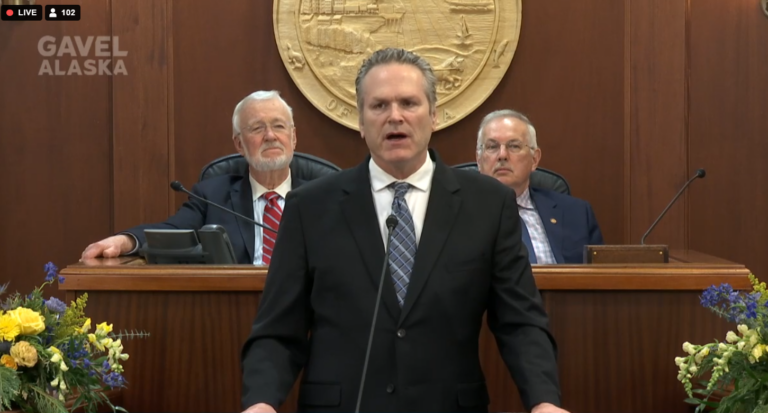
In Governor Dunleavy’s final State of the State before the state legislature, he maintained a position of optimism and hope for the opportunities in Alaska. Everything from disaster relief to a stable economic regime to attract investors from around the world.

“It’s the people of Alaska that had the confidence to put me in this role to serve all Alaskans as governor,” said Dunleavy.

Dunleavy began the evening address with gratitude to the first responders that have been the force behind the recovery of the 85 state and federal disaster declarations while he has been in office.

“Time and time again, they’ve rallied to the cause,” exclaimed Dunleavy, “they’ve answered the call of duty and saved lives.”

Moving from the natural disasters to those that were manmade, Dunleavy wasted no time in letting the room full of legislators know the impact the Biden Administration’s policies had on Alaska. 74 executive actions were taken against Alaska, putting resource development in jeopardy. He reiterated that no other state suffered more under the Biden Administration than Alaska.

With confidence Dunleavy affirmed, “We have a president and administration in office that finally gets it.”

The executive actions issued by the Trump administration on day one of his second term highlight the importance of Alaska to the United States and that Alaska is open for business.

The governor highlighted several areas that illustrated the commitment of the Trump administration, such as:

  • $183M in federal highway funds for transportation infrastructure
  • Reopening millions of acres of land for oil and gas development in NPR-A and ANWR
  • Promoting the AK LNG project internationally with FAST-41 project permitting
  • Permitting expansions at Greens Creek and Red Mine
  • Advancing prospects at Graphite One and Donlin
  • Advancing the King Cove Road
  • $272M to revamp health care across the state

With the list of federal actions alone, the reality of the once in a lifetime opportunity is within grasp to bring to life many transformative projects to the state.

“This is why elections matter,” added Dunleavy. “Individuals can make a difference.”

Governor Dunleavy went on to discuss the economy starting with the job numbers declaring that the 4.7% unemployment Alaska boasts today is nearly equal to the national unemployment rate of 4.6%. Jobs are continued to forecast high in 2026 due to a diversified economy and growing wages.

One notable point in the speech came when discussing the myAlaska app. Governor Dunleavy made a point to showcase that the state of Alaska has migrated over 100 state applications to the cloud. Microsoft even highlighted that through these efforts Alaska is on track to be the first state to handle most of its business in the cloud. These enhancements include PFD applications, hunting and fishing license, and TSA approved mobile driver’s licenses.  

“Once again, we’ve improved the services the people expect,” said Dunleavy.

With many major projects on the horizon and the economy diversifying in ways that require greater mobility, Dunleavy announced that five new air cargo carriers have been announced including Southwest to the Ted Stevens International Airport.

Cargo volumes have increased 32% and passenger traffic is up 23%, showcasing why the Ted Stevens International airport is now the fastest growing airport in the country. Dunleavy also mentioned that the Alaska Marine Highway has a 98.5% uptime through enhanced preventative maintenance in addition to advancing critical infrastructure projects at ports around the state.

In terms of housing, the governor shared that Alaska Housing Finance Corporation (AHFC) has acquired 600 acres from the University of Alaska for future development in Anchorage, Mat-Su, and Fairbanks. Later on, in the speech Dunleavy shared one of the priorities is to partner between the state and AHFC and willing municipalities to increase the housing supply. AHFC will provide buildable land, competitive mortgage rates for first time buyers, and long-term tax breaks.

“It’s a win-win-win for the state, our communities, and most importantly our young people,” said Dunleavy.

This would build upon his plan for expanded internships, apprenticeships and other earn-as-you-learn programs to prepare the workforce of tomorrow. The family centric plans also included improvements in public safety and education. Dunleavy made a point to state that Alaska’s crime rate is down 41.8% since he took office.

“If you take Anchorage out of the mix, our state’s overall crime rate is well below the national average,” Dunleavy noted, “the violent crime rate in Anchorage is nearly three times the national average. It’s higher than Washington DC, it’s higher than Los Angeles, California. It’s higher than New York. And it’s higher than Chicago.”

The State of Alaska and the Municipality of Anchorage will be joining forces to reduce this crime rate. The phased approach encompasses retail theft, drug interdiction, and violent crime.

“Together we can make sure Anchorage isn’t just a safer place, but one of the safest in the country for everyone who lives there and those who visit from around the world,” shared Dunleavy.

The educational highlights were notable with stats on students achieving step change improvements in outcomes during the 2024-2025 school year. By the end of the school year 3rd graders marked a 60% improvement and kindergartners marked a 62% improvement in reading at the benchmark level. A phenomenal improvement as a result of the Alaska Reads Act.

“Dead last is unacceptable. We can’t wait. Out children can’t wait. It’s past time that the voices of parents and students are given the same weight,” said Dunleavy when talking about his education plans. Those plans include increased access to charter schools, open enrollment, and increased teacher retention.

The AK LNG project continues to be the flagship of the administration with new headwinds from the Trump administration advocating for its completion. Dunleavy recognized Glenfarne and the work they have done to bring the AK LNG project closer to reality. He highlighted the partnerships between Glenfarne, Worley, and Baker Hughes. Furthermore, the agreements from Taiwan, Korea, Thailand, and Japan, negotiating definitive LNG purchases.

A highlight of the gas pipeline was the announcement of gas sales agreements with Hilcorp and ExxonMobil. On the other end of the pipe are connection agreements for gas offtake with Enstar and Donlin Gold. Then comes the shipping of LNG. Another highlight was the agreement with Danaos, a Cyprus shipping company that will construct at least six tankers to transport LNG. Essentially, all the wet ink necessary for the pieces of the project to come together.

The big discussion of the night centered around a forthcoming fiscal package. In the last year of his final term, Dunleavy made a case to the legislature to end the fight over the PFD and various budget issues. His aim is to create an environment that is attractive to investors by injecting surety into the fiscals. The plan in anticipated to protect the Permanent Fund and dividend, grow savings, and incentivize investment focusing the objective on the next five years to solve this problem.

“We need a stable, rules-based budget process that is clear, simple, and well understood,” stated Dunleavy. “This can’t be a short-term view.”

Through the night, the theme of optimism and forward thinking was clearly stated by the governor. As was the all-of-the-above approach Dunleavy has taken as a matter of policy through his terms in office.

Aleutian Region School District Superintendent Addresses Task Force on Education Funding

9

Today, Jan 23, the Task Force on Education Funding met at 3:30pm to hear invited testimony. Among those invited to give testimony was Michael Hanley, former Commissioner of Education and current Superintendent of the Aleutian Region School District.

Hanley has spent 35 years in the Alaska public education system with his experience including being a teacher at the Anchorage School District, Principal at an ASD school, Commissioner of Education, and now Superintendent of one of the most remote school districts in the nation.

Opening remarks from Hanley emphasized his appreciation for the task force’s willingness to look beyond numbers and understand the underlying issues causing low test scores and chronic absenteeism in Alaska’s schools.

“It is really easy to make a decision from a distance. But it is really challenging to make a good one,” he stated. “If there’s a silver bullet in education, it is not in the Commissioner’s seat, it is not – respectfully – in your [the legislature’s] seat. It is a high-quality teacher in the classroom. That’s the silver bullet.” 

Hanley emphasized the need to not only look at test scores and data, but to get out to schools in person and get to know the administrators, teachers, and students. Because Alaska has a wide range of districts and educational situations, Hanley points to the need to look at underlying causes rather than numbers.

Some of the underlying factors affecting Alaska’s public education, according to Hanley, are domestic violence, poverty, and tribal priorities.

Alaska ranks in the top 3 states with the highest rates of domestic violence and abuse in the nation. Children who face instability and/or trauma in their home lives consistently test lower and have higher absenteeism than children in stable, healthy homes. Poverty and the stress poverty places on a child’s home life also contribute to lower performance scores in schools with a high population of impoverished families.

Another factor that many people do not realize, according to Hanley, is a factor more specific to rural districts: tribal priorities. He stated that 25% of his students in Atka are chronically absent. However, that reported 25% is three high school students who are highly engaged in their tribal culture. Hanley indicated these kids will skip school to participate in tribal events. Hanley does not offer a solution to this observation but presents it “as an example for why you have to look beyond the numbers.” 

Hanley wrapped up his remarks with this warning: “My caution to you is that there may not be a simple solution, a simple statute that adequately addresses the challenges we face… But the fact that you are looking into it is taking us a step forward.” 

Then Senator Loki Tobin (D-Anchorage) asked Hanley to share his insight on consolidating districts for the purpose of saving State money.

Hanley responded that the State would not substantially benefit from consolidation and districts would be substantially harmed by reducing community representation. “General consolidation won’t lead to savings for the State,” he said. “Do the math… you will find it to be a negligible benefit [for the State] and at great cost to the districts, the loss of voice.” 

Bill to License Naturopaths Moves Forward in Legislative Process

10

Following several prior hearings of HB 147, the House Health and Social Services Committee moved HB 147 out of committee and on to the next step in the legislative process yesterday, Jan 22.

HB 147 is “an Act relating to the practice of naturopathy,” establishing a licensing procedure for qualified naturopaths practicing in Alaska. Naturopathy is a form of alternative medicine, focused on natural remedies. It is often criticized as breaking from evidence-based medicine standards.

The bill is sponsored by Representative Mike Prax (R-North Pole) and co-sponsored by Representatives Rebecca Schwanke (R-Glenallen) and Andrew Gray (D-Anchorage). All three spoke at the meeting before the bill was passed out of committee.

Rep. Mike Prax summarized the bill, stating that the bill’s intent is to “establish a licensing procedure that allows naturopaths to work up to their education and training.” He emphasized that this would help Alaska’s primary care shortage. “[Naturopathy] is basically the same level of care, family practice level of care,” he claimed.

Then Rep. Andrew Gray explained his reasons for cosponsoring the bill. He argued that the bill will help attract well-trained naturopaths that can provide the standard of care to Alaskans who choose not to be seen by traditional medical providers. Many Alaskans either choose not to see traditional providers or seek additional opinions from naturopathic providers. Gray stated that the bill “meets people where they are.”

Lastly, Rep Rebecca Schwanke, also a cosponsor, spoke on her support of the bill. “This comes down to increasing opportunities for care for Alaskans,” she stated. According to Schwanke, Alaska is one of a growing number of states (26 states) that license and regulate naturopaths. She also spoke about her personal experience with a naturopath who helped her father after he received a terminal diagnosis from traditional providers. Her father is alive and well today.

Opinion: SB 92 Ignores Alaska’s Spending Issue; Next Governor Should Say “No” to SB 92

5

By Edward Martin, Jr.

In Alaska, the Constitution does not ask governors to chase revenue. It commands them to faithfully execute the law and protect the people’s resources. 

Alaska’s fiscal debate has once again circled back to oil taxes— this time through Senate Bill 92 and renewed calls to impose an income tax on oil and gas entities organized as S-corporations. The framing suggests that Alaska’s problem is insufficient taxation. That premise is false. 

Alaska’s problem is not a lack of taxing authority. It is a failure to govern within constitutional mandates already in place. 

The Governor’s Duty Is Clear and Non-Negotiable 

Under Article III, Section 16 of the Alaska Constitution, the Governor shall faithfully execute the laws.” That language is not symbolic. It is mandatory. It does not authorize governors to compensate for fiscal mismanagement by selectively redesigning the tax code. It requires enforcement of existing law, respect for constitutional limits, and equal application of policy. 

A governor does not fulfill this duty by proposing new revenue schemes when budgets tighten, but by insisting on discipline, legality, and restraint— especially when political pressure demands shortcuts. 

This leads to two questions every gubernatorial candidate should be willing to answer plainly: 

If elected, will you commit — as required by Article III, Section 16 — to enforcing existing spending laws and constitutional limits before seeking new or targeted taxes? Will you veto legislation that selectively burdens one industry or corporate structure to compensate for government overspending?  

Article VIII Is About Stewardship, Not Exploitation 

Just as important is Article VIII, which governs Alaska’s natural resources. It declares that those resources are to be developed, used, and conserved for the maximum benefit of the people. That mandate assumes long-term thinking, stability, and fairness— not short-term revenue extraction driven by annual budget gaps. 

Article VIII does not convert resource development into a captive funding source for an undisciplined government. It presumes that encouraging investment, production, and responsible development is itself the path to maximum public benefit. 

Repeatedly changing tax structures, singling out specific entities, or targeting one producer through indirect means does not maximize benefit. It shrinks the base, discourages investment, and undermines confidence in Alaska as a place to do business. 

That is not conservation. It is erosion. 

Which raises another question candidates should answer directly: 

How does selectively increasing taxes on one oil and gas producer or corporate form satisfy Article VIII’s requirement that resources be managed for the maximum long-term benefit of all Alaskans— rather than as a short-term fix for a spending problem the Constitution already requires government to control? 

Equal Application of the Law: The Line That Must Not Be Crossed 

A tax system that targets one industry, one ownership structure, or effectively one taxpayer abandons neutrality. Conservatives should be especially alert to this danger. Once government normalizes picking winners and losers, no sector is safe. 

Today it is oil and gas S-corps. Tomorrow it may be family businesses, contractors, or individual Alaskans whose income becomes “convenient” to reach. 

The Constitution does not permit that kind of governance. 

Alaska’s Crisis Is Discipline, Not Authority 

Before any governor endorses new taxes, one fundamental question must be answered honestly: Has the State of Alaska demonstrated constitutional restraint on spending?

Until the answer is yes, proposals for “new revenue” are not solutions; they are evasions of constitutional duty. The Constitution already provides the framework for sustainable governance: limited government, uniform laws, protection of property, and disciplined budgeting. 

A governor faithful to Article III, Section 16 would insist those tools be used first. 

A Word on Surveys

Surveys can be useful, but they are no substitute for constitutional scrutiny. When candidates are asked only what they support — rather than what they are duty-bound to enforce, then the public is left with preferences instead of accountability. 

A serious state deserves serious questions. Alaska’s Constitution does not ask future governors how they feel about revenue. It tells them what they must do: faithfully execute the law, apply it equally, restrain government, and steward the people’s resources for long-term benefit. 

The Conservative Standard for Alaska’s Next Governor 

A constitutionally grounded governor should: 

  • Enforce spending limits before demanding new revenue 
  • Reject targeted or punitive taxation schemes 
  • Defend equal application of the law 
  • Preserve fiscal and legal stability for long-term investment 
  • Uphold Article VIII’s mandate for responsible resource stewardship 

Alaska’s future does not depend on how cleverly we can tax one industry. 

It depends on whether our leaders are willing to govern as the Constitution requires, even when that discipline is politically inconvenient. That is not a partisan demand. It is a constitutional one.

What Are the Candidates Saying?

Read Survey Series: Which Candidates for Governor Support Increasing Taxes on Oil and Gas, Which Don’t, and Why?

Dunleavy Shares Optimism in State of the State Address

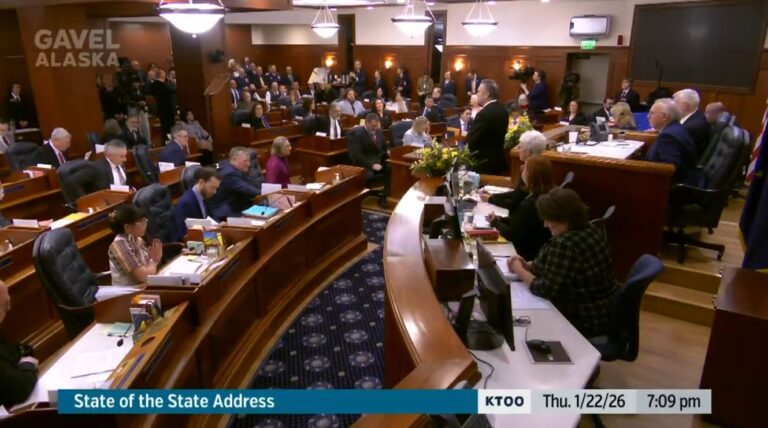
Governor Mike Dunleavy gave his State of the State Address tonight at 7pm. He emphasized optimism despite cynical media coverage of his administration.

He acknowledged the work of first responders, the Alaska Coast Guard, the Alaska Division of Homeland Security, and the Alaska Department of Transportation and Public Facilities in their response to the Western Alaska natural disaster.

He also said his administration dealt with “man-made disasters” created by the Biden administration. “Alaska suffered the most of any state,” he said. However, “Trump finally gets it.” Dunleavy highlighted the Trump administration’s investments in Alaska’s transportation infrastructure, natural resource development, and healthcare.

In addition to good news from federal governance, Dunleavy spoke about the “great things that happened under my administration.” His highlights included: crime down to historic lows, 6 straight years of job growth, stabilized and growing population, the Permanent Fund at record highs, improved reading scores, paid down debts, improved credit rating, modernized information systems across government agencies, improvements to airports and ferries, and new housing developments.

To make access to state services easier, Dunleavy’s administration launched the myAlaska app where 50 state services are now available on mobile devices.

Addressing the state’s nursing shortage, Dunleavy stated that his administration has cut nursing licensing wait times.

According to Dunleavy, “The economy is getting stronger and stronger every year under my administration and diversifying as well.”

More coverage by Must Read Alaska of the Governor’s State of the State Address to come. Keep an eye out!

House State Affairs’ First Hearing of AIDEA Accountability Act: Impact on State Revenue and Economic Development

Editor’s Note: This story was updated on 2/3/2026 to clarify that AIDEA granted a total of $39.2 million to organizations in Juneau, one of which was Alaska Brewing.

Today, Jan 22, Representative Ashley Carrick (D-Fairbanks) introduced HB 124, the AIDEA Accountability Act, to the House State Affairs Committee. HB 124 seeks to enhance “legislative and public oversight of AIDEA as a state corporation.” 

According to Carrick, the intent of the bill is to strike a balance between public backlash against the Alaska Industrial Development and Export Authority (AIDEA) and the State’s desire for AIDEA to move forward. AIDEA’s mission is “to promote, develop, and advance economic growth and diversification in AK by providing various means of financing and investment.” Since its establishment in 1987, AIDEA has had substantial success in generating economic development in Alaska.

Key AIDEA Projects

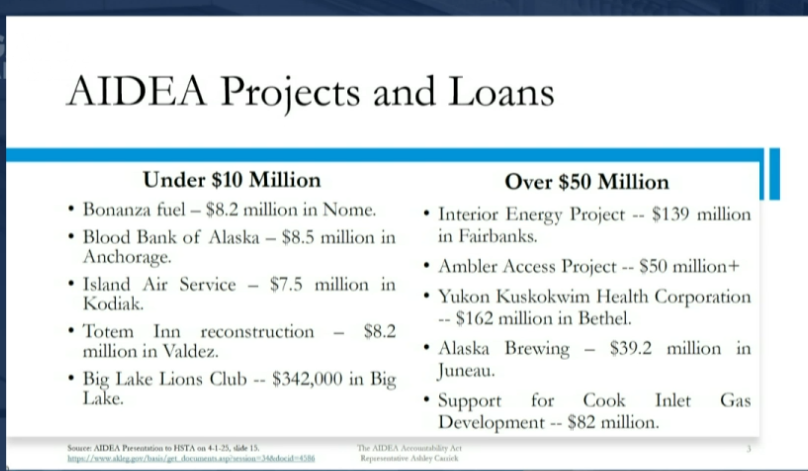
Some of the projects funded by AIDEA include:

This slide is a direct screenshot from Rep. Carrick’s presentation on AIDEA. Although the slide indicates Alaska Brewing received $39.2 million from AIDEA, this is not true. AIDEA issued 19 loans and bonds to organizations in Juneau, including Alaska Brewing, and the total was $39.2 million.

Sectional Analysis

Stuart Relay, Staff to Rep. Carrick gave the sectional analysis, which readers can view in full below.

Committee Discussion

Following the introduction and section analysis, the House State Affairs Committee held a discussion focused on the bill’s ability to balance transparency and oversight goals with continuing AIDEA’s success and independent decision-making.

Why Micromanage?

Representatives Kevin McCabe (R-Big Lake) and Sarah Vance (R-Homer) expressed concern that the bill seemed like “micromanagement.” “Why should we try to micromanage AIDEA,” asked McCabe directly. Rep. Vance said the bill “seems anti economic development.”

Rep. Carrick responded that the bill’s components are broad and designed to help the public. She also admitted that the bill is just at its starting point and she is open to revising the bill after hearing from her colleagues. Carrick expressed that she would like to “elevate the good, heavily supported work that AIDEA does,” while also addressing the public’s concerns about transparency. Becuase AIDEA’s projects impact a large number of communities, Carrick says there needs to be better balance, better oversight, and a better “two-way street between AIDEA and the State of Alaska.”

AIDEA Dividend as State Revenue

Representatives McCabe (R-Big Lake), Himshoot (I-Sitka), and Holland (I-Anchorage) addressed AIDEA’s substantial dividend return to the State of Alaska. AIDEA was the only corporation to return a dividend to the State. Over the years, AIDEA has returned half a billion dollars to State in dividends. McCabe suggests, “we let them alone and let them do their thing,” so they continue to provide revenue for the State.

Countering McCabe’s hand-off approach, Holland asked Carrick if the bill could be used to amend the corporation’s dividend decision-making process to increase State revenue. According to Holland, a Percent of Market Value (POMV) of 5% would indicate a $70 million dividend this year, but AIDEA intends to give only a $20 million dividend. Carrick responded that she is “definitely open to considering” the idea, but emphasized the need for “a sustainable draw.”

Holland also stated, “The bill suggests substantial divestment of AIDEA’s investments” with AIDEA potentially asked to divest of 2/3 of its current portfolio. Holland asked Carrick for details about what is in that portfolio and the impact of divestment. Carrick responded that her staff will take note of the questions, but she did not have any available answers. “Those are great questions for AIDEA when we hear from them,” she stated.

Slowing Down Economic Development

Another concern addressed by Holland and McCabe is the effect of requiring additional legislative approval for AIDEA’s large projects. The legislative approval requirement could slow down important development projects in Alaska. Carrick answered that this is “the biggest policy question for this piece of legislation.” Currently, the threshold defining a “large project” is $10 million, but Carrick says that can be adjusted and requires further discussion. “We want AIDEA to be able to strike while the iron is hot, within reason,” she stated.

Survey Series: Candidates for Governor Share Their Favorite Fish Recipes!

Nathaniel Herz, Northern Journal

Editor’s Note: This piece was originally published in Northern Journal, a newsletter and news website. Nathaniel Herz is an independent journalist and the founder and editor of Northern Journal. Nathaniel has given Must Read Alaska express permission to republish his gubernatorial candidate survey series.

It’s campaign season in Alaska.

Democratic former U.S. Rep. Mary Peltola made national news Monday when she said she’s entering what’s expected to be a hard-fought and expensive race for the Alaska U.S. Senate seat currently held by Republican Dan Sullivan.

Meanwhile two-term GOP Gov. Republican Mike Dunleavy is barred by state law for seeking re-election — and more than a dozen candidates have already announced bids to replace him.

Here at Northern Journal, we expect the governor’s race to be one of Alaska’s most interesting in years.

The winner will face a huge array of policy questions expected to remain unresolved after Dunleavy finishes eight years in office.

Educators accuse policymakers of chronic underfunding of schools in recent years, as lawmakers continually battle over how much to spend on state services compared to Alaska’s annual oil wealth checks, known as Permanent Fund dividends. Urban areas of the state face huge increases in energy costs and contend with a homelessness and housing crisis; rural areas contend with eye-wateringly expensive food prices amid catastrophic crashes of salmon populations.

Candidates for governor are already laying out their visions of how to respond and gearing up their campaigns — but at this early stage of the race, they’re often doing so at untelevised, out-of-the-way forums attended by insiders and special interest groups.

Here at Northern Journal, we saw an opportunity to cut through some of the noise and focus candidates’ and voters’ attention on key issues.

For the next 10 months, we plan to distribute a regular survey of the gubernatorial candidates, each with two questions — one on policy, and one that’s more personal.

We see the survey as a chance to provide Alaskans with clear answers about where candidates stand on the issues that matter most to them — and as a chance for candidates to reach a wide audience of readers and voters directly. As with all other Northern Journal stories, we’ll make the answers republishable by any Alaska-based outlet.

This week’s policy question is about a proposal to boost taxes on oil company Hilcorp, which some lawmakers support as a way to raise revenue for state government. Then, we hear from candidates about their favorite way to cook fish.

Republicans Dave Bronson, Bernadette Wilson, Matt Heilala and Adam Crum did not respond to this week’s survey; Northern Journal sent each candidate multiple emails, as well as text messages, reminding them to complete the survey.

If you have feedback about the survey, or want to suggest a question for the candidates, please drop Northern Journal publisher Nat Herz a line: [email protected]. Thanks for reading.

Question 2: What’s your favorite way to cook Alaska fish? 

What’s your favorite way to cook Alaska fish, and why? Bonus points: share a photo of yourself fishing or preparing your fish dish referenced in your answer to question two. (Publisher’s note: There was no length limit on these responses, so proceed at your own risk — though there’s also the potential to be rewarded with meticulously outlined recipes for pike, salmon and halibut!)

Treg Taylor, Former Alaska Attorney General

Treg Taylor

A very important question! Combine olive oil, horseradish, soy sauce, crushed garlic, and salt and pepper. Liberally brush sauce over salmon and cook on the BBQ. Brush sauce once again on salmon just before it’s done cooking. Pro tip- sprinkle feta cheese on top. Enjoy!

Edna DeVries, Mat-Su Borough Mayor

Edna DeVries

Grilled or fried at home.

Henry Kroll

Henry Kroll

Put the filets in the smoke house for three days before cooking in the oven with lemon pepper and onions.

Tom Begich, Former State Senator

Tom Begich

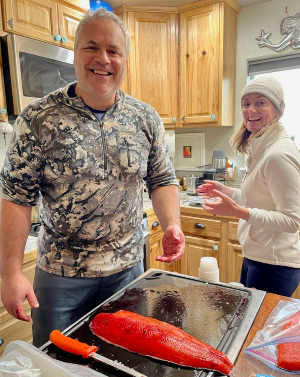
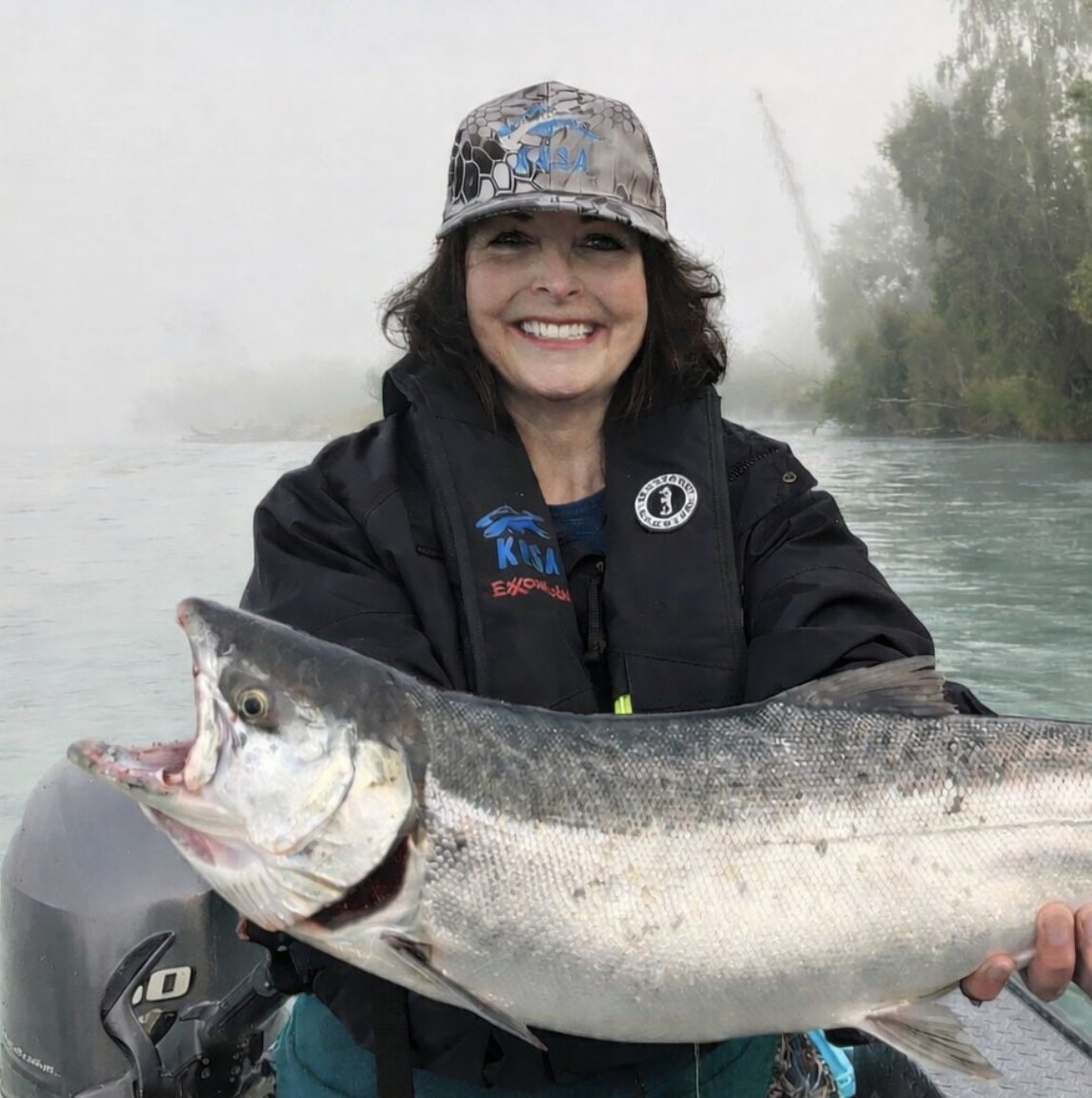
I am terrible chef, but am married to a brilliant one – Sarah Sledge. My favorite way is the next way she prepares halibut, salmon, or any Alaskan seafood. I have attached a photo prepared by Sarah…. Delicious!! Copper River king with roasted Brussels sprouts.

Bruce Walden

Baked, usually, or smoked.

Click Bishop, Former State Senator

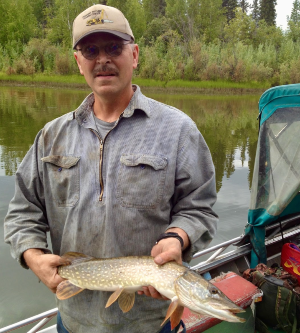
Click Bishop’s Deep Fried Beer Batter Pike

1. Fillet and skin a 12+ pound pike — the bigger, the better. Be sure to remove the Y bones. You can also use salmon if you don’t have pike.

2. Start heating your oil.

3. Cut pike into chunks.

4. Measure out about 2 cups of Krusteaz pancake mix in a bowl.

5. Add about a teaspoon of garlic salt, to taste.

6. Mix in enough beer to make a batter.

7. Drink what’s left over in the can/bottle.

8. Toss pike chunks in the batter.

9. When oil is hot, fry chunks in batches until golden brown. Serve with homemade tartar sauce.

Notes: So delicious, there won’t be any leftovers. Some of my friends from Northway taught me how to cut the Y bones out. Game changer.

James Parkin IV

James Parkin

I’m no fancy chef but everyone who knows anything about cooking fish knows that the best fish recipes always start with fresh wild Alaskan fish.

That having been said, how am I supposed to decide which recipe is my favorite?

Here are four of my favorites, and there are many more! You decide which one is best. Oh yes, and a locally grown salad mix of any kind is a welcome addition to all of these dishes. (Don’t get me started on the Alaskan variety of ingredients we could include.)

My preparation instructions here will be brief and only for the first meal. If you want more details or instructions for the other three meals, you can reach out to me through my website or stop by for dinner. Okay, four meals coming up!

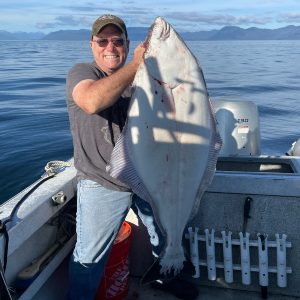
1. Deep fried halibut with homemade tartar sauce and Alaska’s Matanuska Valley baked jojos potatoes. Yes, you can use other kinds of potatoes, but why would you want to?

2. Smoked black cod and rice with dried seaweed salmon egg blend.

3. Skillet fried king salmon steaks and sautéed Tlingit & Haida potatoes, onions and mushrooms.

* As the only biologist candidate, I vow to do what is needed to preserve, protect and increase our king salmon runs!

4. Smoked and fresh packed blend salmon spread with Sailor Boy pilot bread, crackers, chips or make a sandwich for the road.

1. For your Jojos:

Cut the potatoes into jojo pieces, roll them in seasoned (your choice) flour and place them on an oiled (again your choice) cookie sheet. Stick them in the oven at 350-400 and cook them the way you like. While they are cooking, prep and cook your fish.

2. For your wild Alaskan halibut:

Use Alaskan Flour Company’s Great Alaska Pancake Mix. If you don’t have it, Krusteaz pancake mix works very well but has a much different flavor.

Add liquid to the mix for the thickness of crust you like on your fish. More liquid = thinner crust, less = thicker. After making enough pancake mix for your fish set it aside.

Into another bowl, place Kikkoman Panko bread crumbs, or any brand of potato flakes, or make your own bread crumbs by seasoning and oven drying some Great Harvest Bread and crushing it up before hand.

Now, cut your fish into the size pieces you want to eat. Pat them dry. Next, dip each of the pieces of fish into the pancake mix and then roll it in the crumbs or flakes. Place each piece of dipped and rolled fish on a tray or plate. When all of the fish has been prepped, heat your favorite frying oil in a decent size pot or deep fryer to 350-400.

Fry your fish until golden brown. Salt to taste and enjoy!

Oh yes, the tartar sauce. Chop up sweet onions, dill pickles and garlic. Add mayo and mix it all together. I apologize for the brief tartar recipe. My wife makes it. If you want her detailed instructions contact me or come on over! Oh, and don’t forget to take the jojos out when they are done. 😋

Matt Claman, State Senator

Grilled Alaska black cod with miso, soy sauce, white wine, garlic, and sesame oil glaze.

Shelley Hughes, Former State Senator

Shelley Hughes

I love fresh grilled salmon with onion and garlic, and I’ll never turn down my brother’s delicious smoked salmon. But on this chilly January day, my favorite halibut recipe baked in a hot oven makes my mouth water just thinking about it.

Shelley’s Halibut Olympia Extraordinaire

• 2 pounds halibut, cut into 6-8 pieces

• Salt to sprinkle

• 2 cups white wine

• 1/4 cup butter

• 1 medium white onion, chopped

• 1/2 cup sour cream

• 1/2 cup mayonnaise

• 1/4 cup grated parmesan cheese, plus 3 tablespoons for sprinkling over fish

• 1 tablespoon finely chopped fresh dill

• Pepper to lightly sprinkle

• 1 cup crushed Ritz crackers

2.5 hours in advance of meal: salt halibut and cover with wine in a bowl. Thirty minutes before serving, preheat oven to 400°F. Melt butter, stir in chopped onion, and pour into 9 x 13 inch pan. Mix sour cream, mayonnaise, 1/4 cup grated parmesan cheese, and dill. Lightly pepper sauce. Remove fish from bowl. Pat dry with paper towels. Place fish in pan and spread with sauce. Mix 3 tablespoons grated parmesan cheese with crushed crackers. Sprinkle cracker mixture over sauce. Bake 20 minutes. Enjoy!

Nancy Dahlstrom, Lieutenant Governor

Nancy Dahlstrom

My favorite way to cook fish is over a campfire, just sautéed in butter with salt.

Previous in Series: In Case You Missed It

Survey Series: Which Candidates for Governor Support Increasing Taxes on Oil and Gas, Which Don’t, and Why?