Sunday, May 10, 2026
Home Blog Page 335

Watch: Peltola’s fundraising pal Rep. Eric Swalwell’s meltdown in committee over Trump cat meme jokes

Rep. Eric Swalwell, who visited Juneau to raise money for Rep. Mary Peltola in 2022, is now losing his mind over the tidal wave of cat memes that show former President Donald Trump saving the cats and ducks of Ohio from becoming food for Haitian immigrants.

Swalwell has been an enemy of Alaska’s energy economy, and was a special guest of Peltola during her campaign. He was later investigated for his liaison with Fang-Fang, a Chinese spy, and for laundering campaign cash for Super Bowl seats.

Now, he’s incensed about rumors of Haitian immigrants stealing family cats from yards and ducks from city ponds and taking them home to eat have swept across social media, with video of people testifying about the problem of duck poaching and cat roasting to their local elected officials in Springfield, Ohio, where the Biden Administration sent thousands of Haitian refugees. He believes these rumors to be false.

While there has been no solid proof that the poaching of ducks and cats is a widespread problem, last year a community in Nebraska was in outraged after two illegal Honduran migrants allegedly killed a bald eagle with the intention of eating it.

“In interviews last month, following claims at a city commission meeting that Haitians were cooking wildlife taken from local parks, a city official said they had not been able to verify any of those reports and described them as “false” and “misleading” information amplified by social media,” Reuters wrote on the topic.

What is solid is that 20,000 Haitian immigrants have been sent to Springfield, Ohio, overwhelming the abilities of a town of just 59,000, thanks the Biden administration’s expanded of the Temporary Protected Status Program for Haitian immigrants.

Cats and ducks aside, on Wednesday, Ohio Gov. Mike DeWine said he’s send state troopers and millions of dollars in healthcare resources to the city, which has become the poster child for the failed immigration policies of the Biden-Harris Administration.

DeWine broadcast his plan in a news conference on Tuesday. A day earlier, Ohio Attorney General Dave Yost ordered his office to do everything in its power to stop the Biden-Harris Administration rom sending “an unlimited number of migrants to Ohio communities.”

“These dramatic surges impact every citizen of the community, every citizen,” he said, adding that other towns in Ohio are also suffering from an surge of Haitians. “Moms who have to wait hours in a waiting room with a sick child, everyone who drives on the streets, and it affects children who go to school in more crowded classrooms.” 

But it’s the cat and duck memes that made Swalwell crazy. In a House Judiciary Committee, he blasted Chairman Jim Jordan for passing along cat memes on X/Twitter, images hilariously showing Trump hugging ducks and cats as he saves them from becoming someone’s meal. The memes being passed around are being made with artificial intelligence and look cartoonish.

Some of them now are A.I.-made videos that are driving Democrats mad, such as this one:

If cats and ducks are apparently safe enough, according to Democrats, the roads, classrooms, and children of Springfield, Ohio are not. One child has been killed by a Haitian immigrant in Springfield.

Local police report also report traffic issues are exploding with the numbers of Haitians using the roads who don’t know how to observe traffic laws in the United States.

It’s a cultural thing. Haitians do consider cat meat a delicacy, and Haiti is considered by many to be among the most lawless places on earth. Traffic laws are merely suggestions in the deeply Third World Country.

JD Vance, running as Trump’s vice presidential nominee, had this to say about the cats and ducks debate:

“In the last several weeks, my office has received many inquiries from actual residents of Springfield who’ve said their neighbors’ pets or local wildlife were abducted by Haitian migrants. It’s possible, of course, that all of these rumors will turn out to be false. Do you know what’s confirmed? That a child was murdered by a Haitian migrant who had no right to be here. That local health services have been overwhelmed. That communicable diseases–like TB and HIV–have been on the rise. That local schools have struggled to keep up with newcomers who don’t know English. That rents have risen so fast that many Springfield families can’t afford to put a roof over their head. Here is Kamala Harris bragging about giving amnesty to thousands of Haitian migrants.”

Kamala the ‘Marxist’ smirks and sneers her way through first tough debate with Trump

135

Vice President Kamala Harris, in the biggest political event of the year, grimaced, squinted, sneered, twitched, pursed her lips, and made faces at Donald Trump during their first debate meet-up, hosted by ABC News on Tuesday evening.

Trump accused Vice President Kamala Harris of copying his plans because she had none of her own during the Tuesday night debate. He called her a Marxist and said she will destroy the United States if elected president.

“She has no policy. Everything that she believed three years ago and four years ago is out the window. She’s going to my philosophy now, in fact, I was gonna send her a MAGA hat,” Trump said, trolling her. “She’s gone to my philosophy, but if she ever got elected, she’d change it. It will be the end of our country. She’s a Marxist. Everybody knows she’s a Marxist. Her father’s a Marxist professor in economics, and he taught her well.”

Harris said she had the support of all the major economists of the world, including those from Goldman Sachs and professors from Wharton School of Business. She said the Biden-Harris Administration had “cleaned up” the mess that Trump had left.

Neither candidate scored points enough to persuade detractors to change their minds, however. Trump was polite to the nervous and twitchy Harris, who made exaggerated facial expressions at Trump, not unlike a teenager.

She was not able to bait him into some of his more legendary interruptive behaviors, however. Trump remained stoic and disciplined to his message, but repeatedly called out Harris on every lie that she told about him — and there were dozens.

Trump criticized the Biden-Harris border policies that have ravaged cities and towns across America.

“They’re criminals. Many of these people are criminals, and that’s bad for our economy too. Well, bad immigration is the worst thing that can happen to our economy. They have, and she has, destroyed our country with policy that’s insane. Almost policy that you say ‘they have to hate our country,” Trump said.

On social media, several commentators said that Harris was wearing earrings that doubled as high-end hearing devices, and that she may have been getting help.

Was Kamala Harris wearing an audio device during the debate? The word has spread that it appears so.

Topics of immigration, the economy, and abortion all came up, but there was no solid talk about energy policy for the United States or security in the Arctic.

The Lincoln Project, which is an anti-Republican organization, immediately published a statement that said, “Harris lit him up and melted his orange face paint like the Nazis in Indiana Jones.”

But an ABC poll done during the debate shows that 92% of viewers thought Trump won the debate, while just 4% thought Harris won. A CNN poll conducted after the debate showed Trump inching up from 53% to 55% and Harris inched down from 37% to 35% with poll participants.

Breaking: Anchorage judge rules that the Democrats’ second candidate stays on November ballot

18

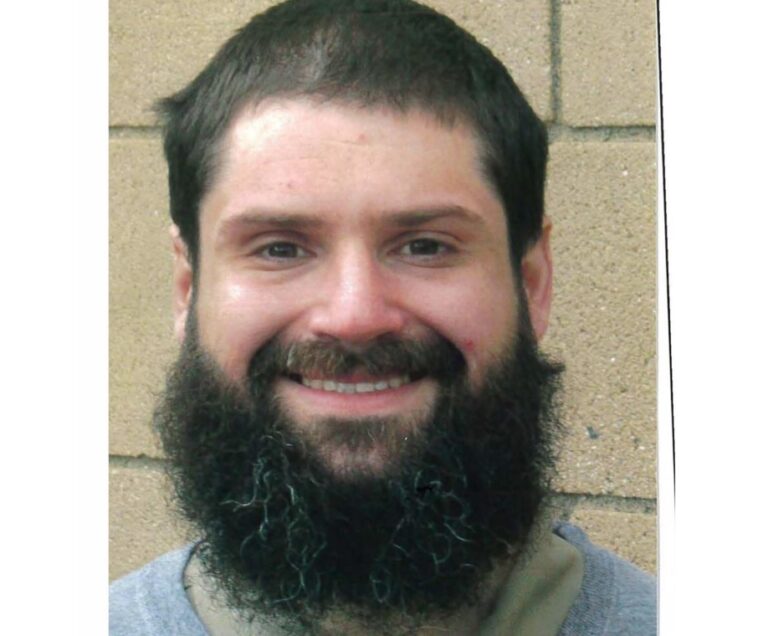
Anchorage Superior Court Judge Ian Wheeles on Wednesday ruled against a request by the Alaska Democratic Party for a temporary restraining order and preliminary injunction against the Division of Elections, an effort by Democrats to stop the division from printing the general election ballot with the name of Eric Hafner on it as a Democrat.

In the congressional race, two Republicans pulled out after the primary was over, and Hafner moved up into the fourth slot for the general election ballot, where voters use the ranked-choice voting method.

The Democrats didn’t want Hafner to take votes away from Rep. Mary Peltola, who has evidently hundreds of Democrat detractors. Hafner was originally the sixth vote-getter out of a dozen on the ballot, but he moved up to fourth place, putting him on the general election ballot even though he had less than 1/2 percent of the primary vote.

The Democrats argued that some voters might be confused by Hafner being on the ballot and, since he is serving time in a federal prison, he can’t serve in Congress if he was elected.

Read the complete ruling here:

“Because of how the court has ruled on the above issues, the court deems it necessary to address Hafner as an indispensable party although the issue was not brought before the court by any of the parties. As a matter of due process, the court could not grant the relief sought by the plaintiffs without joining Hafner as an indispensable party. Under Civil Rule l9(a), an indispensable party must be joined in an “action if (1) in the person’s absence complete relief cannot be accorded among those already parties, or (2) the person claims an interest relating to the subject of the action and is so situated that the disposition of the action in the person’s absence may (i) as a practical matter impair or impede the person’s ability to protect that interest ….” Hafner has an actual interest in the outcome of this case and he would be deprived of his interest without due process if the court granted the relief sought by Plaintiffs,” Judge Wheeles wrote.

“Even if Hafner loses in the election, which all parties assume is likely, and the court assumes Hafner also accepts is likely, there is still an interest in being listed as a candidate on a ballot regardless of the results of the election. Without question, many people successfiilly elected into office start out running without the expectation of success, possibly only looking to build narne-recognition or call attention to a campaign issue. Whether that applies to Hafner is immaterial; the right to be placed on a ballot is a separate interest without regard to the ultimate success in the general election. That interest is certainly not adequately represented by an existing party. While the relief sought here is not asking Hafner to do anything, Hafner would still be deprived of his interest without due process of law if he were to be removed from the
ballot with no notice or summons of this proceeding,” the judge ruled.

Anchorage voter Jay McDonald said he cast his ballot for Hafner for the express purpose of getting him onto the general election ballot. It’s the same reason, he said, that political gun-for-hire Jim Lottsfeldt’s group “Vote Alaska Before Party” was trying to get Republicans to vote for Gerald Heikes — to get him on the November ballot and confuse Republican voters.

McDonald said that he would not stand for having his voting rights disenfranchised by the Democrats. He had encouraged others to follow his lead and vote for Hafner, and he believes dozens of people did just that after he posted his ballot and reasoning on Facebook. He was prepared to sue if Hafner was kicked off the ballot.

Open primaries and ranked-choice voting was designed by liberals to ensure more Republicans would be on the November ballots than Democrats and split the campaign donations, volunteers, and momentum of conservatives. But it just didn’t work out that way on the second election to use the new system.

“Congresswoman Mary Peltola won the August 20 primary election with a clear majority of the votes cast. The next three highest vote-getters were all Republicans. But as an apparent result of last-minute machinations at the expense of Alaska voters, two of those three Republican candidates dropped out, and Defendants [Division of Elections] certified late Monday that they intended to place the fifth and sixth-place finishers on the general election ballot in their place,” the lawsuit says.

It goes on to say that the sixth-place finisher, Eric Hafner, the felon who has made violent threats against political figures, judges, and others, cannot and should not be on the ballot.

“Alaska law does not provide for the inclusion of the sixth-place primary finisher on the general election ballot under any circumstances. But if it did allow for such inclusion, Mr. Hafner would need to be replaced by the seventh-place finisher: Mr. Hafner is disqualified from representing Alaska in Congress for two reasons. First, because he is not and cannot possibly become an inhabitant of Alaska—as the U.S. Constitution requires—while he is serving a federal prison sentence in New York until 2036. And second, because he failed to list his full residence address on his declaration of candidacy, as Alaska law requires,” the lawsuit says.

The Division of Elections is on a tight timeline and made a compelling case to the court. In an affidavit, Director Carol Beecher said that the ballot printer began printing ballots on Sept. 6 and must provide test ballots to the division by Sept. 11, so the division can make sure the ballots can be read and counted by the machines.

“The State Review Board will begin logic and accuracy testing using the test ballots on September 11. All the physical components used in the election – meaning the ballots, USB sticks, memory cards, and voting machines-are designed and tested together. The State Review Board and then regional offices conduct logic and accuracy testing to make sure that the ballots will be counted accurately. Logic and accuracy testing will take one or two days,” Beecher wrote.

“Once logic and accuracy testing is complete, the Division will begin printing more than 3,500 ballots for uniformed, overseas, and state advance voters,” Beecher wrote.

State and federal law require the Division to mail absentee ballots to these voters by Sep. 21 — 45 days before the election. These ballots are processed through the United States Postal Service bulk mail facility in Anchorage. Bulk mail is not available on Saturdays, so the Division must mail these ballots on Friday, Sept. 20.

The ballots for uniformed, overseas, and state advance voters will be printed by the Division in-house, rather than by the printer. The Division cannot print these ballots until the State Review Board has completed logic and accuracy testing. Because of the size of the ballots, they will take longer to print, and the Division must take them to a different vendor to fold them. It also takes time to count and organize these ballots, she said.

Anchorage Daily News staff to unionize, workers say

21

The beleaguered Anchorage Daily News, facing declining circulation and reader apathy, now faces a problem from within — the staff is unionizing.

The news release from the Anchorage News Guild says organizers filed a petition for a union election with the National Labor Relations Board and have requested voluntary recognition from leadership at ADN.

“By forming the Anchorage News Guild, the newsroom staff at ADN aim to advocate for fair wages, increased transparency and a sustainable workplace environment,” the news release says. The newsroom at the newspaper has a staff of about 30, including those in management, such as editors.

The guild says about 80% of the newsroom staff at Alaska’s largest newspaper “are publicly in support of joining The NewsGuild-CWA, which represents more than 25,000 media professionals from publications including The Seattle Times, The New York Times, The Associated Press and many others. The Anchorage unit is joining the NewsGuild-CWA’s Pacific Northwest local.”

This move means the ADN will be the only newsroom in the state to be unionized, the group said.

“Collectively, members of ADN’s unionization effort say they love working for the paper and feel honored to produce the award-winning journalism Anchorage deserves. They say they are unionizing to ensure they can continue to tell the stories of their community for decades to come,” the guild says.

The guild asks the readers and community to show their support for the newsroom’s efforts by signing a petition at https://bit.ly/supportANG to urge leadership to grant voluntary recognition.

The ADN was owned by the McClatchy Company for many years before being sold to Alice Rogoff in 2014, through her online publication the now-defunct Alaska Dispatch News. She renamed the Anchorage Daily News the Alaska Dispatch News.

Rogoff ran the paper poorly and it went into a financial tailspin. She filed for bankruptcy protection in 2017, at which time Johne Binkley of Fairbanks organized The Binkley Company to buy the newspaper for $1 million — far less than the nearly $34 million Rogoff had paid to McClatchy three years earlier.

This year, the newspaper has reduced publication of its print edition to two per week to cut costs.

Kevin McCabe: Dividend, now buried in the operating budget, frustrates and fatigues Alaskans

By KEVIN MCCABE

A sign has appeared in the middle of Big Lake with a red arrow pointing to my campaign sign.

This sign reads “PFD THIEF” and includes a disclaimer stating: “Paid for by Mike Alexander,” with his address. I know Alexander as a member of “Save The PFD,” a group based in Big Lake and led by Mike Widney. Both gentlemen have been politically active on Permanent Fund dividend issues in the past and usually provide invaluable PFD support and comments.

Both, however, have been mostly silent for the past two years. Mike’s sign is clearly a statement of their displeasure with my votes for budgets that included less than a full PFD. As single-issue advocates, they view any legislator who votes for a budget without a full PFD as a “thief.”

But is a vote for a budget that does not have a full PFD a vote against a full dividend? Perhaps if it were the only thing in the budget that would be true. 

The Alaska operating budget includes hundreds of line items that most Alaskans say they want. A sizable part of the budget has programmed funding that is automatic and committed before any broader budget discussions begin. This includes items like state worker pay, operating costs such as Medicaid and school funding, matching money for federal highway dollars, and funding for major school maintenance and pupil transportation, among others.

Additionally, the budget often contains appropriations for projects with a solid return on investment, such as airport and road upgrades. It also includes line items for things like childcare, substance abuse rehabilitation facilities, library rebuilds, and Pioneer Home roof replacements. A vote on the budget encompasses much more than just a stance on a full PFD or any other single line item.

However, there seems to be a disconnect in the “PFD thief” debate when discussing a budget that actually includes a full PFD.

SCS CSHB 281(FIN) amended Senate, which came before the House on May 14, 2022, was the last time in recent memory Alaskans had a chance at a full PFD. The Senate version of the operating budget, which would have paid over $5,000 to every Alaskan—young and old—was sent to the House for a concurrence vote.

After the Covid debacle, this would have been a huge financial boost, not only for Alaskans but for the state’s economy which could have generated billions of dollars in economic activity.

However, two of the most vocal “pro-PFD” legislators voted against this budget. Ironically, at least one of these legislators is still ardently supported by the “Save the PFD” group.

You might wonder why two conservative, Republican, pro-PFD Valley legislators voted against a budget that included the full PFD. Their excuse was that the spending was out of control — and they were right. At the end of the day, however, they still voted against a budget that had a full PFD. 

Even as the Save-The-PFD activists publicly shame other legislators for their supposed anti-PFD votes, this “no” vote on a full dividend in 2022, left out of the conversation about their PFD purity. A relevant question should be how is the no vote on the FY2023 (full PFD) budget, by these two legislators, any different from a legislator voting for a budget that has less than a full PFD?

All legislators have reasons for their budget votes; often driven by the needs of their districts. For the past few years, I had to consider the fact that our district senator is outside any caucus and had no opportunity to shape the budget so I had to do it for both of us. This is more important than creating hollow optics by voting against a budget, which is already destined to pass, simply because it lacks a full dividend.

Several legislators have written Pro-PFD pieces over the years. And many have at various times endured attacks, threats, and protests from Alaskans who focus solely on the PFD without fully understanding the broader budget process. I myself have written several such op-eds and weathered the attacks.

While my position is unchanged, I have noticed a shift in Alaskans’ views on a full PFD. Just in the past past year, I’ve received dozens of emails and public comments expressing, “Reduce or take my PFD—just don’t tax me.”

In contrast, I’ve lately received few messages in favor of a full or statutory PFD. I recognize that “dividend fatigue” has set in for many pro-PFD supporters; they’re simply exhausted from constantly writing and calling—and I don’t blame them.

Since the Gov. Walker veto in 2016 and subsequent court case, the PFD has been buried within the operating budget, making it difficult to determine which legislators are genuinely voting for or against the PFD. It should never have been reduced to a budget item, but that’s the reality we face until we collectively muster the will to resolve it.

The ongoing dispute over the PFD is frustrating for everyone, including pro-full PFD legislators like myself. The implementation of the Fiscal Plan, which many of us worked on during the 2022 interim, is long overdue.

Gov. Jay Hammond’s “militant ring” needs a legally binding voice—not the current arbitrary and convoluted two-statute system (or whatever).

Rep. Kevin McCabe serves in the Alaska Legislature on behalf of Alaskans in the House District 30-Big Lake area (formerly District 8).


Alexander Dolitsky: Marc Chagall’s ‘Pinch of Snuff’ is a symbol of peace and mutual healing

2

By ALEXANDER DOLITSKY

The two most important Jewish holidays are Rosh Hashanah (the Jewish New Year) and Yom Kippur (the Day of Atonement), which are considered the “High Holy Days” and are celebrated as a period of reflection and repentance. Rosh Hashanah is a two-day traditional Jewish holiday. This year it will be celebrated Oct. 2-4 as the start of the Jewish New Year. 

In the Jewish theological tradition, Rosh Hashanah is the birthday of the world, when God created the world 5,784 years ago. The literal translation of Rosh Hashanah is “Head of the Year.” It is named to emulate the human head controlling its body; the day of Rosh Hashanah affects the whole year.

In connection with the upcoming Rosh Hashanah in October, it is imperative to remind the world about the prominent Jewish artist Marc Chagall, representing a symbol of peace and mutual healing. Mutual healing is the one element Jews long for the most; it’s a process in which all parties grow and change; and there is a deep healing in the relationship between people.

Marc Chagall (Moshe Segal) was born July 7, 1887, in Vitebsk, Belorussia, Russian Empire (now Belarus) and died March 28, 1985, in Saint-Paul, Alpes-Maritimes, France.

In 1906, at the age of 19, he left his hometown Vitebsk to live in St. Petersburg, then the center of the Russian intellectual and artistic world. In St. Petersburg, he studied at the Imperial School for the Protection of the Fine Arts and at the Zvantseva School of Drawing and Painting under renowned Russian artists of the time, including Léon Bakst.

In May 1911, Chagall arrived in Paris, where he enrolled at the Académie de La Palette and settled at La Ruche studios in Montparnasse in the south of Paris, mixing with other Jewish immigrant artists, including Amedeo Modigliani and Chaim Soutine; as well as key figures in French modernism, among them Guillaume Apollinaire and Robert Delaunay.

Chagall was destined to become the eminent painter (illustrator) of the most complete edition of the Hebrew Bible (i.e., Christian Old Testament). The Hebrew Bible, also known as the Tanakh, is made up of a collection of ancient writings in Hebrew and Aramaic languages.

Indeed, Chagall’s art was mainly inspired by the Hebrew Bible throughout his entire life. His unique combination of surrealism, cubism, Russian folk traditions and Fauvism propelled him to the top of the artists’ community in Paris.

Chagall’s Orthodox Hasidic upbringing and family roots with strong religious traditions are evident in his paintings, such as “Pinch of Snuff.” This piece depicts a Hasidic Jew in a traditional attire, sitting quietly and chewing a “magic potion” (tobacco) that brings emotional happiness and fictional fantasy.

According to an ancient Hasidic parable, “… when the flow of God’s love poured out into the earth’s basin, it broke into countless fragments of individual things, in each of which still lives a spark of divine love.” Chagall intended to capture this spark of love in his art.

“Pinch of Snuff,” seem above, is currently exhibited at the Metropolitan Museum of Art in New York. In the upper left, a pearl necklace evokes the threads of Chagall’s childhood days in the Hasidic community in Vitebsk. A black yarmulka (a skull cap worn in public by Orthodox Jewish men or during prayer by other Jewish men) masters his yellow curls. In the background, the golden star of David glows over a curtain of intense green color, symbolizing Chagall’s hope for a better future, as he expresses in his prayer:

“God, You who hide in the clouds, or behind the shoemaker’s house, bare my soul, the aching soul of a stuttering child, show me my way. I don’t want to be like everyone else; I want to see a new world. “

Marc Chagall left his unique mark on modern art with his colorful works, encompassing surrealism, neo-primitivism and Fauvism. Throughout his 75-year career, he produced nearly 10,000 works — warm, human pictorial universe, full of personal metaphors, inspired by Jewish traditions, Russian fairy tales, and his own delirious dreams. 

He is the one who created the majestic ceiling of the Opéra Garnier in Paris and The Sources of Music and The Triumph of Music murals painted in 1966 for the Metropolitan Opera House at the Lincoln Center in New York City. After his death in 1985, the artist left behind an impressive artistic heritage and colossal legacy of love and peace for all humanity.

Let us pray like Marc Chagall for the world peace and harmony that Elias (a Hebrew prophet) will bring. Shabbat Shalom with love to all.

 “Fiddler on the Roof.” 1913, copy of the original painting, oil on canvas, private collection.

Marc Chagall: “Despite all the troubles of our world, in my heart I have never given up on the love in which I was brought up or on man’s hope in love. In life, just as on the artist’s palette, there is but one single color that gives meaning to life and art—the color of love.”

Alexander B. Dolitsky was born and raised in Kiev in the former Soviet Union. He received an M.A. in history from Kiev Pedagogical Institute, Ukraine, in 1976; an M.A. in anthropology and archaeology from Brown University in 1983; and was enroled in the Ph.D. program in Anthropology at Bryn Mawr College from 1983 to 1985, where he was also a lecturer in the Russian Center. In the U.S.S.R., he was a social studies teacher for three years, and an archaeologist for five years for the Ukranian Academy of Sciences. In 1978, he settled in the United States. Dolitsky visited Alaska for the first time in 1981, while conducting field research for graduate school at Brown. He lived first in Sitka in 1985 and then settled in Juneau in 1986. From 1985 to 1987, he was a U.S. Forest Service archaeologist and social scientist. He was an Adjunct Assistant Professor of Russian Studies at the University of Alaska Southeast from 1985 to 1999; Social Studies Instructor at the Alyeska Central School, Alaska Department of Education from 1988 to 2006; and has been the Director of the Alaska-Siberia Research Center (see www.aksrc.homestead.com) from 1990 to present. He has conducted about 30 field studies in various areas of the former Soviet Union (including Siberia), Central Asia, South America, Eastern Europe and the United States (including Alaska). Dolitsky has been a lecturer on the World Discoverer, Spirit of Oceanus, and Clipper Odyssey vessels in the Arctic and sub-Arctic regions. He was the Project Manager for the WWII Alaska-Siberia Lend Lease Memorial, which was erected in Fairbanks in 2006. He has published extensively in the fields of anthropology, history, archaeology, and ethnography. His more recent publications include Fairy Tales and Myths of the Bering Strait Chukchi, Ancient Tales of Kamchatka; Tales and Legends of the Yupik Eskimos of Siberia; Old Russia in Modern America: Russian Old Believers in Alaska; Allies in Wartime: The Alaska-Siberia Airway During WWII; Spirit of the Siberian Tiger: Folktales of the Russian Far East; Living Wisdom of the Far North: Tales and Legends from Chukotka and Alaska; Pipeline to Russia; The Alaska-Siberia Air Route in WWII; and Old Russia in Modern America: Living Traditions of the Russian Old Believers; Ancient Tales of Chukotka, and Ancient Tales of Kamchatka.

Fabulous fakes: Candidates’ financials show which no-party candidates pay Democratic Party for help

14

Candidates around the state who claim to be not aligned with a party but who are paying massive amounts to the Alaska Democratic Party for coordinated campaign services include:

Savannah Fletcher, Senate Seat R, Interior-Fairbanks, has paid $3,700 to the Alaska Democratic Party for coordinated campaign buy-in, including consulting, media support, communications, publicity, voter file access, training, use of facilities.

Agnes Moran, House District 1, Ketchikan, has paid more than $3,974 to the Alaska Democratic Party for coordinated campaign buy-in, including consulting, media support, communications, publicity, voter file access, training, use of facilities.

Grant Echohawk, House District 1, Ketchikan has paid more than $1,856 to the Alaska Democratic Party for coordinated campaign buy-in, including consulting, media support, communications, publicity, voter file access, training, use of facilities.

Rebecca Himschoot, House District 2, has paid $3,010 to the Alaska Democratic Party for coordinated campaign buy-in, including consulting, media support, communications, publicity, voter file access, training, use of facilities.

Brent Johnson, House District 6, Homer, has paid over $3,040 to the Alaska Democratic Party for coordinated campaign buy-in, including consulting, media support, communications, publicity, voter file access, training, use of facilities.

Ky Holland, House District 9, South Anchorage, has paid $2,171 to the Alaska Democratic Party for coordinated campaign buy-in, including consulting, media support, communications, publicity, voter file access, training, use of facilities.

Walter Featherly, House District 11, South Anchorage, has paid $3,182 to the Alaska Democratic Party for coordinated campaign buy-in, including consulting, media support, communications, publicity, voter file access, training, use of facilities.

Alyse Galvin, District 14, Anchorage, has paid more than $4,886, to the Alaska Democratic Party for coordinated campaign buy-in, including consulting, media support, communications, publicity, voter file access, training, use of facilities.

Calvin Schrage, House District 12, is $1,510 to the Alaska Democratic Party for coordinated campaign buy-in, including consulting, media support, communications, publicity, voter file access, training, use of facilities.

Nick Moe, House District 16, $1,414 to the Alaska Democratic Party for coordinated campaign buy-in, including consulting, media support, communications, publicity, voter file access, training, use of facilities.

The grand total that the Fabulous Fakes gave to the Alaska Democratic Party, reported as “negative expenditures” by the Party on its APOC reports, is $28,783.

These candidates tell voters they are not aligned with a party, but they are taking thousands of dollars from Democrat donors and giving it to the Democratic Party, which means they have picked their team, while simply telling their friends and neighbors that they are not part of a party.

The Republican Party gives its candidates access to services such as walk lists for door knocking, but does not charge for the service.

Naked and afraid? School Board member is butt of controversy after bare derriere shared on social media

A photo of Fairbanks North Star Borough School Board member Bobby Burgess that has been circulating around social media has some members of the community calling for his resignation. In the photo, Burgess is wearing an apron with his bare-naked buttock to the camera.

At the Sept. 3 school board meeting, community member Rita Trometter told the board Burgess should step down: “Our school system needs to move in one positive step, in a good, constructive direction, by Bobby Burgess stepping down, resign, from the school board. He does need to step down. He is a poor representation of a school board member. Parents don’t want their students to be exposed to what members are exposing in public, on social media.”

Burgess told the reporter that it was a violation of his privacy and his family’s privacy. But according to Keith Fons, Sr., this is a photo that Burgess’ wife posted to social media. Someone simply sent him the photo and he reposted it to his own page.

Burgess’ wife posted the photo? That would be Kristen Schupp, the largest local contributor of cash to the Alaska Senate campaign of Fairbanks Assembly President Officer Savannah Fletcher, also at the center of controversy in Fairbanks.

Fons is no fan of either Burgess or Schupp, whom he describes as a Hamas supporter. Schupp has been highly vocal in the Fairbanks area about the war in Gaza, and she takes the side of Palestinians in the conflict, which began after Hamas terrorists raided Israel and took hostages and killed civilians.

As far as Fons is concerned, Schupp’s support of the Palestinians who started the conflict makes her a supporter of the international terrorist group.

Regarding Burgess’ other controversies, he was escorted out of a political event after causing a disturbance last month, and then went onto Facebook and called for “civility” in meetings.

Fons is pulling no punches as he goes after Burgess, Schupp, and Fletcher on Facebook.

The photo posted by Keith Fons Sr. on social media, which shows a man in an apron cooking. The man appears to be Bobby Burgess and Burgess has said the photo distribution violates his privacy. Fons put the emoji face on Burgess’ butt.

A few of Fons’ posts about the radical leftists on the Assembly and School Board have been removed by Facebook for going against the “community standards.”

Facebook didn’t take the half-naked photo down when Schupp put it up on her page, but took it down when Fons reposted it, even though he had put an emoji over Burgess’ bare bottom. Facebook restored his version of the photo after he filed an appeal.

Fons said he has another photo of Burgess dressed in drag, but that was also taken down by Facebook, along with a photo of a teenager in Burgess-Schupp’s care holding a bottle of wine while looking at a birthday cake set in front of him. Those, too, were restored upon appeal.

Fons, who is a business owner in North Pole, was an organizer of the American flag convoy to Denali National Park earlier this summer after the National Park Service told workers in the park to stop flying the American flag.

The story at KTVF in Fairbanks is at this link

Tim Barto: A doff of the hat to James Earl Jones as he heads off to the cornfield

By TIM BARTO

Certain movie scenes become indelible memories. For many of us baseball diehards, it is James Earl Jones giving his sermon in “Field of Dreams”, a film in which Jones played Terrence Mann, a successful but reclusive author who gives into Kevin Costner’s character’s relentless pleas to join him in watching a ballgame at Fenway Park.

Mann’s character was based on J.D. Salinger, author of Catcher in the Rye, but Salinger wouldn’t allow his name to be used in the film, so the scriptwriters created Mann and made a wonderful choice to have James Earl Jones play him. This was not the first baseball movie in which Jones appeared, as he was in “The Bingo Long Traveling All-Stars & Motor Kings”, and he played the scary old neighbor turned sentimental baseball friend to a group of boys in the highly successful film, “The Sandlot”. 

Jones’ baritone voice resonated with fans and filmmakers alike. He may be most famous for providing the voice behind Darth Vader’s mask, but it was in a cornfield-turned-baseball-diamond that is a favorite for many of us, so much so that this author actually has a shirt with Jones’ script on it.  

Listen to a clip of James Earl Jones’ at this Wikipedia link.

In the not-quite-denouement scene, Costner’s character (Ray) is being pressured by his brother-in-law to sign over his farm, much of which was plowed under to create a magical ballfield where Shoeless Joe Jackson, along with a group of deceased big league ballplayers and – spoiler alert – Ray’s father, could come back and play baseball again. 

Yes, it sounds ridiculous, but it works . . . at least for those of us who remember the game our fathers taught us and that we studied by reading box scores in the sports section of daily newspapers.

Ray is anguished. He put his heart and soul into that field, much to his wife’s initial chagrin as well as the mockery of the local townsfolk. Ray loves sitting with his daughter, watching the oldtimers play on his field, but the lost crop revenue is driving him into bankruptcy. 

It is at this moment that Ray’s daughter tells her dad that he doesn’t have to sell the farm because people will show up there and pay money to watch “the baseball men” as she calls them.

Jones (Mann) follows up on the idea and delivers the speech – one that speaks of dreams and heroes, America and the romance of baseball. The result is goose bumps, misty eyes, lumps in the throat, and a longing for those days of ten cent packs of bubble gum cards and bedroom walls adorned with pennants and posters. 

James Earl Jones was an accomplished actor and a gentleman, but some of us will always remember him as Terrence Mann, who gave an impassioned plea for his newfound friend not to sell his nonsensical baseball field so he can help keep alive passion, tradition, and Americana. 

Tim Barto is a regular contributor to Must Read Alaska and vice president of Alaska Family Council. A lifelong baseball fan, he will pop some popcorn tonight and watch James Earl Jones in “Field of Dreams” . . . and try not to cry.