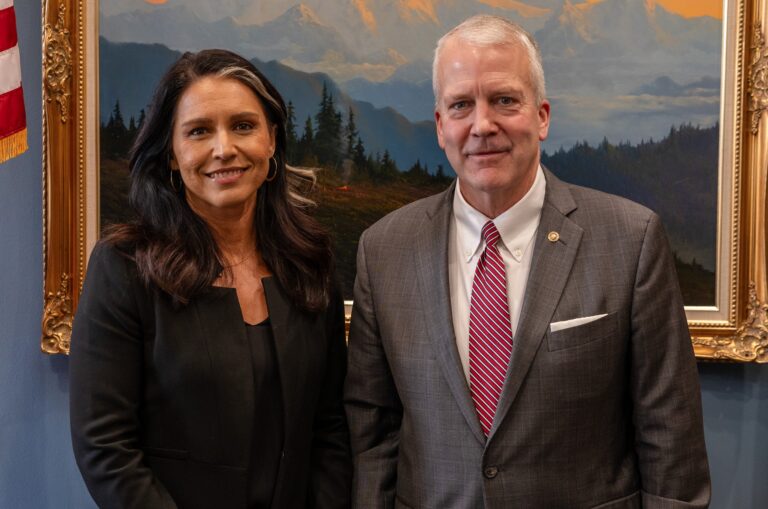
U.S. Sen. Dan Sullivan called former Rep. Tulsi Gabbard a friend, and said today she has what it takes to be an effective director of National Intelligence. The position is the leader of the country’s intelligence community, overseeing and directing the implementation of the National Intelligence Program budget and serving as the principal advisor to the president, the National Security Council, and the Homeland Security Council for intelligence matters related to national security.
“It was good meeting with my friend @TulsiGabbard today. During our discussions, which focused on issues across the globe that impact national security, including Alaska and the Arctic, Lt. Col. Gabbard demonstrated a deep understanding of the responsibilities of the DNI. She will be an important and strong member of the Trump Administration as they restore “Peace Through Strength,” Sullivan wrote on X/Twitter.
Sullivan has taken the lead role in the Alaska delegation when it comes to meeting with Donald Trump’s nominees in advance of Senate confirmation votes in January. He met with Pete Hegseth, Trump’s nominee for Defense secretary, and Rep. Elise Stefanik, nominee for ambassador to the United Nations, and spoke highly of both of them.
Gabbard is a former Democrat who recently abandoned the Democratic Party and joined the Republicans, endorsing Trump and joining the Make America Great Again movement.
Born in the U.S. territory of American Samoa, Gabbard was raised in Hawaii, where at 21-years-old she was elected to the Hawaii House of Representatives. She served one term and then left when she was deployed to Iraq with her National Guard unit.
She was later elected to Congress as the first Hindu member of the House, and the first American Samoan elected to Congress.
Sen. Lisa Murkowski has been tight-lipped on her opinion about Hegseth and has not announced a meeting with Gabbard yet. Both have been targets of the Left and the legacy media that speaks for the Left.
But Murkowski had good things to say about two other nominees — Interior Secretary nominee Doug Burgum and Energy Secretary nominee Chris Wright.
“Both have spent considerable time in Alaska and will be great partners who recognize energy as a good thing and a national asset,” she said.
President Donald Trump has sued famous pollster J. Ann Selzer, her firm Selzer & Company, The Des Moines Register, and its parent company Gannett for violating Iowa’s consumer fraud laws after it published arguably fake data two days before the 2024 general election. Trump is alleging it wasn’t an unintentional mistake that led to the warped results being broadcast to the key election state of Iowa.
Selzer, using unknown methods to support her claim, predicted that Kamala Harris had the lead in Iowa. Trump says that pushing that narrative, Selzer was trying to help Democrats win the state.
The poll, released Nov. 2, said Harris was winning by 3 points — 47% to Trump’s 44%.
In fact, Trump won Iowa by nearly a landslide of 56%, a full 14 point difference. There is, at least, an appearance that both the newspaper and its pollster were colluding.
“In my opinion, it was fraud, and it was election interference,” Trump said.
“The [Kamala] Harris Poll was no ‘miss’ but rather an attempt to influence the outcome of the 2024 Presidential Election,” the court filing says. Read it at this link.
After her disastrous embarrassment in Iowa, Selzer said she will no longer do election polling, but will move on to “other opportunities.”
Nearly all election polls overstate the strength of liberal/progressive candidates and only a handful of pollsters are considered nonpartisan. Reliable pollsters are hard to come by; in Alaska, Dittman Research is considered the most credible. On the national level, Rasmussen Reports, which is conservative, has an acknowledged built-in bias but ends up with fairly credible results.
Earlier this month, Trump agreed to a settlement with ABC News after anchor George Stephanopoulos said on television that Trump had been found guilty of rape. He was not found guilty of rape, but of defamation and sexual abuse of his accuser. ABC has agreed to pay Trump $15 million, earmarked for his presidential library.
Will Trump now go after all the columnists and social influencers who called him a Nazi or fascist during the campaign? If so, he’ll have many Democrats and socialists to litigate against.
At one time in America, falsely calling someone a Nazi was de facto libel or slander, but the phrase is being tossed around liberally these days by many liberals and social media account-holders.
Here are a few examples of news organizations that used the terms Trump, Hitler, Nazi, and fascist in headlines and made the implication that Trump fit the description. These organizations may be able to away with it because of how they carefully couched their terms:
FiveThirtyEight, a polling news reporting company owned by ABC, wrote that the Trump lawsuit is disturbing.
“This would obviously be a baseless lawsuit, but just saying this has a chilling effect, and most pollsters don’t have the financial resources for a legal battle,” wrote Nathaniel Rakich, senior editor at FiveThirtyEight, on X/Twitter.
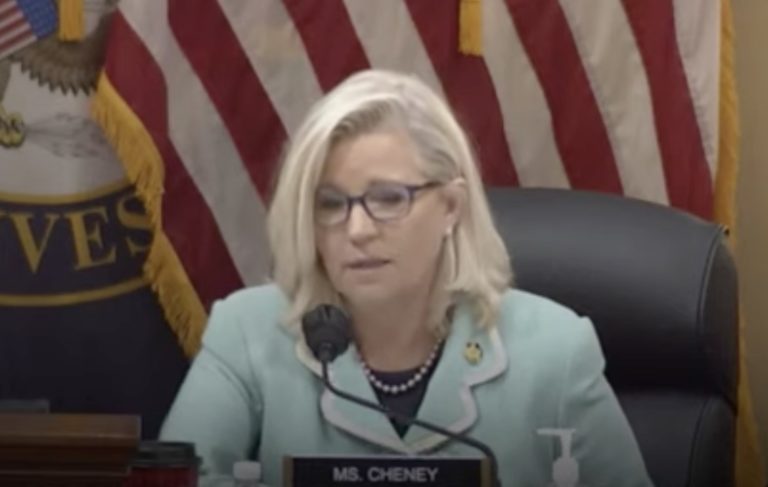
Former Congresswoman Liz Cheney colluded with at least one witness during the Jan. 6 Select Committee investigation that she oversaw before she was removed by Wyoming voters from office in 2022.
Cheney should be investigated by the Federal Bureau of Investigation for possible criminal activity, the Committee on House Administration Subcommittee on Oversight report concludes.
“Based on the evidence obtained by this Subcommittee, numerous federal laws were likely broken by Liz Cheney, the former Vice Chair of the January 6 Select Committee, and these violations should be investigated by the Federal Bureau of Investigation,” the subcommittee report says. “Evidence uncovered by the Subcommittee revealed that former Congresswoman Liz Cheney tampered with at least one witness, Cassidy Hutchinson, by secretly communicating with Hutchinson without Hutchinson’s attorney’s knowledge. This secret communication with a witness is improper and likely violates 18 U.S.C. 1512. Such action is outside the due functioning of the legislative process and therefore not protected by the Speech and Debate clause.”
The report, at this link, calls for the FBI to investigate, as federal law prohibits any person from procuring another person to commit perjury.
“Based on the evidence obtained by this Subcommittee, Hutchinson committed perjury when she lied under oath to the Select Committee. Additionally, Hutchinson was interviewed by the FBI as part of its investigation into President Trump. This Subcommittee sought a copy of the FBI report 302, documenting this interview and Hutchinson’s statements, but the FBI has refused to produce this vital document. The FBI must immediately review the testimony given by Hutchinson in this interview to determine if she also lied in her FBI interview, and, if so, the role former Representative Cheney played in instigating Hutchinson to radically change her testimony,” the report says.
All of this may be moot, as President Joe Biden is providing cover for thousands of criminals and may pardon Cheney before he leaves office. Sen. Bernie Sanders has called for preemptive pardons for Jan. 6 committee members and reports have confirmed that Biden is considering pardons.
An investigation by the FBI may be fraught, since the agency has recently admitted that it had one two dozen agency assets on the ground and in the crowd when the Jan. 6, 2021 protest got out of control and some protesters entered the Capitol, while others become violent outside, fighting with Capitol Police.
In the 1930’s France built the Maginot Line, an array of defenses along the German border to prevent invasion. The Germans, you’ll remember from history class, simply went around it through the Belgian wilderness. The French had a blindspot – the previously impenetrable terrain of their northern neighbour.
80-some years later, America may have a similar exposed flank to the north: Canada’s Arctic.
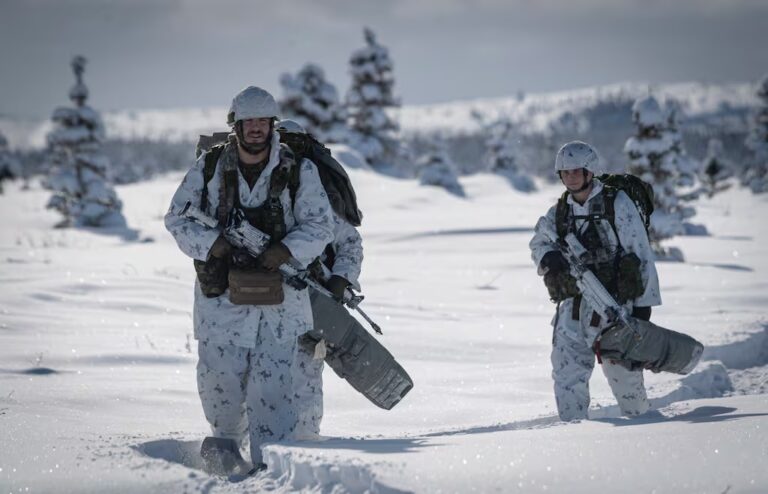
However secure Americans feel in their well attested military superiority, trouble could be coming over the ‘top’ of the world. As global tensions rise – as a future conflict between the Russia-China axis and Western democracies seems ever more likely – Americans have every right to be frustrated with Canada’s failure to properly equip military personnel in the north and enhance continental security in a serious way.
Arecent audit of Canada’s Department of National defense revealed just how threadbare Canada’s Arctic defense infrastructure has become. One investigative journalism website, blacklocks.ca, summarized the audit in stark terms: “Canada’s military is unprepared to defend the Arctic with few soldiers on deployment, few airfields fit for use by the Air Force and little winter training of combat forces.”
Canada only has 308 regular forces and 2,021 reservists in the North – leaving a third of Canada’s Joint Task Force North unstaffed. Thirty-eight percent of military buildings are more than 50 years old. The military’s equipment is either non-existent or unfit for service such that a majority of expenditure’s for Arctic defense is spent on airlifts and equipment rentals from private contractors. And, as blacklocks.ca also points out, a majority of training exercises are done in the warmer months of the year, rendering their value questionable.
All this adds up to what Canadian military historian J.L. Granatstein wroterecently, “Canada, for all practical purposes, is undefended.”
Neither Canadian nor American politicians are unaware of this. On December 6, Canada’s Minister of Foreign Affairs, Mélanie Joly, released a newArctic Foreign Policy which, to the government’s credit, includes a section on strategic challenges and evolving security threats to the Arctic. The Arctic Foreign Policy claims: “The safety, security and defence of the Canadian Arctic comprise a fundamental priority for the Government of Canada and are critical to the collective defence of North America.” But, if that is the case, why is the military so under-resourced and under-staffed? The gap between the government’s verbiage and the progress towards equipping and modernizing the armed forces is palpable.
Earlier this year Canada also released a defense policy update, Our North Strong and Free, which was rightly focused on the Arctic, but, as defense expert Richard Shimooka explained: “From its production to the presentation of the details contained within, the government often seemed more interested in how it was perceived by the various constituencies it sought to impress.” In other words, the document was posturing for Americans more than a serious effort to fix the Canadian military’s deep set procurement and personnel woes.
What Canada’s needs isn’t posturing for friends, but, as professor Rob Huebert calls for, a serious effort to convince Canada’s “enemies that they cannot successfully attack the United States through our Arctic region.”
To paraphrase professor of Arctic studies Whitney Lackenbauer, the concern is regarding threats through the Arctic, not to the Arctic. The Canadian Arctic is an impractical place for a large-scale ground invasion, and there are no strategic goals accomplished by landing an army on Ellesmere Island or Tuktoyaktuk.
But the Canadian Arctic is an exposed flank of North America – an obvious path for cruise and hypersonic missiles to pass through on the way to targets in the United States. For this reason the Arctic has been a military theatre since the advent of nuclear weapons and the beginning of the Cold War. Sensors were placed along the DEW (Distance Early Warning) Line and the Mid-Canada Line to detect missiles with enough lead time that they could be intercepted before reaching their intended destinations. This later evolved into what we have today, the North Warning System.
Sadly, in the wake of the collapse of the Soviet Union and the peaceful decades (at least for the West) that followed, Canada allowed the capabilities of the NWS and its contributions to the defense of North America through the North American Aerospace defense Command (NORAD) to diminish. We are now vulnerable to new weapons systems being developed by our adversaries that can evade our outdated defenses.
With the recent belligerence of Russia and the ascendance of China, renewed effort is required to create Fortress North America: a continent with such exquisite defense systems as to be impenetrable in the case of attack, thus deterring such an attack in the first place.
Arctic security is not about insulating the Arctic from shipping traffic, preventing a race for resources, or maintaining sovereignty over specific lands and waters. It is about protecting a vulnerable flank of North America from Chinese and Russian nuclear missiles. The United States has its hands full neutralizing threats on the Atlantic and Pacific sides. If Canada could just defend its own Arctic through increased military investment and better detection and interception capabilities, the United States could concentrate resources in other hot spots.
President-elect Donald Trump, fixated as he is on ensuring NATO allies do their part, will no doubt push Canada to rise to the challenge of Arctic security. Trump, however brash his diplomatic methods may appear, would do all North Americans a favour by forcing Canada to take its national defense commitments seriously.
Daniel Dorman is the managing editor and director of operations at the Macdonald-Laurier Institute in Ottawa, and the Center for North American Prosperity and Security in Washington, D.C.
In recent weeks, a series of formation and swarm drone sightings over New Jersey, New York, and other parts of the country has prompted concern, with thousands of calls flooding law enforcement switchboards to report the incidents.
Among the areas affected are key military installations: Picatinny Arsenal and Naval Weapons Station Earle in New Jersey and Wright-Patterson Air Force Base in Dayton, Ohio, which was shut down for hours over the weekend due to drones buzzing the area.
President Donald Trump said that due to the drones flying over the Bedminster, New Jersey golf resort he owns, he has changed his travel plans and will not be going to Bedminster.
“Something strange is going on. For some reason, they don’t want to tell the people, and they should,” said the incoming president.
The federal government’s official position started out with, “Don’t worry, this stuff happens all the time.”
Officials from the Federal Bureau of Investigation, Department of Homeland Security, Federal Aviation Administration, and the Department of Defense addressed questions about the situation Monday, with an unidentified spokesperson from the Joint Staff confirming the sightings but advising that such occurrences are not unusual. The unidentified spokesman’s statements were posted one the Department of Defense website.
“We have had confirmed sightings at Picatinny Arsenal and Naval Weapons Station Earle,” the spokesperson said. “This is not a new issue for us. We’ve had to deal with drone incursions over our bases for quite a time now. It’s something that we routinely respond to in each and every case when reporting is cited.”
According to the statement, personnel at these facilities are trained to identify, categorize, and employ tools designed to deter drones from violating restricted airspace.
Officials acknowledged that the origins of the drones remain unknown. The FBI, DHS, FAA, and DOD have yet to identify the operators or their motives.
“To date, we have no intelligence or observations that would indicate that they were aligned with a foreign actor or that they had malicious intent,” the unnamed spokesperson said. “But … we don’t know. We have not been able to locate or identify the operators or the points of origin.”
The DOD’s investigative efforts are constrained, it said, by its limited authority to conduct operations off military installations within the United States. Federal law also prohibits the military from engaging in domestic intelligence, surveillance, and reconnaissance activities that could potentially track the drones’ origins. Instead, military personnel work with local law enforcement agencies to pursue leads.
“We have to coordinate with law enforcement to try to do that, which we are doing,” the anonymous spokesperson said. “And we do that on a routine basis at nearly all of our locations. We have good relationships and excellent coordination, and we respond quickly to try to identify them.”
“The main point is to deter the activity using some of our electronic means that can respond to most of these small commercial systems and deny them access to the airspace over our bases,” the unnamed spokesperson said. “We don’t know what the activity is. We don’t know … if it is criminal. But I will tell you that it is irresponsible. Here on the military side, we are just as frustrated with the irresponsible nature of this activity.”
Later on Monday, a joint statement was issued by the Department of Homeland Security, Federal Bureau of Investigation, Federal Aviation Administration and Department of Defense:
“There are more than one million drones lawfully registered with the FAA in the United States and there are thousands of commercial, hobbyist and law enforcement drones lawfully in the sky on any given day. With the technology landscape evolving, we expect that number to increase over time.
“FBI has received tips of more than 5,000 reported drone sightings in the last few weeks with approximately 100 leads generated, and the federal government is supporting state and local officials in investigating these reports. Consistent with each of our unique missions and authorities, we are quickly working to prioritize and follow these leads. We have sent advanced detection technology to the region. And we have sent trained visual observers.
“Having closely examined the technical data and tips from concerned citizens, we assess that the sightings to date include a combination of lawful commercial drones, hobbyist drones, and law enforcement drones, as well as manned fixed—wing aircraft, helicopters, and stars mistakenly reported as drones. We have not identified anything anomalous and do not assess the activity to date to present a national security or public safety risk over the civilian airspace in New Jersey or other states in the northeast,” the joint statement said.
“That said, we recognize the concern among many communities. We continue to support state and local authorities with advanced detection technology and support of law enforcement. We urge Congress to enact counter-UAS legislation when it reconvenes that would extend and expand existing counter—drone authorities to identify and mitigate any threat that may emerge,” the statement said.
“Additionally, there have been a limited number of visual sightings of drones over military facilities in New Jersey and elsewhere, including within restricted air space. Such sightings near or over DoD installations are not new. DoD takes unauthorized access over its airspace seriously and coordinates closely with federal, state, and local law enforcement authorities, as appropriate. Local commanders are actively engaged to ensure there are appropriate detection and mitigation measures in place,” the agency statement said.
Also on Monday, Department of Homeland Security Secretary Alejandro Mayorkas said, “It is critical, as we all have said for a number of years, that we need from Congress additional authorities to address the drone situation, our authorities currently are limited and they are set to expire. We need them extended and expanded. We want state and local authorities to also have the ability to counter growing activity under federal supervision…”
Later in the day, New York Gov. Kathy Hochul called on Congress to pass the Counter-UAS Authority Security, Safety, and Reauthorization Act, strengthening the FAA’s drone oversight and give states more power to investigate the sightings.
Is it a psychological operation or a way to pressure Congress by creating fear in the pubic? Many are floating those theories, including former CIA officer Laura Ballman, who is a commentator for Fox News.
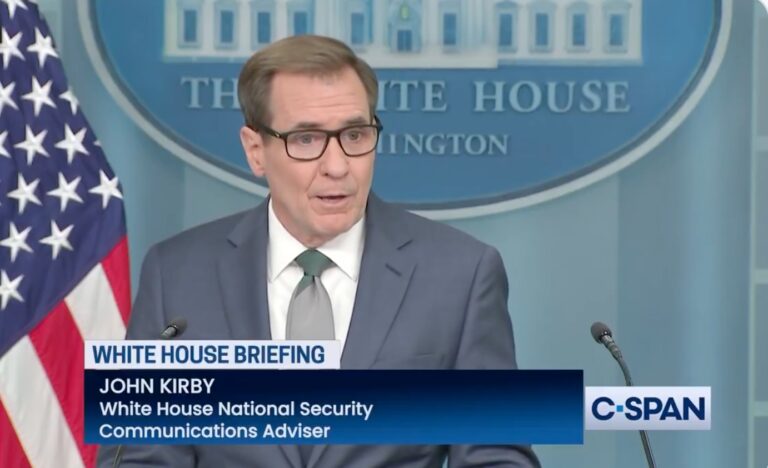
“Now, in terms of who is behind this, deducing the statements that have been made by John Kirby [National Security Council Coordinator for Strategic Communications], who has said that these objects are not operating illegally, coupled with the several op-eds that have been out the last 24 hours about the need to look at our detection systems, makes me think, perhaps, this is actually a classified exercise to test either evasion technology or detection technology in urban areas,” she said on Saturday.
It was a busy day at the Gambell Street office of the Alaska Division of Elections. A second group arrived at the office on Monday, with their petition application in hand: They, too, intend to repeal ranked-choice voting by ballot initiative in 2026.
This group is headed up by some big names in Alaska political circles: Judy Eledge, president of the Anchorage Republican Women’s Club; Bernadette Wilson, a campaign consultant and prominent business owner; and former Rep. Ken McCarty.
The group had over 250 signatures on their application for a petition. They believe they have the muscle behind them to get the repeal passed.
“Ranked Choice voting discriminates, and disenfranchises voters. $15 million of out-of-state money was spent this past election, confusing voters into thinking that a ‘no’ vote was a no to Ranked Choice Voting. If special interest want to spend another $15 million again that’s fine, but make no mistake, we will continue to fight every year and every election cycle for a transparent and timely election process,” said Wilson.
Wilson is the person who was the manager of the last conservative ballot measure to pass in Alaska — the 2010 parental notification law that pertained to minors receiving abortions.
Eledge, a longtime Republican volunteer and connected to women’s Republican groups around the state, is a strong indicator that Republican women’s clubs from Ketchikan to Kenai to Fairbanks will join her in the signature-gathering effort. The group also has people backing it who can bring in national money to help fight the dark money groups that defeated the last repeal effort.
Unlike the first repeal effort that failed this year, this repeal language is just a straight “undo” of the original 2020 ballot measure that was pushed by liberal supporters of Sen. Lisa Murkowski, who was trying to avoid a Republican primary. This repeal language takes everything back to how it was before jungle primaries and ranked-choice voting was authorized by voters in 2020.
Earlier in the day, Phil Izon filed his similarly worded petition with the Division of Election. He was part of the first effort to repeal the ranked-choice voting and jungle primary; that effort failed by just 743 votes after being outspent $15 million in Outside dark money to about $100,000 raised by people in Alaska who support repealing the questionable and confusing voting scheme now being used in Alaska.
With two dueling petitions that aim for the same outcome, it could get confusing. Each petition will need at least 35,000 signatures, so Alaskans may be signing both petitions. After that, it will up to the Division of Elections and Department of Law to decide whether to combine the language of the two initiatives into one question for the ballot.
Read about the other repeal application at this link:
Congressman-elect Nick Begich III has received his first committee assignments for the upcoming two-year session of Congress. NBIII will serve on the House Natural Resources Committee, chaired by Congressman Bruce Westerman, who not only endorsed Begich for Congress but visited Alaska to raise votes for Begich this past summer.
The House Natural Resources Committee considers legislation about American energy production, mineral lands, mining, fisheries, wildlife, public lands, oceans, Native Americans, irrigation, and reclamation.
Begich will also be on the House Transportation and Infrastructure Committee, chaired by Congressman Sam Graves. The committee has jurisdiction over all modes of transportation – from aviation system, to highways, bridges, transit, rail transportation, pipelines, and maritime and waterborne transportation. The committee also has jurisdiction over wastewater infrastructure, emergency preparedness and response programs, public buildings, federal real estate management, federal economic development agencies, and the U.S. Coast Guard.
“With Trump in the White House and majorities in the House and Senate, Alaska is in a position to make progress on policy that will reopen our state to responsible development,” Begich said. “I’m thrilled to be joining the House Committees on Natural Resources and Transportation and Infrastructure – both of which are key to ensuring continued opportunity for the people of Alaska. As we work to develop critical minerals at home and procure new sources of domestic energy, America First will require an Alaska-focus, a perspective I will gladly champion on these committees.”
Getting assigned a seat on these two committees is an especially competitive process. Begich has been working with steering committee members in Washington, D.C. over the past five weeks, making the case about the importance of these committees to Alaska.
Don Young chaired both of these committees at different times during his 49-year tenure. Young passed ANWR provisions out of the House 13 times, but it took a Senate and a president to finally get it over the line.
The window in 2025 is another opportunity for Alaska — with the House, Senate, and presidency all in Republican control. It’s a window that might not have opened for Alaska if Rep. Mary Peltola had remained in office, especially with what is now a narrow Republican majority: Republicans have 220 House members, while 215 seats are held by Democrats.
Phil Izon, one of the leaders in the 2024 attempt to repeal Alaska’s ranked-choice voting and jungle primary system, doesn’t think Nov. 5th’s defeat of Ballot Measure 2 is the final answer. The ballot measure only lost by 743 votes, and that was with a small group of Alaskans up against $15 million in Outside dark money trying to keep ranked-choice voting.
Today Izon filed a new application with the Division of Elections to get another petition circulating, which would lead to Alaskans being given yet another chance to repeal the voting method that has been promoted by Outside dark money and Alaska Democrats.
Izon turned in 214 signatures on his petition application today. The wording that he is asking approval for is nearly exactly what voters voted on this year, which should make it easier for the Division of Elections to approve.
But this time, the key phrase is “remove.”
Izon and others have relayed to Must Read Alaska that many Alaskans were confused by the language of Ballot Measure 2 this year. They thought when they voted “No” that they were voting against ranked-choice voting, when in fact they were voting to retain it.
Now, the wording says:
“AN INITIATIVE TO: REMOVE THE RANKED CHOICE VOTING SYSTEM: AN ACT REMOVING THE RANKED-CHOICE GENERAL ELECTION; RESTORING THE PRIMARY AND GENERAL ELECTION SYSTEMS USED PRIOR TO THE ADOPTION OF THE RANKED CHOICE VOTING INITIATIVE IN 2020 (19AKBE).”
“This act would Remove Ranked-Choice General Election. This act would restore one person, one vote by removing the rank choice voting system and replacing it with the Primary and General Election Process used before the rank choice voting initiative was adopted in 2020. Primary voters would vote for their preferred party candidate, and one candidate from each registered political party would appear on the general ballot. The candidate with the most votes wins the Primary Election. The candidate with the most votes wins the General Election. This initiative also restores voter choice in the nomination of the Lieutenant Governor for each party, reaffirming Alaska’s commitment to its two constitutional offices.”
The wording submitted by Izon is not the final wording. That will be up to the Division of Elections, as it was last time. This time, however, if confusing language is used in the ballot initiative, Izon is willing to challenge it, something he didn’t do last time.
Izon says that the past two years have been an education. There are people all over the state who are ready to try again and will gather the signatures needed. They’ve been through the learning curve together and believe it will be easier to get the required signatures from all across the state. The group will need to get signatures equal to 7% of the total district vote in the last general election from each of 30 of the 40 Alaska House districts.
If people are interested in being a petition gatherer or host an event, or volunteer, Izon has set up a website at www.907Honest.com. While he is not ready to take donations he is looking for volunteers who will help gather signatures once the petition booklets are issued.
The Division of Elections has 60 days to approve the new petition and issue petition books to the 907Honest group, a small grassroots group that is fighting Outside dark money that is taking over Alaska’s elections.
Update: Another group has filed a petition application with the Division of Elections, with the same goal in mind. Read about it at this link:
In a letter to President Donald Trump and his transition team, Alaska Gov. Mike Dunleavy pulled no punches about how devastating the past four years have been for Alaska. And he asked Trump to, on his first day in office, issue an executive order to help restore Alaska’s economy, starting with the Ambler Access Road to the state’s mining district, and reopening the 1002 Area of the Arctic National Wildlife Refuge for energy development.
“In your first term, you led in realizing A1aska’s potential like no other President in history. Alaska’s untapped energy and mineral resources stand ready to contribute to America’s economic revival and national security,” Dunleavy said.
“Over the last four years, under the Biden Administration, Alaska has been targeted by no less than 60 White House executive orders and agency actions, undermining the State’s authority over its land and people, cutting off access to public lands, foreclosing future energy and mineral development for our Nation, and destroying economic opportunity. Your election will hail in a new era of optimism and opportunity, and Alaska stands ready and is eager to work with you to repair this damage wrought by the previous administration, and to set both Alaska and America on a course to prosperity,” Dunleavy wrote. “In order to move quickly, I ask that you issue an Alaska-specific Executive Order on your first day in office, setting in motion critical agency actions that would restore opportunity to Alaska that your Administration set forth.:
Dunleavy specified: Reversing Biden’s resource lockdown on Alaska and reinstating Trump’s previous administration’s actions, opening ANWR and the Ambler Mining District.
Ending the Biden “Deep State” overreach by reversing agency actions that lock up Alaska lands and resources.
Restoring Alaska’s authority over wildlife, lands, and waters, and completing the transfer of statehood lands promised in 1959 for the benefit of the people of our State and the Nation.
Dunleavy also said he expects more 11th-hour punishment of Alaska by the Biden Administration that will need to be undone by Trump when he takes office on Jan. 20.
In addition to the reversal of these actions listed above, we anticipate the Biden Administration in the closing days of their tenure, between now and January 20, 2025, will Dunleavy will flag those for the incoming president’s consideration.
The specific executive orders that Dunleavy requested include these items to reverse Biden’s Alaska resource lockdown:
Reissue TRUMP ANWR Leases, Initiate Exploration, and Hold Lease Sale
Reissue TRUMP Ambler Mining Road Permits to Open Alaska Critical Mineral Storehouse
Reissue TRUMP Tongass Roads Rule to Allow Mineral, Timber, and Community Access
Restore TRUMP Wetlands Policies and Allow Alaska to Develop One Percent End Biden’s Deep State Agency Alaska Overreach
Reverse Over 60 Biden Agency Actions Targeting the Lock-Up of Alaska Lands
Reverse Biden Endangered Species Act and Marine Mammal Protection Act Weaponized Actions Used to Lock-Up Oil & Gas and Mineral Resources in the Name of Climate Change
Reverse Biden Agency Actions Dividing Alaskans over Fish, Wildlife and State authority Counter Biden’s Attack on Alaskan Management of Alaska’s Assets
Restore Alaska’s Primary Authority Over Fish & Wildlife Guaranteed by Law
Restore Full Primacy for States Under the Clean Water Act Guaranteed by Law
Revoke Obsolete Public Land Orders so Alaska May Finally Receive its Statehood Lands
End Agency Stonewalling and Recognize Alaska’s Ownership of its Submerged Lands