According to the latest Rasmussen Reports poll, political civility has declined in America. Likely voters who responded to the question said they expect political violence to increase in the next few years.
The latest Rasmussen Reports national telephone and online survey found that 72% of 1,083 likely voters say, in thinking about the overall tone and civility in American politics over recent years, the level of civility has gotten worse. Just 12% think the level of civility has gotten better, and another 12% believe it has stayed about the same. (The survey question wording is here.)
Rasmussen Reports is known for a high degree of accuracy. In 2024, it was one of five major national pollster that accurately predicted Donald Trump’s win.
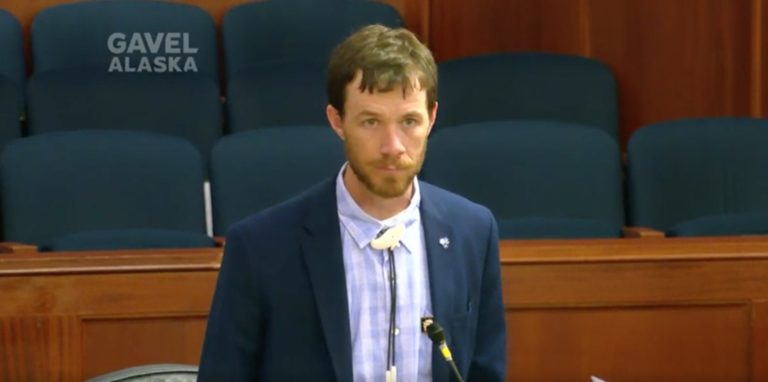
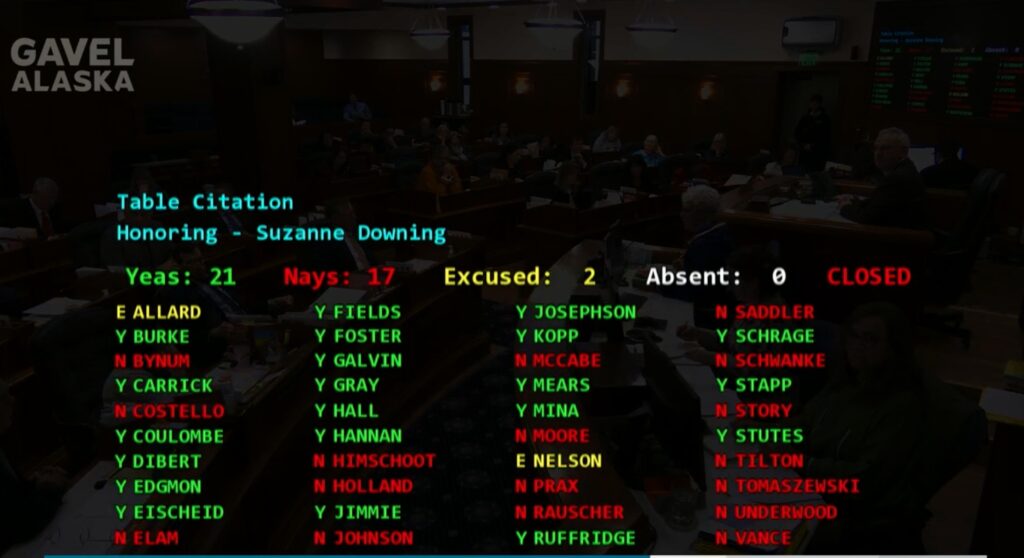
On Friday, the Alaska House of Representatives did something almost unheard of: They denied a ceremonial citation. It was not for someone controversial by action, criminality, or disgrace, but for a conservative Alaska journalist who’s dared to tell the truth too clearly, too often, and to the wrong people.
Suzanne Downing is no stranger to Alaska politics. She’s a force. A truth-teller. A thorn in the side of the establishment who’ve gotten far too comfortable operating in the dark. Through Must Read Alaska, she’s pulled back the curtain on political games, exposed backroom deals, and given a platform to the silent conservative majority in this state.
And for that, the Legislature denied her a routine nod of recognition, something they’ve freely handed out to sports mascots, pet goats, and tomato growers.
Why? Because her words hurt feelings, specifically, the fragile ego of Rep. Zack Fields, who openly admitted his problem with Downing was personal.
Let’s be clear: this wasn’t about journalistic ethics. It was political retaliation dressed up in moralizing hypocrisy. Fields has never objected to a citation before, even when he disagreed ideologically. But when someone dares call him out? Suddenly, citations must pass a purity test.
Even more disappointing were the spineless, so-called Republicans who caved to the pressure and voted to table it instead of standing up for one of the few conservative voices brave enough to take the fight to the public square.
Let’s be blunt: Suzanne Downing has done more to shape public opinion in Alaska than half the Legislature combined. It’s apparent that Downing is informed, unrelenting, and most terrifying voice of all to the political class, because she is independent of their control.
Vote on tabling citation.
Alaska’s mainstream media is MSNBC on crack, pushing spin, not facts. Suzanne built a platform that bypassed them and gave the people a voice. That’s what this petty stunt was about. The establishment couldn’t handle the truth, so they tried to silence it.
The grassroots doesn’t forget moves like this. While lawmakers play political dodgeball with ceremonial resolutions, real people are watching. This wasn’t just an insult to Suzanne … it was a slap in the face to every Alaskan who’s ever dared speak out, ask questions, or hold their elected officials accountable.
Legislators who supported this move should ask themselves: What are they so afraid of? The truth? Or the people who are waking up to it?
A proposal to reinstate a traditional pension system for new public employees in Alaska is on the House floor for its third and final reading on Monday, and is expected to pass, due to the Democrat-led majority.
House Bill 78 would shift future public employees from the current defined contribution retirement system, which is what most workers have, to a costly defined benefit pension plan. The unions and Democrats say this will help the state recruit and retain public workers.
Actuarial modeling and workforce data suggest the change could impose steep costs without delivering the intended results. In fact, although the unions say Alaska can’t retain teachers because of not having a defined pension plan, there are 11 other states that have more trouble retaining teachers than Alaska — with Arizona being the state that has the worst teacher retention.
HB 78 would cost Alaska an additional $2.1 billion over the next 30 years under the most optimistic investment assumptions, according to a recent financial analysis by the Reason Foundation.
But that’s the rosiest scenario. If investment returns mirror the state’s actual performance over the past 23 years, the additional cost could balloon to $11.4 billion.
The bill is advancing through the Democrat-controlled Legislature at the same time that lawmakers are cutting Alaskans’ Permanent Fund dividends, growing taxes, and scraping the bottom of the state’s savings account — the Constitutional Budget Reserve, which has just $2.8 billion remaining. The governor has set a hiring freeze and travel restrictions in place as revenues are not keeping pace with expenses. Gov. Mike Dunleavy has also asked legislators to join him in working on a fiscal plan that could provide stability.
No study has shown that younger workers want pensions; what they want is portability and quality of life assets. In addition, critics believe that the Legislature is actually debating an item that falls under the Alaska Constitution’s “Diminishment Clause,” which puts the state on the hook for pension payments no matter what happens.
A central issue in HB 78 is the assumed rate of return for the pension plan — 7.25%. That assumption would be among the highest in the country. Since 2001, Alaska’s pension funds have averaged only a 5.8% annual return. If the state adjusted its assumption to a more conservative 6.5%, in line with current actuarial standards, it would add $2 billion to current unfunded liabilities.
Alaska is already liable for $7.6 billion that must be paid out to those still in the pension plan that was closed in 2006.
Whether it would slow employee turnover is also a specious argument. Between 2012 and 2023, Alaska had the 11th-lowest turnover rate among state employees nationwide, averaging 13.6% annually, well below the national average of 18.7%.
Even during the pandemic, when turnover spiked across the US, Alaska remained relatively stable. That’s in part to the 37.5-hour work week and generous holiday and vacation benefits. In fact, the average state worker gets 12 holidays and at least 15 personal leave days per year, for a total of 27 days off, or five work weeks every year that state workers are paid for time off.
Comparisons with other states suggest that pension structure is not a key factor in retention. For example, Oklahoma moved to a DC plan in 2011 but has since reported some of the lowest turnover rates in its region, outperforming several DB-plan states.
Modeling from the Reason Foundation shows that HB 78 may not benefit most employees. Over 90% of new hires would receive lower retirement benefits under the proposed DB system due to its back-loaded nature. Most public workers in Alaska do not stay long enough to vest in the more generous later-years benefits typical of DB plans. In contrast, the current defined contribution plan provides better retirement value and portability for short- and mid-term employees.
One area where Alaska’s retirement system does show a gap is coverage under the Supplemental Annuity Plan, or SBS, a mandatory retirement savings program that serves as a substitute for Social Security.
While most public employees are enrolled in SBS, Alaska’s teachers are not—leaving them with no Social Security and no SBS benefit upon retirement. For a full-career teacher, this can mean a retirement income shortfall of up to $60,000 per year compared to peers with full SBS participation, the Reason Foundation said in its testimony to the Legislature last month.
The first portion of a new tax cut proposal released Friday by House Republicans on the Ways and Means Committee marks the latest step in delivering on President Donald Trump’s call for more pro-growth tax relief.
The package builds on provisions from the 2017 Tax Cuts and Jobs Act and includes income tax reductions, expanded deductions, and permanent extensions of prior tax benefits. Committee members say more provisions — including Trump’s proposed tax exemption for tips — will be introduced in the coming days.
Below is a summary of the key components unveiled so far, as analyzed by Americans for Tax Reform.
Income tax cuts
The proposal permanently extends the lower personal income tax brackets originally enacted in the 2017 tax reform law. Additionally, it provides a one-year inflation adjustment to further reduce income taxes in 2025 — a boost that applies to all brackets except the top 37% bracket.
Tax simplification
The current standard deduction, which was doubled in 2017 and is now claimed by 90% of taxpayers, would be made permanent. On top of that, the plan temporarily increases the standard deduction from 2025 through the end of 2028:
Individuals: from $15,000 to $16,000
Heads of household: from $22,500 to $24,000
Married couples: from $30,000 to $32,000
The temporary increase is set to expire on Jan. 1, 2029.
Child tax credit
The current $2,000 Child Tax Credit is made permanent, with a four-year temporary increase to $2,500 per child beginning in 2025. This enhancement will expire in 2029, at which point the credit returns to $2,000 with future inflation adjustments.
Small business relief
The popular Qualified Business Income deduction (Section 199A) for pass-through entities would rise from 20% to 22% and be made permanent. The plan also loosens phase-in limitations and indexes income thresholds to inflation beginning in 2026.
Estate and generation-skipping tax relief
The federal estate tax, referred to as the “death tax,” receives a revision. The exemption threshold is permanently increased to $15 million, indexed to inflation. The generation-skipping transfer tax exemption is also raised to the same level and made permanent.
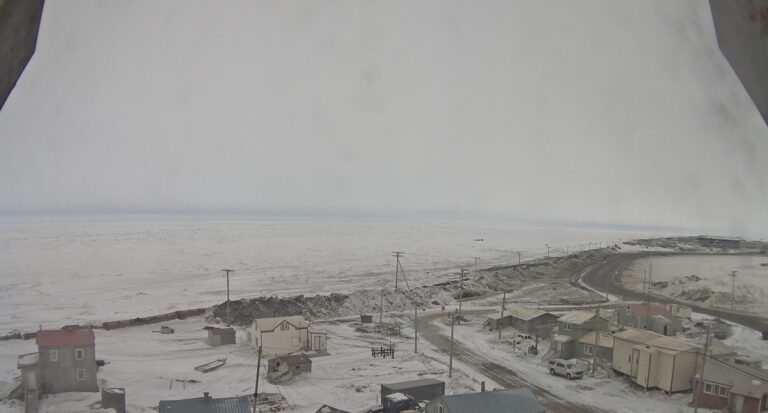
On Saturday morning, the sun set in Utqiaġvik for the last time until Aug.2, marking the beginning of the seasonal “midnight sun” period. The phenomenon is caused by the Earth’s axial tilt that results in continuous daylight for approximately 83 days in this northernmost city in Alaska.
Located about 330 miles north of the Arctic Circle, Utqiaġvik experiences extreme variations in daylight throughout the year. From mid-November to late January, the town undergoes a polar night, where the sun doesn’t rise above the horizon. From mid-May to early August, the sun remains visible 24 hours a day.
Despite the continuous daylight, temperatures remain relatively cool (22 degrees at 9 pm) and it was overcast on Saturday.
Texas Attorney General Ken Paxton announced the indictments and arrests of six individuals, including multiple public officials, in connection with a vote harvesting scheme uncovered in Frio County, about 50 miles south of San Antonio.
The charges stem from a multi-year election integrity investigation conducted by the Attorney General’s Criminal Investigation Division, which executed search warrants in Frio, Atascosa, and Bexar Counties in August 2024. On May 1, 2025, a grand jury in Frio County returned indictments against the suspects following the presentation of evidence by Frio County District Attorney Audrey Louis and Paxton’s Election Integrity Unit.
Among those indicted are:
Frio County Judge Rochelle Camacho: 3 counts of Vote Harvesting
Former Frio County Elections Administrator Carlos Segura: 1 count of Tampering with or Fabricating Physical Evidence
Pearsall City Council Member Ramiro Trevino: 1 count of Vote Harvesting
Pearsall City Council Member Racheal Garza: 1 count of Vote Harvesting
Pearsall ISD Trustee Adriann Ramirez: 3 counts of Vote Harvesting
Alleged Vote Harvester Rosa Rodriguez: 2 counts of Vote Harvesting
According to Paxton’s office, five of the six individuals were arrested on May 2. Judge Camacho has not yet been processed but is expected to be at a later date, Paxton’s office said.
“The people of Texas deserve fair and honest elections, not backroom deals and political insiders rigging the system. Elected officials who think they can cheat to stay in power will be held accountable. No one is above the law,” Attorney General Paxton said in a statement. “My office will continue to work with Frio County District Attorney Audrey Louis to protect the integrity of our elections.”
On April 25, 2025, Milwaukee County Circuit Judge Hannah Dugan was arrested by the FBI and charged with two federal felonies: obstructing an Immigration and Customs Enforcement operation by concealing an illegal alien to prevent his discovery and arrest. The charges are that she allowed an undocumented immigrant to exit her courtroom through a side door not used by the public, in order to help him evade ICE agents. Following her arrest, the Wisconsin Supreme Court suspended her from judicial duties pending trial.
Judge Rodolfo “Rudy” Delgado – Hidalgo County, Texas
Former Texas state district Judge Rodolfo “Rudy” Delgado was convicted in 2019 on multiple counts, including conspiracy, federal program bribery, and obstruction of justice, relating to accepting bribes in exchange for favorable judicial decisions. Delgado was sentenced to five years in federal prison.
Judge Allen Loughry – West Virginia Supreme Court
Allen Loughry, a former chief justice of the West Virginia Supreme Court of Appeals, was arrested in 2018 and convicted on 11 federal offenses, including wire fraud, mail fraud, and making false statements to federal investigators. He was sentenced to 24 months in federal prison and released in December 2020.
Judge Shelley Joseph – Newton District Court, Massachusetts
In 2019, Judge Shelley Joseph was indicted on charges of obstruction of justice and perjury for allegedly assisting an undocumented immigrant in evading ICE agents by allowing him to exit the courthouse through a rear door. In 2022, the charges were dropped as part of an agreement requiring Joseph to refer herself to the Massachusetts Commission on Judicial Conduct and make certain admissions. The Commission filed its own charges in late 2024, saying Joseph refused to cooperate honestly with disciplinary authorities and she brought disrepute to the judiciary. A public hearing is scheduled for June 9 in Suffolk County Superior Court, which will likely end with her removal from the bench.
Joe Biden and his appointees took an abundance of costly and damaging policy actions during his four-year term in office. Fortunately, that damaging agenda was limited to a single term presidency by voters last November who had grown weary of footing the massive bills for it all in the form of constantly increasing prices for all forms of energy.
Now the task of cleaning it all up and repairing the damage falls to President Donald Trump and his appointees. In another fortunate development for America, the President has chosen an eager and extremely talented array of energy-related appointees, including EPA Administrator Lee Zeldin, Interior Secretary Doug Burgum, and Energy Secretary Chris Wright.
One of the costliest actions taken by ex-President Biden related to U.S. national security came when he decided to raid the Strategic Petroleum Reserve by using it as a campaign tool to influence the 2022 mid-term elections. Early that year, Biden invoked a program to rapidly deplete the contents of the SPR, pulling 1 million barrels per day from the underground salt caverns which hold the crude for 180 days in hopes of lowering gas prices at the pump.
In an interview this week with radio host Glenn Beck, Secretary Wright revealed that, by drawing the volumes down so rapidly, Biden caused damage to the integrity of those salt caverns so severe that his Energy Department will now have to spend a big piece of its budget repairing the infrastructure before the caverns can be refilled. “[Biden] flooded the market with oil, reduced the price of oil in the short term but at the cost of U.S. strategic positioning, and they damaged the facilities in the Strategic petroleum reserve by draining them so fast,” Wright told Beck, adding, “We have to spend over $100 million to repair the damage of the Strategic Petroleum Reserve that wasn’t built for that.”
For readers who may not be aware, Congress and President Gerald Ford authorized the creation of the SPR in 1975 in the wake of the first Arab Oil Embargo of 1973-74 That embargo caused severe shortages of gasoline, along with price spikes across the United States. Congress intended the SPR as a tool whose careful deployment would enhance and protect national security in times of real emergencies, not one to be used for cynical political purposes.
“It’s for when a very bad day happens,” Wright put it to Beck. “The world literally runs on oil. If you don’t have oil, you’re screwed in everything you do – economics, defense, health care, anything.”
In March, Secretary Wright unveiled an aggressive plan to refill the SPR, estimating the cost of doing so at the $70 per barrel price that prevailed at the time to be about $20 billion. He also estimated it would take 4 to 6 years to complete the process due to the magnitude of Biden’s unwise withdrawals. Filling the reserve is not something that can be done all in a single transaction. Rather, it is a complex process governed by regulations which require DOE to solicit competitive bids for relatively small lots of crude.
“By design, it’s much slower to fill it than to drain it,” Wright told Beck. “It will take us, going flat out, four, five, six years to refill the Strategic Petroleum Reserve. We are dead set committed to do it, but we’ve compromised our national security for years to get a little bit of an electoral advantage in 2022.”
It should be noted here that Wright would love to take advantage of current low oil prices, which have dropped to around $60/bbl today. Obviously, the same “buy low, sell high” philosophy followed by smart stock investors applies to buying and selling crude oil, too.
But DOE’s buyback program cannot begin until the damage caused by Biden’s careless disregard for national security has been repaired. Doing that will require months, during which time oil prices could rise or drop significantly.
“Energy is the infrastructure of life,” Wright reminded Beck. “You can’t use it for politics.”
But unfortunately for U.S. national security, Joe Biden did just that. The mess he left behind is Wright’s to clean up.
David Blackmon is an energy writer and consultant based in Texas. He spent 40 years in the oil and gas business, where he specialized in public policy and communications.
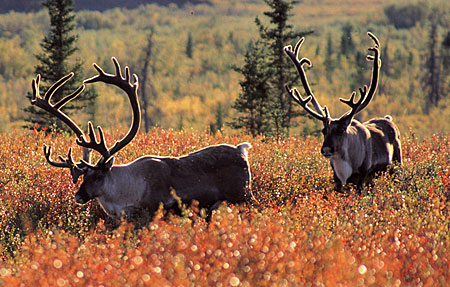
The Alaska Department of Law filed more legal briefs in the ongoing court proceedings surrounding the intensive management of the Mulchatna caribou herd.
The filings come in response to a May 7 Superior Court order that addressed, but did not overturn, the state’s emergency bear removal regulation. The matter stems from a lawsuit by the Alaska Wildlife Alliance.
The emergency regulation, adopted by the Board of Game on March 27, was put in place to help reverse the decline of the Mulchatna caribou population. State biologists have identified high bear predation as a critical factor contributing to the herd’s continued low numbers, prompting the state to authorize targeted bear removal efforts in key areas.
The Mulchatna caribou herd is located in southwestern Alaska, encompassing parts of the Bristol Bay, Kuskokwim River, and Lake Clark regions. Historically, the herd’s range extended from Dillingham to Bethel and as far as Lake Iliamna.
In its ruling, the Superior Court clarified that does not have the jurisdiction to issue a temporary restraining order against the March 27 regulation. Because the emergency action was not part of the original case, the court determined it could not block its implementation. As a result, the State of Alaska is moving forward with the bear removal program.
The Board of Game has emphasized the importance of the Mulchatna caribou as a subsistence resource for many Alaskans. In adopting the emergency regulation, the Board was relying on the authority of Article VIII of the Alaska Constitution and the Intensive Management Act, which mandate the prioritization of wild game populations for human consumption when numbers are insufficient to meet demands.
The Alaska Department of Fish and Game, in coordination with the Board of Game, also has a statutory responsibility to manage wildlife populations sustainably and in accordance with state law. The agencies maintain that the emergency measures are necessary to support the recovery of the caribou herd and to safeguard a critical food source for rural communities.
While the state plans to seek clarification on certain elements of the court’s order, officials have confirmed that the ruling does not prohibit bear-culling activities permitted under the emergency regulation. The Department of Law has reiterated the state’s intent to remain in full compliance with the decision while continuing essential wildlife management efforts.
The Left has obsessed about the price of eggs, which soared to record prices during President Joe Biden’s presidency and which became a stump speech topic of Donald Trump, the candidate, who said he would bring the price down.
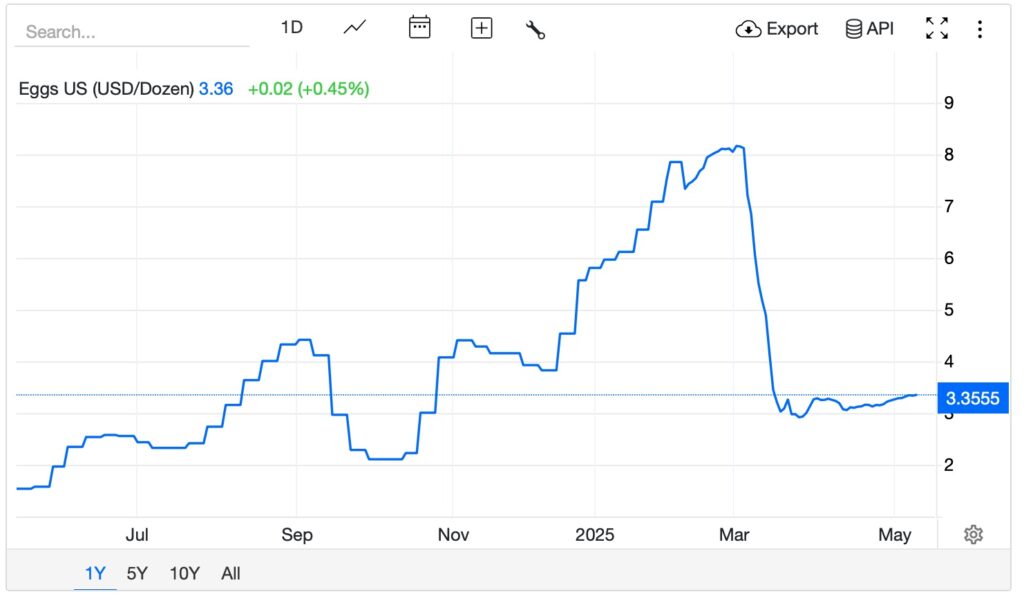
Eggs across the United States have indeed decreased by $2.45 a wholesale dozen, or 42.25% since the beginning of 2025, according to trading on a contract for difference (derivative trading at TradingEconomics.com) that tracks the wholesale benchmark market.
But first the prices soared: US eggs had reached an all time high of $8.17 in March.
TradingEconomics.com
The national average retail price for a dozen large Grade A eggs in April 2025 was approximately $6.23, according to the US Bureau of Labor Statistics. In some places around the country, the price has dropped to around $3.40 a dozen in late April.
At Carrs in Anchorage, a dozen eggs can now be found at $3.99 ($9.49 organic). Costco Anchorage has them at 18 for $6.07 and $9.58 for 24-count carton. Smaller communities and those off the road system, of course, see higher prices, which is why it is not uncommon to see someone boarding a jet in Anchorage and heading for Bethel, Nome, or Kotzebue, with a several dozen eggs as their carry-on luggage.
Try this delicious Sunny Dandelion Eggs recipe this weekend as you weed your garden beds this weekend, and combine those dandelions with some far-more-affordable eggs: