Thursday, July 23, 2026
Home Blog Page 1540

Teachers turn out to oppose PFD payback

PROPONENTS OF FULL DIVIDENDS DIDN’T SHOW

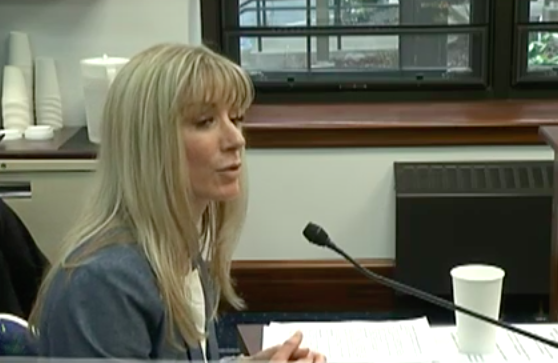
The teachers were organized and they dominated public comment Thursday night during the first public hearing for SB 23 and SB 24.

SB 23 and 24 are the bills proposed by Gov. Michael Dunleavy that would fund full Permanent Fund dividends, and also pay back the amounts that State government kept over the past three years.

The Senate State Affairs Committee heard from 65 Alaskans opposed to the governor’s bills.

The other 33 callers said they support SB 23 and 24. A handful of people were on the fence about it.

Must Read Alaska researched the voter registrations of those testifying. (Not all were found on voter rolls. Some likely are registered to vote under other names than given to the committee, or the names were spelled wrong).

The breakdown was clear: Democrats want to keep the current configuration where the State of Alaska keeps about half of everyone’s dividend and uses it to run state programs and fund education. Most of the Democrats who testified also urged income taxes.

Must Read Alaska counted 25 Democrats among those testifying, all opposed to the legislation.

16 Republicans testified. Just two of them opposed SB 23 and 24, and the rest supported.

The two registered members of the Alaskan Independence Party also supported the PFD bills.

The 22 undeclared voters testifying split between supporting and opposing the legislation.

Of the nine nonpartisan voters, only one of them supported the legislation, with the other eight opposed.

There were at least two students who testified from Sitka and both opposed the bills, saying they preferred to spend the money on education.

Sitka was the community most represented, with 25 testifiers, all of them opposed to the legislation.

Next Tuesday and Thursday the public hearing process will continue at 6 pm. Due to the volume of people calling in, the committee will limit testimony to one minute.

Anchorage callers: 907-563-9085

Juneau Callers: 907-586-9085

All other communities: 1-844-586-9085

Written testimony can be sent to [email protected].

Federal agency delays impact statement for gasline project

4

The Federal Energy Regulatory Commission added three months to the deadline for the draft environmental impact statement that was due today for the Alaska LNG Project.

The draft EIS is now expected to be released in June, with the final document due one year from now, and a final commission decision by June, 2020.

Its likely the federal government shutdown was likely a factor in the revised schedule, which puts the entire process back four months. Also, the chairman of FERC passed away recently and the agency is searching for a new chairman; meanwhile it has a 2-2 partisan split that makes decisionmaking harder.

“The revised schedule for the EIS is based upon AGDC meeting its commitment to provide complete responses to outstanding data requests on the dates it has identified,” FERC wrote, ignoring its own internal difficulties.

But the timeline delay is good news for AGDC, which has not yet provided information on numerous topics requested by FERC. AGDC is working to get third party’s engaged with the process, particularly with permitting and other expertise need. The delay does not impact the project’s viability, sources say.

It is not the first revision on the environmental impact statement schedule. Last year, under Gov. Bill Walker, FERC had issued a plan to have the final EIS completed by December, 2019.

Joe Dubler, the president of AGDC issued a statement: “FERC’s comprehensive analysis of Alaska LNG now includes more than 150,000 pages of environmental and engineering data, including responses to more than 1,700 FERC queries submitted since AGDC initiated this permitting process 22 months ago. Previous FERC scheduling changes accelerated the permitting calendar, and we believe that today’s revision does not affect the prospects for Alaska LNG. We look forward to working with FERC to complete this process and obtain the permits required to bring Alaska’s North Slope natural gas to market.”

The $43-60 billion project includes an 800-mile gasline, bookended by a gas treatment plant on the North Slope and a liquefaction plant at Nikiski, with an adjacent export facility to take the product to Asian markets.

This process has been underway for 22 months, but the state has been pursuing a natural gasline since 2006.

House bipartisan majority hires Walker press secretary

12

Austin Baird, the former press secretary to Gov. Bill Walker, is the new press secretary for the Democrat-led, bipartisan House majority.

Baird is a former news reporter who signed onto the Walker Administration midstream and was in the unenviable position of trying to explain why Lt. Gov. Byron Mallott was resigning, without actually explaining it.

In response to candidate Alyse Galvin’s infamous and dramatic response to Congressman Don Young’s firm handshake, and a social media post from Amy Demboski criticizing Baird’s limp handshake, he posted the following response to Demboski:

Baird worked for KTUU as a political reporter covering the Legislature for several years. He left the station in December of 2017 to join the Walker Administration, where he earned $110,000 a year plus benefits, for a total compensation package of over $130,000 per year.

Walker’s former communications director, Grace Jang, had also worked as a reporter, but left immediately after Walker was elected to join his team. She has started her own consultancy, focusing on crisis communications.

Wielechowski peddles false oil profit narrative

0

TRYING TO GET MORE OIL TAXES AGAIN

Sen. Bill Wielechowski, who has long been a foe of the oil industry, is peddling around the Capitol Building a memo written for him by Legislative Research Services that says ConocoPhillips makes more money in Alaska than anywhere in the world.

Wielechowski, Sen. Tom Begich and other Democrats have drawn the conclusion from that memo that ConocoPhillips should pay more taxes, using the old “our fair share” argument.

The problem with Wielechowski is that he didn’t read the footnote of the memo, which states:

“Please note the barrel of oil equivalent measure is primarily useful as a means of comparing total hydrocarbon energy produced between geographic locations. Because it does not capture widely varying economic factors underlying that production, drawing conclusions on profitability based solely on this measure is problematic. Further, please note that the amount of energy provided by a given volume of crude oil (or any fuel) varies by production location or, more precisely, by the grade of oil produced and the results of its ultimate refinement.”

What that means is that oil producers in the Lower 48, such as ConocoPhillips, are selling barrels of energy that are made up of oil and gas. The gas is a cheap product that lowers the total value of the “barrel of energy equivalent.” But producers have to sell it off so they can get to more of the high-value oil.

With “barrel of energy,” it makes it look more profitable to drill in Alaska, but the per-barrel comparison is false. In certain parts of West Texas, gas is so plentiful that producers are actually paying for it to be hauled away. So comparing the profits on barrels of energy is simply not valid.

In Alaska, each barrel is all oil, at a much higher value. It’s not true that ConocoPhillips makes more per barrel of oil in Alaska, because it costs the company more to produce the oil in the highly technical world of Arctic oil development.

But it’s the same argument Wielechowski has been peddling over the years as he tries to ratchet up taxes on oil companies.

Alaska is such a big portion of the ConocoPhillips portfolio that the SEC requires it to report Alaska separately. None of the other companies doing business in Alaska are required to do so. This is why the Legislative Research Services report focuses only on ConocoPhillips.

[Read the Legislative Research Services report here]

Don Young rated as the most effective member of Congress

2

The non-partisan Center for Effective Lawmaking has named Alaska Congressman Don Young the most effective member of Congress for the 115th Congress.

“Legislative effectiveness” is defined by the group as a “proven ability to advance a member’s agenda items through the legislative process and into law.”

In the 115th Congress, Congressman Don Young authored six bills and numerous provisions in larger legislative packages – such as opening ANWR for energy development – that were ultimately signed into law by the president.

Congressman Young’s legislative achievements are even more impressive given that he did not hold a leadership position of committee Chairmanship during the 115th Congress.

The Center for Effective Lawmaking notes that “relative to the average of 17 bills introduced by House lawmakers, Young put forth 62 pieces of legislation, 19 of which received some action in committee and 14 of which reached the floor.”

His continued legislative success is a testament to his ability to build coalitions, work across party lines, and dogged determination to see Alaska’s priorities to the finish line.

Co-Director of the Center for Effective Lawmaking Alan Wiseman, said,“In Congress after Congress, Congressman Young has emerged to become among one of the most successful members of the U.S. House of Representatives in his efforts to advance his legislative agenda, and the 115th Congress was no exception; as his record of legislative successes contributed to him being the most effective lawmaker in the House.”

Congressman Young has previously been recognized for his effectiveness in Congress. In 2017, FiscalNote named him the most effective Member of Congress. Additionally, the Lugar Center determined Congressman Young to be in the top 10 percent for bipartisanship in Congress.

For more information on the bills Congressman Young has introduced in the 116th Congress, click here.

To read the Center for Effective Lawmaking’s full report on the most effective Members of Congress, click here.

The list of the top 10 Congress members for effectiveness:

1.       Don Young (AK-AL) 5.935 No committee chair
2.       Edward Royce (CA-39) 5.414 Committee chair
3.       Michael McCaul (TX-10) 5.136 Committee chair
4.       John Katko (NY-24) 4.897 Subcommittee chair
5.       Steve Knight (CA-25) 4.657 Subcommittee chair
6.       Bob Goodlatte (VA-6) 4.238 Committee chair
7.       Greg Walden (OR-2) 4.166 Committee chair
8.       Scott Tipton (CO-3) 3.988 No committee chair
9.       Steve Chabot (OH-1) 3.735 Committee chair
10.   Barbara Comstock (VA-10) 3.706 Subcommittee chair

Breaking: Dunleavy meets with Trump on Air Force One

President Donald Trump landed in Anchorage this morning for refueling and standard aircraft checks, and Gov. Mike Dunleavy took the opportunity to greet the president at Air Force One.

Trump was returning from his trip to Vietnam, where he met with North Korean leader Kim Jong-un, and walked away from a denuclearization deal that had been in the works for months, saying it just wasn’t ready.

“Mike, anytime you have a problem, you call me,” Trump said during his remarks to troops. He then spoke about the great job Dunleavy is doing for the state.

Air Force One landed shortly before 9:30 am and Dunleavy greeted the president and they boarded the motorcade for a private visit to a facility on base.

10 am update:

10:06 am update: The president is now addressing the troops.

10:18 am update: Dunleavy is riding back to the Air Force One with the president.

Medicare for all is political malpractice

By ANCHORAGE DAILY PLANET

Democrats running for president in 2020 – along with independent Bernie Sanders – say they support the so-called Medicare For All scheme that estimates show would cost this nation more than $32 trillion.

By comparison, the entire U.S. national budget last year was $4.4 trillion. The Bank for International Settlements says the total amount of money in the world is about $5 trillion. The CIA says the total amount is $80 trillion if you add “broad money,” which is easily accessible money in checking accounts, savings accounts, money-market accounts and the like.

There simply is not enough money available in the world to allow the Left’s harebrained scheme to work. And it knows it. What it will do, if left unchecked to have its way, is ensure everybody gets medical care – just not good medical care, but the effort is not about medical care.

Their Medicare for All scam illustrates the thing this bunch shows Americans every day: With socialists and socialism the truth means so little; control means everything.

Read the Anchorage Daily Planet here.


Who can spend your money better: Government or you?

12

BY ART CHANCE
SENIOR CONTRIBUTOR

The editor and publisher of this publication may recall that I once answered the lefties in the Juneau Empire’s pages with a letter written in one syllable words. Just so they could understand.

I’m going to try to make this as simple as I can.

If you’ve been actually listening to the bleating and wailing about Gov. Michael Dunleavy’s proposed budget in the regular media, unless you really understand State budgets everything you know is wrong.

What the governor and his budget director have done is submit to the Legislature a budget for State programs that can be paid for with reasonably predicted State revenue in State Fiscal Year 20.

Revenue for this purpose mean State taxes and fees. “Reasonably predicted” means that the State can reasonably assume that this is the amount of money it will receive; this has been a real issue over time, as governors have played all sorts of games with over or under-stating the predicted revenue.

Long ago we established that we would do a low-middle-high case estimate of projected State revenue and we would base the budget on the mid-case. Gov. Dunleavy has submitted a governor’s amended budget based on a mid-case projection of next year’s revenue.

Everybody with their hooves in the trough is having a fit, but this is all we can afford without reaching into the kitty, which is the Permanent Fund. If the Legislature wants more, it has to pass an appropriation bill telling the governor where the money is coming from to pay for that “more.”

There is $1.73 billion left in the Constitutional Budget Reserve and there is $16.6 billion left in the Permanent Fund Earnings Reserve account.

Once we get more government than the budget the governor has proposed, we are dipping into the very expensive money in the CBR, or we are dipping into money that those of you who voted for Gov. Dunleavy think rightfully belongs to you: Permanent Fund Earnings Reserve account.

Dipping into the CBR takes a three-quarter vote and every vote costs millions; if you’re going to get Lyman Hoffman’s vote to dip into the CBR, Bethel is going to get something really, really nice. There is some pretty good money in the Permanent Fund Earnings Reserve Account, including all the money they didn’t give you over the last three years in your Permanent Fund dividend, which was halved.

But, if you dip into the Earnings Reserve to pay for ongoing operations of government, you’re not going to get that pay-back on the PFDs they took from you.

So, folks have a choice: Tighten your belts and do without State services and get some your PFD money or let some of that money go to government operations. There is probably a balance in there somewhere.

I don’t much care about the dividend; it is “mad money” to me and I spend it at Costco or in Mexico. It matters a lot to my kids though.

If the welfare recipients in Alaska are going to have more Medicaid coverage, it is going to come out of Permanent Fund Earnings.   If Coastal Alaska is going to have existing ferry service, it is going to come out of Permanent Fund Earnings. If the Education Racket is going to have more money, it is going to come out of Permanent Fund Earnings.

[Read: First public hearing on PFD payback is Thursday]

It’s up to you; who do you think can spend the money better, them or you?

Art Chance is a retired Director of Labor Relations for the State of Alaska, formerly of Juneau and now living in Anchorage. He is the author of the book, “Red on Blue, Establishing a Republican Governance,” available at Amazon. He also is the Must Read Alaska theater critic.

PFD ‘payback’ bills get first public hearings

3

THURSDAY AT 6 PM

The Permanent Fund dividend restoration bills will have their first public hearing on Thursday at 6 pm in the Senate State Affairs Committee.

SB 23 and SB 24 are Gov. Michael Dunleavy’s proposal to repay the Permanent Fund dividends that were not paid by the former governor and legislatures over the last three years, and to ensure that the full dividend is paid this year, according to the prior historic formula.

Alaskans with an opinion can have their voices heard during the hearing. Sen. Mike Shower is the chair of the committee.

The proposal would give to eligible Alaskans Permanent Fund dividends of $1,061 in 2019, $1,289 in 2020, and $1,328 in 2021, for those who have been in the state and were eligible for dividends in 2016, 2017, and 2018 respectively. The amount would be paid out of the Permanent Fund Earnings Reserve Account, which has $16.6 billion.

Anchorage callers: 907-563-9085

Juneau Callers: 907-586-9085

All other communities: 1-844-586-9085

Dunleavy campaigned on returning the portion of the dividend that was swept up by the former governor and legislatures as they sought to plug the fiscal gap for 2016-2020. He said the government budget should not be balanced on the backs of everyday Alaskans, who have suffered during the recent recession, and that returning the dividends to the people will help restore trust in government.