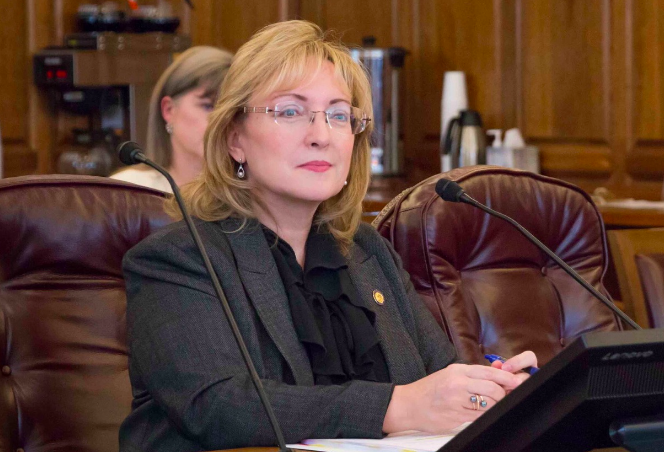
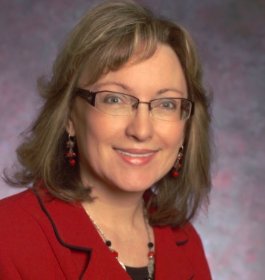
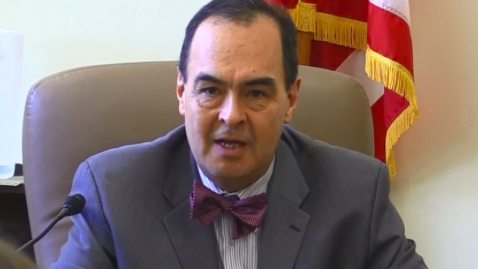
After 20 years of serving in the public sector, Rep. Colleen Sullivan-Leonard is ready for a change. Like more time with grandchildren and family.
The House member from District 7, Wasilla started as a valley planning commissioner in 1999, then was on the city council before working in the Legislature, and then for three governors: Murkowski, Palin, and Parnell. Then she was back on the Wasilla City Council before running for State House in 2016, for the seat vacated by former Rep. Lynn Gattis. She won that seat handily.
Wasilla City Council, 2003
There’s nothing more complicated behind the decision than just being ready for a change. “Twenty years is a long time to serve in the public sector, and I’m looking forward to spending time with family, not being gone from my grandkids, and maybe eventually looking at other opportunities,” she said.
This year will be her last in the Legislature. Whoever wins the seat in the November election will take office in January, 2021.
Colleen Sullivan-Leonard, on the Wasilla City Council in 2010.
District 7 has already had a meeting on the topic and is looking for good candidates. Those interested should contact District Chair Glenda Ledford at 907-355-0562.
There are no shortage of good quality conservatives in District 7, Sullivan-Leonard noted.
It could end up being a lively primary season in this deeply conservative part of Alaska.
Sullivan-Leonard is one of the 16-member House minority Republicans and has been a leader for reducing wasteful government spending.
Steve Strait, appointed to the Alaska Public Broadcasting Commission by Gov. Michael Dunleavy last August, submitted his resignation on Dec. 31, saying that the co-chairs of the commission have refused to hold a meeting and that his requests for a meeting have fallen on deaf ears.
The commission appears to have not met since last spring, although by statute (AS 44.21.256; AS 39.50.200) it is supposed to meet four to six times a year, for a maximum of 15 hours per year.
The commission is in charge of overseeing grants to the 26 public broadcasting radio stations, and the four public television stations in Alaska — Juneau, Anchorage, Fairbanks, and Bethel. Those grants have been zeroed out due to budget constraints.
Steve Strait
Still, Strait says the commission is bound by law to hold quarterly meetings. There is a paid staff that reports to the commission, headed by Mollie Kabler, executive director, so that staff needs to report to someone, but for now, co-chairman Carl Berger has stated through written communications that he has no plans to meet and, further, he has not been able to reach his cochair Lisa (Vaught) Simpson. Both of the co-chairs’ terms expire in August, 2020, unless extended by the governor.
“Having served years on the APBC previously, I know the role it plays in fulfilling its statutory duties. Historically, there are quarterly meetings but I have been unable to convince a majority of commissioners appointed by the previous administration to hold a meeting and the current chairs state they do not intend to meet again in the future,” Strait wrote to Gina Ritacco, director of Boards and Commissions. “The APBC’s last meeting took place May or June 2019. Many managers of public broadcasting question the need for this Commission. APBC public minutes and agendas have disappeared from public access and in short this is a non-functioning Commission,” Strait said. He recommended that the commission be eliminated in statute and that another organization, such as a nonprofit group, could continue the oversight role.
Alaska Statute provides these duties to the commission:
The commission shall (1) apply for federal and private funds for public broadcasting purposes and receive all federal, state, or private funds, property, or assistance that may be appropriated, granted, or otherwise made available to the commission for public broadcasting purposes, and use and disburse funds and property for purposes consistent with the terms of AS 44.21.256 – 44.21.290, subject to reasonable limitations imposed by the grantor; (2) provide consultative services in all aspects of public broadcasting to all public or private agencies in the state that request them; (3) serve as a library and clearinghouse for public broadcasting information; (4) through grants to qualified entities, develop an integrated public broadcasting network for the state; (5) through grants to qualified entities, develop and distribute public broadcasting programming in the state; (6) prepare and submit to the governor and the legislature, in compliance with the state information systems plan adopted by the commissioner of administration, a long-term plan for the development of public broadcasting stations and systems in the state, and biennially update the plan; and (7) perform all other functions necessary to ensure the orderly and coordinated development of public broadcasting in the state.
Strait said the commission, which includes Aaron Weaver as also appointed by Gov. Mike Dunleavy in August, has not actually sworn in the Dunleavy appointees since the commission hasn’t met, nor has it produced a long-term plan, as required by statute.
Former Gov. Bill Walker had appropriated $3.5 million for public radio through the commission in 2018, but most of it was vetoed by the governor and the veto was not overridden by the Legislature.
The commission, even without the grants to disperse to the stations, still has a duty to oversee a grant to the rural emergency broadcasting and rural satellite service.
“We as a body need to step up, get active, conduct election with a recommendation to add the position of Secretary to APBC officers,” Strait wrote his fellow board members in October.
The dismantling of the commission would have to occur through statute, but with a staff to oversee, it’s uncertain who Kabler would report to, although her contract ran out last year. She is currently the holder of all the public documents generated by the commission over that past decade.
CENSUS BUREAU SAYS ALASKA SAW POPULATION DROP LAST YEAR
According to recently released data from the U.S. Census Bureau, the community in the United States with the youngest of the “older than 65” demographic is Fairbanks.
The median age of the U.S. “older” population was 73.2 years in the 2014-2018 American Community Survey.
While Highlands and Palm Beach Counties, Fla., and Mower County, Minn. had some of the highest median ages among the 65 years and older population, at about 75 years, Fairbanks North Star Borough anchored the lowest, at age 70.
It’s not surprising, considering how many Alaskans move south as they enter retirement, for reasons of cost of living, family, caregiving, health, or lifestyle.
As for the male-female ratio, Fairbanks, Kenai, Mat-Su were among the few in the nation that had more men over age 65 than women over that age.
The other counties with more older men than older women were Cass County, Minn.; La Paz County, Ariz.; Monroe County, Fla.; and Polk County, Texas.
Danville city, Va. (61.7%); Bronx County, N.Y. (61.0%); and Muscogee County, Ga. (60.3%), were among counties with the highest percentage of older women than older men.
Older Fairbanksians are remaining in the workforce longer, rather than retiring, according to the survey.
Fairbanks North Star Borough, Garfield County, Colo.; Marin County, Calif.; Montgomery County, Md.; and Windham County, Vt., saw more than 27% of older-than-65 citizens still working. That is higher than the national average of 25.7%. Alexandria City, Va had the most older folks still working, at over 30 percent.
Alaska was among 10 states that lost population between 2018 and 2019. The states were New York (-76,790; -0.4%), Illinois (-51,250; -0.4%), West Virginia (-12,144; -0.7%), Louisiana (-10,896; -0.2%), Connecticut (-6,233; -0.2%), Mississippi (-4,871; -0.2%), Hawaii (-4,721; -0.3%), New Jersey (-3,835; 0.0%), Alaska (-3,594; -0.5%), and Vermont (-369 ; -0.1%).
NATION’S GROWTH SLOWING
According to the U.S. Census Bureau’s national and state population estimates, 42 states and the District of Columbia had fewer births in 2019 than 2018, while eight states saw a birth increase. With fewer births in recent years and the number of deaths increasing, natural increase (births minus deaths) declined steadily over the past decade.
“While natural increase is the biggest contributor to the U.S. population increase, it has been slowing over the last five years,” said Dr. Sandra Johnson, a demographer/statistician in the Population Division of the Census Bureau. “Natural increase, or when the number of births is greater than the number of deaths, dropped below 1 million in 2019 for the first time in decades.”
The ACS is the largest source of small area statistics for social, economic, housing and demographic characteristics. It gives communities the current information they need to plan for what is happening in their communities.
The 2020 Census will begin its count in Alaska, starting in Toksook Bay, and the first person to be counted in America will be “Lizzy,” who will be counted this month in the far-west community that had about 661 people, as of July 1, 2017.
With a new year comes a new legislative session, and the calendar is beginning to fill with meetings in advance of the Jan. 21 convening of the second regular session of the 31st Legislature in Juneau:
Monday, Jan. 6, 1 pm: Anchorage Caucus meets in the Anchorage Legislative Information Offices large conference room. The topic is homelessness and a program led by the Municipality of Anchorage, with invited testimony from members of various Anchorage Community Councils.
Thursday, Jan. 9, 9 am: VPSO Working Group (House and Senate) meets in the Anchorage LIO Foraker Room. They will review a draft report. Invited participants are: Aleutian Pribiloff Islands Association, Alaska Village Council Presidents, Bristol Bay Native Association, Tlingit & Haida, Chugachmiut, Copper River Native Association, Kodiak Area Native Association, Kawerak, Northwest Arctic Borough, Tanana Chiefs Conference, and Dept. of Public Safety. Will be teleconferenced.
Thursday, Jan. 9, 3 pm: House Health and Social Services Committee will hear updates on reform from Senate Bill 74 (2016) and other Medicaid cost containments. Participants are Department of Health and Social Services, Alaska Behavioral Health Association, Alaska Primary Care Association, Alaska State Hospital and Nursing Home Association. The meeting takes place in the Anchorage LIO large conference room and will be teleconferenced.
Tuesday, Jan. 21, 3:30 pm: In the Capitol Butrovich Room 205, Senate State Affairs was the first “regular session” meeting scheduled for Day One of the session. The topic was the future of the Citizens Advisory Commission on Federal Areas, but as of now that meeting appears to have been cancelled. No word on if it is being rescheduled.
Friday, Jan. 24, 3:30 pm: A special Senate Committee on the Railbelt Electric System will meet to conduct a hearing on SB 123. The hearings will continue Monday, Jan. 27 at 3:30 pm, Wednesday, Jan. 29 at 3:30 pm, and Friday, Jan. 31, at 3:30 pm. All meetings will be in the Butrovich Room 205, and will be teleconferenced. Details here.
On Jan. 2, Alaska State Troopers were trying to stop a 2008 red Mazda for swerving near mile 56 of the Glenn Highway.
The vehicle drifted into the opposite lane of traffic, but eventually Troopers, the State Crime Suppression Unit, and the Palmer Police Department were able to get the vehicle stopped after it pulled into a church parking lot.
The driver, George Frese, age 42 of Fairbanks, ignored repeated commands by Troopers, resisted arrest and made verbal threats of physical harm to Troopers, according to the report.
The Mazda was reported stolen out of Fairbanks on Dec. 29, 2019. Frese, according to the report, showed signs of impairment but refused a field sobriety test. He will be charged with Eluding 1, Theft 2, Vehicle Theft 1, Resisting Arrest, DUI, and Refusal.
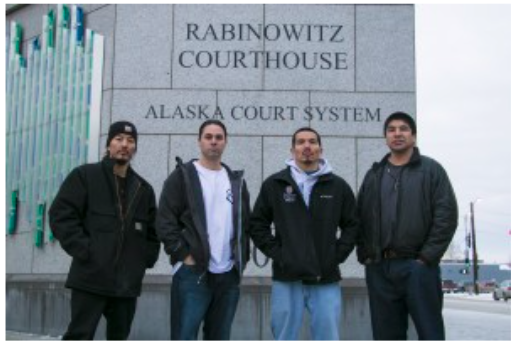
Frese is one of the four men who spent time in prison for the murder of a Fairbanks teenager in 1997. Those who wanted them out of prison, including the Innocence Project, labeled them the Fairbanks Four to build sympathy for their case.
Gov. Bill Walker promised to release them from prison and did so upon taking office, striking a deal with the four that they would not sue the State of Alaska.
Jahna Lindemuth was the attorney for the four. She then became Gov. Walker’s Attorney General, and now is an attorney trying to get Gov. Mike Dunleavy recalled from office.
Even Mark Begich got involved, calling for a federal investigation.
ANALYSIS: OLSON’S SOFT BIGOTRY OF LOW EXPECTATIONS
Sen. Donny Olson, who represents a wide swath of the rural Arctic, has asked Gov. Mike Dunleavy to use his “in” with the Trump Administration to plead for an extension on the REAL ID program for Alaska.
According to Olson, his rural constituents of District T just don’t have enough time before the October deadline, when all adults in America will need to have a TSA-approved form of ID in order to access the secure areas of major airports. They already need these IDs to get onto military bases or other secure federal facilities.
Even though they regularly travel to Anchorage for medical care, Costco runs, and AFN conventions, Olson doesn’t think his constituents can prioritize getting a federally approved ID such as a driver’s license or passport.
REAL ID, in Olson’s view, has been suddenly sprung on Alaskans, and he believes it’s up to the governor to force the issue with the federal government to give everyone a couple of more years to comply.
A review of Olson’s own legislative website and records shows his concern is quite sudden. While he asks the governor to wave a magic wand at the federal deadline, Olson did made no such request under the previous governor, Bill Walker, elected by Alaska Democrats like him.
In fact, Olson has done nothing to help his constituents get compliant with REAL ID. This negligence on his part is in spite of the fact that Alaska had an extension for three years to allow the state to get the equipment into place that would create the Real ID for Alaskans.
First, the extension was granted by the U.S. Department of Homeland Security until Jan. 22, 2018. Then, the extension was extended until October of 2020.
Olson’s own website shows he hasn’t put a press release out on any topic at all since August.
While he sits on the Finance Committee, he didn’t bother to ask for funds to help his constituents get their ID in order.
In fact, he did nothing — no notifications to villages, no educational links, no money, no town hall meetings on the topic.
To give credit where it’s due, he did sit at a table this summer in Nome to ask his constituents to sign the recall petition against the governor.
REAL ID was enacted by Congress in 2005. Fifteen years later, Alaska is one of the last states to be REAL ID compliant, after the Alaska Legislature passed a bill in 2008, barring state agencies from spending money to comply with the federal mandate.
The sponsor of that “resist? REAL ID bill? Sen. Bill Wielechowski, an Anchorage Democrat.
Olson, 15 years after REAL ID was enacted, would rather put the entire nation at risk with yet another extension of the deadline for “special-needs Alaska” simply because, in his mind, his own constituents are not smart enough to get it done.
His approach is an insult the people of his district. These are Alaskans who work in the oil patch, in mines, who fly airplanes, apply for fishing permits, and serve on whaling commissions. These are Alaskans who file for their Permanent Fund dividends, get their cars licensed, and deal with federal officials on a regular basis. They have tribal administrators and Native Corporations at their disposal. Many of them are residents of the richest borough in the state — the North Slope Borough. He treats them as though they are children.
In Olson’s world, a federal mandate is one more opportunity to strike back at a governor who he doesn’t like and wants to recall. He went after the governor for the headline value, and the mainstream media complied.
Olson needs to show leadership and, instead of asking someone else to help his constituents get up to speed on REAL ID, he needs to rise to the occasion and be the leader of his region.
If he doesn’t, then his voters should consider their options. After all, Olson has been in office 19 years; maybe it’s time for someone else to serve –someone who will take things like national security seriously.
Superior Court Judge Phillip Pallenberg has seen Larry Reiger one too many times for one too many assault cases. The 60-year-old Juneau resident with a rap sheet of rampant crime and a long list of victims got 16 years in prison with no probation as his penalty for a lengthy and terrifying attack on a woman in January of 2019.
The sentencing on Jan. 2 came after a July trial, in which a Juneau jury convicted Reiger of Assault in the Second Degree, two counts of Assault in the Third Degree, and three counts of Assault in the Fourth Degree.
Evidence at trial showed Reiger repeatedly strangled the victim, including once to the point of unconsciousness, placed the victim in fear for her life, punched her in the face, kicked her, threatened to kill her, and dragged her by the hair as she was trying to flee, according to the Department of Law.
At the sentencing hearing, the victim spoke of how terrified she was during the assault and that she believed she would die before she could escape, feeling surprised to have woken up after Reiger strangled her to unconsciousness.
She emphasized that what happened to her “should not happen to anyone else, ever again.” People who know Reiger describe him as having a violent side to his personality, one that he can hide. They said he tends to attack the weak, while avoiding those who will stand up to him.
In her sentencing memorandum to the court, Juneau District Attorney Angie Kemp detailed Reiger’s lengthy criminal history of 42 prior convictions dating back to 1983, half of which were for assault or assaultive behavior. Describing Reiger as “a clear risk to community safety [who] will almost certainly reoffend once released,” Kemp emphasized the sentencing goal of isolating him in order to protect the public from future harm. Kemp asked the court to impose the maximum term of imprisonment available under the law.
MRAK research shows that to be the case:
Assault | Disorderly Conduct | Reckless Endangermen | Assault (Domestic) | M.i.c.s. – 7 | Cbj42.20.090 A1: Disorderly Conduct | As 11.71.070a2: Controll Substance | Assault 3 | Driving While Intoxicated | Refusal BA | Conceal Merchandise | Ptrp – Petition to Revoke Probation | Assault – 4th Degree | As11.41.230 (A) (3): Assault – 4th Degree | Criminal Mischief | Cbj42.10.010: Assault | Lewdness | Cbj42.20.090 (A) (1): Disorderly Conduct | Mics – 6th Degree | Mics 6th | Assault 3rd | Concealment of Mdse | Sex Assault – 1st DG | Cbj42.10.010 (A) (1): Assault | Resist Officer | Cbj42.10.010 (A) (3): Dv Assault | Assault 4th | Vcor | Cbj20.25.080 (B): Alcohol – Open Container in Public Area | Crim Mischief – Damage Property – Gen | Assault – Purposeful, Reckless Injury | Robbery 2 – Use Force to Prevent Resistnc | Cbj72.10.028: Valid Operators License Required – 1st Offense | Driving While Under The Influence – Under Influence Liquor or Drug | Disorderly Conduct – Challenge to Fight | Cbj42.20.230: Consumption of Marijuana in a Public Place – 1st Offense | Cbj72.02.075: No – Passing Zone
Those charges don’t include some of the ones that were dismissed by prosecutors during plea agreements, such as impersonating an officer during an assault and robbery in Juneau, where the victim was a 16-year-old boy.
Commenting on Reiger’s “truly extraordinary criminal history,” Judge Pallenberg said the individual victims of Reiger’s past assaults would nearly fill the courtroom. He was obviously familiar with many of the cases where Reiger had been in his courtroom but had been cycled back into the community.
Finding Reiger to be a “worst offender,” Judge Pallenberg stated that a fundamental duty of a judge is to protect the public – and he’d seen few people more dangerous than Reiger, who now has three hots and a cot at Lemon Creek Correctional Center in Juneau. He’ll be 75 years old by the time he has a chance to offend again in civil society.
With what promises to be a barn-burner of a legislative session just on the horizon, a news story recently laid out Gov. Mike Dunleavy’s view of taxes: Surprise! He does not like them.
That has big-government advocates in a tizzy. Without taxes, without taking Alaskans’ Permanent Fund dividends, they wail, how will Alaska deal with its looming $1.5 billion budget deficit? The Legislature last year showed it will run from the notion of cutting government to match revenues like a vampire from the rising sun.
Dunleavy, to his credit, says he will not be proposing or supporting higher taxes in the coming legislative session – but adds he is open to the discussion.
He did, if you will recall, earlier push for a constitutional amendment that would require a vote of Alaskans on any new proposed broad-based taxes.
And why not? Alaska does not even require a supermajority vote in the Legislature to pass a new tax. Why not have Alaska voters decide how much, if anything, they are willing to invest in government? It is, after all, their government. Alaskans, not just legislators, should have final say on broad-based taxes such as income and sales levies.
All of that is anathema to our betters, but we think Dunleavy has the right idea. Alaskans should have final say on how much government they want.
If the more-government folks can make a legitimate case for more money and more government, so be it. If not, Alaskans would get the chance to put the question to rest.
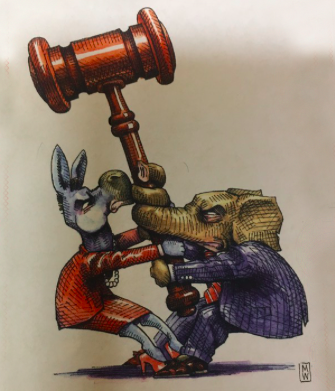
Democrats in the Alaska House of Representatives make up 15 of the 40 seats. Add to those the two “stealth Democrats” Dan Ortiz and Bryce Edgmon, and you have 17. They have an outsized influence on public policy in Alaska because of six Republicans who aligned with them in what became a 23-member coalition at this time last year.
The Alaska Democratic Party is unsatisfied with having a majority that includes so many Republicans. They already lost two Republicans from their caucus last session, and they know they could lose more this year, if they push for an income tax or oil taxes, both of which seem likely.
Democrats are seeking to create a “true majority,” according to the Alaska Democratic Party’s year-end fundraising pitch, which was emailed to registered Democrats last week.
“Democrats are getting ready to run for the State House where we seek a true majority, and for the State Senate to strengthen our ranks,” the Democrats’ newsletter stated, hopefully.
They also asserted that Democrats would restore morality to America:
“We are poised to get the country realigned and restore our moral compass,” the ADP fundraising pitch added.
Their targeting committee has been busy identifying which Republicans in the Alaska House they have the best odds of beating in order to create that true majority.
So far, according to MRAK sources, the Democrats have identified the following House seats to flip:
Lance Pruitt, District 27 Anchorage. Their candidate Liz Snyder is rumored to have raised close to $100,000 and Pruitt has not filed for reelection. He seems unlikely to file at this late point; no sitting legislator can raise funds while the Legislature is in session. Liz Snyder, to date, has no opponent and has a path to victory paved with early dollars.
Sarah Vance, District 31 Homer. Vance took out Indie-Dem Paul Seaton (who ran in the Democrat primary unopposed in 2018). Seaton had promoted income taxes and had aligned with Democrats on oil tax hikes. Kelly Cooper, an undeclared candidate who will probably choose to run in the Democrats’ primary and as their nominee in November, has filed against Vance.
Sara Rasmussen, District 22 Anchorage. Rasmussen beat Indie-Dem Jason Grenn in 2018. Grenn ran as an undeclared in 2014 and beat the Republican incumbent, Liz Vazquez, but he caucused with the Democrats, which did not go over well in this Republican-leaning district. Democrats don’t have a viable candidate yet, but it will likely be an Undeclared, rather than an actual Democrat.
Mel Gillis, District 25 Anchorage. Gillis was the Republican appointed to the seat by Gov. Mike Dunleavy after Josh Revak moved to the Senate; the shuffling occurred after the death of Sen. Chris Birch. Calvin Schrage, a registered nonpartisan, has filed to run and will probably be on the Democrats’ primary ballot; Schrage signed the Dunleavy recall petition.
The other seats Democrats could try to flip would be Bart LeBon of District 1, which he won by just one vote in 2018. Democrats wanted that seat to go to Democrat Kathryn Dodge, but she lost after a recount, and then went on to lose a bid for mayor of the City of Fairbanks. Dodge was their best hope for keeping District 1 in 2018 after Scott Kawasaki moved to the Senate; Dodge may be tired of losing and not step up to the plate in 2020. LeBon is currently caucusing with the Democrats, and that may give him immunity from the Democrats’ target list.
On the Republican side, in addition to Lance Pruitt and Steve Thompson not having yet filed for reelection, Ben Carpenter of Nikiski and Dave Talerico of Healy have also missed out on the 2019 fundraising cycle by dragging their feet. Carpenter is likely to file, and announced on the Michael Dukes show on Monday that he intends to file, while Talerico is said to be on the fence. Both are in safe Republican districts.
Rep. John “Agnaqluk” Lincoln of Kotzebue has changed his registration back to Undeclared, and has not filed for reelection to District 40; he has indicated he will not run again. Lincoln had been appointed to the seat after Dean Westlake, who Democrats picked as their way to take out Democrat Ben Nageak in 2016, resigned in disgrace. For his last year in office, Lincoln is still a member of the House Democrat-led majority, but is now not a Democrat.
Ely Cyrus, a registered Republican from Kiana and the former vice mayor of the community, has filed for District 40.
Democrats will probably find a blue candidate for District 40 to replace Lincoln in 2020. They likely won’t target Republicans like Louise Stutes of Kodiak, who is one of their biggest Republican allies in the Democrat-controlled caucus. Others they’ll leave alone are Reps. Jennifer Johnston, Chuck Kopp, Gary Knopp, and Steve Thompson, all who abandoned the Republicans’ once-22-member caucus, and now are part of the Democrats’ caucus. Of those, Knopp is the only one in trouble in his district, as he faces a primary challenge from Republican Ron Gillham.
Republicans who remain in the Republican caucus, now a minority, are 16 strong, two more than at this time last year, when they only had 14 of their elected Republicans working together.
House Republican Minority Caucus
For the 17 Democrats to create a ‘true’ majority, they’ll need to pick off four seats, and ensure that Republican Rep. Gary Knopp of Kenai doesn’t lose in his primary.
If all that comes to pass, the Democrats will not need at least some of the Republicans who crossed over to their caucus. Which ones would lose chairmanships under that scenario is a far-more speculative topic.