Sunday, April 26, 2026
Home Blog Page 1415

Theater Review: ‘The Underpants’ has top-drawer acting at the PAC

0

By ART CHANCE
SENIOR CONTRIBUTOR

Juneau’s Perseverance Theatre makes another sortie from the Workers’ Paradise to the bourgeois hinterlands of Anchorage this week with a presentation of Steve Martin’s adaptation of “The Underpants” at the Sydney Laurence Theater at the PAC.

I’ve had a long and schizophrenic relationship with Perseverance Theatre going back to the mid-Nineties when I was the Juneau Empire’s theater critic.

[Buy tickets to The Underpants at this link.]

It’s fair to say that I’ve almost always appreciated their performances and quite often disliked their plays.

First, a bit of background about; yes Steve Martin, the playwright, is that same “wild and crazy guy” of Saturday Night Live fame. Though it is little known outside artsy circles, Martin is a very successful award-winning writer, playwright, and dramatic actor.

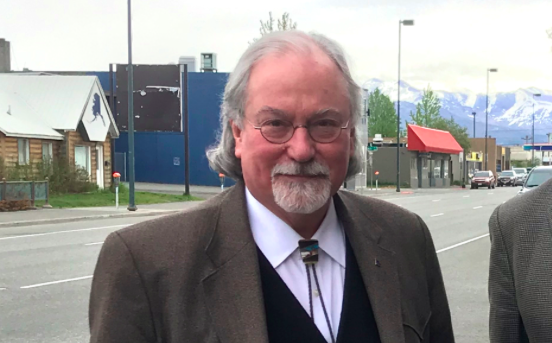
Art Chance

Martin’s deconstructionist comedic style is perfectly in keeping with the Wilhelmine German origins of Carl Sternheim’s original play from 1910.  Deconstruction and post-modernism have their roots in late-19thand early-20thCentury Germany.

Continuing the schizophrenic theme, belle époque Germany was riven by social dislocations. Germany had been an autocratic almost feudal agricultural society at mid-century.   By the early 20th Century, only 30 percent of its population was engaged in agriculture, the cities dominated cultural and civic life, and it had surpassed England as the World’s leading industrial power.

The majority political party in the German Parliament was the Socialists and Wilhelmine and Wiemar Germany had a level of socialism and central government power that today’s US socialists can only imagine.

That said, the church and the traditional aristocracy were still very powerful and influential as witnessed by the fact that the Kaiser’s censors forced Steinheim to change the name of his play from “The Underpants” to “The Trousers.”   In Wilhemine Germany the culture war took place largely in the arts. In Wiemar Germany the culture war took place in the streets.   The few who know a little history know the result.

The New York Times said “The Underpants” was “laugh out loud funny.” If you read the NYT or the Anchorage Daily News, it is laugh out loud funny. If you don’t, you realize that if you laugh, you’re laughing at yourself.

Perseverance Theatre has never met a traditional value or figure that they didn’t want to make fun of; their idea of good fun and good art is to make St. Joan of Arc into a foul-mouthed lesbian barmaid.

The Underpants isn’t that extreme, but it has a go at just about every traditional role and institution. The overarching theme is a mostly-by-double-entendre attack on traditional sexual mores and gender roles. As usual, men get the worst of it, but the women aren’t spared. There are plenty of jabs at religion, government. Of course, we must have a few jabs about how anti-intellectual traditional men are.

In keeping with the deconstructionist approach, there aren’t really any likeable characters. Gertrude, the busy-body upstairs neighbor, played by Shadow Meienberg, comes closest. She encourages Louise Maske (Kelly Gibson) to adultery but redeems herself when she foregoes the opportunity for an adulterous romp with Louise’s husband, the insufferable Theo Maske (J. David Dahl).

There really isn’t a protagonist or anything like a hero in the story, but most of the play revolves around the interaction between Frank Versaci (Ben Brown) and Louise Maske. Frank witnessed Louise’s “wardrobe malfunction” and lost his mind over her as the result.

Ben does a superb job as the fey, foppish, wannabe poet and philosopher lecherously pursuing Louise.

Louise, dismissively referred to by Theo as a “little housewife,” is a ditz in the best Edith Bunker tradition. An adulterous fling with Frank fascinates her, but interestingly, it is Frank who abandons the quest for her virtue.

Tai Yen Kim’s Benjamin Cohen makes today’s pajama boys look like models of masculinity and his interactions with Theo give the vehicle for showing some good, traditional German anti-Semitism, which was in fact a real thing in Wilhemine Germany.  Charles Cardwell’s Klinglehof, albeit a minor character, is used to make traditional attitudes look silly and weak in the face of onrushing modernity.

In sum, “The Underpants” is well acted and well staged as one can almost always expect from Perseverance. The themes from 1910 still reverberate over a century later. You’ll either like the play itself or you won’t. The snarky, pseudo-intellectual humor will appeal to sophomores of all ages. The adults among us have just learned to observe and grade adolescent snark whether we find it in art or politics.

Art Chance is a retired Director of Labor Relations for the State of Alaska, formerly of Juneau and now living in Anchorage. He is the author of the book, “Red on Blue, Establishing a Republican Governance,” available at Amazon. He was once described by KTUU as the epitome of “toxic masculinity.”

Urban encampments: Lessons for Anchorage from Austin

9

By MATT MACKOWIAK
GUEST CONTRIBUTOR

I have good news and bad news.

Here is the good news: It appears there are only 11 people in Austin who do not see what a disaster the homeless camping ordinance has become for our city in just two short months.

Here is the bad news: The 11 people are the mayor and the city council.

I don’t know what else city leaders need to see to realize they made a horrendous mistake in allowing homeless people to sleep and camp anywhere in public.

Matt Mackowiak

By the time you read this, 30,000 people will have signed our petition to rescind the Homeless Camping Ordinance. That is with zero paid advertising.

The Homeless Camping Ordinance is turning Austin into a dirty city, one that is not welcoming to visitors and tourists, and rendering it unsafe for women and children at night.

Mayor Steve Adler has recently said that the Homeless Camping Ordinance will stay in place until there is sufficient housing for our 2,200 homeless population.

That will take years.

That is totally unacceptable.

Recently the University of Texas Police Chief asked the city to ban homeless camping on the entire campus due to safety concerns.

In response to the public uproar over this unwise policy, the city is planning to ban homeless camping on a few streets (like 6th Street and Congress Avenue) and in high pedestrian areas.

But is this not an admission that homeless camping is unsafe? If it were safe, they wouldn’t need to ban it on certain streets.

The net effect of this minor policy change is that it will make all other streets more unsafe because that’s where the homeless population will go.

Our city spends $30 million a year on homeless programs and city leaders admit past efforts have totally failed. The city is planning to more than double that for 2020 to $62 million.

We have about 800 beds for homeless individuals through all sources and need another 1,400 beds.

Where will they go? How long will it take to build new or retrofit existing buildings?

I am tired of hearing ridiculous arguments from city leaders and advocates.

At a forum last week, an activist on the panel named Chris Harris said ‘Homeless people in your neighborhoods are your neighbors’. This is absurd. They are transients. Neighbors are people who live in a community and pay money to be there.

We all want our homeless population to be safe and receiving care for drug abuse and mental health challenges. Everyone else needs to be working and on a path to self-sufficiency.

Our city leaders are destroying our city’s image. Business meetings and conferences are cancelling. Tourists are expressing horror at what Austin has become. The Austin Police Association say they cannot cite or arrest homeless individuals under the current policy due to confusion over what it means.

Enough is enough.

On Sept. 20, the day after the next City Council meeting where homeless policy is expected to be debated, we will take action.

Along with local Democrat and neighborhood activist Cleo Petricek, we are forming a new nonpartisan nonprofit organization called Save Austin Now.

We will launch a petition drive to ban homeless camping in public for the May 2020 ballot, which is the next opportunity. This will require at least $150,000 and at least 20,000 verified signatures from Austin residents. We will need your help and will ask for it soon.

Please visit SaveAustinNow.com and subscribe to our emails. If you are willing to contribute to our efforts, please do so here.

City leaders are fiddling while Austin burns, and this disastrous policy is getting worse by the day.

It is time for Austin residents to rise up and make their voices heard.

Matt Mackowiak is the co-founder of Save Austin Now, a nonpartisan 501(c)3 organization dedicated to educating Austin residents about standard of living issues. Their website is SaveAustinNow.com.

Under fire: NRA moves board meeting from Anchorage to DC

25

SAN FRANCISCO DECLARES NRA ‘TERRORIST ORGANIZATION’

The NRA board of directors had scheduled its annual meeting to be held in Anchorage on Sept. 13, with some fishing and other outdoor excursions planned.

But in late August the board hastily decided to move the meeting to the Washington, D.C. area due to several anti-gun measures being considered in the Democrat-controlled House of Representatives.

The House Judiciary Committee started hearings on Sept. 4. after Chairman Jerrold Nadler, a New York Democrat who wants stricter gun laws, heard three bills, all introduced by fellow Democrats:

  • Disarm Hate Act, H.R. 2708, introduced in May by Rep. David Cicilline (D-RI), which would disqualify anyone convicted of a misdemeanor “hate crime” from being able to purchase a firearm;
  • Keep Americans Safe Act, H.R. 1186 introduced in February by Rep. Ted Deutch (D-FL), which includes a ban on magazines over 10 rounds’
  • Extreme Risk Protection Orders Act of 2019, H.R. 1236, introduced in February by Rep. Salud Carbajal (D-CA).

The NRA board has been in turmoil all year and in the past several weeks four of its member have resigned, three of them stating that they were concerned about the financial decisions and wasteful spending of President Wayne LaPierre.

The NRA meeting in the DC-Virginia area is now scheduled for Sept 11-14. The cancellation of the Anchorage meeting is said to cost the organization about $100,000, due to cancellation fees for rooms and excursions.

Alaskan Wayne Anthony Ross sits on the board of directors and told a reporter from Newsweek that he was “disappointed” in the decision to relocate the meeting.

“We worked for four or five years to get it approved by the board to come up here,” he told the reporter. “In 2005, we had the NRA board come to Alaska. We have the highest percentage of NRA members of any state in the union.” But Ross conceded that if the board needed to stay close to the action in the U.S. Capitol, he could not oppose the move.

[Read more about the NRA bailing on Anchorage at Ammoland]

Last Tuesday, the San Francisco Board of Supervisors passed a resolution that categorizes the National Rifle Association a “domestic terrorist organization.”

San Francisco city and county governments “should take every reasonable step to limit those entities who do business with the City and County of San Francisco from doing business with this domestic terrorist organization,” the resolution says. It makes it official city policy that San Francisco should “encourage all other jurisdictions, including other cities, states, and the federal government, to adopt similar positions.”

The NRA issued a statement: “This ludicrous stunt by the Board of Supervisors is an effort to distract from the real problems facing San Francisco, such as rampant homelessness, drug abuse and skyrocketing petty crime, to name a few. The NRA will continue working to protect the constitutional rights of all freedom-loving Americans.”

Berkowitz on junket to Japan, Camp Berky moves back toward downtown

10
VALLEY OF THE MOON PARK TENT-A-THON
It’s off to Japan for Mayor Ethan Berkowitz for sister-city meet-and-greets.
Back at home, Camp Berkowitz, the Whack-a-Mole tent encampment that moves from city park to city park, has returned to Valley of the Moon Park, within eye-shot of the children’s playground. The 30-or-so tent city is a project of the Poor People’s Campaign, a couple of local churches, and various political activists.
A couple of weeks ago, the campers were forced to move from that very Valley of the Moon location; camp organizers chose Cuddy Park, until the police department’s 10-day abatement notices were tacked on trees.
Earlier this summer, the campers had laid claim to a large swath of the Delaney Park Strip in downtown Anchorage until they were shooed off after two weeks of occupation.
The roving tent city is one part home-brewed solution for those without housing, and one part protest movement to call attention for the need for more services for a population of wanderers, some of whom can’t afford housing, and some of whom are making homelessness a hobo lifestyle for all sorts of reasons.
Remarkably, no fights, crimes, or disturbances have been associated with the self-policing, loosely knit community. And a tour of the Cuddy Park encampment area revealed that the area had been cleaned up after campers left, and city crews have cleared the brush that had hidden the encampment from the road.
The mayor on July 24 declared this situation a civil emergency. The Assembly extended the emergency until Aug. 6. Then, on Aug. 6, the Assembly again extended the emergency until Sept. 24 at 11:59 pm.
But where’s the mayor, and where are the reports he was asked to give to the Assembly?
Berkowitz, along with a posse of other city officials are in Japan, on a friendship mission to Chitose. Traveling with him are Assembly members Christopher Constant and Forrest Dunbar, both who are understudies for the role of mayor, once Berkowitz is retired in 2021.
Why Chitose, Japan? It’s Anchorage’s sister city, located on the island of Hokkaido.
When Berkowitz declared the emergency back in July, he said it was to “address the impacts of state budget cuts that pose dire and imminent public health and safety risks.”
His declaration continued: “Municipal Code 3.80.060 allows the mayor to make use of all available resources of the municipal government, including municipal personnel, as may be reasonably necessary to cope with an emergency. Actions may include alternate deployment of current MOA employees and the swift reallocation of resources necessary to preserve and protect the public safety, health, and welfare.”
“This is an unprecedented decision for an unprecedented situation. Existing shelters have lost funding at a time when demand for their services is projected to skyrocket. First responders and health care professionals are anticipating a massive surge in 911 and emergency room calls, and it is imperative that we meet this impending humanitarian crisis with the resources that we deploy when responding to all emergencies.”
[Read: Berkowitz declares a civil emergency on homelessness]
And yet, the encampment is still doing its 10-day abatement rotation.
Assembly member Felix Rivera had toured the nomadic colony  late last month and noted that a sense of community had started to develop and he saw merit in creating sanctioned permanent tent cities.
Meanwhile, the junket to Japan has been kept largely under wraps, although Assemblyman Christopher Constant has been posting cryptic messages about it on social media.

What will happen to the BP building in a post-BP era?

1

By BRANDON SPOERHASE
GUEST CONTRIBUTOR

BP operations in Alaska date back more than 60 years. The company has had significant investments on the North Slope, specifically Prudhoe Bay, and almost half ownership in the trans-Alaska pipeline. Now, we know they are on their way out, selling their remaining Alaska assets to relative newcomer Hilcorp, a privately owned company.

All BP’s Alaska operations and upstream business are headquartered at its iconic Anchorage office building on the corner of Benson Boulevard and the Seward Highway; you can see its unique yellow and green helio lit up on the side of the building for miles around. While the company has been selling some assets to other producers since at least 2015, the news of its departure poses big questions.

Brandon Spoerhase

What does BP’s departure mean for the commercial real estate market? First, some history.

BP’s Anchorage headquarters is a 15-floor, 324,000-square foot, Class A office building. It was built from 1983 to 1985, and the entire campus is 18 acres and includes a cafeteria and atrium. It is one of the most recognizable buildings in Alaska. (The company also built and operates the BP Energy Center, a building in midtown where nonprofit groups can meet for free. The Energy Center is the only Alaska asset not included in the sale to Hilcorp and BP has said it will remain in Anchorage “as a legacy.”)

The first phase of development was as an office building, with enough land to be able to accommodate a second tower if Alaska’s operations required one. In addition, it was designed to be able to convert to into a hotel when and if the time came for such a transition.

A few years ago, BP’s Anchorage property was sold to Oak Street Real Estate Capital, LLC, a private equity real estate firm based in Chicago, Illinois. The firm manages accounts for institutional and high net-worth investors, including public and corporate pension plans, insurance companies and trusts.

In Anchorage, the office Class A market vacancy rate was 15% in January. The market has continued to soften due to state budget concerns, with companies contracting and minimizing their occupancy costs. In the midst of this, BP attracted a new tenant to its building — Oil Search. This rapidly growing oil company relocated to this building from downtown, and has announced plans to ramp up with more employees in Alaska as it develops the exciting new Pikka development.

It is unknown what BP will do with its existing work force, although we can reasonably assume that some employees will be retained, some will move to other BP locations, and some will be laid off and potentially picked up by other oil and gas companies.

The other unknown is what BP will do with the remainder of the lease space and the remaining committed lease term as it prepares to transition out of Alaska. The continued softening of rental rates and rising vacancy rates has been the trend in 2019, and the Anchorage office market is going to feel the impact if BP’s current occupied space is vacated and available for lease. If Hilcorp moves into the BP building, the immediate impact will be lessened, though questions about how long they plan to stay there remain.

In the end, from a commercial real estate perspective, more questions are being asked than answered right now. It serves as a vivid reminder that change is the only constant in Alaska, whether in politics, the economy, or real estate. These types of events can be unsettling, but also present new opportunities. Office space owners and renters would be wise to take advantage of them.

Brandon Spoerhase is a lifelong Alaskan, a broker for BSI Commercial Real Estate, and a former member of the Anchorage Planning and Zoning Commission. He specializes in commercial and investment real estate. His column runs monthly in the Anchorage Daily News and is offered here with his permission.

Fitch does the downgrade on Alaska

23

HONG KONG ALSO DROPS A NOTCH

Fitch Ratings downgraded Alaska’s general obligation bond rating from AA to AA1 on Thursday, as it warned it would do months earlier if spending continued to exceed revenue.

The message from Fitch is that the State doesn’t have its fiscal house in order. The Legislature has continued since 2013 to appropriate more than the revenues can support, digging deeper and deeper into savings accounts.  Political realities prevented this governor, and the previous one, from cutting spending as much as needed to avoid a downgrade.

Gov. Bill Walker, before leaving office, added hundreds of millions of dollars to the state budget before pronouncing it “balanced.” It was up to Gov. Michael Dunleavy to bring a dose of courage needed to make the cuts.

Fitch and other ratings agencies don’t much care if Alaska cuts its budget or raises taxes; it just wants to see the books balance.

House Bill 2001, the operating budget that included  $156 million in budget restorations, reduced one third of the state’s deficit with a reduction of $650 million in total state spending. But it came at a political price that was born primarily by the governor, not by the bipartisan Legislature — he’s now the focus of a recall campaign led by Democrats.

On the bright side, Fitch said the State’s rating outlook is stable. In 2017, it said the outlook was unstable.

The AA+/Aa1 rating signifies that the issuer or carrier has strong financial backing and cash reserves, according to Investopedia. But it means it will cost the State more to borrow money for general obligation bond projects.

SAME RATING DOWNGRADE AS HONG KONG

Like Alaska, Hong Kong suffered the same rating fate, as it was downgraded by Fitch last week from AA+ to AA.

“Ongoing events have inflicted long-lasting damage to international perceptions of the quality and effectiveness of Hong Kong’s governance system and rule of law, and have called into question the stability and dynamism of its business environment. These features are integral to Fitch’s assessment of the territory’s creditworthiness, and while still strong in a global context, are at risk of being further eroded as a result of enduring social strife,” the agency said.

Did PBS find cause of Alaska students’ poor test scores? Climate change?

HOT WEATHER MAKING USA STUPIDER

If we’re to believe PBS science reporting, then climate change may be to blame for Alaska’s students performing worse than ever.

That would explain then why, with the Arctic warming at twice the rate of the rest of the planet, Alaska’s students have fallen further behind in their scoring on the standardized PEAKS test they took last spring.

Students in Alaska did no better on the National Assessment of Educational Progress in 2017. Only 32 percent of students in Alaska performed at or above the national NAEP Proficient level in math.


[See more about Alaska’s NAEP math trends here]

PBS’s science headline reports, “The hotter the planet grows, the less children are learning.” They’ve got science to prove it, as well as anecdotal evidence from a teacher or two.

Of course, it makes sense. Everyone feels more sluggish when the temperatures soar, which is why offices are kept at a more ideal temperature range of 68-74 degrees.

But a Cornell Study showed that 77-degree offices actually reduced errors and are better for business.

What’s an eager science believer to believe?

PBS reports that for every 1 degree Fahrenheit increase in outdoor temperature over a year, there’s a 1 percent reduction in student learning.

Denver High School French teacher Tiffany Choi says the current heat wave in Denver is making the students sleepy.

“Today was a little bit hot, so I noticed kids were very sleepy and they were having to get up to drink water quite often. If you are dehydrated, and you have to keep going to the water fountain, that can take away from their classroom experience,” Choi told the reporter.

The heat wave in Colorado led to the following PBS reportage:

“The connection between lost learning and a greater number of hot days is one more example of how climate change is already affecting our lives — and it’s an alarm bell for what we stand to lose in the future. Humans still have time to allay the worst consequences of continued global warming. But unless significant changes occur in the next decade — which seem more and more unlikely — the world will be locked into an inescapable period of heat waves unlike our species has ever seen.”

The report cited further proof: “Hotter Southern counties — like in Florida and Texas — showed lower test scores than counties in the North, even after controlling for other socioeconomic factors like family income, county economic status or local pollution.”

“Aside from glimpsing what this limbo period will be mean for young students and their ability to learn, the study adds to hefty debate around how developed nations will be influenced by global warming. The prominent theory is low-income countries will bear the brunt of consequences, but this study and others point toward nuanced calamities for places like the U.S.,” says the PBS report.

In other spurious correlation news, Great Alaska Schools, the organization that advocates for more money for schools, last year blamed funding for the low test scores:

“I think that (the numbers) tell us that our schools are struggling to keep up with the low funding that they’ve received from the Legislature over the past few years,” Aaron Poe of Great Alaska Schools told a reporter. “There really have been some pretty significant cuts over the past few years and I think we’re starting to see some of that now with these low test scores.”

[Read: Are Alaska’s schools and educational desert?]

Must Read Alaska’s crack research team ran the numbers on state education rankings and temperature and found that Alaska, with the lowest average temperatures in the United States also ranks 47th out of 50 for education achievement, according to U.S. News and World Report:

While on the other hand, Alaska, with its low educational ranking, would do well in a Zombie Apocalypse, according to our research team, which provided this stunning analysis:

Listicle: How Alaska healthcare costs compare with other states

13

People living in Alaska spend the most on healthcare in the country, and more than double what people in Hawaii spend, according a report on the website  The Senior List.

Using data from the Healthcare Cost Institute the study tells Alaskans who are on private insurance what they already know too well: The cost of medical care in the 49th state can be budget crushing.

Here’s how the 50 states and D.C. compare for health care spending:

1. Alaska – $7,469
2. West Virginia – $6,813
3. South Dakota – $6,733
4. New Hampshire – $6,720
5. Wyoming – $6,695
6. New Jersey – $6,402
7. Wisconsin – $6,355
8. New York – $6,335
9. South Carolina – $6,233
10. Connecticut – $6,232
11. North Dakota – $6,131
12. Vermont – $6,103
13 Texas – $6,057
14. Indiana – $6,043
15. Maine – $5,993
16. Minnesota – $5,988
17. Ohio – $5,975
18. Delaware – $5,805
19. Nebraska – $5,772
20. Pennsylvania – $5,696
21. Georgia – $5,668
22. Florida – $5,615
23. Louisiana – $5,577
24. Kentucky – $5,566
25. North Carolina – $5,532
26. Rhode Island – $5,508
27. Washington, D.C. – $5,488
28. Colorado – $5,487
29. Illinois – $5,478
30. California – $5,466
31. Idaho – $5,458
32. Virginia – $5,455
33. Oklahoma – $5,427
34. Massachusetts – $5,426
35. New Mexico – $5,408
36. Mississippi – $5,385
37. Iowa – $5,364
38. Washington – $5,348
39. Montana – $5,336
40. Tennessee – $5.306
41. Missouri – $5,184
42. Oregon – $5,112
43. Alabama – $5,031
44. Nevada – $5,028
45. Arizona – $4,962
46. Michigan – $4,961
47. Maryland – $4,919
48. Kansas – $4,887
49. Arkansas – $4,608
50. Utah – $4,499
51. Hawaii – $3,626

From the Healthcare Cost Institute, a breakdown of average prices for common services shows what those services cost in 2013 through 2017 in every state and D.C. (this table is not particularly readable on a smart phone.) The 2017 Health Care Cost and Utilization Report shows that spending per privately insured person grew by 4.2 percent, the second year in a row of spending growth over four percent. Price increases were the primary driver. The report covers the period 2013 through 2017 and includes claims data from four national insurance companies: Aetna, Humana, Kaiser Permanente, and UnitedHealthcare.​ 

Download the data files here.

Annual Average Price by State by Service Category
Inpatient Outpatient Professional Services Prescription Drugs
State 2013 2014 2015 2016 2017 2013 2014 2015 2016 2017 2013 2014 2015 2016 2017 2013 2014 2015 2016 2017
AK 22,959.98 26,428.35 30,499.98 33,385.15 31,319.86 685.27 652.24 699.91 739.22 732.18 214.7 213.83 228.57 236.42 238.66 86.31 101.78 112.06 116.9 112.83
AL 13,317.90 14,701.49 14,961.42 16,675.18 16,206.03 394.95 416.3 423.8 433.72 459.44 84.67 85.93 86.99 93.76 95.56 76.94 80.53 85.85 93.33 96.5
AR 12,218.49 12,811.20 13,478.52 14,414.34 14,996.46 361.54 377.18 376.5 383.98 396.64 85.07 86.59 90.55 93.98 95.7 71.96 78.66 84.37 92.04 94.59
AZ 15,627.47 15,583.64 17,130.65 18,303.41 19,013.65 613.98 674.5 683.41 715.37 769.22 89.04 90.86 92.67 101.36 106.05 86.59 92.2 99.33 104.41 106.43
CA 26,316.75 27,314.91 28,826.98 30,345.91 32,010.27 711.8 782.82 818.03 838.9 892.7 99.24 103.37 106.43 111.68 118.61 74.79 80.56 89.59 92.9 91.78
CO 18,528.69 19,187.43 20,639.93 20,857.25 22,121.56 635.14 661.89 682 698.08 738.5 100.14 103.12 107.21 113.04 117.81 93.8 99.34 107.02 112.94 113.67
CT 17,265.71 18,583.23 19,686.15 21,022.89 22,306.06 328.4 352.43 373.04 379.84 406.39 113.03 115.93 120.34 125.16 130.64 102.59 111.39 121.16 127.48 129.38
DC 14,681.01 14,604.64 18,325.86 16,653.51 18,347.22 528.26 569.59 566.78 584.7 615.81 92.45 96.22 99.91 104.7 105.21 116.99 131.62 150.26 162.36 171.34
DE 18,912.75 18,903.41 21,917.02 23,402.56 21,783.13 564.01 602.74 613.44 648.17 605.08 94.68 96.64 100.01 105.26 109.28 92.82 100.58 110.95 108.23 113.13
FL 16,326.69 17,210.71 18,128.91 19,210.90 20,230.51 594.68 633.91 673.17 699.89 743 91.89 94.96 99.21 104.24 108.94 98.61 104.38 111.44 113.71 112.87
GA 15,414.04 16,135.84 16,661.19 18,249.91 19,173.94 557.02 605.74 641.92 670.64 698.68 97.65 100.28 104.05 110.36 114.57 90.56 94.95 102.85 109.16 110.29
HI 18,373.60 20,638.76 18,618.15 32,559.01 25,545.72 539.52 527.28 559.32 560.69 637.37 87.63 80.06 84.78 94.24 101.77 89.66 94.14 109.66 107.9 91.9
IA 13,147.20 14,324.85 15,021.71 15,116.14 16,623.28 381.37 397.53 403.84 422.73 456.95 106.89 111.54 113.74 118 120.85 73.09 75.84 81.47 88 88.46
ID 16,953.81 18,565.74 19,259.38 20,388.83 21,835.34 463.17 501.98 504.57 508.96 526.99 125.1 125.8 129.38 132.34 134.38 85.27 88.4 95.7 107.04 104.5
IL 16,240.67 17,069.28 17,312.40 17,634.44 18,470.22 447.33 467.29 460.95 446.93 447.15 103.25 105.22 107.46 111.74 115.34 87.42 93.68 103.11 109.32 111.5
IN 19,339.21 20,664.45 21,293.61 21,683.81 23,405.69 555.21 572.94 586.53 605.52 610.35 99.22 102.24 105.79 111.99 117.62 78.52 84.15 88.61 95.52 96.69
KS 15,237.92 15,065.86 15,731.48 16,310.24 17,261.83 466.98 477.91 480.58 477.62 498.89 95.95 97.42 99.11 98.75 101.76 81.45 85.2 91.62 96.59 98.9
KY 14,646.74 15,633.02 15,363.01 16,512.22 16,623.89 500.06 539.6 493.56 488.44 511.33 79.24 80.99 88.6 93.52 98.63 74.8 80.3 85.78 90.62 93.7
LA 14,025.16 14,577.48 14,791.49 15,219.48 16,306.23 361.34 364.13 354.87 348.98 369.71 96.6 99.17 103.7 108.64 110.37 82.34 87.32 96.16 97 97.1
MA 14,643.16 15,868.33 16,083.55 16,321.31 17,514.18 255.68 270.43 275.95 280.68 290.28 113.94 118.03 123.03 129.45 137.49 83.71 95.02 101.72 111.57 116.24
MD 13,402.95 13,718.46 14,439.37 14,761.70 15,803.54 505.46 528.83 522.57 525.27 551.95 85.74 88.44 90.74 95.91 100.52 92.05 99.39 108.68 113.08 116.54
ME 19,690.95 21,651.54 22,953.96 25,059.05 25,937.33 362.27 395.58 419.7 437.64 473.98 106.55 110.18 113.73 117.09 122.74 77.86 85.2 92.23 100.31 100.95
MI 15,537.36 15,971.32 16,669.98 16,426.95 17,205.09 378.91 388.28 399.6 417.04 433.96 91.94 94.37 99.79 102.89 107.53 79.8 85.18 92.21 98.34 100.34
MN 16,206.54 17,764.22 17,923.36 19,217.63 20,650.79 459.38 493.4 534.63 567.18 579.56 128.97 133.53 137.58 143.52 149.68 80.81 85.64 88.88 96.37 103.67
MO 13,296.87 14,817.76 15,354.25 16,676.67 16,752.89 357.98 372.7 406.63 404.06 432.1 93.32 96.23 99.03 102.85 105.19 81.4 86.25 92.73 99.13 104.08
MS 13,555.23 14,226.21 13,911.80 14,869.19 15,567.06 441.99 463.11 478.91 483.37 528.08 93.86 94.95 96.44 102.23 104.49 81.22 88.08 89.56 96.16 95.14
MT 19,196.40 18,116.93 22,752.93 22,605.30 20,881.81 456.71 487.73 455.7 454.55 489 134.46 140.07 146.04 146.14 150.03 78.56 85.79 85.25 96.09 93.73
NC 16,624.83 17,213.67 17,874.64 18,232.06 18,146.54 617.26 661.07 675.34 686.85 674.57 97.03 101.16 105.06 110.16 112.5 86.89 90.28 99.53 105.39 107.83
ND 16,217.38 16,632.17 15,947.47 21,385.48 18,209.48 498.05 501.76 563.49 567.31 606.86 125.29 126.81 129.73 138.57 149.28 66.41 69.44 82.97 94.93 97.99
NE 16,063.98 16,671.29 17,548.52 18,176.55 19,613.33 481.54 494.38 504.63 527.74 543.27 106.57 110.49 111.09 111.33 118.72 82.5 87.58 95.57 102.06 100.24
NH 18,493.43 20,125.19 20,799.95 22,460.02 23,050.47 374.19 390.74 401.29 406.98 431.89 132.27 137.44 143.23 153.88 158.93 88.99 94.47 100.38 110.8 113.71
NJ 16,581.95 17,869.63 18,872.45 20,339.46 21,047.91 528.28 532.44 535.2 540.39 570.77 99.57 102.84 106.21 109.32 112.96 113.16 123.58 135.73 140.14 142.58
NM 16,464.69 16,864.53 17,663.26 21,606.93 19,582.68 457.99 497.28 502.99 511.71 460.16 107.85 109.22 113.07 122.13 128.58 77.58 81.91 94.24 102.28 100.97
NV 15,851.71 18,314.09 18,975.94 19,234.93 19,280.72 667.84 756.22 772.67 780.69 831.45 94.38 96.34 99.65 105.88 109.69 88.26 95.15 106.98 112.62 114.76
NY 16,816.23 18,491.09 20,086.75 21,559.39 23,626.52 327.32 341.86 358.96 379.68 424.08 100.33 102.15 105.88 109.73 112.46 109.92 121.39 134.25 139.92 146.17
OH 16,254.70 17,159.54 18,972.70 19,661.49 20,400.51 374.61 403.19 412.96 426.06 454.66 94.93 97.14 101.44 109.25 114.35 82.61 87 93.91 99.99 102.98
OK 14,918.45 15,235.60 15,464.19 17,692.77 18,484.44 515.93 535.93 541.55 547.68 569.91 87.96 87.48 90.88 97.72 98.52 83.77 87.69 94.27 101.1 100.07
OR 19,290.51 20,985.82 20,780.72 21,711.66 23,143.93 403.95 414.44 422.01 429.83 476.62 124.92 127.01 130.28 134.83 137.17 78.67 84.48 94.77 101.88 105.21
PA 16,391.48 17,685.91 17,617.06 18,358.58 19,209.29 364.71 384.3 392.4 405.3 442.42 96.86 100.9 102 108.64 111.16 88.35 96.69 107.29 112.89 115.36
RI 16,437.85 16,637.23 16,642.52 18,194.35 18,321.84 225.91 236.37 242.79 241.94 245.46 90.79 94.5 97.83 106.17 111.38 81.23 86.2 92.29 99.18 101.14
SC 20,960.00 21,927.58 21,958.32 22,639.70 24,511.86 633.18 682.97 712.9 726.3 755.82 97.39 100.19 104.7 110.42 111.94 82.59 87.2 94.39 99.42 103.21
SD 19,169.67 19,033.45 22,857.72 24,504.71 26,427.02 759.02 811.61 848.91 892.4 901.72 128.65 130.28 133.26 134.02 142.48 76.92 74.69 79.91 88.12 100.38
TN 14,424.44 15,327.48 16,303.30 16,571.26 16,989.40 479.07 496.14 512.41 526.83 560.22 84.59 88 92.27 96.88 99.32 79.25 84.58 90.03 95.55 97.94
TX 17,728.30 18,227.91 19,122.97 20,158.58 20,739.80 621.79 636.43 650.24 654.37 686.9 97.21 99.81 104.26 109.88 111.1 95.48 106.56 114.83 118.24 114.14
US 17,272.41 18,257.71 19,092.44 20,067.02 20,942.52 472.51 497.09 510.86 522.4 548.52 99.45 102.45 106.09 111.41 115.42 86.94 93.38 101.73 107.23 108.68
UT 12,606.55 14,511.45 15,037.71 16,025.00 16,027.28 494.65 543.45 568.84 562.68 575.38 92.8 95.1 97.56 104.92 110.07 84.11 87.29 91.96 98.79 100.43
VA 16,712.10 17,285.57 18,649.21 18,886.24 20,208.52 554.56 574.03 585.86 588.75 618.86 92.64 96.36 99.47 103.32 106.2 89.05 94.29 101.39 106.49 108.98
VT 19,759.22 18,940.26 16,812.99 20,703.73 22,420.89 392.07 382.48 411.52 421.73 457.28 156.62 152.69 152.54 169.12 182.39 83.06 89.56 96.09 108.35 99.33
WA 19,498.36 21,687.56 22,031.76 22,276.32 24,244.99 501.64 552.43 562.63 586.65 620.86 104.17 107.75 111.3 114.46 116.37 87.8 94.76 104.45 111.57 118.44
WI 17,262.43 18,827.27 18,714.82 20,167.23 20,758.27 472.6 487.54 506.35 521.43 537.72 155.63 160.47 167.37 176.68 183.81 73.38 77.27 86.23 94.76 99.44
WV 18,513.20 20,317.18 21,043.50 22,408.65 23,944.81 458.83 474.06 476.99 505.77 559.26 98.66 98.75 100.31 108.14 116 74.57 76.84 83.92 90.86 90.83
WY 20,792.48 21,370.45 24,331.18 24,574.78 22,711.73 537.22 578.01 583.77 638.1 628.67 176.64 190.05 198.89 191.26 192.89 79.55 86.81 91.27 103.91 108.29

More state budget cuts coming — will Alaskans be ready?

6

By WIN GRUENING
SENIOR CONTRIBUTOR

Gov. Michael Dunleavy’s quest to balance the state budget reached its first milestone.   On Aug. 19, Dunleavy achieved what very few thought was possible – almost $680 million in hard cuts in finalizing Alaska’s FY 2020 budget.

While this was unprecedented, it only constituted the first step in the primary goal he advocated during his gubernatorial campaign – a sustainable budget.

After all the legislative special sessions, public hearings, and political fights in 2019, it’s hard to imagine going through a contentious budget battle again next year.

However, it appears that we will.  Judging from much of the reaction around the state, not many believe it.

Win Gruening

Alaskans’ debate on the size of the Permanent Fund Dividend has dominated the discussion in the hope that it could, by itself, resolve all of Alaska’s budget issues.  In some ways, though, it was a diversion.  Even with the currently reduced PFD of approximately $1,600, Alaska must deal with a $730 million budget deficit next year.

Granted, final decisions on the current cuts and PFD amount were not determined until recently.

But hoping to forestall the inevitable by mounting a recall effort – or thinking that ratcheting up taxes on the oil industry will save us – is wishful thinking.

Suffering from denial, many school districts and municipalities have been reluctant to take the necessary measures to prepare for the continuing pressure on their budgets.

The mistake some local governmental entities will make is to assume that Alaskans will accept higher property taxes, sales taxes or debt before considering further cuts or less onerous revenue measures.

Let’s face it, we Alaskans have been living beyond our means for many years and our local governments, school districts, and, to a degree, even some non-profits have escaped serious scrutiny of their overhead, adherence to mission, and efficiencies.

As a local taxpayer, wouldn’t you want to make sure unnecessary or wasteful operations or practices were identified, curtailed or eliminated before you agreed to a hike in taxes? Or will you just assume that local programs and services are all operating at peak efficiency?

Before committing to new projects or services, wouldn’t you want to know that funding will be prioritized to meet basic needs of public safety and health and required standards of maintenance of public facilities?

The discussions surrounding these questions need to happen sooner rather than later.

Education will remain the elephant in the room.

K-12 school construction debt reimbursement was reduced by half this year.  Looking ahead, the other half will be on the chopping block along with possible changes to the base student allocation and the confusing formulas used to calculate state funding for school districts.

Before begging for more money from their local assemblies, will school districts agree to consider all options – including consolidating or closing facilities and cutting back on non-essential programs?

At the University of Alaska, the second phase of their 3-year budget reduction plan will kick in next year – further impacting local economies where campuses are located.

The University has no choice but to explore boosting other revenues. Obviously, tuition will need to be reviewed.  But before local communities are asked to help support our university system, what other outside sources of income are available?

By all accounts, university alumni fundraising is lagging – as is private support for their athletic programs. Alumni participation rates and average giving are significantly below that of other public universities.

All non-profits would be wise to take a long, hard look at their operations to verify that their expenses and services are truly directed at their core mission and can be justified in this budget environment.

Grants from the Rasmuson Foundation and other grant providers will be under even greater demand.  The departure from the oil patch of British Petroleum, whose philanthropy has provided millions of dollars in charitable contributions within Alaska each year will strain non-profit budgets even further.  As individuals, we’ll all need to dig deeper to help maintain needed social services.

Alaskans have been rescued in the past by rising oil prices.

But that won’t happen this time.  This time it’s real.  Believe it.

Win Gruening retired as the senior vice president in charge of business banking for Key Bank in 2012. He was born and raised in Juneau and graduated from the U.S. Air Force Academy in 1970. He is active in community affairs as a 30-plus year member of Juneau Downtown Rotary Club and has been involved in various local and statewide organizations.