Friday, June 5, 2026
Home Blog Page 1189

Alaska’s vaccine allocation plan charts wise course

3

By WIN GRUENING

Alaska has already differentiated itself during the pandemic by achieving some of the lowest Covid mortality rates in the country. Fortunately, the Dunleavy Administration wants to keep it that way as evidenced by the recent announcement that it will give priority to seniors age 65 and over in the next stage of the state’s vaccine allocation plan. 

Alaska’s plan departs from Federal guidance in several respects.  According to Dr. Anne Zink, state Chief Medical Officer, the Alaska-specific recommendations were first debated by a committee of medical experts, then tweaked by Republican Governor Mike Dunleavy’s administration.

Amid surging Covid cases and limited vaccine doses, states were faced with tough choices on whom to vaccinate first.  Traditionally, the Center for Disease Control has issued guidance for states to follow. But ultimately, the decision is left to governors and health officials who are not required to follow CDC guidelines.

There has been almost unanimous agreement at the national and state level that the first phase of vaccination, known as 1a, would include about 21 million health care workers and 3 million adults living in long-term care facilities. According to the CDC, these groups are at highest risk of requiring hospitalization or dying from COVID-19, and protecting them first, in turn, reduces the burden on society. Alaska also chose to include, in Phase 1a, frontline EMS and Fire Service personnel providing medical services, who are frequently exposed to COVID-19 patients.  

The more difficult decisions came when figuring out who to include in the following phases, known as 1b, 1c and Phase 2. State officials throughout the country wrestled with whether to assign priority to the elderly and people with serious medical conditions, or to “essential workers”.  Seniors, who are dying of the virus at the highest rates, were pitted against “essential workers”, a nebulous category that encompasses non-healthcare front-line workers highly exposed to infection, but also includes many non-front-line workers.

“If your goal is to maximize the preservation of human life, then you would bias the vaccine toward older Americans,” Dr. Scott Gottlieb, the former Food and Drug Administration commissioner, said recently. “If your goal is to reduce the rate of infection, then you would prioritize essential workers. So it depends what impact you’re trying to achieve.”

On December 20, a federal vaccine committee advising CDC recommended that Phase 1b be designated for elders 75 and over, plus frontline essential workers like teachers, postal service, grocery store workers and bus drivers – regardless of age. The committee also recommended that following that, in Phase 1c, persons aged 65–74 years, persons aged 16–64 years with high-risk medical conditions, and essential workers not recommended for vaccination in Phase 1b should be offered the vaccine.

While the CDC has yet to issue their final guidance on Phase 1b, individual states have already begun formulating their plans for the second wave of vaccinations. This phase is now slated to begin in Alaska on Monday, January 11.  

In Alaska, as part of its Phase 1b planning process, a public hearing with members of the Alaska Vaccine Allocation Advisory Committee was held and written and oral testimony was received from more than 380 people and groups.  

Individuals and interest groups implored State health officials to include their workers or demographic in the next phase of vaccinations.  Testimony came from the commercial fishing industry, senior citizens, infrastructure workers, pilots, fishermen, teachers, and the staffs of prisons, domestic violence shelters, and court system – even the Alaska State Legislature.

Ultimately, though, the administration recommended within Phase 1b, to allow a larger group of seniors aged 65 and older to be vaccinated first, more liberal  than the federal guideline, prior to essential workers who will be vaccinated in later tiers of Phase 1b.

Perhaps members of groups testifying could legitimately claim how essential they are in our society under different circumstances, but their arguments pale when weighed against the mortality statistics of this pandemic. 

According to Alaska Department of Health, Alaskans aged 60 and older comprise more than 85% of COVID-19 deaths and 60% of related hospitalizations, despite representing only 15% of all cases.

Alaskans can be grateful that the Dunleavy administration recognized this.

Win Gruening retired as the senior vice president in charge of business banking for Key Bank in 2012. He was born and raised in Juneau and graduated from the U.S. Air Force Academy in 1970.

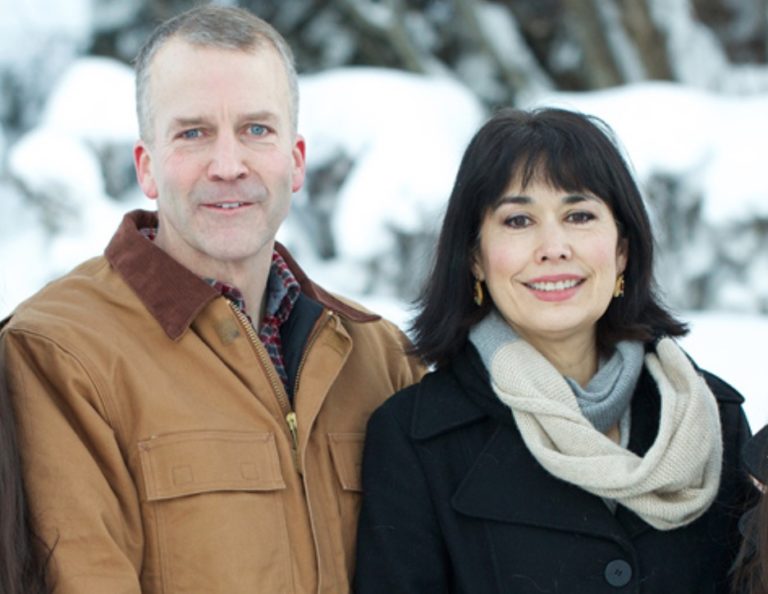
Sen. Sullivan addresses Alaskans in long note about election, riots, future

74

The following letter was received by many Alaskans who wrote or contacted the office of U.S. Sen. Dan Sullivan:

I.  Introduction

I want to thank the thousands of Alaskans who called or wrote in about the presidential election, and on the joint session of Congress to count the Electoral College vote. Regardless of where you stand on the presidential race, your engagement is appreciated. In fact, it is crucial for our democratic system of government. 

I also want to thank the many Alaskans who reached out to make sure my team and I were safe on Wednesday, January 6, 2021, as violence was underway at the U.S. Capitol while we were attempting to undertake our constitutional duty by counting the Electoral College vote. And, I thank the courageous work of our law enforcement officers today, including the Capitol police, some of whom were seriously injured and, tragically, one of whom died. 

The violence that engulfed our Capitol was a disgrace and will go down as one of the sadder and more dispiriting days in our country’s history. But those who chose violence in order to disrupt our constitutional duties did not have the last word. Early on Thursday morning, January 7, Congress fulfilled its role to count the votes of the Electoral College, ensuring that an orderly transition of power—one of the most sacred hallmarks of our great constitutional republic—takes place on January 20, showing the country, and the world, the resiliency of America’s democracy.

Like I have done with all critically important decisions—including votes to acquit President Trump on impeachment charges just 11 months ago—I’ve focused intently on fulfilling my constitutional responsibilities throughout the Electoral College process. I have refrained from talking to the media before I could fully absorb all of the material—particularly the relevant constitutional provisions, historical record, precedents, and input from Alaskans and fellow senators. Similar to the impeachment trial, I have been focused on the impact that our actions in the U.S. Senate would have, not just today, but the precedents that will be set regarding constitutional norms, our institutions, and states’ rights—giving serious consideration to the deep responsibility we have in the Congress to future times.  

Many Alaskans encouraged me to join some of my fellow senators in objecting to certain states’ Electoral College votes, but as I explain more fully below, I believe that by objecting to the votes of the Electoral College, Congress would be dramatically expanding its limited constitutional role in presidential elections by usurping the explicit constitutional power of the states and the people to elect the President. This would set unwise and troubling precedents, especially for Alaska.  

Like many Alaskans, I am deeply concerned that the incoming Biden administration will work to undermine much of the historic progress we have made during the Trump administration that has positively impacted working families, our economy, our military and veterans, access to our lands, Alaska Native communities, and the federal judiciary. But, ultimately, my oath is to the Constitution and the laws of our nation. This includes the Electoral College process and the orderly transfer of power. 

II. The Imperative to Restore Confidence in Our Elections 

It is increasingly clear that tens of millions of Americans, including thousands of Alaskans, question the legitimacy of the outcome of this election and the integrity of the American electoral process. This should trouble all Americans, whether you are a Democrat, Republican, or Independent. These concerns should not be dismissed. The lack of confidence in the integrity of our elections began well before the 2020 elections, as we witnessed many prominent national elected officials questioning the legitimacy of the 2016 presidential election results over the past four years. It is vitally important that Americans have confidence in election integrity. To that end, I, along with a number of my colleagues, introduced on January 6, 2021, one of the first bills of the 117th Congress that calls for the establishment of a 9/11-type commission that will bring transparency to many of the issues and irregularities of the 2020 election with the goal of advancing state-led reforms that will protect and enhance the integrity of our electoral systems. 

III. Objections to the Electoral College Votes Will Not Change the Outcome of the Election

Elections are often contested, and commonly involve all manner of recounts and legal challenges—2020 was no exception. The pandemic, and the unprecedented number of mail-in and absentee ballots cast, made those challenges all the more pronounced. I supported the Trump campaign’s right to request recounts and pursue legal challenges through our courts. In our constitutional system of government, this is how electoral disputes and allegations of fraud are resolved.  

Numerous legal challenges have been heard across the six battleground states, including many before Republican-appointed judges. There were also appeals and reviews by the U.S. Supreme Court and investigations by the Department of Justice, under the leadership of Attorney General Barr. While some instances of election fraud and irregularities have undoubtedly occurred, no Supreme Court justice, state or federal judge, state legislature, or governor found sufficient evidence to overturn their state’s election results. Of the six states to which questions have been raised, five have state legislatures controlled by Republicans and two have Republican governors. Pursuant to their constitutional obligations, each of these states has certified Electoral College slates to be counted by the Congress. No state submitted multiple slates of electoral votes.  

Nevertheless, many are still convinced that widespread fraud took place. They encouraged me to join efforts by some of my Republican Senate colleagues to object to the counting of certain electoral votes. But it needs to be said that such objections would not have resulted in a second term for President Trump. The vote by a Joint Session of Congress on January 6 was never going to produce this result, even though many were misled into believing that this could happen. Even my Senate colleagues who were supporting these efforts acknowledge that, under federal law, it would have required Speaker Pelosi and House Democrats to reject Electoral College votes supporting Joe Biden and to vote to support President Trump instead. This was not going to happen. For that reason, Republican senators seeking to object to the Electoral College vote emphasized that they were taking such actions as a way to “raise the issue of election integrity.” 

As noted above, I am very focused on this issue and am leading legislative efforts in this regard. But an important reason I did not join these efforts by several Republican senators to object to the state-certified electoral votes was that I believed they lacked constitutional legitimacy and could have had profound and negative consequences for Alaska.  

IV. States Through the Electoral College Have the Primary Constitutional Power in Electing the President

Article II of the U.S. Constitution and the 12th Amendment govern how our country elects the President. This is one of the most important pillars of our constitutional order undergirding the peaceful transition of power, which is a cornerstone of our republic. Article II creates the Electoral College and provides that “[e]ach state shall appoint, in such manner as the Legislature thereof may direct, a number of electors, equal to the whole number of Senators and Representatives to which the State may be entitled to in Congress…The person having the greatest Number of [Electoral College] votes for President, shall be the President.” Acting through the Electoral College, the Founders entrusted the states and the people with the power to elect the President, explicitly giving each state the sole authority to hold their own elections and select electors for the Electoral College. Pursuant to Article II, every state has enacted laws governing how this process is conducted, and has robust mechanisms for challenging and reviewing election results through canvasses, recounts, and the courts. 

While Article II and the 12th Amendment commit the power and responsibility for electing the President to the states and the people, these constitutional provisions also make clear that the role of Congress is limited—primarily to count the Electoral College votes in a joint session of Congress. Congress has a larger role only in extraordinary circumstances, such as an electoral vote tie or if a state submits competing slates of Electoral College votes. More specifically, by objecting to state-certified Electoral College votes, members of Congress were not only asserting that Congress has the authority to overturn elections, they were  usurping the explicit constitutional power of the states to choose the President. 

Such a precedent would be unwise and troubling, especially for states like Alaska. It could create a system that would allow the President to ultimately be chosen by whichever political party controls the Congress, overriding the power of the states. It could also eviscerate the role of the Electoral College, which gives Americans in less populous states, like Alaska, a much greater voice in presidential elections. This has been a long-sought goal of progressives from large population states. But the Electoral College is not some antiquated vestige of the past. It is a wise institution created by our Founders that was intended to enhance federalism and individual liberty. Protecting our constitutional order and the explicit constitutional right of states to elect the President requires the Senate to respect the limits placed on our own power. 

From a more Alaska-oriented and partisan perspective, our state has voted for Republican presidential candidates every four years since 1964. Yet, in the past 32 years, successful Republican presidential candidates have won the popular vote only once, relying on the Electoral College for their victories, which Alaska supported, during this time span. This includes President Trump’s 2016 victory. 

The actions by some Senate Republicans to challenge electors in several states endangers this constitutional system, which has benefitted Alaska and enhanced federalism and our individual freedoms for decades.  

V. Conclusion

I was saddened and angered by the violence that engulfed the Capitol on January 6, 2021, and I wish fervently that President Trump had accepted the results of the election, and more forcefully and earlier repudiated the violence on that sad day. 

This past November, a significant majority of Alaskans, myself included, supported President Trump’s reelection. These Alaskans should not be confused with or lumped together with those who perpetrated violence in the historic halls of the U.S. Capitol. Working with Alaskans, the Trump administration helped our state make historic progress on a variety of issues that positively impact working families, our economy, our military and veterans, access to our lands, Alaska Native communities, and the federal judiciary. Although I stand ready to work in a bipartisan manner with President-elect Biden, I am deeply concerned that the incoming administration will work to undermine much of the progress we have achieved in the past few years. 

But, ultimately, my oath is to the Constitution and the laws of our nation. This includes the Electoral College process, and the orderly transfer of power—one of the most sacred elements of our great constitutional republic—which will take place on January 20. For these reasons, I voted on January 6 and 7 against objections to the 2020 state-certified Electoral College vote, which helped to underscore for Alaskans, our fellow Americans, and the rest of the world that American democracy remains resilient and strong. I recognize that thousands of Alaskans did not agree with this decision, but I believe strongly that this was the constitutionally correct action to take as your Senator. 

About a year ago, right before the impeachment trial began, I was at an event in Wasilla where many Alaska veterans were in attendance. One proud veteran approached me with a simple but fervent request: “Senator Sullivan, protect our Constitution.” I believe I did as a result of my votes on impeachment and, although I am sure that some will disagree, I believe that I also did so regarding my Electoral College votes. 

On January 6, 2021, the world witnessed our Capitol under siege. On January 20, our country will swear in the 46th President of the United States. The world will witness the cornerstone of our democracy, a peaceful transfer of power—like there has been in our country for more than 200 years. Our Constitution will remain strong. 

Thank you again for contacting me on this issue. I hope you and your family find yourselves healthy and well during these challenging times. I am confident that Alaska and America will emerge stronger and more resilient as we all work together to fight the COVID-19 pandemic. If you have any more questions or concerns, please feel free to contact me or my staff. My office can be reached at 202-224-3004, or online at www.sullivan.senate.gov.

Sincerely,
 
Dan Sullivan
United States Senator 

Providence Alaska refuses patient visit from her pastor

21

The religious hospital Providence Alaska Medical Center does not allow ministers to visit their parishioners who are in the hospital, a pastor has told Must Read Alaska.

The pastor, of a protestant Christian faith, said the hospital told him that only hospital chaplains and police chaplains are allowed to see patients and that patients’ own ministers are prohibited from visiting them in the hospital. The pastor said the decision was kicked up the chain through four decision makers, until he was finally denied the visit to his parishioner.

A similar case in Maryland was challenged in July by that state’s Office of Civil Rights, which ended up settling with Prince George Hospital in an agreement that forced the hospital to ensure a patient’s right to religious visitation, even during the COVID-19 pandemic.

Judge denies Lance Pruitt a do-over for D-27 election

20

Republican Rep. Lance Pruitt lost in his court challenge of the flawed election in District 27.

Pruitt had claimed that the moving of a polling location and the lack of voter notification by the Division of Elections led to his loss. He was asking the court for a do-over or other remedy.

The Alaska Supreme Court said in a brief statement that Pruitt had not “met the burden” to overturn the election of Liz Snyder, the Democrat who had challenged Pruitt for the second time. But the actual reason the Supreme Court denied the challenge won’t be provided to the public by the justices for as long as two years.

Pruitt’s attorneys said that by not notifying voters of the polling location change, the Division of Elections had disenfranchised them. The State attorneys arguing for the Division said that the COVID-19 pandemic had made elections particularly tricky this past year, and they were doing their best.

Judge sides with Dunleavy on commission appointments, denies injunction

3

A Superior Court judge has refused to give the Legislative Council a preliminary injunction over a series of commission and other executive appointments that the Legislature never confirmed.

The 94 appointments the governor made, including the commissioner of Revenue, had not been approved by the Legislature when it gaveled out in May of 2020.

Technically, those appointments were to expire at the end of the year. But Dunleavy kept them. The lawsuit was to determine if he had the right to keep them, even though the Legislature did not perform its duty of holding confirmation votes.

Judge Pallenberg said that keeping the appointees in place has not caused irreparable harm to the authority of the Legislature, as the Legislative Council had claimed. Nor have any of the appointees committed some egregious act that has harmed the public welfare, and they’re not likely to over the next 11 days, before the Legislature convenes again.

“The injury complained of is an abstract one,” Pallenberg wrote of the Legislative Council’s argument.

“I am also not persuaded that this harm to the Legislature would exceed the harm that would result to the executive branch if the court abruptly removes 94 people from office, nor that the executive branch can be adequately protected against this harm,” Pallenberg wrote. The preliminary injunction was denied, but the case still remains to be decided by the court.

Murkowski says she may have to walk away from Republican Party

Sen. Lisa Murkowski stated today that if President Donald Trump doesn’t resign from office, she is not sure she has a place in the Republican Party.

Murkowski may be finally free to speak her mind, now that Ballot Measure 2 has passed, which many politicos believe make it far easier for her to win reelection. Murkowski might fare well under an open primary system if she registers as an undeclared or nonpartisan. She is up for re-election in 2022.

“I want him out. He has caused enough damage,” Murkowski told a reporter on Friday.

Alaska Republican Party Chairman Glenn Clary said he had not had a chance to discuss the issue with but welcomes the opportunity to do so.

“Lisa will have to do what Lisa thinks is best for her, and voters of Alaska will decide what’s best for them,” he said.

House Speaker Nancy Pelosi might give Murkowski an opportunity to once again vote on impeachment. Pelosi said that next week she may move to impeach Trump for the second time over what she said was his role in inciting a violent attack on the U.S. Congress in the U.S. Capitol.

Several House Republicans may this time support impeachment, which would be a first in history, as no president has been impeached twice, and none has been impeached during his final two weeks of office.

Pelosi told reporters today that she spoke with Gen. Mark Milley, the chairman of the Joint Chiefs of Staff, to discuss taking away the president’s access to the nuclear codes, to prevent him from detonating a bomb.

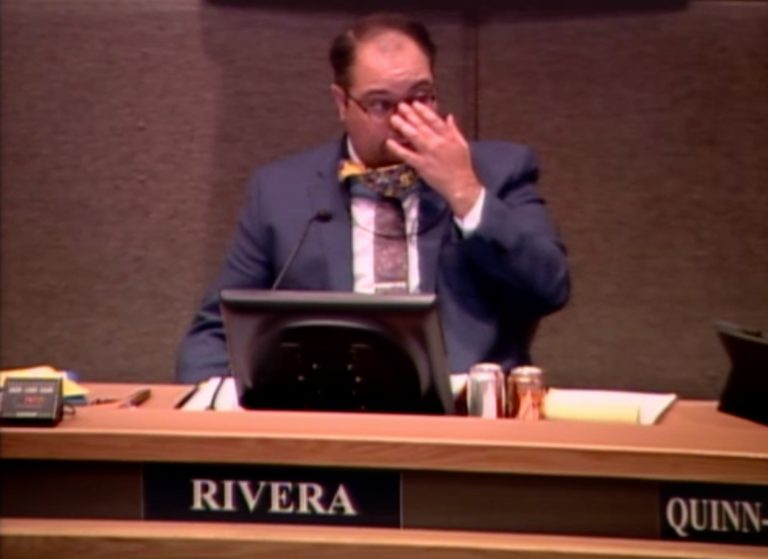
Felix Rivera kicks Jamie Allard off of chairmanship of Assembly Audit Committee

Anchorage Assemblywoman Jamie Allard wanted to do an independent audit of the CARES Act fund disbursement in Anchorage.

The next thing that happened was she was kicked off as chair of the Assembly Audit Committee, as she was coming out with the annual plan for the audit.

Chairman Felix Rivera “deplatformed” Allard from her role as head of audit, because he said he doesn’t like her tone. He replaced her with South Anchorage Assemblywoman Suzanne LaFrance.

Rivera has also censored Allard during Assembly meetings.

Rivera told Allard in an email message that, “I don’t appreciate your tone in replying Mr. Alex Slivka (Chief Fiscal Officer and chief adviser on the Corona Virus Relief Fund. “I believe this committee will be better served by having a more seasoned chair.” Allard is still a regular voting member of the committee.

Allard has question about what happened to the summer workers who worked on the trails, paid for with CARES Act funds, and what the Girdwood Clinic did with the money the Assembly awarded it.

Ronna McDaniel reelected chair of Republican Party

19

At the Republican Party’s winter meeting in Jacksonville, Fla, Ronna McDaniel was reelected chair of the party. She was unopposed. Under normal circumstances, the head of the RNC would be blamed for the loss of the presidential election and two Georgia Senate runoffs. But in this case, there is strong party support for McDaniel.

Many Republicans feel that COVID-19 brought chaos to the elections, and that not enough fraud was proven that it would have changed the outcome.

“Being chair of the Republican National Committee has been an honor of the lifetime, and I’m so honored to be re-elected. We have a lot of work to do heading into 2022 and I’m ready to make sure Republicans up and down the ballot have the resources they need to win!” she wrote.

Co-chair Tommy Hicks was also re-elected.

Representing Alaska at the four-day meeting at Amelia Island was Alaska Republican National Committeewoman Cynthia Henry of Fairbanks and party Finance Chairman Craig Campbell of Anchorage.

One item of discussion at the end of the meeting was the sudden statement by Sen. Lisa Murkowski, who said unless President Donald Trump resigned she doesn’t know if she has a future in the Republican Party.

What I saw at the revolution: ‘A mixture of anger and a lot of love for this country’

78

While the mainstream media and politicians are calling them extremists, rioters, and terrorists, that is not how one Alaskan saw the Save America rally-goers in Washington, D.C., which turned aggressive, ending in the death of one protester and the death of one member of the Capital Police.

Our traveler reported to Must Read Alaska at various times during the Save America protest in Washington, D.C. on Wednesday until the cell service in the District of Columbia was jammed by authorities in mid afternoon.

He takes exception to the media characterizing protesters as extremists, terrorists, or “a mob.” Most were peaceful, he said. Less than one percent were at the aggressive end of the scale.

“They were extremely patriotic,” he said. “They believe in the Constitution and they support the United States of America. We were praying, and thanking each other for coming and standing for the country.”

Our contact flew into Washington, D.C. the day before the rally. That night, he mingled with others who were arriving, and he got oriented to where the rally would be held the next day. He and his friends stood in line for 12 hours to get a close-up view of President Donald Trump, who was scheduled to speak to the rally-goers on Wednesday. The crowd size was over one million, he reported.

When asked if he felt Trump incited a riot, our contact said, “Absolutely not.” About three quarters of the way through Trump’s remarks, over one quarter of the people started walking toward the U.S. Capitol, where most people assumed there would be a peaceful march around the building.

One quarter of a million people was a big crowd converging on the Capitol. Our witness was at the end of a crowd of people over two miles long. The building was barricaded, and there was no way to march around it.

By the time our witness arrived, the barriers around the Capitol had already been broken down by the few at the front who were aggressive. Police had decided to just let people through.

The people behind the ones in front — tens of thousands of protesters — arrived at the Capitol not knowing there had ever been barriers to be broken. They thought the place was open, as police were letting them through. It was a bit of a festival-like atmosphere for a few minutes. Grandmothers, families, men and women, young and old, black, white, Samoan, and Asian filled the steps going up to one of the doors. It looked like a Trump rally. Our witness joined one woman who was praying for the police who were present.

Law enforcement alternated between lax and intense. There would be no evidence of law enforcement, and then all of a sudden tear gas was sprayed into the eyes of the protesters, and concussive blasts would go off, echoing between the buildings.

What our witness saw was mainly peaceful protesters, many who were praying, some on their knees. Others who made it into the Capitol acted with respect, staying within the velvet cords as they made their way.

“There were four kinds of people: People who were confused, not knowing what to do; people who were serious, and who were fervently praying; people who wanted to take part in something; and people who actively wanted to get into the Senate,” he said.

“It was a mixture of anger and a lot of love, love for this country,” our witness said. He is reluctant to give his name because he has seen reports that an FBI dragnet is underway to arrest people who attended the rally.

The scene became more chaotic. Our witness saw one man being carried down a set of stairs unconscious, and with urine-soaked jeans. A grandmother came toward our witness and said she was only there to defend the country for her grandchildren. Her eyes were burning with tear gas.

According to our witness, between 1,500 and 2,000 went into the building, with about 100 getting quite a ways inside.

“I heard yelling and all of a sudden a whole group of people started pushing to get out. They had been pepper sprayed.”

Most of the people were trying to prevent things from getting out of hand, he said.

“They chanted “Respect the house.” They were yelling “Don’t wreck anything, this is our house,” he reported.

“These Trump supporters are patriots and have been spending months and even years doing their own research,” he said. “Everybody was like a brother or sister, and they’ve been doing reporters’ jobs for months. Everybody was expecting to hear our path forward to continue our republic.”

“I did not meet one person at the Trump rally who thinks Democrat politicans are Americans. They’ve been bought by the CCP (Chinese Communist Party). They want to achieve an alternative form of government in the form of socialism.”

As our witness made his way back to Alaska, he was still somewhat stunned and emotionally drained by all he had witnessed. He is worried that the FBI is going to round up grandmothers who attended and charge them as terrorists. He is concerned that President Trump will be charged with sedition. And he is deeply worried about the future of the country under what he and millions others still view as a stolen election.