Thursday, June 4, 2026
Home Blog Page 1088

First big cruise ship in 21 months arrives in Alaska: Serenade of the Seas

The first large cruise ship to dock in Alaska in over 20 months arrived in Ketchikan on Friday, when the Royal Caribbean Serenade of the Seas pulled into port. It was a test run.

The Centers for Disease Control had federal officials onboard, and after a day in Ketchikan the ship turned and returned to Seattle to complete what is known as a “simulated cruise.”

The 2020 cruise season in Alaska was a bust, due to restrictions caused by the Covid-19 pandemic. Most of Southeast Alaska’s economy has suffered immense harm because of the lack of visitors. Prior to 2020, Alaska had over 1 million cruise passengers a season, dropping to zero passengers in 2020.

Still in effect are Canadian government restrictions, which required congressional action to overcome. On May 20, Congress approved a bill to waive the requirements of Alaska-destined cruise ships to make port calls in Canada, and President Joe Biden signed the waiver.

Politicians, such as Sen. Lisa Murkowski, and civic leaders were on hand to greet the ship in Ketchikan. The Serenade had only about 300 people onboard — all volunteer passengers — and was essentially operating to show the CDC that it had good Covid-19 protocols in place.

Royal Caribbean released health protocols for Serenade cruises on July 1, which include wearing face masks in the public areas of the ship, and social distancing rules onboard.

Among activities that were monitored by the CDC:

  • embarkation and disembarkation procedures, including terminal check-in
  • on board activities, including at dining and entertainment venues
  • evacuation procedures
  • transfer of symptomatic passengers or crew, or those who test positive for SARSCoV-2, from cabins to isolation rooms
  • quarantine of all remaining passengers and non-essential crew
  • other activities listed in CDC technical instructions and orders

Serenade is one of two Royal Caribbean cruise ships scheduled to sail to Alaska this year. Ovation of the Seas is scheduled to begin Aug. 13 for an abbreviated season.

Serenade will sail 7-night cruises, with stops in popular ports of call, including Juneau, Sitka, Ketchikan and Icy Strait Point, Alaska, Endicott Arm fjord, and Dawes Glacier of Glacier Bay, but not Skagway.

Attending a formal event on the dock to welcome the ship were Lt. Gov. Kevin Meyer, Mayor Bob Sivertson and Rodney Dial from the City and Borough of Ketchikan, and chamber of commerce representatives.
District 30 Republicans endorse Tshibaka

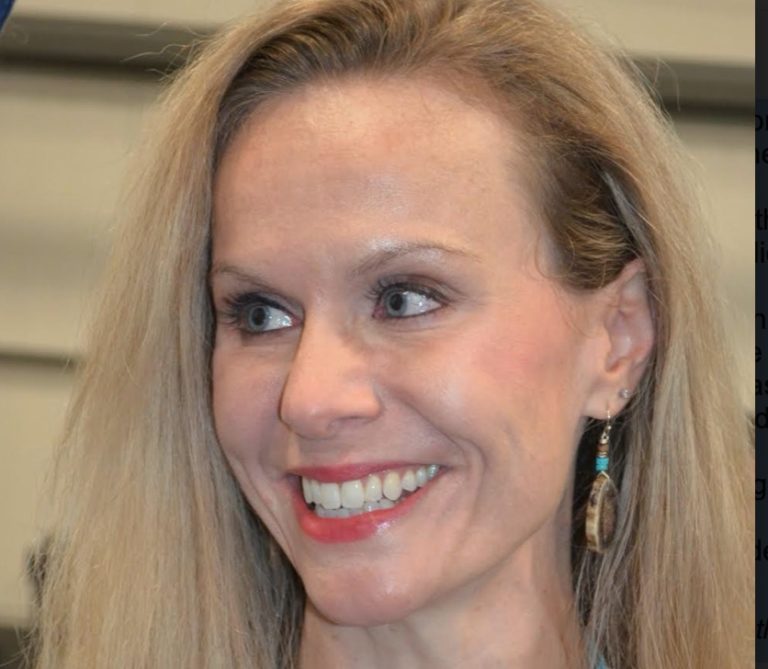
Kenai District 30 Republicans joined several other districts in endorsing candidate Kelly Tshibaka for U.S. Senate.

The district polled every district officer and the vote was unanimous. It brings the number of Republican district organizations to nine that have chosen Tshibaka over incumbent Republican Lisa Murkowski.

The other districts are: 8, 12, 13, 14, 15, 21, 23, and 29. 

District 30 is one of the strongest, most organized districts in the state, with a full slate of officers and leadership in every precinct position filled. It is represented by state House Rep. Ron Gillham and state Sen. Peter Micciche.

Also endorsing Tshibaka are both Kenai Republican women’s clubs, both Mat-Su Valley Republican women’s clubs, and the Anchorage Republican Women’s Club. Bikers for Trump, and former President Donald Trump himself have endorsed Tshibaka, who was raised in Anchorage.

The Alaska Republican Party has organizations in 37 of the 40 districts in the state, which are organized around state House seats. The Republicans will meet at their State Central Committee in Fairbanks on Saturday, when it’s expected at least two voting entities — women’s clubs or districts — will request an endorsement from the party for Tshibaka.

Woman who wore Trump mask on jet starts website to ‘expose Alaska Airlines’

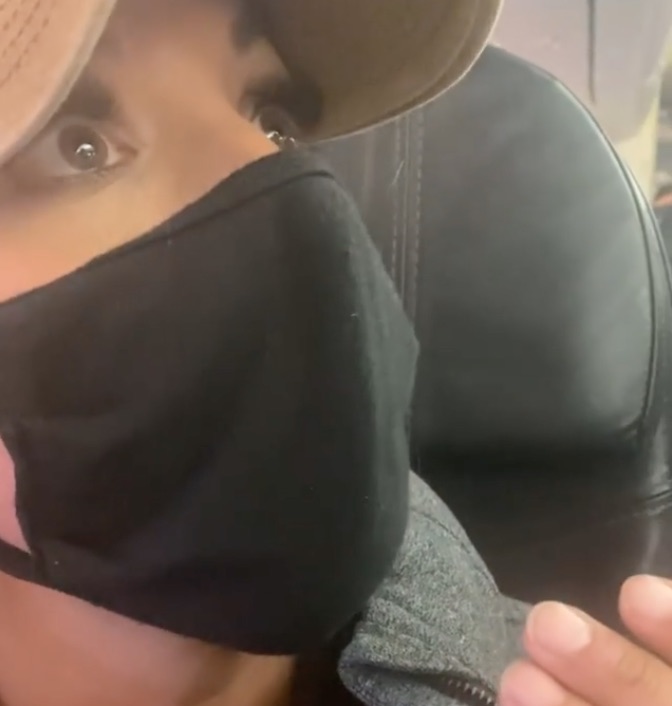
Sara Gamache, who was kicked of an Alaska Airlines jet on June 24 because of her Trump mask, has started a website to gather more stories from others who believe they have been discriminated against by the airlines.

On ExposeAlaskaAirlines.com, Gamache tells her story in full, with greater detail than the Must Read Alaska story posted last week, and her husband also tells the story from his perspective. On social media, she Sara she is hoping to start a class action lawsuit.

Read: Woman says she was removed from Alaska Airlines jet for her Trump mask

Caleb Gamache wrote: “My wife posed no risk to the passengers or crew at any time and complied quickly with every request from the flight attendants. Any delays to the flight were caused by the overzealous flight attendant who seemed to take personal offense to the political statement on Sara’s mask. I view this as an egregious affront to both my wife’s 1st Amendment Rights and corporate sponsored intolerance to people of different beliefs. I truly believe that if the political statement present on my wife’s mask matched the corporate culture of Alaska Airlines then there would have been no interference from the cabin crew. Further, it is patently irresponsible for the cabin crew to demand my removal from the flight. I was in compliance with all FAA, CDC and Alaska Airlines policies and presented no definable threat or concern to the safe operation of the aircraft. To me, my removal from the flight was simply another punishment doled out to ensure that a singular political optic was adhered to by the current passengers of the flight and as a warning to future passengers that may choose to fly with this airline. At no point should either of us been removed from the flight and I hope that Alaska will choose to educate their employees on tolerance and understanding of those who hold different beliefs than them.”

Alaska Airlines has not responded to a request from Must Read Alaska for their perspective on the incident.

Sen. Rand Paul vows to introduce bill to repeal airline mask mandate

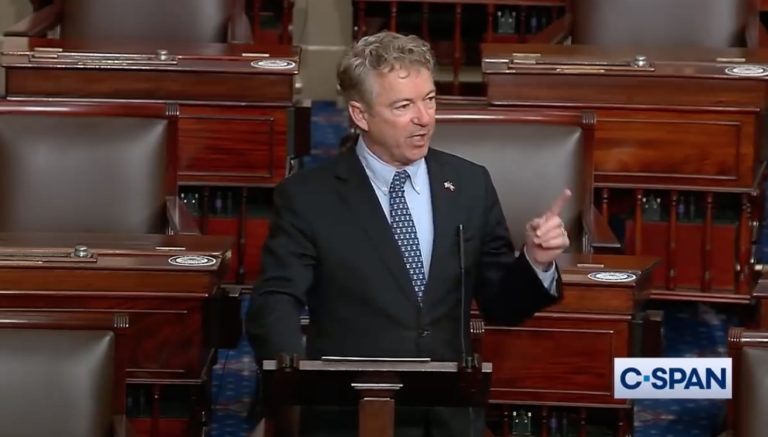
On Twitter Thursday, Sen. Rand Paul of vowed to introduce legislation to remove the mask mandate now in effect for airlines.

“When the Senate returns to session, I will be introducing an immediate repeal of the mask mandate on planes,” Paul wrote. “Enough! Time to stop this farce and let people travel in peace!”

Paul,  a Republican and the junior United States Senator from Kentucky since 2011, is a physician who has been a critic of the Biden mask mandates contained in the transportation executive order signed by the president on his first day in office.

The Senate returns to session on July 12.

Interior Secretary sets up a woke task force with equity lens on Black Lives Matter riots, law enforcement’s role last summer

In response to the last summer’s fiery, sometimes violent, and destructive Black Lives Matters protests at the nation’s Capitol, Interior Secretary Deb Haaland is creating a task force to look at policing policies in the Interior Department’s law enforcement agencies and whether they handled the situation properly.

Haaland’s memo outlining the task force said the focus will be on building strength the trust in the Interior Department’s law enforcement subsections, including in the National Park Service, the Fish and Wildlife Service, the Bureau of Reclamation, the Bureau of Land Management, and the Bureau of Indian Affairs. 

Haaland referenced a report from the Office of Inspector General, entitled “Review of U.S. Park Police Actions at Lafayette Park,” which detailed the actions the U.S. Park Police used to disperse protestors in and around Lafayette Park in Washington, DC, during the unrest that went three weeks from May 28 to June 23, 2020. Secret Service agents suffered broken bones due to rocks and bottles of urine and alcohol thrown at them by the rioters.

The task force will use what Haaland calls an “equity lens” and “evidence-based decision making,” to look for ways to improve the agency’s law enforcement program and build trust with minority communities.

“This task force will focus on ways to (1) strengthen trust in our law enforcement programs; (2) ensure appropriate policy and oversight is implemented; and (3) ensure supportive resources are available for officer mental health, wellness, and safety,” she said.

“The task force shall also involve experts from the Office of Diversity, Inclusion and Civil Rights and from the Office of Human Capital, at a minimum, and will request engagement from other entities in the Department as needed,” Haaland wrote.

“I am confident that this Department-wide approach will identify meaningful solutions to assist law enforcement and communities in strengthening trust and collaboration, while ushering the Nation into the next phase of community-focused law enforcement,” she wrote. (Emphasis ours)

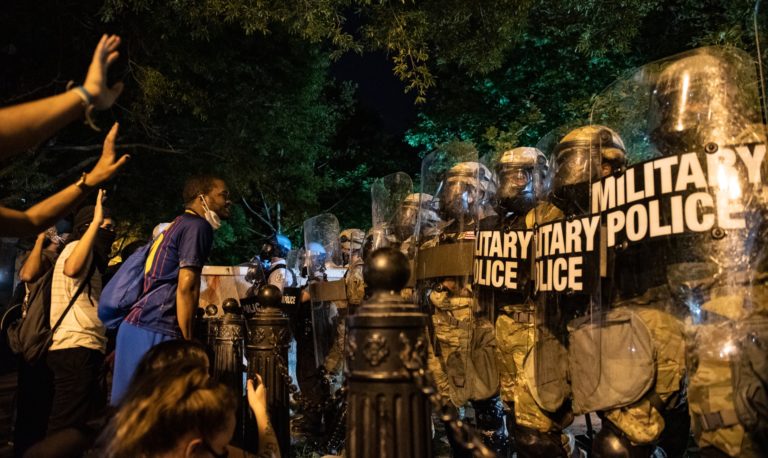
The protests in Lafayette Park were sparked by the killing of George Floyd in Minneapolis and were part of nationwide rioting and looting, but the D.C. protest was aimed largely at President Donald Trump during an election year, and police used flash bangs, tear gas, and shields to safely clear the Black Lives Matter protesters from the area.

Black Lives Matter sued the Trump Administration, but last month a federal judge ruled Black Lives Matter can’t claim damages over the removal of their protesters from Lafayette Square.

U.S. District Judge Dabney Friedrich dismissed claims that Trump, former Attorney General Bill Barr, and former Defense Secretary Mark Esper had coordinated a conspiracy directed at black protesters.

“Merely alleging that the defendant officials communicated, without alleging any details of those communications that suggest an unlawful agreement, cannot justify inferring the requisite agreement” Friedrich wrote.

Now, the Interior Department will take its own shot at the Trump Administration over the clearing of the Lafayette Park riot, which Trump opponents say was done so that Trump could walk to a nearby church for a media appearance.

Trump’s appearance at the historic St. John’s Episcopal Church on Lafayette Square across from the White House, which had been set on fire by rioters, enraged Trump opponents, who said it was Trump showing false piety and that he is a white supremacist. Trump went to the church as a symbol to the nation that he would restore order in the Capital and not allow the destruction of historic property and monuments.

The protesters came so close to the White House on May 30, 2020 and were so volatile that the Secret Service ushered Trump into a basement bunker designed to protect the president from a terrorist attack, as protesters threw rocks and tried to break through police barricades.

Protesters crossed temporary barricades set up near the Treasury Department buildings and entered President’s Park, next to the White House.

Rosa Pineda photo from Wikipedia.

Homer couple raided by FBI finds travel harder on the ‘special’ list with TSA

A Homer, Alaska couple, whose home was raided in April by federal agents who said they were looking for House Speaker Nancy Pelosi’s laptop, have found they’ve been placed on a special security screening list by the Transportation Security Administration.

Their recent experiences traveling have left them feeling like their government is treating them like domestic terrorists.

Read: FBI breaks into Homer home, looking for Nancy Pelosi’s laptop

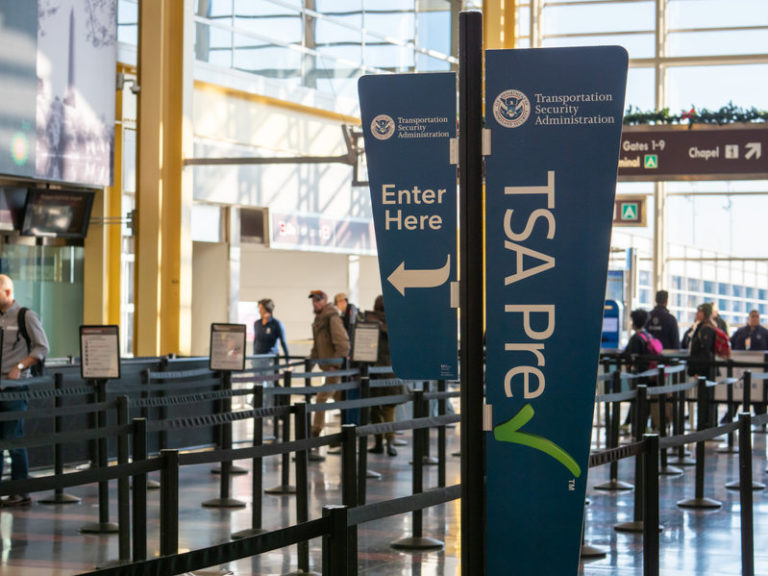
When Paul Hueper drove from Homer to Anchorage and returned to Homer on Ravn Air two weeks ago, he was pulled aside by airline personnel. His ticket had an SSSS designation, which means he’d been selected for secondary screening.

“They held me at the check-in for 45 minutes while they were conversing with TSA,” Hueper said. He was finally able to catch his flight home.

Last week, when he and his wife Marilyn tried to board a flight in Anchorage for Seattle and San Francisco, on their way to a memorial service in Sonoma, they were pulled aside for such extensive screening that they missed their flight. And then they missed their next flight out of Seattle.

“They went through every piece of clothing, every piece of paper, swabbed everything,” Paul said, of TSA at Ted Stevens Anchorage International Airport. After going through the full-body scanner, the couple were physically patted down.

Missing their first flight, they booked the next one available. When they arrived at the gate to board, TSA was waiting for them again, and went through all of their belongings once more.

The couple arrived in Seattle, but then missed their flight out of Seattle due to their Anchorage experience and also because they were turned away at the gate and forced to submit to TSA baggage and personal searches again, and yet again at the gate.

Everything in their bags touched once again by TSA, everything swabbed for traces of explosives, full-body pat-downs. Again, TSA was waiting for them at the jetway and went through all their possessions one last time.

For their flight home on July 5, after all the pat downs, scans, and checks, there was even a last surprise mobile TSA checkpoint placed halfway down the jetway to their plane in order to intercept them again to swab their carryons and for agents to interrogate them.

The Huepers realize they’ve been singled out because they went to Washington, D.C. on Jan. 6, and, as far as the way the government is treating them, the Huepers think they’ve landed on some kind of domestic terrorist list.

The Huepers have concluded that any trip they take will need to have four hours built into it ahead of any flight or connecting flight, and they’ll need to ask the airlines for help to get them on their flights since they have been  turned back whenever they try to board.

The drop into their Orwellian experiences started in late April, when 12 agents — FBI, Capitol Police, ATF, and even local law enforcement — broke down the door of the Huepers’ home. They held the Huepers at gunpoint and accused Marilyn of having stolen Pelosi’s laptop during the Jan. 6 protests inside the U.S. Capitol. They did not produce a search warrant until after they had searched the whole house and kept the Huepers and their houseguests in handcuffs for hours, not allowing them to even use the bathroom.

Marilyn says she never went inside the Capitol on Jan. 6, although Paul posted on Facebook photos of her on the steps of the Capitol. The couple had gone to D.C. to hear former President Donald Trump speak, along with tens of thousands of other Americans who attended that day. Some went into the Capitol and created dangerous conditions. One woman inside the Capitol was shot by Capitol Police or other unknown police officer.

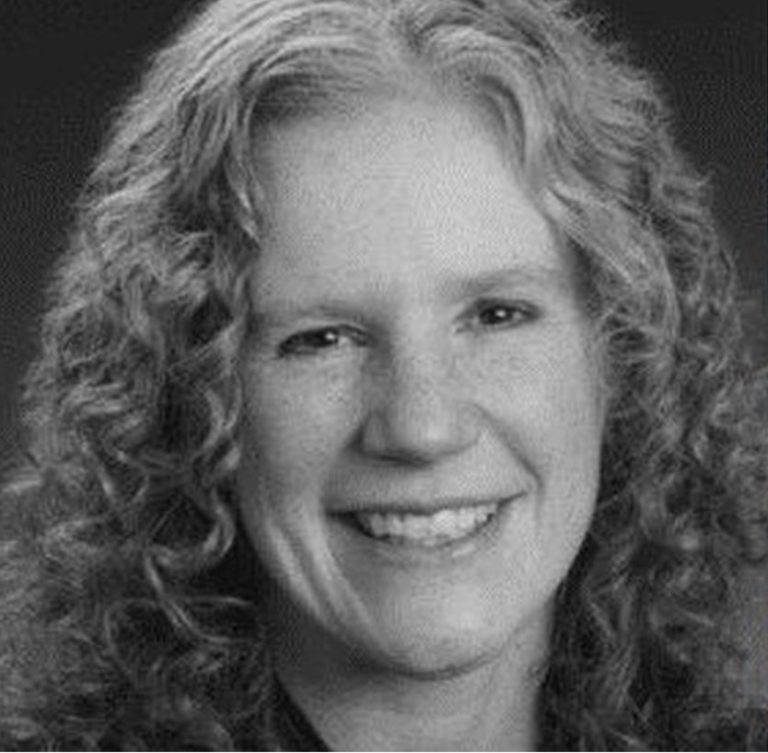
A photo circulated by the Capitol Police and FBI led law enforcement to single out Marilyn as the person who had stolen the laptop from Pelosi’s office. The comparison between Marilyn, below left, and the unidentified woman sought by federal agents, right, shows numerous differences.

During the federal raid in April, the couple’s door was damaged and never repaired by the government, which took her and Paul’s laptops, the couple’s cell phones, and a copy of the U.S. Constitution.

That Pelosi laptop has never been found, but after weeks, the Huepers’ laptops were returned to them, although their laptops were compromised and unusable due to being bitlocked by the FBI.

That led to Rep. Jim Jordan interrogating FBI Director Christopher Wray in June about why the FBI had taken the pocket copy of the U.S. Constitution during the raid of the Huepers’ home. Wray dodged the question and said he could not talk about an active investigation.

Read: Rep. Jim Jordan asks FBI director why the agents took the Huepers’ copy of the Constitution

Michael Hanifen: Covid reveals broader health disparities that put Alaskans at risk

Dr. MICHAEL HANIFEN

Despite the promising recent news that those who want the vaccine can get one, Alaska has been seeing a troubling trend. There has been a considerable surge of new cases of the virus in Interior Alaska, leaving healthcare workers concerned for public health more widely in the area.   

Unfortunately, this news reflects a broader trend of health disparities that have torn through Alaska for years. With such a large rural population, many people across our state lack consistent, reliable access to high-quality healthcare, putting many in danger of having serious health problems with nowhere to turn.

In rural areas with less reliable access to internet services, even telehealth isn’t always a viable option. A report released last year by the Centers for Disease Control and Prevention found that one in five American Indians or Alaska Natives were in “fair or poor health,” considerably more than the 12.1 percent average for U.S. adults more broadly.    

Furthermore, data from the Indian Health Service, which is operated by the U.S. Department of Health and Human Services, reveals American Indians and Alaska Natives have a life expectancy of 5.5 years lower than the average for the U.S. population. They also have higher rates of various health conditions including heart disease, diabetes, liver disease, and more.    

Add in the pandemic, and the problems only grow. According to a CDC report issued last summer, American Indians and Alaska Natives had an incidence of confirmed Covid-19 cases 3.5 times higher than other Americans. These communities were also at higher risk for serious health problems due to the coronavirus pandemic, amplifying the broader inconsistencies at work that must be addressed.   

Finally, reining in these health concerns will be a daunting task that requires action from more than just state or federal governments. Thankfully, many companies and nonprofits are stepping up to tackle the issues of both rural health among Native American Indian and Alaska Native populations.    

For example, the Department of Veterans Affairs recently partnered with Veterans of Foreign Wars, the American Legion, and Philips North America to create a program called Accessing Telehealth through Local Area Stations (ATLAS). This program helps to bring telehealth options directly to veterans – many of whom live in rural parts of Alaska and other states – directly at their closest VFW or American Legion posts. That way, they don’t have to worry about being unable to use home telehealth options and can avoid extensive travel.   

In another public-private partnership that saw a high level of success, the IHS partnered with Philips and eHealth Initiative to create a series of webinars on Native Americans’ health during the pandemic. Now, Philips is also partnering with the Health Equity, Action & Leadership Initiative, which provides fellows who spend two years working and learning from hospitals in Native American communities.   

The inconsistencies that pervade the American healthcare system will not be dispatched overnight, and the success of efforts to bring them to an end will depend on support from local and federal lawmakers.

Our lawmakers should be doing what they can to expand public-private partnerships like those that (ATLAS)  is spearheading. Given that these issues affect Alaskans poignantly and uniquely, I encourage Senators Lisa Murkowski and Dan Sullivan and Congressman Don Young to help support both public and private projects to create and sustain a more equitable consistent health system for all Alaskans. 

Dr. Michael Hanifen is owner and president of North Star Chiropractic Wellness Center, LLC. 

Dunleavy appoints Jennifer Henderson to Alaska Supreme Court

Gov. Mike Dunleavy today announced the appointment of Jennifer Stuart Henderson to the Alaska Supreme Court. Judge Henderson was selected from a group of individuals nominated by the Alaska Judicial Council to fill the seat of retiring Chief Justice Joel Bolger.

Judge Henderson has been an Alaska resident for 18 years, and has practiced law for 18 years. She graduated from Yale Law School in 2001 and is currently a superior court judge in Anchorage.

Earlier, the governor had written to the Alaska Judicial Council and asked if they had any other names than the three they had sent. And he remarked that they had ignored a rural applicant from Kotzebue, Judge Paul Roetman. Although the governor did not include any reference to that letter to the council, it appears that he was unable to persuade the majority of the members to provide him with other names.

In Alaska, the governor must choose a justice from a list provided by the Judicial Council, which is largely controlled by the Alaska Bar Association.

Read: Dunleavy pans names provided for Supreme Court pick

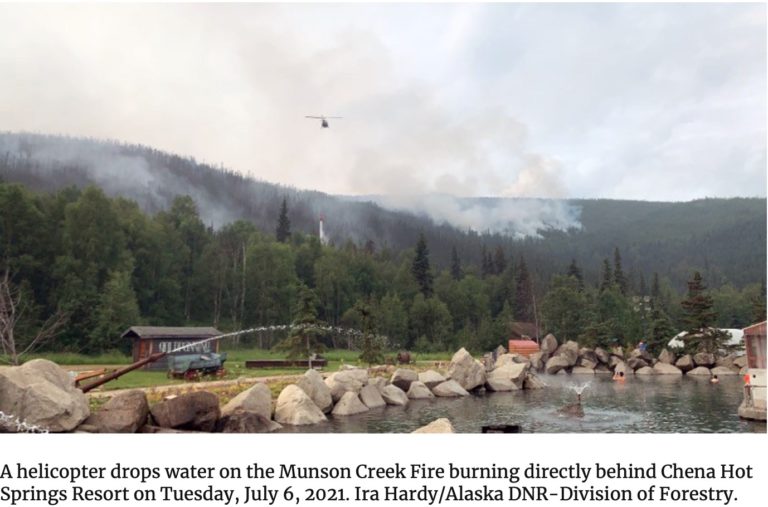
Firefighters get help from cooler temperatures, light rain near Chena

0

Wildfire crews reported quiet fire behavior due to light rain, high humidity, and cooler temperatures in the Munson Fire near Chena Hot Springs Road and the Chena Hot Spring Resort.

Crews have cleared brush and installed sprinklers on cabins between mileposts 42 and 48. By Tuesday evening, protection had been completed on 72 cabins on the south side of Chena Hot Springs Road, which is closest to the fire, between miles 48 and 56.

No structures at the resort or along Chena Hot Springs Road have been lost, and Chena Hot Springs Resort remains open. Nearly 200 firefighters and overhead personnel are assigned to the fire.

Crews had completed a fire line south of the resort and were spraying water on it to slow the fire but had to be pulled back for safety concerns.

Firefighters wet down buildings around the resort and cabins closest to the fire with pumps, hoses and sprinklers that have been set up during the past week in anticipation of the fire reaching the resort.

Starting yesterday and continuing today, firefighters are able to “go direct” on the burning edge of the fire to stop the slow, creeping movement down the hill directly behind Chena Hot Springs. They have wrapped up point protection on four cabins along the Middle Fork of the Chena River, the Division of Forestry wrote.

Read: Fire rages near Chena Hot Springs Resort, but owner says he’s ready