Wednesday, April 29, 2026
Home Blog Page 1084

Alaska oil prices edge over $75

14

Alaska North Slope crude popped up over $75 a barrel last week, a price not seen since October, 2014, when prices were coming down from more than $100 a barrel that year. The most recent reported price is $75.88.

$75.88 is more than a 42 percent increase over what the State’s Department of Revenue had predicted in its spring forecast, which said the average price would be about $53.05 per barrel for the fiscal year ending on June 30. It’s also more bullish than what was predicted by Goldman Sachs in February, when it said Brent crude would rise to $75 a barrel in the third quarter. That prediction was well above what other analysts were saying over the winter.

Brent crude also closed above $75 and West Texas Intermediate closed at $73.08 on Friday.

Inventories of oil are down in the Lower 48, at the same time demand is surging. U.S. commercial crude oil inventories (excluding those in the Strategic Petroleum Reserve) decreased by 7.6 million barrels from the previous week, the Energy Information Administration reported for the week of June 18.

Futures traders are banking on prices surging soon, with dropping inventories and Americans traveling again.

Rare is the summer day when the State of Alaska reports as much as 500,000 barrels of Alaska North Slope crude flowing through the Trans Alaska Pipeline. Oil flow has averaged 477,426 barrels per day this month, while last June it averaged 393,387 barrels per day, and in June of 2019, it averaged 480,225 barrels per day.

Alaska Life Hack: Alaska Airlines will boost flights to NYC, but won’t fly there from LAX

3

Alaska Airlines is reorganizing its routes to better compete. The company will be offering 25 daily nonstop flights from West Coast cities to New York’s JFK, (12 flights) and Newark (13 fights.)

But those flights will not leave from Los Angeles International Airport. Instead, Alaska Airlines will exit the Los Angeles-JFK market and move those flights to other West Coast hubs. Starting Oct. 6, it will have 12 peak daily nonstops to JFK, using all of its allocated arrival and departure slots:

  • Seattle-JFK, 4 daily nonstops
  • San Francisco—JFK, 4 daily nonstops
  • Portland-JFK, 2 daily nonstops
  • San Diego-JFK, 2 daily nonstops
  • Seattle—Newark, 4 daily nonstops
  • Los Angeles-Newark, 4 daily nonstops
  • San Francisco-Newark, 3 daily nonstops
  • Portland-Newark, 1 daily nonstop
  • San Diego-Newark, 1 daily nonstop

The route between LAX and JFK is one of the most competitive in the country, with American, Delta, JetBlue, and United all serving that itinerary with flat beds. It’s a market that Alaska wasn’t competing in as well as it had hoped.

For those passengers with tickets for after that Oct. 6, the airline will be contacting them to help with new arrangements.

Former Alaska U.S. Sen. Mike Gravel passes

8

Former Alaska U.S. Sen. Mike Gravel died on Saturday at the age of 91, in Seaside, Calif. The cause of his death was myeloma.

A Democrat most of his life, he was Alaska’s senator from 1969 to 1981. He ran for president twice, in 2008 and 2020.

He was best known on the national scene for opposing the Vietnam War, trying to end the military draft, and reading the Pentagon Papers into the Congressional Record in 1971. Officially known as the Report of the Office of the Secretary of Defense Vietnam Task Force, the Pentagon Papers were stolen from the Defense Department by Daniel Ellsberg, who worked on the project for the Rand Corporation. The papers showed that the Johnson Administration had systematically lied to the public and Congress about the Vietnam War. The papers, once read into the Congressional Record, became fair game for newspapers to report.

Gravel was born and raised in Springfield, Mass. and moved to Alaska before statehood in the 1950s. He was looking for a “far-away place” where he could get a political start without having to have social or political connections, as he would have had to have in Massachusetts. He worked on the Alaska Railroad as a brakeman. He rose through the ranks of the Alaska Democratic Party, which was the dominant party in Alaska at the time. By 1957 he was a division chairman for Anchorage for the Democratic Central Committee and the next year he was president of the Alaska Young Democrats.

Soon after arriving in Alaska, he sold real estate and became a real estate developer, ran for the Alaska House of Representatives in 1962, and served in the House from 1963 until 1967. He served as Speaker of the House.

Gravel, whose full name was Maurice Robert Gravel, challenged Sen. Ernest Gruening in 1968 and beat him in the primary, and then went on to beat Elmer Rasmuson, banker and former mayor of Anchorage, in the general election. He played an important role in getting Congress to approve the Trans-Alaska Pipeline System in 1973.

He unsuccessfully ran for vice president in 1972, was reelected for his final term in the Senate in 1974, and then was defeated in the primary by Clark Gruening, who was defeated in the general election by U.S. Sen. Frank Murkowski, a Republican, in 1980.

After his unsuccessful bid for the presidency as a Democrat in 2008, Gravel registered as a Libertarian, but failed to get the nomination.

In 2019, he briefly launched a bid for president again. He gained the following of youthful Democratic Party radicals and idealists, who employed novel social media tactics to gain attention for the aging candidate. Some of his close associates founded the Gravel Institute to continue his work in pushing the concept of direct democracy, as an alternative to representative democracy.

He also was an advocate for legalization of marijuana and was for a time president of a marijuana startup called KUSH, which made cannabis-infused products.

Read: Mike Gravel, former Alaska senator, exploring run for president at 88

An exhaustive biography of his life can be found at Wikipedia.

Dimitri Lanahan, pointed paintball gun at police, was on the lam from halfway house

The 23-year-old man shot dead by Alaska State Troopers on Friday was on the lam from the Cordova Center in Anchorage and a warrant had been issued for his arrest in April. He had a short but troubled life, much of it spent incarcerated.

Troopers saw a silver Jeep weaving recklessly through Gold Rush Estates Trailer Park in Fairbanks at about 2:40 am. The Jeep nearly hit a marked Trooper vehicle, forcing the Trooper to take evasive action. A chase ensued and the Jeep driver led the Trooper to a wooded area between the Fairbanks Airport and the Tanana River flood dike, where Dimitri Lanahan exited the Jeep and pointed what appeared to be an assault rifle at the Trooper.

A Trooper shot Lanahan, who was declared dead at the scene.

The rifle used by Lanahan turned out to be a replica, a paintball gun designed to look like a real rifle. The Jeep and the license plates turned out to have been stolen in Anchorage.

Lanahan is from Kodiak, where he attended junior high school; he spent time as an inmate at the McLaughlin Youth Center in Anchorage. He had most recently been convicted of Assault III, Criminal Mischief, Violating Conditions of Release, and False Information. 

The Alaska Bureau of Investigation is conducting an investigation into the incident; once complete, their investigation will then be reviewed by the Alaska Office of Special Prosecutions. The name of the trooper who shot Lanahan will be released after 72 hours per department policy.

Alaska Lemonade Day — it’s a thing in the 49th State

5

Who knew? Alaska has an Alaska Lemonade Day, as demonstrated by Macie Miller, one busy entrepreneur today in Wasilla. Miller is selling the favorite summertime refreshment at Wasilla Lake and keeping alive a long tradition of young entrepreneurs.

As part of a program of the Alaska Small Business Development Center, and in partnership with the UAA Business Enterprise Institute, Lemonade Day Alaska is an annual Alaskan experiential event that teaches K-12 children how to plan and launch their own business through a tried and true method: A lemonade stand.

Since 2011, more than 18,000 kids in over 70 Alaska communities have sold over $5 million worth of lemonade, the program reports. National Lemonade Day comes later in August in hotter parts of the country, but for Alaska, mid-summer is a winning time.

For more information about lemonade stands across the state today, visit lemonadeday.org/alaska.

Support young business leaders by patronizing their lemonade stands, wherever fine lemonade is sold.

Ted Cruz, Susan Collins, and other senators file bill to end mask mandates on airlines

21

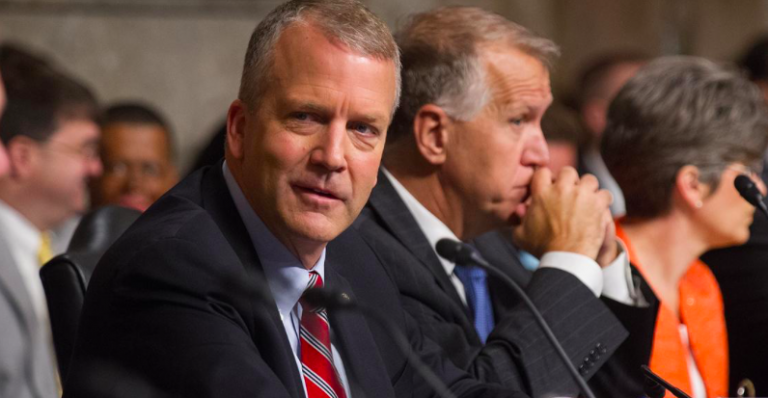
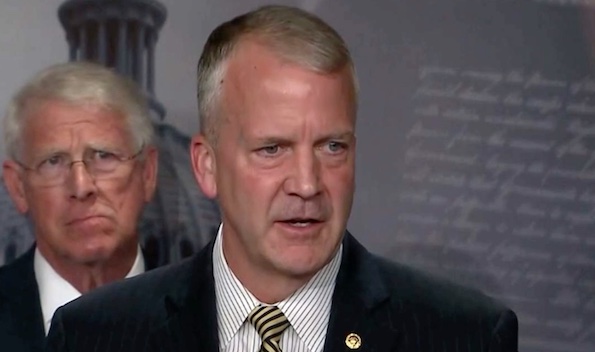
U.S. Sens. Ted Cruz (R-Texas), Susan Collins (R-Maine), Jerry Moran (R-Kan.), Roger Wicker (R-Miss.), Cynthia Lummis (R-Wyo.), and Marsha Blackburn (R-Tenn.) introduced a Senate resolution this week calling on the Biden Administration’s Centers for Disease Control and Prevention to end its mask mandate for fully vaccinated individuals on public transportation throughout the United States-including at airports, on commercial airplanes, on buses, and rail systems.

“Over 150 million people in the United States are fully vaccinated and mask mandates have been lifted across the country. But the CDC inexplicably still hasn’t lifted the mask mandate for public transportation. It’s long past time for President Biden and the CDC to follow the science and end this mask mandate for fully vaccinated individuals. Americans should be able to travel to celebrate Independence Day with their friends and loved ones without having to follow an outdated and unnecessary mandate,” Cruz said.

“The CDC recently released recommendations significantly curtailing mask requirements both in indoor and outdoor settings. It makes no sense that someone can go to a restaurant without wearing a mask, but they cannot fly on an airplane without one even though it has a far better ventilation system,” Collins said.

Transportation Safety Administration mask mandates have led to numerous incidents on flights, where cabin crews have had to deal with passengers who won’t comply. Flight attendants have even experienced violence, and now the TSA is starting a its self-defense training course for flight crews. 

Sen. Collins said that she had recently spoken with two flight attendants about the mask mandate for air travel and said one of them was frightened about what would happen if she tries to enforce the mandate.

Sen. Moran said: “Vaccination rates in the U.S. have helped end this pandemic and return our lives to normal. Requiring vaccinated passengers on trains and airplanes to continue wearing masks doesn’t follow the science, and the CDC and TSA should update their guidance to reflect their own findings and help us safely return travel to normal.”

Last Monday, a frequent flier filed a lawsuit against seven airlines: Southwest, Alaska, Allegiant, Delta, Frontier, JetBlue, and Spirit. Lucas Wall accused the airlines of discriminating against travelers who can’t wear masks because of medical conditions, including his own anxiety disorder. Wall was prevented from boarding a Southwest Airlines flight leaving Orlando. Wall is also suing President Joe Biden, the Centers for Disease Control and Prevention, TSA, and the Department of Homeland Security.

Sen. Blackburn said that President Joe Biden has lectured people to “follow the science.” She said, “It’s clear that this rhetoric was just another way for the radical left and big government to control Americans. Experts have been clear for months – if you are vaccinated you do not need to wear a mask. It’s time we end these absurd political charades and start following the science.”

Sen. Lummis said that Americans are going back to normal. “Wyoming and most other states lifted their mask mandate months ago. Vaccination rates are increasing and COVID cases are decreasing. The only place most Americans are wearing masks now is in airports and on airplanes. Secretary Buttigieg even said that the mandate is not actually about the science, but instead about ‘respect.’ If there’s no science backing it up, it’s time for the mandate to go.”

Read the full text of the resolution here.

Read Unfriendly skies: Airlines’ poor hospitality is reaching the breaking point

Unanimous: District 12 Republicans endorse Tshibaka for Senate, along with second Mat-Su women’s club

5

Alaska Republican Party District 12 has endorsed Kelly Tshibaka for U.S. Senate. The vote was taken Thursday night and was unanimous, according to people who attended the district meeting. District 12 encompasses Chugiak, Eklutna, Peters Creek, Butte, and Fairview areas of the Mat-Su Valley.

Also endorsing Tshibaka this past week was the Mat-Su Valley Republican Women’s Club; it was also an unanimous vote from the entire club, which is the oldest Republican Women’s Club in Alaska, established in 1947.

As candidate Tshibaka makes appearances around the state, she has also won endorsements from both Kenai Republican women’s clubs, the Anchorage Republican Women’s Club, both Mat-Su Valley Republican women’s clubs, and the District 21 Republicans in Anchorage.

Read: Kelly Tshibaka wins endorsement from Valley Republican Women’s Club

The Alaska Republican Party at the State Central Committee quarterly meeting in March voted to censure Sen. Lisa Murkowski and vowed to find a replacement for her as its preferred choice for U.S. Senate. Murkowski has held the seat since 2002. Tshibaka announced her intent to run for the seat on March 29.

Read: Who has Trump endorsed besides Tshibaka? He’s endorsing party chairs around the country

Dan Fagan: When it comes to the PFD, they fixed what wasn’t broken

By DAN FAGAN

If Legislators followed the law and paid the 2021 Permanent Fund dividend based on the statutory formula that is on the books, each available Alaskan would likely get $3,687 this fall. That’s based on the money in the Earnings Reserve Account on June 21.

Traditionally, the check amount is calculated at the end of the fiscal year on June 30, so the $3,687 figure is not that far off from what this year’s statutory formula will end up being.  

This is all moot, since former Gov. Bill Walker changed things by ignoring the statutory formula used for decades and instead allowed legislators to determine how the money in the earnings reserve account is spent. 

And since Republicans-in-name-only and Democrats outnumber conservatives in the Legislature, when it comes to how to spend money from the Permanent Fund Earnings Reserve Account, the people are thrown left over scraps. 

Mike Dunleavy, elected to undo Walker’s ignoring of the law and resulting PFD thievery, has been unable to fulfill his campaign promises.   

If Dunleavy was able to make good on his campaign promise to go back to following the law and paying the full statutorily required dividend and repay the money removed since the change, a family of four would be looking at a check for $43,200 this year. 

Do you think Alaskans would have ever voted for Walker if they knew it would cost a family of four that much cash? 

The legislature passed a budget with a $525 dividend this year. If it holds and the governor ends up signing it, each eligible Alaskan will lose out on $3,100 this year that’s legally theirs. 

Since state leaders started ignoring the PFD statutory formula still on the books, Alaskans are now out a combined $10,800, including the $3,100 this year, assuming the current budget stands. 

Some argue Alaskans don’t deserve that kind of money because they haven’t earned it. Sen. Natasha Von Imhof even called Alaskans who asked legislators to follow the traditional statutory formula law greedy. 

Those opposed to paying the full dividend say our state is embroiled in a fiscal crisis and we can’t afford to hand out money to Alaskans. 

And yet oddly enough, the most conservative members of the Legislature are the ones who support the full dividend the most. Almost all Democrat and RINO legislators oppose paying the full dividend. 

But aren’t conservatives supposed to be against government handouts and free unearned money? 

The money from the Alaska Permanent Fund originally came from the oil industry. It’s now so huge and capable of growth it has become quite the money maker. It grew from $65 billion last June to $81 billion this year. The fund grew so quickly over that time, it earned enough money to pay the full statutorily required dividend for this year in less than two months. 

So why are conservative legislators supporting the full dividend, while the RINOs and most Democrats opposing it? Two words: special interests. 

RINOs and Democrats are government-centric types. They’re in it for the public employee union bosses, the non-profit cabal, lobbyists, Alaska businesses benefitting financially from government bloat, deep state bureaucrats, and the Juneau swamp. They know if the money produced by the Permanent Fund goes to regular working people, it means less for the special interests. 

If you were to summarize in a sentence the legacy of Bill Walker it would be this: He changed the focus of the Permanent Fund away from a mechanism designed to share Alaska’s resource wealth with the people to one now catering to special interests. 

And yet nothing’s really changed under Dunleavy. He’s not a dictator; the Legislature is the culprit in denying Alaskans their legally required full dividend.

But Dunleavy has not used his bully pulpit in calling out anti-dividend legislators. His effort to keep his PFD promises during the campaign has been lackluster at best. 

Recently, the governor gave up on the traditional statutory formula by announcing a new plan. It’s a plan similar to the one proposed by Dunleavy’s opponent, Mark Begich. 

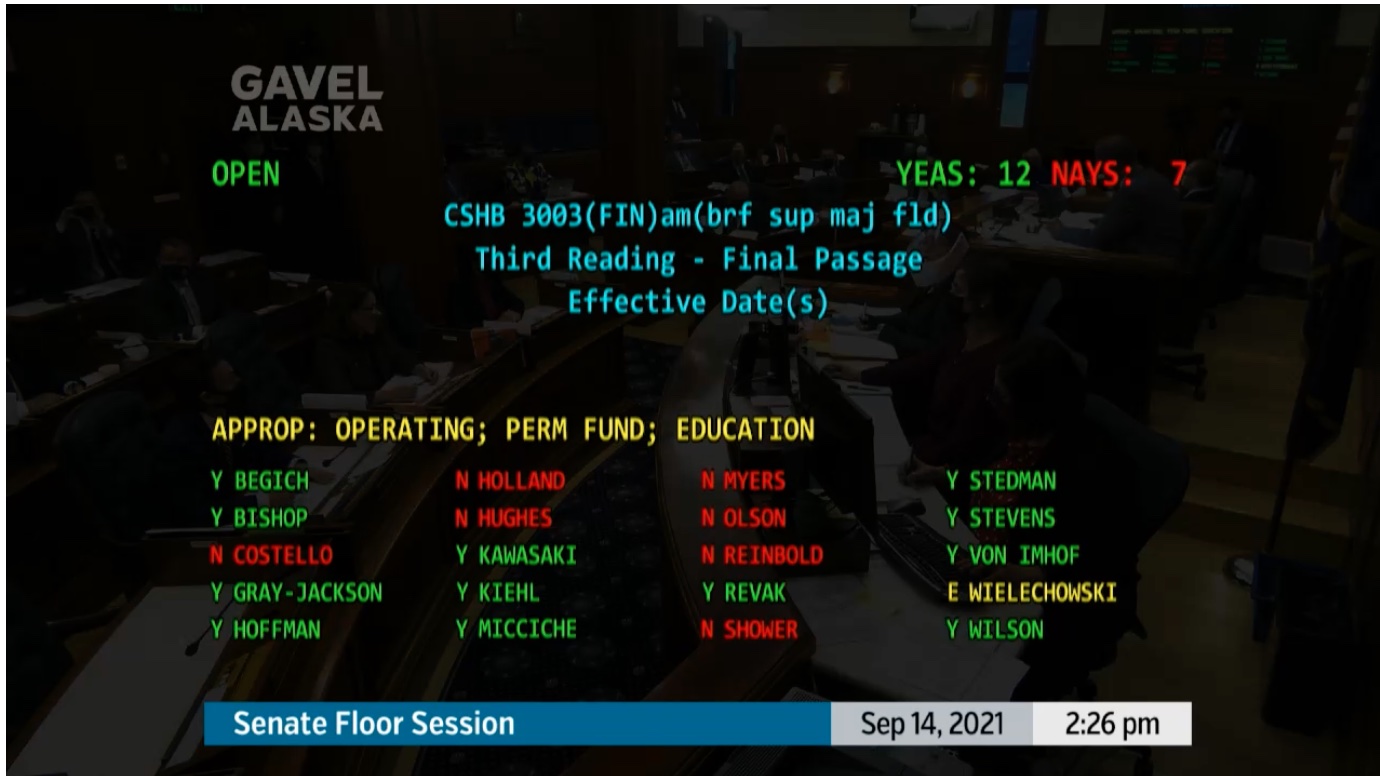
The traditional statutory formula suffered its final death blow when the Senate voted it down recently. Senators Peter Micciche and Josh Revak, both of whom campaigned on favoring the full dividend, were the deciding votes to kill it.  

The traditional statutory formula was working and did not add a penny to the state’s budget. Taking a five-year average of the earnings account to pay a dividend guaranteed the corpus of the fund would always grow. If the earnings reserve account had a good five years, Alaskans got a big dividend. If the earnings were off, the dividend would shrink. 

The plan was working until Walker tried to fix something that wasn’t broken. The special interests and government-centric types couldn’t be happier. 

Some opposing the full dividend also argue as the Permanent Fund grew so would the dividend. They claim the check would become so large it might attract freeloaders to the state. The $3,600 that would have been paid this year is a good example. 

If the fund continues to grow as it has in the past year, it won’t be long until we would have seen a $10,000 dividend for each eligible Alaskan under the traditional statutory formula.    

And that is a legitimate concern, although to qualify for that big check you’d have to live in the state a full year. Alaska is an expensive place to live, and the winters are long and cold. For a single person to uproot themselves and live somewhere more expensive for a year in hopes of getting a dividend check seems unlikely.  

For a large family it might make more sense. A family of five would get $50,000 once the $10,000 dividend check became a reality. 

This is something state leaders could deal with in the future if it becomes a problem by capping the dividend.

Bottom line is the PFD statutory formula the state has been using for decades was working. It’s true the state spends more than it takes in, but that’s because we spend close to triple the national average of other states.  

Under the traditional formula the state could still use half of the five-year average of the earnings of the fund to help pay for government. It had not done so in the past, but it could have.

The governor’s PFD proposal is better than what Walker has given us. But it’s a shame Dunleavy gave so little effort to fight to keep the PFD formula we’ve been using all along. Now that Dunleavy gave up on it, it’s dead for good.

Dan Fagan hosts the number one rated morning drive radio show on Newsradio 650 KENI.  

Who has Trump endorsed besides Tshibaka? He’s now endorsing GOP chair candidates

Former President Donald Trump has not yet announced a trip to Alaska, but he’s now on the road, making the rounds in the country’s heartland, with stops in Ohio on Saturday for his first big rally, as he seeks to leverage his profound influence on elections.

More than 74.2 million voters chose Trump in the 2020 election and many of them still believe in Trump’s agenda for America.

Trump has, to date, made at least 24 endorsement in races for governors, Congress, or for state Republican chairs. He apparently is looking far ahead to ensure that Republican state party chairs are actively supporting conservative candidates in line with Republican values.

In Alaska, the Republican Party under former Chairman Glenn Clary voted by 77 percent to censure Sen. Lisa Murkowski. Clary has since resigned and now-Chairwoman Ann Brown is the leader until next March, when he party conducts elections. Brown, during the most recent State Central Committee meeting, voted against censuring Murkowski.

Governor endorsements

  • Gov. Greg Abbott, Texas
  • Sarah Huckabee Sanders, Arkansas
  • Henry McMaster, South Carolina
  • Glenn Youngkin, Virginia

U.S. Senate

  • Sen. John Boozman, Arkansas
  • Rep. Mo Brooks, Alabama
  • Sen. Mike Crapo, Idaho
  • Sen. Ron Johnson, Wisconsin
  • Jerry Moran, Kansas
  • Sen. Rand Paul, Kentucky
  • Sen. Marco Rubio, Florida
  • Sen. Tim Scott, South Carolina
  • Kelly Tshibaka, Alaska

Trump has also said that he wants Herschel Walker to run for Senate in Georgia, against the well-funded Democrat Sen. Raphael Warnock. Walker, formerly of the NFL and U.S. Olympic Bobsled Team, has not yet announced.

U.S. House

  • Mike Carey, Ohio
  • Rep. Virginia Foxx, Virginia
  • Julia Letlow, Louisiana
  • Max Miller, Ohio
  • Susan Wright, Texas

State Republican Party Chairs

  • Frank Eathorne, Wyoming Republican Party chairman
  • Drew McKissick, South Carolina Republican Party chairman
  • Bob Paduchik, Ohio Republican Party chairman
  • David Shafer, Georgia Republican Party chairman

Trump has said at least twice that he intends to come to Alaska to campaign against Sen. Lisa Murkowski. He said it once in March, to The Hill newspaper: “I will not be endorsing, under any circumstances, the failed candidate from the great State of Alaska, Lisa Murkowski. She represents her state badly and her country even worse. I do not know where other people will be next year, but I know where I will be — in Alaska campaigning against a disloyal and very bad Senator.”

Earlier this month he restated that he intends to come to Alaska: “I look forward to campaigning in Alaska for Kelly,” he said in his endorsement statement on June 18.

Read: Trump endorses Kelly Tshibaka for U.S. Senate for Alaska