Just weeks after announcing he had terminal cancer, Jim Varsos, better known as Hobo Jim, died Oct. 5
He was a beloved singer-songwriter, best known for the “Iditarod Trail Song,” who in 1994 was named Alaska’s official balladeer.
Varsos was born in 1952 in Indiana and raised in Wisconsin. He began playing guitar at the age of 12, according to Wikipedia, and hitchhiked to Nashville after attending college. He traveled and rode freight trains around the country and made his way to Alaska, where he appeared in small venues and state fairs for decades. He split his time between Alaska and Nashville in recent decades.
Varsos worked with publisher Pat Higdon, singer Russell Smith, and writer Rory Bourke, among others. He co-wrote “The Rock” with Russell Smith, and co-wrote with Janis Ian the song “Empty.” In 2018 he received an Honorary Doctorate in Fine Arts from the University of Alaska Fairbanks.
According to the state data dashboard, nine new hospitalizations for Covid-19 have occurred in Alaska since Oct. 1. The total number of people hospitalized with Covid stands at 194, with 38 of those on ventilators to help them breathe.
20.7 percent of those in the hospitals in Alaska have Covid, according to the daily dashboard.
The dashboard also reports 835 new instances of Covid-19 diagnosis on Oct. 4, and a decrease of 29 percent from last week, when daily case counts were over 1,000.
A retired nurse told the Anchorage Assembly that the masks the general public is wearing, and the way they are wearing them, is completely ineffective in stopping the spread of the Covid-19 virus. They must be replaced constantly if they are to do any good, and also must be replaced after they are touched. The only possibly effective mask for the public is an N-95 mask, and those are very difficult to wear, but the same rules apply — no touching.
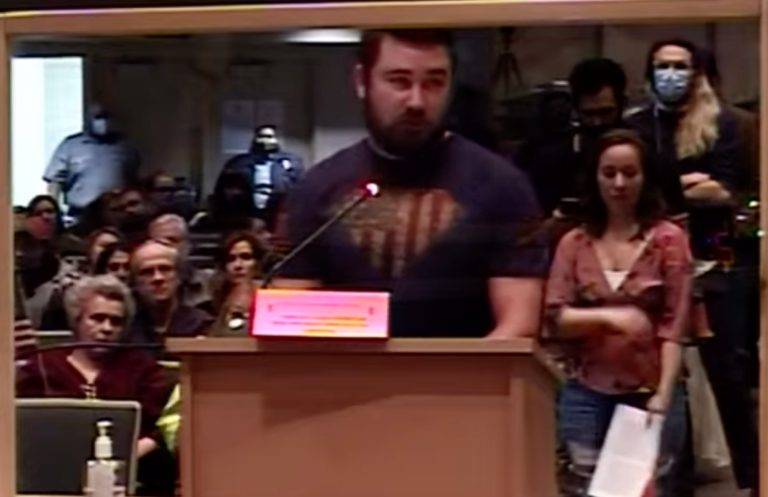
A chiropractor, and Air Force veteran told the Assembly that the last mask mandate pitted people against each other and made the community hostile.
“It’s unacceptable to pit people against each other and it’s unnecessary. there are a minimum of 12 studies that show, pre-pandemic and during the pandemic that masks don’t work. I’ve said this before. I’ve showed you the science. You didn’t want to listen to me,” he said. Austria instituted a mask mandate in April of 2020, but by that fall the virus was surging, even with the mandate, he said. Coronaviruses run rampant in the fall typically, he added.
Natural immunity, monoclonal antibodies, Vitamin D, Ivermectin, Quercetin, are the appropriate treatment for many, he said.
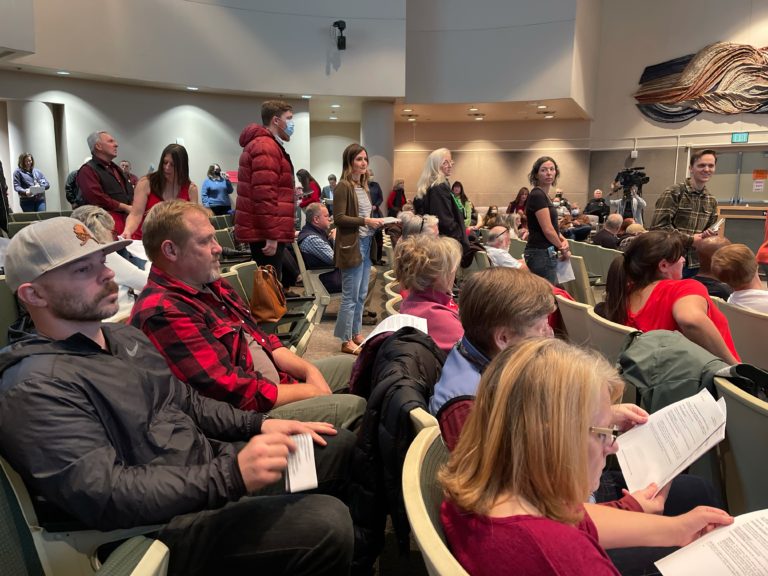
Dozens of Anchorage residents lined up to testify for the fourth night.
A retired construction worker explained that masks don’t work for men with facial hair. Assembly Chair Suzanne LaFrance cut him short when he started to say that anyone condoning homosexual lifestyles is not in a position to comment on people’s health practices. LaFrance would not let him finish his statement, curtailing his right to petition the government. He had not been allowed to complete his three minutes permitted at the podium.
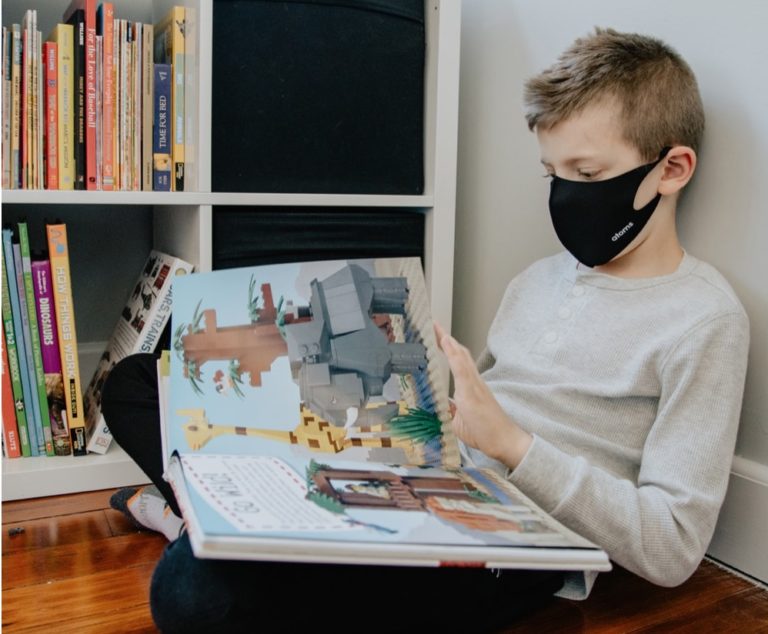
A mother from Rabbit Creek said her 6-year-old son, who has asthma, was separated from the rest of his class because he wears a face shield due to the difficulty of breathing with a surgical mask, and put into an empty classroom by himself.
“That sounds like abuse, not accommodation,” the woman said. “You’ve given overzealous authority to mask-wielding psychopaths to chase people down in public places in order to harass, bully, and discriminate against them, all in the name of doing the right thing,” she said.
“If it is truly about health … then shut down the fast food … close the grocery aisles where the cookies are, make everyone get out and walk 30 minutes a day,” another woman told the Assembly. “This is about control, not health.”
An Alaska Native contractor told the Assembly that doing heavy work and wearing a mask is unreasonable. “And if I don’t wear a mask, you’re going to take my money from me, fine me as a business owner? Must I remind you, we’ve already been doing this. I walked through the stores of Anchorage and was judged for not wearing a mask … I already was threatened physically in public multiple times for not wearing a mask. I already experienced my mother going blind even though a doctor told her she should not wear a mask, because your mandates forced her to wear a mask at work,” he said. He mentioned the increase in youth suicide, and children deprived of sensory experiences. “I did not comply the first time, and I’m so happy to see the community will not comply this time.”
Assemblywoman Austin Quinn-Davidson, who no longer appears in person at Assembly meetings due to her fear of Covid, interrupted the testimony repeatedly to say that it was not relevant. Assembly Chair Suzanne LaFrance returned to her habit of admonishing the crowd for clapping, telling them they were being disruptive.
When Mayor Dave Bronson asked testifier Elizabeth Walsh who on the Assembly was qualified to make health decisions for her, she replied, “None of them, Mr. Mayor.” Chair LaFrance scolded the mayor and said his question was out of order, to the audible derision of the crowd in the Loussac Library.
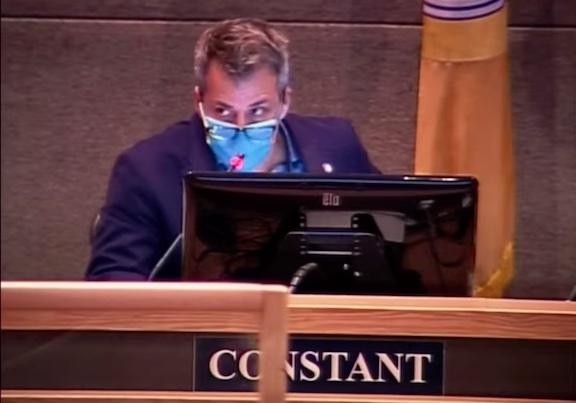
Assemblyman Chris Constant continued his practice of pointing out people in the audience that he didn’t like, due to their loud vocalizations. Assemblywoman Jamie Allard said he appeared to be practicing intimidation.
Nate Paulsen testified, “I see through this ordinance and I think Anchorage will see through this ordinance … It is a set up for smearing mayor in case he does not enforce it. We the people elected the ‘end the mandate guy’ for a reason. The majority has spoken. To the Assembly members from District 4 and 5 who introduced this ordinance, the will of the people is against you.”
About midway through the evening, the testimony, which began a week ago Tuesday, was about 140 against the mask ordinance, to 32 in favor of it. The Assembly has also received much written and email testimony.
When Dr. Russell Biggs approached the microphone to testify, Assemblyman Constant walked out of the room.
Biggs, the author of the recall petitions against Assemblyman Felix Rivera and Meg Zaletel, spoke as a 20-year physician, many of those years working with critically ill cardiac patients. He worked in infectious disease control in the Harris County Jail in Texas.
Biggs spoke about the mandates in general and the blatant political leverage the Assembly has used to misuse millions of dollars of federal CARES Act money. Although he didn’t talk about the science of masks, he noted that fully vaccinated, fully masked members of the Assembly (Zaletel, Quinn-Davidson, Petersen, Rivera, and Perez-Verdia) are so afraid of the virus they can no longer show up at meetings to face the public.
“It is duplicitous and cynical and signals that the best, most effective measures available are either never enough or that our elected leaders are craven opportunists who are politicizing a public health emergency for political advantage,” he said.
As the Assembly paused for a break the large crowd broke into a chant, “We will not comply! We will not comply!” about 15 times.
On Tuesday, Mayor Dave Bronson announced that the Municipality of Anchorage, in partnership with WEKA Medical, has started a new Covid-19 treatment center to provide vaccinations, testing, and monoclonal antibody (mAb) treatments.
“This will drastically increase our capacity to fight against the COVID-19 virus,” Bronson said. “We are doing everything we can to increase treatments for the citizens of Anchorage.”
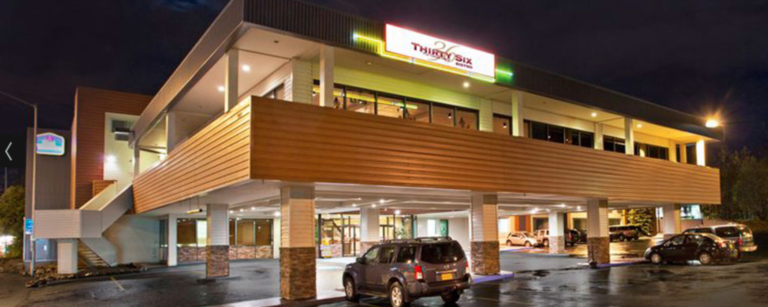
The Covid-19 Treatment Center will be inside the former Golden Lion Hotel, 1000 E. 36th Avenue, a Municipality of Anchorage owned building. The building was purchased by the former mayor and Assembly, using proceeds from the sale of ML&P. Mayor Ethan Berkowitz and the Assembly instead wanted the hotel to be used for drug treatment for addicts.
Instead, at the direction of the mayor, the private provider WEKA will use the facility to provide vaccinations, testing, and monoclonal treatments for Covid infections. The facility will have the capacity to treat hundreds of patients per week. This new location will significantly increase treatment capacity in Anchorage, Bronson said.
Another mAb treatment center, operated by Fairweather in conjunction with the State of Alaska, is located in Tikahtnu Commons at 1142 N. Muldoon Rd.
Monoclonal antibody treatments are recommended by the Infections Disease Society of America and the National Institutes of Health. Monoclonal antibodies help the immune system recognize and respond more effectively to the Covid-19 virus. The treatment can prevent severe symptoms and hospitalization. The treatment is available regardless of vaccination status.
The center is open now. People need to register at the link above.
Background on the Golden Lion Hotel purchase in 2020:
Anchorage Assembly Vice Chair Chris Constant, when asked by Assembly Chair Suzanne LaFrance to lead the Pledge of Allegiance on Oct. 5 before the Assembly took public testimony, could be heard leaving out the phrase “under God” as he led the public in the recitation.
His voice, picked up by microphone and broadcast throughout the room, clearly dropped the phrase. When members of the public shouted out the end of the Pledge, “with liberty and justice for all,” Constant then pointed them out and warned them they would be removed.
Read more about the history of the changes to the Pledge of Allegiance at this link.
The Monday night meeting was devoted nearly entirely to public testimony on AO2021-91, Assemblywoman Meg Zaletel’s mask mandate.
Bernadette Wilson, a well-known civic leader who testified later on the proposed ordinance, asked the public if a man who cannot manage to say the Pledge properly should really be in charge of their health decisions:
“How awkward it is that assemblyman Constant can’t even get the Pledge of Allegiance right but he can get our health care right?” she asked.
Wilson also pointed out the irony that the Assemblywoman Meg Zaletel, who is pushing the masks-for-all ordinance, refuses to sit up on the dais among other members of the Assembly — all who are wearing masks except Assemblywomen Jamie Allard and Crystal Kennedy — and instead dials into the meeting from home.
As a public service during this time when Providence Alaska Medical Center says it is in crisis and may have to decide which patients live or die, Must Read Alaska is providing a list of the surgeries, mostly elective, that will be done at the hospital daily, so readers can understand the usage of services at the hospital and plan their lives accordingly.
Oct. 5 surgeries include two to four that will require the intensive care unit:
Spine x4 VP shunt Endo x 1 Robot prostate Parathyroidectomy Vats x2 THA TKA Robot hyst neo Gyn tape GU ureteroscope CABG AVR Card abl x2 TAVR Card stent AV shunts x2 Cv Cor Angio x3 AFib TEE x2 ECT x3 Hyst DC Ureteroscopy stone rem stent Lap gastric sleeve Lap HH and GJ revision Bil Myringotomy with tubes Ton and AD x2 Total lap hyst bso Bronch Egd Eus CS x3 Cerclage Trach TKA revision
Monday’s continued public hearing was another six hours of testimony from the public, and again, the public was overwhelmingly against the ordinance by Assemblywoman Meg Zalatel, to make masks mandatory in Anchorage.
Since last week, the Assembly has taken nearly 20 hours of testimony about the mandate, which is intended to stop the spread of Covid-19 in the community.
Unlike previous nights, Assembly Chair Suzanne LaFrance used her gavel lightly and rarely admonished the crowd when they clapped after testimony. Unlike last week, no one in the crowd was handcuffed and hauled out of the chambers, and in general the mood was improved due to LaFrance relaxing the decorum rules in what has been a highly contentious battle between the Assembly’s leftist majority and the public.
After 18 months of anger about local Covid policies that have created unintended harm, LaFrance’s approach seemed to soothe the annoyed Anchorage residents.
A few from the public spoke in favor of the proposed mandates. One, Travis Neff, used to be a paid tracker to do damage to the campaign of U.S. Sen. Dan Sullivan on behalf of Senator Mark Begich.
A clip of his statement, which was in reality much longer and accused Mayor Dave Bronson and Assemblywoman Jamie Allard of being Nazis, he used his three minutes to make personal attacks on Assembly members and the mayor, while Assembly Chairwoman Suzanne LaFrance refused to call him out of order until he had finished:
Another supporter of the mask law is a federal healthcare provider, who likened the audience of ordinance opponents to “communist China.” He said he was there to oppose them and his testimony was especially dramatic:
Most of the people who approached the podium were respectful but passionate about their experiences with Covid mandates over the past 18 months of public policy that has impacted their lives. One woman, who spoke through a voice box due to having had throat cancer, gave a profound accounting of the impact on disabled people, who are discriminated against by those who don’t realize they cannot wear a mask:
Assembly Vice Chair Chris Constant was the enforcer on the dais, pointing at people who were too loud and threatening them, “You’ve been warned.” It was good-cop, bad-cop with LaFrance holding the gavel.
Assembly members Zaletel, who is the maker of the ordinance, Pete Petersen, Austin Quinn-Davidson, and Felix Rivera stopped showing up at meetings weeks ago and only call into them now. They refuse to face the public outcry over their attempts to enforce masks.
Assemblyman Kameron Perez-Verdia was present for half of the testimony on Monday, and then left, and was said to have called in after he departed.
The hearing continues at the Anchorage Assembly chambers at 5 pm on Tuesday, with evidently several more people who intend to have the ruling body of Anchorage hear of the impacts the masks have on their health, their businesses, and their quality of life.
Dear Anchorage School Board Members and Superintendent Bishop,
First let me thank you for the Sept. 15, 2021 recognition of your internal data that demonstrates very few positive Covid-19 cases relate to close contacts and the change in your protocol that would have previously quarantined close contacts. I’m glad to see ASD using good data and moving in the right direction, finally.
I am also in receipt of your Oct. 1, 2021 letter to all ASD families. In that letter you state “As we begin to wrap up the first quarter of the school year, our COVID mitigation protocols have proven to be effective.”
This is an unscientific declaration. You have no control group with which to compare your experiment, an experiment on our children.
In that same letter, you asked for parental support “to partner in bolstering our students’ growth and development behaviorally, emotionally, and of course, academically.”
These are typically parental responsibilities I agree. I propose that these responsibilities would be made easier if our children were allowed a normal educational experience without the false promise of a non-protective mask that does not stop aerosols and virus sized particles.
You are requiring children to suffer hour after hour, day after day in an oppressive and unhealthy mask that is nothing more than a virtue signaling device in relation to the virus.
Your letter states, “We see struggles manifesting in elementary schools with student outbursts, including tears and tantrums. In our middle and high schools, students are acting out at times with harsh language and disrespect to adults and each other. Staff also report more physical altercations among students. Please remind your students that violence in our schools will not be tolerated.” Well you might want to ask yourself what’s different about this year. Maybe breathingone’s own recirculated air for 8 hours a day in an oxygen deprived environment might be a contributing factor?
I read in your letter the following, “This pandemic has in many ways brought division to our nation, state, and municipality. ASD is a microcosm of our community; if prejudice and discrimination exist in our community, it most likely will rear its ugly head in our schools.”
While I believe this is more of a set up for the introduction of Critical Race Theory in our schools, I must correct your erroneous statement: It is not the pandemic that has divided anything. It is our response to the pandemic that has caused the division of our community. If you take walk through any store today you will see about a 50/50 split of people who choose to wear masks and those who do not. Everyone is content, no one is acting out and people are freely and calmly going about their business. Masks are optional right now, outside of school.
I don’t know how much longer this mandatory mask farce will be tolerated. What I do know is that you are telling 43,555 enrolled ASD students that they are disease-carrying incubators and that they should be afraid of all other people as they are dangerous and this could lead to their untimely demise by associating with others.
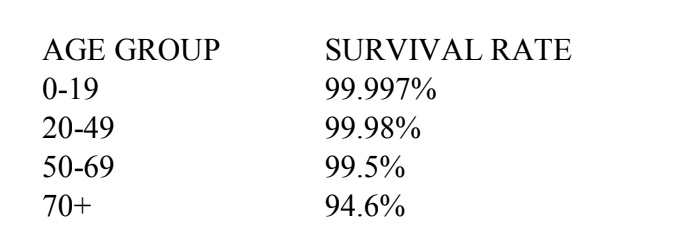
Reference the following National Covid Survival Rate from the CDC for the period Jan. 1, 2020 through Sept. 11, 2021.
Children do very well against this virus. They have strong healthy immune systems. I understand there have been no COVID deaths in Alaska for age group 0-19 years.
As a reminder, you the ASD school board and Superintendent are doing this to our children. Nobody else. This is all on you. You have been elected or hired to make good rational decisions that benefit the students enrolled here. I question your authority to make personal medical decisions for students and staff. You are not doctors. Your reliance on CDC guidance should be reconsidered.
We need you to use common sense and logic along with your ability to observe what is actually happening in our schools and going on around you. The kids will only be hurt with chronic mandated masking. It is not healthy to wear a mask for 8 hours a day.
I refer you to Alaska’s Chief Medical Officer, Dr. Anne Zink’s position on mask problems when she summarized the ill effects of breathing through a warm moist mask for hours on end day after day, the bacteria they collect and that the wearer rebreathes.
Mandates transfer responsibility to you as they are your creation and you are responsible for any damage they bring.
The current situation is not tolerable. If this is such a deadly virus and masks worked, then why are celebrities and politicians immune from the same requirements you are imposing on our kids in Anchorage? I didn’t watch the Emmy awards or attend Barack Obama’s birthday party, but I saw pictures after the fact and there was not a mask to be found, except on the servants. This is a farce. You know it. I know it. We all know it. This is not a health mandate. It is political and medical tyranny for the purpose of power and control.
Children need to see each other children’s faces and their teacher’s faces in order to develop speech, expression and emotional connections. Teachers and students need to hear each other to communicate and learn. Masks inhibit communication. Wearing a mask day after day is very unhealthy both mentally and physically. We are at risk of raising a generation of kids who think this is normal. The mask policy is definitely not normal and very likely damaging to kids as well as adults. These masks are not meant to be worn all day, every day.
Following is from a 2020 article in the Journal of Infectious Diseases and Epidemiology.
Long term mask wearing is attributed to slowing thinking and loss of concentration.
Healthy adults are able to safely raise their pulse and breathing for short periods to levels much higher than the increases seen with masks. Indeed, temporary pulse, breathing, and blood CO2 increases are healthy and beneficial effects of physical exercise.
The argument that masks are therefore safe for healthy adults, however, ignores health problems associated with long-term, chronic mask use. According to data reviewed by the German scientists, “[e]ven slightly but persistently increased heart rates encourage oxidative stress” and arteriosclerosis.
Even “slightly increased breathing rates over long periods,” the German scientists note, may cause “high blood pressure, cardiac dysfunction and damage to blood vessels supplying the brain.” Over extended periods of time, “small increases in carbon dioxide in the inhaled air” have been linked with asthma, high blood pressure, and neurological problems.
Other harmful effects of mask wearing show up much quicker. In 2020, Chinese scientists reported experimental results with human test subjects using multiple common mask types, including surgical masks and N95s. They found significant impaired thinking or concentration after only 100 minutes of mask use, correlating significantly with reduced blood oxygen levels in the test subjects.
The 2020 article in the Journal of Infectious Diseases and Epidemiology reported that 24 percent of 343 surveyed medical staff, who wore a mix of surgical and N95 masks while working their shifts, began to experience impaired cognition from one to four hours after starting their shifts. Readers of all professions who have been forced to mask up at work during the pandemic might sympathize with the article’s conclusion: “Wearing masks for a prolonged amount of time causes a host of physiologic and psychologic burdens and can decrease work efficiency.”
Please retract the mask mandate, resist the pressure to issue future such mandates and be the good example of wise and thoughtful leaders that we need you to be right now.
Masks are unnecessary and unhealthy. We need to immediately move to a voluntary mask policy.
Dan Smith is a lifelong Alaskan and Anchorage resident.The Anchorage School Board meets on Tuesday, Oct. 5 at 6 pm. ASD staff and members of the public are required to wear a face covering while inside the ASD Education Center (5530 E. Northern Lights Blvd 99504).More information on how to attend, testify, or watch online is at this link.
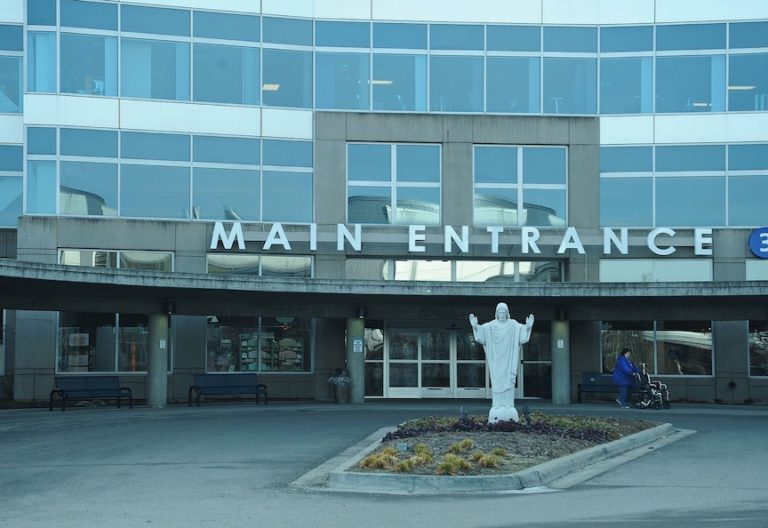
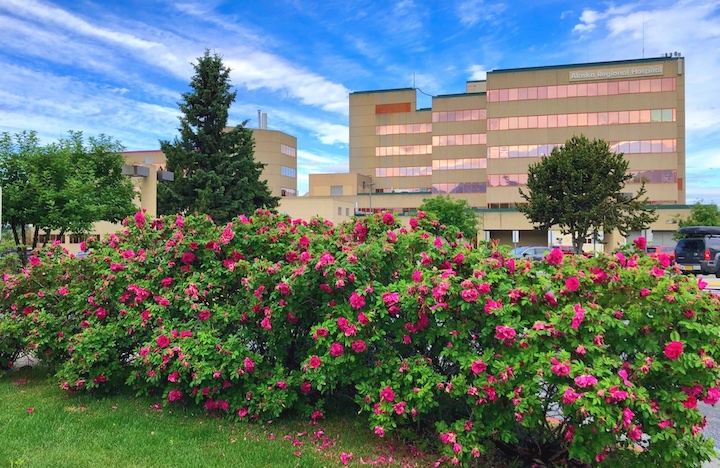
Breaking its silence, Alaska Regional Hospital issued a public statement, which was read into the record by Anchorage Mayor Dave Bronson at the continuation of a public hearing on a proposed mask ordinance on Monday night.
In it, the hospital shared that it will evaluate and handle the most critical cases, and reschedule some operations that are not critical in nature, a different approach from what is being done at Providence Alaska Medical Center:
“The Crisis Standards of Care (CSC) recently implemented across Alaska by the Department of Health and Social Services gives facilities additional flexibility in making decisions around how to care for patients and utilize hospital resources.
“While we have seen an increase in patients in recent weeks as a result of our region’s COVID-19 surge, we at Alaska Regional Hospital are committed to doing everything we can to continue delivering the best care possible to every patient. We will not be making immediate changes to our hospital operations as a result of this announcement.
“Although our hospital has been operating at near capacity, we still have the ability to provide care and we encourage residents to seek the emergency care they need.
“At Alaska Regional we are still doing surgeries, however we continue to review our surgery schedule daily to prioritize the most critical cases, and may postpone or reschedule some operations based on the urgency of the procedure and based on bed availability. Emergency surgery cases continue. We will continue to monitor the situation closely and we appreciate our colleagues’ unwavering commitment to patients.
“As we carefully evaluate the options we have in responding to the evolving needs of our community, our focus continues to be on the health and safety of our patients, colleagues and all Alaskans.”
Regional, unlike Providence Alaska Medical Center, said it is not making changes to its operations and moving into crisis of care standards, where patients may be triaged and may die because of lack of care.
Also unlike Providence, Alaska Regional did not wade into the political arena of the proposed ordinance from Anchorage Assemblywoman Meg Zaletel, which would require all in Anchorage to wear masks, with limited exceptions for some disabled, and those under the age of 2. Providence has taken a leadership role in pushing the mask mandate, which would be in effect at least through the end of the year.