Thursday, April 30, 2026
Home Blog Page 1066

Seldovia has breakthrough Covid cases

The Seldovia Village Tribe and the City of Seldovia say two more cases of Covid-19 were reported in fully vaccinated individuals in the community.

That brings the total number of positive test results received in the community to 17. The tribe said that 11 of those cases — or 65 percent — are individuals who have been fully vaccinated.

The tribe is encouraging people to wear masks, physically distance, and wash their hands frequently.

Although not common, breakthrough cases are increasingly being reported nationally as more people get vaccinated against Covid-19.

According to AARP, when it comes to older adults, vaccinated individuals ages 65 and up are 94 percent less likely to be hospitalized with Covid-19 than people of the same age who are not vaccinated.

Seldovia is in the Kenai Peninsula Borough, and had a population of 255 in the 2010 U.S. census.

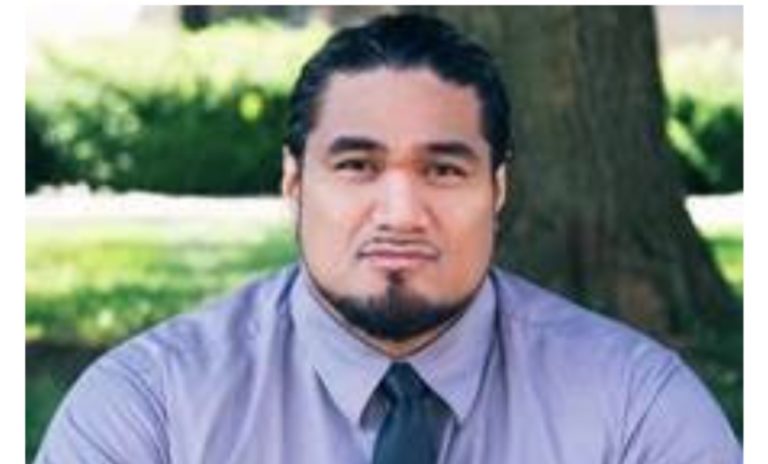
Rep. Cronk says he represents ‘Bush Alaska’ but the ‘Bush Caucus’ excludes him due to the ‘R’ after his name

Rep. Mike Cronk represents a wide swath of rural Alaska, from McCarthy to Eagle, Venetie, Tanana, Cantwell, Northway, Tok, Ft. Yukon, Healy, Two Rivers, Moose Creek, Manley, all along the Yukon River, down the Parks Highway, as well as the Copper River Basin, and everywhere in between.

But as a newly elected member of the Alaska House, he has been excluded from the “Bush Caucus” by its other members.

The only explanation he can come up with is that he is a Republican, and that the Bush Caucus is now a club for Democrats.

Cronk arrived in Juneau and immediately reached out to Rep. Bryce Edgmon and Rep. Tiffany Zulkosky, who represent areas from the Aleutians to Kotzebue. They kept waving him off, however. Cronk says that Edgmon told him, “We will talk about it.”

But entry into that group of lawmakers was always out of reach, and Cronk eventually, after he met with Edgmon for the third time, he realized they simply were not going to allow him to join the group of Democrats and fake independents.

“As a new legislator who grew up in rural Alaska (Northway), who lives in Tok and represents the most diverse district in Alaska (District 6), representing ‘bush/rural’ Alaska was of the utmost importance to me,” Cronk wrote to his district. “District 6 consists of 9 ‘remote’ villages and over 35, small road accessible villages/towns/cities. It was imperative that I be a part of the ‘Bush Caucus’ so I could work with the others that share the same issues so we could work together to best represent bush/rural Alaska as a unified voice.”

Cronk, who grew up in Northway, is the father of four Alaska Native daughters who are Doyon shareholders. He is a retired teacher of 25 years.

“It was clear that the following did not matter: I represent over 40 villages/small towns/cities. I grew up hunting, fishing, and trapping. I live a subsistence lifestyle.I grew up in a village and learned the traditional ways from the Upper Tanana people,” he said.

“I understand the needs of our people as well as the needs of our villages/small town/cities. I have done my absolute best to represent all people of District 6 as well as the entire state. If the Bush Caucus wants to truly represent all of ‘Bush/Rural Alaska,’ it needs to look beyond the political letter after the name,” he wrote. He added that in the past, the Bush Caucus would work with the Republican majority because that’s how they could get money for infrastructure needs in rural Alaska.

“But more recently, with the PFD becoming an issue and money becoming more scarce, they’ve caucused with the Democrat majority who favor more government,” Cronk said.

It seems to me that with all the issues that affect Bush Alaska such as: PFD, PCE, education, rural sanitation, lack of infrastructure, managing fish and wildlife for food first, environmentally safe resource development, salmon runs on the Yukon, loss of firefighting jobs, mental health, drug and alcohol abuse, public safety issues, domestic violence, sexual abuse, lack of broadband internet, and lack of jobs, wouldn’t it be fitting to have a Republican as part of the ‘Bush Caucus’ for unity, diversity, and show that we are all working together for Bush/Rural Alaska?”

It was a rhetorical question, no doubt.

“Rest assured, ‘Bush Caucus’ member or not, I will do my absolute best to represent all of District 6. From McCarthy to Eagle, Venetie, Tanana, Cantwell, Northway, Tok, Ft. Yukon, Healy, Two Rivers, Moose Creek, Manley, all along the Yukon River, down the Parks Highway, as well as the Copper River Basin, and everywhere in between, you will be heard and represented,” he wrote. “You will know that your representative will be there for you (the people) before government.”

Read: Mike Cronk launches campaign for House District 6.

Jesse Sumner: How to fix a defective budget

By JESSE SUMNER

How to Fix a Defective Budget

After two special sessions to create a smart and functional budget, one would think Alaska legislators would have used it to their advantage and created a budget that works for Alaskans.

Instead, the end result was an overinflated budget that was haphazardly forced through to avoid a government shutdown, puts economic pressure on Alaska’s fiscal future, and does not create a viable path forward for the Great Land.

A sustainable Alaska budget would use population growth plus inflation to find the maximum threshold on state appropriations.

In order to create a responsible Alaska budget for the upcoming fiscal year, the state Legislature should have appropriated no more than $6.18 billion — a $2.02 billion discrepancy from its first proposal of $8.2 billion.

The budget that finally passed is better than the first, as it received cuts of $1.07 billion, however, it still sells Alaskans short with a discrepancy of $957 million from the aforementioned responsible Alaska budget amount. The $7.13 billion price tag is still too high to stabilize and maintain Alaska’s private-sector economy.

The best way to address the discrepancy is with a revised constitutional spending cap, which year after year the Legislature fails to act upon.

Without a formally revised constitutional spending cap that is voted on and approved by the people, Alaska’s financial future will continue to be at the mercy of the Legislature and the whims of those in power. An improved constitutional spending cap will help ensure the values of the Legislature stay in line with the values of the people.

It would also help at the local government level: A better constitutional cap on expenditures would remove budgetary uncertainty for our municipalities and boroughs. When state budget reductions are carried out sporadically, local governments are incentivized to tax more in order to build contingency reserves.

For the past few years, Alaska policymakers have been making claims of “40% spending cuts.” That claim may be great for campaign ads, but it’s a deceiving sliver of the big picture. Recent research shows that actual Alaska state spending reductions since 2013 are closer to 18.5%, and more a result of fancy accounting than meaningful legislative action.

Smoke and mirrors accounting may benefit the Legislature during campaign season, but it does nothing for Alaskans or their futures.

While the current budget has identified temporary revenue sources, long-term effects of overspending could prove harmful to the Last Frontier’s economic health including the further expansion of the state government, contraction of our private-sector economy, or further diminished state savings accounts. Of course, Alaskans are already being proposed as the source for funding the budget discrepancy via personal taxes.

The best option for the state legislature to stabilize Alaska’s economy is to allow Alaskans to vote on a more serious constitutional spending cap and in the meantime, make the budget cuts necessary to stay under the cap.

The Last Frontier’s history over the past two decades has proven time and time again that we cannot spend or tax our way into prosperity. Hard decisions need to be made to shape a more secure fiscal future for our state.

If Alaska residents, businesses, and families are expected to create and follow a smart, priority-based budget, our state government should be held to the same standard.

Our leaders are not supposed to be creating a budget for themselves and their special projects. Our government is supposed to be creating a budget for the people of Alaska. The first budget the state Legislature proposed crashed and burned because they did not put the people of Alaska first, and instead prioritized their own self-interest and re-election campaigns.

The second budget is only marginally better. Neither of these budgets is responsible.

Alaska deserves better. We want to see our businesses flourish. We want to see our opportunities grow. Unless state government gets spending in check, the only thing Alaskans can expect to see is taxes, instability and an uncertain economic future.

Jesse Sumner is a lifelong resident of the Mat-Su Borough, a business owner, and a board member of Alaska Policy Forum.

Assembly approves an ordinance to hire its super staffer, but removes the super powers

After Anchorage residents shared sharp words with the Anchorage Assembly late Tuesday night, the hiring of a de facto shadow mayor was scaled back.

Now, the new super-staffer to be hired to help the Assembly won’t be able to rifle through the desks of city employees or drop in unannounced to the mayor’s cabinet meetings. The person won’t be able to inspect evidence lockers. The original ordinance would have allowed all those powers and many more.

But the approval of the ordinance, which passed 8-2 with Eagle River Assemblywomen Jamie Allard and Crystal Kennedy objecting, comes with a hefty price tag.

Like the Assembly’s latest hire of an equity officer who cannot be fired without their permission, the new person will make $115,000 a year, have a four-year contract, and with benefits added in will cost Anchorage taxpayers as much as $800,000.

The new liaison for the 11 members of the Assembly will be added to 23 other staffers already serving as aides, bringing the total to 24, not counting the Clerk’s Office and department directors.

The super-staffer liaison will be hired by the chair of the Anchorage Assembly, but the four-year contract means that person will be able to acquire more power than the three-year terms that Assembly members have.

Read: Assembly to hire shadow mayor to bypass duly elected mayor

Assembly members Felix Rivera and Meg Zalatel complained on the record that their workload was too great and that their current staff was overworked.

The ordinance was criticized by most attending the Assembly meeting who spoke on the record on Tuesday.

“If Anchorage was a growing vibrant city as it once was, I would understand your need to grow your organization. If you are unable to accomplish your work with the staff that you have, perhaps you should look at the current staff and yourselves for shortcomings,” said Tom McGrath, who has observed the Assembly since 1978.

“Anchorage is now a declining city, it’s not a growing city. Adding personnel is just putting an added burden on the already overburdened property taxpayer,” he said.

Read: Anchorage city staff grew by more than 100 under Berkowitz

Assemblywoman Allard agreed. She said the special assistant position is a “step in the wrong direction of fiscal responsibility.

“We have already overburdened the public with new and increased taxes, business shutdowns, frivolous spending, and spending against the desires of the taxpayers. To create yet another government position and salary at this time is irresponsible, and raises questions as to the true intent of this assembly,” she said. “Not only is this proposed staff position redundant, but it is also an egregious violation of the separation of powers. It creates the perception that this assembly does not trust the new administration, is not willing to work with them, and will even change the charter to bypass the will of the people, assert their agenda, and plant their own informant within the executive branch,” she said.

Word quickly spread through City Hall on Wednesday that the new liaison for the Assembly to the Executive Branch has already been chosen and is someone who worked on the 8th floor of City Hall in the last administration of former Mayor Ethan Berkowitz.

Word police: Biden Administration won’t let immigration judges use phrase ‘illegal alien’

In a July 23 memo from a top Department of Justice appointee who oversees federal immigration judges, there are certain words that can no longer be used by judges.

President Biden appointee Jean King, director of the Executive Office for Immigration Review, has imposed new terminology on the nation’s 539 immigration judges.

…”To Provide Safe and Orderly Processing of Asylum Seekers at the United States Border (Feb. 2, 2021), do not use the terms ‘alien’ or ‘illegal alien’ to describe migrants,” Jean King wrote in a July 26 memo.

Instead of “alien,” judges are give a menu of words they may use, which include: Respondent, applicant, petitioner, beneficiary, migrant, noncitizen, or non-U.S. citizen.

Instead of “undocumented alien or illegal alien,” judges must now use: Undocumented noncitizen, undocumented non-U.S. citizen, or undocumented individual

Rather than “undocumented alien child,” judges are instructed to say: Unaccompanied noncitizen child, unaccompanied non- U.S. citizen child, or UC.

The new terminology rule was a result of President Joe Biden’s Executive Order 14012, “Restoring Faith in Our Legal Immigration Systems and Strengthening Integration and Inclusion Efforts for New Americans,” which states the “Federal Government should develop welcoming strategies that promote integration [and] inclusion.” 

In the “definitions” provision in section 101 of the Immigration and Nationality Act, the terms “alien” has a distinct meaning, one that is no longer allowed in immigration courts:

Section 101(a)(3) says, “The term ‘alien’ means any person not a citizen or national of the United States.” Section 101(a)(22) of the INA, in turn, states: “The term ‘national of the United States’ means: (A) a citizen of the United States, or (B) a person who, though not a citizen of the United States, owes permanent allegiance to the United States.”

Federal border officials have apprehended more than 1.1 million illegal aliens at the U.S.-Mexico border during this fiscal year, Customs and Border Protection said in a news release last week. The last time so many were apprehended was in 2006, but the new Biden welcome mat has created a crisis along the southern border, one that is largely ignored by the mainstream media.

The word rule outlawing “alien” went into effect July 26. The memo can be read at this link.

Juneau ranks among top cities whose unemployment rate recovered fast

According to WalletHub, Juneau, Alaska ranks 29 among 180 cities surveyed to determine which of them recovered most quickly from the Covid-19 unemployment crisis of 2020.

The most quickly recovered city in the survey was Lincoln, Neb., followed by Omaha, Neb. They now have unemployment rates of 2.6 percent and 3.3 percent respectively.

Juneau unemployment rate is 5.9 percent at the time of the study, which compared June 2021 to June of 2019 and January of 2020.

Juneau bounced back 23.18% from June 2019 to June 2021 and improved 26.37% from January, 2020 to June, 2021.

Source: WalletHub

That 5.9 percent unemployment rate in Juneau is the exact national average for the study timeframe.

“The COVID-19 pandemic was disastrous for U.S. employment, but the job market is showing signs of healing now that the country has mostly reopened. The national unemployment rate is currently at 5.9%, which is 60% lower than the peak of 14.8% during the height of the pandemic,” WalletHub reported.

Anchorage made the 70th spot on the list, with unemployment at 6.20% in June.

To identify where workers have been most affected by the coronavirus pandemic economy, WalletHub compared 180 cities based on four metrics and used the Bureau of Labor Statistics unemployment figures. That data comes with a caveat, because BLS disclosed that it misclassified some workers on temporary layoffs as “absent from work because of other reasons” rather than “unemployed.” Therefore, the real unemployment rate in June might be around 3% higher than reported, WalletHub noted.

For this reason, WalletHub included two columns for the unemployment rate in the table linked here. One has the officially reported unemployment rate, and one with the “adjusted” rate after accounting for the misclassification.

Tim Barto: Sports and character

By TIM BARTO

When I was a young boy and budding athlete, the phrase we often heard about why young people should get involved in sports was “sports builds character.” By the time I was a young man and a budding coach, that phrase was turned around and became, “sports reveals character.”  

The debate continues as I head towards becoming an old man and a budding crank, I, for one, tend to side with the more recent theorem: Sports reveals character.  

The simplest argument against sports being a character builder is to point to the popular athletes of our time. If one can look at the cacophony of bat flippers, trash talkers, flag kneelers, and wife beaters that pervade our games and still argue that sports builds character, then it would prove nothing more than character being a wholly subjective concept.  

The recent tragic – and simultaneously beautiful – story of the East High Thunderbirds baseball team provides a revelation of character that we would all love to see in teenage boys, regardless of whether they play sports or not.  

The idea that a high school team could find out mid-game, a game in which they were getting thumped pretty handily, that their coach did not show up for the game because he passed away in his sleep, and then continue to play the game and stage a comeback of Hollywood proportions to win it, brings goosebumps to the arms and tears to the eyes. Add to that the fact that the coach’s son was one of the players and the whole situation becomes surreal.  

Read For Coach Barnhart, East High Thunderbirds roar back for a win following shocking death

How that young man and his teammates were able to concentrate enough to continue playing that game, let alone staging a double digit rally to win it, is incomprehensible and inspiring. 

This was a genuine display of character on more levels than is possible to count, especially for a group of teenage athletes.

Speaking of teenage athletes, my fellow Alaskans, how incredibly fun was it watching 17-year-old Seward citizen Lydia Jacoby win a gold medal?

The medal was supposed to belong to her American teammate, Lilly King, the reigning Olympic champion and world record holder, but the experts did not count on a tenacious Alaska gal who took to training in Resurrection Bay (average temperature 54 degrees) when her local pool was closed due to the pandemic.

The only thing better than watching Lydia come from behind to win gold was watching her fellow Sewardians (copyright pending) go completely crazy watching her do it. 

Afterwards, Olympic champion Lydia addressed the media and put on a display of poise and maturity as impressive as her gold medal swim. She spoke of proud she was to represent her country and state, and she reveled in how her hometown celebrated.

What a display of character.

These two sports stories, one tragic and one zany, but both immensely inspiring, reveal the full spectrum of human emotions, and that is what sports does best. It brings us highs and lows, all within a few hours . . . or in Lydia’s case, one minute and 4.95 seconds.  

The stories also have a purity to them. No political statements. No attempts to divide us. Just young athletes doing their best while competing in the sports they love. 

They are beautiful displays of character.

Tim Barto is vice president at Alaska Policy Forum, and president of Chugiak-Eagle River Chinooks Baseball Boosters.

Homeland Security says ‘masks for all’ DHS employees starting Wednesday

In a memo received by Department of Homeland Security employees, starting on July 28, all DHS employees must wear face masks covering nose and mouth while indoors at any DHS workplace. The rule applies regardless of vaccination status.

The action is in response to Tuesday’s guidance from the Centers for Disease Control and Prevention that people should be wearing masks while indoors. It incorporates recommendations from the DHS Workforce Health and Safety and DHS Chief Medical Officer teams.

This mandate includes workers in:

  • FEMA
  • Federal Law Enforcement Training Center
  • Transportation Security Administration
  • U.S. Citizenship and Immigration Services
  • U.S. Coast Guard
  • U.S. Customs and Border Protection
  • U.S. Immigration and Customs Enforcement

Earlier this week, the Veterans Administration mandated vaccines for all of its employees.

Read: Veterans Administration makes vaccines mandatory for staff

Alaska Life Hack: Canadian border guards call for strike Aug. 6

Canadian border guards and other officials voted Tuesday to strike, in a walkout that would take place three days before Canada opens its borders to fully vaccinated Americans. The border has been closed for 20 months and will open Aug. 9, if current Canadian plans hold.

Read: Alaska Life Hack: Canadian border to open to Americans Aug. 9, but with requirements

According to CBC, some 8,500 members of the two unions representing the guards and officials said bargaining has stalled since December. Now, the union is going after elected officials.

The Public Service Alliance of Canada union wrote:

“We’ve organized a targeted phone campaign to hold MPs’ feet to the fire in several key ridings. We want to send a clear message that a labour dispute at Canada’s borders would damage their election campaign and take away from the issues that matter most to voters.

“Let’s send Vance Badawey [member of Parliament] a clear message that a labour dispute at Canada’s borders would damage his election campaign and take away from the issues that matter most to voters. Next to Niagara and Fort Erie, this swing riding is not a consistent Liberal seat. In 2019, this was a close election, with the incumbent Liberal  MP narrowly defeating the Conservative candidate by less than four per cent.”

The Canada Border Services Agency said that the strike would slow down commercial traffic at the border and ports of entry, would impact international mail and parcel deliveries form Canada Post and other shipping companies, and impact the collection of duties and taxes on goods entering Canada.