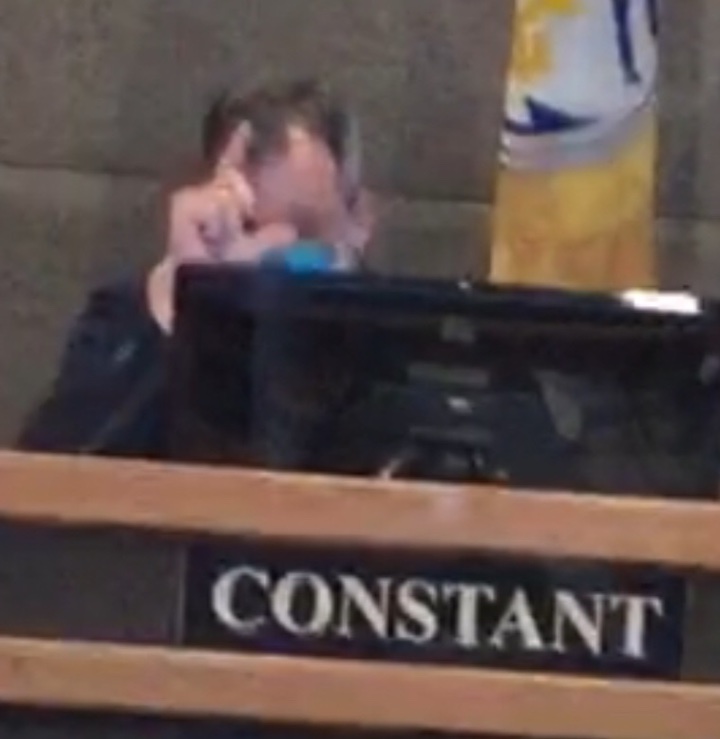
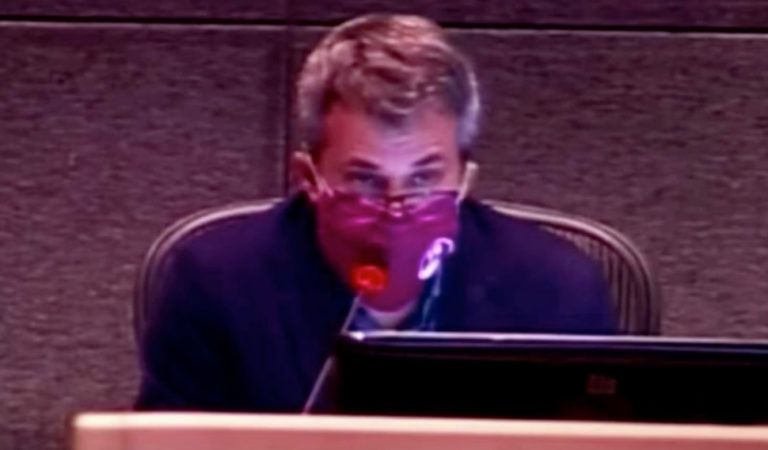
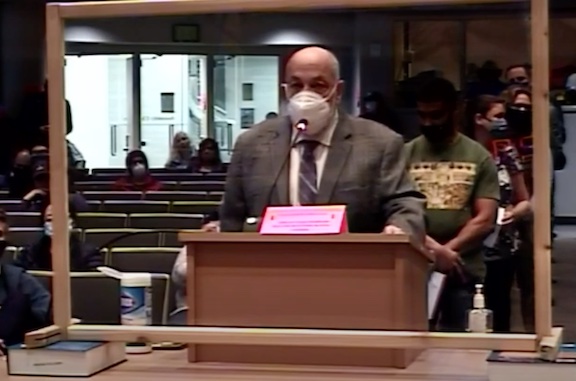
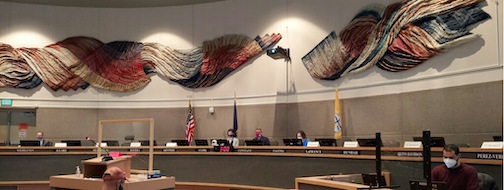
During Wednesday’s Anchorage Assembly meeting, a woman in the audience shouted to the front that Assemblyman Chris Constant had made the L-shaped “Loser” sign on his forehead at her. He denied it.
The official video from the Anchorage Assembly YouTube channel does not show the incident.
But a video taken by a citizen journalist shows it. Was it an itch that Constant needed scratch? Or was he being rude?
Here’s the video of the assemblyman from downtown Anchorage flashing the Loser sign:
And, take two, here’s the video of Chris Constant being called out for his actions by a member of the audience:
After the Anchorage Assembly hastily ended its meeting on Wednesday without taking up any business on the agenda except its new mask rule, it rescheduled the meeting to Thursday at 5 pm in the Loussac Library, 3600 Denali Street, on the main floor Chambers.
But after Chairwoman Suzanne LaFrance gaveled out on Wednesday, a woman in the audience shouted the question, “Are you going to arrest us?”
It was the question of the hour. The public attending was not amused by the antics of the Assembly, as it tried to enact a rule that everyone in the chamber be masked, and then tried to bully the Mayor’s Office into enforcing that rule, which is not compatible with the emergency ordinance the Assembly passed one week ago, requiring people to mask when in public. The rule for the Assembly Chambers says there are no exemptions to the mask ordinance, and City Manager Amy Demboski said she would work to enforce the law the Assembly passed, which does have exemptions.
The problem for the Assembly is that it wants the Mayor to use police to enforce its “room rules,” which do not have the force of law. The police are under the control of the Mayor’s office and city Manager Amy Demboski said she will enforce the law.
On tonight’s agenda, should the Assembly be able to get out of its own way and conduct business, is the big-ticket item of the year: The annual budget. This, and numerous other items that typically interest the public, await the Assembly and whether it can actually conduct a meeting.
Twenty months into the Covid-19 pandemic in Alaska, the Bethel City Council has approved an ordinance that will prohibit the public from attending in person any official meetings of the government, such as City Council meetings.
According to the ordinance passed on Oct. 26, officials and members of committees may attend government sessions, but the public must attend via video-conferencing through the Zoom program, or by conference call.
Appointed and elected officials on committees, commissions, or the City Council may also attend virtually, but the support staff for the meetings must attend in person. Volunteer members or staff are not allowed to attend in person if they have traveled out of Bethel 10 days prior to the meeting, unless they are fully vaccinated. They also must not attend if they have any symptoms of Covid or if any member of their household has tested positive or is in quarantine.
Also, no food is allowed in meetings, and masks must be worn by those who are allowed to attend.
The legislation was brought forward by Mayor Mark Springer as a way to address the Covid pandemic in Bethel.
In addition to the public being blocked from the government proceedings, two weeks earlier the city council passed a mask ordinance that applies to all over the age of 2 who are:
Inside of, or in line to enter, any indoor public space;
Obtaining services from a healthcare facility;
Waiting for or riding on public transportation or while in a taxi or bus;
Engaged in work, whether at the workplace or performing work off-site, when:o Interacting in-person with any member of the public; o Working in any space visited by members of the public, regardless of whether anyonefrom the public is present at the time;
Working in any space where food is prepared or packaged for sale or distribution to others;
Working in or walking through public common areas, such as hallways, stairways, elevators,and parking facilities;
In any room or enclosed area where other people (except for members of the person’s ownhousehold or residence) are present when unable to physically distance;
Driving or operating any public transportation or taxi service or ride-sharing vehicle;
While outdoors in public spaces when maintaining a physical distance of six feet frompersons who are not members of the same household or residence is not feasible.
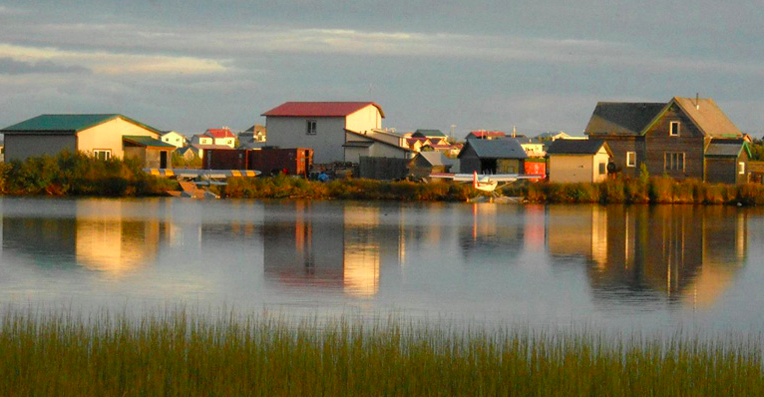
On the Kuskokwim River, the City of Bethel is home to over 6,000 Alaskans, many of Yu’pik heritage. It is a hub community for Western Alaska and the Bethel Census Area, which has a population of about 18,000. Bethel is served by Alaska Airlines with typically two flights a day from Anchorage.
According to the State of Alaska Covid data dashboard, 5,388 people in the Bethel census area have been diagnosed with Covid since the beginning of the pandemic. The region has seen 121 cases in the past seven days.
After a late start for its meeting on Wednesday, the Anchorage Assembly was able to get through the Pledge of Allegiance, the land acknowledgement. Then it got hung up on the next item: Masks.
Chairwoman Suzanne LaFrance tried and eventually succeeded in passing an in-house rule for the Assembly Chambers that demanded all in the Chamber wear a face mask — public and Assembly members included.
Hardly anyone in the audience was complying and it soon became evident the executive branch would not forcibly remove people from the room, regardless of the Assembly’s wishes.
The issue turned into a standoff with the Mayor’s Office, as the rule-making majority tried to assert control over the face attire of people, and as the City Manager Amy Demboski held firm that she would enforce the law the Assembly passed last week, but not this additional rule, which she said didn’t have the legal standing of the original ordinance.
The dispute took over an hour to resolve. People stayed in line at the podium for the audience participation portion of the meeting, but were thwarted from taking part by the ongoing dispute over masks.
Finally, Assemblyman Chris Constant said that if the city manager would not throw unmasked people out of the Assembly Chambers, then the Assembly should simply adjourn or continue the meeting to Thursday.
Quickly, the group passed the mask rule and gaveled out, over the objections of Assembly members Jamie Allard, Crystal Kennedy and John Weddleton. The meeting will start over again on Thursday at 5 pm. 1:30 pm, a time when most members of the public cannot attend.
Kennedy called the whole thing a childish power struggle between members of the Assembly and the Administration. Although she didn’t name them, she was referring to the seven majority members who were insisting on mask compliance, with no exceptions made, a complete dismissal of the law they had just passed last week.
Removing her own mask for a moment, Kennedy said on the record that the paper masks don’t do anything to prevent the spread of the virus and the disagreement over enforcement was embarrassing for the whole city.
Constant, however, said that people who attended the meetings in recent weeks are now dying of Covid and it is the Assembly’s job to set the place, time, and manner of the meetings. He said the Bronson Administration was overstepping the separation of powers by not allowing the Assembly to set more strict rules for its meetings than what was in the mask ordinance it passed last week.
Earlier in the Wednesday meeting, there were more than a dozen people standing outside the Chambers trying to gain entry. They were being blocked by security guards because they didn’t have masks on. City Manager Amy Demboski intervened and said anyone could come into the Chambers without a mask if they declared an exemption.
That infuriated Assemblyman Constant, who in a fit of pique called it “childish.”
A member of the audience soon yelled at Constant, accusing him of being childish for making the “Loser” sign at her. He yelled back. Others jeered and called the majority of the Assembly “cowards” for gaveling out.
A member of the public who sat through the meeting explained, “In other words, if the Assembly says everyone must wear a clown suit to the Assembly Chambers, the Assembly believes it has the right to enforce that.”
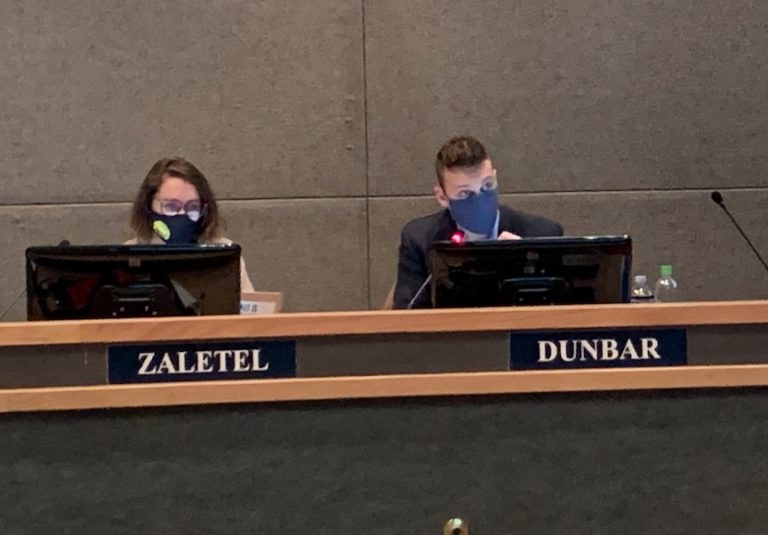
It was a separation of powers issue, with Assemblyman Forrest Dunbar repeatedly trying to get Demboski to say she would not enforce the mask ordinance. Demboski would not bite, and only replied that she would enforce the law. She said the law clearly allows for exemptions and it’s not proper to ask people to declare or explain their specific exemptions because those are medical or mental disabilities.
Assemblywoman Meg Zaletel, who just won a recall election by a wide margin, said there would be no exceptions to the mask ordinance — people can attend the meetings by phone or watch on YouTube if they can’t wear a mask or a face shield to the meeting.
Assemblywoman Allard pointed out that the whole thing was a set up to try to recall the mayor. She was warned by the chair for impugning the motives of others.
Assemblywoman Kennedy had, perhaps, the insight of the night: “I cannot believe how juvenile an action this is. I understand there is a power struggle going on. Everybody gets it. The more we keep doing this, the more vindictive things get, the more vengeful things get … At some point this has got to stop.”
And eventually it did stop. The Assembly returns Thursday auto continue the meeting, giving the majority on the Assembly time to figure out how to enforce a policy that most of the public was openly defying.
Left undone on the agenda were numerous important items, not the least of which is the first public hearing for the budget for next year.
A man who attended nearly every Anchorage Assembly meeting, including special meetings, has died, Must Read Alaska has learned.
Eugene Haberman testified on almost every item on the agenda, much to the annoyance of Anchorage Assembly members. But over the years, he had perfected the art of the 3-minute time limit, including the preamble that he always included:
“My name is Eugene Haberman. I follow the public process. When the public process is done appropriately, the decisions made by the governing body is more likely to be in the public interest.”
In June, Haberman was heading to Anchorage from his home in Wasilla to testify at an Assembly meeting. He was in a serious car accident, and was covered with blood and glass, as he described it. But his friends helped him get suited up and cover his wounds, and he made it to the meeting — but not in time for public testimony. The Assembly would not accept his testimony since he was late, and he wrote about the event in The People’s Paper.
At one point, the Assembly took up an ordinance designed to try to limit his participation.
With three minutes allowed for each public hearing item, Haberman’s participation in a meeting could stretch to 15 minutes, irritating members such as Christopher Constant, who once said, “While the public may come for a public hearing on a specific item, he (Haberman) comes and testifies on multiple items every single night — sometimes as many as 10 or 15 items,”
At a recent Assembly meeting, Haberman fainted and was attended to in the Assembly Chambers by a medic. He was 70 years old. He was said to have died a few days later at home; we are unable to confirm the time and place of his passing.
Haberman also attended many meetings of the Anchorage School Board and public meetings in the Mat-Su Valley, where he lived. He always dressed dapperly in a suit and tie to attend public meetings, and since the pandemic started, he was always seen in an N95 mask.
He was known as a kindly but persistent man who had lived in Alaska for more than 43 years. During the 1980s, he published a periodical called “Gay Alaska,” to promote the gay lifestyle in the 49th state. He also worked as a doorman for the Sheraton Hotel downtown in his earlier years.
At the Oct. 12 Assembly meeting he admonished the Assembly for allowing the crowd in the room to become unruly. But earlier this year, he was convicted for a misdemeanor charge of Cause Fear Of Injury in Palmer.
The cause of his death is not known by Must Read Alaska.
The Anchorage Assembly meeting on Wednesday is likely to be calmer than recent ones, if only because the public won’t be attending. The Assembly is enforcing a limit on public participation. No more than 125 will be allowed into the Assembly Chambers, due to the Assembly’s new rules, although there are many items of public interest, including the proposed 2022 budget.
Also, face masks must be worn by everyone during all meetings of the Assembly, whether it’s in the chambers, or the next-door Wilda Marston theater, which will be limited to 150 people.
The Assembly is taking up a resolution concerning the homelessness plan that has been under negotiation for months.
After Mayor Dave Bronson was elected, he proposed a plan for dealing with the drug- and alcohol-fueled homelessness situation in Anchorage. For over a year and a half, homeless people have been housed in the Sullivan Arena, where hockey games used to be played. The cost for operating the Sullivan as a homeless shelter is about $3 million a month; currently 420 people are sheltering at night in the facility, at a cost of more than $7,000 per person, per month.
The Assembly refused to entertain Bronson’s homelessness plan after his election, which the liberal majority opposed. The plan involved a navigation center to get the people the services they need — drug treatment, medical treatment, housing, and jobs. Instead, the Assembly dug in its heels, but finally accepted an offer from the mayor to negotiate.
Tonight’s plan to be considered by the Assembly is the result of over 22 meetings, each running several hours, mediated by retired Admiral Tom Barrett.
The Assembly sent three members to these meetings — Meg Zaletel, Chris Constant, and John Weddleton. From the Mayor’s Office, Craig Campbell, Larry Baker, and John Morris represented.
If the policy passes the Assembly tonight, there’s still a lot of work to be done to finalize a plan, and because of the Assembly delays, the Sullivan will remain the mass homeless shelter for the winter, as long as FEMA money keeps coming. That agenda item is explained more here.
Also on the agenda for the meeting is approving an item to create a improvement district for Midtown Anchorage. Improvement districts allow special taxes to be levied for the purpose of improving the area, much in the way downtown Anchorage has been improved by such a taxing device.
The Assembly intends to spend $100,000 of federal ARPA Covid relief money to set up the special taxing district.
The Assembly will also take public testimony on an ordinance that would require the mayor to bring his appointees forward for confirmation immediately, or as soon as the Assembly requests it. That ordinance is being offered because the liberal majority on the Assembly want to axe some of the mayor’s appointees, who serve in a temporary capacity until they are approved by the Assembly.
The specific language is: “An appointment for a principal executive or department head position subject to assembly confirmation may be scheduled for a confirmation hearing and set on a meeting agenda for a confirmation vote by the assembly chair at any time after such person is hired or receives compensation for the position, or is otherwise serving in the position in a provisional, temporary, or acting capacity. Submittal of a memorandum from the mayor or designee is not a prerequisite for this action by the chair, and lack of such memorandum does not preclude a confirmation vote.”
Several appointees of the mayor are also up for confirmation during the meeting, including Dan Zipay for Solid Waste Services, Bradly Coy, Municipal Traffic Engineer, Joe Gerace, Health Department Director, and James Winegarner, Director of Real Estate
The Assembly will also open public testimony on the mayor’s proposed budget. The Assembly intends to get that portion of the meeting started by 8 pm. Those items include:
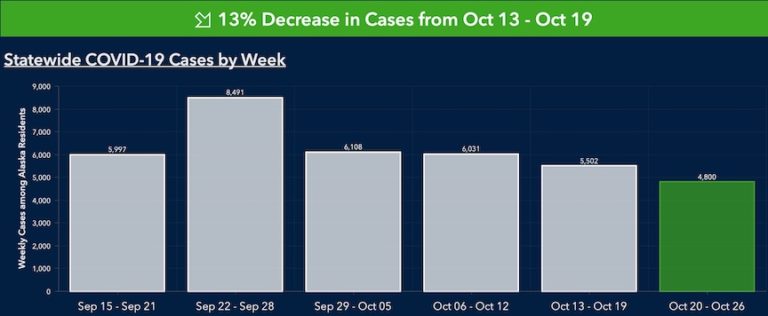
Tuesday’s count for new positive Covid diagnoses in Alaska was 560, a decrease of 13 percent from last week. Since March of 2020, 131,056 out of 730,000 Alaskans have been infected with the virus; 690 are counted to have died because of it. The average number of positive tests per day over the past seven days is 685.
Alaska hospitals currently have 243 Covid patients and hospitals are near or at capacity. 23 percent of patients in Alaska hospitals have Covid and 33 Covid patients are on ventilators.
There are 24 ICU beds available for adults in Alaska and 291 non-ICU beds available, according to the state’s data dashboard. Providence Medical Center is the only hospital in Southcentral Alaska with openings in its ICU. Fairbanks Memorial Hospital’s ICU is near capacity.
According to the Anchorage Municipality’s dashboard, 11.3% of the 443 patients who went to an emergency room on Monday were there due to Covid symptoms. There are 112 people with Covid in Anchorage hospitals; one of them is considered a minor.
69 percent of Alaskans over the age of 12 are “fully vaccinated.”
On Oct. 27, 2021, Holy Rosary Academy, one of the most academically successful private schools in Alaska, has been separated from the Catholic Church by the top Catholic in the state, the Archbishop of Anchorage-Juneau
In a letter to the school, Archbishop Andrew Bellisario wrote that the school had not met his nine mandates, which included provisions involving curriculum and health mandates. Some Catholics reached out to Must Read Alaska and said the mandates included a mask mandate for students. The crackdown from the archbishop started several months ago and the school and his office have been negotiating since.
Bellisario’s Tuesday letter was a followup from last week’s ultimatum. In it, he acknowledged he had heard form Catholics wanting him to reconsider.
“I understand the concerns and frustration with this situation and I share in their disappointment. It does worry me that some children and parents feel they are being abandoned by their Archdiocese. It is important for me to express that I have always kept the care, education and safety of the children and all Catholics of the Archdiocese in the forefront of my decision,” he wrote.
“As your Archbishop, I am ultimately responsible for every Catholic institution in the Archdiocese of Anchorage-Juneau, including any privately owned and operated Catholic school. I have insisted that the members of the Board of Trustees accept the minimum standards that I specified in order to fulfill my obligation under Church law to protect all of the people of God in this Archdiocese, including those served by Holy Rosary Academy. In any diocese, it is the bishop who has the authority to determine whether a school is a Catholic school,” he wrote.
“I respect the right of the members of the Board of Trustees to make decisions for Holy Rosary Academy. The Board of Trustees cannot expect the privileges of a Catholic school without accepting the obligations of this recognition. I have clearly explained what is necessary to grant Catholic recognition to Holy Rosary Academy in the new Archdiocese of Anchorage-Juneau. I want to do so, but it is impossible for me to grant recognition without acceptance of the minimum standards that I specified,” Bellisario wrote.
“Regrettably, as of today, October 26, 2021, I do not recognize Holy Rosary Academy as a Catholic school. Holy Rosary Academy does not have the obligations or privileges of a Catholic school in the Archdiocese of Anchorage-Juneau. The students. parents. families, staff and supporters of Holy Rosary Academy will always be welcome to celebrate Mass and receive the sacraments in their own parishes. If, at any time, the members of the Board of Trustees decide to agree to accept and adhere to the minimum standards of a Catholic school as I have specified. they are welcome to request recognition of Holy Rosary Academy as a Catholic school in the Archdiocese of Anchorage-Juneau,” the he wrote.
The school board of trustees and headmaster sent a note to parents on Wednesday morning, acknowledging the decision.
“We have prayed fervently, offered Masses, adored Our Lord for hours on end seeking guidance and a peaceful resolution to this situation, and we have our answer. We must trust in His will and go forth confident in the work we are doing here at the School, a vibrant and beautiful place of classical learning, Catholic faith, and true joy. With record enrollment, strong fundraising, an amazing faculty, and outstanding recognition for HRA this year, a bright future lies ahead for our students, families, and staff,” the school wrote to the Holy Rosary community. The school has an enrollment of about 150 students, 39 percent of whom are racial minorities. 14% of students are of Asian or Pacific Islander, or of Hawaiian heritage, and 10% are hispanic.
Starting Wednesday, Holy Rosary Academy will be known as a “Classical School in the Catholic Tradition,” but not a church-controlled Catholic school.
“This will have no impact on our desire to form saints and students ready for a life well-lived,” the board wrote. “We will continue to offer our school as a model for living by the laws of our Creator as we depend on the Trinity, Our Blessed Mother, and the angels and saints to guide us in our efforts to lead others to sanctity. Our classrooms will remain filled with the wisdom of the ages, our hearts will remain open to Truth, Beauty and Goodness. In conversation with the Church fathers, our souls will still reach towards heaven and the open arms of our Christ and His Father,” the board wrote to parents.
A new report finds that Anchorage ranks 55th out of 95 cities in the country in terms of how easy it is to set up and run a business. Colorado Springs was rated as the easiest place in the country to do so, while Charleston, West Virginia was the most difficult
Unlike many studies that measure regulations at the state level, annual study focuses on city-level regulations across North America.
“This report should serve as a wakeup call,” said Bernadette Wilson, Alaska director of Americans for Prosperity. “Small businesses are the backbone of our economy. We need less government regulations to support Alaska’s entrepreneurs and foster an environment that will create jobs and grow our economy. AFP-AK is calling on state lawmakers to prioritize meaningful improvements to ensure Alaska is a great place to do business.”
Through broad-based grassroots outreach, Americans for Prosperity (AFP) is driving long-term solutions to the country’s biggest problems. AFP activists engage friends and neighbors on key issues and encourage them to take an active role in building a culture of mutual benefit, where people succeed by helping one another. AFP recruits and unites Alaskans behind a common goal of advancing policies that will help people improve their lives. For more information, visit www.AmericansForProsperity.org