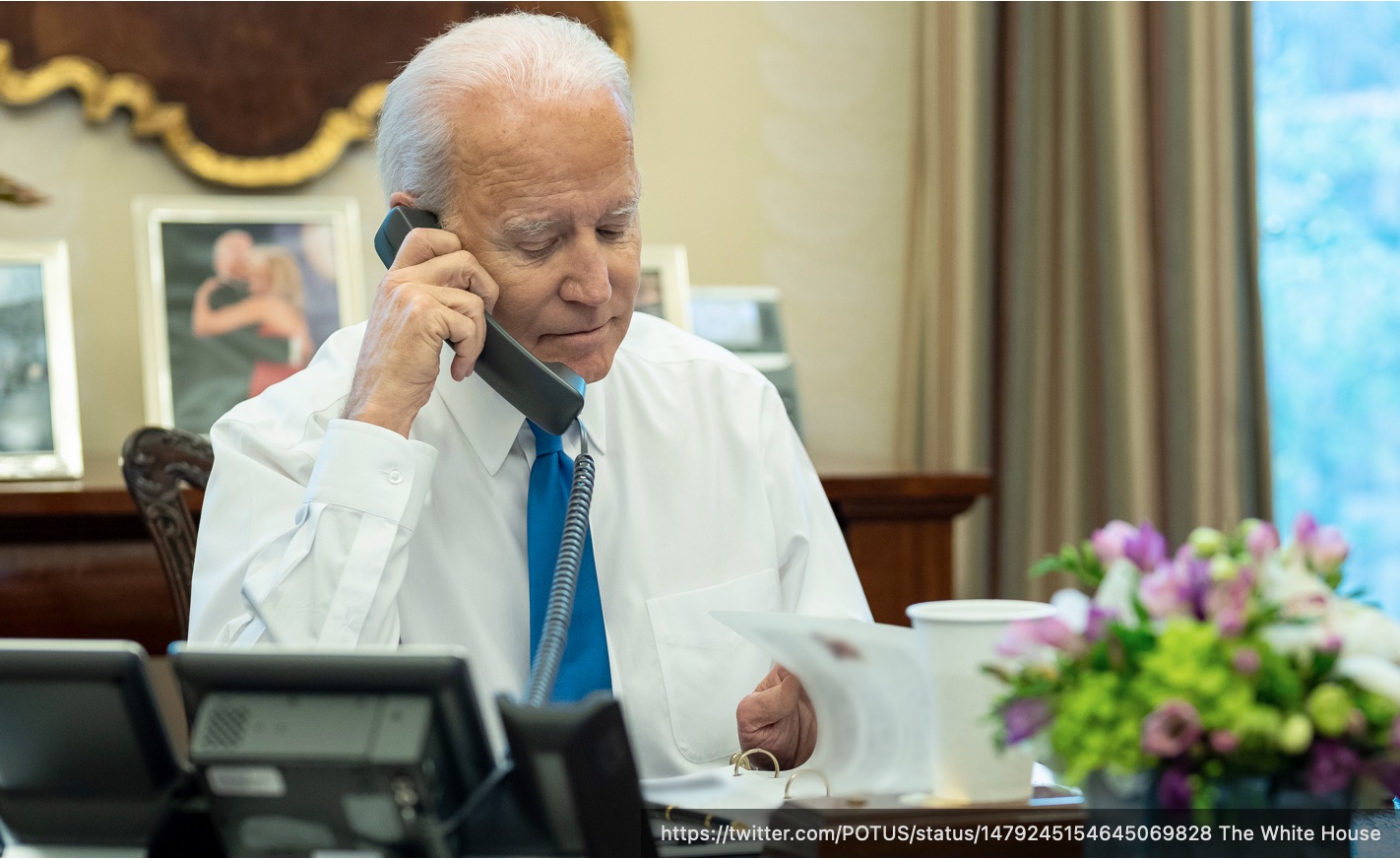
President Joe Biden and Venezuelan President Nicolás Maduro have agreed to a deal that eases the remaining U.S. sanctions on Venezuelan oil industry, according to reports. As part of the deal, Maduro will allow a competitive and internationally monitored presidential election in 2024.
The deal will be finalized during a meeting in Barbados on Tuesday, sources said.
Maduro won in a 2018 election that were criticized as fraudulent. He runs a repressive regime that is also on the international watchlist for harboring and financing terrorists.
“Venezuela remained a permissive environment for known terrorist groups, including dissidents of the Revolutionary Armed Forces of Colombia (FARC), the Colombian-origin ELN, and Hizballah sympathizers,” according to the U.S. State Department in 2020.
Venezuela is also still under a presidential Executive Order 13692, which declared a national emergency with respect to human rights violations, persecution of political opponents, suppression of press freedoms, use of violence and intimidation, and other abuses of power by the Venezuelan government. The order was put in place by President Barack Obama in 2015, kept in place by Presidents Donald Trump and Biden, and continued in a declaration by Biden in March of 2023.

“The situation in Venezuela continues to pose an unusual and extraordinary threat to the national security and foreign policy of the United States. For this reason, I have determined that it is necessary to continue the national emergency declared in Executive Order 13692 with respect to the situation in Venezuela,” Biden said on March 1.
In 2022, Biden conducted a prisoner swap with Venezuela. In order to get back several wrongfully detained Americans, Biden exchanged two drug dealers who were referred to as the Maduro “narco nephews,” because of their blood relations with President Madura’s wife.
Efrain Antonio Campo Flores and Francisco Flores de Freitas, the narcotics traffickers who had been arrested in Haiti by U.S. drug enforcement agents for trafficking of 800 kilograms of cocaine they were planning to bring to New York City, were sent back to Venezuela in exchange for seven Americans, five of them business executives of Citgo Petroleum Corporation, and one who was a Marine Corps veteran, Matthew Heath, who had been held captive for two years.
Heath, who had been traveling in South America, was lured into Venezuela by its intelligence forces, and he was immediately arrested as soon as he set foot in the country. His dramatic story was told in the Miami Herald when he returned.
Then, in November of 2022, Chevron received permission from the Biden Administration to expand production in Venezuela to import to America, despite the existing sanctions and executive orders pertaining to the Maduro regime.
The lifting of oil sanctions by Biden administration reversed sanctions put in place by Trump
“The license to Chevron was issued the same day that the regime and the democratic opposition forces began a dialogue in Mexico City that was supposed to lead to less repression and some kind of political opening that would culminate in free elections in 2024. Moreover, the negotiations were supposed to produce a deal that would create a fund, overseen by the UN, to help ameliorate Venezuela’s horrendous humanitarian situation,” according to the Council on Foreign Relations.
Recently, Biden also did a prisoner swap with Iran. On the anniversary of 9-11, Biden offered to swap five Iranians for five Americans, and sweetened the pot by unfreezing $6 billion in Iranian funds for the country, with which United States severed diplomatic relations in 1980. Iran is considered a terrorist state.
After Israel was attacked by Iran-backed Hamas at the end of September, the Biden Administration worked to refreeze the $6 billion, evidently stopping the transfer of the funds from banks in South Korea and Qatar.
U.S. Sen. Dan Sullivan, hearing the news about the new lifting of sanctions on Venezuela, issued a statement: