
By ALEXANDER DOLITSKY
I first arrived in America on February 1, 1978. An agent of the Immigration and Naturalization Services greeted me at the John F. Kennedy Airport in New York. He gave me $8, a small booklet titled Introduction to a New Life, a packet titled United States Refugee Program, and wished me “Good luck!” On that same day, I traveled to Philadelphia, where my new life began as an immigrant in America.
Three to four months later, a rumor went around among the Russian immigrant community in Philadelphia that Vladimir Vysotsky, a popular actor, poet and singer, would perform at the Doral Restaurant in the northeast part of the city. Tickets cost $10, which at that time was a substantial sum for newly arrived immigrants. But I scraped together the money for a ticket and went to the Vysotsky concert.
I knew Vysotsky’s songs well. Having been a student of the history faculty of Kiev Pedagogical Institute, I had participated in archeological expeditions and always listened with enthusiasm to his songs and often shared the experience with a small circle of friends while seated around a fire.
In the U.S.S.R., Vysotsky, an ideologically controversial character, was “the voice of the heart of a nation.” His wide-ranging and forthright poems and songs were considered subversive by the Soviet authorities, but they were the cultural lifeblood for many Russians, especially for young generation of the 1960s and 1970s.
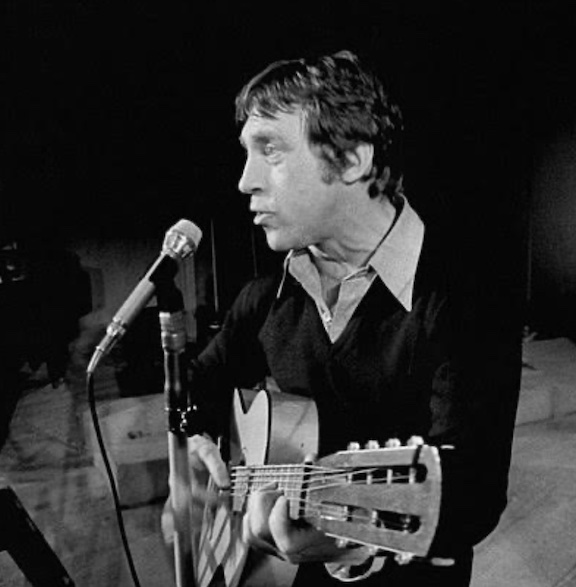
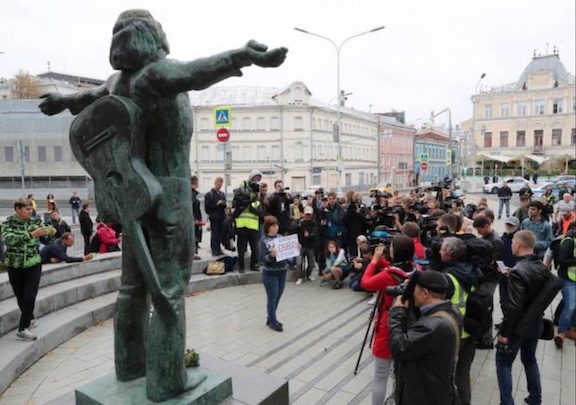
Vysotsky is so unique that there are probably few like him worldwide. In some ways, however, his music and lyric resembles a combination of American performers—John Prine, Johnny Cash, Woody Guthrie and Bob Dylan, but in the context of Russian culture.
In a majority of cases, Vysotsky performed at factory concert halls or in other unassuming venues and in cultural clubs. It was practically impossible to attend one of his concerts in the former Soviet Union due to a high interest for his performance or security reasons engineered by the internal police.
In the spring of 1978, nearly 200 people, all Russian immigrants (approximately 300 immigrant families lived in Philadelphia in the 1970s), were crowded into the Doral Restaurant auditorium in northeast Philadelphia. Representatives of Soviet authority from the Russian Embassy in D.C. or from the nearest Russian Consulate were also present, standing in various corners of the hall and looking intently over the assembled crowd. Their mere presence evoked a feeling of caution, tension and fear borne of past years in the Soviet Union.
On the stage was a chair, and near this chair one of the concert organizers had placed a bottle of vodka with a highball glass. A short time later, Vysotsky quietly came on stage with his guitar and, without looking out over the attendees in the hall, sat on the chair and turned to the audience: “Please, do not send me notes with requests. I will sing only what I want or can sing.” The audience did not respond to these words; he began to perform, one song after another, without commentary and particular emotion. The concert lasted 40–50 minutes. Vysotsky did not drink the vodka.
My second, but at that time not personal, encounter with Vysotsky occurred in the summer of 1990, in Altay (mountains in Russia north of Mongolia) where, along with students of the history faculty of Krasnoyarsk University, I was conducting an archeological investigation of the Denisov Cave—a Late Paleolithic site dated approximately 20–25,000 years old. Academic Anatoliy Panteleyevich Derevyanko, on behalf of the Siberian Branch of the Academy of Sciences of the U.S.S.R., had invited me to Akademgorodok (a large scientific center in Western Siberia) in Novosibirsk for three months to participate in the archeological expedition in Altay.
By this time, I had already lived in America for 12 years and had become a naturalized U.S. citizen.
At the conclusion of the archaeological expedition, the students from Krasnoyarsk University with whom I had worked gifted me a book of Vladimir Vysotsky’s verses titled Klich (“call” or “summons”). The book was already quite worn and, it appeared, read many times by many people. On the first page of the book the students had written: “To our friend Alex from his Soviet student historians. Denisov Cave – ‘90’.”
Vysotsky died in Moscow in July of 1980 at the age of 42. Although he left behind a long and sad account of his last days under the influence of many drugs, he is fondly remembered by those who loved his lyrics and open-minded, pro-freedom songs.
These were my encounters and are my recollections regarding Vladimir Vysotsky, one of the instigators and pioneers of glasnost (“the opening”) in the former Soviet Union, that took place long before the Soviet Chairman of the Communist Party Mikhail Gorbachev’s socio-economic reforms in the mid-1980s.
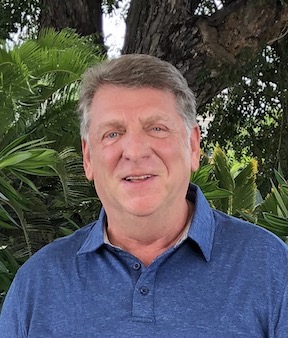
Alexander B. Dolitsky was born and raised in Kiev in the former Soviet Union. He received an M.A. in history from Kiev Pedagogical Institute, Ukraine, in 1976; an M.A. in anthropology and archaeology from Brown University in 1983; and was enroled in the Ph.D. program in Anthropology at Bryn Mawr College from 1983 to 1985, where he was also a lecturer in the Russian Center. In the U.S.S.R., he was a social studies teacher for three years, and an archaeologist for five years for the Ukranian Academy of Sciences. In 1978, he settled in the United States. Dolitsky visited Alaska for the first time in 1981, while conducting field research for graduate school at Brown. He lived first in Sitka in 1985 and then settled in Juneau in 1986. From 1985 to 1987, he was a U.S. Forest Service archaeologist and social scientist. He was an Adjunct Assistant Professor of Russian Studies at the University of Alaska Southeast from 1985 to 1999; Social Studies Instructor at the Alyeska Central School, Alaska Department of Education from 1988 to 2006; and has been the Director of the Alaska-Siberia Research Center (see www.aksrc.homestead.com) from 1990 to present. He has conducted about 30 field studies in various areas of the former Soviet Union (including Siberia), Central Asia, South America, Eastern Europe and the United States (including Alaska). Dolitsky has been a lecturer on the World Discoverer, Spirit of Oceanus, andClipper Odyssey vessels in the Arctic and sub-Arctic regions. He was the Project Manager for the WWII Alaska-Siberia Lend Lease Memorial, which was erected in Fairbanks in 2006. He has published extensively in the fields of anthropology, history, archaeology, and ethnography. His more recent publications include Fairy Tales and Myths of the Bering Strait Chukchi, Ancient Tales of Kamchatka; Tales and Legends of the Yupik Eskimos of Siberia; Old Russia in Modern America: Russian Old Believers in Alaska; Allies in Wartime: The Alaska-Siberia Airway During WWII; Spirit of the Siberian Tiger: Folktales of the Russian Far East; Living Wisdom of the Far North: Tales and Legends from Chukotka and Alaska; Pipeline to Russia; The Alaska-Siberia Air Route in WWII; and Old Russia in Modern America: Living Traditions of the Russian Old Believers; Ancient Tales of Chukotka, and Ancient Tales of Kamchatka.
Read: Neo-Marxism and utopian Socialism in America
Read: Old believers preserving faith in the New World
Read: Duke Ellington and the effects of Cold War in Soviet Union on intellectual curiosity
Read: United we stand, divided we fall with race, ethnicity in America
Read: For American schools to succeed, they need this ingredient
Read: Nationalism in America, Alaska, around the world
Read: The case of the ‘delicious salad’
Read: White privilege is a troubling perspective
Read: Beware of activists who manipulate history for their own agenda


