Beginning in the 1950s, American youth inherited material privileges unknown to prior generations. Postwar prosperity delivered cars, televisions, disposable income, expanded schooling, leisure, and a consumer culture that treated children as a distinct market. Toys, rock and roll, drive-ins, and suburban abundance replaced the hardships of the Depression and war. These goods were real. Yet from the perspective of St. Thomas Aquinas, they were incomplete and often disordered. Nature, Aquinas taught, “intends not only the begetting of offspring, but also its education and development [traductionem et promotionem] until it reach the perfect state of man as man, and that is the state of virtue.” Parents give their children three things: being, nourishment, and instruction (Aquinas, 1265–1274/1947, Suppl., q. 41, a. 1). When the third is neglected or outsourced, the first two become instruments of spoiling rather than formation. The result, now visible across generations, is a great number of confused, weak, depressed, addicted, and suicidal young people.
Aquinas grounded parental duty in natural law and the common good of the family. Marriage exists for the good of the offspring: not only their physical survival but the perfection of their souls through virtue. Aquinas describes the child, before the use of reason, as held within a kind of “spiritual womb” of parental care (Aquinas, 1265–1274/1947, II-II, q. 10, a. 12). Education continues the work of generation, providing the intellectual and moral formation that leads a child from dependence to the ability to live prudently. Habits of temperance, fortitude, justice, and prudence must be instilled early, through example, correction, and explanation of the “why” (Aquinas, 1265–1274/1947, I-II, q. 51, aa. 2–3). Children watch closely, and parents who embody self-mastery teach more powerfully than words. Discipline is not punishment for its own sake but an opportunity for growth. Love provides the security that makes correction effective. This work belongs first to the family, especially in the years before the age of reason. Around age seven, a child becomes capable of moral discernment and begins to act with responsibility (Code of Canon Law, 1983, can. 97, §2). After that threshold, society, schools, and peers exert stronger influence. Formation delayed is formation forfeited.
The 1950s marked the beginning of a decisive shift. The economic boom and the baby boom produced unprecedented external goods: higher living standards, more years of schooling, later entry into the labor force, and a youth culture of consumption and independence. Television and advertising targeted children directly, while wider access to cars granted mobility. Expert voices, beginning with Dr. Benjamin Spock, reassured parents that child-rearing need not be so demanding (Spock, 1946). These developments coincided with rising female labor-force participation. By the end of the 1960s, roughly 40 percent of women were in the workforce (Toossi, 2002), and dual-income households and formal childcare arrangements expanded all the more. Parents increasingly placed children in the hands of others, usually strangers, through schools, daycares, programs, and later screens, so that careers and personal freedom could continue with less interruption. Time-use data later showed that parents in some decades actually spent more hours with their children, yet the quality and primacy of that time changed (Sayer et al., 2004). Institutional settings and professional expertise often substituted for the daily, intimate work of forming character and habituating virtue at home.
Abundance without corresponding virtue produces vice, and vice, like virtue, becomes ingrained by habit. External goods such as wealth, leisure, and safety are goods of fortune, and they serve the soul only when rightly ordered by prudence and temperance (Aquinas, 1265–1274/1947, I-II, q. 2). Left unchecked, they foster intemperance: the inability to delay gratification, to endure hardship, or to govern appetite. Fortitude then atrophies when every discomfort is removed, because the habit of virtue has been replaced by the habit of vice. Justice and piety toward parents weaken when authority is outsourced or treated as optional (Aquinas, 1265–1274/1947, II-II, q. 101). Children raised amid plenty but without disciplined habit reach the age of reason already formed by peers, media, and institutions rather than by the family. These children often lack the interior resources to govern themselves and tend to use people as objects, as means to an end, in a variety of ways. Scripture warns that “a young man according to his way, even when he is old he will not depart from it” (Douay-Rheims Bible, 1582–1610/1899, Proverbs 22:6). The converse is also true: habits of self-indulgence and dependence, once set, persist. This does not mean they cannot change, but therein lies the battle: whether the will yields to the passions or is rightly ordered by intellect and reason.
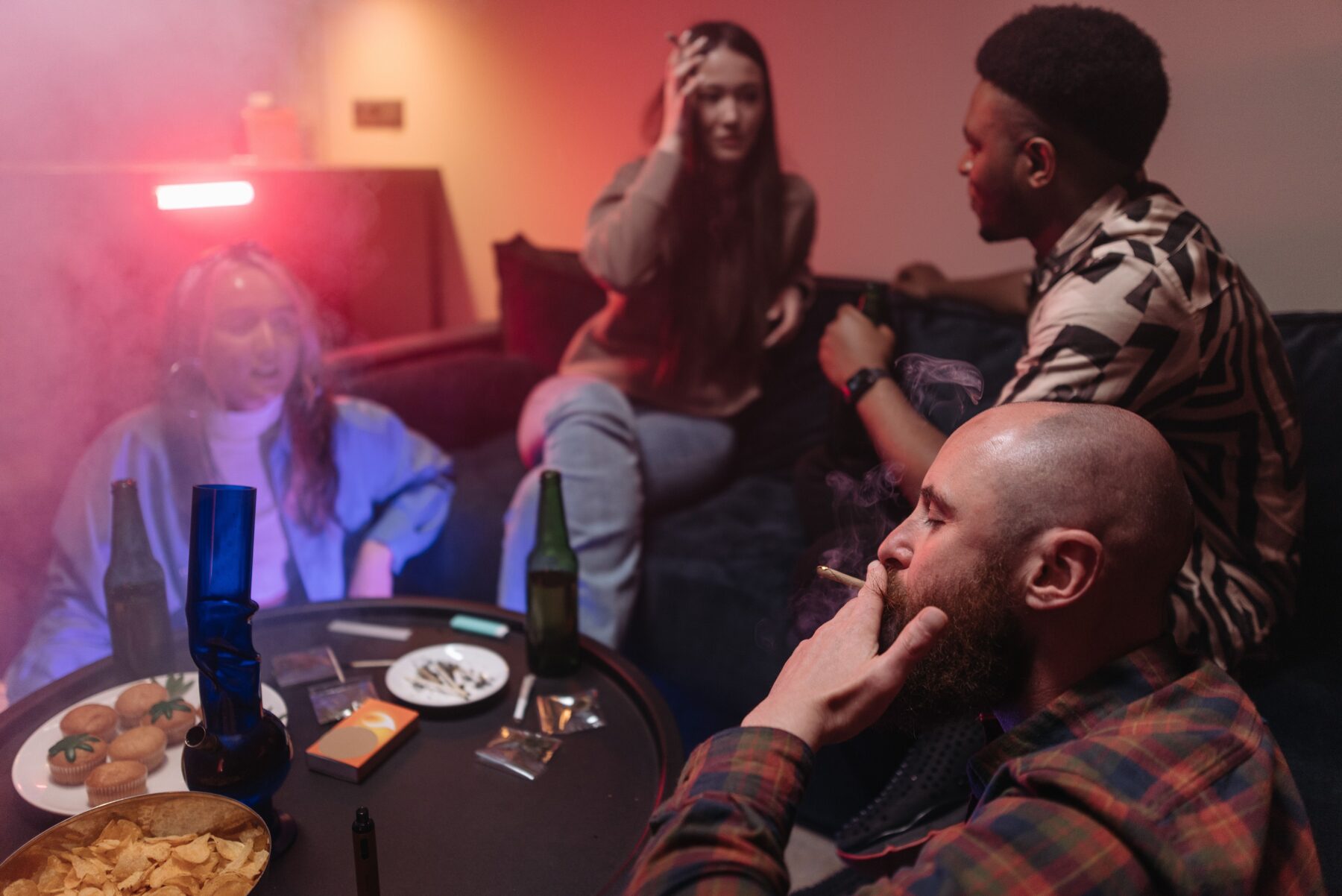
The consequences have been measured, and the data are grim. Youth suicide rates began a long-term rise in the mid-to-late 1950s, a generational pattern in which each successive cohort faced higher risk at younger ages. Suicide risk, once concentrated among the elderly, shifted increasingly toward those under 35 (de Lacy et al., 2026). In recent decades the trend has accelerated: persistent sadness among high school students has climbed sharply (Centers for Disease Control and Prevention, 2024), major depressive episodes have increased (Mojtabai et al., 2016), and emergency department visits for self-harm have risen (Mercado et al., 2017). Addiction has followed the same trajectory. Marijuana is now legal in many states, and today’s strains, whether smoked, vaped, or eaten, are far more potent than those of earlier decades. Cannabis seized in the 1970s averaged less than 2 percent THC (Stoner, 2019); by 2022, flower sold in Washington State’s legal market averaged 21 percent, and concentrates averaged 69 percent (Washington State Liquor and Cannabis Board, n.d.). Across the last three generations, confusion about identity, purpose, and the good itself has become widespread. These are not merely “mental health” statistics. They are signs of souls unprepared for the rational and moral life that Aquinas identified as the proper end of human development. Sadly, with marijuana now legal in so many states, we cannot yet know its effect on the development of infants raised in homes where the smoke of these potent strains and other drugs hangs in the air. Because developmental harm unfolds slowly, the full picture may not emerge until years after the damage has been done.
Delegating child-rearing also opened the door to neglect and abuse, because too many parents do not exercise due diligence when choosing childcare. When parents remove themselves to preserve careers and autonomy, children spend formative hours under the authority of strangers or systems whose primary loyalty is not to the child’s virtue. Institutions can fail, and often do, because no surrogate can secure the bond between parent and child as the parent can. Predators have become creative and hard to detect in exploiting gaps in supervision, and the internet has made this easier than at any other time in history. Even well-intentioned programs cannot replace the particular love and knowledge a mother and father possess. The family is the first school of the virtues because it is the first society ordered to the complete good of its members (Catechism of the Catholic Church, 1997, paras. 1666, 2223; Second Vatican Council, 1965, para. 3). It must be stressed that no substitute fully replicates God’s original plan for rearing children: a man and a woman united in the sacrament of marriage, rightly living the unitive and procreative meaning of the marital act, welcoming the children with which He has blessed them, and raising them in a healthy, holy, and stable domestic church (Catechism of the Catholic Church, 1997, paras. 1656, 2366; Paul VI, 1968, para. 12).
The remedy is not nostalgia for scarcity but the recovery of order. Parents must learn to parent, and many were never shown how, given the brokenness of so many families in which one or both parents pursued self-fulfillment. This means reclaiming the primary right and duty of education rather than treating it as a task for specialists (Catechism of the Catholic Church, 1997, para. 2221; John Paul II, 1981, para. 36). Mothers, in particular, must be mothers: present, attentive, and pouring themselves into their children in the early years, when habits take root most deeply. The years before the age of reason are decisive. A child who has been loved, corrected, and shown the reasons for good action by those who know him best enters the wider world with a formed will and a directed intellect. Society will still influence him, but it will not form him from scratch.
Aquinas did not despise material goods. He recognized that external goods can support the life of virtue (Aquinas, 1265–1274/1947, I-II, q. 4, a. 7). The error of the last seventy years has been to treat those goods as sufficient and parental sacrifice as optional. Freedom and career have their place, but they are subordinate to the family’s natural end. When parents choose the former at the expense of the latter, they withhold the very instruction nature requires. The harvest is weakness where strength was needed, confusion where clarity was possible, and despair where hope should have been planted. Restoring the family as the primary school of virtue is not a private preference. It is the condition for producing adults capable of living according to reason and, ultimately, of knowing God. Until parents accept that burden again, the privileges of the postwar world will continue to exact a hidden and terrible price.
Sources
Aquinas, T. (1947). Summa theologica (Fathers of the English Dominican Province, Trans.). Benziger Bros. (Original work written 1265–1274)
Catechism of the Catholic Church (2nd ed.). (1997). Libreria Editrice Vaticana.
Centers for Disease Control and Prevention. (2024). Youth Risk Behavior Survey data summary & trends report: 2013–2023. U.S. Department of Health and Human Services. https://www.cdc.gov/yrbs/dstr/pdf/YRBS-2023-Data-Summary-Trend-Report.pdf
Code of Canon Law. (1983). Libreria Editrice Vaticana.
de Lacy, N., Danks, D., Lam, W., Smith, K., Collins, T., Wilson, F., & Pescosolido, B. (2026). A century of suicide: Insights from long-term data in the United States. Proceedings of the National Academy of Sciences, 123. https://doi.org/10.1073/pnas.2519951123
Douay-Rheims Bible. (1899). John Murphy Company. (Original work published 1582–1610)
John Paul II. (1981). Familiaris consortio [Apostolic exhortation]. Libreria Editrice Vaticana. https://www.vatican.va/content/john-paul-ii/en/apost_exhortations/documents/hf_jp-ii_exh_19811122_familiaris-consortio.html
Mercado, M. C., Holland, K., Leemis, R. W., Stone, D. M., & Wang, J. (2017). Trends in emergency department visits for nonfatal self-inflicted injuries among youth aged 10 to 24 years in the United States, 2001–2015. JAMA, 318(19), 1931–1933. https://doi.org/10.1001/jama.2017.13317
Mojtabai, R., Olfson, M., & Han, B. (2016). National trends in the prevalence and treatment of depression in adolescents and young adults. Pediatrics, 138(6), Article e20161878. https://doi.org/10.1542/peds.2016-1878
Paul VI. (1968). Humanae vitae [Encyclical letter]. Libreria Editrice Vaticana. https://www.vatican.va/content/paul-vi/en/encyclicals/documents/hf_p-vi_enc_25071968_humanae-vitae.html
Sayer, L. C., Bianchi, S. M., & Robinson, J. P. (2004). Are parents investing less in children? Trends in mothers’ and fathers’ time with children. American Journal of Sociology, 110(1), 1–43. https://doi.org/10.1086/386270
Second Vatican Council. (1965). Gravissimum educationis [Declaration on Christian education]. Libreria Editrice Vaticana. https://www.vatican.va/archive/hist_councils/ii_vatican_council/documents/vat-ii_decl_19651028_gravissimum-educationis_en.html
Spock, B. (1946). The common sense book of baby and child care. Duell, Sloan and Pearce.
Stoner, S. A. (2019). Potency of marijuana. University of Washington, Alcohol and Drug Abuse Institute. https://adai.uw.edu/pubs/pdf/sto19-02.pdf
Toossi, M. (2002). A century of change: The U.S. labor force, 1950–2050. Monthly Labor Review, 125(5), 15–28. https://www.bls.gov/opub/mlr/2002/05/art2full.pdf
Washington State Liquor and Cannabis Board. (n.d.). Understanding THC concentration and potency. Retrieved September 22, 2026, from https://lcb.wa.gov/education/understanding_thc_concentration_and_potency