Wednesday, May 6, 2026
Home Blog Page 986

Breaking: Court issues injunction on forced vaccines for healthcare workers

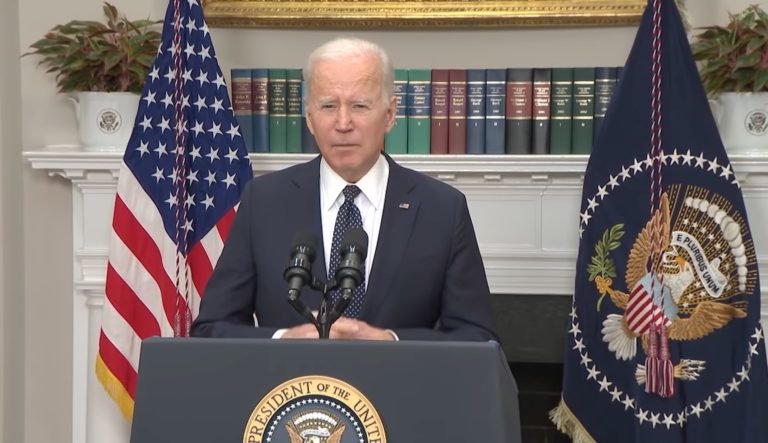
Today, following a lawsuit from Missouri Attorney General Eric Schmitt and 10 other states, the United States District Court, Eastern District of Missouri, issued a preliminary injunction, halting the Joe Biden Administration from enforcing its Covid vaccine mandate on healthcare workers in the states that sued.

Those states include Alaska, which joined the lawsuit as it was filed on Nov. 10.

“Earlier today, the United States District Court, Eastern District of Missouri, issued a preliminary injunction halting the Biden Administration from enforcing its vaccine mandate on healthcare workers. This is a huge victory for healthcare workers in Missouri and across the country, including rural hospitals who were facing near certain collapse due to this mandate,” Schmitt said in a statement. “While today’s ruling is a victory, there’s more work to be done, and I will keep fighting to push back on this unprecedented federal overreach.”

This is a stay on the enforcement of the mandate, as the 6th Circuit Court of Appeals determines the merits of lawsuits over the mandate’s actual legality.

The stay means hospitals and medical centers cannot demand healthcare workers be fully vaccinated for Covid or lose their jobs. At least not by using the Biden mandate as the reason. Hospitals and medical centers can still act on their own, and most in Alaska do require a vaccine to continue employment.

The mandate that has been put on hold required nearly every employee, volunteer, and third-party contractor working  at 15 categories of healthcare facilities to be vaccinated with at least one shot against Covid-19 by Dec. 6.

Read the injunction against the Centers for Medicare and Medicaid (CMS):

Surprise: Joe Miller endorses Rep. Chris Kurka for governor

Former senatorial candidate Joe Miller pulled a good one on Monday: Instead of announcing his own campaign for governor, as many expected, he endorsed Chris Kurka for governor. Yes, the same Rep. Chris Kurka who has served for 11 months in the Legislature for Wasilla.

Miller said he was disappointed in Gov. Mike Dunleavy. Nothing had been addressed to remedy vote integrity, which is an issue he takes personally after losing to Sen. Lisa Murkowski, and he blamed Dunleavy for violating the U.S. Constitution in his early response to the Covid-19 pandemic in 2020.

Kurka, he said, will be the real deal for conservative Alaskans.

Miller mentioned oligarchs and seemed to hold a grudge against Dunleavy, who he said had sent “underlings” to meet with him and “pat me on the head.”

Campaign observers say that Kurka could pull 5 percent of the zealot vote away from the sitting Republican governor. And another said that Miller just gave candidate Bill Walker a huge gift, because conservative voters, in a ranked choice election scenario as Alaska is about to hold, have a 50 percent drop off after they make their first choice. And so Kurka’s voters will not necessarily choose Dunleavy as their second choice. This could give Walker a 5 percent advantage he never dreamed of.

Kurka, who is the former state director for Alaska Right to Life, is set to make remarks about his campaign at 3 pm on Monday.

Alaska Life Hack: Cut your own tree

15

Supply chain problems and sub-zero temperatures notwithstanding, Alaskans can cut their own Christmas trees on state land.

Households are limited to one tree, and no permit or fee is required. Maps and information on Christmas tree harvesting in Southcentral and Interior Alaska – as well as information about how to care for your fresh-cut tree – are available at http://dnr.alaska.gov/commis/pic/christmastree.htm.

From the Division of Forestry, here are some guidelines for safe, legal cutting of Christmas trees on state public lands:

  • Properly identify who owns the land where you intend to cut your tree. If you have any questions on land ownership, call the nearest Division of Forestry office.
  • Cutting trees in state parks, experimental forests and commercial timber sales is prohibited.
  • Maximum tree height is 15 feet.
  • Christmas trees cut on state land are for personal use only and may not be sold.
  • The division does not maintain forest roads and anyone traveling on them should be properly equipped to do so. Have warm clothing and appropriate equipment incase you get stuck, including tire chains, shovel and tow strap.
  • Cut trees as low and close to the ground as possible.
  • Do not litter, and be courteous to other tree cutters and residents. For a directory of area forestry offices around the state, including addresses and phone numbers, go to http://forestry.alaska.gov. Answers to additional questions are available at the Department of Natural Resource’s Public Information Centers in Anchorage (907- 269-8400) or Fairbanks (907-451-2705).

Poll: Dunleavy ranks high in popularity, compared to all other governors

Maybe the Recall Dunleavy people saw the writing on the wall when they laid down their cannons this past summer and quit: Gov. Mike Dunleavy is, in fact, popular.

Dunleavy is the 16th most popular governor among the 50 states, according to Morning Consult, a survey firm that seasonally ranks the popularity of elected officials.

Dunleavy ranked higher than Gov. Gavin Newsom of California, a Democrat who recently beat a recall attempt at the ballot box. Dunleavy also ranked higher than Gov. Brad Little, of Idaho, a Republican who is being challenged for governor by his own Republican Lt. Gov. Janice McGeachin in the May, 2022 primary.

At 57% approval rating, Dunleavy is just one point below South Dakota Gov. Kristi Noem in the survey.

The most popular governor in the survey was Gov. Phil Scott, a Republican serving in Vermont, who has a 79% approval.

Of the top 20 governors in the approval rankings, 15 are Republicans, while five are Democrats.

Dunleavy, who faced a recall campaign that started only three months after he took office, has seen his approval rating go up and down and up again. In the fourth quarter of 2019, Morning Consult had him at a dead even, with 42% approving, and 42% disapproving of him, and he was ranked 9 among all 50 governors for popularity. At that same time, Florida Gov. Ron DeSantis had a 58% approval rating.

Morning Consult successfully predicted the free-fall of former Gov. Bill Walker in 2018. The polling firm named him the least popular governor running for re-election in 2018, with net approval of -26%. He ended up with just 2 percent of the vote — 5,757 Alaskan voters to Dunleavy’s 51.4% or 145,631 votes.

“Walker posted the largest net slide in approval of any governor in the fourth quarter, falling 19 points compared to the previous quarter,” the survey firm reported.

In this final quarter of 2021, a reputable Alaska survey firm showed the same results as Morning Consult did for Dunleavy, who will face off against non-party candidate Walker, Democrat Les Gara, and Libertarian Joe Miller, who is set to announce his candidacy on Monday morning.

Republican DeSantis, although much lauded by conservatives around the country this year for his battle with President Joe Biden, has a 52% approval in his state, and Texas Republican Gov. Greg Abbott is at 50%.

The least popular governor in the country is Oregon Democrat Kate Brown, who has a 43% approval rating. That is up slightly from the fourth quarter of 2019, when 37% of Oregonians approved of her.

Read the analysis at this link.

Passings: Barry Matteson, 1943-2021

4

Barry Matteson passed away from complications of a stroke on Nov. 19, 2021 at the age of 78. He was born Oct. 21, 1943 in Bismarck, N.D. to Roy Matteson and Lucy (Woehler) Matteson.

Barry served in the United States Air Force, and in 1963 was stationed at Elmendorf in Anchorage, AK. Barry was honorably discharged and remained in his beloved Alaska, the state he called home for 57 years. He started a small business, Barry’s Custom Cycle and eventually grew that business to be House of Harley-Davidson, Denali Harley-Davidson, and Kenai Peninsula Harley-Davidson. A Harley-Davidson Dealer for 37 years, he was a founding member of Alaska Bikers Advocating Training and Education, Harley Owners Group Alaska Chapters, Alaska Motorcycle Dealers Association, and a member of American Legion Riders.

He loved to ride his motorcycle, was an avid reader, enjoyed studying the U.S. Constitution, traveled the world, and never stopped learning. He put family first. Barry was generous and gave to many local and national organizations, including Must Read Alaska. He was a patriot and advocated for conservative values. 

Barry is survived by the love of his life, his wife of 39 years Karen Sue Matteson, his son Joseph Matteson, daughters, Tammy Thompson, Tracy Czajkowski, Bonita James, Meggie Hoeft and Dia Matteson, his sisters Darby Matteson and Berma Matteson, and his numerous grandchildren and great grandchildren. He was predeceased by his parents Roy Matteson and Lucy Matteson and by his son Brett Matteson.  

A celebration of life will be held at Unite Church (2626 Abbott Rd., Anchorage, AK) on Dec. 12 at 3 pm, with a reception to immediately follow at House of Harley-Davidson.

In lieu of flowers, the family asks that donations be made in Barry’s honor to one of his favorite charities: The Heritage Foundation (heritage.org) or Downtown Hope Center (downtownhopecenter.org). 

Reports: Uganda loses its main airport to the Chinese after defaulting on loan

According to several media outlets across Africa, Uganda has lost possession of the Ugandan Entebbe International Airport, along with other strategic assets, because the country has not been able to repay a loan to the Export-Import Bank of China.

The Sahara Reporters wrote that President Yoweri Museveni had sent a delegation to renegotiate with the Chinese government over “toxic clauses that exposed the East African country.” It was to no avail.

The Ugandan Entebbe International Airport is about 40 miles from Kampala, the capital, and is the country’s only international airport. It would be used by ConocoPhillips, Exxon, and Eni, all companies doing business in Alaska.

The Museveni-led Ugandan government had, on Nov. 17, 2015, signed an agreement with Exim Bank to borrow $207 million at two per cent upon disbursement, according to the Sahara Reporter. The loan was to mature in 20 years, and had a seven-year grace period. But as part of the deal, there were conditions requiring the Ugandan government to surrender the airport to the Chinese lenders, which are owned by the Communist Chinese government.

According to the Daily Monitor, the Ugandan government waived international immunity in the agreement it signed to secure the loans, exposing airport to take over without international protection.

The relinquishment of a major portion of the country’s infrastructure is reminiscent of the discomfort many Alaskans expressed after former Alaska Gov. Bill Walker signed an agreement with China to finance the design and construction of the now-mythical Alaska LNG project from the North Slope to Nikiski.

Walker and former Alaska Gasline Development Corporation President Keith Meyer signed a joint development agreement was signed with three major Chinese entities, all controlled by the communist government:

  • Sinopec, one of the largest oil and gas companies in the world, generates $456 billion in annual revenue.
  • Bank of China is one of the five largest banks, with clients in more than 50 countries and regions.
  • With an estimated $813.5 billion, China Investment Corporation is the world’s third largest sovereign wealth fund.
Walker smiles for the camera after signing the joint operating agreement with the Chinese.

“This is a big project with big players and big benefits,” Walker noted at the time. “There are more steps before a final investment decision is reached, but having the largest LNG buyer in the world participating in this project means the Alaska LNG project has favorable market engagement at the highest level. This project will finally allow Alaska to reach its full potential as a state. As we move from having one of the highest unemployment rates in the country to the lowest, we will build a stronger Alaska.”

That year, a cybersecurity firm said a Chinese university probed the computer networks of Alaska state departments, especially the Department of Natural Resources, and also private businesses during Walker’s trade mission “in an apparent attempt to ascertain vulnerabilities and gain illegitimate access.”

The firm, Recorded Future, published a report that said the attack originated from computer infrastructure at Tsinghua University.

The report said Alaska was not alone as the target of “cyberespionage” from Tsinghua infrastructure, called an elite Chinese university by Recorded Future, according to the publication Government Technology.

While Walker was courting China, this lending arrangement didn’t work out so well for the Ugandans, and by 2018, Walker was out of office and the new administration pulled the plug on the arrangement.

Several commentators at the time warned that Alaska should be careful about getting into bed with the People’s Republic of China, pointing to the many assets across the African continent that were already under the ownership of China.

Background: In February of 2015, South Korea, through the Korea International Cooperation Agency, gave the government of Uganda a grant of $27 billion Ugandan dollars towards modernization of the airport.

The Ugandan government began the three-phase upgrade and expansion in a project that was scheduled to stretch until 2035 and cost $586 million in U.S. dollars. With the South Korean grant and the China loan, not all of the costs were covered. Financing wasn’t secured to complete the project.

“In desperation, Uganda in March 2021 sent a delegation to Beijing hoping to renegotiate the toxic clauses of the deal but the officials came back empty-handed as China would not allow the terms of the original deal to be varied,” the Sahara Reporter wrote.

“Last week, Uganda’s Finance Minister, Matia Kasaija, apologised to parliament for the “mishandling of the $207 million loan” from the China Exim Bank to expand Entebbe International Airport,” the news agency said.

The airport, built in 1972 and used by the Uganda military, has over 1.9 million passengers per year, and the renovation is said to be 75.2 percent complete.

China controlling the airport will create a political challenge for Musenvi, “who came to power on the back of an armed uprising in 1986, and expose him to election defeat,” the news organization said.

Although Alaska escaped a fate like Uganda is suffering, in 2020, Gov. Walker and Keith Meyer put together a new corporation to try to take over the Alaska Gasline project from AGDC and move it forward, presumably with Chinese financing. By then, AGDC was under new leadership and was not interested.

Now Walker is running for governor again.

Is Joe Miller running for governor?

Former U.S. Senate candidate Joe Miller has hinted he is about to announce a run for governor. But then, again, maybe not.

All he is saying is he will make an announcement that will be streamed on the Joe Miller and Restoring Liberty Facebook pages at 9 am on Monday, Nov. 29.

Miller was the Republican Party nominee when he was the Tea Party candidate for U.S. Senate in 2010, winning against incumbent Sen. Lisa Murkowski. She then ran a write-in candidate and beat him and Democrat Scott McAdams in the general election.

Miller ran again for Senate in 2014, but was beat by Sen. Dan Sullivan in the primary. In 2016, he was the Libertarian candidate for Senate against Murkowski, and came in second on the general election ballot with about 30 percent of the vote. He was aligned with the Constitution Party for a while but is once again a registered Libertarian.

There are possibly two other Libertarians running for governor — Billy Toien and Roman Shevchuk. This coming election cycle, all candidates from all parties (or no party) will appear on the same primary ballot, and the top four vote getters will proceed to the general election ballot, where they will face off in a ranked-choice ballot design.

The major candidates so far are Gov. Mike Dunleavy-R, Bill Walker-no party, Billy Toien-L, Roman Shevchuk-L, and Les Gara-D.

Go ask Alice: Rogoff mansion sells

The sprawling Campbell Lake mansion where the former owner of the Anchorage Daily News once hosted President Barack Obama has been sold.

The sale price and the buyer are unknown, but the listing was for $3.2 million when Alice Rogoff put it on the market in October, 2020.

Rogoff lost the Anchorage Daily News in a bankruptcy settlement in 2017. She and her husband, David Rubenstein (whose home on Nantucket Island is being rented by President Joe and First Lady Jill Biden this weekend) divorced last December.

Rogoff relocated mostly full time to Alaska after buying the Anchorage Daily News from McClatchy in 2014 for $34 million. She already had controlling interest in the upstart online-only Alaska Dispatch and folded the two organizations together, renaming the entire publication the Alaska Dispatch. Her move to Alaska prompted friendly questions from the fawning Washington Post in a story titled “What’s this Washington insider and billionaire’s wife doing in Alaska?”

“Her rising profile in Alaska, her marriage to one of the country’s most successful private-equity managers, and the physical and metaphorical distance from her life — and husband — in Washington have made observers in both places curious about her ambitions,” the Post reported.

Her ambitions soon became clear as she helped engineer a win for Bill Walker in 2014, when he challenged former Gov. Sean Parnell and won — with the help of the media that she owned.

The Binkley Company, owned by the John Binkley family in Fairbanks, bought the paper for $1 million and saved it from extinction.

Rogoff’s home on the lake has 7,170 square feet, five bedrooms, seven bathrooms, and a dock for her floatplane, which she wrecked on July 3, 2016 in Halibut Cove. She was able to swim away from the downed Cessna.

Rogoff also has property on the East Coast and she publishes Arctic Today, an online news outlet with a global look at exclusively Arctic matters that she was allowed to take with her when the bankruptcy was settled.

Suzanne Downing: Blaming ‘misinformation,’ Dr. Zink does a disservice to Alaskans

One of the more disappointing reads of the season was the Oct. 27 opinion essay in The Washington Post penned by Alaska’s own Chief Medical Officer Anne Zink.

Most of it is an acceptable accounting of Alaska’s experience with Covid-19. We did pretty well in the beginning, and Gov. Mike Dunleavy’s administration, including Zink, did a phenomenal job getting test kits manufactured in-state, when it was nearly impossible to get supplies. They got protective gear shipped over from China in record time.

Alaskans followed Dr. Zink’s advice in February of 2020 to wash their hands frequently for 20 seconds and sneeze into their sleeves. She is on the record early in the pandemic for saying that surgical masks are essentially petrie dishes.

“A mask is a wet, moist environment that’s collecting viruses and bacteria … It’s not useful to protect you from other people,” she told a legislative hearing.

By June, 2020, Zink had changed her tune about why she wears a mask: “Humility: I don’t know if I have COVID as it is clear that people can spread the disease before they have symptoms. 2. Kindness: I don’t know if the person I am near has a kid battling cancer, or cares for their elderly mom. While I might be fine, they might not. 3. Community: I want my community to thrive, businesses to stay open, employees to stay healthy. Keeping a lid on COVID helps us all.”

That’s very laudable and noble, but 180-degrees from what she had said in February, 2020, and not particularly backed by science.

In The Washington Post last month, Zink took credit for Alaska’s great look on the national stage early in the pandemic, and then blamed Alaskans for the outbreak in the fall of 2021, when case loads spiked.

Alaskans fell prey to misinformation, she said.

This is a curious argument: Alaskans, evidently, have some unique quality that makes them fall for misinformation when people in Florida, with some of the lowest Covid case counts in the world, do not.

Today, the case loads are spiking in Iowa and Kansas. It must be that people are suddenly falling for misinformation in Iowa, but not in Alaska, because within weeks of spiking and causing concern in hospitals in late September, Alaska’s numbers have returned to what the World Health Organization considers the “green zone” of viral transmission — below 5% for the past two weeks. Alaskans should pat themselves on the back for not falling for misinformation.

The blame for misinformation rests on the medical community, policy makers, and on social media, but perhaps unequally. Let’s take the medical community first.

The struggle to understand what is probably a bioweapon, while filtering data through the sieve of medical experience and teachings, has led the medical profession to make imperfect recommendations to the public, and to exclude important avenues of inquiry, such as early treatment.

The medical community, led by people in charge such as Dr. Zink and Dr. Anthony Fauci, have pushed masks, distancing, and finally a leaky vaccine as the primary methods for controlling the disease. And yet, with this sneaky virus, it’s apparent that the vaccine is not going to succeed, as in less than two years the virus has evolved from its initial stage, to the more virulent Delta, and now to the even worse variant being called “omicron.” This virus, unlike viruses that come from nature, reminds us of the Greek mythological creature Hydra; every time one head is chopped off, two more grow back.

The jury is still out on whether the mass vaccination program is a good idea, but Zink’s assertion that low vaccination rates and vaccine hesitancy in Alaska is a big reason for the September surge is unsupported. 81 percent of the Juneau population is vaccinated, and yet there were 19 new cases diagnosed Wednesday. This, in what is one of the most vaccinated communities in the country — a town of 30,000 that also has instituted forced masking, six-foot distancing, and mandatory limits on gatherings. Not quite Australia, but they can see it from there.

What’s more, the breakthroughs and reinfections are on the rise in Alaska already. Through the end of September 2021, a total of 13,265 Covid-19 vaccine breakthrough cases were documented among Alaska residents, according to the Alaska Department of Health and Social Services. We must keep in mind that most Alaskans did not even have access to the vaccine until March of 2021, and yet by September, the breakthroughs were growing by leaps and bounds.

If the medical community has suffered reputation damage because of its changing and flawed advice, and if the political class has outdone itself in the scare tactics its perpetuated, the mosh pit of social media hasn’t been all that helpful either. This virus is serious, and those who diminish or dismiss its dangers do so at their own peril, and the greater community’s as well.

But the people of social media are not to blame for the misinformation. Much of what they are trading in is no more misinformed than what is being fed to them by Big Pharma and its handmaidens at the FDA, CDC, and in the mainstream media. Alaskans are reading widely; are they to dismiss the repression they see occurring around the world? Should Alaskans not make a stand so their communities don’t resemble the quarantine camps of Australia? Should they not fight for the Constitution?

Are the experiences of Israelis to be discounted? Is Ivermectin, which is a drug commonly used to treat Covid around the globe, such a danger that Alaskans can’t have access to it? What would be the harm of telling Alaskans to load up on Vitamin D, lose weight, build their immune systems with zinc and quercetin, and get plenty of exercise?

What of the stories Alaskans have told Must Read Alaska about doctors, nurses, and health practitioners discriminating against the unvaccinated or refusing to treat them altogether? Are those stories not relevant? What of the mandates on workers to get vaccinated or lose their jobs? Are these Alaskans’ experiences “misinformation”?

And importantly, what exactly is misinformation in an era in which some doctors, from Dr. Fauci to our local medical mafia at Providence, have become politicized and are telling leaders in Anchorage to enact behavioral mandates? From this perch, it appears that only because of the strong libertarian streak in Alaskans have we been able to avoid the vaccine passports now enacted in Washington, Oregon, and California.

Dr. Zink’s writing in the Wa-Po belittled Alaskans. It shifted the blame to them for a virus that is a global roller-coaster of increasing intensity and challenge. She didn’t help the case of doctors, and she insulted Alaskans by characterizing them as too stupid or hardheaded to know good information from bad in a world where the information is rapidly changing, and where much has been worthy of doubt.

Suzanne Downing is the publisher of Must Read Alaska.